• Binge Drinking and Chart Geekery

    I was slightly under the weather today and had nothing better to do than noodle around on the computer, so let’s do some more chart geekery. This morning a reader sent me a link to this chart in the New York Times about binge drinking:
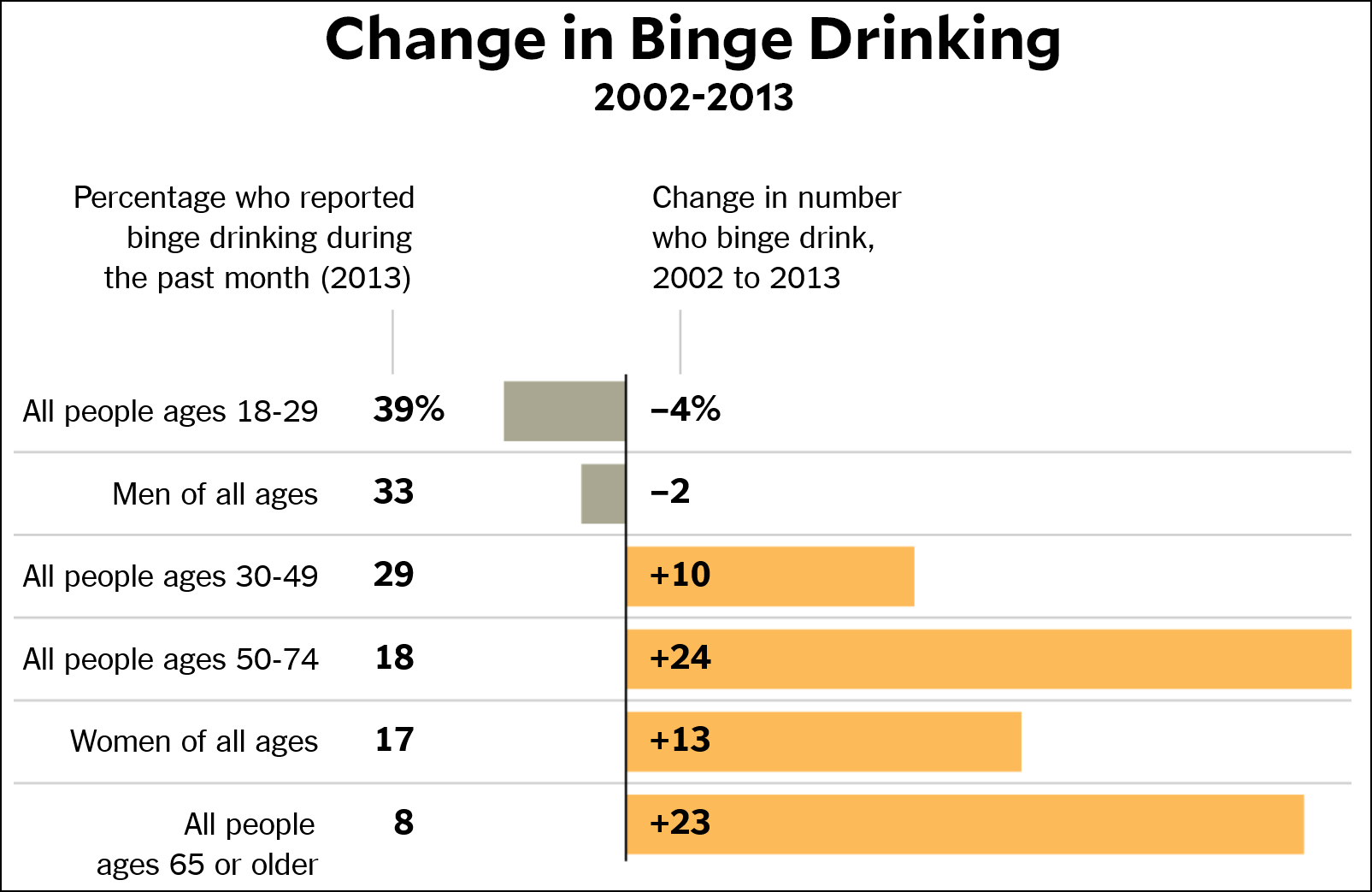
    That’s one confusing chart! I stared at it for a while, trying to figure out how binge drinking could go down 2 percent among men and up 13 percent among women, resulting in a net change for all people of -4 percent. After about a minute I finally realized that the top bar was only for people age 18-29. Basically, this is such a mishmash of different ages and genders that it’s hard to compare anything. Why not just do this?
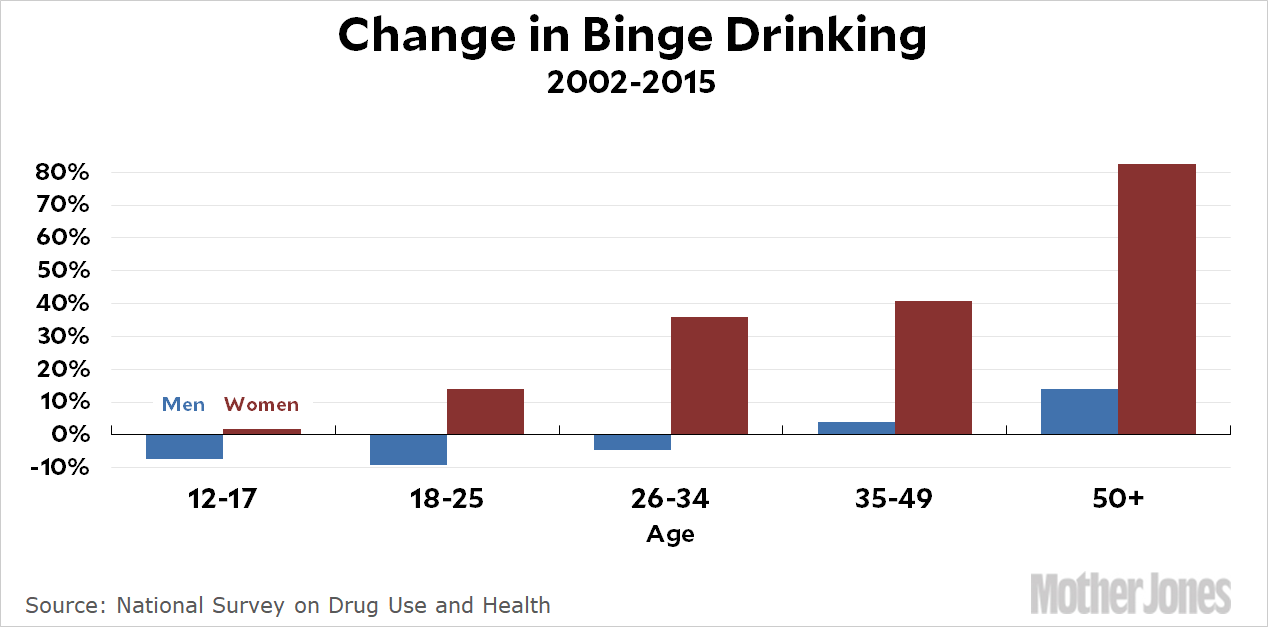
    You could pretty easily add other age categories if you want, or a bar for all ages. Or a chart showing both 2002 and 2015 rather than just the change. It’s not like it would take up any more room than the other chart. The data is easily available online, so why not just present it all?

    I dunno. But my reader had a different complaint. Take the bar for women over 50. The number who report binge drinking in the previous 30 days has gone up from 17 percent to 31 percent. What’s the best way to represent that? It’s a difference of 14 percentage points, but 82 percent. I think the latter is more informative, but it’s always confusing when you compare percentages. It’s easy to see that an increase from, say, $17 to $31 is 82 percent, but less intuitive that an increase from 17% to 31% is also 82 percent. But it is.

    POSTSCRIPT: Alternatively, you could lard up your chart with the kitchen sink:
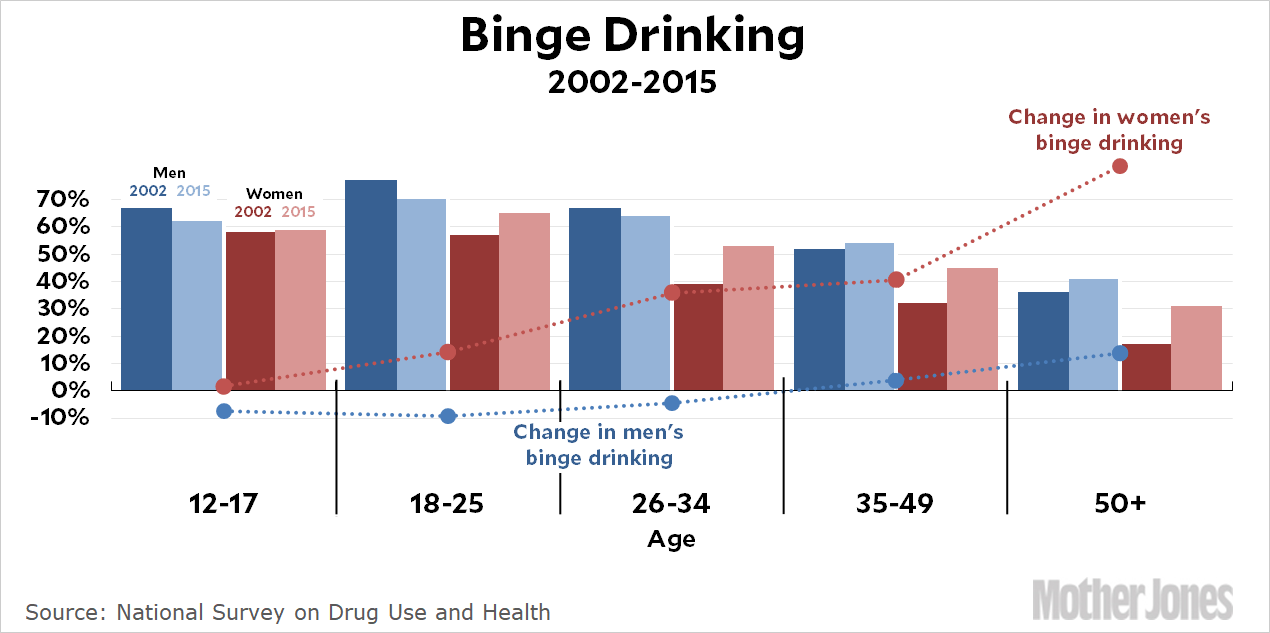
    On the upside, this one shows the absolute percentages of binge drinking reported by every age/gender combination, as well as the growth rate in binge drinking since 2002. On the downside, it’s pretty hard to parse for a casual reader.

    It also has way different numbers than the Times chart. I don’t know why that is. Maybe I bollixed up the data. But it seems pretty straightforward. Here’s the crosstab I used for the 2015 data:
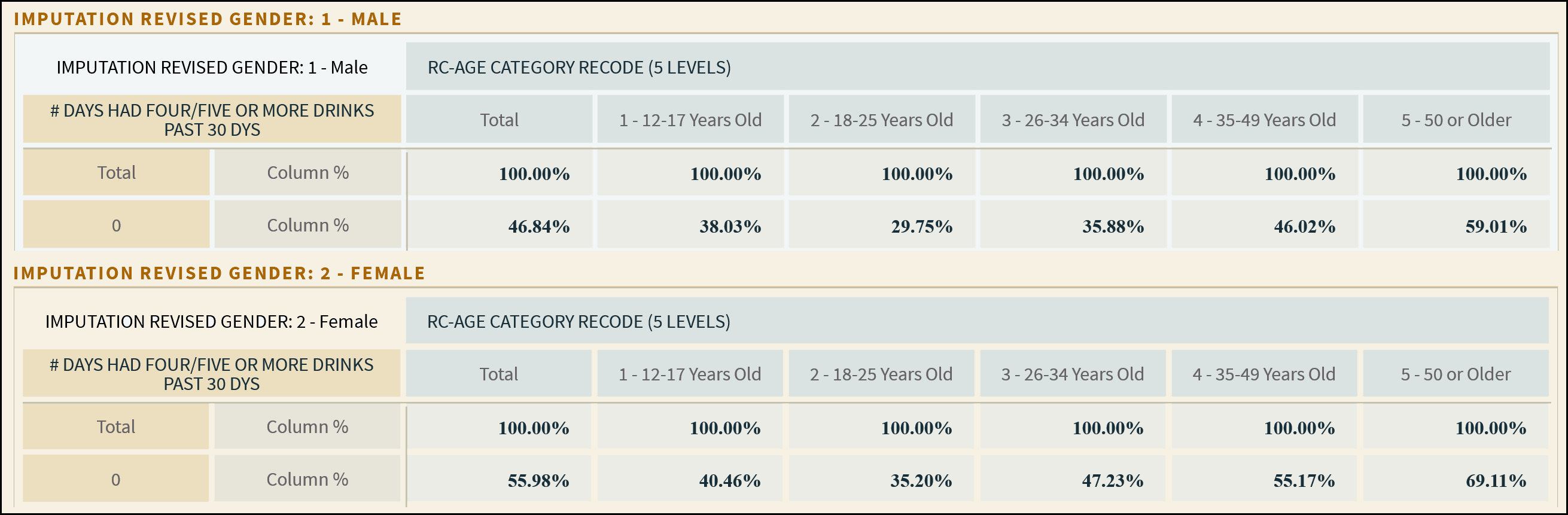
    If 46.84 percent of males reported zero days of binge drinking, then 53.16 percent reported binge drinking at least once. But the Times chart says 33 percent. I don’t know what’s going on.

  • A Drunken Trump Aide Sparked the FBI’s Trump-Russia Investigation

    Here is Donald Trump a few days ago:

    This is Exhibit A in the conservative agit-prop campaign to discredit the Trump-Russia investigation: It was all kicked off by the Steele dossier, which was just a Hillary-funded hit job that the Trump-haters in the FBI used as an excuse to go after him.

    But here’s the thing: Steele shared his dossier with a Rome-based FBI agent in August 2016. In October he briefed a larger group of FBI agents in Washington. But the FBI had quietly begun its investigation three months earlier, in July. Obviously the dossier is not what kicked off the FBI investigation.

    So what did? Today the New York Times tells us:

    During a night of heavy drinking at an upscale London bar in May 2016, George Papadopoulos, a young foreign policy adviser to the Trump campaign, made a startling revelation to Australia’s top diplomat in Britain: Russia had political dirt on Hillary Clinton. About three weeks earlier, Mr. Papadopoulos had been told that Moscow had thousands of emails that would embarrass Mrs. Clinton, apparently stolen in an effort to try to damage her campaign….Two months later, when leaked Democratic emails began appearing online, Australian officials passed the information about Mr. Papadopoulos to their American counterparts.

    ….It is unclear whether Mr. Downer was fishing for that information that night in May 2016….It is also not clear why, after getting the information in May, the Australian government waited two months to pass it to the F.B.I. In a statement, the Australian Embassy in Washington declined to provide details about the meeting or confirm that it occurred.

    Ah yes, George Papadopoulos, one of the charter members of Trump’s foreign policy team formed in March 2016. Back then he was an “excellent guy,” but after he pleaded guilty to a charge of lying to the FBI earlier this year he was immediately derided by Trumpies as a mere “coffee boy” that nobody took seriously.

    Well, who knows about that? But Trump did pick him, and apparently he did get crocked in London and tell the Australian ambassador that the Russians had thousands of pages of compromising emails about Hillary Clinton. In July, sure enough, WikiLeaks released thousands of emails hacked from the DNC server. Apparently this lit a fire under the Australians, who passed along Papadopoulos’s drunken intel to the FBI, and that’s when the FBI began investigating Trump. They were shocked—as anyone would be—that apparently the Trump campaign had advance knowledge of Russian dirty tricks aimed at the Clinton campaign.

    Ten months later Trump fired FBI director James Comey for keeping the investigation alive, and the rest is history.

  • Wait! I Have a Better Dual Y-Axis Chart.

    I blew it! In my post earlier this morning about charts with dual y-axes I picked some miscellaneous data as an illustration. Then I saw a tweet about an article written in October that lays out the relationship between trust in government and murder rates:

    The murder rate since World War II has tracked almost perfectly, as criminologist Gary LaFree has observed, with the proportion of Americans who say they “trust the government in Washington to do what is right” most of the time and who believe that most public officials are honest.

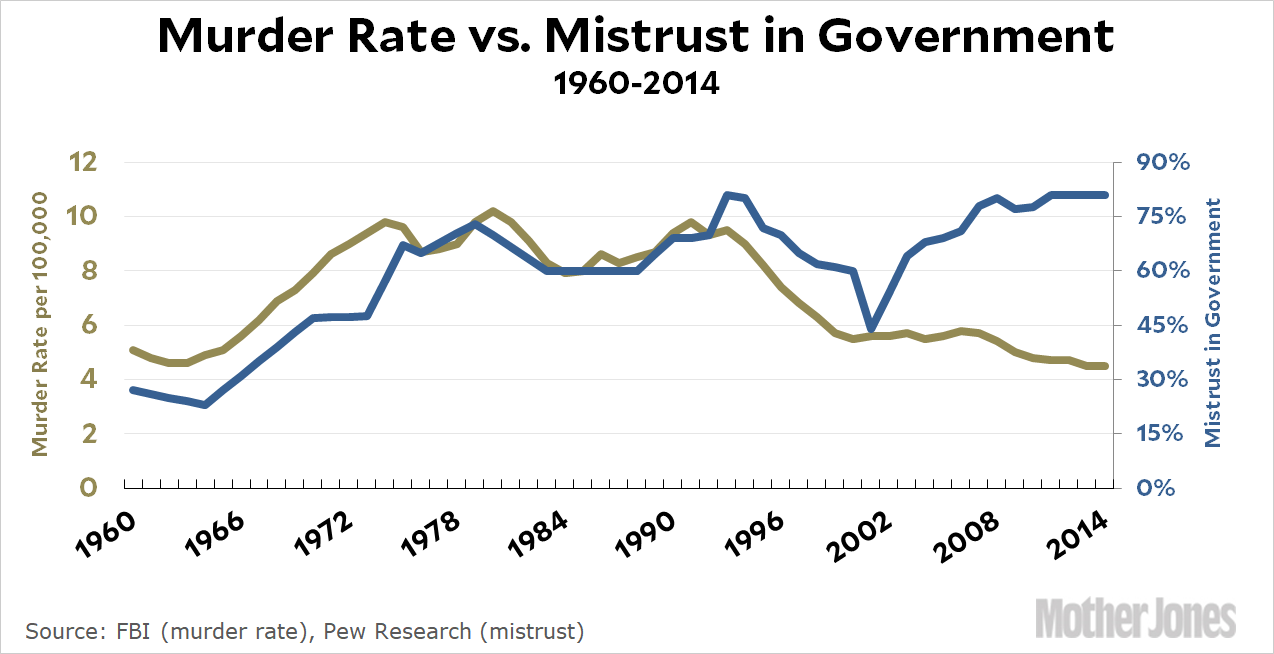
    How about that. But is it true? Here’s a lovely chart with dual y-axes to provide a quick visual check. Note that I’m plotting murder vs. mistrust in government, since that’s supposed to be the actual driving factor:

    It actually fits pretty well until the late-90s, when mistrust started rising again but the murder rate kept going down. (The 9/11 attacks caused a spike downward and improved the fit, but that obviously shouldn’t be taken seriously. The divergence really began around 1998 or so.)

    I have no comment on this, since I haven’t read LaFree’s book and really couldn’t judge it anyway. If anything, I might guess that an increase in murder rates is a factor in driving up mistrust in government, but who knows? As with the lead-crime hypothesis, you need a lot more than a single national correlation to make a case for causality.

    However, it does show the usefulness of dual y-axes in a real world test. If you put these charts side-by-side, it would be hard to see if they match up. If you charted them on a single axis, the murder rate would look like a flat line down around zero. But with a dual axis you can pretty easily get a quick-and-dirty sense of whether there’s anything there. And if you then do the serious analysis to convince yourself that the correlation is real, the chart is a great visual illustration of your thesis.

  • Pick Your Favorite Shutter Speed!

    A couple of days ago I threatened to post a gallery of pictures of the fountain in Trafalgar Square taken at different shutter speeds. That way you can see how they differ and decide which one you like best. Doesn’t that sound like fun? Here you go.

    Just as a note, it’s a little tricky to compare the shortest and longest shutter speeds with the middle two because my camera doesn’t have the range to properly expose them. I adjusted them in Photoshop to look similar to the others, but a more expensive camera would have made them look modestly better.

    Shutter speed: 1/320th of a second

    Shutter speed: 1/4 of a second

    Shutter speed: 1 second

    Shutter speed: 10 seconds

  • Today’s Morning Waker-Upper: The Great Dual Y-Axis Dispute

    Today let’s discuss one of the great blogging controversies of our time. Having dispensed earlier with the Oxford comma (yes) and how to treat the word data (it’s singular), it’s time to take on the great Dual Y-Axis Dispute.

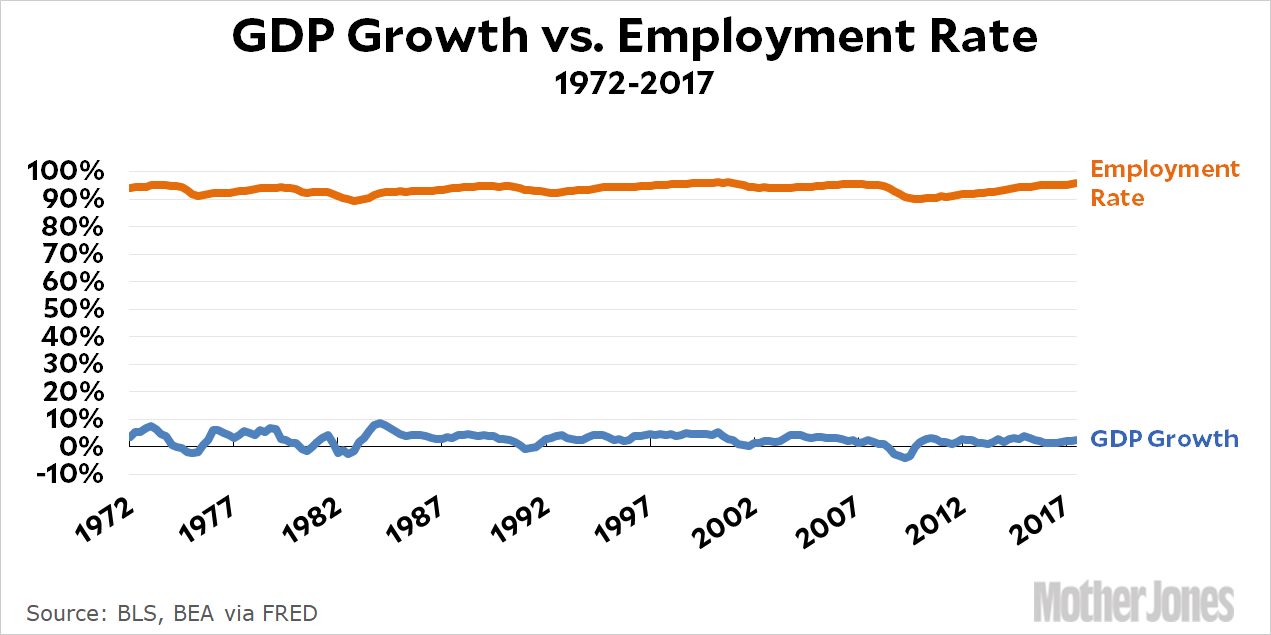
    I’ll illustrate this with a chart I made up. Suppose I want to show that economic growth leads to high employment. Does this do the job?

    This chart does indeed show both GDP growth and employment, but it’s almost impossible to tell if they’re related in any way. To show them both, the chart has to scale all the way to 100 percent, but when the scale is that large you can barely even see the peaks and valleys, let alone whether they’re related. So instead I can do this:

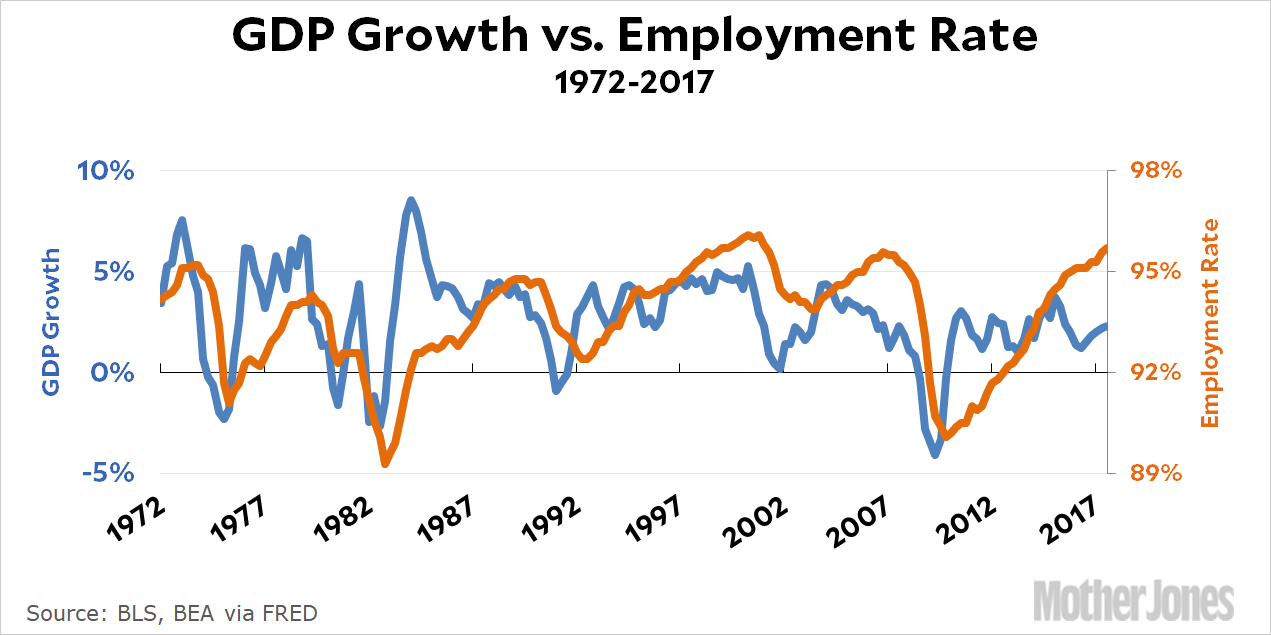
    By using one y-axis for GDP growth (on the left) and another for the employment rate (on the right), you get a good view of how and when each of them has gone up and down. It’s now clear there’s a relationship, as you’d expect, but it’s also not perfect. Why did the huge Reagan expansion produce only modest employment growth? Conversely, why has the modest Obama/Trump expansion produced huge employment growth? Seeing the data presented this way helps to make things clearer and can spur further questions.

    Now, there’s no question that a dual y-axis can be confusing. It’s just not something we’re used to seeing. I always try to make my dual-y charts easier to read by labeling them in different colors so it’s immediately obvious which line goes with which data series. I also do my best to adjust the axes so that the numbers on both sides line up properly with the gridlines.¹

    So the question is: Does the clearer presentation of the relationship make up for the added complexity of the chart? And is there a better way to show it? I’d answer definitely yes to the first question, and usually no to the second. Sometimes there is a better way, but not always. Sometimes it’s either a dual y-axis or nothing.

    And, really, what’s the objection? I’ve been a big fan of chart guru Edward Tufte for decades, and his mantra was to simplify as much as possible and to ruthlessly eliminate “chart junk.” This is good advice, but ever since Tufte became popular it’s become advice that many people take too far (as Tufte himself did later in life, I think). Eventually you get to the point where you’re making it harder to read a chart because it’s become so spare that it lacks the visual cues readers expect. You can eliminate gridlines entirely, for example, but that makes it harder on the reader who wants to look at a chart carefully and get a real sense of the data behind it. When you sacrifice that, you can easily end up with a wiggly curve that’s more just a directional symbol (something is going up, or down, or U-shaped) than a true chart.

    So that’s my take on dual y-axis charts. Yes, they add some clutter and complexity. Yes, they can be confusing to a casual reader. You should do your best to address that. But sometimes it really is the simplest, least cluttered way of making a point. When that’s the case, don’t let either personal dislike or the misplaced authority of Edward Tufte stand in the way of using them.

    ¹FWIW, this is harder than it sounds.

  • Donald Trump Is the First President to Lose a Third of His Staff in Year 1

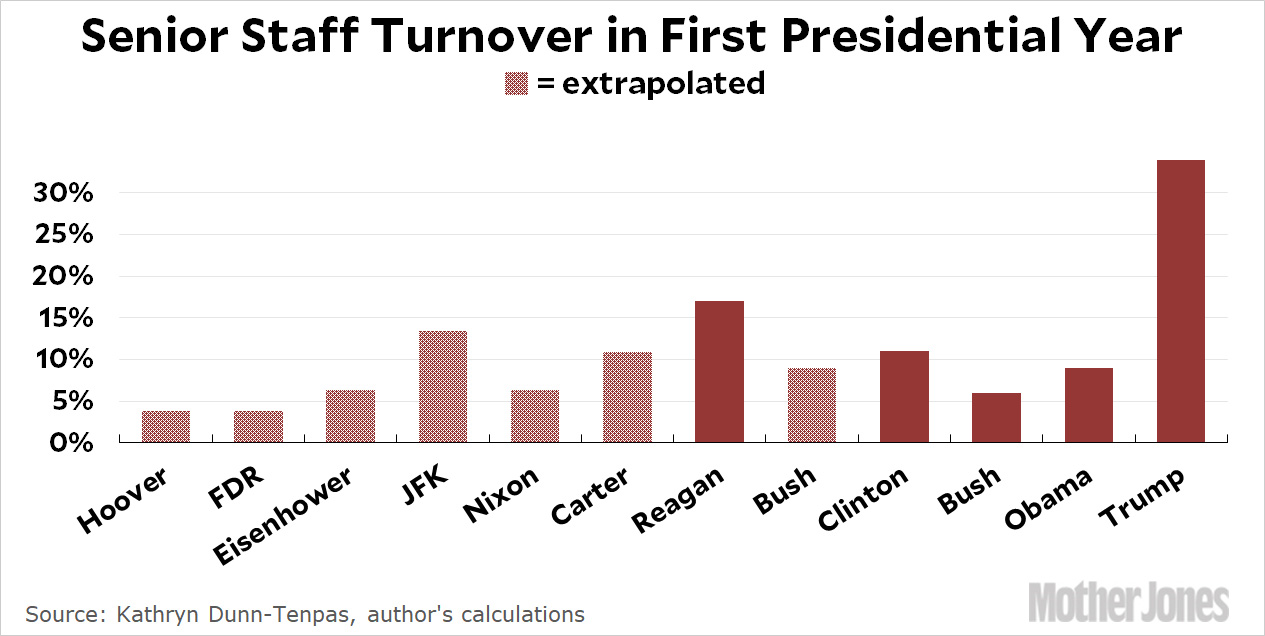
    Unless Donald Trump suddenly decides to fire the entire Oval Office—and you never know, do you?—he’ll end his first year with a turnover rate among senior staff of 34 percent. That’s really high!

    The red bars are from Kathryn Dunn-Tenpas, a political science professor at the University of Pennsylvania who studies presidential transitions. The shaded bars are also from Kathryn Dunn-Tenpas—sort of. I took the numbers from this paper, and then reduced them by a third so they matched up for both Reagan and Clinton, the only two presidents in both datasets. Is this kosher? Of course not. Nobody tell her I did this. But it probably provides a rough historical lens to view this through.

    Anyway, there are no surprises here. Trump has been firing and otherwise losing his senior staff at an astounding clip: about 3-4 times the rate of his predecessors, and double the rate of the previous record holder, Ronald Reagan. I guess he didn’t know how to hire the best people after all.

    It’s also worth noting how Trump has been refilling the swamp. His initial staff was top-heavy with outsiders who were raring to turn Washington DC inside-out. But nearly all of them are gone, replaced by standard-issue Republican swamp dwellers. Gaze into the swamp too long, and it turns out the swamp stares back.

  • Friday Cat Blogging – 29 December 2017

    For our final catblogging post of the year, our local furballs have agreed to give the stage to Tillamook, one of my mother’s cats. I was visiting yesterday because the latest Windows update from Microsoft corrupted her PC so badly it wouldn’t boot. It was a lengthy visit, since I had decided it was time to buy a new computer rather than risk surgery on the old one, which would probably just crash again soon. They’re so cheap, why not? Anyway, the basics are all working now, though I’m sure there will be plenty of fiddly details to attend to over the next few weeks.

    Every time I do something like this I wonder how anyone survives having a PC. I’m pretty PC savvy, but even I had to screw around a fair amount to get all the backups and the email archives and the browser profiles etc. etc. working properly. An ordinary person wouldn’t have had a chance.

    On the bright side, the printer driver apparently installed itself without my even touching it. If only everything else worked so well.

  • In 2018, Can We Please Dial Down the Coverage of President Trump’s Tweets?

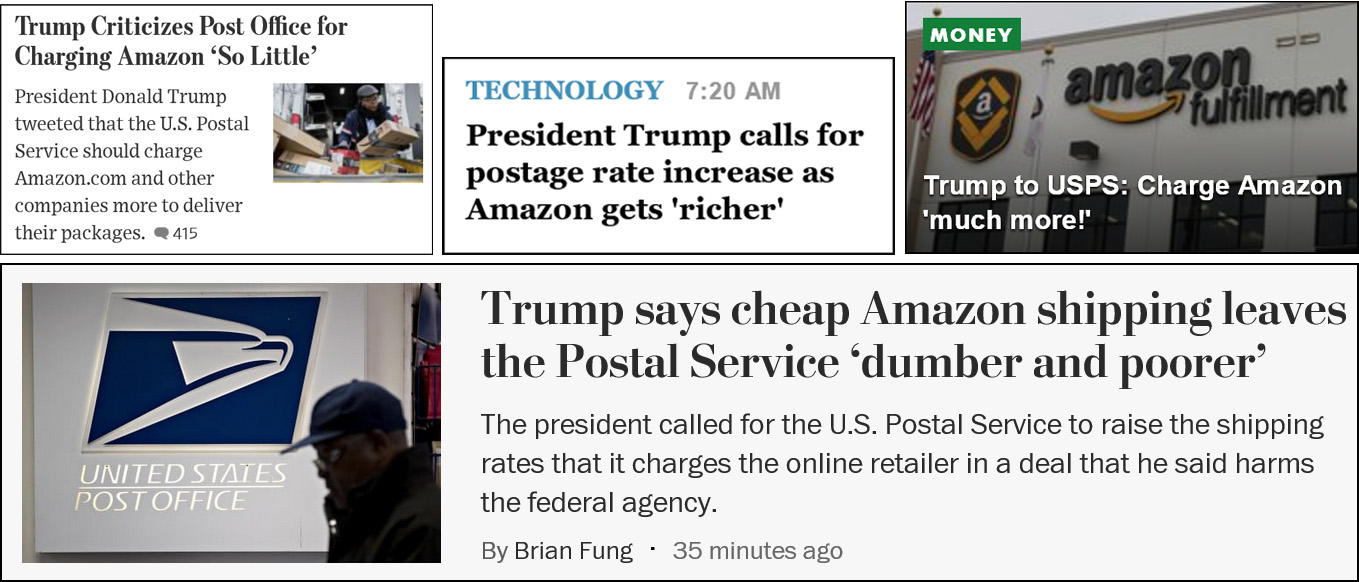
    Here’s something I wish we’d see less of in 2018:

    I get that when the president says something, it’s news. But Donald Trump’s random revenge tweets¹ really don’t rate coverage anymore, and certainly not front-page coverage. Just wait a day or two. If this turns into something truly newsworthy, like members of Congress agreeing that we should raise Amazon’s shipping rates, then run with it. Until then, it’s just more of Trump’s aimless blather, intended to keep people talking about him. It’s not the president of the Unites States truly proposing some kind of policy change. Ignore it.

    ¹In case you don’t get this: Trump hates the Washington Post. The Washington Post is owned by Jeff Bezos. Jeff Bezos is the CEO of Amazon. Therefore Trump hates Amazon.

  • Stop Blaming Boomers. It’s the Greatest Generation That Ruined America.

    Michael Evans/ZUMAPRESS

    I’m running out of things to say this year, so how about this: We should stop blaming boomers for “ruining America.” Everyone is picking on the wrong generation.

    • Start in the 60s and 70s. Boomers were in college then, and they played significant roles in the rise of the civil rights movement, the feminist movement, the environmental movement, the sexual revolution, and the antiwar movement. Those are all good things, right?
    • In the late 70s and 80s, the economic policies that would define the next several decades were put in place. But at this point, boomers were junior analysts and low-level aides. This stuff was put in place by Reagan conservatives, members in good standing of the Greatest Generation.
    • In the 90s, Bill Clinton tried to reverse some of this stuff. It was only half-heartedly, true, but then again, Clinton was only barely a boomer. And he never had a chance anyway. The conservative take on the economy was set in stone by then.

    There’s no question that boomers have benefited from all this stuff, but they’re not the ones who ruined the economy for millennials. You can chalk that up to the Greatest Generation. Maybe we should come up with a new name for these folks?

  • What’s Really Causing the Decline in US Life Expectancy? It’s Not Opioid Overdoses.

    From the Washington Post:

    For the second year in a row, life expectancy in the United States has dropped. It is not hard to understand why: In 2016, there was a 21 percent rise in the number of deaths caused by drug overdoses, with opioids causing two-thirds of them. Last year, the opioid epidemic killed 42,000 people, more than died of AIDS in any year at the height of the crisis.

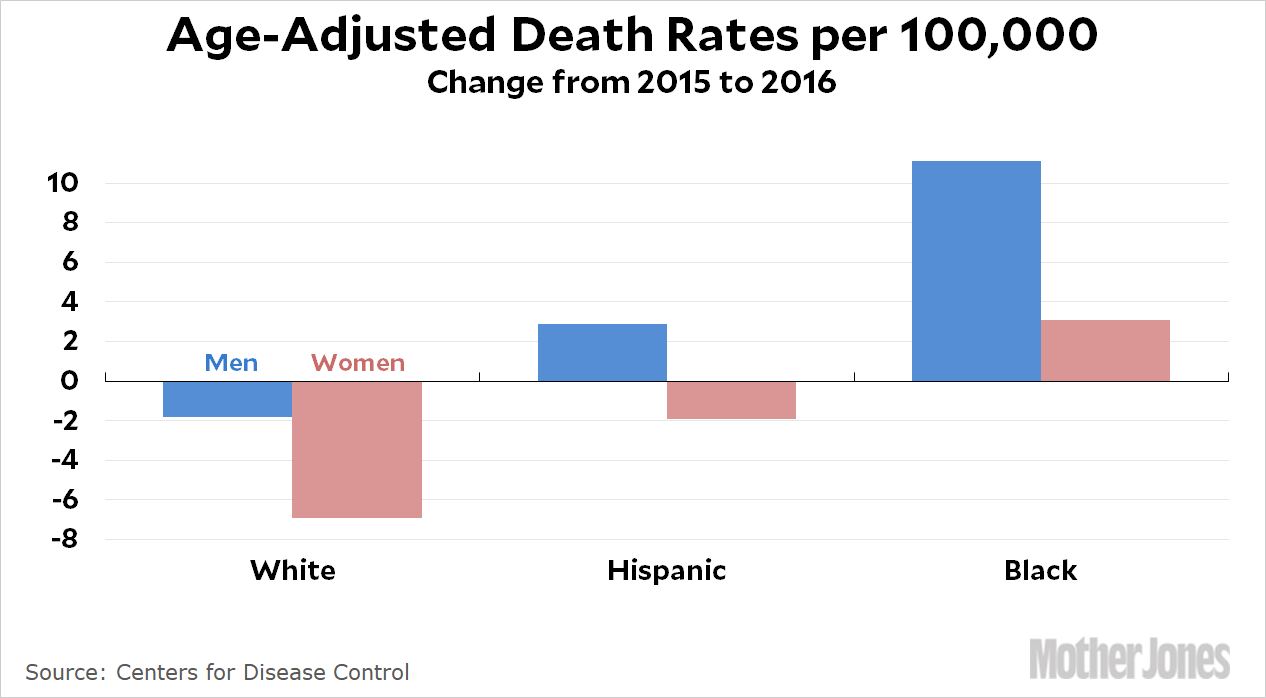
    In 2016, according to the CDC, 2.7 million people died in America. An extra 7,000 deaths from drug overdoses is a tragedy, but surely it’s not enough to move the needle on life expectancy? Besides, opioids are supposedly the “white” drug, and the age-adjusted death rate for whites was down in 2016. It’s the death rate of blacks that went up, especially black men.

    This made me curious, so I looked around to see where this meme came from:

    Here’s the abstract from a JAMA report: “Specific contributions of drug, opioid, and alcohol poisonings to changes in US life expectancy since 2000 are unknown.Here’s a Scientific American synopsis of CDC data:While the authors didn’t draw a direct link, another report also released Thursday by the CDC found an estimated 63,600 people died of opioid overdoses in 2016.” According to this chart, about 11,000 more whites died from opioid overdoses last year compared to 2015, but the white death rate went down. Obviously that didn’t contribute to lower life expectancy. Only about 1,200 additional blacks died of opioid overdoses, and that’s definitely not enough to move the needle on overall life expectancy.

    Maybe I’m missing something in the subtleties of how death rates correspond to life expectancies, but the change in life expectancy seems like it’s being driven by blacks, especially black men. And the number of opioid overdoses among blacks is too small to impact the overall national life expectancy more than a hair. There’s something else going on, but what?