
Counterinsurgency or counterterrorism? Traditionally, the former requires lots of troops in order to root out and defeat a local insurgency while protecting the civilian population, while the latter requires only a small, light force to chase after bad guys and kill them. 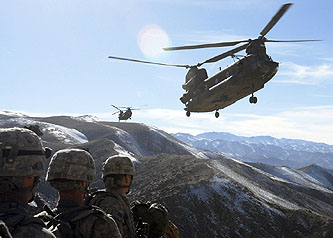 But Spencer Ackerman reports that in addition to top commander Gen. Stanley McChrystal, the two commanders of U.S. special forces, Vice Adm. William McRaven and Vice Adm. Robert Harward, both favor big troop increases to back up their counterterrorism efforts:
The fact that JSOC veterans like McRaven, Harward and McChrystal favor an overall counterinsurgency strategy with a counterterrorism component demonstrates that the military no longer believes distinguishing between the two is tenable in the Afghanistan war. “Special Operations Forces that were traditionally used for counterterrorism better understand how their capabilities fit into a counterinsurgency campaign than perhaps they did when the wars in Iraq and Afghanistan began,” said Andrew Exum, a veteran of both wars and a fellow at the Center for a New American Security who over the summer advised McChrystal in a review of Afghanistan strategy.
….McRaven runs a secretive detachment of Special Forces known as Task Force 714 — once commanded by McChrystal himself — that the NSC staffer described as “direct-action” units conducting “high-intensity hits.”….In a move signaling his own importance to McChrystal, Harward will arrive in Afghanistan later this month to command a new task force, known as Task Force 435, that will take charge of detention facilities in Afghanistan.
….The advice of McRaven and Harward to the White House strategy review, the [NSC] staffer said, was to push for a “heavy, heavy, heavy COIN [counterinsurgency] presence” in select population centers like the capitol city of Kabul, while relying on new or expanded counterterrorism units like Task Force 714 for hunting and killing terrorists outside of those population centers — particularly in areas like the porous border between Afghanistan and Pakistan, a key transit point for Taliban and al-Qaeda-affiliated insurgents.
Basically, there seems to be no support anywhere in the military for a light footprint in Afghanistan. In a way, that’s no surprise: why not get as many troops as you can, after all? But it also highlights Obama’s dilemma: regardless of where his heart is, it’s almost impossible to defy military advice when it’s nearly unanimous. Picking one side vs. another is one thing, but trying to impose your own strategy on the entire bureaucracy is quite another. It sounds like the light footprint never really had a chance.
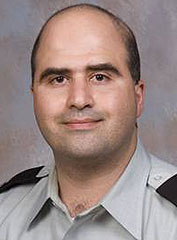 the military could encounter from Muslims conflicted about fighting in the Muslim countries of Iraq and Afghanistan, according to a copy of the presentation obtained by The Washington Post.
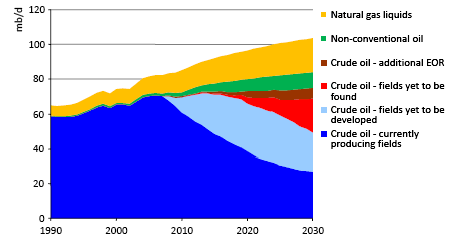 but the fact was that there was not as much oil in the world as had been admitted. “We have [already] entered the ‘peak oil’ zone. I think that the situation is really bad,” he added.
 The long arm of the law has reached out and
 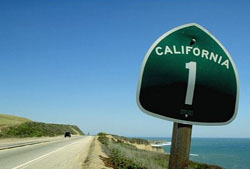 For years, a shifting alliance of activists here in California has been pressing the idea of calling a constitutional convention to try and cut through the partisan tangle in Sacramento. Unfortunately, since only the legislature can call a constitutional convention, the partisan tangle in Sacramento stands in the way of cutting through the partisan tangle in Sacramento.
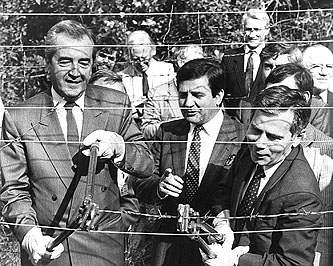 This isn’t exactly a forgotten part of history, but still, it’s nice to see reporter Mitchell Koss reminding us today that although the fall of the Berlin Wall was the most dramatic aspect of the end of Soviet domination of Eastern Europe, it wasn’t the original trigger. In the LA Times today, he writes about the changes in Hungary between a visit in 1987, “when it seemed as if the Soviet presence in Eastern Europe would last for a thousand years,”



