• Michelle Obama’s Pitch to Disaffected Democrats

    The passage below was only a tiny part of Michelle Obama’s speech tonight, but I think the entire rest of the address, all 3,000 words of it, had only a single purpose: to make this one tiny part resonate by the time she got to it.

    I love that we can trust Barack to do what he says he’s going to do, even when it’s hard — especially when it’s hard….He reminds me that we are playing a long game here — and that change is hard, and change is slow, and it never happens all at once.

    ….And if so many brave men and women could wear our country’s uniform and sacrifice their lives for our most fundamental rights, then surely we can do our part as citizens of this great democracy to exercise those rights. Surely, we can get to the polls and make our voices heard on Election Day.

    That was it. That was the whole point of the speech: to convince disappointed Obama fans that her husband was worth getting off their butts and working for again. Change is hard. It happens one small step at a time. We’re playing a long game and you should be ashamed of yourself if you feel like quitting just because Barack hasn’t won every battle. Now get out there and vote.

    The rest of the speech was extremely well crafted and Michelle Obama delivered it like a pro. It hit all the right notes. There were no gratuitous partisan attacks (unless her remark that “the truth matters” was a subtle barb). I’ll bet it gets high marks in the overnight polling. But as good as the rest of it was, it was, in the end, just a superstructure designed to provide emotional support for the four sentences above. If they hit home, the speech did its work. If they didn’t, it failed.

  • Driverless Cars Coming Soon to a State Near You (If You Happen to Live Near California)


    Google insists that its technology for driverless cars is just about ready for prime time. Apparently the California legislature, which a few months ago was still hung up on liability issues, now agrees:

    SB 1298 from Sen. Alex Padilla, D-Van Nuys, was passed unanimously by the Senate Wednesday night following the Assembly’s 74-2 approval Tuesday….The bill charges the DMV by January 2015 with determining standards for cars that would essentially operate on autopilot, since such technology is so new that the state’s vehicle code never mentions driverless cars.

    That’s pretty amazing. Not the technology, mind you, but the fact that California’s Democrats and Republicans managed to agree on something virtually unanimously. Normally I wouldn’t put money on them coming together to pass a Mother’s Day resolution.

    I’m planning to buy a new car later this year, and I usually keep my cars for about ten years before I replace them. That said, I’m willing to bet that this is the last car I ever buy that I drive myself.

  • What Could Obama Do With a Second Term?

    <a href="http://www.flickr.com/photos/barackobamadotcom/5132666931/">Barack Obama</a>/Flickr


    The punditocracy seems to be in agreement: Barack Obama can’t just run a negative campaign designed to eke out a slim victory over a bruised and ultimately punch-drunk Mitt Romney. He also needs to offer a vision. But what? David Brooks offers three alternatives:

    • Global warming
    • Fixing broken capitalism
    • Deficit reduction

    James Wimberley offers two alternatives:

    • Global warming
    • Campaign finance reform

    Andrew Sullivan offers two alternatives:

    • Deficit reduction
    • “Radical” tax simplification and regulation reform

    It’s discouraging that none of these seem remotely feasible. Global warming is unquestionably the most important item on these lists, but a serious climate change bill couldn’t even get close to passing two years ago, when Democrats had a big majority in the Senate. There’s no plausible argument that Obama could succeed on this front during a second term any more than King Canute could keep the tide from coming in. (An unfortunately apt analogy.)

    So how about fixing broken capitalism? It’s not clear to me that Obama thinks capitalism is seriously broken, so that seems pretty unlikely. Campaign finance reform? Liberals have been dashing themselves against the shoals of CFR for four decades now, and have failed utterly. In fact, they’ve not only made no progress, but things are arguably quite a bit worse today than they were when the CFR battles started. What’s more, recent Supreme Court decisions have considerably narrowed the scope of what Congress could do even if it wanted to.

    So that leaves deficit reduction and tax reform. Obama, as near as I can tell, really does think long-term deficit reduction is important. His otherwise inexplicable behavior during the debt ceiling showdown certainly suggests that he takes it seriously. But there’s a reason his efforts last year failed: He won’t accept a package without tax increases and Republicans won’t accept one with tax increases. I have no reason to think that either side is going to budge on this.

    So that leaves tax reform. This has the virtue of not being flat-out impossible. Unfortunately, it has the drawback of being soul-crushingly boring. I’m willing to predict right here and now that no presidential candidate in history will ever ride to victory on the coattails of tax simplification and regulation reform.

    Personally, I’d like to combine tax reform and climate change: Cut personal and corporate tax rates (possibly along with simplification) and make the cuts revenue neutral via a substantial carbon tax. Even better: Don’t make it revenue neutral, and use the additional revenue to fix Social Security and rein in the long-term deficit. That would combine tax reform, climate change, entitlement reform, and deficit reduction all in one package. Booyah!

    What’s more, this is a plan that should appeal to conservatives, since it would cut marginal tax rates and make up for it with something that’s essentially a consumption tax. It would also attack carbon externalities, which is extremely congenial to orthodox conservative economics, and reduce the long-term deficit, ditto. And there’s more! It would broadly stimulate investment in clean energy without picking winners and losers, which ought to be a good thing even for conservatives, and it would do it in a very predictable way, which would be good for business.

    Of course, this would require conservatives to admit that climate change exists, and that doesn’t seem to be on the horizon. It would be different if we were dealing with actual conservatives: something like this might seem like a very appealing compromise. Unfortunately, it’s been a long time since we had genuine conservatives to deal with. The bright-eyed true believers of today’s Republican Party are something else entirely.

    So I leave it to the hive mind. Are there any other bright ideas floating around out there? Are there any big visions Obama could offer that are both inspiring and politically conceivable?

  • Who Are the Worst Tax Dodgers in Greece?

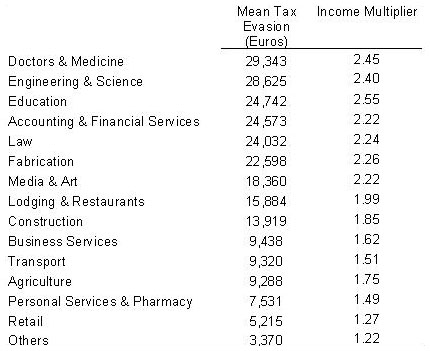
    Fascinating tidbit of the day: Tax evasion is so widespread and so culturally embedded in Greece that loan officers in banks have standard multipliers they use to convert reported income into real income. If you’re a doctor, for example, they assume your income is 2.45x what you report to the tax man. If you own a restaurant, they multiply by 1.99. If they didn’t do this, they’d never approve any loans at all because no one would have enough income to qualify.
    It just goes to show how people manage to adapt to almost anything. But why the different multipliers for different industries? The Economist summarizes the paper that came up with the multipliers:

    One hypothesis is that people in industries which generate a bigger “paper trail”—because they use more intermediate goods as inputs, for example—are at greater risk of being caught and therefore evade tax less. The authors do indeed find that industries that generate lots of traceable information have lower levels of evasion. But they also find another interesting correlation, between the professional backgrounds of Greek parliamentarians and the industries with high levels of tax evasion. Stripping out lawyers, who have a disproportionately nasty habit of becoming politicians, the three most tax-dodging professions account for about half the votes among Greek MPs. That, the authors say, might explain a lack of political willpower on the issue of tax evasion.

    Apparently the retail industry in Greece desperately needs to elect more of its own to parliament. A multiplier of 1.27 is pathetic.

  • Quote of the Day: Paul Ryan Misses by a Factor of 30

    From Paul Ryan, on the stump in North Carolina yesterday:

    In 1980 under Jimmy Carter, 330,000 businesses filed for bankruptcy. Last year, under President Obama’s failed leadership, 1.4 million businesses filed for bankruptcy.

    It turns out this isn’t true. In 1980 there were 43,000 business bankruptcies. Last year there were 47,000.

    But here’s what’s weird: Ryan’s numbers are right if you include both personal and business bankruptcies. So why not just say that? Why not just say “individuals and businesses” in the sentences above. It would still have the same impact. There’s really no reason to mislead his audience this way.

    It’s sort of like his marathon whopper. Why claim he ran a sub-three-hour marathon? To convince people that he’s in really good shape? Well, he is in really good shape. He doesn’t need to bother inventing weird stuff like this to make that point. And no one’s going to change their vote because of his marathon prowess anyway.

    I dunno. Maybe Ryan doesn’t have the steel trap mind everyone thinks he does. Maybe he forgets a lot of stuff. Maybe he likes his applause lines a little too much. Or maybe he’s just really sloppy. It’s a little hard to figure out.

  • Factlet of the Day: Prosecuting Bribery Leads to More Prosecutions for Bribery


    Here’s a fascinating little factlet. The New York Times reports today that most big prosecutions under America’s anti-bribery law are against foreign companies. Siemens, for example, paid a fine of $800 million even though it’s a German company and the bribes in question were paid to Argentinians. Their American presence, however, was big enough to make them liable under U.S. law. American companies argue that this is a matter of leveling the playing field: they’re at a disadvantage competing against companies that feel free to pay bribes, so they’re eager for the Department of Justice to use its authority to put a stop to it.

    But Henry Farrell points to a paper that concludes that these prosecutions also have a knock-on effect:

    Holding all other variables constant, the odds of a country enforcing its first case [of bribery] are twenty times greater if a country has experienced extraterritorial application of the FCPA as compared to countries that have not.

    “In other words,” says Henry, “many countries that have anti-bribery legislation on their books are disinclined to enforce this legislation against their firms, until the US makes an issue of prosecuting their firms for them. This results in a remarkably large rise in the likelihood of subsequent enforcement.”

    I have no broader point to make about this at the moment. I just thought it was interesting.

  • My Personal Stake in the Election


    Ramesh Ponnuru writes today that if Barack Obama wins reelection, nothing will change. Republicans will not feel chastened one bit. Instead, they’ll conclude that they can’t win with a faux conservative like Romney, and will spend the next four years amping up the obstruction machine while they wait for Paul Ryan or Marco Rubio to save them. It will be gridlock as far as the eye can see.

    I think he’s probably right. For the most part, the American public has a choice this November between four years of Republican radicalism and four years of nothing much changing. But Ed Kilgore points out at least one major change that Americans can expect if Obama is reelected:

    For the record, there’s at least one area of highly significant, powerful activity that will occur automatically if Barack Obama is re-elected, even if Republicans make congressional gains and convince themselves to go even crazier: the Affordable Care Act will be implemented, and 30 million or so Americans without health insurance will be covered, making the big step back towards “individual responsibility” for health care conservatives crave that much less likely.

    This is true. And here’s an interesting thing: for the first time that I can remember, this means that I have a personal stake in the election. It’s not just that I find one side’s policies more congenial in the abstract, but that one policy in particular could have a substantial impact on my life.

    You see, I’ve never really intended to keep blogging until I’m 65. I might, of course. Blogging is a pretty nice job. But I’d really like to have a choice, and without Obamacare I probably won’t. That’s because I’m normal: I’m in my mid-50s, I have high blood pressure and high cholesterol, a family history of heart trouble, and a variety of other smallish ailments. Nothing serious, but serious enough that it’s unlikely any insurance company would ever take me on. So if I decided to quit blogging when I turned 60, I’d be out of luck. I couldn’t afford to be entirely without health insurance (the 4x multiplier that hospitals charge the uninsured would doom me all by itself), and no one would sell me an individual policy. I could try navigating the high-risk pool labyrinth, but that’s a crapshoot. Maybe it would work, maybe it wouldn’t.

    But if Obamacare stays on the books, I have all the flexibility in the world. If I want to keep working, I keep working. If I don’t, I head off to the exchange and buy a policy that suits me. No muss, no fuss.

    So yes, this election matters, and it matters in a very personal way. It does to me, anyway. It’s not just about gridlock as far as the eye can see.

  • Paul Ryan Is a Tax Hawk, Not a Deficit Hawk


    Are Republicans—and in particular, Paul Ryan—dedicated deficit hawks? Let’s make this simple. Here’s a timeline:

    2001-08: Republicans, including Ryan, repeatedly vote to increase the deficit during the George Bush administration. This includes votes in favor of two huge tax cuts, two huge wars, and a big Medicare expansion, none of which are paid for.

    January 20, 2009: Barack Obama is inaugurated.

    October 2009: After nine months of focusing on stimulus and job creation, Obama begins his famous “pivot” toward long-term deficit reduction.

    January 2010: A Senate proposal to create a bipartisan deficit commission is filibustered. Politico explains what happened: “The tepid support from Democratic leaders contributed to the loss, but more decisive was the number of Republicans switching under pressure from their party to block the measure. Six Republicans who had co-sponsored the bill as recently as last month voted against it.”

    One day later: In his State of the Union address, Obama announces that he’ll act on his own: “I’ve called for a bipartisan fiscal commission, modeled on a proposal by Republican Judd Gregg and Democrat Kent Conrad….Yesterday, the Senate blocked a bill that would have created this commission. So I’ll issue an executive order that will allow us to go forward, because I refuse to pass this problem on to another generation of Americans.” This is the birth of the Bowles-Simpson Commission.

    March 2010: Republicans appoint six members to the commission. One of them is Paul Ryan.

    December, 2010: The Bowles-Simpson commission fails to agree on a plan. All three of the House Republican appointees vote against it, including Paul Ryan.

    July 9, 2011: House Speaker John Boehner abandons negotiations with President Obama over an ambitious plan to cut the deficit by $4 trillion. The Washington Post explains why: “Boehner (R-Ohio) told Obama that their plan to ‘go big’….was crumbling under Obama’s insistence on significant new tax revenue.” One of the key opponents of compromise on taxes was Paul Ryan.

    July 22, 2011: Boehner abandons yet another set of deficit negotiations when it becomes clear that House Republicans won’t support tax increases of any kind. Sam Stein quotes a Republican aide explaining that Ryan was, once again, one of the key opponents: “There were certain people … who thought the pursuit of the grand bargain was a useless pursuit because it could never pass anyway. Ryan was one of them. Ryan is opposed to tax increases.”

    August 2012: The Romney/Ryan campaign explicitly endorses tax cuts, but declines to take a stand on how they would pay for this by closing tax loopholes. The campaign also explicitly rejects any cuts in defense spending. Their Medicare plan proposes no cuts at all for a decade, and after that it proposes the same growth rate cap as Obamacare. However, unlike Obamacare, it doesn’t include any plausible mechanisms for meeting that cap. Social Security reform is not addressed at all.

    Actions speak louder than words, and I think you can draw your own conclusions from Ryan’s actions. Aside from a fondness for scary charts, there’s really nothing in his career that demonstrates any serious concern with the deficit. What he has demonstrated is consistent opposition to tax increases under any and all circumstances. I think you can also fairly say that he has no problem with spending cuts to social programs.

    So that’s that. Ryan wants to cut taxes on the rich and cut spending on the poor. That’s his real preoccupation, not deficit reduction.

  • Presidential Campaigns Will Soon Be Done Entirely in CGI

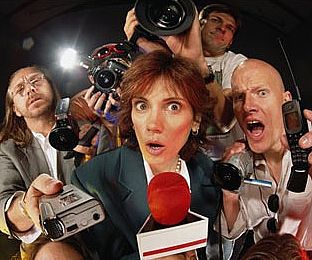
    Dylan Byers reports today on an open secret: the 2012 campaign is a relentless, joyless exercise in trench warfare, and reporters hate it. So what’s the solution?

    Some reporters believe it is just a matter of waiting out 2012 in hopes that 2016 will see the return of 2008-level excitement….Others fear that with every election cycle, campaigns are further battening down the hatches, setting precedents of media control that ultimately render the media powerless to do anything but wait at the mercy of a scripted quote, like dogs waiting for scraps.

    Bingo. This has been going on for years, and it’s accelerated dramatically over the past decade or two. With every campaign, candidates push the envelope a little more, testing the boundaries of how far they can restrict press access. The answer, I think, is pretty plain: they could literally allow the press no access at all and it wouldn’t hurt them. The only reason they still allow the little bit they do is inertia. Despite all the evidence to the contrary, they still find it hard to believe they could really get away with shutting out reporters completely.

    But they could. The mainstream media, by its own rules, isn’t really allowed to gripe about access, and anyway, nobody listens when they do. What’s more, the days when candidates needed press coverage are now gone. During the primaries, when money is still scarce, it’s a different story: free media attention is still a valuable commodity. But once the general election campaign starts, campaigns can reach everyone they need to reach, more safely and with more pinpoint control, via partisan media, television ads, data mining, debates, short hits on local TV, and social media. In those forums, they can pretty much say anything they want, without having to field any embarrassing questions about whether they have their facts right and without fear of inadvertent gaffes. The truth is that the downside risk of talking to reporters is now greater than the upside benefit of the coverage they give you.

    This dynamic has already gone pretty far. John McCain and Barack Obama both ran very buttoned-up campaigns in 2008, and this year both Romney and Obama are famous for their spectacular lack of availability to the national press corps. They do occasional formal sit-down interviews, which are pretty safe, and — maybe — take a few questions a month. That’s it. And guess what? The sky hasn’t fallen. It turns out they can get away with it just fine.

    By 2020 campaigns will be like studio bands that never do live shows. They’ll be conducted entirely in a bubble, with national reporters allowed no access whatsoever. Doesn’t that sound like fun?