• Sadly, 20-Second Cell Phone Charging Probably Still Just a Dream


    Last night, I wrote about Ionut Budisteanu, a Romanian teenager who won an Intel science award by inventing some cool technology that could make driverless cars cheaper. Today, Matt Yglesias picks up on this story, but also tells us about another award winner:

    Eesha Khare, an 18 year-old from California, also did something with some major potential commercial applications and “developed a tiny device that fits inside cell phone batteries, allowing them to fully charge within 20-30 seconds.” We’re told that “Eesha’s invention also has potential applications for car batteries.”

    I hadn’t noticed that, but a bit of googling produced several dozen breathless media reports about a new invention that will charge your cell phone in 20 seconds. I was a little skeptical: this didn’t sound like merely an Intel award winner, it sounded like a patentable invention that would turn Eesha Khare into an instant billionaire. So I checked into it a bit.

    Long story short, it turns out that Khare did some interesting work in supercapacitors. This is obviously impressive for a teenager, but no, it’s not a fabulous new invention. Lots of companies have been working on supercapacitors for a long time, and lots of companies have investigated the specific chemistry that Khare used. The account here is perhaps a bit more dyspeptic than it should be, but I suspect the wrap-up is about right: “Add it all up and the central conclusion we can draw from all of this is that the mainstream media is stupid.”

    Which is too bad. It would be nice to charge my cell phone in 20 seconds and my tablet in two minutes. Oh well.

  • Mitch McConnell’s Friends Are Being Oppressed By Liberal Thugs


    Ed Kilgore is impressed with the flexibility of Mitch McConnell’s mind:

    You have to hand it to Mitch McConnell. While other scandal-mad Republicans are off on a wild goose chase that could well end in 1998, McConnell’s focused on exploiting scandals to promote his very favorite cause, and his special gift to the corruption of American politics: hiding the identity of big campaign donors. His op-ed in today’s Washington Post aims at convincing us that conservative donors obviously need anonymity because they will otherwise be persecuted by Obama-inspired bureaucrats and union thugs.

    In fairness, this has actually been the conservative party line ever since they did an abrupt U-turn after Citizens United and decided that disclosure of donors’ identities wasn’t something they approved of after all. From the very beginning, their claim has been that America’s right-wing millionaires need to keep their political affiliations private because otherwise liberals will hound them into….something. Even now, McConnell can’t really provide any specifics of just what would happen if donors had to make their donations public, and is instead reduced to muttering vaguely about Chicago thuggery, a “culture of intimidation,” and favoritism in awarding government contracts:

    These tactics are straight out of the left-wing playbook: Expose your opponents to public view, release the liberal thugs and hope the public pressure or unwanted attention scares them from supporting causes you oppose. This is what the administration has done through federal agencies such as the FCC and the FEC, and it’s what proponents of the Disclose Act plan to do with donor and member lists.

    I’ll give him this much: supporting political causes does indeed expose you to pressure from people who don’t like your causes. This goes both ways, of course, and conservatives are just as fond of boycotts and picketing and demagoguery as lefties are. The question is why McConnell thinks not just that speech should be free of government interference, but should also be free of any consequences whatsoever. The marketplace of ideas is weak tea indeed when no one has any idea of just who’s saying what.

  • High School Student Slashes Cost of Driverless Cars


    Ionut Budisteanu, a high-school student from Romania, has invented a system that slashes the price tag of driverless cars:

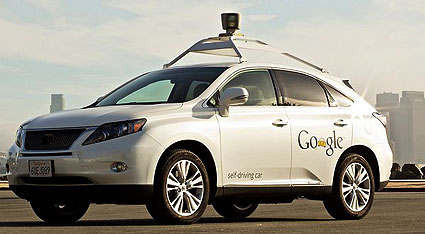
    “The most expensive thing from the Google self-driving car is the high resolution 3-D radar, so I was thinking how I could remove it,” he told NBC News. His solution relies on processing webcam imagery with artificial intelligence technology to pick out the curbs, lane markers, and even soccer balls that roll onto the road. This is coupled with data from a low-resolution 3-D radar that recognizes “big” objects such as other cars, houses, and trees.

    All of this information is collected and processed real time by a suite of computers that, in turn, feed into a “supervisor” computer program that calculates the car’s path and drives it down the road….The high-resolution 3-D radar used by Google, he noted, costs about $75,000. His whole system should work for no more $4,000.
    Actually, it’s not the cost savings that are interesting here. Google’s engineers are undoubtedly well aware of cheaper alternatives to their high-res radar, but have stuck with their current system because it provides better feedback and price is no object when you’re still in the prototype stage. What’s interesting is the fact that Budisteanu’s system essentially replaces Google’s expensive hardware with cheap processing power. This is one of the keys to the future of artificial intelligence. As recently as a few years ago, Budisteanu couldn’t have done what he did because the processors then available wouldn’t have been powerful enough. Today they are, which means that brute force plus some software can do the same thing as Google’s sophisticated radar.

    Brute force isn’t the answer to all AI problems, but lots of processing power is a minimum necessary component. Without it, you simply have no chance of coming close: a hamster-sized brain can’t solve differential equations no matter what you feed it. But once you get a bigger, faster brain, possibilities start to open up that seemed impossible only a short time before. Budisteanu’s invention is a pretty good example of this.

  • Making Deposits in the Sleep Bank


    Today, the Wall Street Journal tells us that, within limits, extra sleep can make up for missed sleep. Plus this:

    Recent data suggests that banking sleep in advance of a long night can actually offset upcoming sleep deprivation. “If you knew you were going to give birth on a particular day, for example, you could sleep for 10 hours a day for multiple days before the event, and be fine,” he says. Just plan ahead.

    Just plan ahead! Who are these people, anyway? Can most of us really just choose to sleep ten hours for a few days in a row even if we don’t really need it? Hell, I can’t do it even when I do need it. Which has been for approximately the past 20 years.

    On the other hand, I’m also pretty unlikely to be giving birth anytime soon, so I guess it all evens out.

  • Here’s How to Fool People Into Thinking They Know More Than They Do


    Which do you learn more from? A presenter with good speaking skills and professional visual aids, or someone reading badly from prepared notes? Oddly enough, a team of psychologists actually decided to test this. Their test subjects, as usual, were university students:
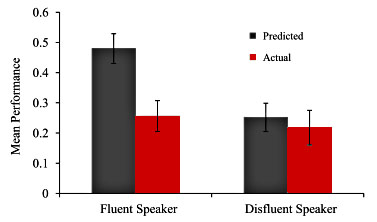
    Afterwards the students answered questions about how much they felt they had learned. As expected, students who had watched the lecturer with better presentation skills expected to remember more of the material, believed that they understood the material better, and rated their interest and motivation more highly than the students who watched the dud instructor.

    The twist came when the students took a test that investigated their memory and understanding of the Calico cats concept. The students who watched the skillful (or “fluent”) lecturer barely outperformed the students who watched the “disfluent speaker.” But they did much poorer than they expected to do, whereas the other group did about as well as they expected.

    If these results hold up, it means that flashy, TED-style lectures don’t actually impart any more knowledge than boring old-school lectures. But they do make you more confident that you learned something. Is that worthwhile all by itself? Or is it better to have a proper grasp of just how much you really know? I’ll leave that as an exercise for the reader.

    POSTSCRIPT: And what’s this business about calico cats? Well, that was the subject of the test lecture. Roughly speaking, cats are white by default, and their two sex chromosomes each add a color to their coat. Color is carried on the X chromosome, so female (XX) cats can potentially be tricolored (orange, black, and white). Male (XY) cats max out at two colors (white plus one other). So with rare exceptions, only female cats can be calicos.

    POSTSCRIPT 2: Are you thirsting for a political angle to this? Well, Fox News is pretty well known for pioneering a much flashier, more visual approach to the news. Does this turn Fox watchers into tedious blowhards who think they know more than anyone else even though they don’t? I report, you decide.

  • Looking For a Benghazi Talking Points Villain? It Was David Petraeus, Not Barack Obama


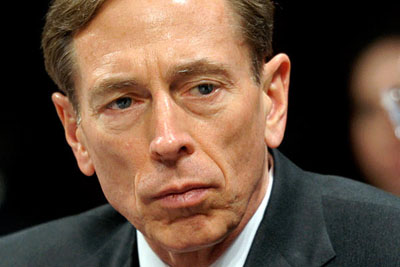
    After reading through the Benghazi “talking points” emails and doing some additional reporting, Scott Wilson and Karen DeYoung confirm what’s been pretty obvious for a while now. The House committee that originally asked for the talking points wanted only some basic facts so that no one would mistakenly disclose classified information to the press, but CIA Director David Petraeus—“a master of the craft of media cultivation”—understood the reputational stakes immediately and acted accordingly:

    A close reading of recently released government e-mails that were sent during the editing process, and interviews with senior officials from several government agencies, reveal Petraeus’s early role and ambitions in going well beyond the committee’s request, apparently to produce a set of talking points favorable to his image and his agency.

    The information Petraeus ordered up when he returned to his Langley office that morning included far more than the minimalist version that Ruppersberger had requested. It included early classified intelligence assessments of who might be responsible for the attack and an account of prior CIA warnings — information that put Petraeus at odds with the State Department, the FBI and senior officials within his own agency.

    This was especially galling to the other participants in the review process because (a) the Benghazi annex was a CIA installation and CIA was responsible for its security, (b) the talking points were supposed to be limited to what we knew about the attack, and (c) the whole point of producing the talking points was to avoid endangering the investigation by revealing classified information about suspects and methods.

    In the end, as Wilson and Young point out, “The only government entity that did not object to the detailed talking points produced with Petraeus’s input was the White House, which played the role of mediator in the bureaucratic fight that at various points included the CIA’s top lawyer and the agency’s deputy director expressing opposition to what the director wanted.” This entire controversy has been much ado about nothing from the beginning, but if you absolutely insist on singling out a villain, the choice is now pretty obvious. David Petraeus was the Machiavellian manipulator of the narrative here, not Barack Obama.

  • The Most Absurd Religious War in Geek History is in the News Today


    The creator of the GIF, Steve Wilhite, caused a firestorm today by weighing in on the correct pronunciation of his creation:

    He is proud of the GIF, but remains annoyed that there is still any debate over the pronunciation of the format. “The Oxford English Dictionary accepts both pronunciations,” Mr. Wilhite said. “They are wrong. It is a soft ‘G,’ pronounced ‘jif.’ End of story.”

    This is not the first time Wilhite has handed down this decree. It’s never been the end of the story before, and needless to say, it was not the end of the story this time either. But I bring this up not to declare my own allegiance, but to ask a different question. I need some honest input from old timers here.

    As near as I can remember, controversy over the pronunciation of GIF has existed practically from the day of its birth. Nevertheless, my recollection is that 20 years ago, most people pronounced it JIF. The hard-G contingent was a distinct minority. But that seems to have changed over time. Today, my sense is just the opposite: most people pronounce it with a hard G, and the Jiffies are now a small rump fighting a rearguard action.

    Everyone has such strong opinions about what the pronunciation should be that it’s hard to solicit opinions on the purely empirical question of how it has been pronounced. But I’m going to ask anyway. Please don’t bother answering unless you were born before 1970. For those of you who were, and especially for those of you who worked in the tech industry in the 80s and 90s, what’s your recollection? Has the favored pronunciation changed, or has the hard G always been the more popular choice?

  • How the World’s Dullest Story Became the Target of a Massive Leak Investigation


    Four years ago, Fox News reporter James Rosen wrote a story saying the CIA had learned that North Korea planned to carry out a nuclear test if the UN approved additional sanctions:

    What’s more, Pyongyang’s next nuclear detonation is but one of four planned actions the Central Intelligence Agency has learned, through sources inside North Korea, that the regime of Kim Jong-Il intends to take — but not announce — once the Security Council resolution is officially passed, likely on Friday. The other three actions include the reprocessing of all of the North’s spent plutonium fuel rods into weapons-grade plutonium; a major escalation in the North’s uranium-enrichment program; and the launching of another Taepodong-2 intercontinental ballistic missile.

    The Justice Department immediately launched a leak investigation, which culminated in charges against Rosen’s source, Stephen Jin-Woo Kim, an analyst at the Lawrence Livermore National Laboratory who had been detailed to the State Department. As part of this investigation, DOJ tracked Rosen’s movements and subpoenaed his phone records. Journalists are apoplectic about this, but Jack Shafer wonders just what Rosen thought he was doing:

    Although Rosen’s story asserts that it is “withholding some details about the sources and methods … to avoid compromising sensitive overseas operations,” the basic detail that the CIA has “sources inside North Korea” privy to its future plans is very compromising stuff all by itself. As Rosen continues, “U.S. spymasters regard as one of the world’s most difficult to penetrate.”

    Hmmm. There’s really no other way to get information this detailed except from a source inside North Korea, so it’s not clear to me that Rosen really gave anything away with that line. At the same time, it’s not clear why Rosen published this story at all. As Michael Tomasky says:

    No offense intended to Rosen, but…I don’t even see where that’s such big news. Of course North Korea was going to do something to protest a UN sanctions vote. Do what? Well, missile tests is what it’s been doing for the last several years now to scare people, so…a missile test. I mean, if I’d read that on June 11, 2009, I’d have stopped after three paragraphs and thought tell me something I don’t know. So why was the government so up in arms about it in the first place?

    Tomasky’s point is that it’s outrageous that DOJ would go ballistic over a story that basically revealed nothing. But that misses the point. The story is completely uninteresting. And yet, by its very publication, it alerted North Korea to a possible mole in high places. So why would you run a piece like this? Here’s Josh Marshall:

    It’s difficult for me not to be more shocked by the self-interested preening of fellow journalists over a comically inept reporter and source than the arguable dangers this episode holds for press freedoms. Indeed, I’ve tried and failed. I can’t.

    I don’t like the fact that the Obama administration has been so aggressive at investigating leaks, and so aggressive at targeting reporters when they do. But it’s stuff like this that prevents the American public from sympathizing much. When they look at a case like this, most of them don’t see the government eroding a reporter’s First Amendment rights. They see a reporter recklessly divulging legitimately sensitive information and destroying a career in the process —and apparently doing it just for the hell of it.

    I still don’t condone the DOJ actions in this case—especially since they basically had Kim’s confession and didn’t really need Rosen’s phone records—but at the same time I’d sure be interested in hearing Rosen’s defense. What was he thinking when he did this?