
• A Cheap and Easy Way to Treat Drug Overdoses


    Every year, tens of thousands of people die of prescription drug overdoses. Lynne Lyman tells me something today that I didn’t know: there’s a cheap, simple, and very effective way of reversing an overdose, one that’s been around for more than four decades:

    Naloxone (trade name: Narcan) is a low-cost, generic drug approved by the FDA in 1971….The drug is easy to administer, either as an intramuscular injection or through a nasal spray, and it has no negative side effects….It’s not a narcotic and has no recreational use. You can’t get addicted to it. Its only purpose is to reverse an opiate overdose, which it does by ejecting opioids from receptors in the brain, thus reversing the respiratory depression that can lead to death.

    Lyman says anyone using either licit or illicit drugs should have some naloxone on hand:

    People using prescription painkillers to treat chronic pain — along with those who might misuse drugs — would be taught to keep naloxone on hand and to make sure someone in the household knows how to use it. It would be a bit like people with life-threatening bee allergies carrying EpiPens, which deliver a single dose of easily administered epinephrine in case of a sting.

    So what are the barriers to its routine use? The first is that most physicians aren’t trained to offer it, even when they are treating people who abuse drugs or when prescribing opiates to those in severe pain….Another barrier is that naloxone is not on the state Medicaid formulary….Even some emergency personnel don’t have access to naloxone.

    ….One way to remove barriers would be to make the drug available over the counter, something Nora Volkow, head of the National Institute on Drug Abuse, has said she supports. Last year, when the FDA held hearings on the drug, only one person spoke against that idea. But regulatory hurdles along with marketing issues must be addressed before it can happen.

    Marketing issues? Right. It turns out that naloxone, being a generic drug, isn’t very profitable. So nobody really feels like making it (it’s frequently subject to shortages), and the two manufacturers left have jacked up the price considerably. This is from a conference report a couple of years ago:

    In a world of multi-billion dollar blockbusters, naloxone is virtually an orphan drug. By 2007, only three companies — Hospira, International Medications, and Endo Pharmaceuticals — were marketing naloxone….Endo recently closed its manufacturing facility and exited the market. Hospira subsequently increased prices in a move apparently unrelated to any real increase in production, distribution, or marketing costs. For its part, International Medications phased out the production of the single-dose 1 mL of a 0.4 mg/mL solution….The decision to discontinue the production of the smaller bottle significantly raises supply costs of programs designed to equip lay responders with emergency doses of the drug.

    The price increase is substantial. The Harm Reduction Coalition surveyed naloxone programs in Fall, 2008. Programs reported increases in the price of naloxone ranging from 30% to as high as 400%. On average, programs reported that the price for their naloxone supply had tripled in recent years.

    I don’t really have anything to add to this—aside from the fact that I’m hardly surprised by any of it. Nevertheless, I’d never heard of naloxone before reading this, so I figure lots of you probably haven’t either. Price increases or not, if you or a family member takes prescription painkillers, you might want to ask your doctor about naloxone. Better safe than sorry. 
  • Whining About Being White About to Get New Lease on Life


    From Rand Paul, complaining to a black audience about his reception at historically black Howard University last week:

    I think some think a white person is not allowed to talk about black history … which I think is unfair.

    Um, yeah. That’s been a real problem for whites. Son of the South Ed Kilgore comments:

    Those of us who wondered whether Paul in going to Howard was engaged in legitimate “minority outreach” or just playing to the white galleries, have a lot more reason to suspect the latter motive now that he’s openly posing as a victim of racism against white folks.

    ….Paul seems to be peddling the highly revisionist take on civil rights history laid out last year in National Review by Kevin Williamson, which holds that Republicans alway were and always will be the party of civil rights while Democrats have consciously switched their white supremacist tactics from Jim Crow to “plantation” socialism. It’s a hallucinatory approach to developments too recent and too well known to fool people about, and for that reason, it’s a line of argument that tends to offend people, particularly those being told they are fools for voting Democratic.

    I got an email from a reader along these same lines, basically saying that Democrats didn’t so much bravely embrace civil rights in the 60s in the full knowledge that it would be electorally disastrous, but instead, cynically “started the new racism of political favoritism built upon race. Group think and group privilege. All kinds of statistics about how many of each race attain what social standing and income level.” I thought of this as the Glenn Beck version of history, but maybe I was failing to give credit where it’s due. I’ll refer to this as the Williamson version of history from now on.

    This version of racial history has been an undercurrent within the conservative movement for years, but it’s never really been out and proud, so to speak. At least, I don’t think it has. I wonder if the efforts of Williamson and Rand Paul are going to change that? Is this going to become a genuine thing among conservatives, once they decide that a few months of being nice to minorities and the young is quite enough, thank you very much, and they might as well give up on these malcontents? I can’t wait to find out.

  • Who Donated $11 Million to Proposition 30?


    On the off chance that there are still a few people out there looking for something to read about other than the explosions in Boston, here’s an interesting story for you. But first the backstory.

    Last year, Californians voted on Proposition 30, a ballot initiative to raise taxes. (It passed.) As you’d expect, Prop 30 attracted plenty of opposition within the state, but as you might not expect, it also attracted a huge amount of opposition from outside the state. In particular, an organization called Americans for Responsible Leadership donated a stunning $11 million to oppose both Prop 30 and Prop 32 (a union busting initiative). But who was behind ARL? Therein hangs a story. Here is Andy Kroll writing on the day before the November elections:

    Americans for Responsible Leadership, the Arizona nonprofit that made the $11 million donation, had refused demands by California’s Fair Political Practices Commission to name its donors. So the state watchdog sued ARL, and judges agreed that ARL needed to fess up. ARL relented Tuesday, but its response is far from satisfying: ARL’s $11 million originally came from…another shadowy group called Americans for Job Security, which is run out of an office in Alexandria, Virginia. To complicate matters more, Americans for Job Security had funneled the $11 million through a third nonprofit, the Center to Protect Patient Rights, before it finally landed in ARL’s coffers.

    Did you get that? The money was funneled from AJS to CPPR to ARL. So when, after losing a relentless, scorched-earth court battle, ARL was finally forced to reveal the source of the money, they had the last laugh. It was just another anonymous organization. You can almost hear the smirks.

    But guess what? California is still fighting to get the names of the donors. Here’s Andy today:

    As the probe progresses, some conservatives are nervous that more details—such as the identities of actual donors—could be publicized. “This case has got very, very deep and significant implications,” says a conservative lobbyist with knowledge of the investigation. “A lot of folks are going to have their dirty laundry hung out, and it’s not going to be pretty. Why would money go through such a circuitous route if not to conceal the donors?”

    And the FPPC isn’t done. Investigators recently issued a dozen more subpoenas to individuals and nonprofits in connection with the case, the Huffington Post reported….After initially balking, the nonprofits are now cooperating with investigators.

    Read the rest for a few guesses about who’s involved with this. And stay tuned for more. This could get interesting.

  • Day Care, the Final Frontier


    In 2011, Jon Cohn wrote a story called “The Two Year Window,” about new research demonstrating the importance of the first two years of a child’s life. Roughly speaking, most child care that’s average or better is probably OK. But down in the bottom third, conditions are often bad enough to cause permanent cognitive damage, sometimes at a biological level. One third is a lot of kids.

    Appropriately, two years later Cohn is back with a follow-up, “The Hell of American Day Care.” Children who get proper attention and interaction, he says, “tend to develop the skills they need to thrive as adults—like learning how to calm down after a setback or how to focus on a problem long enough to solve it”:
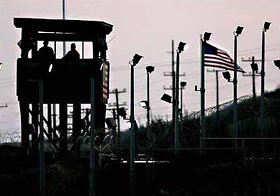
    Kids who grow up without that kind of attention tend to lack impulse control and have more emotional outbursts. Later on, they are more likely to struggle in school or with the law. They also have more physical health problems. Numerous studies show that all children, especially those from low-income homes, benefit greatly from sound child care. The key ingredients are quite simple—starting with plenty of caregivers, who ideally have some expertise in child development.

    By these metrics, American day care performs abysmally. A 2007 survey by the National Institute of Child Health Development deemed the majority of operations to be “fair” or “poor”—only 10 percent provided high-quality care. Experts recommend a ratio of one caregiver for every three infants between six and 18 months, but just one-third of children are in settings that meet that standard.

    ….At the same time, day care is a bruising financial burden for many families—more expensive than rent in 22 states. In the priciest, Massachusetts, it costs an average family $15,000 a year to place an infant full-time in a licensed center. In California, the cost is equivalent to 40 percent of the median income for a single mother.

    I remain convinced that the biggest bang for the buck we could get from any kind of new government spending would involve getting serious about pre-K day care. It wouldn’t be cheap: probably the better part of $100 billion per year. That might take the form of subsidies and regulation, or of government-run day care centers. The latter worked well during World War II, and continue to work well for the military. And it’s a system that serves the French well, with their system of crèches and école maternelles. But it’s not the only way. Tougher regulation of private day care, along with better training and subsidies for poor families, could do the job too:

    Since the 1930s, with the introduction of Social Security, the United States has constructed—slowly, haphazardly, often painfully—a welfare state. Pensions, public housing, health care—piece by piece, the government created protections for citizens that the market doesn’t always provide. Child care is the major unfinished part of that project. The lack of quality, affordable day care is arguably the most significant barrier to full equality for women in the workplace. It makes it more likely that children born in poverty will remain there. That’s why other developed countries made child care a collective responsibility long ago.

    With universal healthcare finally on the horizon (though progressing with plenty of fits and starts), pre-K is now the last big brick in the social welfare edifice. It’s insane that we deliberately give it such short shrift, even with the knowledge that universal, decent-quality pre-K would almost certainly produce a smarter, more stable, better adjusted generation of adults in the very near future. For more, read the whole story. It’s worth a few minutes of your time.

  • A Guantanamo Hunger Striker Tells His Story


    Marcy Wheeler tweets:

    I’d really love some pollster to figure how what % of Americans know how many Gitmo detainees have been cleared for release.

    I believe the answer is about 40 percent—but, like Marcy, I doubt that many people know this. Her tweet was prompted by an op-ed today in the New York Times by Samil Naji al Hasan Moqbel, a Yemeni hunger striker at Guantanamo who is being force fed:

    I’ve been detained at Guantánamo for 11 years and three months. I have never been charged with any crime. I have never received a trial…The only reason I am still here is that President Obama refuses to send any detainees back to Yemen. This makes no sense…I do not want to die here, but until President Obama and Yemen’s president do something, that is what I risk every day.

    Where is my government? I will submit to any “security measures” they want in order to go home, even though they are totally unnecessary.

    Yemen’s previous administration prevented the release of many detainees by demanding enormous payments from the US before it would accept them. The current administration has changed course, and has requested that all Yemeni nationals be repatriated to Sana’a. But now it’s the U.S. that refuses to deal. Andy Worthington reports that after the failed underwear bomber plot:

    Obama responded to a wave of hysteria by announcing a moratorium on releasing any cleared Yemenis from Guantanamo. That order remains in place two years and eight months later, even though it is a monstrous injustice to continue holding men cleared for release and to pander to populist fear-mongering by insinuating that the very fact of being Yemeni is tantamount to being a terrorist—or, at the very least, a terrorist sympathizer.

    But it’s not entirely Obama’s fault, reports the Boston Globe:

    Congress bears much of the blame, because lawmakers have included provisions in the annual defense authorization bill that make it harder to close the facility. They prohibit the use of funds to transfer detainees to the United States for trial in federal court and require the secretary of defense to certify that detainees cleared for release are sent to countries that have “agreed to take effective steps to ensure that the transferred person does not pose a future threat to the United States, its citizens or its allies.” That sweeping language has had a chilling effect. No one can give an absolute guarantee that detainees won’t go back to fighting, just as no one can ensure that criminals released from US prisons won’t go back to crime. As Charles Stimson, who headed detainee affairs under George W. Bush, points out: “You have to tolerate some kind of risk.”

    ….Obama should muster the political courage to stand up to Congress on Guantanamo. If his secretary of defense is unable to certify a transfer under the tough provisions, Obama retains the ability to transfer prisoners with a “national security waiver” — a power he has never used….A new, democratically elected government in Yemen is putting together a plan to take responsibility for its detainees. About a third of the 88 men from Yemen have already been cleared for release. Keeping them at Guantanamo just because of their nationality flies in the face of justice. The US government should support the democratic transition in Yemen by providing the financial, military, and intelligence support necessary to send them home and keep an eye on them.

    Some detainees are tougher to deal with than others. But those who have already been cleared for release, and which Yemen is willing to accept, should be the easiest. Moqbel might or might not fall into this category (his status is unclear), but there are at least a couple dozen Yemenis who do. Obama should let them go.

  • To Understand Gold, Look Across the Ocean


    Matthew Drudge reports today that panic is everywhere in the world of gold bugs. And sure enough, after drifting downward from $1,800 to $1,550 over the past six months, gold has plummeted another $200 over the past two days. Paul Krugman feels vindicated:

    As Joe Weisenthal says, this should be seen as really good news, because it offers strong evidence that the goldbug/inflationista view of the world — which says that we need to stop all efforts at monetary and fiscal stimulus lest we turn into Weimar — is, in fact, all wrong.

    I don’t follow the gold market at all, but the interesting aspect of this to me is: what about China and India? My hazy understanding of the rise in gold prices over the past decade has been that increased demand in those two countries was a far more important factor than speculative fever among tea party types in the U.S. So if the price has dropped by a quarter over the past half year, it must have something to do with decreased demand in China and India. And sure enough, when I click on today’s story about gold in the Wall Street Journal, here’s what it tells me:

    Worries are spreading that Asian buying, which has helped prop up gold prices for years, may slow. China reported that its economy unexpectedly slowed last quarter, spurring fears that Chinese consumers, faced with less cash, could stop purchases. In India, the largest gold industry group warned that the country is losing confidence in the metal because of its recent slide. Investors in Europe cashed out of gold en masse amid concerns that U.S. stimulus may come to an end earlier than expected, and following news that Cyprus may sell a chunk of its gold reserves to fund part of its bailout package.

    It’s still not clear exactly what’s going on. If this report is right, there are merely fears that Chinese consumers “could” reduce their gold buying, and Indian purchasers are said to be reacting to gold’s recent slide, not causing it.

    Still, I think that somehow China and India ought to be the focus of explanations about gold’s slide. Obviously, a bubble mentality can take over once a price drop has continued for a while, but the original source needs to be reduced demand. And that points to the other side of the Pacific Ocean.

  • In the Long Run We’re All Dead. In the Medium Run, We Have Things to Worry About.


    Perhaps today I will link only to people named Matthew. Here is Matt Yglesias on possible fears about the future:
    I understand why people worry about technological unemployment. And I understand why people worry about rising entitlement spending burdens. What I don’t understand is why people worry about them both simultaneously. In the technological unemployment world, we’ll be able to give everyone a 2013 level of consumption goods with a radically diminished workforce, raising the question of what everyone is going to actually do.

    ….The other worry is the opposite of this one. It’s that in the future a very large share of our population will be elderly nonworkers and a very large share of our workforce will be dedicated to taking care of elderly nonworkers (“skyrocketing health care costs”), and that consequently younger people’s living standards will diminish or stagnate.

    Either of those things could happen, but they can’t both happen.

    Well, now, I’m not so sure about that. The question is: who will benefit from technological unemployment? Unless public policy changes fairly radically, the answer is: the owners of technology. In other words, the rich.

    If technology really does keep improving and putting humans out of work, this means the rich will get ever richer. And in theory, we can tax away that wealth to take care of our entitlement problems. In theory. But I don’t think it’s entirely irrational to be worried that this might not be as easy as it sounds. As you may have noticed, rich people fight like crazed weasels to prevent their wealth from being taxed away. Do we think their political power is somehow going to decline as they become richer and richer?

    This cycle can’t go on forever. Eventually the masses will rebel, or the rich will actually get less rich because nobody has any money to keep the economy going. (Robots have no need for houses or fast food restaurants.) Or something. But “eventually” could be a ways away. In the medium-term future, both technological unemployment and rising entitlement burdens could indeed both be serious problems simultaneously.

  • It’s Hard to Get a Job if You Haven’t Had a Job For a Long Time


    Matthew O’Brien reports on a recent study showing that companies are reluctant to hire people who have been out of work for six months or more. A pair of researchers sent out thousands of fake resumes that were identical except that some showed a long spell of unemployment and some didn’t, and then tallied up the callback rates:

    The results are equal parts unsurprising and terrifying. Employers prefer applicants who haven’t been out of work for very long, applicants who have industry experience, and applicants who haven’t moved between jobs that much. But how long you’ve been out of work trumps those other factors.

    ….As long as you’ve been out of work for less than six months, you can get called back even if you don’t have experience. But after you’ve been out of work for six months, it doesn’t matter what experience you have. Quite literally. There’s only a 2.12 percentage point difference in callback rates for the long-term unemployed with or without industry experience….In other words, the first thing employers look at is how long you’ve been out of work, and that’s the only thing they look at if it’s been six months or longer.

    I wish there were a baseline study to compare this to, because I doubt this is anything new. Hiring managers have always been suspicious of applicants who have been out of work for a long period. Partly it’s because skills can atrophy over time. Partly it’s fear that someone out of work for a long time might be lazy and not all that committed to working. Partly it’s a hunch that if no one else is interested in an applicant, there’s probably a good reason for it. Partly it’s a sense of uneasiness that a long spell of unemployment might represent a hidden problem of some kind (drugs? recent divorce?). Or perhaps that someone out of work for a long time might be bitter about it.

    When the economy is stronger, and it’s harder to fill open jobs, you might get some callbacks anyway. When the economy is weak, as it is today, and hiring managers have a dozen good candidates for every opening, you’re completely out of luck. Any black mark is enough to kill your chances. Some of this might be rational and some of it might not, but it’s not something that’s just popped up recently. It’s just more noticeable because of the lingering effects of the Great Recession.

  • Buckraking, Obama Style


    Noam Scheiber writes that Barack Obama doesn’t really like former aides showing off their closeness to the White House. But that’s not really a problem:

    There are more than enough ways to cash in on a White House tour of duty that fall comfortably within the red lines governing Obama’s Washington. No one in the West Wing, from the president on down, would begrudge former colleagues the chance to make a buck so long as a modicum of tact is displayed.

    That’s good to hear, no? Click the link for more.

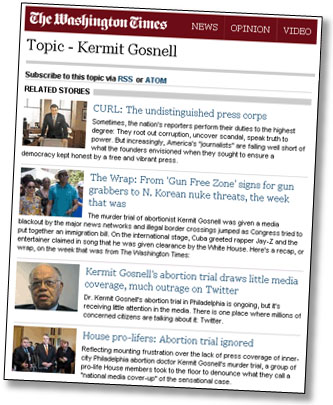
  • Kermit Gosnell: A Case Study in Working the Refs


    The Kermit Gosnell story is truly breathtaking. There are, of course, the actual crimes Gosnell is charged with, which are appalling all on their own. Gosnell was a rogue abortion doctor who (it’s alleged) ran a hideously deadly clinic in Philadelphia, and remained open for years before local authorities did anything to shut him down. The details are gruesome to report and stomach-turning to read about. 

    And then there’s the media angle. When a grand jury report on Gosnell’s conduct was released in 2011, it got a smattering of national coverage and then dropped off the radar. On March 18 of this year, Gosnell’s trial started. It got plenty of coverage in Philadelphia, as well as on some activist websites, but not much elsewhere.

    That is, it didn’t get much coverage until conservatives decided they could make hay with charges that the story was being deliberately suppressed by the liberal media. To see the way this hustle works, consider how the conservative Washington Times has handled the Gosnell case so far.

    On March 18, they ran an AP dispatch about the start of the trial. Since then, they haven’t published a single additional piece. However, they have published the following:

    • March 27: An op-ed by Christopher Harper about the media’s “shameful” silence concerning the Gosnell case.
    • April 8: A news story about the “media blackout” of the Gosnell trial for “political reasons.”
    • April 11: An editorial deploring the fact that “this grim story was not something for the morning papers or the evening news, at least not for those reading the ‘mainstream’ newspapers or watching ABC, CBS or NBC.”
    • April 11: A news story reporting that conservative House members “took to the floor to denounce what they call a ‘national media cover-up’ of the sensational case.”
    • April 12: A news story reporting that “conservatives and other pro-life advocates who are upset with the lack of coverage of the case are taking to social media sites in droves.”
    • April 13: A weekly news recap headlined, “Abortion doctor on trial, but media not interested.”
    • April 14: An op-ed about our “undistinguished press corps,” listing all their recent shortcomings. “Most egregious of all, though, has been the lack of coverage on the ‘House of Horror’ trial of abortionist Kermit Gosnell.”

    And that brings us to today. Adding it all up, we have a grand total of one story about the trial itself and seven stories complaining that other media outlets aren’t covering the trial. It’s pretty obvious what the priorities are here, and, as Paul Farhi reports, the Washington Times is hardly alone:

    The Weekly Standard and the National Review, two leading conservative magazines, for example, hadn’t published anything on the trial, according to a search of the Nexis database.1 The New York Post’s conservative editorial board has written one commentary — an editorial lamenting the lack of coverage, which, although it doesn’t mention it, includes its own paper.

    We can add to that the Wall Street Journal’s conservative editorial page, which hasn’t mentioned it yet. And Alex Seitz-Wald reports that Fox News has run “brief updates on the trial in its roundup of the day’s news on several nights over the past month,” but that’s about it for its news programs.

    Why hasn’t the Gosnell trial caught on nationally? Beats me. I’ve often wondered just what it is that causes some local crime stories to become media sensations and others to molder in obscurity. But the interest of the conservative press is pretty obvious, and it has little to do with the grisly nature of the case itself. After all, they’ve been well aware of the Gosnell trial all along, because both Breitbart.com and conservative pro-life sites have been covering it extensively. Despite this, they barely mentioned it themselves. Obviously, even conservative editors didn’t it consider it newsworthy on a national scale. Their outrage only kicked into high gear when they spied an opportunity to pretend that this was a story about the liberal media ignoring a grisly abortion story. And according to Farhi, it’s working:

    The media appears to be responding to the criticism. CNN devoted multiple segments to the story Friday. CBS said it plans two segments and MSNBC will discuss the trial on its “Morning Joe” program Monday. The Post ran a full AP report on it in Saturday’s editions; the paper has also assigned its own reporter to cover the trial in Philadelphia this week.

    “We talked about the story during the day on Friday and decided that, in fact, the story warranted our staff attention because of the seriousness and scope of the alleged crimes and because this was a case that resonated in policy arguments and national politics,” said [Post executive editor Martin] Baron. “In retrospect, we regret not having staffed the trial sooner. But, as you know, we don’t have unlimited resources, and . . . there is a lot of competition for our staff’s attention.”

    I’m not really outraged by conservatives working the refs like this. Both sides exploit tragic events for their own benefit. That’s politics. But I sure hope the media itself understands just how zealously they’re being worked.

    1The Standard finally included a piece on the Gosnell trial in its current issue. Its subject? The fact that the national media hasn’t been reporting on it.

