• Friday Cat Blogging – 18 October 2013


    This week we have another mystery quilt, where you receive the instructions bit by bit and watch the design take shape before your eyes. It’s called “Stitches in Time,” and it was machine pieced and hand quilted.

    I am informed by the quilter-in-chief that Domino’s favorite new activity is to jump on the bed and lick Marian’s eyelids in the middle of the night. We are all eager for this to stop and for Domino to find some other favorite new activity.

  • Sean Hannity Can’t Be Bothered With the Truth

    <a href="http://foxnewsinsider.com/people/sean-hannity">Fox News</a>


    This is hilarious in a pathetic kind of way: last Friday, Sean Hannity invited three “regular families” onto his show to relate their horror stories about premium hikes and business-killing regulations under Obamacare. Eric Stern decided to call all three of them to find out what was really going on.

    Answer: nothing. One of them was apparently just lying, and the other two hadn’t even checked the exchanges, where they would have found that they could get better coverage for considerably less than they’re paying now.

    That’s just sad. Hannity runs a big-time show with well-paid producers, but they apparently couldn’t find even a single true example of someone who got screwed by Obamacare. How hard can that be? Even liberals acknowledge that some people will end up worse off. But Hannity’s staff couldn’t be bothered. I guess he figures his audience doesn’t really deserve any better.

  • Right-Wing Media Finally Free to Obsess About Obamacare Website


    Rep. Mark Meadows (R–NC) was the author of a House pledge to vote against any Continuing Resolution that didn’t defund Obamacare. Dave Weigel caught up to him and asked if he planned to write another letter when the current CR runs out:

    “We’re not going to need to because the president has said he’s willing to negotiate when there’s not a gun to his head,” said Meadows. “We’ll fix all the problems between now and then. I’m gonna hold him to his word—his word was that he was willing to negotiate now, and that’s what we all expect.” Obviously Meadows could change his mind in a few months, but I was struck how pragmatic he wanted to sound.

    Hmmm. I’m pretty sure that Obama didn’t mean he was willing to negotiate about defunding his signature health care bill once the gun was lowered, so I wouldn’t count on anything along those lines. I’d say that ordinary budget negotiations are more along the lines of what he had in mind.

    Which is too bad. There are actually details of Obamacare that I suspect Obama and his allies really would like to fix, and they might be able to give Republicans a few things they want in return. But I’m pretty sure that Republicans are still salivating over Obamacare’s imminent collapse once it gets up and running, and are entirely unwilling to do anything that might actually make it function more smoothly. So that’s probably out.

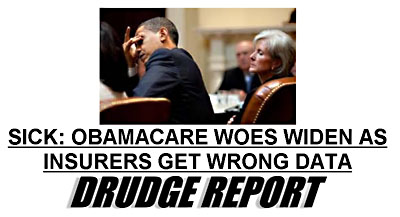
    And on a related subject, remember how we all figured that once the budget shutdown was over, conservative sites would finally be freed to start banging away on the problems with the Obamacare website? Well, over at The Corner, seven of the top dozen posts right now are about exactly that. It’s the top story on Drudge. It’s at the top of the blog feed at the Weekly Standard. I count seven Obamacare stories on the front page at Fox News. Red State has two. Etc. This is what it would have been like 24/7 for the past two weeks if Ted Cruz and his merry band of own-goalers hadn’t hijacked the national conversation and made people actually start to feel kind of sorry for Obamacare.

  • BREAKING: China Still Not Collapsing


    Matt Yglesias thinks it’s time to give China a break:

    I’ve lost track of how many years we’re into the story of “debt-burdened China and its unsustainable investment-fueled growth are about to crash and burn” but this morning came the news of a rebound in economic growth despite a fall in exports after a couple of down quarters. Naturally the news article is nonetheless filled with gloom and doom about bad debts and overinvestment and blah blah blah.

    And to be clear, I think that two things are true. One is that as China gets richer and richer its growth rate is going to be on a downward trajectory. The other is that if you predict a Chinese financial crisis every month for enough straight months, eventually the Chinese financial crisis will occur.

    True dat. Unfortunately, this is probably evidence not that China won’t crash, but that bubbles can almost always be sustained longer than people think. In the U.S. serious people started to bang the drum about the housing bubble as early as 2002, and by 2005 everyone was tired of it. But the very next year, the market peaked and started its epic collapse.

    Nonetheless, I agree with Yglesias. That’s not to say China will never suffer from a recession. It will, just like every other country. But its real problems are less bubblific in nature than they are structural and long-term: aging demographics, rising wages, global competition, and the automation of the workplace. Getting to a per capita GDP of $10,000 has been an amazing achievement, but getting to $20,000 is going to be a lot harder.

  • Charles Krauthammer Wants Redskins to Change Name, But Doesn’t Want Anyone Else Saying So


    Charles Krauthammer explains today that because words evolve over time, he thinks it’s time for Washington DC’s football team to change its name:

    If you were detailing the racial composition of Congress, you wouldn’t say: “Well, to start with, there are 44 Negroes.” If you’d been asleep for 50 years, you might. But upon being informed how the word had changed in nuance, you would stop using it and choose another.

    And here’s the key point: You would stop not because of the language police. Not because you might incur a Bob Costas harangue. Not because the president would wag a finger. But simply because the word was tainted, freighted with negative connotations with which you would not want to be associated.

    ….Similarly, regarding the further racial breakdown of Congress, you wouldn’t say: “And by my count, there are two redskins.” It’s inconceivable, because no matter how the word was used 80 years ago, it carries invidious connotations today.

    This is perfectly sensible, as is the rest of what he says. So here’s my question: why does he feel the need to start the column with this little swipe?

    I don’t like being lectured by sportscasters about ethnic sensitivity. Or advised by the president of the United States about changing team names. Or blackmailed by tribal leaders playing the race card.

    Is he just establishing his conservative cred? Because as near as I can tell, he’s saying pretty much the same thing as Costas and Obama. So why is he annoyed when they say it, but thinks it’s OK when he says it? If Costas and Obama are right—and he seems to think they are—why is there anything wrong with what they said?

    POSTSCRIPT: If you’re interested in seeing exactly how the usage of “redskin” has evolved over time, Ian Gordon has you covered here.

  • January Is Perilously Close to Primary Season


    Right now, there’s a common assumption in DC circles that Republicans won’t repeat the mistakes they made this month when the next budget deadline hits in January. Sure, there’ll be a fight over levels of spending and who gets what, but it will be a fairly ordinary fight. The government will stay open, the debt ceiling will get raised, and Obamacare will remain safe.

    Thoreau isn’t quite so sure. After all, January is perilously close to primary season:

    The best way to win a GOP primary is to say that you refused to compromise with the Democrats. If I were a Democratic elected official, I’d much rather try to negotiate something with Republicans now than in primary season.

    If the budget and debt ceiling negotiations were a bit later, that would work to the Democrats’ advantage, because shutdowns will not be popular with the general election audience. However, January is close enough to primary season that it stiffens Republican spines, and just far enough from November that a lot can happen in the interim.

    My other prediction is that next August will be one hell of a news cycle. There’s a lot that both sides will want voters to forget before November, especially Team Red, so I predict Peak Stupidity in August of 2014. The crazier it is, the cleaner the slate is wiped in September.

    I’m not sure I actually believe this, since I suspect that all the big talk about primarying each and every Republican who voted for yesterday’s deal is mostly going to turn out to be smoke. And if you don’t have a credible challenger by January, you don’t have a lot to worry about. But it’s still an interesting hypothesis that’s worth keeping an eye on.

  • Sorry, Democrats, the Sequester Is Here to Stay


    As several people have pointed out to me, my headline this morning (“The Republican Defeat in the Budget Deal Was Complete and Total”) is satisfying but not entirely true. After all, Republicans did get a continuing resolution that funds the government at sequester levels. Democrats agreed to that long ago.

    But I’ve never really thought of that as a Republican victory, because I never really thought there was any chance at all of rolling back the sequester. Here’s why:

    • Everyone agreed to it in 2011. Everyone wanted lower spending. Remember, the sequester was a temporary substitute for a Grand Bargain that would have cut spending even more, and it became permanent only when the infamous supercommittee failed. But the supercommittee also would have cut spending even more. The sequester wasn’t a compromise, it was the smallest, most Democrat-friendly level of spending reduction that was on the table in 2011.
    • Status quo bias is important. In this case, it works in favor of keeping the sequester in place.
    • Upcoming negotiations over the sequester aren’t an example of hostage taking. They’re just ordinary budget negotiations. If, in the end, it turns out there’s nothing that conservatives want badly enough, then Democrats simply don’t have the leverage to get higher spending levels. And it looks very much as if that’s the case.
    • The original sequester cuts were dumb, across-the-board reductions. But that was only for last year. Appropriations can all be freshly negotiated this year, which makes the pain of the sequester smaller.
    • I’m not at all convinced that President Obama even wants to do away with the sequester. He says he does, of course, and his budget proposal includes higher levels of spending. But his actions over the past three years speak louder than words. His pivot to the deficit in 2010 seemed quite genuine, and his active push for a grand bargain in 2011 confirmed that he takes the deficit fairly seriously. It’s true that the sequester is a lousy way of addressing the deficit, but I suspect that Obama thinks it’s better than nothing. If he could negotiate some kind of swap between short-term discretionary cuts and long-term entitlement cuts, he’d do it, but if he can’t he’s not going to invest a lot of energy in fighting the weather.

    It’s possible that there’s some kind of minor deal to be made before the CR extension runs out in January. But for the moment, I think the sequester is locked into place. Republicans have never been serious about “entitlement reform,” and even if they were, there’s no way that anything significant could be negotiated within a few weeks. Without that, there’s just no bargain to be had except, possibly, at the margins. Unfortunately for Democrats, the sequester is settled law just as much as Obamacare is. And we all know the lesson Republicans learned from fighting Obamacare, don’t we?

    UPDATE: I’m getting some feedback that suggests the Obama White House, in fact, really, really hates the sequester because it hammers discretionary spending so badly. So I might have gone too far in my fifth bullet above. However, I still think the sequester is here to stay, and I doubt that Obama is going to try to fight too hard against it.

  • How Likely Is a Budget Deal Later This Year?


    My congressman, John Campbell, has been sending out daily emails during the budget showdown, and today’s wrap-up shows an admirable grip on reality:

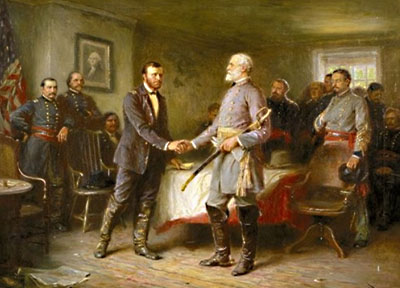
    The mainstream media (MSM) would have you believe that this was a “bipartisan agreement”. It was…..in the same way that Lee and Grant reached an agreement at the Appomattox Courthouse in 1865. It was a complete surrender on the part of Republicans. All that was “negotiated” were the terms of that surrender.

    Yeah, pretty much. Except that, as I recall, Grant allowed Lee’s men to keep their swords and horses, didn’t he? I’m not sure the 2013 GOP even managed to get that much out of the deal.

    In any case, Campbell’s email is basically an effort to buck up the spirits of his fellow conservatives by taking shots at the media, Janet Yellen, Obamacare, and scurrilous Democrats. (No, I’m not sure what Yellen did to deserve being put into this company.) That’s all fine. But I thought this was the interesting part:

    The next “cliff” comes on January 15, 2014 when the government could potentially shut down again. That date was intentionally chosen because that is when the next round of Sequester cuts, that further reduce government spending, take effect. This round of cuts will disproportionately hit defense spending. Democrats are hoping that they can leverage increased funding for defense for all the IRS, EPA, ObamaCare and welfare spending that they want. I think that effort will fail. The greatest threats to America today are from within, not without. In my opinion, we must preserve the Sequester as the only force we currently have that is limiting the cost and scope of government to some degree. Between now and then, watch the White House spin machine spool up on how “devastating” these cuts are in order to soften the ground for this push. But, if they want to shut the government down again in order to increase spending, let them do it.

    How should this be taken? In its most obvious sense, it’s an assertion that Republicans won’t budge on sequester levels of spending. If the greatest threats to America are “from within, not without,” this means they’re willing to sacrifice the Pentagon in order to keep domestic spending low.

    On the other hand—and I freely admit that I’m just reading tea leaves here—when Campbell says only that “I think” increased funding will fail, that sure doesn’t sound very adamant, does it? Even granted that Campbell isn’t a table-pounding type of tea partier, that seems pretty lukewarm. Maybe there really is a minor deal to be made on the budget later this year.


  • The Republican Defeat in the Budget Deal Was Complete and Total


    The budget deal passed by Congress yesterday did, in the end, include one concession to Republicans: a provision that tightens up income verification for Obamacare recipients. Since Democrats were insisting on principle that they wouldn’t provide Republicans with any ransom in return for keeping the government open, this seems a little worrying at first. It may not be a big ransom, but it’s not zero, either.

    Today, though, Sarah Kliff reassures me. In fact, it really is zero:

    The deal basically requires two submitted reports in the course of the next year. Health and Human Services Secretary Kathleen Sebelius is due to submit the first report by Jan. 1, which must detail “the procedures employed by American Health Benefit Exchanges to verify eligibility for credits and cost-sharing reductions described in subsection.” Six months later, the HHS inspector general is required to submit a report “regarding the effectiveness of the procedures and safeguards provided under the Patient Protection and Affordable Care Act for preventing the submission of inaccurate or fraudulent information by applicants.”

    ….There’s nothing about the income verification measures that passed Wednesday night that will change Obamacare, aside from a few staff members at Health and Human Services devoting some hours to gathering the data and writing up these reports. And that probably explains why Democrats were okay with passing this language in the first place.

    That’s it? A couple of routine reports? I take it back: The Republican defeat in this debacle really was complete and total.