
Obamacare’s moment of truth is coming. By now we’ve heard all the scare stories about a few health insurers in a few states requesting gigantic rate hikes for next year. But over the next few weeks, states are going to start publishing the actual average rate increases that consumers will see in 2016. California released its report today. It’s still marked preliminary, but you can expect that the final numbers will be very close to these:
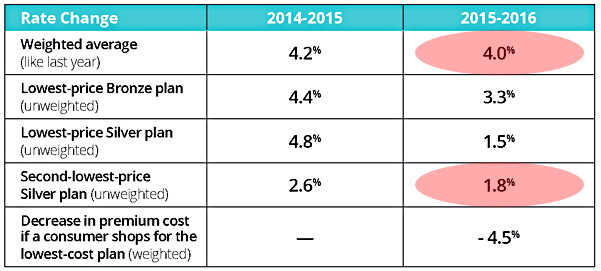
I’ve highlighted two numbers. First, the overall average rate increase is 4.0 percent. That’s way lower than you’ve seen in the scary headlines. And this is for a state that makes up more than a tenth of the country all by itself.
Second, the price of the second-lowest-price silver plan has gone up 1.8 percent. This is the figure used to calculate subsidy levels, so it’s an important one. In fact, here’s an interesting consequence of that number: because subsidies will be going up roughly 1.8 percent, and the cost of the lowest-price silver plan is going up only 1.5 percent, the net cost (including subsidies) of buying the cheapest silver plan is actually going down. As you can see in the bottom row, if you shop for the lowest-priced plan, your premiums are likely to decrease about 4.5 percent.
I have a feeling this number is not going to be widely reported on Fox News.
Now, California isn’t necessarily a bellwether for all the other states. Because it’s the biggest state in the union, it has lots of competition that helps drive down prices. A big population also means less variability from year to year. Also: California’s program is pretty well run, and the California insurance market is fairly tightly regulated. All this adds up to a good deal for consumers.
In any case, the headline number here is a very reasonable 4 percent increase in overall premiums, and a 4.5 percent decrease for consumers shopping for the cheapest plans. These are real statewide numbers, not cherry-picked bits and pieces designed to encourage hysteria. Once again, it looks like Obamacare is working pretty well.
This all comes via Andrew Sprung, who has much more detail here.
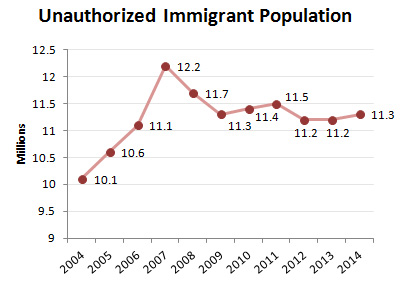 First, CNN asked “Just your best guess, do you think the number of immigrants coming to the United States illegally has increased or decreased in the last few years?” Among Republicans, 83 percent thought it had increased. Granted, asking about the “last few years” is a little ambiguous, but if you assume at a minimum that it means less than a decade, then 83 percent of Republicans are woefully misinformed. As you can see from the
 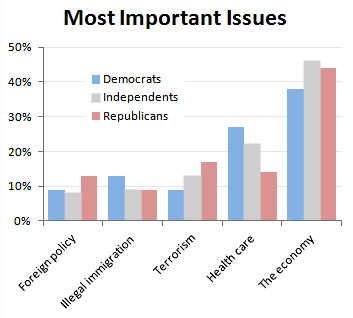 The second interesting question was one that asked about which issues were most important. This kind of thing always has to be taken with a grain of salt, but even so it’s a little surprising how little Republicans actually care about immigration. For all the attention it’s gotten from Donald Trump, only 9 percent said it was their most important issue, the lowest showing of any of the issues CNN asked about. The economy and terrorism/foreign policy were far and away the biggest worries among Republicans. Also surprisingly, health care didn’t register very high either. The tea party may be yelling endlessly about the need to repeal the worst law since the Fugitive Slave Act, but among all Republicans, only a few rate it as a critical issue.
 though. This link has never been confirmed in humans….Based on these newer studies, saccharin was removed from the carcinogen list in 2000. But by that time, opinions were set. It did little to make anyone feel safe.
 forward in productivity someday soon that starts substantially reducing the amount of human labor needed to drive the economy forward.
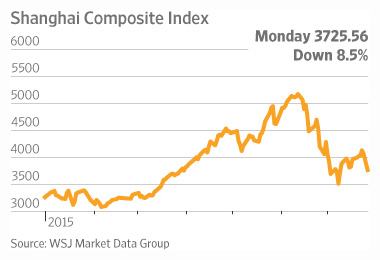 Thanks to government support, the Shanghai stock index has rallied for the past few weeks after a month of losses. Today it plummeted again, apparently due to the government withdrawing its support.
 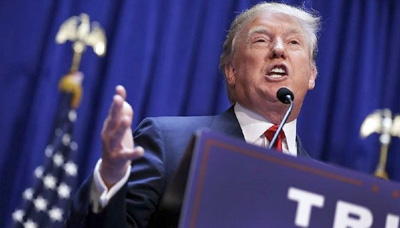 If you want to understand Donald Trump—and I wouldn’t blame you if you don’t—
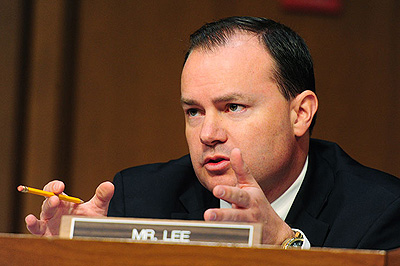 No, this isn’t about Donald Trump. It’s about Sen. Mike Lee of Utah—who plans to offer yet another amendment to repeal Obamacare, but this time with a special super-duper secret sauce added to the
 done suggest that fewer insurers in the marketplace will mean higher prices.



