• Who’s More Racist: You or an Algorithm?

    For some reason there’s a sudden interest in what seems like a minor topic: whether machine learning is biased. The basic argument is that since computer programs are written by humans and trained on human data, they inevitably inherit human biases along the way. Therefore, we need to…

    …do something. But I’m not sure what. Nobody ever seems to suggest much of anything.

    I suspect there’s a reason for that: the problem of AI bias is far less pervasive than critics suggest. It happens, of course. But the thing to keep in mind about AI and machine learning is that they don’t have to be perfect to be useful. They just have to be better than humans. As long as an algorithm is no more biased than the average person—and I’ve never heard of an example where one is—then it’s a useful thing.

    But there’s more than that to say in favor of automation: even if an algorithm is biased, it’s far easier to correct than it is in a human. For example, if you’re concerned about why an algorithm is making its decisions, you can program it to tell you. It will be 100 percent honest and 100 percent non-defensive about this. Humans, by contrast, frequently don’t even know why they make particular decisions, and if they do they’ll often lie about it.

    Likewise, if you’re concerned that a training set has introduced bias, you can retrain an algorithm. Once you have a goal in mind, this is fairly quick and painless. Humans, by contrast, are all but impossible to retrain once they become adults.

    It’s useful to be aware of these things, and to insist that algo designers incorporate bias antigens from the start. Algorithms of any complexity shouldn’t be black boxes. They shouldn’t be hard to retrain. They should be written to hunt for possible biases and report them. This isn’t trivial, but it’s hardly the biggest programming challenge in the world. Given all this, the odds that machine intelligence will end up being more biased than human beings is, to anyone who’s aware of how biased human beings are, pretty laughable.

  • Lunchtime Photo

    On the last day of my visit to New York last year, I was pondering how to get to the airport: taxi or subway?¹ I had dinner with friends the night before, and they assured me the subway was great. One of them even checked out the MTA website to make sure the line was running normally. It was.

    So the next morning I headed out to the subway station and… the train to JFK had left one minute before I got there. So I twiddled my fingers for half an hour waiting for the next one. It trundled along and… somehow, I still don’t know how,² I missed my stop. Unfortunately, the next stop after JFK is about ten minutes away across Jamaica Bay. So I stewed for ten minutes. My only lucky break came when we finally got to the next station: a train heading in the other direction was only a minute away. So I got on the train and stewed for another ten minutes, by which time my schedule was starting to get kind of tight. Finally I got off, took the airport shuttle to the terminal, and then walked ten miles to the check-in area, time running out the entire way.³ Eventually I got there, but not before I tripped and fell down an escalator because I was in a real rush by then.

    A harrowing story, no? But there was one bright spot: I managed to be so late that I saw the sun rising over the airport on the way back across Jamaica Bay. So here is today’s photo memorializing that crappy morning: a plane landing just after sunrise at JFK airport.

    ¹I suppose most people would just take a taxi and not give it another thought. After all, it’s not as if money was an issue. But I really like subways.

    ²My best guess is that I got caught up in taking a picture of something and wasn’t paying attention.

    ³OK, not really. But damn, it sure seemed like ten miles.

    September 15, 2018 — On the A train across Jamaica Bay, New York City
  • Only 27% of Americans Think American Health Care Is Above Average

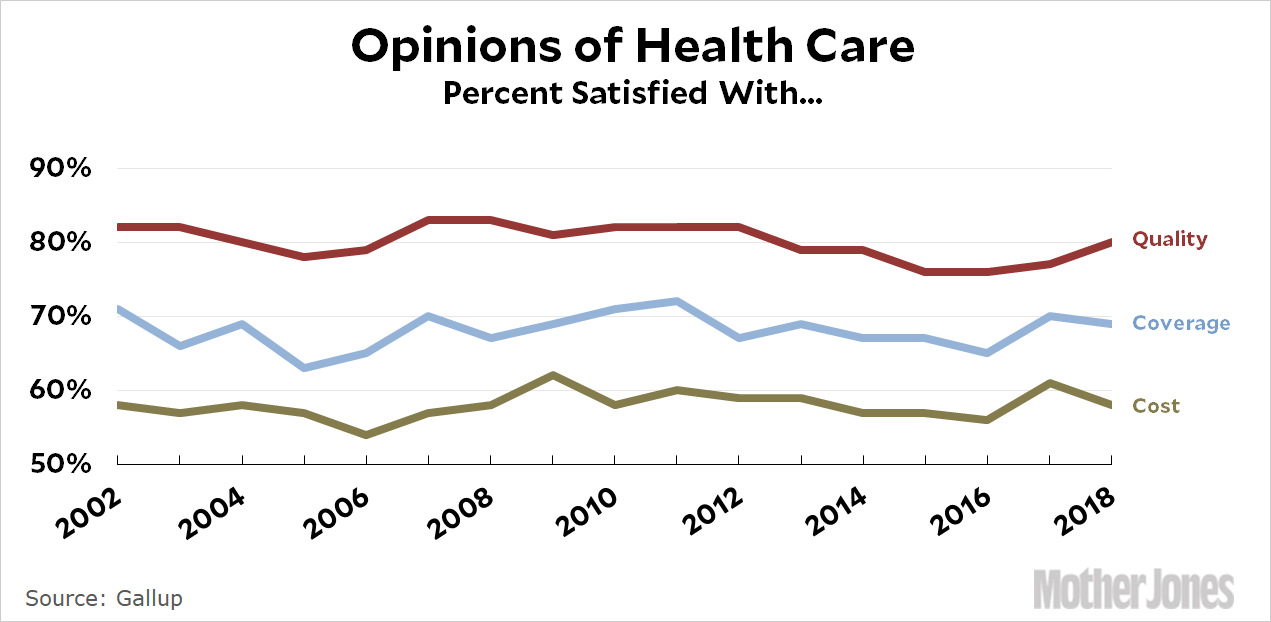
    A couple of days ago I suggested that Democrats needed to conduct a scorched-earth campaign against insurance companies if they wanted to persuade the public to support some kind of national health care plan. But that got me thinking. Conventional wisdom says that employer health insurance is the “gold standard,” and that most people who have it don’t want to trade it in for something else. But is that true? Do most people really love their health insurance? Or has that declined as coverage has gotten narrower and copays have gotten higher? Here’s the answer according to Gallup:

    To my surprise, nothing much has changed over the past two decades. Despite everything that’s happened over that time, opinions have stayed pretty steady. People love their health plans about as much as they ever did.

    However, as I was gathering this data, I read through the Gallup survey questions and found something that surprised me a lot:

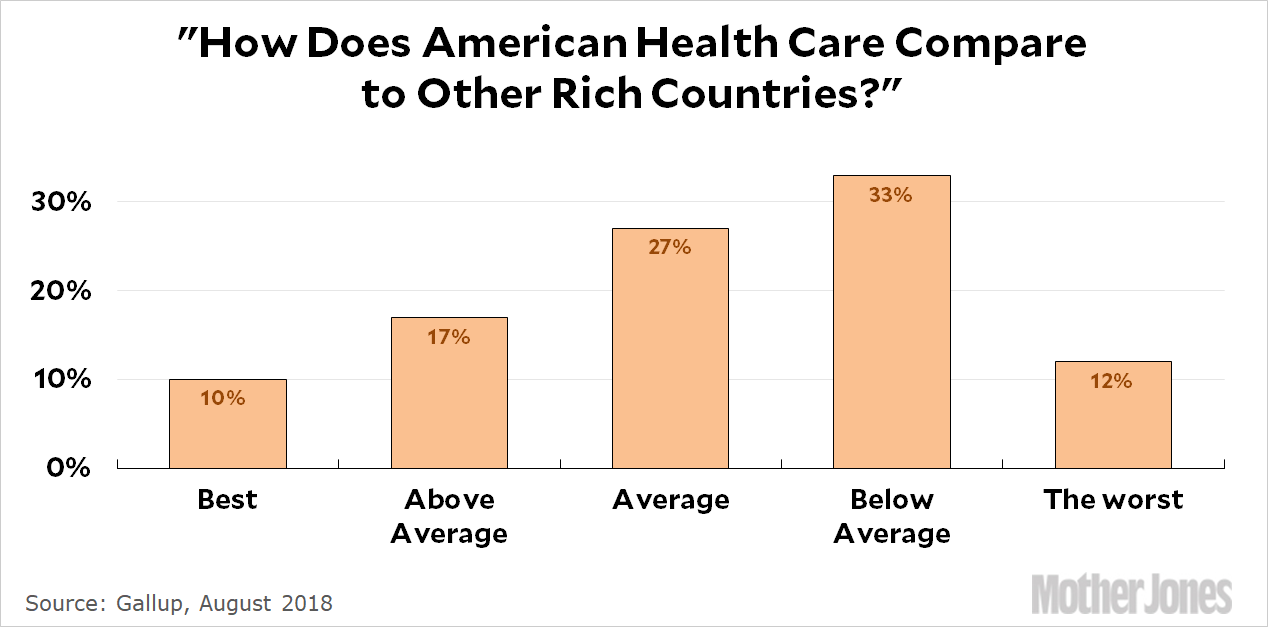
    Conventional wisdom says that we Americans think our health care is the best in the world. But it turns out that only 27 percent of us even think it’s better than average—while nearly half think it’s worse than average. This sure seems like something we could build on as we’re trying to persuade the country that we can do better than what we have now. Anybody up for Make Health Care Great Again™?

  • What’s Up With Howard Schultz?

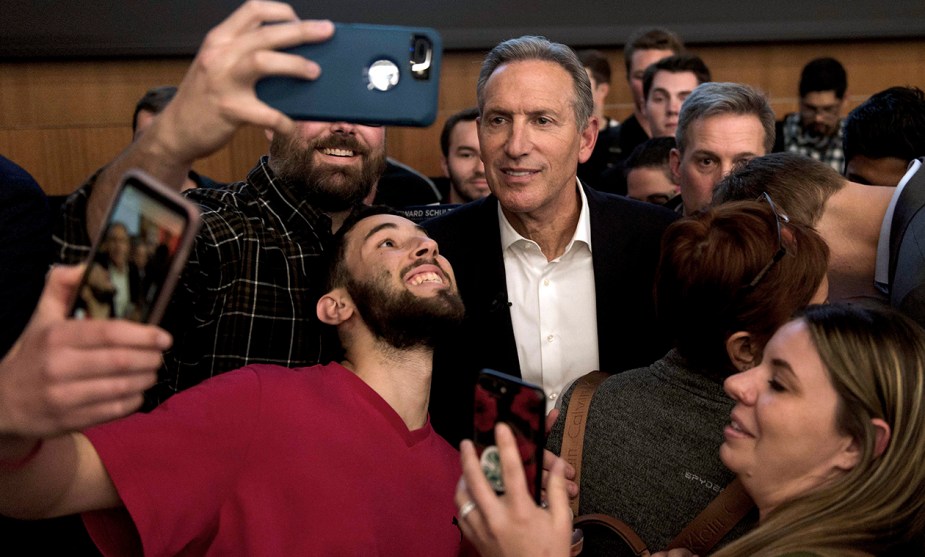
    Coffee mogul Howard Schultz enjoying his brief time in the limelight.Brian Cahn/ZUMA

    What’s the deal with Howard Schultz? I mean really: does anyone know? He can’t possibly believe he has a chance of winning on a platform of social liberalism and fiscal austerity. This is roughly the platform Gary Johnson ran on in 2016, and even in the midst of the greatest displeasure with the establishment candidates in years, he only polled 3 percent.

    So what does Schultz add to that? Well, he’s a billionaire, and billionaires are kind of unpopular right now. On the other hand, as a billionaire he can blanket the airwaves with his unpopular stands. So maybe he could poll around 1 percent.

    I don’t get it. He apparently has no real policy proposals to offer. Instead, he’s spent the past week insulting the various Democratic nominees. But I suppose that might be smart. There are people who dislike Democrats—though most of them are Republicans who support Trump—but there’s virtually nobody who’s going to like his policies once he finally gets around to admitting what they really are.

    I dunno. I was emailing with a friend recently about why Schultz was running, and my final comment was “Never underestimate ‘unrestrained vanity project’ as a reason, especially when billionaires are involved.” Maybe I should just stop there and not try to make any further sense of it.

  • Workers Have Lost a Trillion Dollars In Annual Pay Over the Past 20 Years

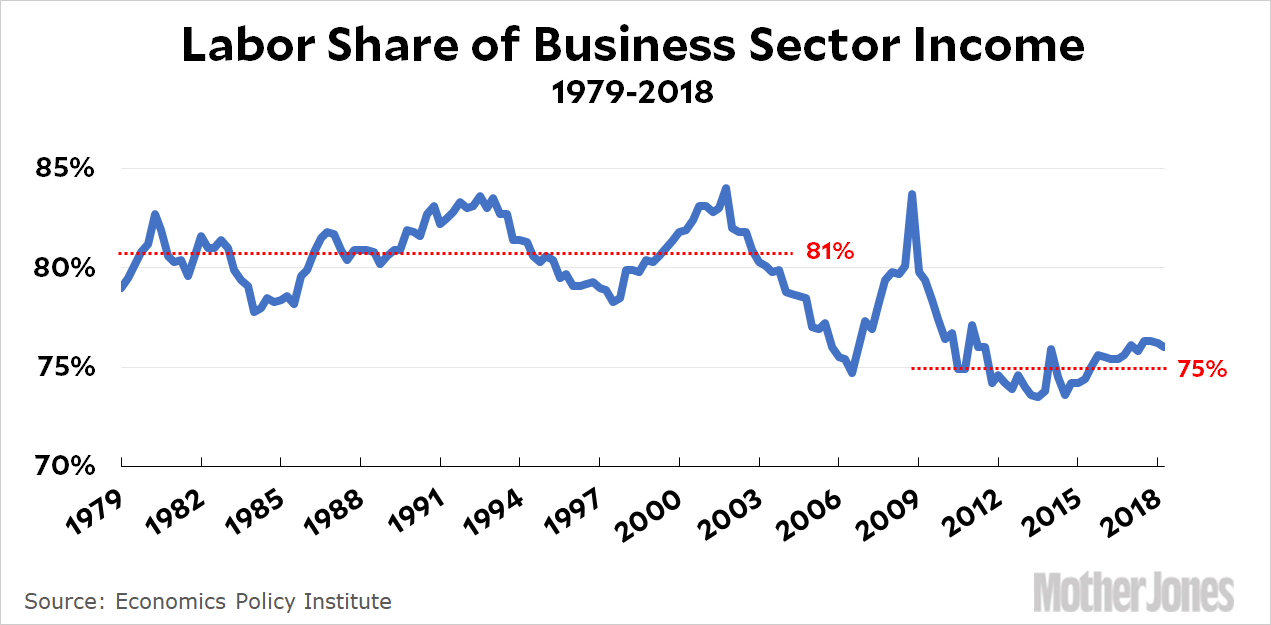
    Courtesy of EPI, here is labor’s share of business income over the past 40 years:

    Since 2000, labor’s share has declined by about a trillion dollars. If you’ve become jaded by numbers this huge and have no idea what they mean on a human scale, it’s simple: this works out to something in the ballpark of $7,000 per worker. If we could just get back to the level of 80s and 90s, we’d all be making about $7,000 more per year.

    This is not a huge ask. It’s not like trying to bring back the postwar Golden Age. We’re talking about something that was common as recently as 20 years ago. Since then, the CEO class has decided to add a trillion dollars to its income by taking it away from its workers. This is something that Democratic presidential candidates ought to share when they’re out on the campaign trail.

  • How Did Lefties Take Over the Democratic Party So Quickly?

    Illustration by Mother Jones

    Henry Farrell asks Sam Rosenfeld about the fight between centrists and lefties within the Democratic Party:

    What’s notable about the current situation is that the centrists aren’t putting up much of a fight at all — certainly not one with any sense of an underlying vision behind it or a factional esprit de corps. All of the energy, motivation and commitment is coming from the left and has been for several years now.

    I think the grass-roots energy powering pols like Bernie Sanders and Alex Ocasio-Cortez belongs to an underappreciated tradition of left-liberal activism within the party that stretches back at least to the labor activists and “amateur” Democrats of the mid-20th century. Across the decades, left-liberal Democrats have argued for a more ideologically cohesive and ambitious agenda and more disciplined and hard-charging partisanship, to make the party into a vehicle for social democracy. The ideological space separating the dueling factions has arguably become much smaller, as the party system has ‘sorted’ liberals into the Democratic Party. If Hillary Clinton or even Henry Cuellar are the intraparty bete noirs of the left, rather than Howard Smith and James Eastland, something’s changed.

    The first sentence here is the most important one: there’s really not much of a fight going on at all. Partly this is because the entire party became relatively more liberal as it went through the process of losing a big bloc of southern white conservatives that abandoned it for a new home in the Republican Party. But more recently I think there’s something different going on.

    It starts with the observation that there are two fundamentally different kinds of left-wing “centrists.” The first genuinely has pretty moderate views. The second actually has fairly lefty views but doesn’t think there’s any chance of getting them enacted. So they propose moderate programs not because it’s all they want, but because it’s all they think they can get. These folks are best thought of as tactical centrists.

    Barack Obama was a genuine centrist in some areas (fiscal policy, for example), but a tactical centrist in others. I don’t have any doubt, for example, that he’s supported true national health care pretty much forever. He just didn’t admit it because he didn’t want to come off as too radical. And once elected, he let Congress take the lead and create the Affordable Care Act because he was keenly aware that it was the most he could get from the Democratic Party at that time.

    But what happens to tactical centrists when, suddenly, national health care becomes a mainstream idea again?¹ Well, they were always for it privately, so they’re perfectly happy when it becomes OK to say so publicly. This seems like a shift to the left in the party, but it’s really more of a shift to the left in the nation. There have always been plenty of Democrats who were willing to talk about universal health care, but only recently have they become convinced that the public is ready to hear about universal health care. This explains why “centrists” aren’t fighting back very hard against the new lefties. For a lot of them, the reason is simple: they agree with them and always have.

    ¹Why “again”? Because it was a mainstream idea in the party for nearly the entire 20th century up through the early 70s. It was only later that it became something of a hot button, and only after the failure of Bill Clinton’s health care program that it became truly off limits.

  • Obamacare Enrollment Down Slightly in 2019

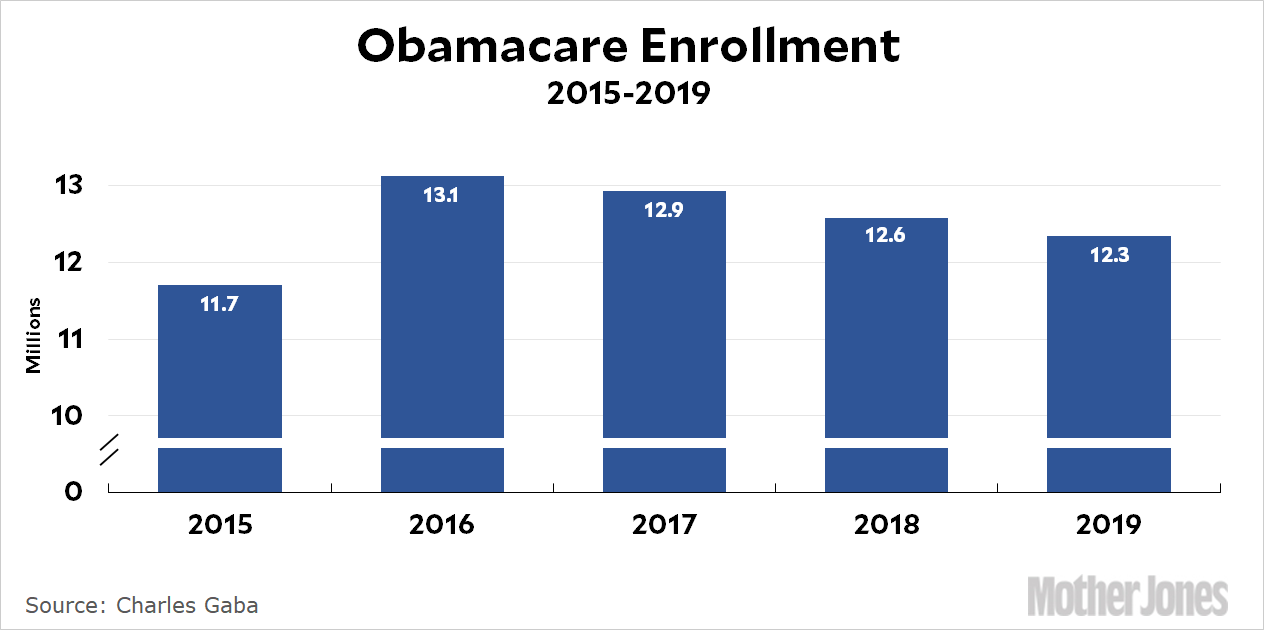
    California reported its final Obamacare enrollment figures today, and that just about wraps things up for this year. Via Charles Gaba, here are the final enrollment numbers for the past few years:

    Enrollment numbers dropped by about 300,000 from last year, and all of that was due to a decline on the federal exchange. It’s tempting to conclude that the culprit for this is Donald Trump’s efforts to sabotage Obamacare, but the declines began in 2016, when Obama was still in office,¹ and have continued pretty steadily since then. My guess is that they’re most likely due to an improving economy, which has put people back to work and given them access to employer health insurance. This in turn means that every year some number of people will drop out of Obamacare and sign up with their employer plan instead.

    But it’s really hard to say for sure. The size of the decline is small (a couple of percent per year); we don’t have Medicaid numbers yet; and as we saw a few days ago, we don’t even know if the total number of uninsured has increased or stayed flat. Given all this, the reason behind the decline on the federal exchange might not even be knowable.

    In any case, the size of the year-to-year changes is so small that I wouldn’t worry too much about it. It’s a gnat in the overall health care picture.

    ¹The 2017 year began in October 2016 and ended in early 2017. That’s all Obama.

  • Lunchtime Photo

    This is a mystery flower from our backyard. Marian doesn’t remember what it is, and of course I never knew in the first place. But it’s certainly very colorful, isn’t it?

    I was going to insert a joke here about how this must be a hardy variety of flower since it’s surviving our chilly 64º temps today, but I don’t have the heart. All of you in the Midwest take care of yourselves, OK?

    UPDATE: It’s an African daisy, possibly the Pink Sugar variety.

    January 29, 2019 — Irvine, California
  • There’s a Bigger Difference Between 6 and 10 Than You Think

    What the hell?

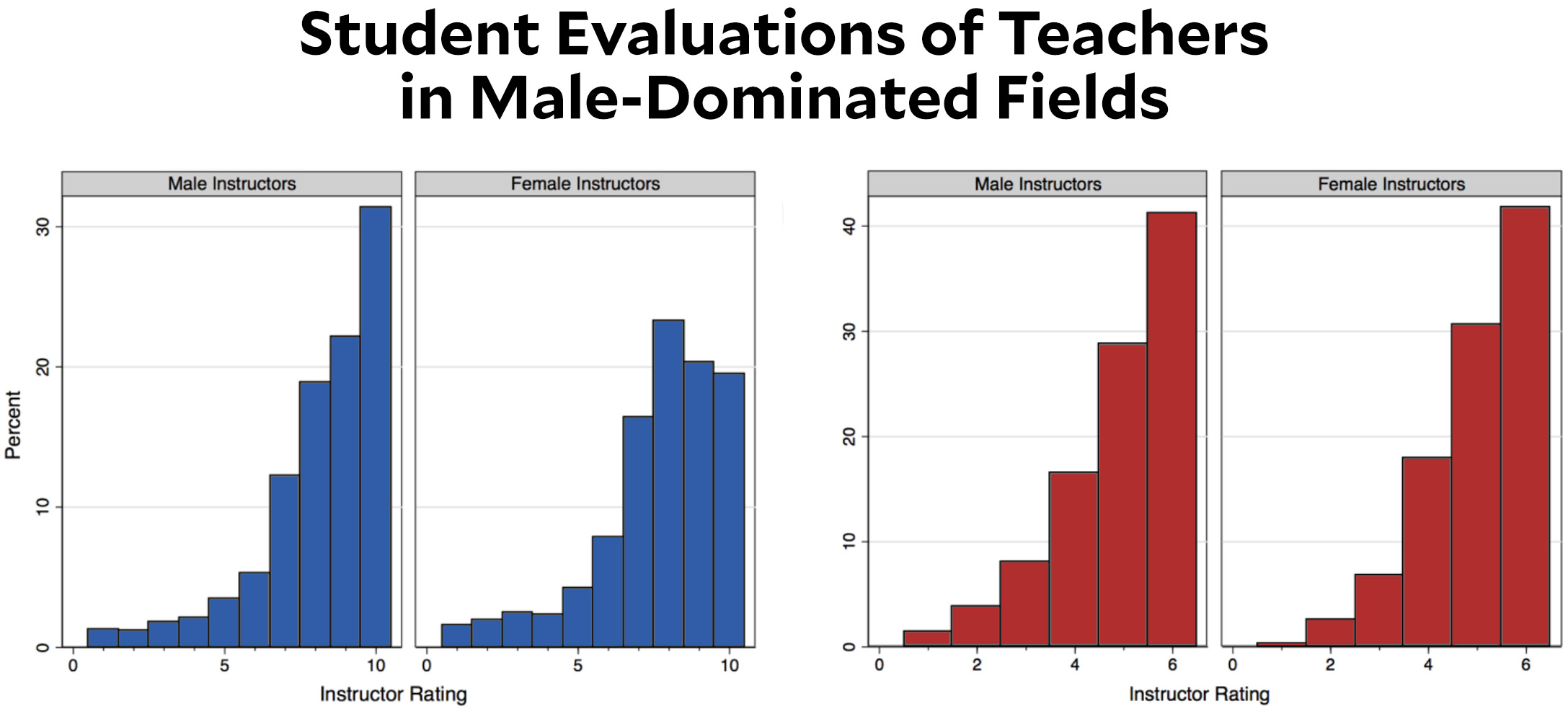
    This is exactly what it looks like. A large research university decided to switch its teaching evaluation surveys from a 10-point scale to a 6-point scale. In most fields, this made little difference. But in fields that are traditionally male-dominated, the enormous gender gap in evaluations disappeared. Why?

    This chart comes from a new paper by Lauren Rivera and András Tilcsik, and they don’t really seem to know either. Here’s what they say:

    Drawing from a complementary survey experiment, we show that this effect is not due to gender differences in instructor quality. Rather, it is driven by differences in the cultural meanings and stereotypes raters attach to specific numeric scales. Whereas the top score on a 10-point scale elicited images of exceptional or perfect performance—and, as a result, activated gender stereotypes of brilliance manifest in raters’ hesitation to assign women top scores—the top score on the 6-point scale did not carry such strong performance expectations. Under the 6-point system, evaluators recognized a wider variety of performances—and, critically, performers—as meriting top marks. Consequently, our results show that the structure of rating systems can shape the evaluation of women’s and men’s relative performance and alter the magnitude of gender inequalities in organizations.

    In other words, students viewed a 9 or 10 on a scale of 1-10 as implying true brilliance, and they were reluctant to evaluate female instructors as brilliant. However, a 6 on a scale of 1-6 doesn’t carry the same connotations. Students interpret it as really good, but not necessarily brilliant. Because of that, they were perfectly happy to evaluate the top female instructors with the top evaluation.

    Do you believe this? Do I believe it? Beats me. The sample size in the study is large, so that’s not a problem. The switch to a 6-point scale was unrelated to gender concerns, so that’s not an issue. The modeling appears to be reasonable. And the change in results is large. The effect sure seems real, but it’s still anyone’s guess about why the effect is real and why it’s so large. Given my respect for cognitive biases like framing effects, the authors’ explanation seems OK to me, but it’s still a bit of a guess. I’d sure like to hear a few other people weigh in.

  • Yes, There’s Yet Another Story About Facebook and Privacy

    Ron Sachs/CNP/ZUMA Wire

    Last night I read a story at TechCrunch about a research project run by Facebook. Long story short, they used an Apple program that allows unapproved iPhone apps to be released internally to employees, and instead used it to release an app to regular users. The app asks for root level access to your phone and gives Facebook access to pretty much every single thing you do: email, messaging, shopping, location, etc. The research program was aimed at both adults and teens (with parental consent).

    Today, Facebook announced that it was halting the iPhone version of its program, but before they could shut it down Apple blocked it. Facebook naturally issued a statement saying it had done nothing wrong but…well, you know. They value the privacy of their customers above all else blah blah blah.

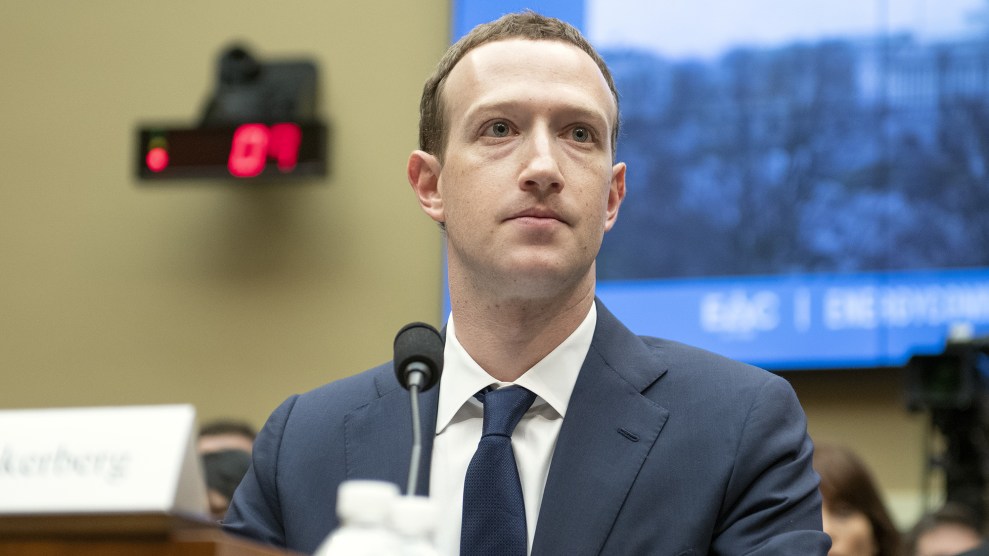
    Only the Apple version of the app has been banned, since Apple controls app installations on iPhones with an iron fist. They don’t like Facebook’s research program, so out it goes. There’s no such control over Android apps, however, so the Android app is still out there. And I imagine it will stay out there until there’s a bunch of public pressure to kill it, at which time Mark Zuckerberg will tearfully admit that they’ve made a mistake, but they’ve learned from it and they value the privacy of their customers above all else blah blah blah.

    Mark Zuckerberg believes in his heart of hearts that an obsession with privacy is bad for the world, and his goal is to help humanity by getting us all comfortable with the idea of our personal information being shared with everyone. He believes in this religiously, which means he’s simply never going to stop pushing the boundaries of privacy as far as he can. There’s no reason to think that he will ever voluntarily turn Facebook into a good actor.