• Cohen: Trump Knew Everything

    I’m a little behind on this, but here’s the latest on the Michael Cohen front:

    Michael Cohen, President Donald Trump’s former personal attorney, claims that then-candidate Trump knew in advance about the June 2016 meeting in Trump Tower in which Russians were expected to offer his campaign dirt on Hillary Clinton, sources with knowledge tell CNN. Cohen is willing to make that assertion to special counsel Robert Mueller, the sources said.

    But wait:

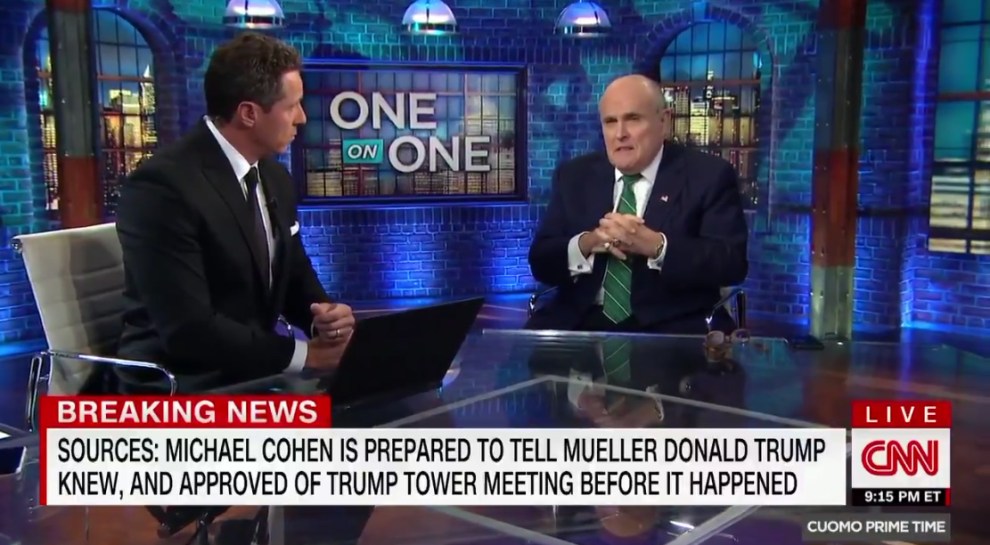
    Rudy Giuliani, the President’s attorney, told CNN’s Chris Cuomo on “Cuomo Prime Time” Thursday night that Cohen has “been lying all week, he’s been lying for years.”

    “I don’t see how he’s got any credibility,” Giuliani added. Giuliani also said Cohen is “the kind of witness that can really destroy your whole case” and called Cohen, who was a top Trump Organization attorney for a decade, a “pathological liar.”

    So Rudy says that Trump’s longtime attorney and fixer is a “pathological liar.” But why did Trump need a pathological liar on his staff? Should we assume that everything Cohen has said for the past few years while he was defending Trump is a lie? Should we assume that Trump’s need for pathologically lying attorneys continues to this day, which is why Rudy is on TV every day retailing the most ridiculous lies imaginable?

    In any case, it looks like the Trump-Cohen relationship is now in full meltdown: apparently there’s not just one recording, there’s a dozen—or maybe a hundred. Plus there’s this:

    Allen Weisselberg, a longtime financial gatekeeper for President Donald Trump, has been subpoenaed to testify before a federal grand jury in the criminal probe of Mr. Trump’s former personal lawyer, Michael Cohen, according to people familiar with the investigation.

    ….In the recording, which Mr. Cohen secretly made and which is under review by federal investigators, Mr. Cohen said he would set up a company to make the payment, adding, “I’ve spoken with Allen Weisselberg about how to set the whole thing up,” before Mr. Trump interrupts him. Later in the conversation, Mr. Cohen reiterates that he “spoke with Allen” about the plan to finance the payment.

    I’m sure I’m not the only person who’s reminded by this of the years-long drip-drip-drip of Watergate revelations. I was only barely old enough back then to really follow along, so it looks like now I get a second chance in full adulthood. But I’m not sure that helps: so much shit is going down that I still have a hard time keeping up. What’s going to happen next week?
  • Quote of the Day: Fact Checking? What Fact Checking?

    Future-Image via ZUMA

    From the New York Times Magazine’s profile of Gwyneth Paltrow and her effort last year to produce a quarterly Goop magazine in partnership with Condé Nast:

    It didn’t work out. “They’re a company that’s really in transition and do things in a very old-school way,” G.P. said….“I think for us it was really like we like to work where we are in an expansive space. Somewhere like Condé, understandably, there are a lot of rules.

    ….One of them is that they weren’t allowed to use the magazine as part of their “contextual commerce” strategy….But the other rule is — well, the thing couldn’t be fact-checked. Goop wanted Goop magazine to be like the Goop website in another way: to allow the Goop family of doctors and healers to go unchallenged in their recommendations via the kinds of Q. and A.s published, and that just didn’t pass Condé Nast standards….G.P. didn’t understand the problem. “We’re never making statements,” she said. Meaning, they’re never asserting anything like a fact. They’re just asking unconventional sources some interesting questions.

    I wonder if Donald Trump is a fan of Goop?

  • Facebook’s Problem Isn’t Privacy, It’s the Size of Earth’s Population

    Facebook crashed on Wednesday after it released its Q2 earnings report. The Washington Post’s take was pretty typical:

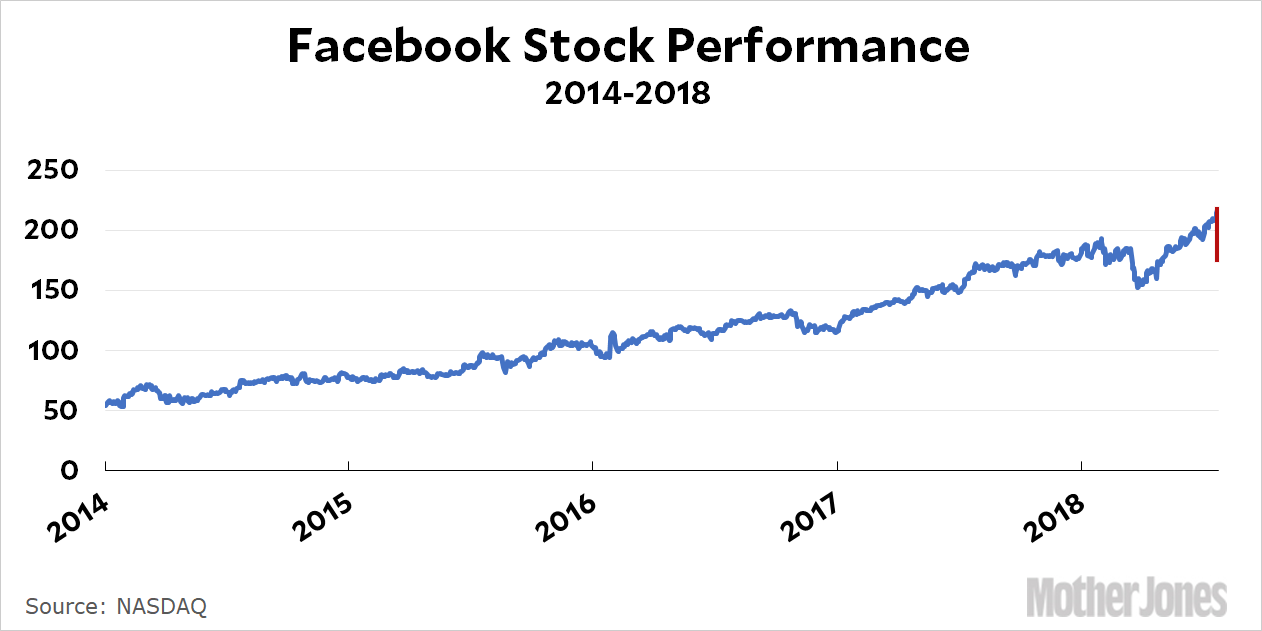
    The cost of years of privacy missteps finally caught up with Facebook this week, sending its market value down more than $100 billion Thursday in the largest single-day drop in value in Wall Street history. Worries about the rising costs of privacy regulations and controversies … played a key role in a major Wall Street selloff that started Wednesday night after Facebook reported earnings. Facebook’s stock closed down 19 percent Thursday, at its lowest level in nearly three months.

    Well, maybe. There’s no question that Facebook’s share price took a huge hit:

    So what’s missing from the Post’s lead? First, there’s the phrase I omitted. Here’s the full sentence:

    Worries about the rising costs of privacy regulations and controversies, along with declining growth in users and revenue played a key role in a major Wall Street selloff that started Wednesday night after Facebook reported earnings.

    Second, a closer look at Facebook’s tumble shows that the earnings report itself produced only a modest drop. Revenue growth was slightly disappointing and user growth was pretty anemic, which caused a 7 percent drop—nothing to sneeze at, but not panic selling either. Apparently investors heard the numbers and weren’t, in fact, worried much about privacy regulations even after months of frenzy about it. The huge drop came only after Mark Zuckerberg finished the blah-blah portion of the earnings call and CFO David Wehner took over. Facebook’s growth rate, he said, would probably drop about 20 points by the end of the year. That was when the panic started, as the Wall Street Journal’s intraday trading chart shows:

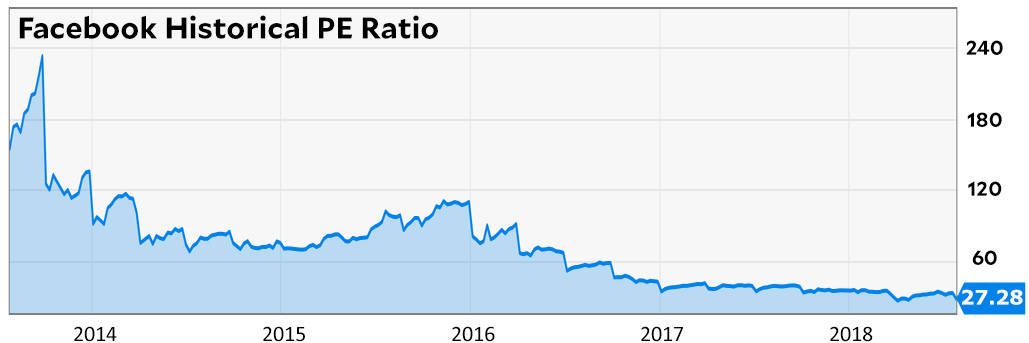
    Wehner was actually pretty insistent that his dismal forecast was only slightly related to privacy issues. Maybe that was happy talk, maybe not. But it almost doesn’t matter. If we take him at his word, the slowdown is actually because Facebook’s core growth is slowing and they’re focusing more on new products that produce less revenue. Conversely, if we assume that Wehner was sugarcoating Facebook’s privacy problems, it means Facebook’s core business is slowing because those privacy problems are real and permanent. And it’s not as if investors haven’t been expecting this for a while:

    If we assume a steady-state PE of around 15, Facebook has been steadily declining in that direction for years, which is perfectly normal. Nonetheless, it’s not there yet and it’s still trading at a multiple that assumes earnings growth well in excess of normal. One way or another, Wehner put a huge bullet hole in that assumption, and Facebook’s stock reacted the way high-flying tech stocks usually do to bullet holes: they crash.

    Tech investing in fast-growing companies is always a game of musical chairs. Professional investors aren’t idiots, and they know that high growth can’t last forever, but they can’t afford to pull out of a stock while everyone else is still playing the game. So they watch nervously, ready to panic when the right excuse presents itself. This week it did.

    I have my doubts that Facebook is truly endangered by the latest round of privacy outrage. But it doesn’t matter. Wehner made it pretty clear that growth is slowing no matter what. After all, when you have 2 billion users and already own a huge percentage of the online advertising market, how much upside is there? Unless that newly discovered lake on Mars is really an underground martian city and it turns out that martians are eager to gossip with earthlings about Demi Lovato’s latest problems, there’s a limit to Facebook’s future market.

  • Democratic Governors Are All Kind of Meh

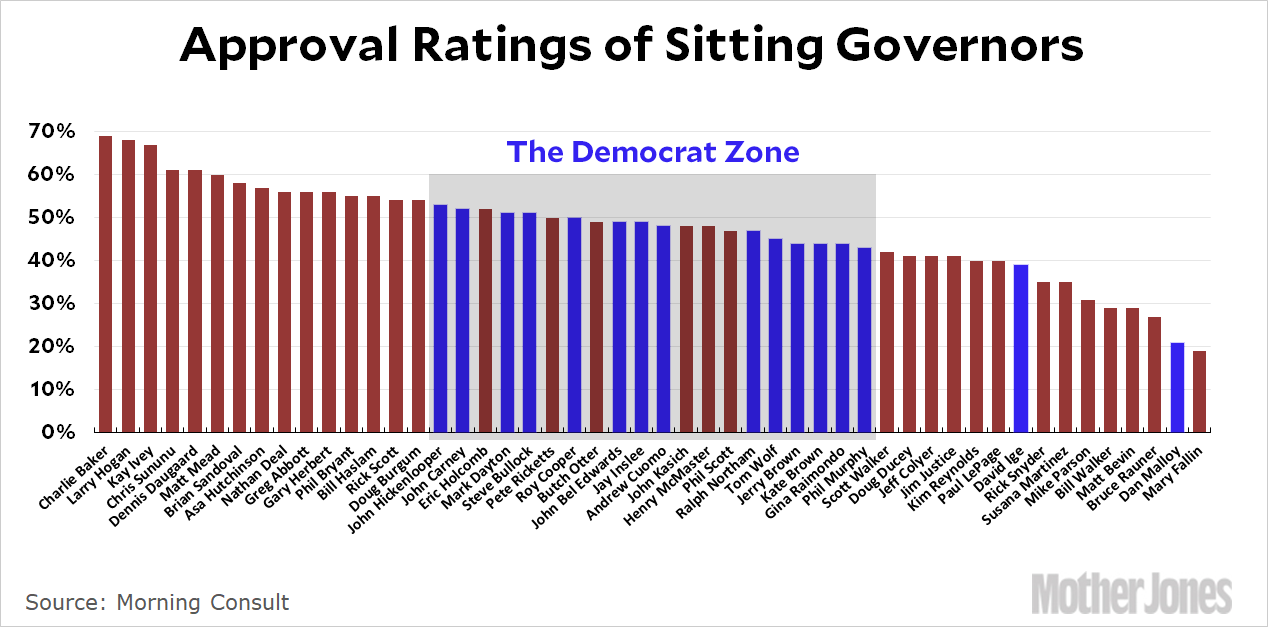
    Over at National Review, Ramesh Ponnuru notes that Morning Consult’s list of popular governors is 100 percent Republican in the top ten. And that’s unusual: “I calculated the chance that all ten of the most popular governors would be Republicans just based on their dominance of governorships at 0.9 percent.”

    I think there might be more going on here than pure arithmetic, but set that aside. When I clicked the link I was a little puzzled to find that the least popular governors were also Republicans. With only a few exceptions, Democratic governors exclusively occupy a zone of mediocre popularity:

    What’s going on here? A bit of research might shed some light, but I’m too lazy for that. Instead, I’ll toss out a few possibilities:

    • Republicans really hate Democrats and when Republicans respond to polls they virtually all disapprove of Democratic governors no matter how they’re doing.
    • Democrats whine and moan about their Democratic governors more than Republicans do about their Republican governors. Republicans tend to coalesce around their governors more than Democrats do.
    • Republican governors are more likely to have Republican legislatures, which makes it easier to get things done.
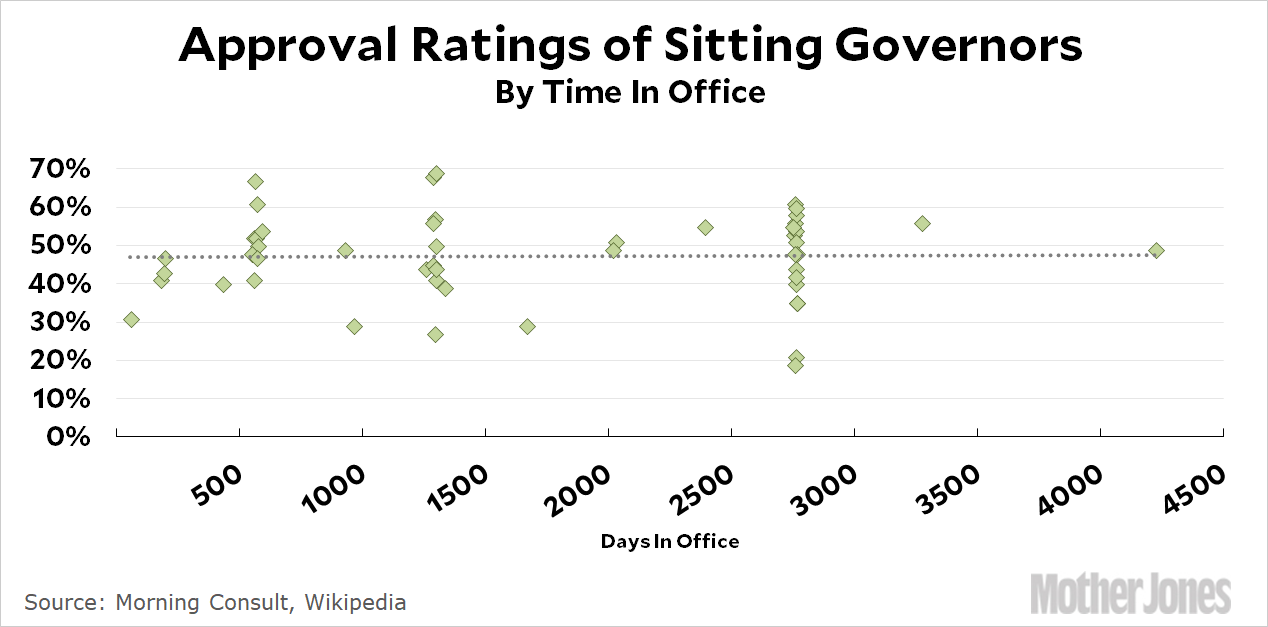
    • Newly-elected governors tend to be more popular, and we just happen to have a bunch of newly elected Republicans right now. For some reason I got kind of curious about this one, so I checked it out:

      Nope, nothing there, not even the tiniest correlation. That’s actually kind of peculiar, isn’t it? Granted, things are messed up by the fact that so many governors take office during the same week in January every few years, but still, you’d expect something. Butch Otter has been governor of Idaho for nearly 12 years, but he continues to putter along with dead average popularity.

    • On average, maybe Democrats just do mediocre jobs as governor.
    • Perhaps it’s something racial, but I can’t quite put my finger on it. Democrats are more likely to win governorships of urban states, and this forces them to walk a tightrope between the black and Hispanic voters who put them in office and the white voters in the rest of the state. That leads to lots of mushy decisions that please no one. Conversely, Republican governors in white states can pretty much ignore people of color and just do what their white supporters want. This makes them popular. As for the really unpopular Republican voters, well, maybe they just all fucked up somehow?

    Any other ideas? This would be nothing but an oddity except for the fact that governors often serve as the bench for presidential candidates. If Democrats are light on popular governors, that’s potentially a problem for presidential campaigns.

  • Here’s a Grammar Lesson for Internet Reporters

    Last week some old tweets from around 2009 “resurfaced” in which director James Gunn made some tasteless jokes about pedophilia. He was subsequently fired as director of Guardians of the Galaxy 3.

    A few days ago, a pilot from 2009 “resurfaced” in which director Dan Harmon made some tasteless jokes about pedophilia in a parody of Dexter.

    Today a tweet from 2009 “resurfaced” in which comedian Sarah Silverman made a tasteless joke about pedophilia.

    But tweets don’t resurface themselves. So who did it? Southpaw explains:

    (Praxis: a customary practice or conduct. In other words, internet trolls have deliberately chosen “resurfacing” as a way of producing confusion and revenge. That’s why you’re suddenly seeing it so often.)

    This is generally true of tweets and other internet memes: they mostly don’t “resurface” for no particular reason. Some actual person with an axe to grind spends hours or weeks plowing through old archives in order to find ancient material like this. Even when it’s obviously a joke—tasteless but still a joke—they know that it might damage the target’s career.

    Why bother? Not because anyone cares about these specific people. They’re discovered at random, after all. The reason is so that genuinely hateful tweets and social media posts from neo-Nazis and white nationalists can be played down when they’re discovered. After all, “everyone does it,” right?

    Everyone who plays along with this game, from Disney all the way down to beat reporters producing a quick deadline post or a 30-second segment, needs to understand the role they’re playing. It’s not benign and it’s not accidental. So give some thought to how you handle this stuff. Explain the context. Find out where it first “resurfaced.” Don’t just be a pawn in service of internet trolls and flamers.

  • Lunchtime Photo

    This is a small copse of daisies at Knockreer House in Killarney National Park. I shot this on the way out, just after taking a bunch of pictures of the famous Knockreer red deer.

    UPDATE: I am informed that these are not daisies, but a “noxious weed” known as Tansy Ragwort. Really? It doesn’t look all that noxious to me.

    MORE ON RAGWORT! “In the Republic of Ireland, the Noxious Weeds (Thistle, Ragwort, and Dock) Order 1937, issued under the Noxious Weeds Act 1936, declares ragwort as a noxious weed, requiring landowners to control its growth.”

    September 25, 2017 – County Kerry, Ireland
  • Is the Emoluments Clause the Key to Finally Seeing Trump’s Tax Returns?

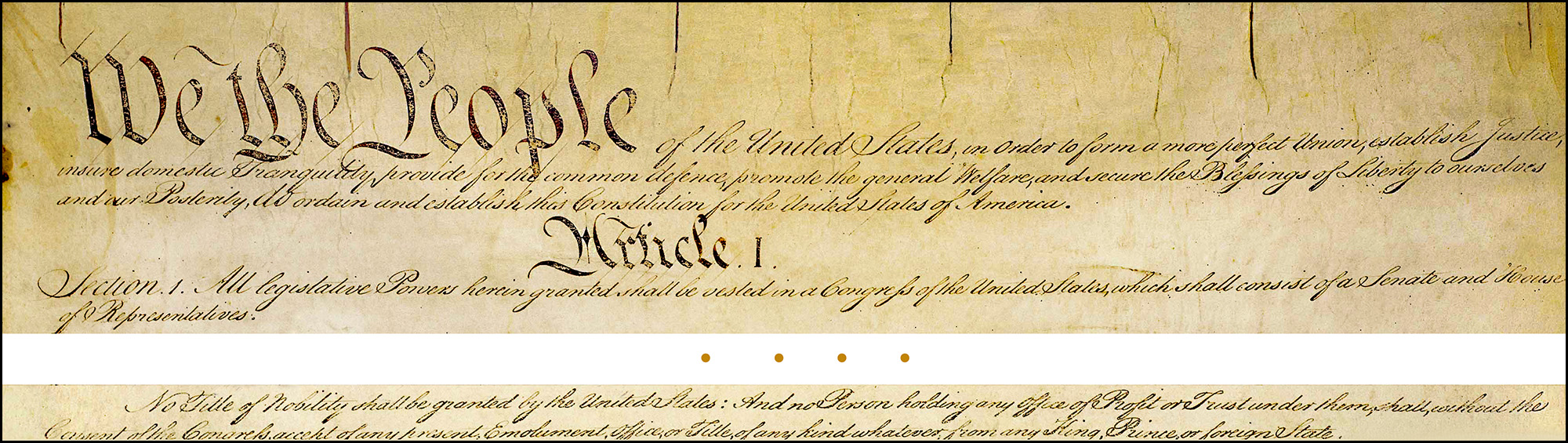
    Conservative law professor David Post takes a look at Wednesday’s district court opinion in the “emoluments” case against Donald Trump and finds it oddly persuasive:

    The dispute centers almost entirely, at least at this stage, on the meaning of the term “emolument.” The plaintiffs assert, in essence, that the Trump Organization’s profits from ordinary business transactions — profits that, as the court notes (see footnotes 7 and 8), go into Trump’s pocket, given his continuing ownership of the Trump Organization and the feeble “trust” he set up to hold his ownership stake, which allows him to withdraw money in any amount at any time for any reason — is an “emolument”; the term, in their view, covers “any profit, gain, or advantage.”…So when a foreign government makes payments to the Trump Organization for the use of the facilities at the Trump Hotel in Washington — as several have done — this is an “emolument … from [a] foreign State” and therefore violates the Foreign Emoluments Clause.

    ….Trump has a different, narrower, interpretation of the term; he argues that it covers only profits “arising from an office or employ.” That is, a payment is only an “emolument” if it is made in connection with official actions, as “compensation for official services.” The President cannot, say, accept a payment from the government of France for giving a speech to the French parliament, or for serving on the Academie Francaise (in his official capacity).

    ….The court adopted the broader reading pressed by the Plaintiffs, and I have to say that, at least on first reading, I find its analysis to be awfully persuasive. Judge Messitte looks pretty carefully both at internal, textual consistency and the “original public meaning” of the term at the time of the ratification of the Constitution, and all evidence — including pretty overwhelming evidence from Founding-era dictionaries and legal texts — does seem to point to the broader interpretation.

    ….The political fallout from this ruling could be quite substantial, to put it mildly. Not because it will reveal any “emoluments” that haven’t already been reported on, but because the court could now allow the parties to proceed to discovery, and that could be the first time that the public gets a close look inside the Trump financial empire — at Trump’s tax returns, for example, which would almost certainly be relevant evidence in regard to the nature and scope of the payments that Trump has received to date….Those of us who harbor serious doubts about our President’s integrity and law-abiding nature have believed for a while that he’s hiding something in there, and we may be about to find out whether we’re right or not.

    This is a bit dense, but the bottom line is that Post thinks (a) Trump is violating the emoluments clause, and (b) if a court agrees, it will probably allow the plaintiffs to get a look at Trump’s tax returns in order to find out just how substantial the emoluments are.

    This frankly sounds a little too good to be true, but you never know these days. Stay tuned.

  • Here’s What the Future Orange County Looks Like

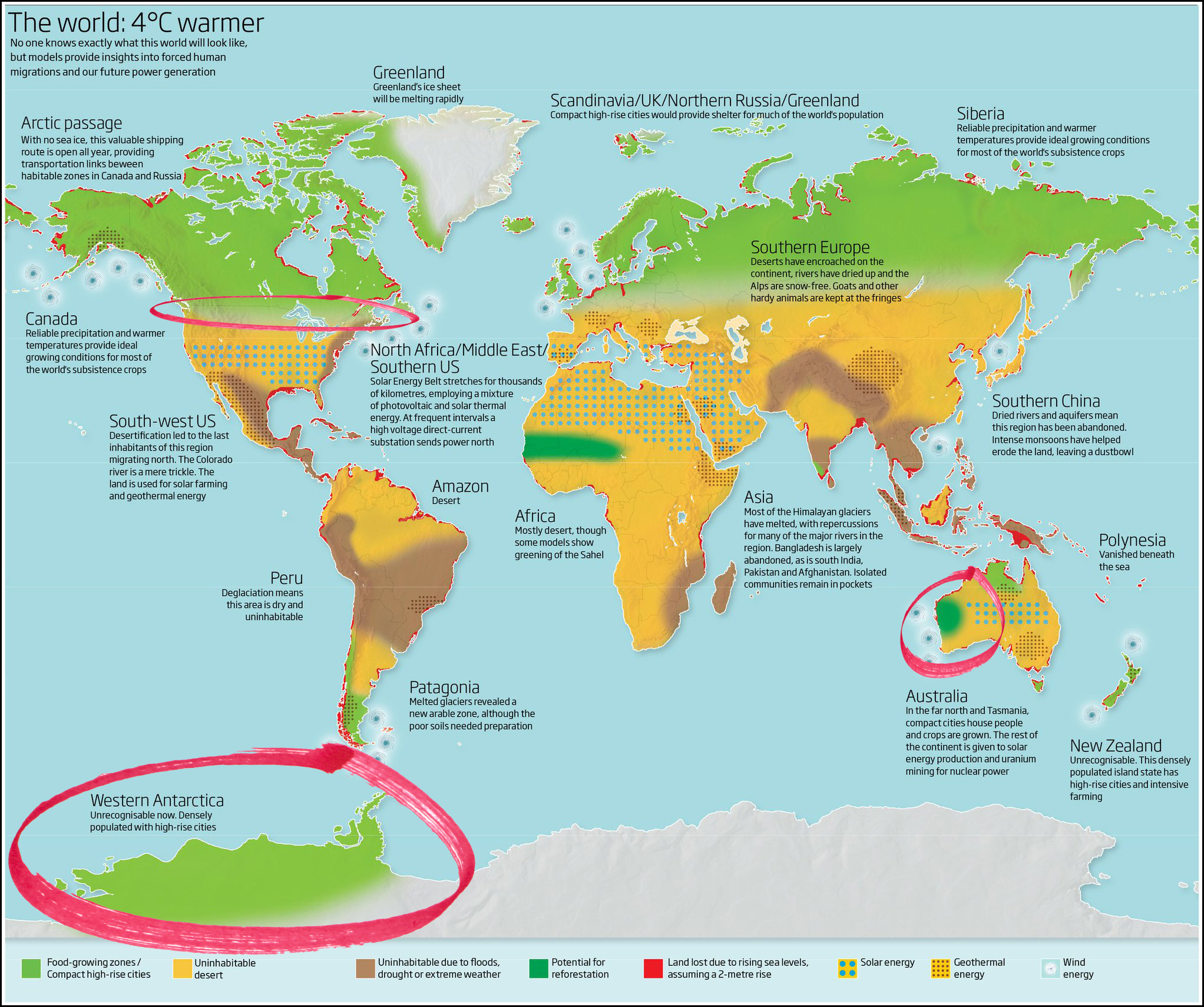
    New Scientist magazine has created this map of what the world will look like after an additional warming of 4ºC or so. It looks like Orange County is no longer either red or blue, but more of an uninhabitable yellow with every square meter crammed with solar generators.

    On the bright side, life in Western Antarctica looks pretty nice. Dense high rises, just like the liberal urbanists want, and plenty of food growing zones. Sightseeing tours to see penguins will be easier than ever. There’s probably still some good skiing in the Ellsworth Mountains, and if not, the Transarctic Mountains are a short plane ride away.

    Alternatively, if you want to make plans more quickly, the northern US from Seattle to Minnesota looks awfully nice. You can buy land pretty cheap up there right now.

    Finally, there’s Perth. I’ve always had a soft spot for Perth, even though I’ve never been there. It’s labeled “potential for reforestation,” but I’m sure that means there are some nice temperate areas here and there on the margins? And plenty of energy! New Zealand will apparently be a garden spot too.

    Of course, Africa, Asia, South America, most of the United States, most of Australia, the Middle East, and all of Europe south of Siberia will be howling wastelands. Omelets and eggs, you understand. But not to worry. Just as in the movie 2012, I’m sure that rich people like you and me will find a nice place to survive.

  • Here’s What the New Orange County Looks Like

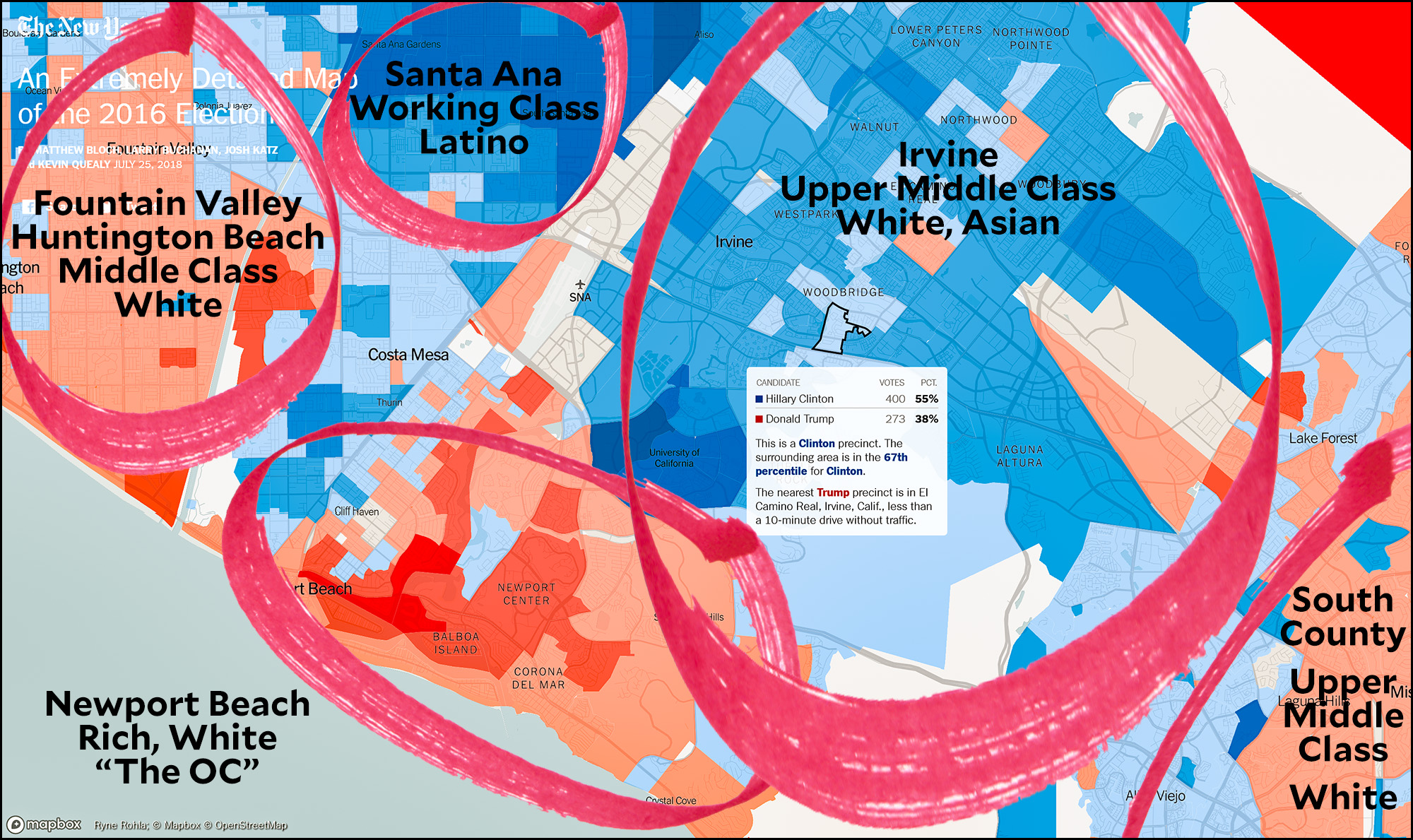
    The New York Times has a lovely precinct-level map of the 2016 election, so naturally the first thing I did was check out my own neighborhood. This isn’t all of Orange County, but it’s a big chunk of it:

    The beach areas of Orange County are still largely white and either middle class or richer. This is Republican country. The northern part of the country is working class and increasingly Latino, and has been turning Democratic for a long time. In the middle you have my hometown of Irvine, which is less rich than Newport Beach; less old school than Huntington Beach; less Latino than North County; and less white-flighty than South County. It is well educated, upper middle class, and welcoming to Asians, who have settled here in large numbers. As a result it has become steadily bluer over time. My precinct, which is smack in the middle of one of the older parts of Irvine, voted for Hillary Clinton by a margin of 55-38. UC Irvine, in the lower left, is a hotbed of liberalism, of course.

    We’ll see how that translates this year. A door knocker came by yesterday asking if I planned to vote for Katie Porter, the progressive Democrat who beat out moderate Dave Min in the primary last month. “A lot of your neighbors are Democrats,” he said with a bit of surprise, and that’s true. Still, it’s one thing for them to vote against Donald Trump, it’s quite another to vote against the cautious, well-coiffed, virtually invisible Republican Mimi Walters in November. We’ll see. But I’m afraid CA45 is not generally considered a great pickup opportunity unless the blue wave turns into a blue tsunami.

  • White House Press Office Reverts to Kindergarten

    "Focus now. You ask her if we ever used the word 'ban' "Fox News

    I know you all want to be up-to-date on the latest juvenile behavior from the White House, so here you go. In the first video, Kaitlan Collins, a pool reporter from CNN, does the usual pool reporter thing:

    The White House press staff was outraged by this totally normal behavior and issued a statement: “Our staff informed her she was not welcome to participate in the next event.” That seems clear enough, no? Well, no:

    I’m especially amused by Shine’s condescending instruction to reporters to “focus now,” while refusing to answer any questions until they first ask Collins if Shine ever used the word “ban.” Apparently now we’re going to play some kind of White House version of Password:

    “Um, forbid”

    “Prohibit”

    “No, like in boycott”

    “Embargo.”

    “No, no, um, blackball.”

    “Ban.”

    “Close, close, but not quite as definitive.

    “Not welcome?”

    “Bingo!”