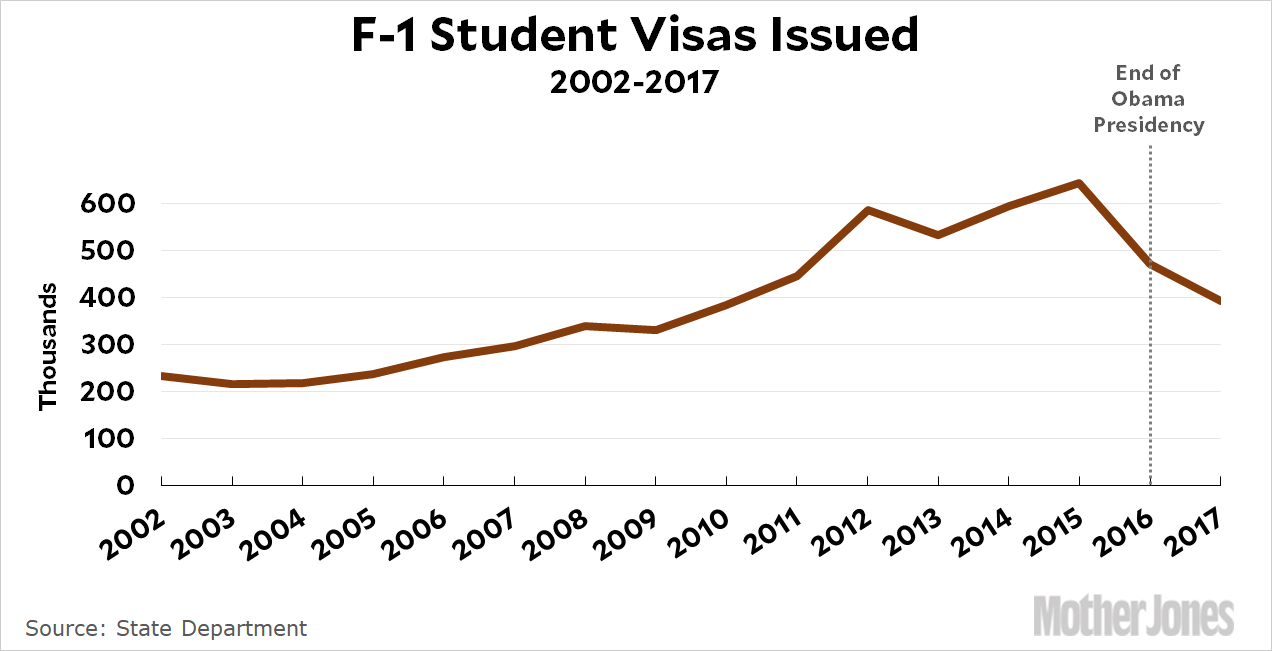
The number of visas issued to foreign students fell markedly last year amid stricter immigration policies, State Department data show….Some of the slide can be attributed to stepped-up competition from schools in other countries and less support for foreign study by some governments. But immigration attorneys and school officials say Trump administration policies are making the U.S. a tougher destination for foreigners and point to stricter scrutiny of those who do apply.
I am, needless to say, ready to believe this, but State Department data (here and here) doesn’t really back it up:
I don’t know what happened in 2016, but that was when the biggest drop occurred—and it happened on President Obama’s watch. The decline continued during President Trump’s first year, but at a lower pace.
Why did the Obama administration reduce student visas by 27 percent in its final year? Or were there simply fewer applicants? The 2016 figures were released after Trump’s inauguration, so all the stories about it were Trump-centric. But the decline itself happened while Obama was still president. What’s the explanation?
The White House on Sunday vowed to help provide “rigorous firearms training” to some schoolteachers and formally endorsed a bill to tighten the federal background checks system, but it backed off President Trump’s earlier call to raise the minimum age to purchase some guns to 21 years old from 18 years old.
….The Trump plan does not include substantial changes to gun laws….Rather, the president is establishing a Federal Commission on School Safety, to be chaired by Education Secretary Betsy DeVos.
….The White House plan released Sunday does not address the minimum age for gun purchases. Pressed by reporters about the apparent backtracking, a senior administration official said the age issue was “a state-based discussion right now” and would be explored by DeVos’s commission.
Who could have guessed that Trump would cave in to the NRA after all his tough talk? That is, other than everyone?
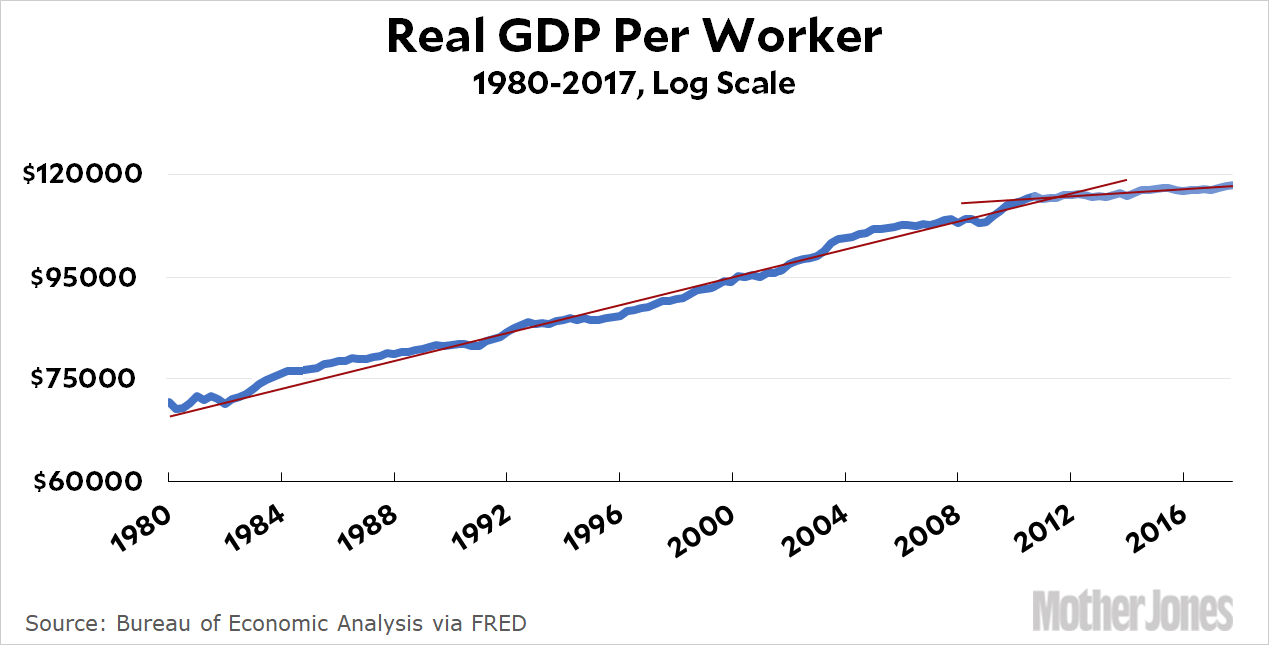
Here is GDP per worker in the United States. It’s on a log scale so that it’s easier to see the inflection point in 2010:
We never really recovered from the Great Recession. Unemployment is down and wages are starting to rise, but worker productivity flattened suddenly in 2010 and never regained its old growth rate. As of 2017, it still hadn’t.
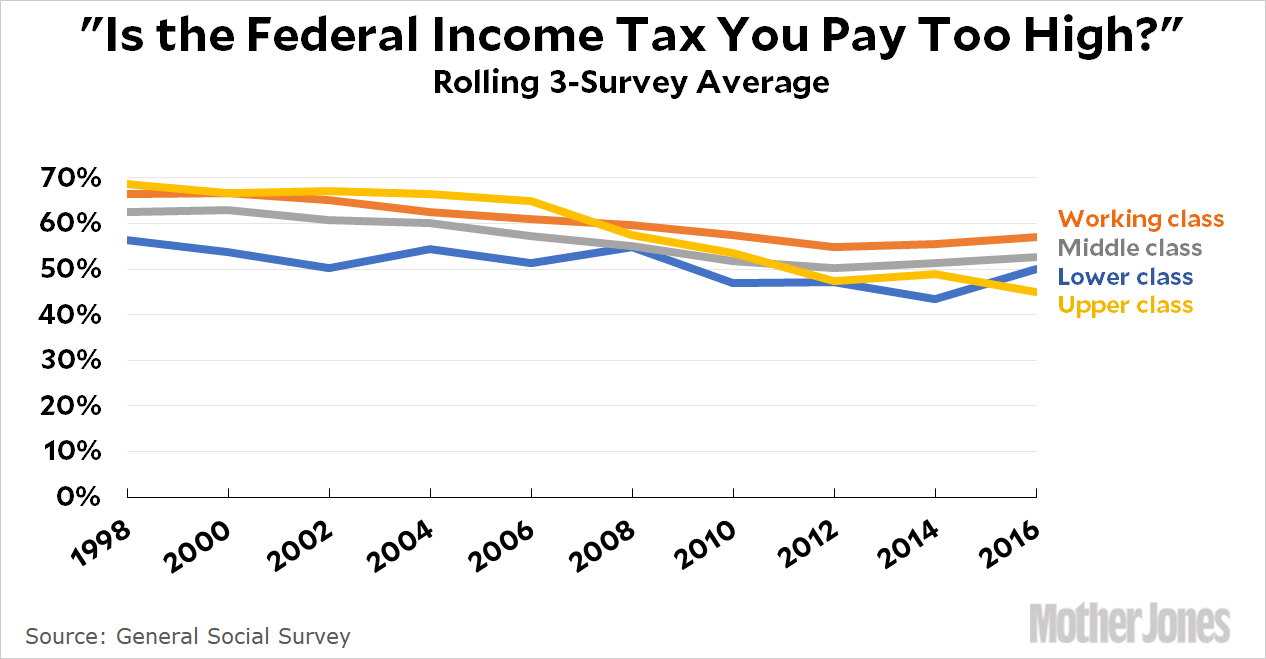
A Twitter conversation this afternoon got me curious about something. The biannual General Social Survey asks people what they think about the federal income tax. In 1994, when Newt Gingrich and the Republican Party were hammering Bill Clinton on his tax increase, we saw a sharp jump in the number of people who thought the federal income tax was too high. Since then, the number has gone steadily down:
There are several interesting things about this:
There’s not really that much difference between classes. From lower all the way to upper, there’s only about ten percentage points of separation.
The lower class has paid negative income tax since 1988 and the working class has paid negative income tax since 2001. How is it possible that half of them think this is too high?
The middle class pays an average income tax rate of about 4 percent. Again, how can so many think this is too much?
The upper class, which has gotten steady tax cuts since the late 90s, has seen a steady decrease in the number who think they pay too much. This kept going down during the Obama presidency, and even Obamacare and the 2012 “tax cliff” standoff didn’t faze them much.
Now, one possibility is that respondents were thinking about all federal taxes, not just income taxes, when they answered this question. That’s possible, especially outside the upper class. But even if you account for that, the lower class still pays a negative rate and the working class pays about 8 percent. It seems hardly plausible that either of these groups truly think these rates are out of line.
So what accounts for this? Part of it is just politics. Politicians constantly tell people that too much of their hard-earned money goes to taxes, so that’s what people think. Besides, when they look at their paycheck, net pay is a lot less than gross pay. The fact that this gap includes federal withholding plus Social Security plus Medicare plus state taxes may not really make much of an impression. Nor does the fact that for many of them, this withholding is made up at the end up the year via the EITC or a tax refund.
And one other thing: for folks in the middle class and below, literally everyone tells them their tax rates are too high. Republicans say it because they say that to everyone. Democrats say it because they’re constantly complaining that Republican tax cuts are regressive and the middle class is getting cheated. If both Republicans and Democrats agree that your taxes are too high, how could you think otherwise?
Whatever the case, by 2016 we had reached the absurd point where high earners—who really do pay a substantial amount of federal income tax—were more satisfied than all the other classes, who pay almost no federal income tax at all. This is a crazy world.
As long as we’re on the subject of art this morning, let’s just go ahead and say it: One of our most beloved classics of literature isn’t really very good. I’m talking about A Wrinkle in Time.
Now, before hordes of baby boomers rush to @ me on Twitter, let me acknowledge a couple of things. First, it’s a children’s book. I get that. And second, if you loved it as a child and still retain warm memories of it, that’s fine. We all do that.
But. It so happens that I never read it when I was a kid. I don’t know why. So I read it last year, and even by kid standards it didn’t seem very good. I had a feeling I knew why I felt that way, but I wasn’t sure. So I read it again yesterday, and now I’m sure.
The book’s big problem is that we never really know why anything is happening. How did Mr. Murry end up on Camazotz? By accident, I suppose. Fine. But why do the Mrs. W’s care so much about a single person from a remote world? We never know. Why did they wait a year to mount a rescue? We never know. Why couldn’t they rescue him themselves? We never know. Why did it have to be Mr. Murry’s family? We never know. What was the point of taking Charles Wallace to Camazotz, other than to create a hostage? We never know.
I could go on and on. Even as an adult, I couldn’t really make sense of the book. A lot of stuff happened, but none of it seemed to follow from what had gone before. It just happened. I suppose kids might not care so much about that as long as there’s plenty of colorful action, but even most kids’ books are a little more motivated than Wrinkle in Time.
Anyway, it struck me as something of a precursor to the modern sf-ish movie spectacle: lots of action, but a story that either makes no sense and no one cares about or, at best, is motivated by a transparently pointless MacGuffin. You’d think that would make Wrinkle in Time a perfect movie for our era, but apparently not. Perhaps the filmmakers never quite understood what kind of property they had on their hands.
Chris Richards writes today in the Washington Post that we are routinely “freaked out” about music. I’m not so sure about that, but let’s go with it. Here’s his explanation:
It’s distressing to be reminded that the world is filled with corporations that will work relentlessly to monetize every moment of our lives — especially because those moments are finite. And I think this is where our underlying angst over streaming originates. Listening to music on streaming platforms ultimately reminds us that there are lifetimes upon lifetimes of recorded sound that we won’t live long enough to hear.
Both of these statements are true. But they’ve been true for a very long time. They’ve been true of music, books, movies, sporting events, paintings, and just about every other form of art in existence. More than that, though, critics have been moaning about the commodification of art for as long as art has been around. Has anything really changed that much just because we now consume music through iTunes and Spotify?
That said, I’ll confess that the monetization of every moment of our lives really does seem a lot more obvious than it used to, and it can be both tedious and demoralizing. This is one reason I was never upset that the geekosphere failed to create a workable micropayments architecture for the internet. Do I really want to have make dozens of decisions, day in and day out, about whether I feel like spending a penny or a dime on something? No I don’t. I think we dodged a bullet there.
I’ve just been told, “Nobody reads science fiction any more.” Can we *please* prove that wrong? Please retweet if you’re a fan of written SF. Let’s make our voices heard. pic.twitter.com/EMubcY2Hqc
Why timely? I don’t keep up with sf as much as I used to, but last night I decided I was in the mood for some. So I browsed through new releases for the past three months. I immediately crossed off (a) fantasy novels and (b) anything that was book x of y. In other words, all I wanted was a single-volume sf novel that wasn’t part of an ongoing series.
After doing that, there were maybe four or five books left to choose from. Some just didn’t look like my cup of tea, as some books don’t. In the end, there were two books left on my list. I bought one of them. So far it’s not very good.
Obviously I’m in a minority. There’s a lot of fantasy out there because it’s popular these days. There are also lots of novels that are part of continuing universes because that’s also popular these days. But it leaves those of us with more old-school tastes without a lot of choices. This is why I don’t read all that much sf anymore.
POSTSCRIPT: I read both multi-volume fantasy (is there any other kind?) and multi-volume sf, though only after the entire series has been published. According to my Nook library, the most recent fantasy series I’ve read is N.K. Jemisin’s Broken Earth, and the most recent sf series is Cixin Liu’s Three-Body Problem. However, my usual preference is for self-contained sf. According to my Nook library, I’ve managed to read a grand total of two such books over the past year or so: Connie Willis’s Crosstalk and Cory Doctorow’s Walkaway.
When we were at Yosemite National Park a few weeks ago, we happened to be there during peak Horsetail Fall season. We didn’t plan this. It was just a coincidence. Nevertheless, there we were, and so we heard the story of Horsetail Fall two or three times. It goes something like this:
Horsetail Fall was discovered by a hiker/rock climber named Galen Rowell in 1973. He noticed that at just the right time, in just the right month, it would light up so brilliantly that it looked like a firefall. He and his buddies were on the Manure Trail or somesuch when they discovered it, so they jokingly named it Horsetail Fall. They didn’t tell anyone, though, and it remained unknown. Eventually Rowell shared a photo, and it made the rounds of Yosemite insiders. Then social media exploded, and now everyone knows about Horsetail Fall.
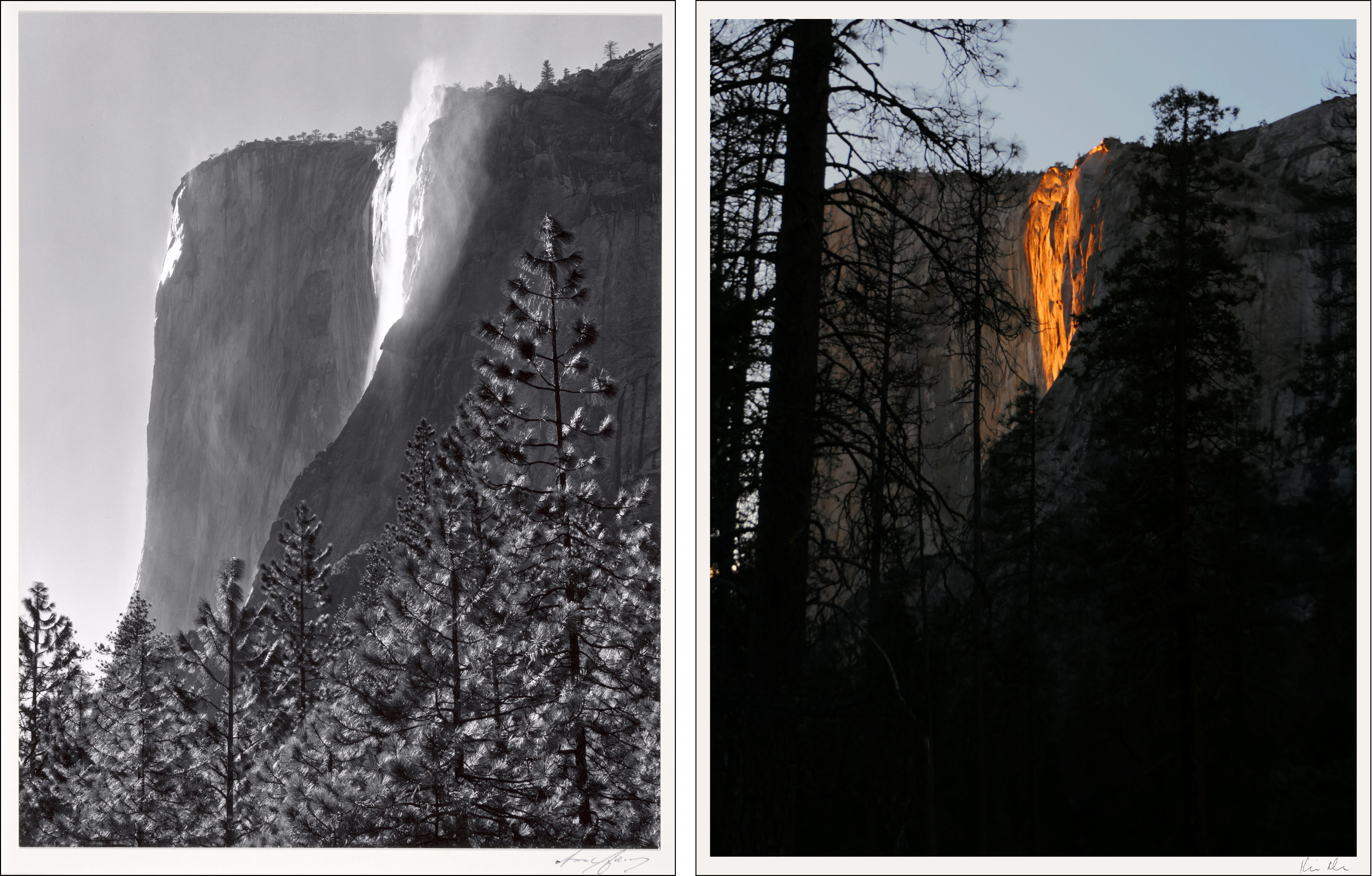
This story seems pretty unlikely. Nobody ever noticed it before? You can see Horsetail Fall from the main road exiting the park. Thousands of people have seen it every year for the past century, including a famous photographer or two:
The Ansel Adams picture is from 1959, taken from the same spot as the Kevin Drum picture from 2018. The Adams print is called “El Capitan Fall.”
Obviously this waterfall was no secret. So how is it that nobody before 1973 noticed the brilliant firefall effect during late February sunsets? This is something that everyone agrees about: there’s no record from either native American tribes or the white settlers who came later that they noticed the firefall effect. This is truly strange. Did something happen in the 1970s that changed the color of the sunset? Did the path of the waterfall shift slightly?
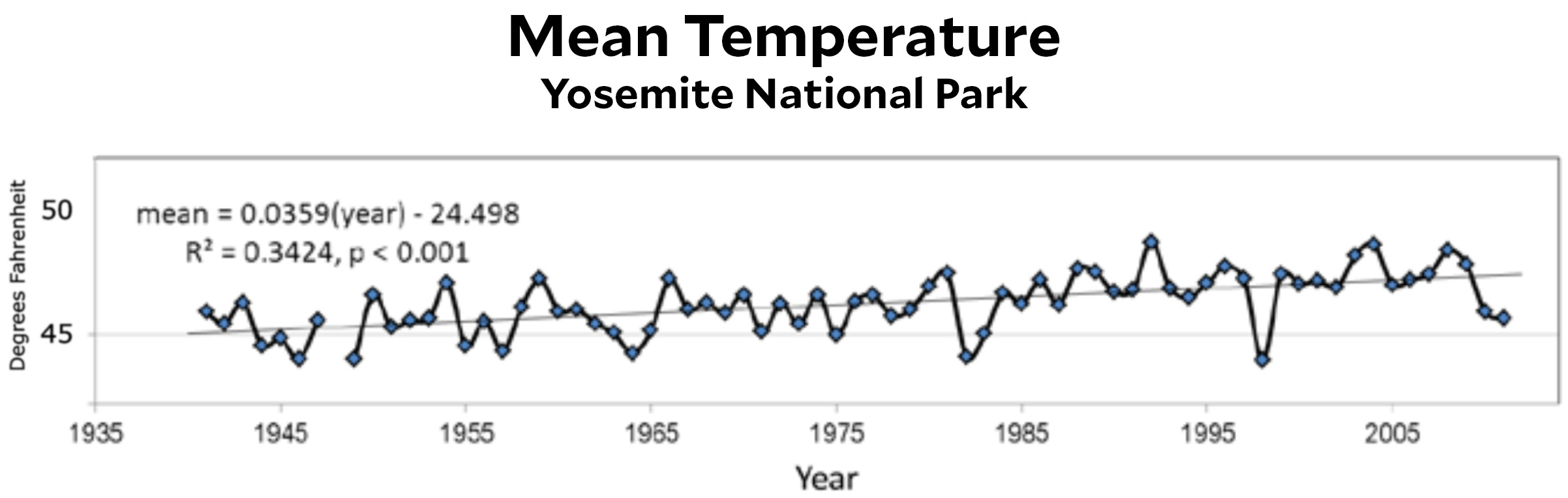
Or is climate change to blame? Horsetail is an ephemeral fall, and it appears only in winter and spring, beginning when the snowpack starts to melts. Maybe in the past that didn’t happen until March 1—too late for the firefall effect—but now it typically happens in mid-February thanks to rising temperatures?
This weather station series is for the whole park so it doesn’t tell us specifically about temperatures in February or temperatures in the vicinity of the melting icepack. And there are certainly individual warm years before 1973. Still, the evidence is consistent with the idea that the firefall effect might not have become a regular occurrence until the 1990s or so, and was missed before then because it was so sporadic.
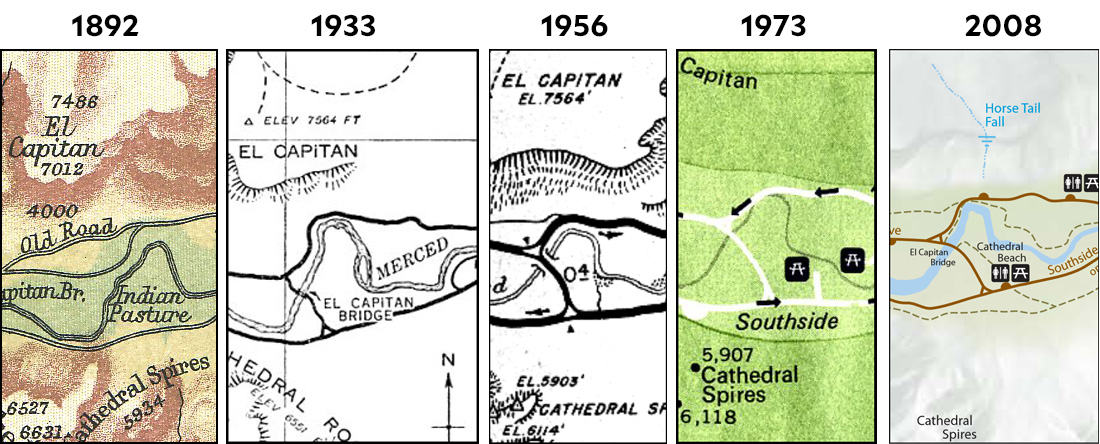
It’s also the case that although Horsetail Fall is easily visible, it’s a fairly minor waterfall in a park full of iconic ones. Most ephemeral falls aren’t named, and they don’t show up on maps either. I can’t find a record of the fall—or even the creek that feeds it—on any map prior to about 2008:
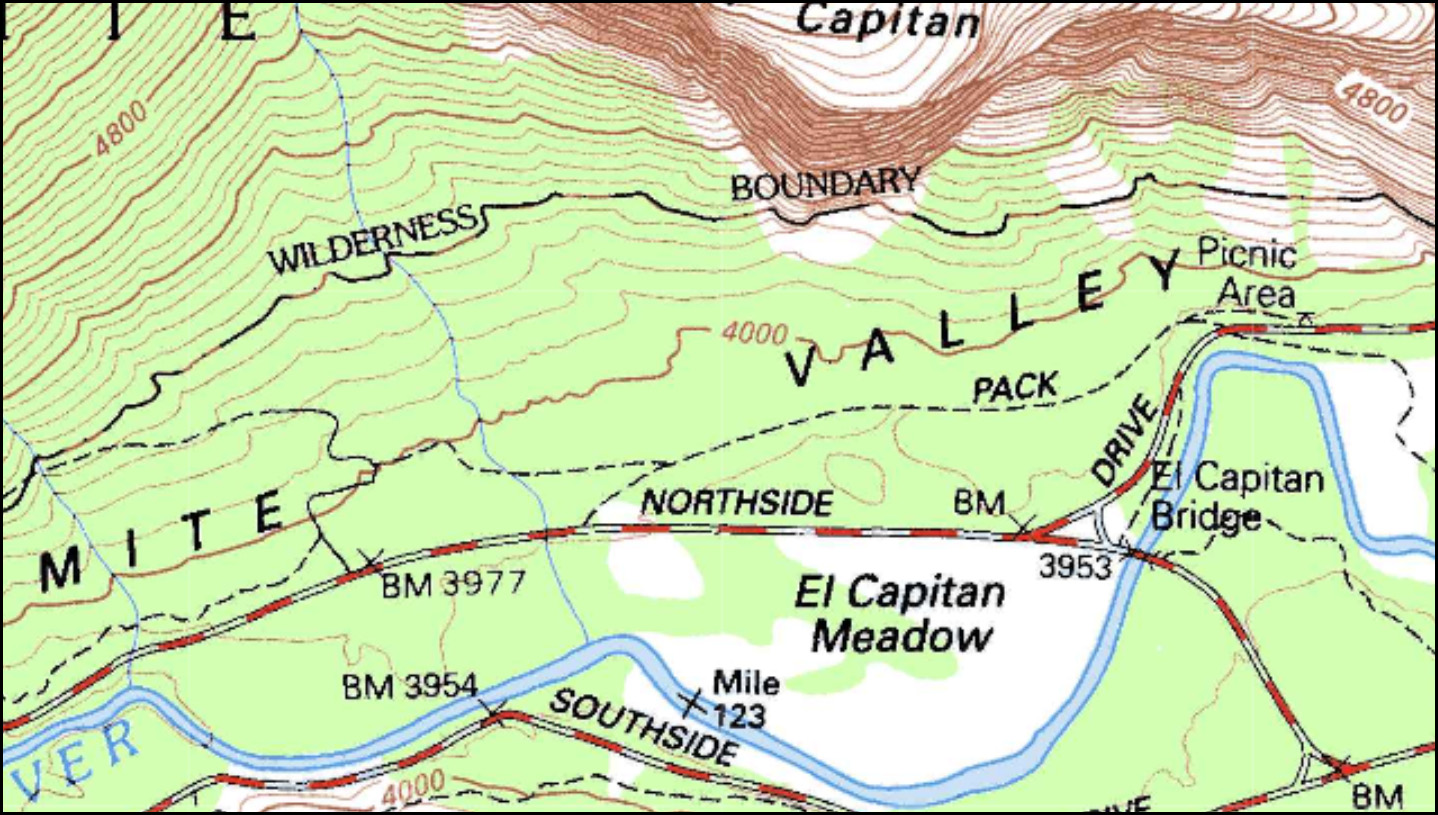
Despite a 1,600-foot drop, Horsetail is apparently too insignificant to show up even on a detailed modern topographic map:
It’s a mystery. Climate change is my best guess for the weird Horsetail Fall tale, but feel free to chime in with your own theories.
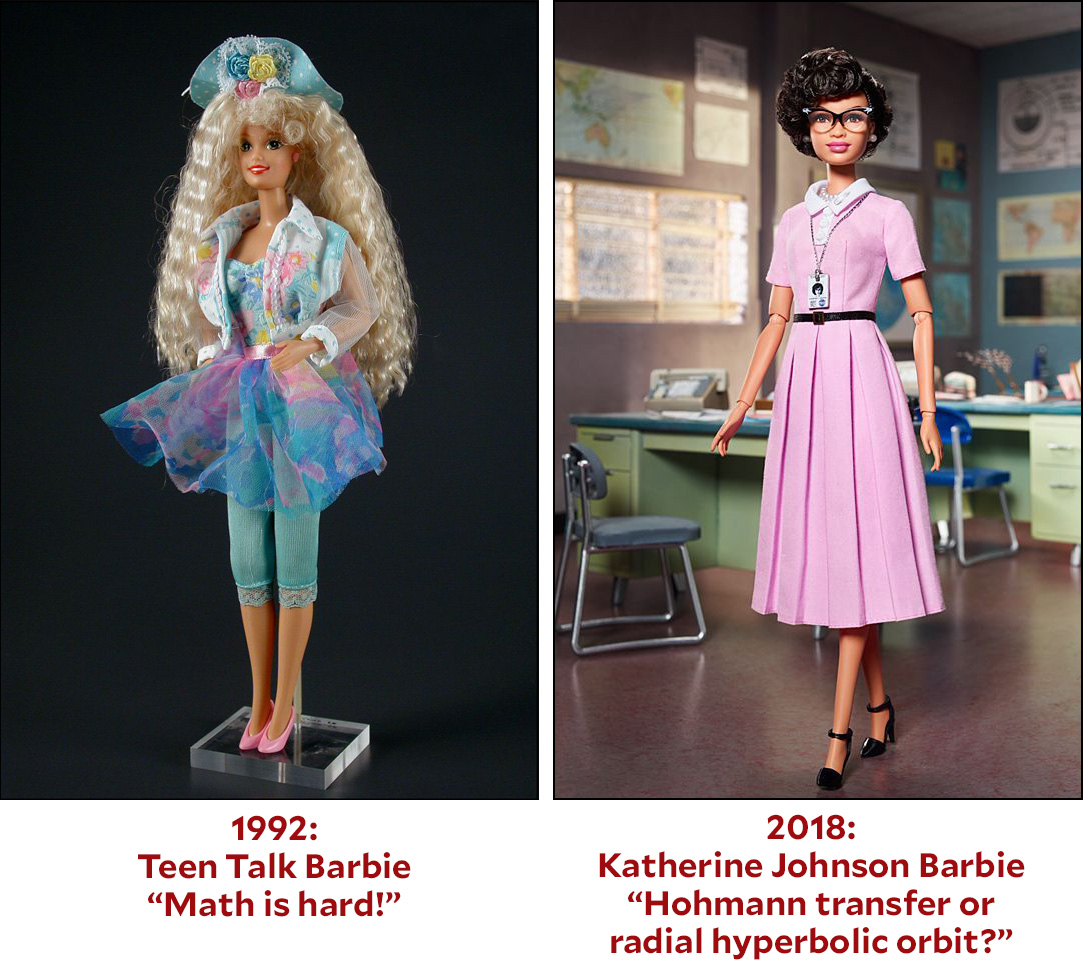
We may have a long way to go, but at least we’ve made a little progress:
Sadly, the Katherine Johnson Barbie is “for the adult collector,” along with Amelia Earhart Barbie and Frida Kahlo Barbie. For those who think Kahlo’s life has been egregiously airbrushed and turned into little more than a cult-like commercial property, this is perhaps the final insult.
The price of the California bullet train project jumped sharply Friday when the state rail authority announced that the cost of connecting Los Angeles to San Francisco would be $77.3 billion and could rise as high as $98.1 billion — an uptick of at least $13 billion from estimates two years ago. The rail authority also said the earliest trains could operate on a partial system between San Francisco and Bakersfield would be 2029 — four years later than the previous projection. The full system would not begin operating until 2033.
I think that if the rail authority says the cost “could” rise to $98 billion, we can take that to the bank. This means that the new minimum estimate for the train is now $98 billion, up from $33 billion a few years ago. And there’s still no funding source for even a fraction of that. Nor is there likely to ever be unless the state legislature ponies up taxpayer dollars to build it out.
And of course, the estimates of ridership and travel time remain completely unrealistic, just as they’ve always been. Other than that, things are going swimmingly.
And we respect that! But maybe you’re of a mind to support our work directly instead? We have until December 31 to raise the last $400,000 we need to keep our nonprofit newsroom running at full strength into 2026. Will you make a gift today?
We noticed you have an ad blocker on. Can you pitch in a few bucks to help fund Mother Jones' investigative journalism?
Billionaires own the media,
but they don’t own us.
At Mother Jones we know these aren’t conventional times, and they require unconventional coverage. That’s what deliver every day: fierce, independent journalism you can’t find elsewhere. Perhaps never in the history of our country has that been more necessary than now. But we can’t do it without reader support—your support. Please chip in today.
Billionaires own the media,
but they don’t own us.
At Mother Jones we know these aren’t conventional times, and they require unconventional coverage. That’s what deliver every day: fierce, independent journalism you can’t find elsewhere. Perhaps never in the history of our country has that been more necessary than now. But we can’t do it without reader support—your support. Please chip in today.