It is 70 degrees. The weather is perfect. No cats were harmed in the making of this documentary.


It is 70 degrees. The weather is perfect. No cats were harmed in the making of this documentary.
Here’s the price-earnings ratio for the S&P 500 since World War II. Right now it’s hovering a little above 25. In the past three decades, it has never reached that point without leading quickly to either a deep correction or a full-blown recession.¹ Of course, we just passed a big tax cut even though the economy is running at 100 percent of its potential. So maybe that will inflate it even more, leading to an even bigger correction/recession than usual. Fun times.
¹If you’re wondering why the PE usually spikes upward during a recession, it’s because earnings crater faster than stock prices. When the denominator goes down, the PE goes up.

Tom Williams/Congressional Quarterly/Newscom via ZUMA
Under the new Republican tax law, big corporations will get a permanent tax cut of 14 percentage points. You will get a tax cut of about 1 percentage point—until it expires, that is, at which point your taxes will be higher than they are today.
That is all.

Lucasfilm
Warning: spoilers ahead.
I saw The Last Jedi earlier this week, and my reaction was a little different from the others I’ve seen. I didn’t love it, I didn’t hate it, and I couldn’t care less about the allegedly massive backlash from true-believer fans. My main gripe was something else entirely.
Any ongoing series, especially one that’s explicitly space opera, has to periodically introduce unexpected twists and turns. That’s what keeps people coming back to soap operas. In the original trilogy we got that. Empire introduced Yoda; we learned more about the Force; and Darth Vader was revealed as Luke’s father. Return of the Jedi delivered too. We finally met the emperor and learned just how powerful the Dark Side is. Leia was revealed as Luke’s sister. And Darth Vader turned at the end.
The prequels, no matter how much you like or dislike them, also delivered on this score. Phantom Menace showed us the origin of both Anakin Skywalker and the future emperor. Midichlorians, even if you found them ridiculous, were brand new and, potentially, interesting. Clones was weaker, but Boba Fett fans finally got an origin story and we learned all about the clone wars briefly mentioned in the very first movie. Revenge finally revealed why Anakin Skywalker turned to the dark side and how the Jedi order was wiped out.
Then we get to The Force Awakens. The fact that it’s all but a scene-by-scene remake of New Hope was bad enough, but it was also a plodding, by-the-numbers remake. There’s a new Sith lord and his apprentice. Been there, done that. Han Solo is flying around the galaxy with Chewie. Sure. The empire First Order builds another Death Star and the rebel alliance Resistance destroys it. Yawn.
But then, at the very end, we finally get thrown a bone: Luke Skywalker is exiled by his own choice on Ahch-To, and we don’t know why. That’s enough to keep interest alive in the next movie.
And that brings us to The Last Jedi. There is literally nothing new or unexpected in this movie. Luke, it turns out, is just on Ahch-To sulking over his own shortcomings. The backstory for Snoke could have been interesting, but he was summarily killed off and forgotten. Ditto for Rey’s backstory, which is casually deep-sixed. The relationship between Rey and Kylo Ren might have turned into an intriguing plot twist, but no. They turn into standard-issue enemies. In the meantime, we get the usual space battles in which an entire fleet of Star Destroyers apparently carries fewer fighters than a World War II-era aircraft carrier. Plus a 30-minute subplot designed to do nothing except resolve a completely invented crisis of cowardice from Finn.
I was not a big fan of The Force Awakens. But I guess I can say that at least the ending kept me waiting for the next episode. The Last Jedi is similar in one way: it’s well crafted, decently plotted, and lacking any real soul. But it’s worse because it doesn’t provide even a shred of anything resembling an interesting new twist. For the first time ever—even including the prequels—I don’t have much interest in seeing the next movie. Why would I?
The Washington Post writes today about seniors being forced to work forever thanks to the end of the traditional pension:
The way major U.S. companies provide for retiring workers has been shifting for about three decades, with more dropping traditional pensions every year. The first full generation of workers to retire since this turn offers a sobering preview of a labor force more and more dependent on their own savings for retirement.
….The notion of pensions — and the idea that companies should set aside money for retirees — didn’t last long. They really caught on in the mid-20th century, but today, except among government employers, the traditional pension now seems destined to be an artifact of U.S. labor history….In place of pensions, companies and investment advisers urge employees to open retirement accounts….The trouble with expecting workers to save on their own is that almost half of U.S. families have no such retirement account, according the Fed’s 2016 Survey of Consumer Finances.
None of this is wrong, but it presents far too rosy a picture of the past. Traditional pensions never covered more than half the workforce, and until the 70s more than a quarter of all men worked past 65:¹
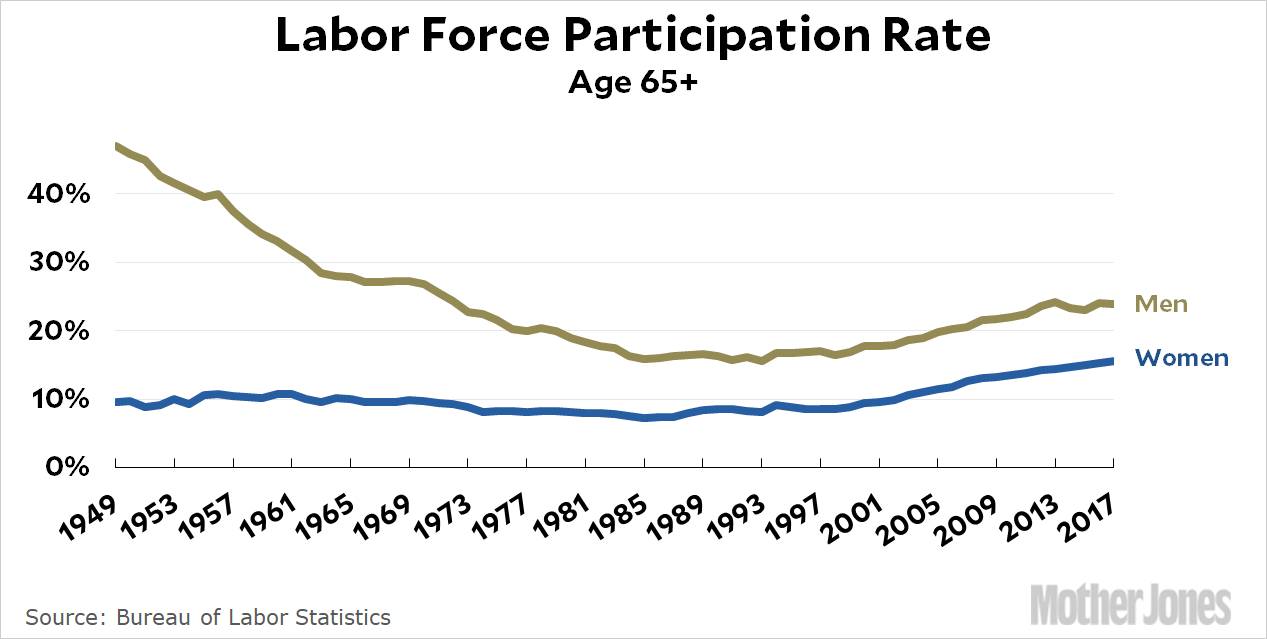
The long mid-century decline in the number of working seniors was due to increasingly generous Social Security payments for the poor and the working class, not to traditional pensions that most of them didn’t have in the first place. That decline ended around 1990 and the number of people who continued working after 65 started slowly increasing—but again, this uptick had little to do with the end of pensions. It began in an era when traditional pensions were still pretty widespread among men aged 65+, whose working years spanned 1950-1990.
So what’s reponsible for the increase? Part of it is voluntary: as we’ve become healthier and longer-lived, some people just don’t want to retire. They like their jobs. The other part is involuntary: some workers can’t survive on Social Security and have to work to make ends meet.² There’s no firm survey data about this that I’m aware of, but roughly speaking it’s probably split about 50-50. This means that since 1990, the number of seniors who are working because they have to has increased about 4 percentage points.
Given what I’m about to say, there’s probably nothing I can do to persuade everyone that I think this is a bad thing. But it’s a bad thing. America has grown richer over the past three decades, and the number of seniors who work because they have to shouldn’t be increasing.
That said, the increase is small, and it’s almost certainly not related to the end of traditional pensions. The kind of people who are forced to work beyond 65 didn’t have pensions back in the day and they don’t have 401(k) plans today. They just have Social Security and whatever they’ve managed to save. The idea that a crappy economy and an end to traditional pensions means that everyone has to work forever just isn’t true and we should stop pretending otherwise.
And that said, the best solution to this problem is to increase Social Security payouts to the bottom third of the income spectrum. This could be done at relatively modest cost, and it would be by far the most effective way of making sure that everyone who wants to retire at 65 is able to.
¹Data for 1949-2007 here. Data for 2007-2017 here.
²A bit of this is also due to the increase in the full Social Security retirement age. There’s no data on how big an impact this has had, but it’s probably fairly small.
Twitter is all over the LA Times today:
very impressed by their commitment to diversity by including a redhead pic.twitter.com/Be6oM1zcu9
— Dana Schwartz (@DanaSchwartzzz) December 22, 2017
It’s not just an all-white cover, it’s a jarringly all-white all-blond cover (with one redhead). Even Donald Trump would probably look at it and shake his head.
Is this a frequent thing for The Envelope? I don’t have their covers for the past year, but a quick scroll through their most recent stories shows that 8 out of 30 are about people of color (or a roundtable that includes at least one POC). That’s 27 percent. Is that bad? OK? Good but could be better? I’m not sure. It’s better than the Oscars, at least.
But what I’d really be interested in is a story about how a cover like this happens. Obviously every magazine wants big stars who are likely to win awards. But I assume that you can’t always get everyone you want. Agents make their clients available depending on whether they have a movie to promote; whether they happen to be in town on the day of the shoot; whether they feel like doing it; etc. Did the Times invite some black actresses, but by chance they didn’t accept so they were stuck with an all-white roundtable? Or what? Once thing I know for sure is that it didn’t happen just because no one noticed it. At the very, very least, the photographer, Kirk McKoy, who’s shot a million of these things, certainly noticed it.
Somebody at the Times should write this story! Not in a defensive, apologetic way, necessarily, but more as a sort of explainer about how things work in the entertainment biz. It would be a good read.
This is Hopper playing hide-and-seek in the Australian willow tree in our backyard. She did this for a couple of minutes as I moved the camera from one side of the trunk to the other, and then climbed higher up the tree to get a better look at things. Satisfied, she scrambled back down and jumped into our neighbor’s yard. They know our cats almost as well as we do. Luckily, they like cats.

The New York Times reports that steel imports are up and steelworker jobs are suffering:
The layoffs have stunned these steelworkers who, just a year ago, greeted President Trump’s election as a new dawn for their industry. Mr. Trump pledged to build roads and bridges, strengthen “Buy America” provisions, protect factories from unfair imports and revive industry, especially steel. But after a year in office, Mr. Trump has not enacted these policies. And when it comes to steel, his failure to follow through on a promise has actually done more harm than good.
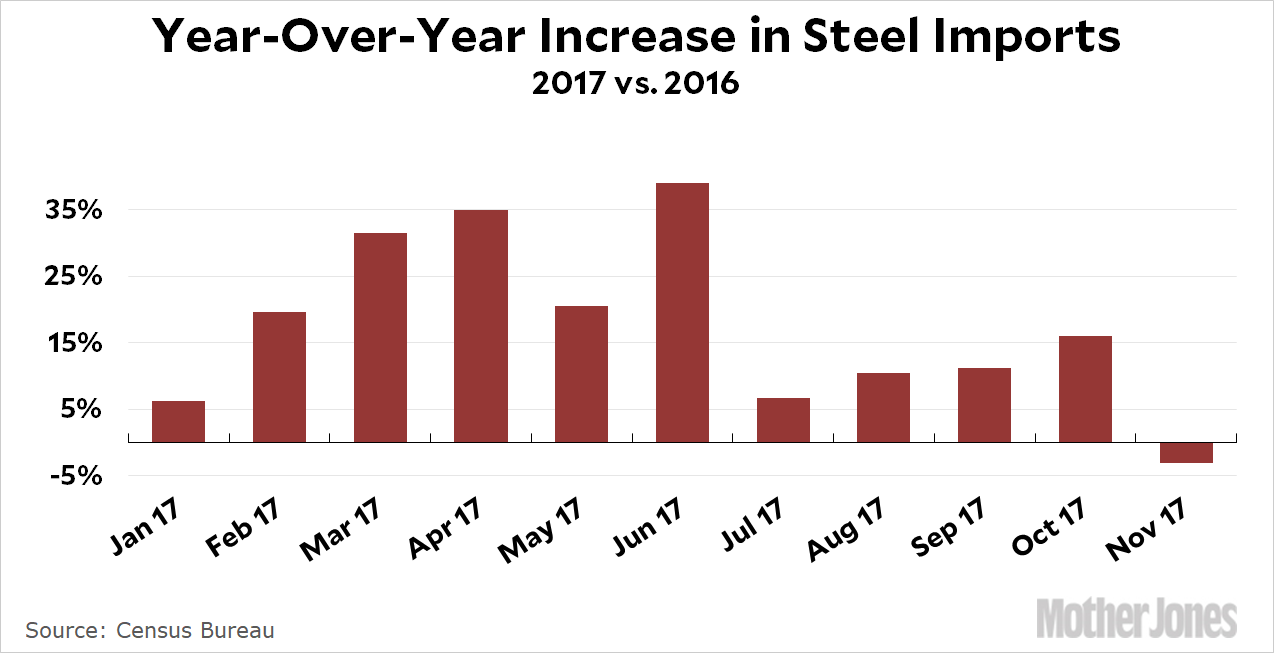
Foreign steel makers have rushed to get their product into the United States before tariffs start. According to the American Iron and Steel Institute, which tracks shipments, steel imports were 19.4 percent higher in the first 10 months of 2017 than in the same period last year. That surge of imports has hurt American steel makers, which were already struggling against a glut of cheap Chinese steel.
Steel imports have been up every month of Trump’s presidency except November. Here’s a chart:
I’m sure Trump will eventually respond to this with some kind of loud but ultimately meaningless gesture. In the meantime, this seems like the kind of thing Democrats might want to highlight in those upper Midwest states that voted for Trump last year.
Richard B. Levine/Levine Roberts/Newscom via ZUMA
Sucking up to Donald Trump is tricky business. On Wednesday Wells Fargo announced that it was raising its minimum wage thanks to the passage of the Republican tax bill:
Wells Fargo to Raise Minimum Hourly Pay Rate to $15, Target $400 Million in 2018 Philanthropic Contributions, Including Expanded Support for Small Businesses and Homeownership
Company announces initial actions to support economic growth with tax reform
“We believe tax reform is good for our U.S. economy and are pleased to take these immediate steps to invest in our team members, communities, small businesses, and homeowners,” said President and CEO Tim Sloan.
That press release is a little vague. Was Wells really doing all this because of the tax bill? A pair of LA Times reporters called the press office to find out:¹
Asked by the Times to clarify the connection Wednesday, Wells Fargo spokesman Peter Gilchrist said there was none….Asked directly to confirm that the pay raises were not a result of the tax bill, Gilchrist said, “That is correct.”
But wait:
On Thursday, Gilchrist backtracked. “We believe tax reform is good for our U.S. economy and are pleased to raise our minimum hourly pay to $15 as a result.” …He would not comment on the reason for the earlier statement.
Needless to say, Wells Fargo is in a heap of trouble these days over a series of scandals that never seems to stop, so flattering the president is just good business. Maybe it won’t help, but it can’t hurt.
In any case, I think we can take this as a case study in what’s really going on with all those companies announcing new initiatives thanks to the tax bill: they have nothing to do with the tax bill at all. It’s just business as usual. But they’re certainly eager to say it’s because of the tax bill. I suppose I would be too if I had a lot of business with the Justice Department or the SEC or the Pentagon.
¹Originally I had no link for this story, but now I do. After intense investigation, it appears that the latimes.com site automatically redirects me to beta.latimes.com, which doesn’t quite work yet and didn’t have this story available. That’s why I couldn’t find it. It’s not surprising for a beta site to have bugs, but it’s not clear why I’m unable to access the regular site.
Oh, and this is only on Firefox. It works fine on Chrome and Edge. I deleted all my latimes.com cookies, but that didn’t help. The investigation continues.
Later: I went in and removed all site-specific data for both latimes.com and beta.latimes.com. That did the trick.
Pete Marovich via ZUMA
On the orders of Attorney General Jeff Sessions, Justice Department prosecutors have begun asking FBI agents to explain the evidence they found in a now dormant criminal investigation into a controversial uranium deal that critics have linked to Bill and Hillary Clinton, multiple law enforcement officials told NBC News. The interviews with FBI agents are part of the Justice Department’s effort to fulfill a promise an assistant attorney general made to Congress last month to examine whether a special counsel was warranted to look into what has become known as the Uranium One deal, a senior Justice Department official said.
Hillary Clinton gave away our uranium to Russia!
No uranium. Can I repeat that. No uranium left the United States or is going to leave the United States
— Gen Michael Hayden (@GenMhayden) December 22, 2017
Oh. So what’s the deal here? Is this just another Benghazi, an excuse to hold endless hearings that will trash Hillary Clinton’s reputation?
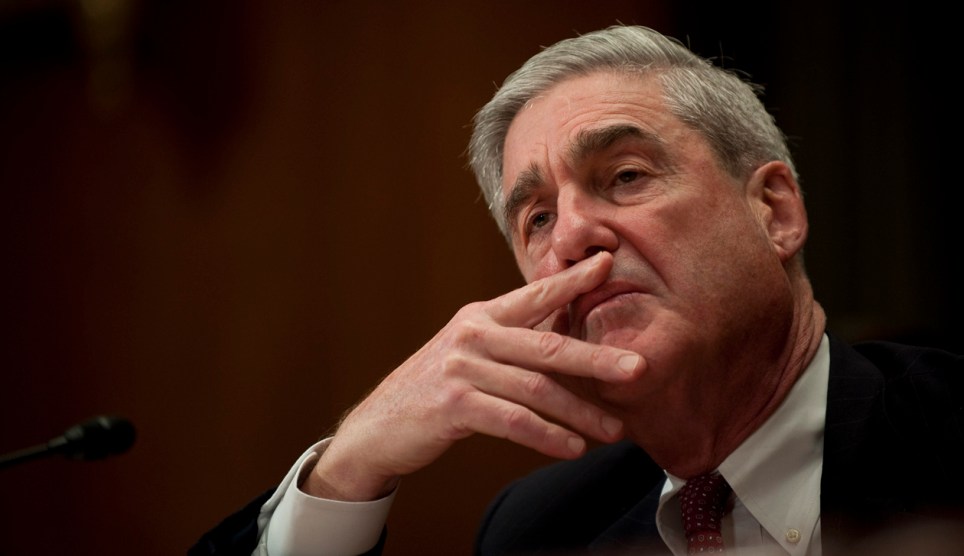
Nope, not that either. Republicans don’t care about Hillary Clinton anymore. This is all about trashing Robert Mueller’s reputation. Keep this in mind whenever you read Uranium One news. Mueller was director of the FBI back when the Uranium One deal was approved, and Republicans are desperately hoping to find evidence¹ that Mueller protected Obama and Clinton by thwarting investigations of wrongdoing. Then they can push for Mueller to be fired. That’s what this is all about.
¹Or “evidence.” You know what I mean.

Award-winning photojournalism.
Stunning video. Fearless conversations.


