Only until MIDNIGHT, every dollar you give to support our nonprofit newsroom will be matched 2X. Fierce, investigative journalism doesn’t happen by accident—it happens because readers like you make it possible. We can’t do our work without you. Please don’t miss this chance!
Only until MIDNIGHT, every dollar you give to support our nonprofit newsroom will be matched 2X. Fierce, investigative journalism doesn’t happen by accident—it happens because readers like you make it possible. We can’t do our work without you. Please don’t miss this chance!
The Wall Street Journal reports that retailers are heading into the holiday season with lackluster sales:
Retailers gave a mixed read on consumer spending heading into the key holiday season, with department store chain Kohl’s Corp. and Home Depot Inc. reporting weak sales, but discounter TJX Cos. continuing to log strong sales.
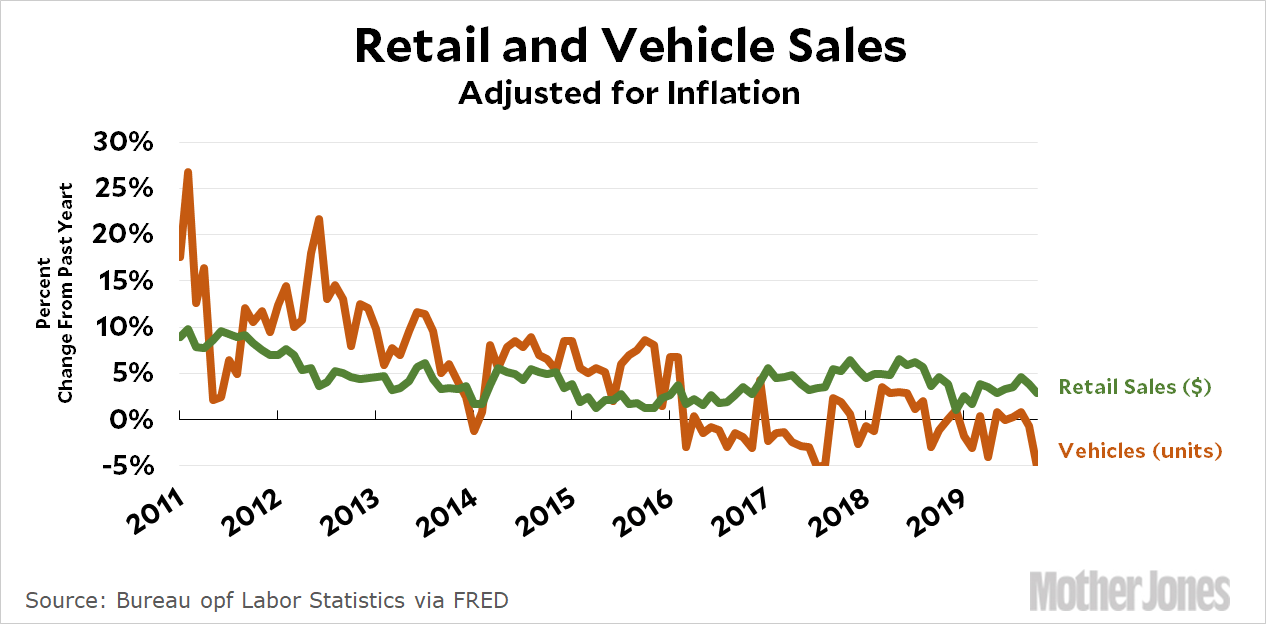
Advance sales were released on Friday. Here they are:
Vehicle sales have been declining on a year-over-year basis since 2011 and dropped again last month. In October they were 5.1 percent below October sales a year ago.
Retail sales are a little more encouraging. They dropped a bit in 2019, but have recovered since then. However, they dropped last month and are currently 2.9 percent above October of last year. That’s not rockin’ and rollin’, but it’s not too bad either.
As usual these days, the upshot is that the economy is doing OK, but not great. Eventually that will change, and mostly likely we’ll be unhappy about it.
The Trump administration announced on Monday that it no longer considers Israeli settlements in the West Bank to be illegal. Symbolically this is a big deal, I suppose, but in real-world terms it’s meaningless. The peace process has been dead for the past 20 years, and over that time Israel has made it brutally clear that it eventually intends to annex its West Bank settlements by main force. There is nothing that will change its mind.
Rightly or wrongly, then, Trump’s announcement doesn’t matter—aside from its effect on domestic US politics, of course. In that realm, this is mostly a shoutout to Trump’s evangelical Christian fans.
So count me as relatively untroubled by all this. After 20 years I’m willing to accept reality whether I like it or not. Practically speaking, the settlements are Israeli territory regardless of whether they are “illegal” under international law. It’s probably time to stop pretending otherwise.
For those of you worried about the fate of poor Lily, who trapped herself in my mother’s attic while the house was getting a new roof, I have good news. The addition of a stepladder to her escape route, combined with the continuing lure of cat food, finally motivated her to jump down. I went over and quickly replaced the attic hatch, and now both the attic above and the crawl space below have been feline proofed.
I have no photographic proof of this since Lily won’t show her furry little face to anyone but my mother, but Mom assures me that she saw Lily this morning roaming around the backyard. Life is once again back to normal.
In Donald Trump’s world, Donald Trump is never to blame for things going wrong. And since things go wrong constantly, this means that the search for scapegoats is neverending.
In the latest example of this, Trump is taking a beating from diplomats and other State Department officials who have testified that Trump did indeed try to extort Ukraine into providing dirt on Joe Biden in return for military aid. Since Trump can’t admit that his problems stem from the fact that he actually did something wrong, it must be a problem with the State Department instead. Right? So now Mike Pompeo is caught in Trump’s crosshairs:
Trump has fumed for weeks that Pompeo is responsible for hiring State Department officials whose congressional testimony threatens to bring down his presidency, the officials said. The president confronted Pompeo about the officials — and what he believed was a lackluster effort by the secretary of state to block their testimony — during lunch at the White House on Oct. 29, those familiar with the matter said.
….“He feels like he’s getting a bunch of blame from the president and the White House for having hired all these people who are turning against Trump,” an official familiar with the dynamic said of Pompeo, “and that it’s the State Department that is going to bring him down, so it’s all Pompeo’s fault.”
Is there anybody that Trump hasn’t turned on yet? Aside from family members, of course. There’s Steve Mnuchin, who miraculously seems to have remained on good terms with Trump, but that’s about it beyond a few low-profile cabinet members that Trump doesn’t care about and probably doesn’t even realize exist. Working for Donald Trump is not for the faint of heart.
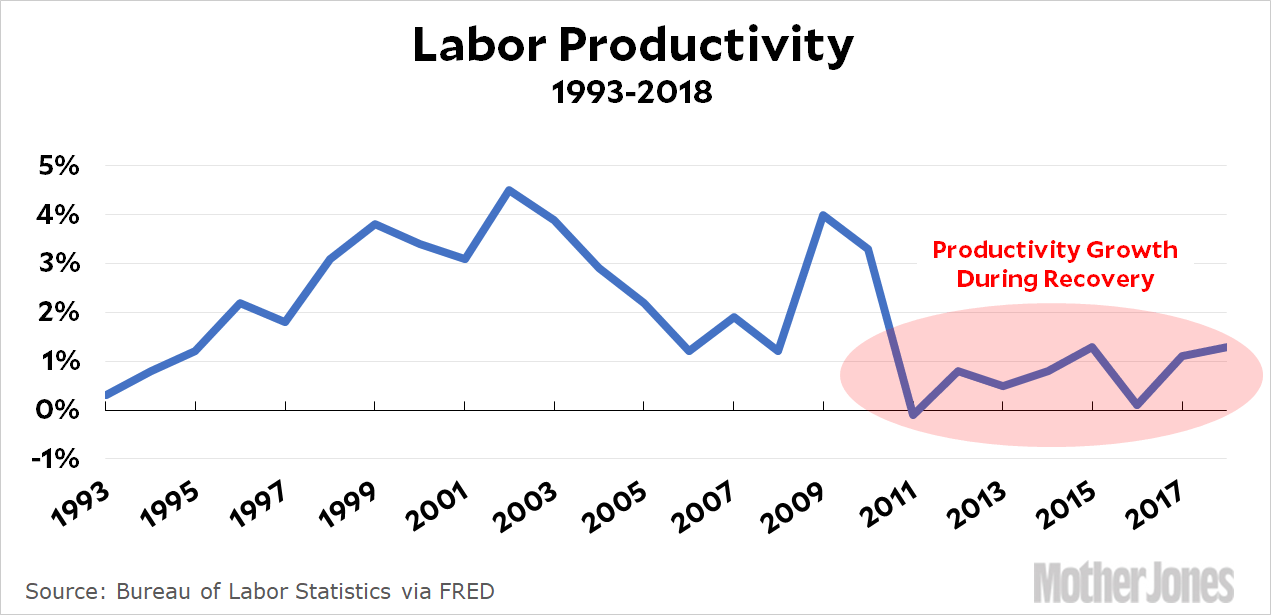
To start off the week, here is one of the enduring puzzles of the past decade: why has labor productivity grown so slowly during the recovery from the Great Recession?
Is it because the minimum wage hasn’t gone up much, giving employers little incentive to replace people with machines? Is it because the best minds of our generation are creating dating apps instead of useful labor-saving devices? Is it because the early stages of AI are so hit-and-miss that it does as much harm as good?
Leave your guess in comments. The winner gets an all-expenses-paid tenured professorship at Harvard.
Last week I mentioned a new cat in the Drum family. There is more to the Drum family than just Marian and me, though, and the new cat is a brown tabby who decided to adopt my mother a few days ago. Mom named her Meowser because she meows a lot, which I suppose is fair turnabout since we kids named one of our first cats Meow because, you know, meow.
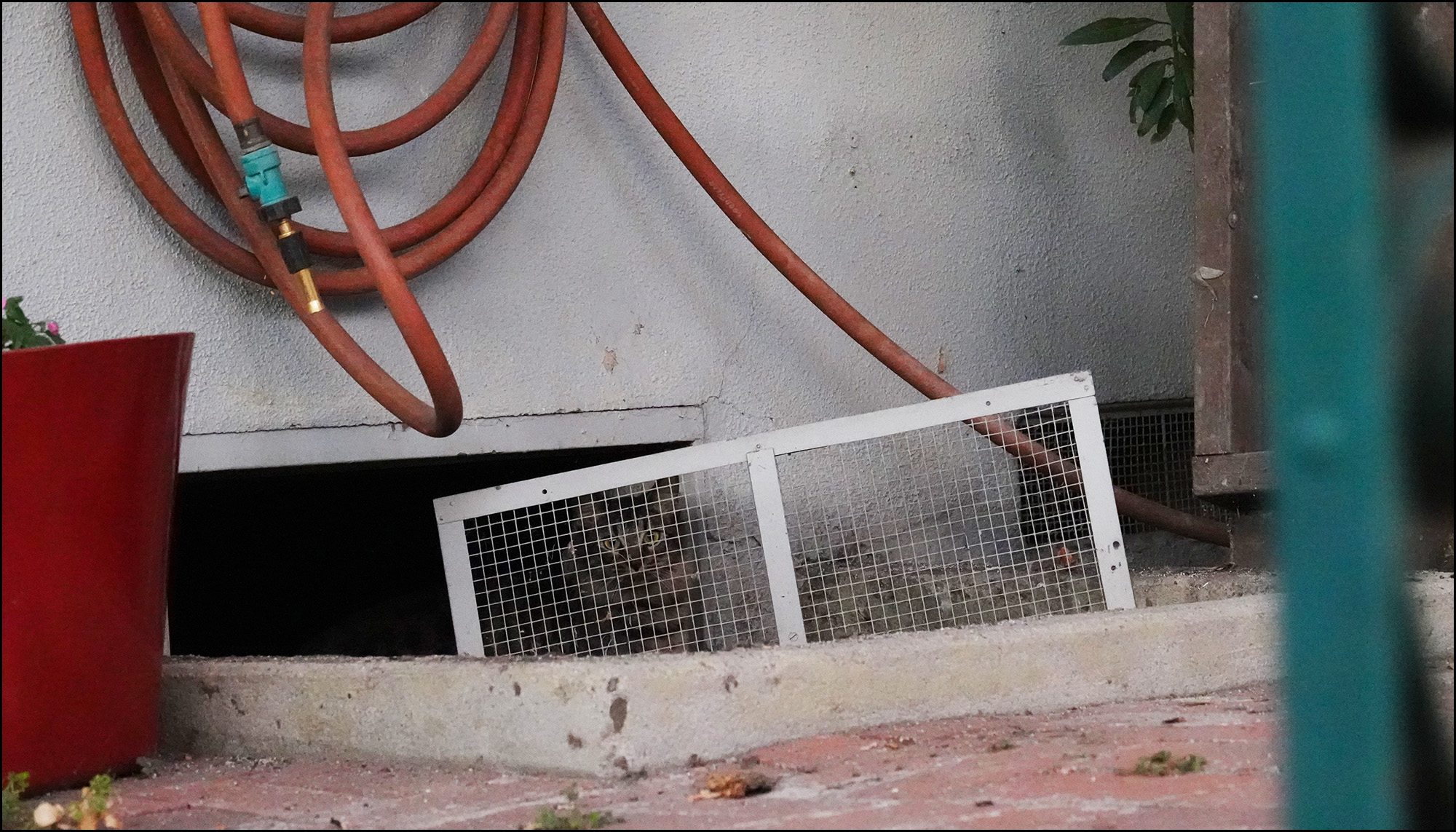
Anyway, I went over to get some pictures last Sunday, but Meowser was nowhere to be found. Then we heard—yes—a meow coming from somewhere, and after a bit of investigating it turned out that Meowser had somehow gotten into the crawl space beneath the house. Unfortunately, there have been painters and roofers and sundry other hired helpers around the house for several days, and this has spooked all the cats. One of them is hiding in the attic and Meowser, it turned out, had chosen the crawl space and didn’t really want to come out. So we had our work cut out for us. Let me set the scene for you. Here’s the big (i.e. human sized) entrance to the crawl space after I removed the grate. If you look closely you can see a pair of cat eyes peeking out:
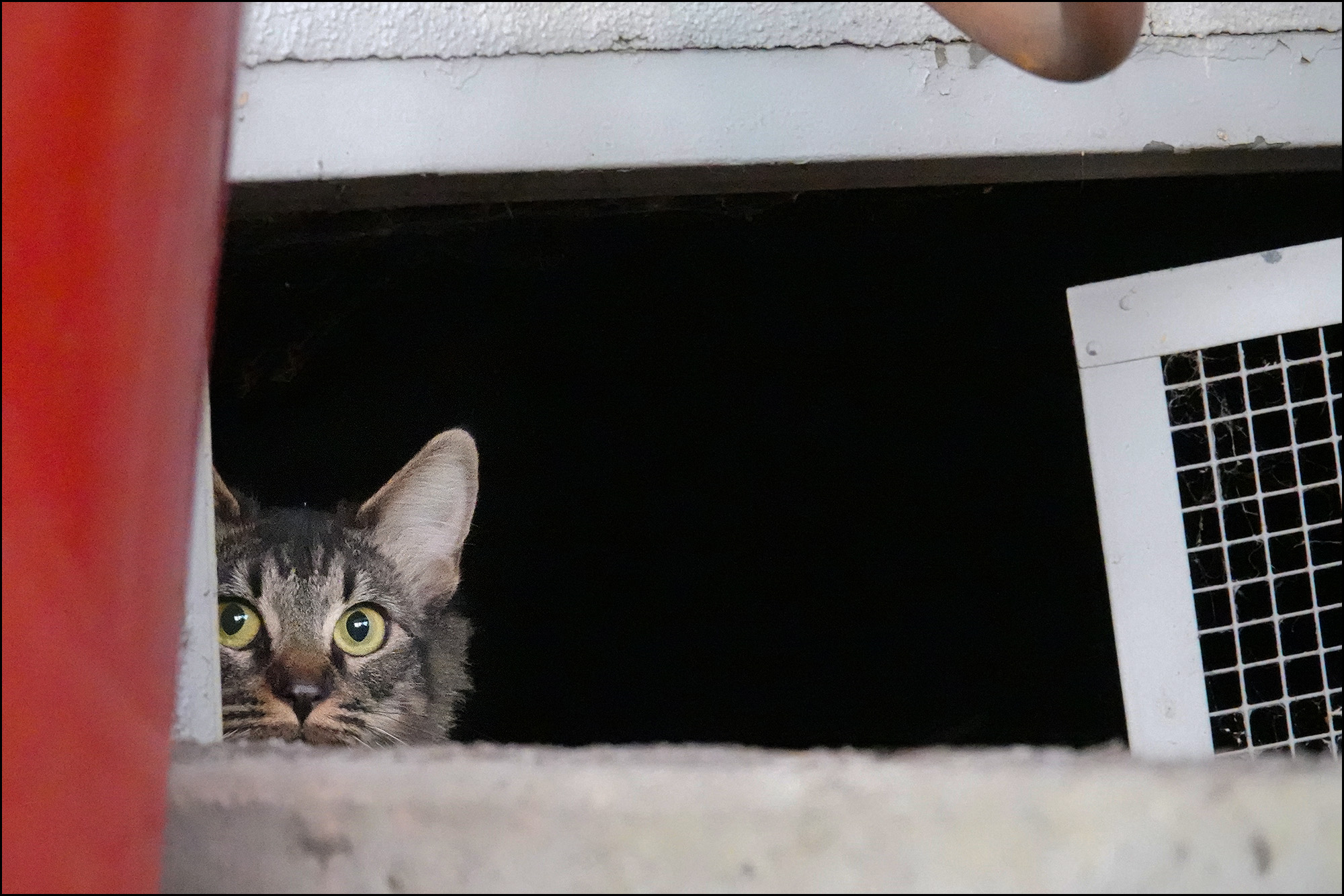
After a while Meowser tentatively decided to make an appearance:
Unfortunately, after a few seconds she decided she was unsure about the whole thing and zipped back under the house, where she went back to watching us doubtfully. On the bright side, this is a great cat picture:
Finally my mother decided to lure her out with a plate of food. This got Meowser’s attention:
Sure, it might be risky, but a cat’s gotta eat:
And for the record, here’s a closeup so you can see what Meowser really looks like:
The good news about all this is that Meowser was hungry and thin when she wandered into my mother’s house. She is now hungry and well fed. The bad news is that when my mother tried to sneak behind her and replace the grate, Meowser detected the trickery and zipped back. So I never really did get to make friends with her.
In any case, Mom reports that Meowser is now out and all entrances to the crawl space have been blocked off. Unfortunately, Lily is still in the attic and won’t come down, which makes it a real pain to keep her in food and water. But naturally Mom does. When the workers are gone and everyone relaxes a bit, we all hope she’ll finally come down.
POSTSCRIPT: Once again, a shout out to all the camera nerds. These pictures were shot in pretty dim light at the end of the day. The camera settings were f/4, ISO 5000-10000, shutter speed 1/100. And yet the pictures came out perfectly nicely. Even after two decades of using them, I continue to marvel at the photos I can routinely get with a good digital camera.
POSTSCRIPT 2: After lunch today I’m headed over to Mom’s house on a mission of mercy to see if the two of us can somehow lure Lily down. Unfortunately, Lily is scared of me and also seems to be as happy as a clam in her new snoozing spot. We’ll see what we can do.
After any mass shooting, the inevitable conservative reply is “Nothing Dems are proposing would have stopped this particular mass shooting anyway.” David Harsanyi goes all in on this tactic:
California has already passed a “universal background check” law. California, in fact, already instituted a 10-day waiting period, a limit to handgun purchases, a microtracking system, a personal safety test, an “assault weapon” ban, an age hike on the purchase of shotguns and rifles from 18 to 21, “red flag” laws that allow police to confiscate guns without genuine due process, among many other restrictions. And none of those laws stopped the “slaughter” of children in Santa Clarita.
Right. See, the thing is that these are all fairly feeble restrictions, and they aren’t likely to have much effect. The obvious answer is to pass laws that might actually make a difference, but unfortunately conservatives unanimously oppose them all. That means they never pass, which means the “slaughter” of children continues.¹
You might also want to note that whenever there’s a mass shooting, then by definition the laws currently on the books didn’t stop it. Ditto for murder, robbery, rape, carjacking, and so forth. You can play this juvenile game forever. Pay no attention to it.
¹Why the scare quotes? Beats me, though it’s become something of a trending fad on Fox News these days. Somebody should ask Harsanyi about that.
It’s the 25th anniversay of Prop 187, California’s infamous attempt to cut off public benefits for undocumented immigrants, so it’s getting a suddenly renewed wave of attention. For the record, Prop 187 passed but was then struck down by the courts, so it never took effect. Nonetheless, it inspired a wave of protest from Hispanics and led to the permanent downfall of the California Republican Party.
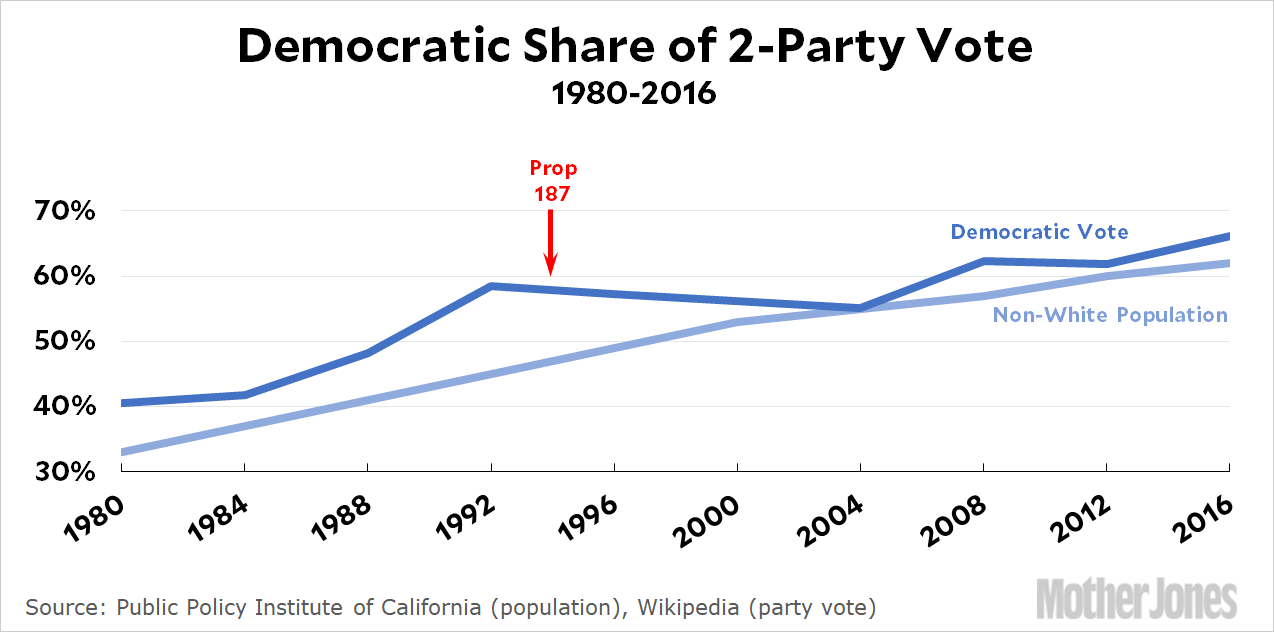
Or did it? Here’s a chart I put up a year ago:
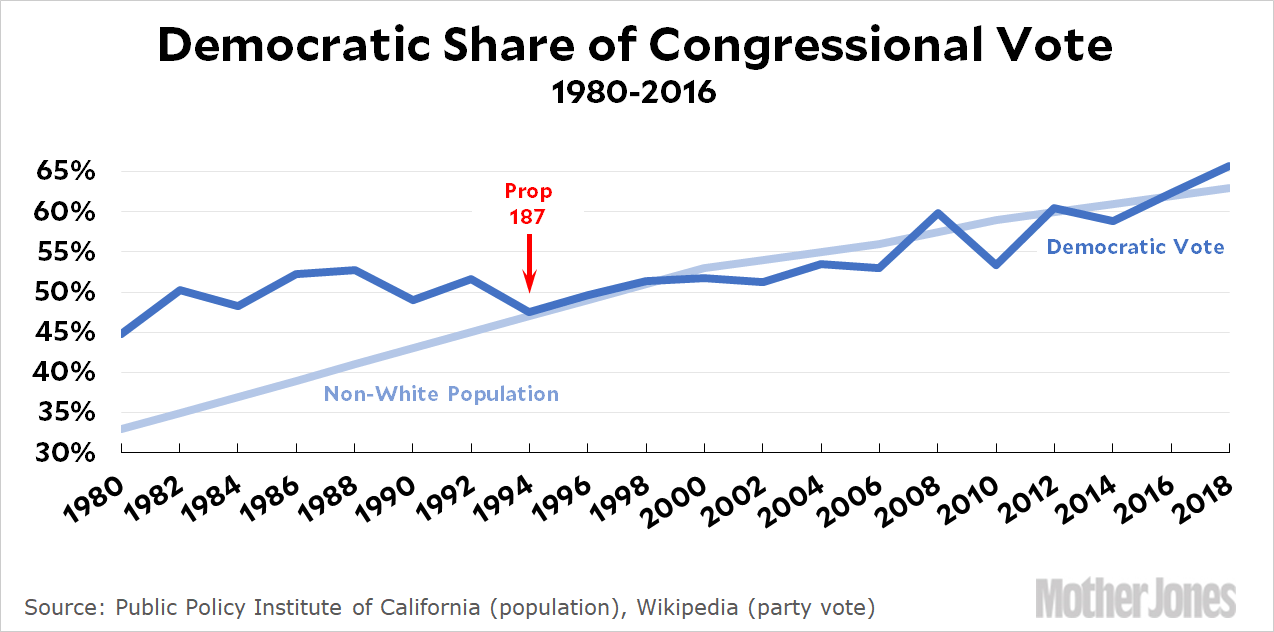
Prop 187 has no apparent effect. The Democratic vote mostly just follows the rise of the non-white vote, especially after 2000. Now here’s congressional voting:
Once again, Prop 187 has no noticeable effect. From the mid-80s to 2002 the Democratic vote share is about flat. However, after 2002 it starts to rise at the same rate as the non-white population.
My (obvious) conclusion: The Democratic redistricting of 2000 finally gave the non-white vote its proper representation, and they voted overwhelmingly for Democrats, just as they always had. As a result, starting in 2002 Democrats received a steadily larger share of the overall vote thanks to non-whites making up a steadily larger share of the population.
It’s that simple. Prop 187 probably cemented Hispanic support for Democrats, but that was about it. It was demographics and redistricting that really made the difference.
If you believe in the demographic theory of presidential elections, the same thing will happen nationally when the non-white vote reaches about 50 percent. Unfortunately, that’s still a decade or two away. In the meantime, Democrats will have to continue winning a sizeable chunk of the white vote if they want to stay in business.
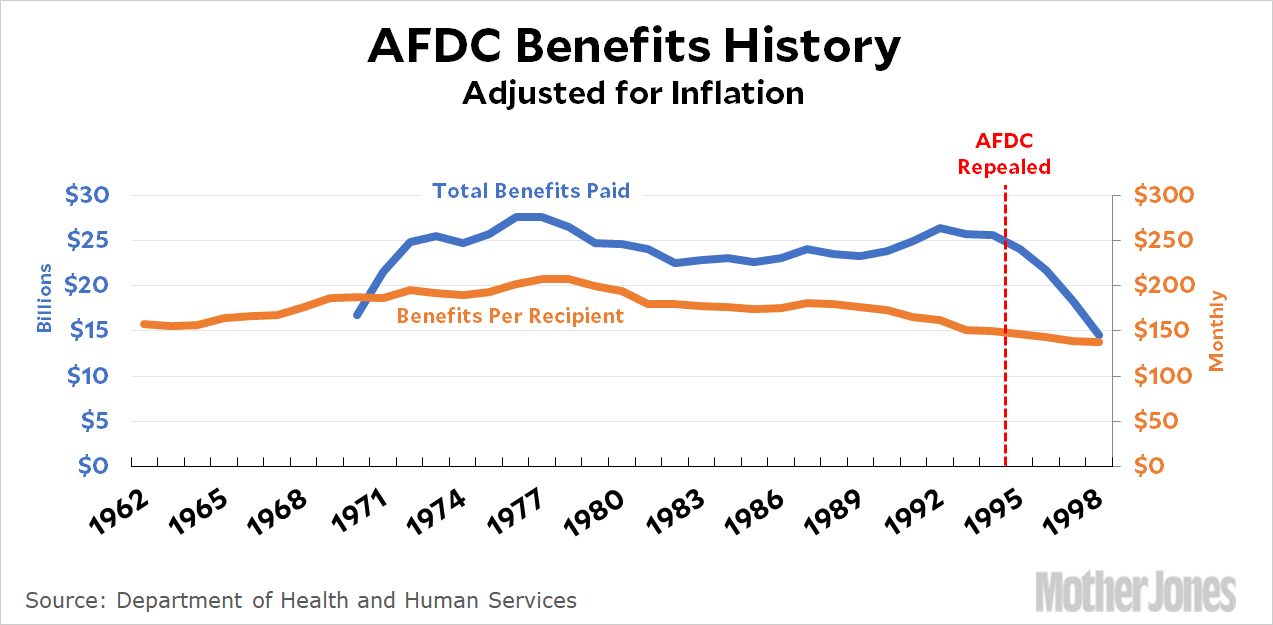
I have had the following chart sitting around for months and I just noticed it again today. But what does it mean? Why did I make it? What story was I planning to tell?
AFDC started out as a program for (white) widows. That was no problem: back in the 30s no one expected (white) widows to work so giving them a living allowance was widely supported. In the early 60s it expanded to incude any family where the father didn’t work. People grumbled a little bit. In the late 60s black women were allowed to get AFDC benefits. More grumbling. Then benefit requirements were eased, leading to larger enrollments. Yet more grumbling. And that was about it through the 1990s.
As of 1995 total benefits paid had for years been flat at about $25 billion, and benefits per recipient were actually declining, reaching their lowest level ever in 1994. So why was AFDC killed in favor of TANF? The program wasn’t skyrocketing out of control. There was some evidence that AFDC recipients didn’t look for jobs, but the evidence was kind of thin. Oh, and the AFDC rolls were full of black people, a big change from the 50s and early 60s.
Beyond all that, what point did I have to make? It’s driving me crazy. I’ll FedEx a free lollypop to whoever can guess what I was planning to do with this chart.
Can you pitch in a few bucks to help fund Mother Jones' investigative journalism? We're a nonprofit (so it's tax-deductible), and reader support makes up about two-thirds of our budget.
We noticed you have an ad blocker on. Can you pitch in a few bucks to help fund Mother Jones' investigative journalism?