Fierce, investigative journalism doesn’t happen by accident—it happens because readers like you make it possible. Every dollar you give before midnight Friday to support our nonprofit newsroom will be matched dollar-for-dollar. We can’t do our work without you. Don’t miss this chance!
The deadline’s almost here! Fierce, investigative journalism doesn’t happen by accident—it happens because readers like you make it possible. Every dollar you give before midnight Friday to support our nonprofit newsroom will be matched dollar-for-dollar. We can’t do our work without you. Don’t miss this chance!
George Cracknell Wright/London News Pictures via ZUMA
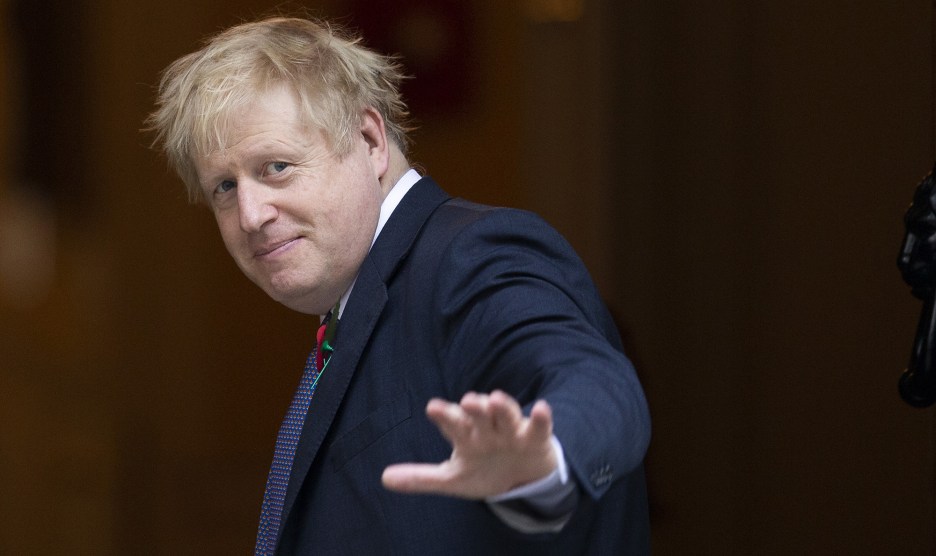
A few years ago Britain passed a bill that set a five-year term for the prime minister. An election could be called sooner only with the agreement of two-thirds of parliament. Today, Boris Johnson asked for that agreement, but it didn’t go well:
The prime minister failed on Monday to get the votes of two-thirds of MPs he needed to secure an election under existing laws, after opposition parties largely abstained. However, he said he would table a short bill on Tuesday that would change the law in order to hold a poll on 12 December. He would only need a simple majority for this plan.
Can one of my British readers please explain this? In the US, the requirement of a supermajority vote is generally meaningful thanks to Senate rules or constitutional mandates. But in Britain, anything parliament can do, it can also undo. So what was the point of the original bill mandating a two-thirds vote?
I gather that one difference is that Johnson’s “short bill” is open to amendments, which makes it slightly less desirable than an election called under normal rules. Is that it? Or is there some subtlety here that I’m not grasping?
Alexander Vindman is a lieutenant colonel who currently serves in the White House as the top Ukraine expert on the National Security Council. He was an eyewitness to President Trump’s call with Ukrainian president Volodymyr Zelensky and on Tuesday he is going to testify before Congress. The New York Times has the story:
“I did not think it was proper to demand that a foreign government investigate a U.S. citizen, and I was worried about the implications for the U.S. government’s support of Ukraine,” Colonel Vindman said in his statement….“This would all undermine U.S. national security,” Colonel Vindman added, referring to Mr. Trump’s comments in the call.
Vindman was also present during a White House meeting between American and Ukrainian officials:
[It was] a stormy meeting in which Mr. Bolton is said to have had a tense exchange with Mr. Sondland after the ambassador raised the matter of investigations he wanted Ukraine to undertake. That meeting has been described in previous testimony in the impeachment inquiry.
At a debriefing later that day attended by the colonel, Mr. Sondland again urged Ukrainian officials to help with investigations into Mr. Trump’s political rivals.
“Ambassador Sondland emphasized the importance that Ukraine deliver the investigations into the 2016 election, the Bidens and Burisma,” Colonel Vindman said in his draft statement.
“I stated to Ambassador Sondland that his statements were inappropriate” and that the “request to investigate Biden and his son had nothing to do with national security, and that such investigations were not something the N.S.C. was going to get involved in or push,” he added.
Most of this has been reported before, but Vindman is an eyewitness, and an unusually credible one. He’s an active duty officer who’s an Iraq war veteran; he immigrated from Russia to the US at age three; he speaks Ukrainian; and he’s widely regarded as a diligent and earnest civil servant. So how do you deal with someone like that? If you’re Fox News, you do it like this:
That was quick: Laura Ingraham goes right at LTC Vindman being a Soviet refugee of Ukrainian origin; John Yoo then says LTC Vindman may be guilty of espionage https://t.co/bht402n9QP
Republican state senators in North Carolina review state maps while drawing new congressional districts on Feb. 16, 2016.Corey Lowenstein/AP
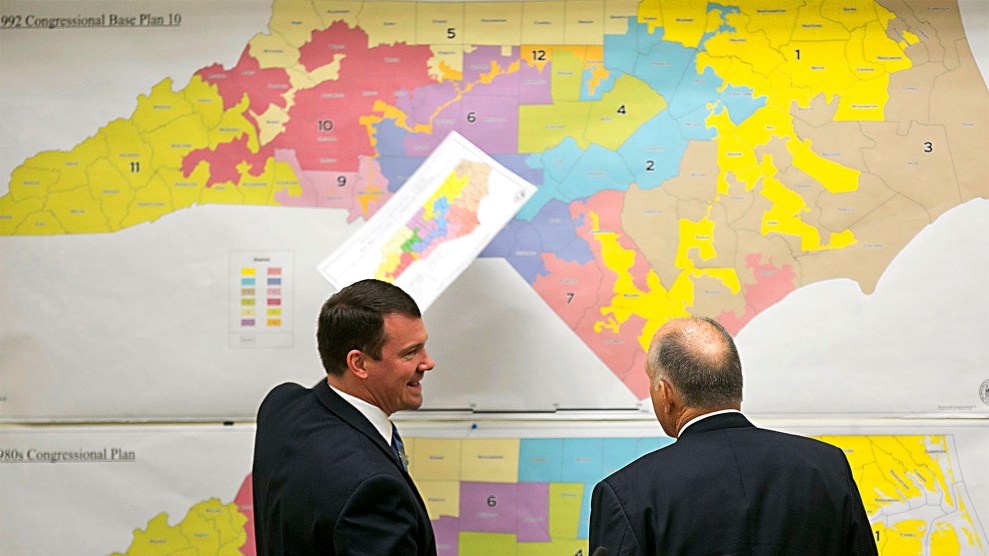
A couple of months ago a state court in North Carolina struck down the legislature’s gerrymandered maps for state legislative districts. Today the same court struck down the maps for congressional districts.
(Why a state court? Because the Supreme Court ruled a while back that federal courts shouldn’t get involved in partisan gerrymandering cases. State courts, however, still have jurisdiction.)
This is good news since the North Carolina case is something of a destruction test for gerrymandering decisions. The behavior of the North Carolina legislature has been almost literally beyond belief: First they gerrymandered based on racial classifications, and after that was struck down they generated a nearly identical map but carefully made sure race was never mentioned in the legislative record. Even then, though, they were so greedy that they created a map that almost literally made it impossible for Democrats to ever win a majority no matter how the vote went.
If a map like that can’t be overturned, then pretty much no map can ever be overturned. This means that judicial review of gerrymandered maps may be hanging on by only a thread, but at least it’s still hanging on. More here.
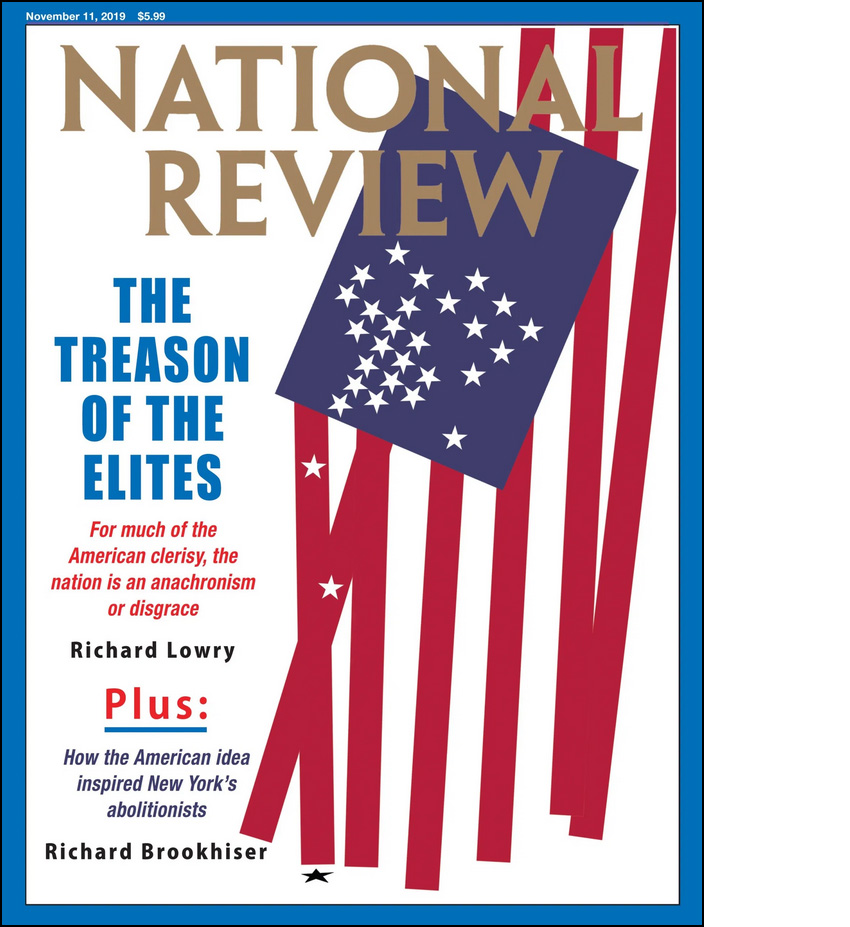
I’m ashamed to admit that I had to look up the word clerisy, which turns out to mean nothing more than intelligentsia. I guess that’s the price of going to a state university.
Anyway, Lowry’s essay is now available to us non-subscribers, so I read it. It’s mainly about the evolution of historiography in the United States, from old-school scholars who reliably extolled the greatness of our country to modern academics who bemoan the way we’ve treated blacks and native Americans and the poor and so forth. Lowry’s essay begins, predictably enough, with the usual conservative grumbling about Howard Zinn’s A People’s History of the United States—a book I should read someday, I suppose—which has sold 2 million copies during its existence. This amounts to about 50,000 copies a year, giving it an Amazon ranking of #2,639 in the US history category at the moment. This doesn’t strike me as a mortal threat to American exceptionalism, but I suppose your mileage may vary.
This is followed by a brief potted history of how historians have treated US history over the past couple of centuries, climaxing with modern academics and their obsession with identity politics and the depredations of the rich and white against the poor and black:
What historic challenges do the race, gender, and class obsessions of American historiographers prepare us for today? To win a campaign against heteronormativity? To beat ourselves up endlessly and dethrone historical figure after historical figure over white privilege? To be constantly watchful for the baleful effects of toxic masculinity?
An anti-national history is, on top of everything, profoundly ungrateful. It fails to credit our ancestors for achievements on an epic scale. It denies the continuities of our history and our dependence on men and women who didn’t know us but bequeathed us the marvel of America. It runs counter to the inscription that John Adams wrote on the tombstone of his forebear Henry Adams: “This stone and several others have been placed in this yard, by a great great grandson from a veneration of the piety, humility, simplicity, prudence, patience, temperance, frugality, industry and perseverance of his Ancestors, in hopes of recommending an imitation of their virtues to their Posterity.”
I would sympathize more with this attitude if not for the fact that I have, personally, never read a popular history of the United States that took this anti-American attitude. Perhaps it’s common in academic monographs used by critical theory professors, but I have no particular evidence of that and Lowry doesn’t provide any. In any case, it certainly doesn’t seem to have seeped very far outside of academia, where history books and history channels and historical dramas mostly still seem to agree that America is a helluva place.
But all of this is just preface to the main thing that struck me about Lowry’s essay: nowhere does it display any interest in actual historical truth. On the contrary, he approvingly quotes William H. McNeill’s conviction that “believable myths” are necessary to public action. Maybe so—but surely America is not such a horrible place that a fair reading of its history will cause us all to drift into a fatal stagnation?
One can, obviously, disagree about how important some particular facet of American history is, but modern histories are almost unanimously superior to older tomes that suggested slavery wasn’t so bad; ignored the genocide of native Americans; pretended women didn’t exist; and portrayed the robber barons as noble titans of industry. As a matter of simple historical truth, surely most modern histories are, in fact, more accurate than the books of our parents’ childhoods that Lowry seems to favor?
Howard Zinn’s #2,639 ranking on Amazon.com doesn’t worry me. What does worry me is an ignorant nationalism that can be unleashed seemingly at will by conservative politicians who want to wage yet another dumb war or win power on the backs of racism and xenophobia. Right now that mindless form of nationalism is, quite clearly, still ascendant in Donald Trump’s America, and it’s a genuine danger. Anyone who genuinely opposes Trump—as Lowry claims to—really ought to be able to see that.
Nyhan’s point is that there’s no particular conservative bias in this list. I’d make a second point: Most of these posts aren’t partisan or political in the first place. Those of us who follow politics as a hobby think that it’s the most important thing in the world, but the rest of the world doesn’t agree. The readership of most political sites is tiny compared to the readership of sports blogs or mommy blogs or gossip blogs.
This is one of the reasons I’m untroubled about Facebook’s decision not to police political advertisements. I’m no fan of Facebook, but that’s mainly because of their dismal record on things like privacy and data portability. When it comes to political influence, however, there’s little reason to think they play an outsize role. On the contrary, their political influence is minuscule compared to Fox News and talk radio and Drudge and the Wall Street Journal editorial page.
We should be concerned about organized foreign influence on Facebook. We should be concerned about Facebook taking an active censorship role. We should be concerned about Facebook allowing third parties to use private information for political purposes. But taking a hands-off approach to political ads? On a scale of one to ten, it’s maybe a two at most. It’s just not worth getting worked up about.
President Trump said he has encouraged his Republican allies to defend him on the substance of the impeachment probe, instead of focusing on criticizing the process, ahead of another week of scheduled testimony from administration officials.
Doesn’t Trump realize that the reason his allies are whining about process is because they have no defense to offer on substance? Maybe not. Maybe Trump is so delusional he actually believes that there’s some substantive defense of extorting a foreign country to smear a political rival.
Luckily for him, the rest of the Republican Party is smarter. They’ll stick to carping about the unfairness of the hearings and, in a pinch, claiming that Trump’s extortion of Ukraine is just a minor slap-on-the-wrist kind of thing, certainly nowhere near an impeachable offense.
How long will this work? If the modern Republican Party is as shameless as I think it is, forever. We’ll see.
We killed Osama bin Laden long after al-Qaeda was no longer a threat, and now we’ve killed Abu Bakr al-Baghdadi after ISIS has ceased to be an active threat. Perfect timing! Still, it could be worse. The Greatest Generation never did track down Hitler in his bunker, did they?¹
Anyway, the New York Times reports that it was a close-run thing. Apparently we learned al-Baghdadi’s general location several months ago and began an intelligence operation to track him down more precisely:
But Mr. Trump’s abrupt decision to withdraw American forces from northern Syria disrupted the meticulous planning and forced Pentagon officials to press ahead with a risky, night raid before their ability to control troops and spies and reconnaissance aircraft disappeared, according to military, intelligence and counterterroism officials. Mr. al-Baghdadi’s death, they said, occurred largely in spite of Mr. Trump’s actions.
I also notice with amusement that newspaper headlines are all couching the operation in “Trump says” terms, as if they aren’t quite willing to accept it as unvarnished truth until they have more than just the president’s word.
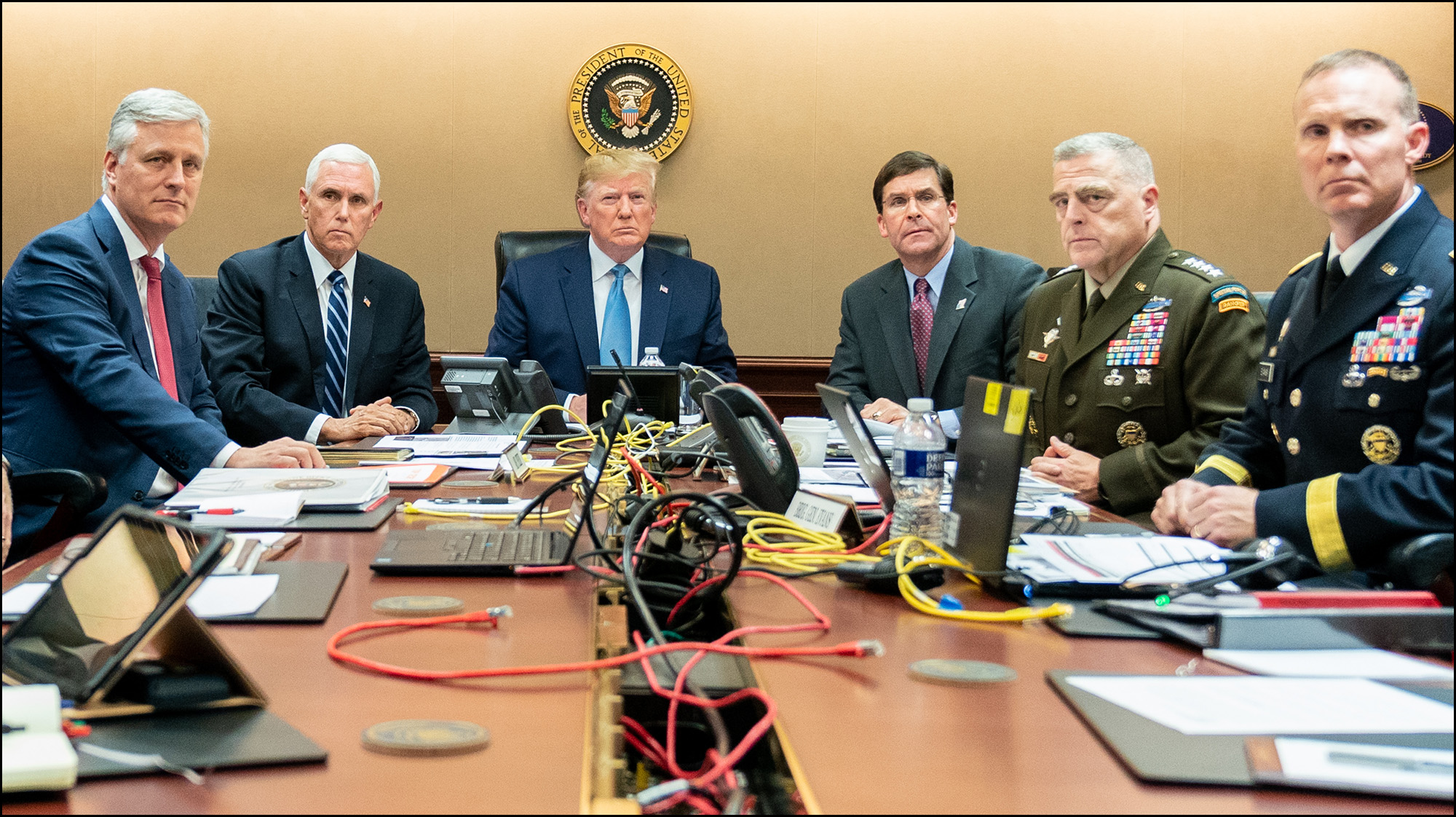
There’s not much more to say except that Trump treated the whole thing in typically Trumpian fashion: refusing to notify Democrats ahead of time; thanking Russia for help the Russians say they didn’t provide; claiming it was the greatest anti-terrorist operation of all time; and then releasing a staged situation room picture:
This picture was taken a couple of hours after the raid, but the Trumpies were too dumb to hide their tracks by massaging the metadata in the photo to make it look like Trump was following the raid in real time. But I suppose it doesn’t matter. As Reagan taught us, all that matters is that the image itself gets into the news. And it did. A chance to mock Trump certainly got me to post a copy, didn’t it?
Just in time for Halloween, here is Hilbert giving us his best portrayal of a witch’s familiar at midnight. I’m not sure he pulls it off, though. He just can’t help looking like a friendly little furball.
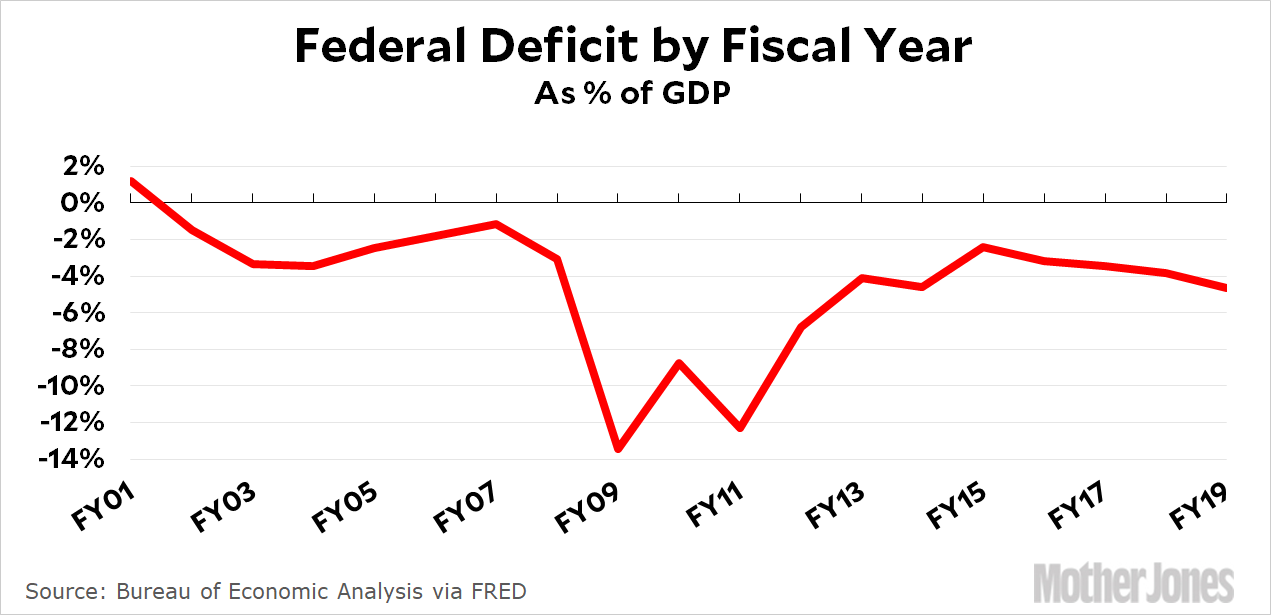
The news is full today with scary stories about the federal deficit approaching a trillion dollars this year. And that’s true. But as you know, money comparisons should always be presented with inflation accounted for. In this case, the equivalent method is calculating the deficit as a percentage of GDP. Here it is:
That doesn’t look quite so bad, does it? Now, it’s true that Donald Trump said it would be a piece of cake to get rid of the deficit and he hasn’t done it. It’s also true that you don’t really want to see the deficit getting bigger during an economic expansion. So this is not a great result.
Still and all, it’s not catastrophic either. Which just goes to show: adjusting for inflation is a bipartisan tool. Sometimes it makes your side look better, sometimes it makes the other side look better. Either way, it’s almost always the right way to look at things.
Can you pitch in a few bucks to help fund Mother Jones' investigative journalism? We're a nonprofit (so it's tax-deductible), and reader support makes up about two-thirds of our budget.
We noticed you have an ad blocker on. Can you pitch in a few bucks to help fund Mother Jones' investigative journalism?