Estrogen Kills Fish

Get your news from a source that’s not owned and controlled by oligarchs. Sign up for the free Mother Jones Daily.


Estrogen is bad for fish. In more ways than we thought.

We know that estrogen and estrogen-mimicking chemicals known as endocrine disruptors cause intersex fish—that is, males with immature female egg cells in their testes.

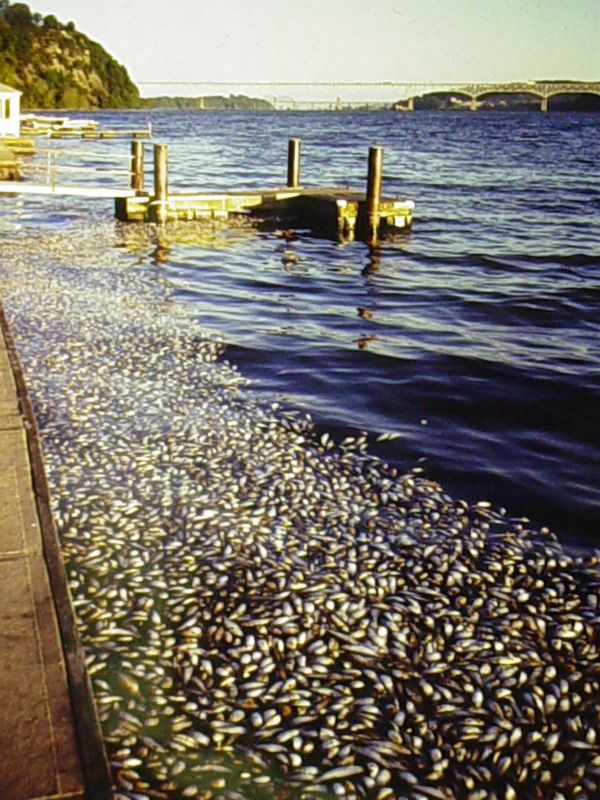
New research finds that fish exposed to estrogen produce less immune-related proteins, making them more susceptible to disease. This suggests why fish in the Shenandoah and Potomac Rivers are simultaneously afflicted by mass kills, lesions, and intersex fish.

US Geological Survey researchers suspected that estrogens were causing fish kills and fish lesions as well as intersex fish in the two river systems. So they exposed largemouth bass to estrogen and found the fish produced less hepcidin—an iron-regulating hormone of mammals, fish, and amphibians.

Exactly what hepcidin does to boost immune systems is unclear. But it may act as an antimicrobial peptide, the first line of defense against disease-causing bacteria, fungi, and viruses. Or it might affect the iron balance in infected vertebrates. Or both.

We do know we’re loosing megatons of synthetic chemicals into waterways every year. Most are plastics additives, surfactants, birth control agents, antimicrobials, pharmaceuticals, personal care products, or controls for insect, weed, and fungal populations.

But all too many wind their way from industry, livestock, irrigation, sewage, and storm run-off into lakes, ponds, oceans, marshes, streams, rivers, and groundwater—eventually into fish.

And from there into humans, perhaps accounting for the alarming rise of human male reproductive disorders in recent years, including birth defects of the penis, undescended testes, reduced sperm production, and testicular cancer.

You think that might slow down the chemical pipeline. Especially in rivers so close to Washington, DC. But apparently money is worth more than masculinity.
 

DECEMBER IS MAKE OR BREAK

A full one-third of our annual fundraising comes in this month alone. That’s risky, because a strong December means our newsroom is on the beat and reporting at full strength—but a weak one means budget cuts and hard choices ahead.

The December 31 deadline is closing in fast. To reach our $400,000 goal, we need readers who’ve never given before to join the ranks of MoJo donors. And we need our steadfast supporters to give again—any amount today.

Managing an independent, nonprofit newsroom is staggeringly hard. There’s no cushion in our budget—no backup revenue, no corporate safety net. We can’t afford to fall short, and we can’t rely on corporations or deep-pocketed interests to fund the fierce, investigative journalism Mother Jones exists to do.

That’s why we need you right now. Please chip in to help close the gap.

DECEMBER IS MAKE OR BREAK

A full one-third of our annual fundraising comes in this month alone. That’s risky, because a strong December means our newsroom is on the beat and reporting at full strength—but a weak one means budget cuts and hard choices ahead.

The December 31 deadline is closing in fast. To reach our $400,000 goal, we need readers who’ve never given before to join the ranks of MoJo donors. And we need our steadfast supporters to give again—any amount today.

Managing an independent, nonprofit newsroom is staggeringly hard. There’s no cushion in our budget—no backup revenue, no corporate safety net. We can’t afford to fall short, and we can’t rely on corporations or deep-pocketed interests to fund the fierce, investigative journalism Mother Jones exists to do.

That’s why we need you right now. Please chip in to help close the gap.

We Recommend

Latest

Sign up for our free newsletter

Subscribe to the Mother Jones Daily to have our top stories delivered directly to your inbox.

Get our award-winning magazine

Save big on a full year of investigations, ideas, and insights.

Subscribe

Support our journalism

Help Mother Jones' reporters dig deep with a tax-deductible donation.

Donate