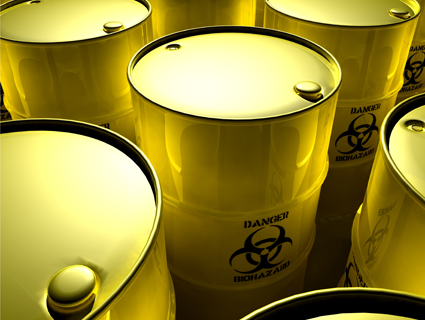
<a href="http://www.shutterstock.com/cat.mhtml?lang=en&search_source=search_form&search_tracking_id=0_rbcJiNyPWTeuCS63thvQ&version=llv1&anyorall=all&safesearch=1&searchterm=hazardous+chemicals&search_group=&orient=&search_cat=&searchtermx=&photographer_name=&people_gender=&people_age=&people_ethnicity=&people_number=&commercial_ok=&color=&show_color_wheel=1#id=72899287&src=NgVA8u3CHHjxsNSk_bH7dA-1-7">Jiri Vratislavsky</a>/Shutterstock
A bit of positive news this week may have gotten lost in the shuffle. On Wednesday, two senators announced bipartisan legislation to fix our nation’s outdated and ineffective chemical regulations. New Jersey Democrat Frank Lautenberg and Louisiana Republican David Vitter announced an agreement to reform the Toxic Substances Control Act (TSCA), a 37-year-old law governing the use of tens of thousands of hazardous chemicals. I’ve written before about how the law’s failures have left dangerous chemicals largely unregulated.
That these two lawmakers agreed on the new legislation, dubbed the Chemical Safety Improvement Act of 2013, is a big deal. Lautenberg has made strengthening TSCA one of his legacy issues in the Senate, from which he is retiring in 2015. Vitter is known as a industry booster how has blocked progress on chemicals in the past.
The bill would, for the first time, require the EPA review the safety of all chemicals used in products, whereas TSCA grandfathered in a lot of chemicals without testing their safety. It would also make it harder for companies to claim “confidential business information” as an excuse for not disclosing what’s in their products. TSCA reform advocates will note that this latest bill is not as tough as the Safe Chemicals Act that Lautenberg had previously championed. The Environmental Working Group slammed the proposal as “unacceptably weak” and listed the areas where it falls short.
But others see the agreement as movement in the right direction. As Richard Denison, a senior scientist at the Environmental Defense Fund, told Energy & Environment Daily:
“I’ve worked for a number of years trying to improve a statute and a program that is hamstrung at every turn by that statute,” Denison said. “My reference point is whether this bill improves EPA’s ability to work relative to current TSCA. And there’s no question that it does.
“If one measures it against an ideal, the kind of bill I’d write if I were king, then this doesn’t meet all the criteria,” he added. “But this bill has a higher likelihood of passing.”