Jakub Porzycki/NurPhoto via ZUMA Pres
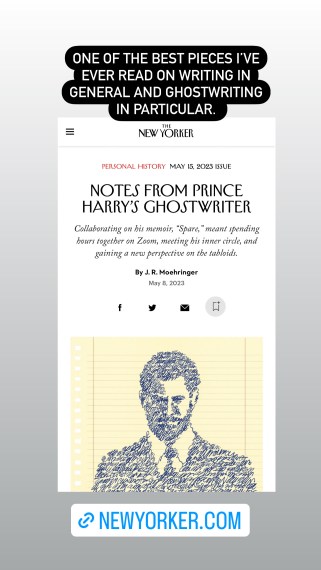
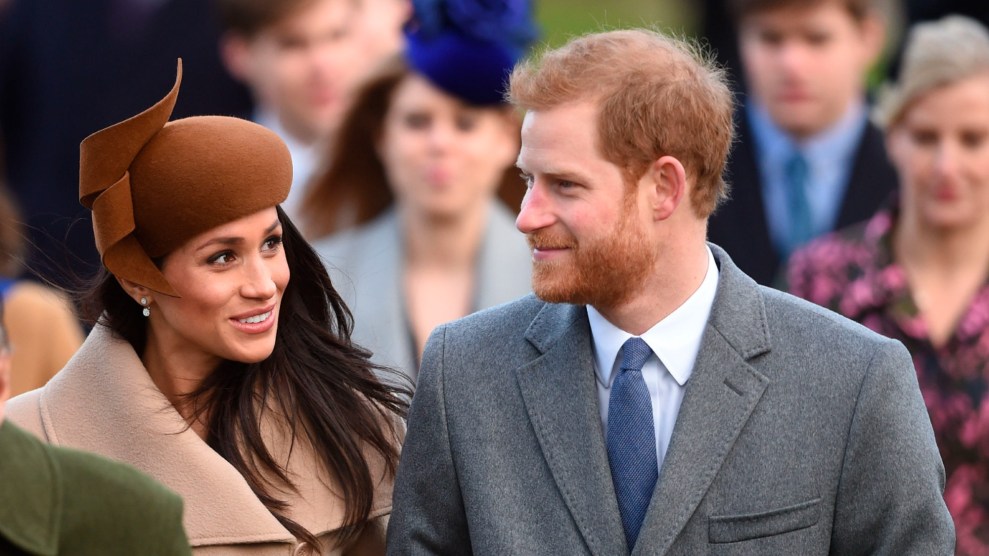
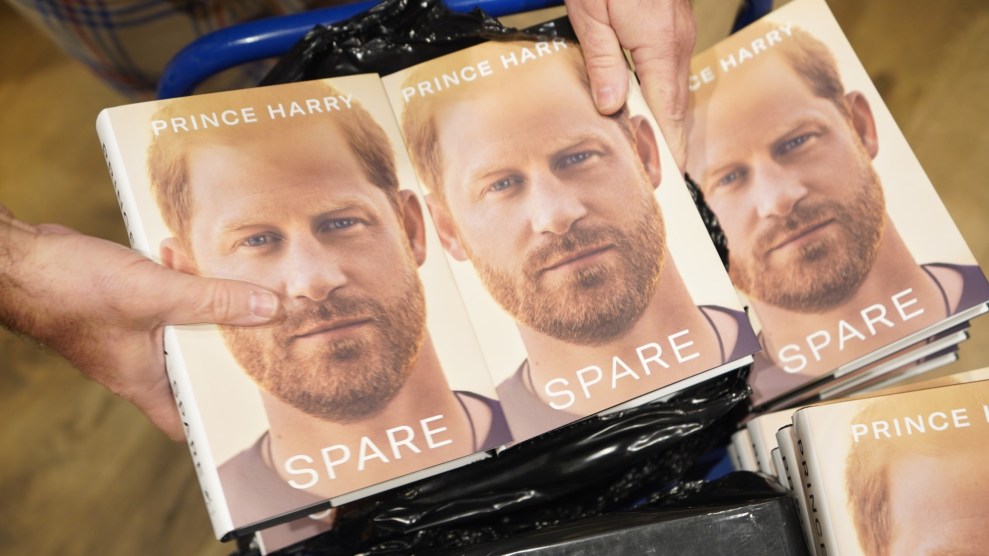
In this week’s New Yorker, JR Moehringer breaks all the rules of ghostwriting by ceasing to be invisible and asserting his hiding-in-plain-sight presence as the writer for Britain’s exiled Prince Harry’s blockbuster memoir Spare. Moehringer offers plenty to satisfy Royal obsessives, providing glimpses into their process, their relationship, and the genuine affection and respect that seems to have grown between him and his subject. Here are two guys, from unfathomably different worlds, connected by nearly obsessive love for their deceased mothers, and calling each other “dude.”
We are given the opportunity to witness Harry’s stubbornness as an example of the inevitable tensions that arise between the writer and the author. In the opening scene, Moehringer describes Harry’s repeated insistence on including his retort to soldiers who tortured him during his military training, and Moehringer’s repeated refusal to do so. (Moehringer won that one.) We see Meghan providing treats while Moehringer labors in his word factory on their California estate. And we have an intimate view of the outsized controversies that appeared after the memoir was published. Moehringer sets the record straight about an egregious passage in the book that mentions a TK Maxx sale the prince claimed to wait for every year. As Moehringer writes:
Not so fast, said the monarchists at TK Maxx corporate, who rushed out a statement declaring that TK Maxx never has sales, just great savings all the time! Oh, snap! Gotcha, Prince George Santos! Except that people around the world immediately posted screenshots of TK Maxx touting sales on its official Twitter account. (Surely TK Maxx’s effort to discredit Harry’s memoir was unrelated to the company’s long-standing partnership with Prince Charles and his charitable trust.)
Quite a relief to have that sorted out.
But for those of us, who have ever been ghostwriters, and I have ghosted seven books, (please don’t ask for whom) the real revelations were in Moehringer’s descriptions of his own experiences in the ever-mysterious process between writer and author: the back and forth, the disagreements, the negotiations, the sometimes confused pride of authorship. I’ve always said that what appeals to me about this role is the opportunity to do two professions that always interested me but ones I would never have managed: actor and psychoanalyst. But I am a mere mortal.
Moehringer is at the very top of the Mt. Olympus of ghosts, having written not only Harry’s best-selling memoir but also tennis star Andre Agassi’s bestseller, Open, which the New York Times called, “not just a first-rate sports memoir but a genuine bildungsroman, darkly funny yet also anguished and soulful.” And then there is Moehringer’s own story, The Tender Bar, which George Clooney made into a major motion picture starring Ben Affleck. Who would have thought that someone with his astonishing success would have had an experience common to the rest of us as we struggle with our own aspiring authors, a process he describes as “the mystic paradox of ghostwriting: you’re inherent and nowhere; vital and invisible. To borrow an image from William Gass, you’re the air in someone else’s trumpet.”
It is when he recounts a dinner with a bunch of sportswriters who, it turned out, also had their own experiences toiling as ghosts, that secrets are revealed:
At once, the meal turned into a raucous meeting of Ghostwriters Anonymous. Everyone had a hard-luck story about being disrespected, dismissed, shouted at, shoved aside, abused in a hilarious variety of ways by an astonishing array of celebrities, though I mostly remember the jocks. The legendary basketball player who wouldn’t come to the door for his first appointment with his ghost, then appeared for the second buck naked. The hockey great with the personality of a hockey stick, who had so few thoughts about his time on this planet, so little interest in his own book, that he gave his ghost an epic case of writer’s block. The notorious linebacker who, days before his memoir was due to the publisher, informed his ghost that the co-writing credit would go to his psychotherapist.
For those of us who have experienced the privilege and the ordeal of ghostwriting, Moehringer’s failures are as delicious a revelation as Harry’s use of drugs. “And yet some days I’d hear that siren call. An actor, an activist, a billionaire, a soldier, a politician, another billionaire, a lunatic would phone, seeking help with a memoir,” he writes.
“Twice I said yes. Not for the money. I’ve never taken a ghosting gig for the money. But twice I felt that I had no choice, that the story was too cool, the author just too compelling, and twice the author freaked out at my first draft. Twice I explained that first drafts are always flawed, that error is the mother of truth, but it wasn’t just the errors. It was the confessions, the revelations, the cold-blooded honesty that memoir requires. Everyone says they want to get raw until they see how raw feels. Twice the author killed the book. Twice I sat before a stack of pages into which I’d poured my soul and years of my life, knowing they were good, and knowing that they were about to go into a drawer forever. Twice I said to my wife, Never again.”
My friend Laura Zigman has been the ghostwriter for, among others, actor and comedian Eddie Izzard whose memoir, Believe Me, became a New York Times bestseller. (She’s a novelist as well, whose new book Small World the Times called a “brave and heartfelt book of truths.”) Which is to say she knows from writing and from ghosting. What she noted on Instagram, sums up my own experience as I read this piece. Maybe I’ll pick up Spare next.