China dropped the price of their currency to an almost a historic low. It’s called “currency manipulation.” Are you listening Federal Reserve? This is a major violation which will greatly weaken China over time!
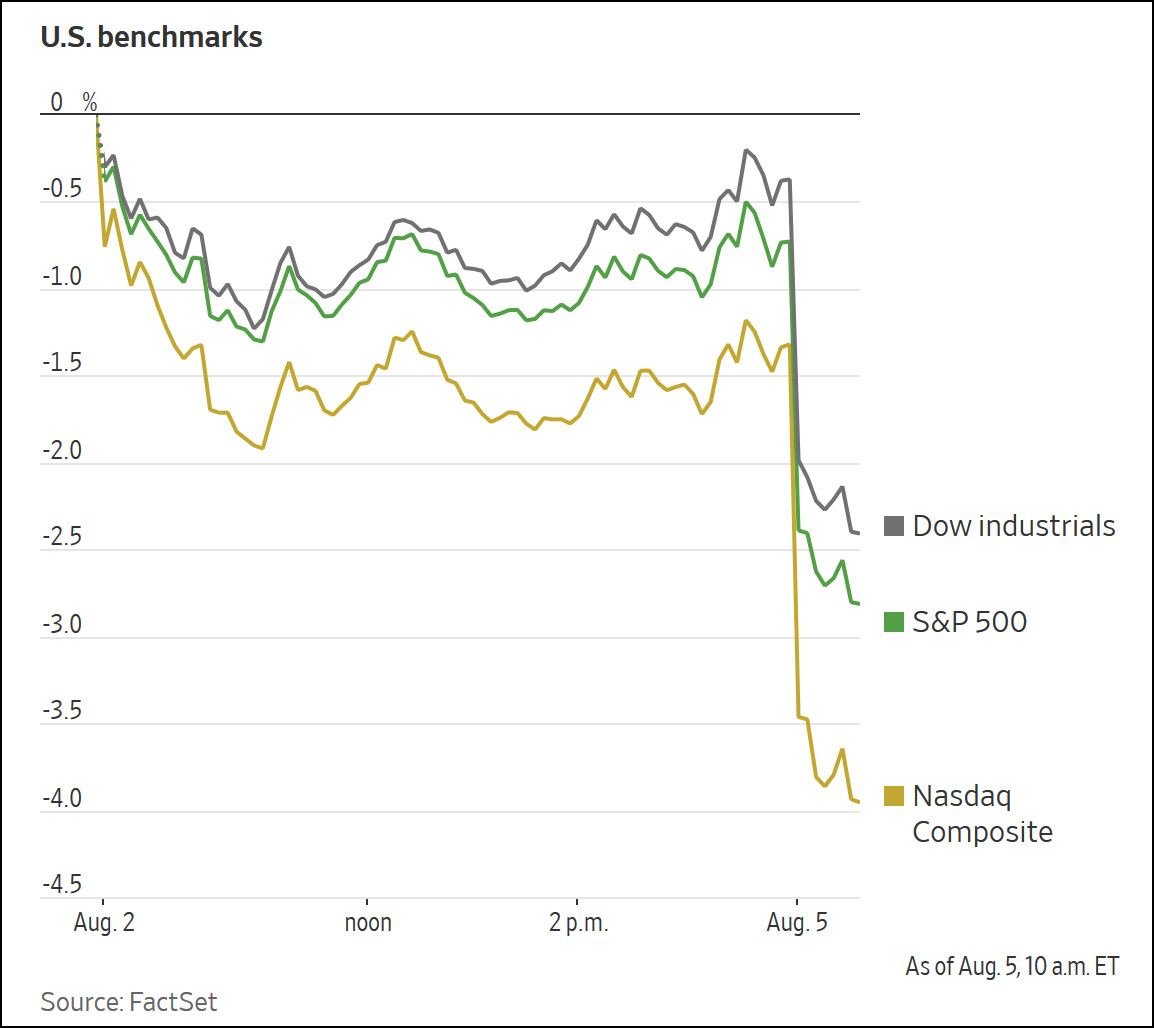
How about that? China has trade weapons other than tariffs at its disposal. Who knew? Well, China did, for one. They released a statement blaming the depreciation of the yuan on “the effects of unilateralist and trade-protectionist measures and the expectations for tariffs against China.”
And now the whole world is panicking. Here’s another chart from the Wall Street Journal:
Mourners in El Paso hold a vigil to honor the victims of Saturday's mass shooting.Roberto E. Rosales/Albuquerque Journal via ZUMA
As usual, I don’t have a lot to say about our latest series of mass shootings. I’ll just repeat my standard prescription: the only real answer is to ban semi-automatic firearms. This is obviously not going to happen anytime soon, but it should be the goal. The only way to move public opinion on this issue is to start saying this clearly, loudly, and persistently.
And let’s all forget about the NRA, OK? Sure, they’re a terrible, corrupt organization, but they aren’t the root problem. Public opinion is. There are just too many people in America who like their guns and too few people who feel strongly about getting rid of them. To make a difference, that has to change. Like gay marriage, it will change maybe one percent a year and it will take 20 or 30 years to finally come to fruition. But what other way is there?
I know I should be over this by now, but the sheer gall of Donald Trump is still hard to believe. This morning he retweeted this from evangelical leader Franklin Graham:
5 yrs ago today Dr. Kent Brantly arrived at @EmoryUniversity Hospital after contracting the Ebola virus while serving w/@SamaritansPurse in Liberia. He was the 1st Ebola patient to set foot in the U.S. We still thank God for the miracle of his healing. pic.twitter.com/99S12j828V
Evangelicals to this day are exercised over a description of them in 1993 as “poor, uneducated, and easy to command.” But if they’re truly unable to see through such obvious and cynical pandering, maybe they deserved it all along.
How much has globalization hurt the American worker? Entire forests have been felled around this question, but here’s a simple way of getting a rough read on things.
Globalization mainly affects what’s called the tradeable sector—that is, stuff that can be traded between countries. These are mostly physical goods like cars and coal and lumber. However, it has little effect on the nontradeable sector, things like retail and education. So if globalization has hurt the wages of American workers, you’d expect to see more downward pressure on wages in the tradeable sector than in the nontradeable sector.
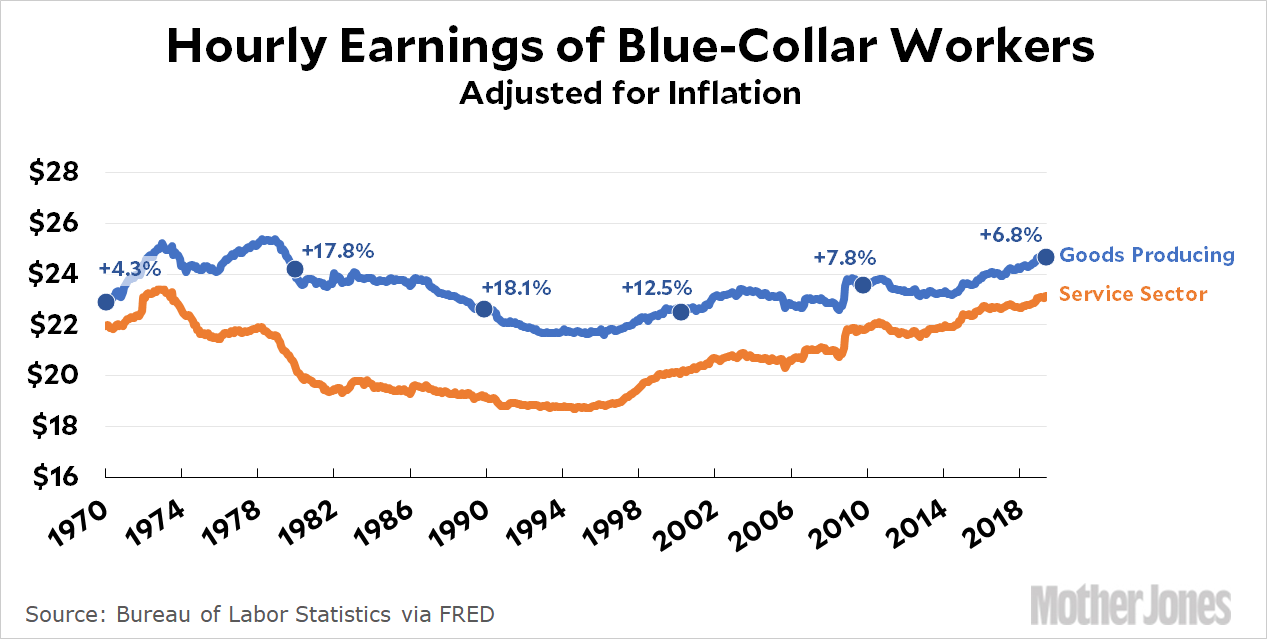
As a rough cut on this, you can look at blue-collar wages for goods-producing industries vs. service sector industries. Here it is:
In 1970, before the big wave of globalization hit, wages in goods-producing industries were 4 percent higher than in the service sector. Then, starting in 1980, when globalization began to take off, the service sector took a steep and sustained dive. It eventually started to catch up, but by 2019 it still hadn’t: wages in the goods-producing industries were 7 percent higher than in the service sector.
Globalization may well have pushed wages down in the goods-producing industries. But if that’s the case, why were wages in the service sector pushed down even more? The answer is inconvenient for corporations and the rich, who like to shrug their shoulders and say that it’s a global world these days and, hey, what can you do? The answer they’re all afraid of is: labor unions. Service-sector wages have lagged because, even in the current anemic state of organized labor, goods-producing industries still have more of a labor presence than the service sector.
A whole host of problems—income inequality, sluggish wage growth, unaffordable housing, the power of Wall Street—are just symptoms of the fact that American workers don’t have the bargaining power to demand higher wages. Fix that, and a whole lot of other problems will magically get fixed at the same time.
It’s been hot and muggy around here lately, and Hopper is clearly out of energy. She barely even has the strength to give the camera the evil eye these days.
The Trump administration has flip-flopped on importing drugs from Canada. HHS secretary Alex Azar has always been against it, but he says that Trump has been “pushing” him on the subject. But why? Let me start with a familiar story, this time from the Canadian Broadcasting Corporation:
It was Tara Saunders’s dermatologist who suggested she drive across the border to Canada to buy her medication. The dermatologist called in the prescription to Mark’s Marine Pharmacy in Vancouver. The 20-minute drive from her home in Blaine, Wash., saved Saunders $300 US a month.
….She isn’t the only one making the trek north. Earlier this month, a group from Minnesota, calling themselves the Caravan to Canada, made a trip to Ontario to buy insulin at a tenth of the U.S. price.
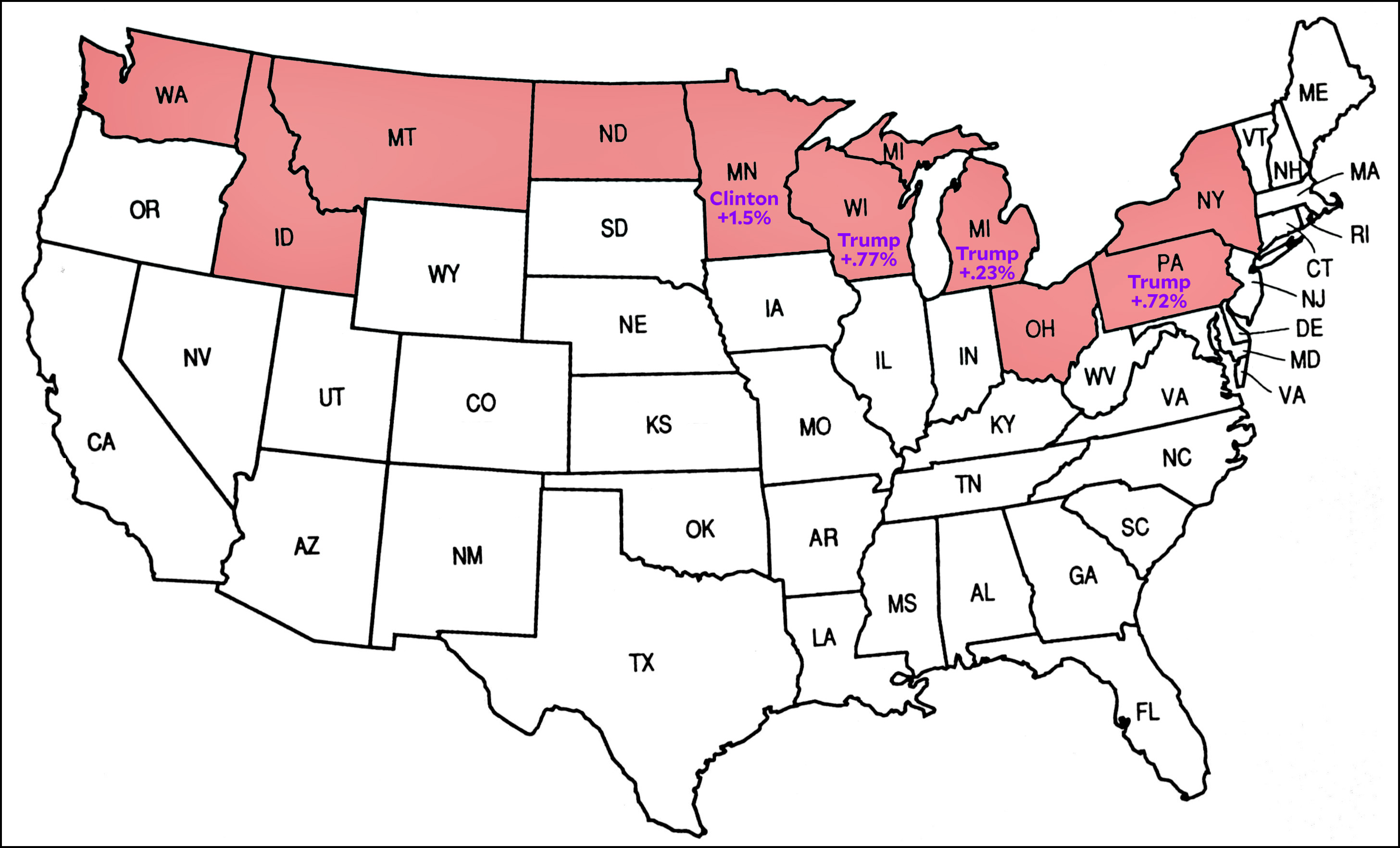
These are both states that border Canada. Are you starting to get an inkling of what’s going on? Maybe a map will help:
Trump is focused like a demon on the blue-collar states that won him the presidency in 2016 by a hair, states that he knows could go either way in 2020. Right now it’s mostly people in these border states who are the ones schlepping across the border for their insulin or cholesterol meds, and allowing legal importation would make a concrete improvement in their lives.
Is that a lot of people? No, but when you win a state by 0.2 percentage points, every little bit helps. And you can be sure that Fox News affiliates in these states will be on board with lots of heartwarming stories about someone’s grandma who can now relax and not have to worry about the monthly drive to Sault Ste. Marie or Hamilton that keeps her from having to ration her drugs. This new policy has nothing to do with making health care better. It has everything to do with Trump winning a few more votes in the upper Midwest.
My new, high-speed blogging hub of operations.Kevin Drum
I guess this is my week for being hoist on my own cynical petard. As promised, I went out and bought a new cable modem yesterday. I didn’t do this because I thought it would make any difference, but because I figured I’d never get any serious help from Cox tech support until I did. So I bought the one that was on sale, plugged it in, allowed Cox to sniff around, and then ran a speed test to get a rough idea of where I was.
And . . . it was running consistently at 4-6x the performance of my old box. And in the last 24 hours, at least, it hasn’t crashed once. So the problem really was my cable modem, just like the Cox guy suggested.
Which is a bit of a mystery. I mean, it’s not like my old cable modem was some kind of relic from 1997. I bought it three years ago, and it’s still a current model—selling for more than the replacement box I bought. So why would it provide such sluggish service? And why would it slowly deteriorate over time to the point where it was crashing three or four times a day?
Beats me. Luckily I have wealth privilege, which means that if I can fix a problem for mere small dollar amounts, it just doesn’t matter. If the new device works and all it cost was $150, I don’t care what the problem was. In with the new, and off to the trash with the old.
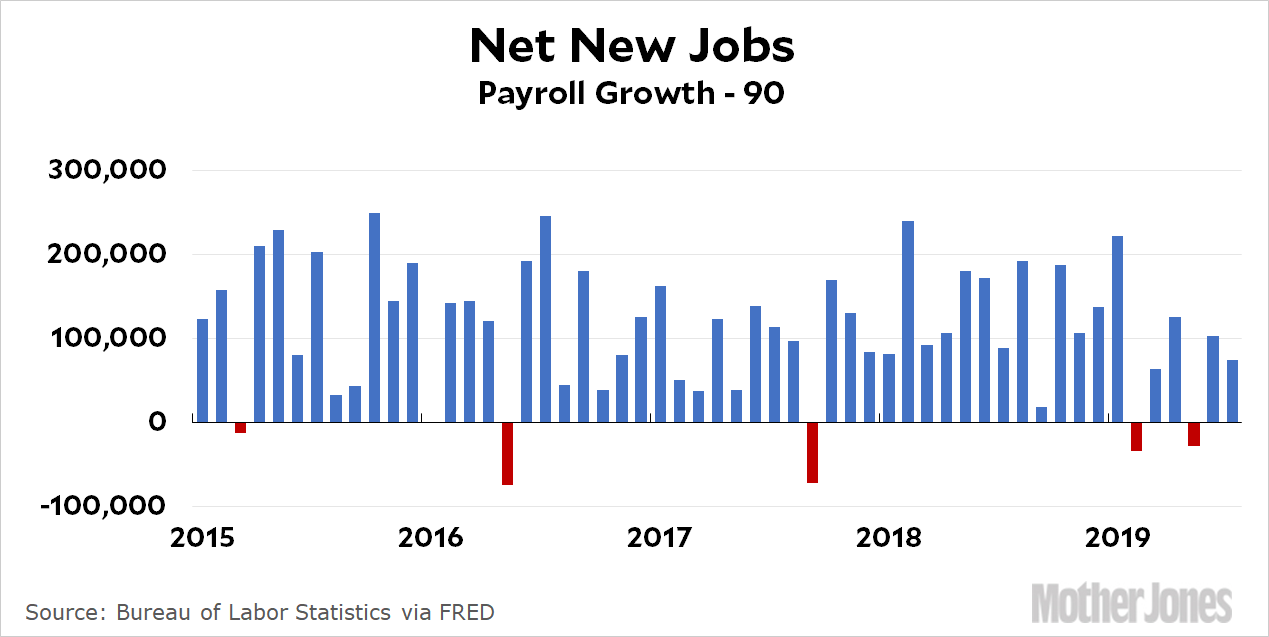
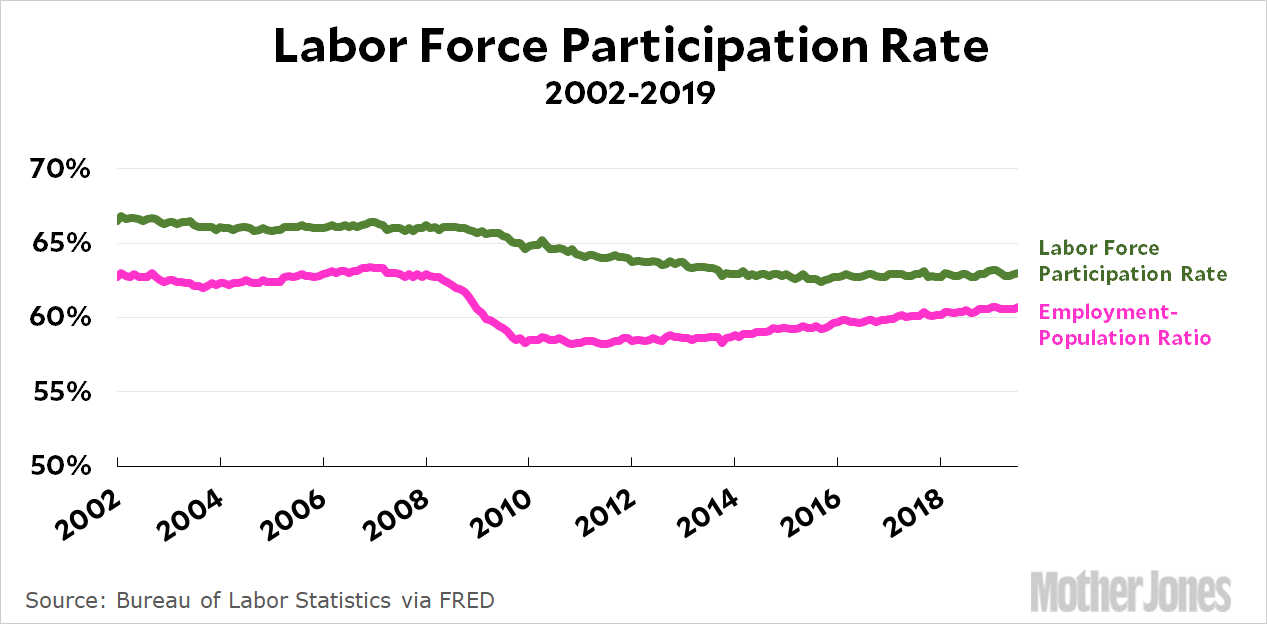
The American economy gained 164,000 jobs last month. We need 90,000 new jobs just to keep up with population growth, which means that net job growth clocked in at 74,000 jobs. This is a modest number, but it happened for all the right reasons. BLS recorded 283,000 newly employed plus another 183,000 who have left the sidelines and re-entered the labor force. Both the labor force participation rate and the employment-population ratio ticked upward slightly.
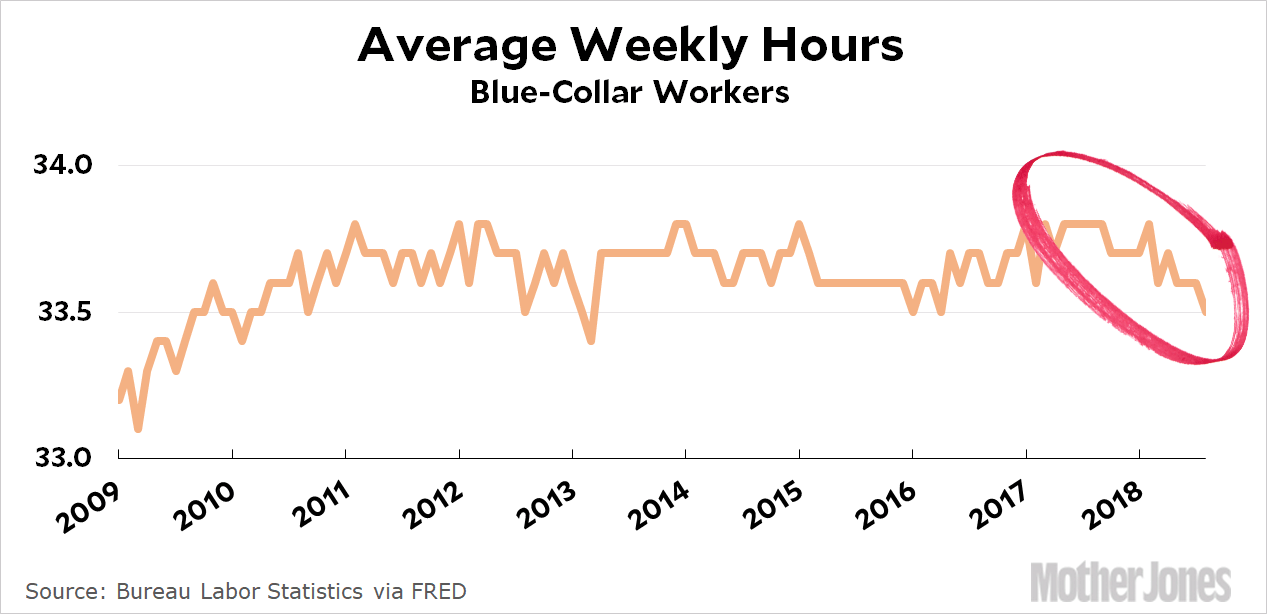
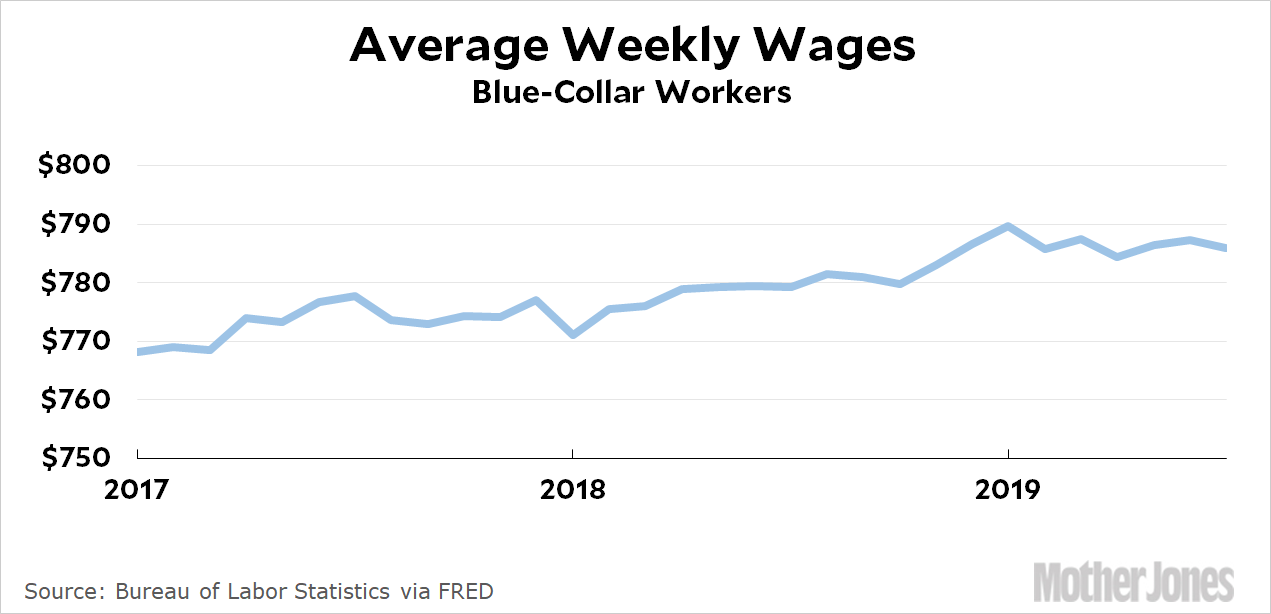
On the wage side of things, the news was tepid. Hourly wages for blue-collar workers were up at an annual rate of about 0.5 percent after adjusting for inflation. That’s nothing to write home about. What’s worse, the number of hours worked went down, so average weekly wages declined at an annual rate of about 1.6 percent. This continues a trend from last year of workers getting fewer hours, which is now down to its post-recession level.
The upshot of all this is that weekly blue-collar wages have been slowly declining ever since the beginning of the 2019. July was just the latest drop.
The White House has instructed newly installed Defense Secretary Mark T. Esper to reexamine the awarding of the military’s massive cloud-computing contract because of concerns that the deal would go to Amazon, officials close to the decision-making process said….The president’s directive represents a departure from what is usually a scripted bureaucratic process. Trump on several occasions has spoken out against Amazon and its chief executive, Jeff Bezos.
….Oracle has lobbied Trump aggressively on the matter, hoping to appeal to his animosity toward Amazon as well as former defense secretary Jim Mattis, who angered the president when he resigned last year over the administration’s foreign policy decisions. Oracle Executive Vice President Ken Glueck, who runs the company’s policy shop in Washington, said he created a colorful flow chart labeled “A Conspiracy To Create A Ten Year DoD Cloud Monopoly” that portrayed connections among Amazon executives, Mattis and officials from the Obama administration. That graphic made it to Trump’s desk and led to a discussion between the president and his aides, people familiar with the matter said.
This is like a hellscape mashup of kindergarten temper tantrums with vindictive adult corruption. Trump doesn’t like the Washington Post, so he takes revenge on its owner by lashing out at Amazon and telling the Pentagon he doesn’t want them to get any big contracts. Meanwhile, the Oracle folks, obviously having taken the measure of our moron-in-chief, know exactly what buttons to push. Hell, they’re so proud of it—and so sure that Trump will never catch on—that they brag about it publicly.
This is a test for Esper. Will he do the right thing and let the procurement process run normally? Or will he cave in to Trump and invent some reason to reopen the bidding? Tick tick.
And we respect that! But maybe you’re of a mind to support our work directly instead? We have until December 31 to raise the last $400,000 we need to keep our nonprofit newsroom running at full strength into 2026. Will you make a gift today?
We noticed you have an ad blocker on. Can you pitch in a few bucks to help fund Mother Jones' investigative journalism?
Billionaires own the media,
but they don’t own us.
At Mother Jones we know these aren’t conventional times, and they require unconventional coverage. That’s what deliver every day: fierce, independent journalism you can’t find elsewhere. Perhaps never in the history of our country has that been more necessary than now. But we can’t do it without reader support—your support. Please chip in today.
Billionaires own the media,
but they don’t own us.
At Mother Jones we know these aren’t conventional times, and they require unconventional coverage. That’s what deliver every day: fierce, independent journalism you can’t find elsewhere. Perhaps never in the history of our country has that been more necessary than now. But we can’t do it without reader support—your support. Please chip in today.