• We Are All Social Democrats Now

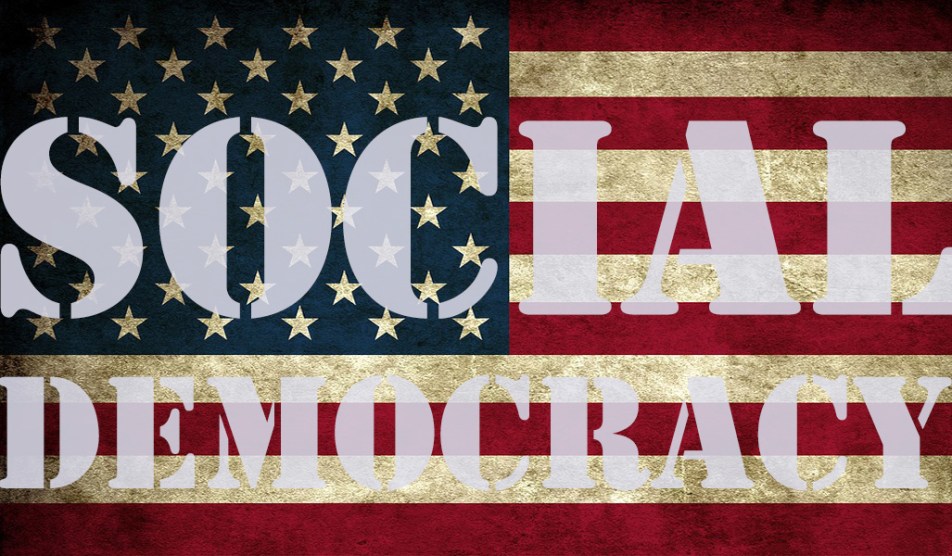
    I know there’s some unhappy history behind the American use of “social democrat” as a political description, but those feuds happened more than a half a century ago and maybe it’s time to let them die. Why? Because life would sure be a lot easier if we could all learn to accept social democrat as the most accurate description of most modern progressives.

    I’m perfectly happy with the label, myself. For those of you who are hazy about what social democracy is, here’s a quickie bullet list. Assuming I didn’t bungle anything, it basically follows the work of Sheri Berman, one of today’s foremost scholars of social democracy and author of The Primacy of Politics: Social Democracy and the Making of Europe’s Twentieth Century:

    • Non-revolutionary; accepts democracy as its political foundation
    • Seeks to reform and reshape capitalism, not destroy it
    • Market based, but harnessed to the common good by a regulatory state
    • High progressive taxes to support a generous welfare state
    • Fundamentally communitarian, originally designed to counter the appeal of nationalism
    • Undergirded by belief in both social and economic equality

    It’s worth adding that like most political movements, social democracy is both flexible and limited. It doesn’t insist on any particular view of gun rights or abortion, for example, nor will it tell you if recessions are best handled by monetary or fiscal policy. Likewise, although it would certainly point strongly in the direction of universal health care, it easily subsumes everything from the British model to the Swiss. (Or, in American terms, everything from the VA system to Obamacare.)

    For more, check out Berman’s “Understanding Social Democracy,” a short paper that mirrors the history and exposition of her book.
  • Friday Cat Blogging – 1 February 2019

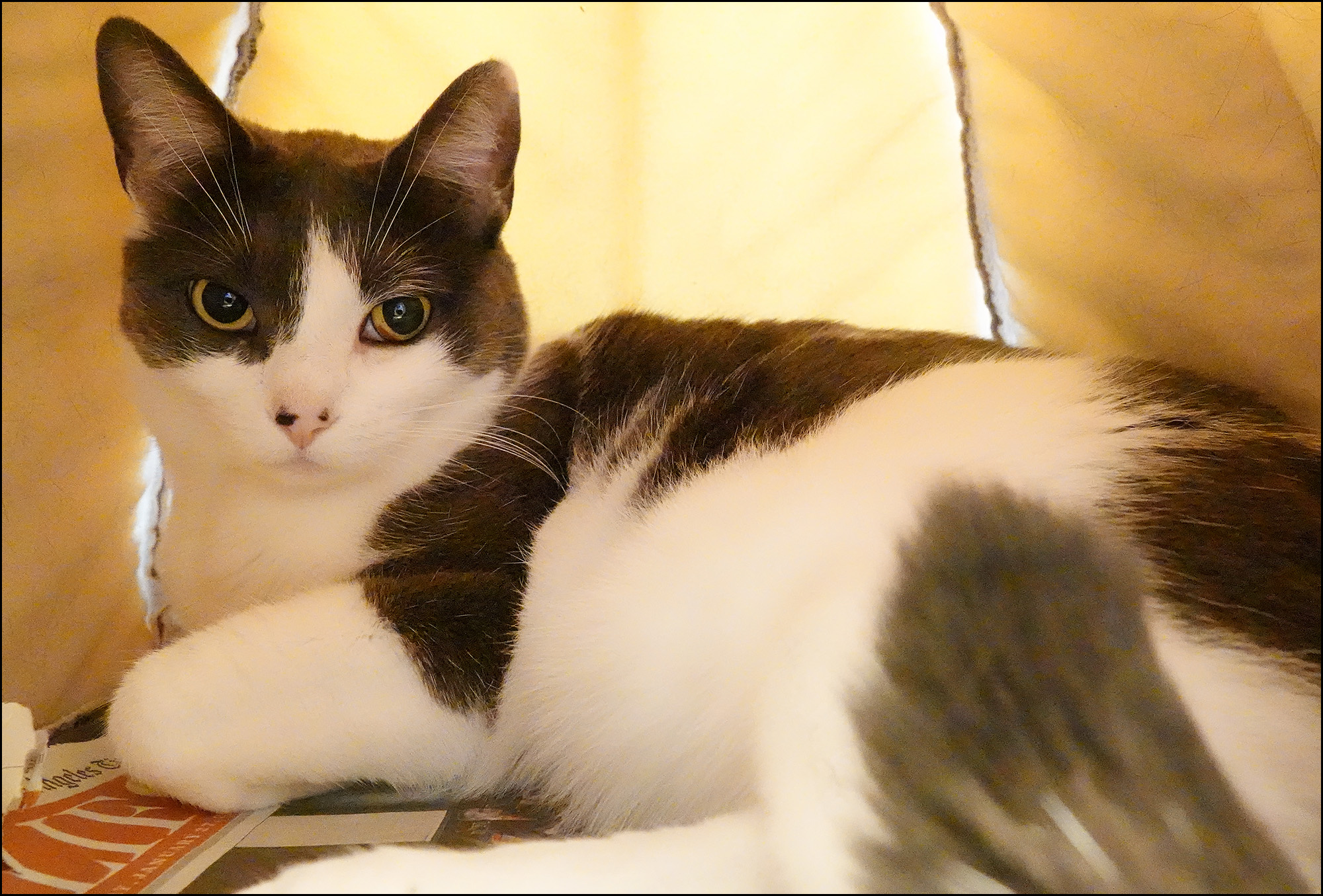
    We’ve owned a cat yurt for several years, but the cats never took to it. It just sat in a corner, forever lonely and unused.

    But last week, for some reason, I decided to see if I could get the cats to like the yurt. First it got a good washing. Then I put a section of the newspaper on the bottom, since cats love to sprawl out on newsprint. Finally I put it up on my desk, where both cats love to curl up unless they’re upstairs on Marian’s desk.

    For the first few days, nothing. I was almost ready to give up. But then, on Wednesday, both cats suddenly fell in love with it. One of them would squish their way in, stay for half an hour or so, and then leave. A few minutes later the other one would take up residence. Then the other one. There was a constant parade of cats coming and going for their turn in the yurt. I’m not really sure what to make of it.

    In any case, this is Hopper during one of her turns. As you can see, the yurt glows warmly through the far end when the sun is up, which must be very comforting. On the other hand, the yurt also seems to attract nitwits with cameras. This is pretty annoying, as Hopper’s expression suggests, but it’s the kind of thing cats have learned to put up with around here. It’s the price of a never-empty cat food bowl.

  • New Book Reveals the Obamacare Cowardice of Chief Justice John Roberts

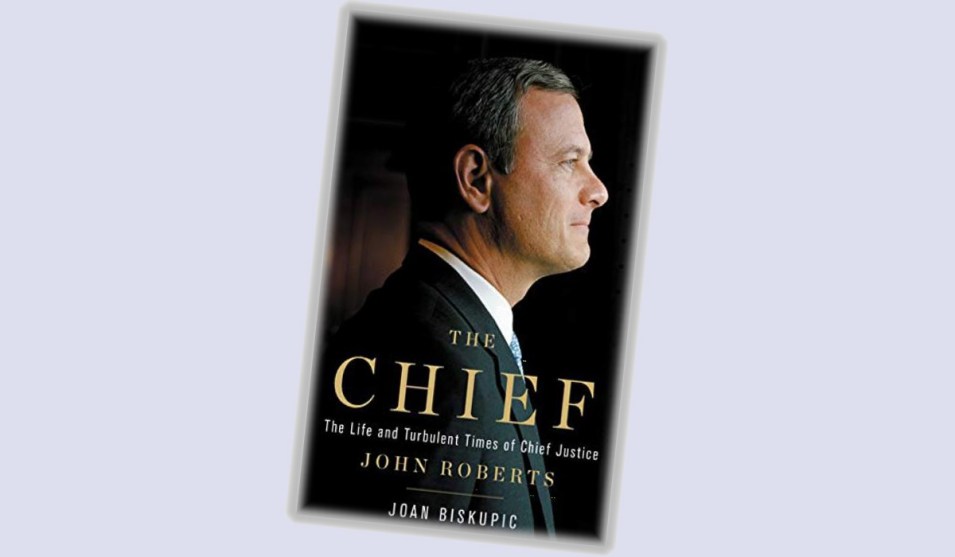
    Joan Biskupic has written a biography of Chief Justice John Roberts that confirms some of the horsetrading that produced the final Obamacare opinion in NFIB vs. Sebelius. Michael O’Donnell provides the details:

    Biskupic reports in detail for the first time on the machinations of the Obamacare case, revealing that Roberts started out in a different place. She writes that he initially voted with the four other conservatives to strike down the ACA, on the grounds that it went beyond Congress’s power to regulate interstate commerce. Likewise, he initially voted to uphold the ACA’s expansion of Medicaid. But Roberts, who kept the opinion for himself to write, soon developed second thoughts.

    Biskupic, who interviewed many of the justices for this book, including her subject, writes that Roberts said he felt “torn between his heart and his head.” He harbored strong views on the limitations of congressional power, but hesitated to interject the Court into the ongoing health-insurance crisis. After trying unsuccessfully to find a middle way with Kennedy, who was “unusually firm” and even “put off” by the courtship, Roberts turned to the Court’s two moderate liberals, Stephen Breyer and Elena Kagan. The threesome negotiated a compromise decision that upheld the ACA’s individual mandate under Congress’s taxing power, while striking down the Medicaid expansion. Future scholars will endlessly probe this fascinating moment in judicial history, but Biskupic deserves credit for writing the first draft.

    This doesn’t speak well for Roberts. By the time he met with the two liberals, he apparently held two genuine beliefs: (a) the individual mandate was constitutional because it was a tax, and (b) ACA’s Medicaid expansion was also constitutional. But he was only willing to support the individual mandate if liberals were willing to negotiate a deal to strike down the Medicaid expansion. In other words, he was only willing to support what he believed to be true in return for striking down something else he believed to be true.

    Why? We can only guess, but presumably Roberts was making a purely political decision: in order to retain his conservative reputation, he needed to strike down something in return for upholding the mandate. So Medicaid got chopped. Kagan and Breyer went along with this because they had no choice.

    Horsetrading is one thing, but this is not how Supreme Court justices are supposed to operate. If Roberts truly believed the individual mandate was constitutional as a tax, he should have had the guts to simply say so without any payoff. Doing otherwise was just cowardly.

    UPDATE: A few commenters have pointed out that we don’t know for sure when Roberts changed his mind on the mandate. Maybe the idea came from Kagan and Breyer: “Hey, how about if you uphold the mandate on tax grounds? If you do, we can still rein in the scope of ACA by killing the Medicaid expansion.”

    This is not the sense I get from the review, but it’s a little hard to tell for sure. Perhaps the book itself has more detail. It comes out in late March.

  • Democrats Vote in Favor of Forever War

    Anas Alkharboutli/DPA via ZUMA

    Congress doesn’t like President Trump’s plans to withdraw troops from the Middle East:

    The Senate, in a bipartisan rebuke to President Trump’s foreign policy, voted overwhelmingly to advance legislation drafted by the majority leader to express strong opposition to the president’s withdrawal of United States military forces from Syria and Afghanistan. The 68-to-23 vote to cut off debate ensures that the amendment, written by Senator Mitch McConnell of Kentucky and backed by virtually every Senate Republican, will be added to a broader bipartisan Middle East policy bill expected to easily pass the Senate next week.

    Sadly, the vote was truly bipartisan: Democrats backed it by a vote of 25-20. It’s strictly an advisory vote, but among other things it:

    calls upon the Administration to pursue a strategy that sets the conditions for the long-term defeat of al Qaeda and ISIS, as well as the protection of regional partners and allies, while ensuring that Iran cannot dominate the region or threaten Israel; and calls upon the Administration to certify that conditions have been met for the enduring defeat of al Qaeda and ISIS before initiating any significant withdrawal of United States forces from Syria or Afghanistan.

    In other words: stay forever. It will be many years before anyone can certify the “enduring” defeat of al-Qaeda and ISIS and ensure that Iran can’t threaten Israel. If those are the conditions, we’re never going to leave.

    And 25 Democrats voted in favor of this. As always, the foreign policy establishment remains truly bipartisan in favor of endless intervention overseas.

    POSTSCRIPT: In case you’re interested, all of our potential Democratic nominees for president voted against the amendment. Kamala Harris, Elizabeth Warren, Cory Booker, Kirsten Gillibrand, Bernie Sanders, and Amy Klobuchar all voted No.

  • Chart of the Day: Net New Jobs in January

    The American economy gained 304,000 jobs last month. We need 90,000 new jobs just to keep up with population growth, which means that net job growth clocked in at a healthy 214,000 jobs. The unemployment rate rose to 4.0 percent.

    The BLS does a comprehensive revision of the previous year’s numbers each January, and that resulted in a fairly large revision downward in December’s numbers. They’re now 90,000 less than was reported last month, so I guess the holiday season wasn’t quite as good as we thought.

    Earnings of production and nonsupervisory workers increased at a miserly annualized rate of 1.6 percent in the month of January. With inflation running at about 2 percent, this means that blue-collar workers saw a pay cut of about 0.4 percent. Yuck. However, this is probably just making up for the huge upward spike last month. Year-over-year earnings increased 3.4 percent, or about 1.4 percent when you account for inflation. That’s not bad.

  • The Great Texas Immigrant Voter Hunt Shoots Itself In the Foot

    A few days ago I wrote about yet another idiot initiative—this time in Texas—to rid their voter rolls of the vast hordes of noncitizens who were messing with their elections. They must be there, right? Everyone knows it.

    At the time, I naturally figured that nothing would come of it, but I also wondered if we’d ever hear about it again when it produced the inevitable bupkis. Little did I expect that not only would we hear more about it, it would take less than a week:

    After flagging tens of thousands of registered voters for citizenship reviews, the Texas secretary of state’s office is now telling counties that some of those voters don’t belong on the lists it sent out. Officials in five large counties — Harris, Travis, Fort Bend, Collin and Williamson — told The Texas Tribune they had received calls Tuesday from the secretary of state’s office indicating that some of the voters whose citizenship status the state said counties should consider checking should not actually be on those lists.

    That was on Tuesday. Here’s more from yesterday:

    By the time local elections officials downloaded a list of 366 registered voters the Texas Secretary of State’s Office initially said may not be citizens, the office had called to tell them to disregard the list, Elections Administrator Kathy Van Wolfe said….“They sent out a list and called us and said it was a mistake,” Van Wolfe said. “All those people have proven citizenship.”

    ….Election officials in Texas’ largest county say they have already cleared about 18,000 voters in the Houston area who the state had wrongly flagged as potential noncitizens. Harris County special assistant attorney Douglas Ray said Wednesday he expects to find more mistakes as the state backpedals on claims that tens of thousands of illegal ballots had potentially been cast since 1996.

    So that’s that. The wingers in Texas were so anxious to tell the world there might be 95,000 noncitizens on their voter rolls that they massively flubbed it. Within a few days their list has probably been cut in half, and by the time this fiasco is completed I’ll be surprised if they find more than a dozen noncitizens. What a bunch of idiots.

  • Who’s More Racist: You or an Algorithm?

    For some reason there’s a sudden interest in what seems like a minor topic: whether machine learning is biased. The basic argument is that since computer programs are written by humans and trained on human data, they inevitably inherit human biases along the way. Therefore, we need to…

    …do something. But I’m not sure what. Nobody ever seems to suggest much of anything.

    I suspect there’s a reason for that: the problem of AI bias is far less pervasive than critics suggest. It happens, of course. But the thing to keep in mind about AI and machine learning is that they don’t have to be perfect to be useful. They just have to be better than humans. As long as an algorithm is no more biased than the average person—and I’ve never heard of an example where one is—then it’s a useful thing.

    But there’s more than that to say in favor of automation: even if an algorithm is biased, it’s far easier to correct than it is in a human. For example, if you’re concerned about why an algorithm is making its decisions, you can program it to tell you. It will be 100 percent honest and 100 percent non-defensive about this. Humans, by contrast, frequently don’t even know why they make particular decisions, and if they do they’ll often lie about it.

    Likewise, if you’re concerned that a training set has introduced bias, you can retrain an algorithm. Once you have a goal in mind, this is fairly quick and painless. Humans, by contrast, are all but impossible to retrain once they become adults.

    It’s useful to be aware of these things, and to insist that algo designers incorporate bias antigens from the start. Algorithms of any complexity shouldn’t be black boxes. They shouldn’t be hard to retrain. They should be written to hunt for possible biases and report them. This isn’t trivial, but it’s hardly the biggest programming challenge in the world. Given all this, the odds that machine intelligence will end up being more biased than human beings is, to anyone who’s aware of how biased human beings are, pretty laughable.

  • Lunchtime Photo

    On the last day of my visit to New York last year, I was pondering how to get to the airport: taxi or subway?¹ I had dinner with friends the night before, and they assured me the subway was great. One of them even checked out the MTA website to make sure the line was running normally. It was.

    So the next morning I headed out to the subway station and… the train to JFK had left one minute before I got there. So I twiddled my fingers for half an hour waiting for the next one. It trundled along and… somehow, I still don’t know how,² I missed my stop. Unfortunately, the next stop after JFK is about ten minutes away across Jamaica Bay. So I stewed for ten minutes. My only lucky break came when we finally got to the next station: a train heading in the other direction was only a minute away. So I got on the train and stewed for another ten minutes, by which time my schedule was starting to get kind of tight. Finally I got off, took the airport shuttle to the terminal, and then walked ten miles to the check-in area, time running out the entire way.³ Eventually I got there, but not before I tripped and fell down an escalator because I was in a real rush by then.

    A harrowing story, no? But there was one bright spot: I managed to be so late that I saw the sun rising over the airport on the way back across Jamaica Bay. So here is today’s photo memorializing that crappy morning: a plane landing just after sunrise at JFK airport.

    ¹I suppose most people would just take a taxi and not give it another thought. After all, it’s not as if money was an issue. But I really like subways.

    ²My best guess is that I got caught up in taking a picture of something and wasn’t paying attention.

    ³OK, not really. But damn, it sure seemed like ten miles.

    September 15, 2018 — On the A train across Jamaica Bay, New York City
  • Only 27% of Americans Think American Health Care Is Above Average

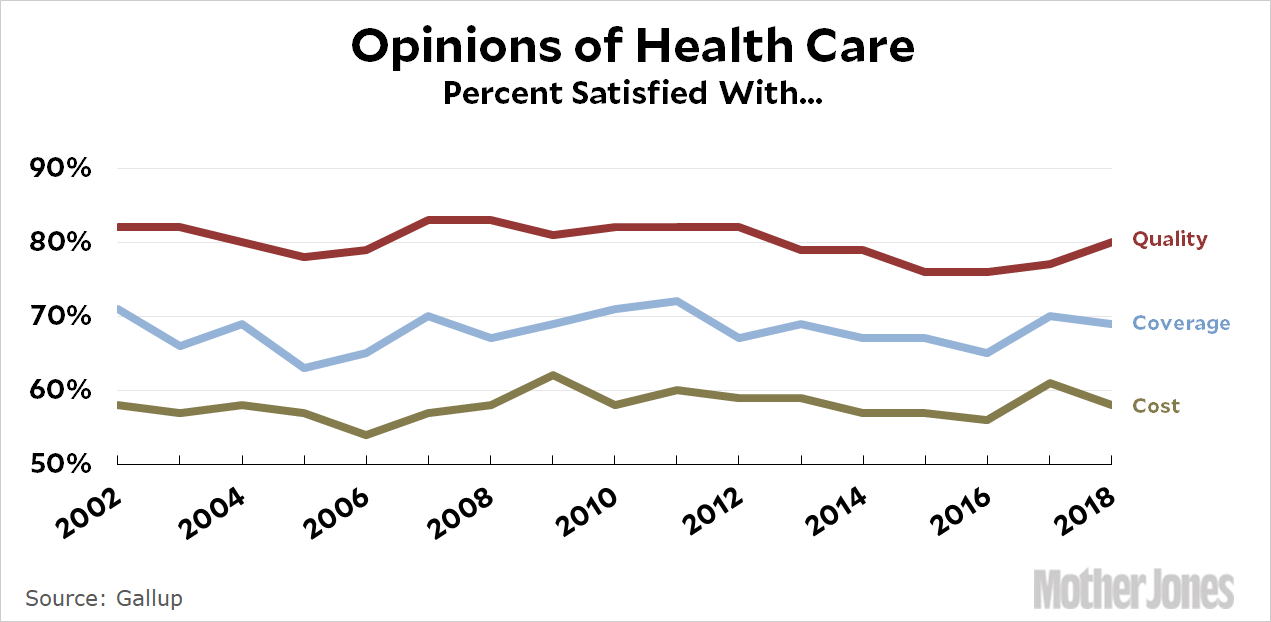
    A couple of days ago I suggested that Democrats needed to conduct a scorched-earth campaign against insurance companies if they wanted to persuade the public to support some kind of national health care plan. But that got me thinking. Conventional wisdom says that employer health insurance is the “gold standard,” and that most people who have it don’t want to trade it in for something else. But is that true? Do most people really love their health insurance? Or has that declined as coverage has gotten narrower and copays have gotten higher? Here’s the answer according to Gallup:

    To my surprise, nothing much has changed over the past two decades. Despite everything that’s happened over that time, opinions have stayed pretty steady. People love their health plans about as much as they ever did.

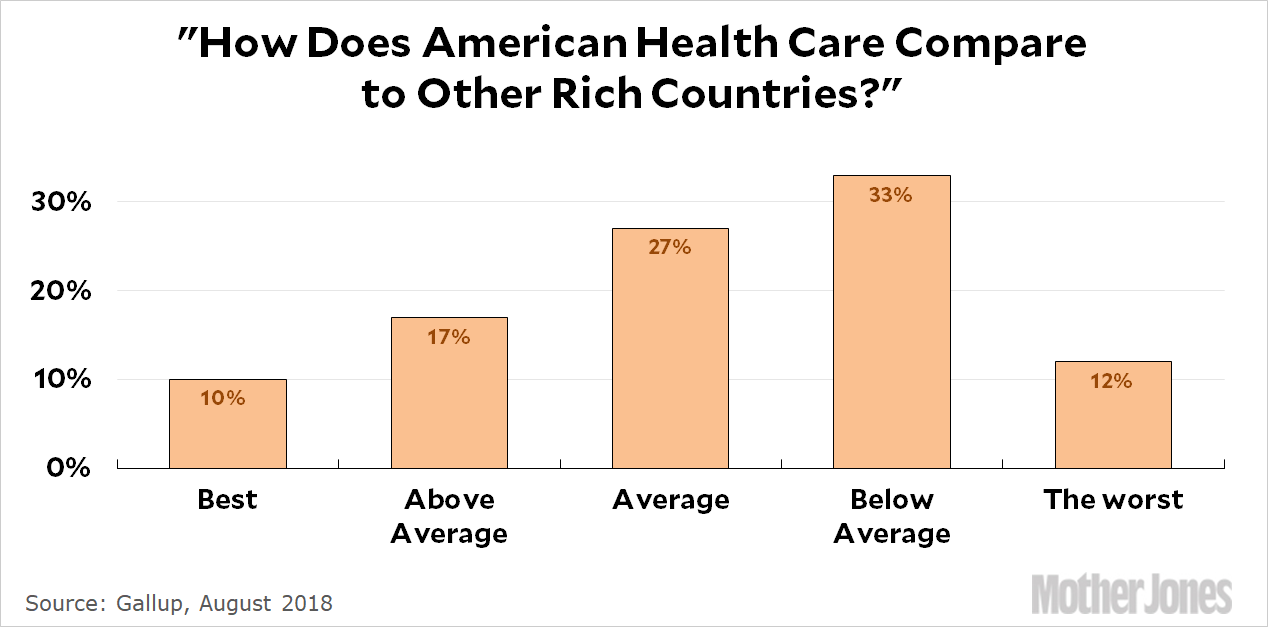
    However, as I was gathering this data, I read through the Gallup survey questions and found something that surprised me a lot:

    Conventional wisdom says that we Americans think our health care is the best in the world. But it turns out that only 27 percent of us even think it’s better than average—while nearly half think it’s worse than average. This sure seems like something we could build on as we’re trying to persuade the country that we can do better than what we have now. Anybody up for Make Health Care Great Again™?

  • What’s Up With Howard Schultz?

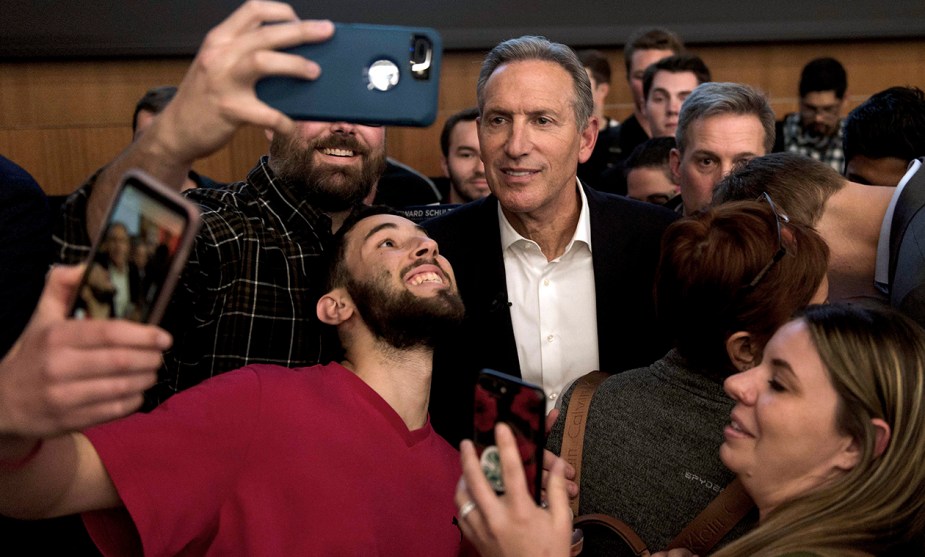
    Coffee mogul Howard Schultz enjoying his brief time in the limelight.Brian Cahn/ZUMA

    What’s the deal with Howard Schultz? I mean really: does anyone know? He can’t possibly believe he has a chance of winning on a platform of social liberalism and fiscal austerity. This is roughly the platform Gary Johnson ran on in 2016, and even in the midst of the greatest displeasure with the establishment candidates in years, he only polled 3 percent.

    So what does Schultz add to that? Well, he’s a billionaire, and billionaires are kind of unpopular right now. On the other hand, as a billionaire he can blanket the airwaves with his unpopular stands. So maybe he could poll around 1 percent.

    I don’t get it. He apparently has no real policy proposals to offer. Instead, he’s spent the past week insulting the various Democratic nominees. But I suppose that might be smart. There are people who dislike Democrats—though most of them are Republicans who support Trump—but there’s virtually nobody who’s going to like his policies once he finally gets around to admitting what they really are.

    I dunno. I was emailing with a friend recently about why Schultz was running, and my final comment was “Never underestimate ‘unrestrained vanity project’ as a reason, especially when billionaires are involved.” Maybe I should just stop there and not try to make any further sense of it.