• ¡Mexico Again!

    Following up on the whole NAFTA thing, I thought I’d collect a few summaries and charts that would help explain the consensus on NAFTA a little better. First off, here’s a survey of economists:
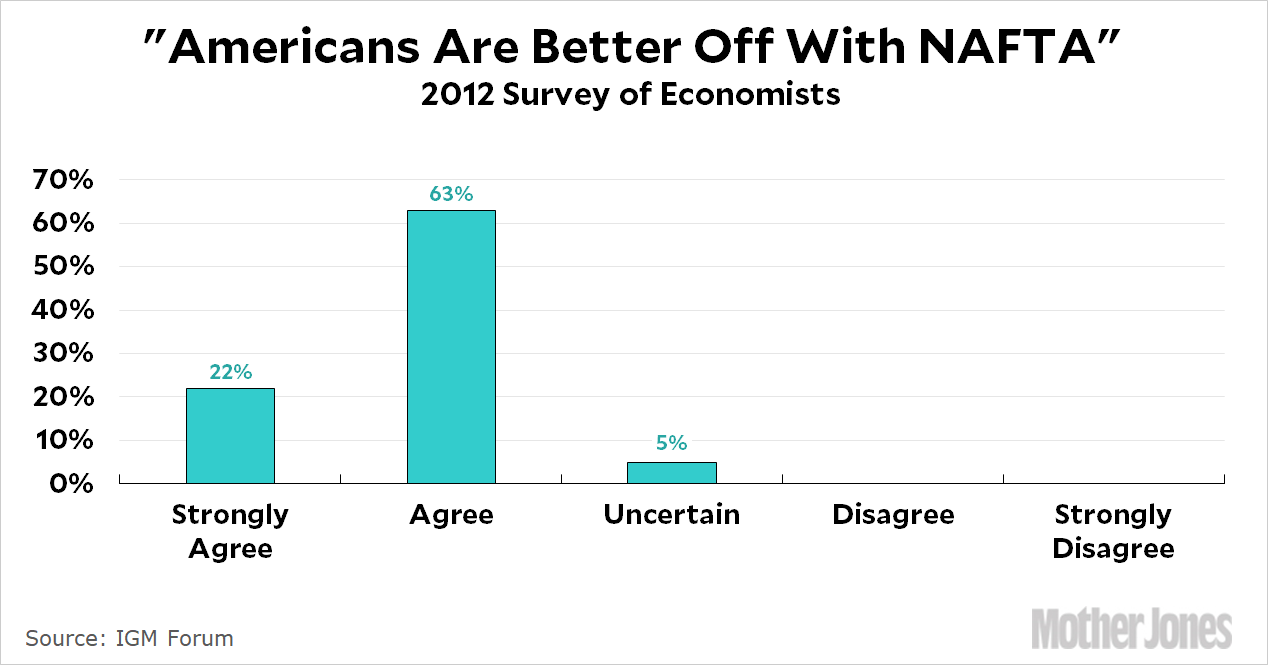
    This is the mainstream view of NAFTA. There are some lefty economists who would disagree with this, for the same reason they dislike most trade agreements: the benefits tend to skew to high-income workers while displacing some number of low-income workers. But economic elites and national leaders tend to like trade agreements a lot. Here’s the Economist on the 20th anniversary of NAFTA:

    For its first six years the pact’s success was remarkable. Cross-border investment ballooned. Rapid growth led to the three countries’ share of global production hitting a peak of 36% in 2001. But the progress stalled. Fears of terrorism in the United States after September 11th 2001 led to a security clampdown on its borders that still hampers trade today (the drug war in Mexico has not helped). Even more destabilising, after China joined the World Trade Organisation in 2001, American firms in Mexico upped sticks and headed across the Pacific. Trade within North America eventually started to grow again; but global trade—principally with China—mushroomed.

    This is an important point: after 2000, when China joined the WTO, it gets very hard to analyze the impact of NAFTA. The trade data simply becomes overwhelmed by the Chinese tidal wave in both manufacturing and agriculture. Nonetheless, by 2017, when NAFTA was two decades old and the Chinese tsunami had taken its full effect, mainstream American economic opinion continued to be moderately positive toward NAFTA.

    But what about Mexico? Has NAFTA been good for them? There’s no simple survey of Mexican economists that I’m aware of, but here’s a 2006 survey taken in Mexico that asked generally about international trade:
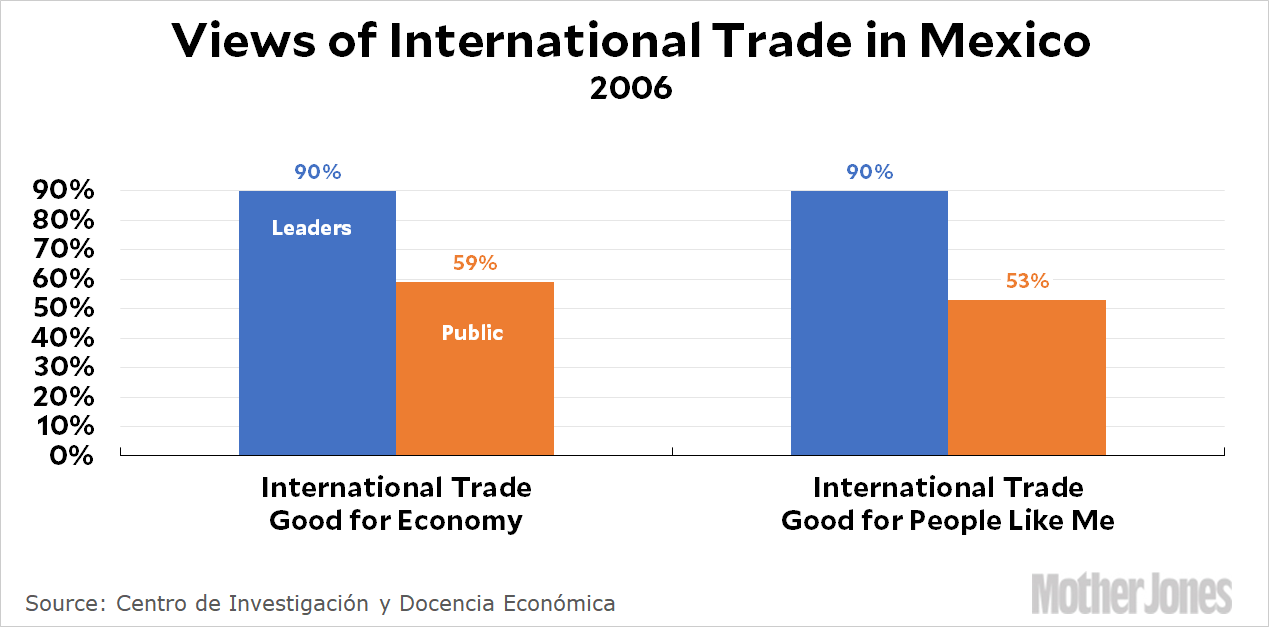
    So a decade after NAFTA, Mexican public opinion toward trade was still generally favorable and elite opinion was extremely favorable. And what about economic researchers? Do they think NAFTA was good for the Mexican economy? Here’s the generally reliable Congressional Research Service:

    A number of studies have found that NAFTA has brought economic and social benefits to the Mexican economy as a whole, but that the benefits have not been evenly distributed throughout the country….positive impact on Mexican productivity….positive effect on stimulating the productivity of Mexican plants….economic effects have found that the net overall effects on the Mexican economy tended to be positive but modest….NAFTA helped Mexico get closer to the levels of development in the United States and Canada.

    Other studies suggest that NAFTA has been disappointing in that it failed to significantly improve the Mexican economy or lower income disparities between Mexico and its northern neighbors.

    ….Many critics of NAFTA say that the agreement led to a large number of job losses in Mexican agriculture, especially in the corn sector. One study estimates these losses to have been over 1 million lost jobs in corn production between 1991 and 2000. However, while some of the changes in the agricultural sector are a direct result of NAFTA…many of the changes can be attributed to Mexico’s unilateral agricultural reform measures in the 1980s and early 1990s….These reforms coincided with NAFTA negotiations and continued beyond the implementation of NAFTA in 1994. The unilateral reforms in the agricultural sector make it difficult to separate those effects from the effects of NAFTA.

    Ah, the “corn sector,” source of a million arguments. A lot of people continue to believe that “NAFTA killed Mexico’s rural corn farmers,” but there’s a big problem with this: Mexico initiated sweeping economic reforms that took effect from the late 80s to the late 90s, and NAFTA came right in the middle. Here’s the basic data, courtesy of the USDA:
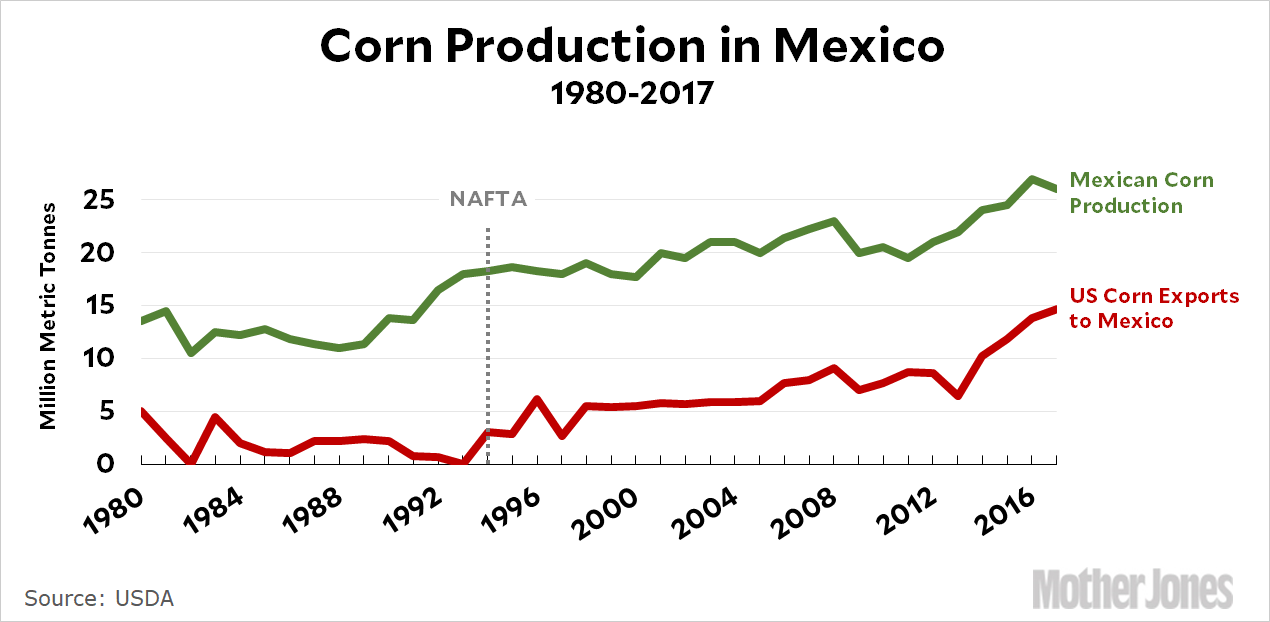
    This is raw data, and you can read it a lot of different ways. But a few things are clear:

    • Mexican corn production began to increase in the late 80s and has continued to increase ever since.
    • After NAFTA, US corn exports to Mexico increased.
    • This produced a brief pause in Mexican corn production, which was flat between 1995 and 2000.
    • It also reduced the price of corn by about a quarter.
    • However, between 1994 and 2017, Mexican corn production has increased from 18 to 26 million tonnes. That’s a rise of 42 percent.

    All of these things taken together unquestionably had a big effect on Mexican corn production, especially on rural farmers with low efficiencies. But the biggest point of pain for rural farming communities was not NAFTA. More likely, it was the Mexican government’s decision to reduce price supports for agricultural commodities like corn starting in the late 80s, well before NAFTA was signed:
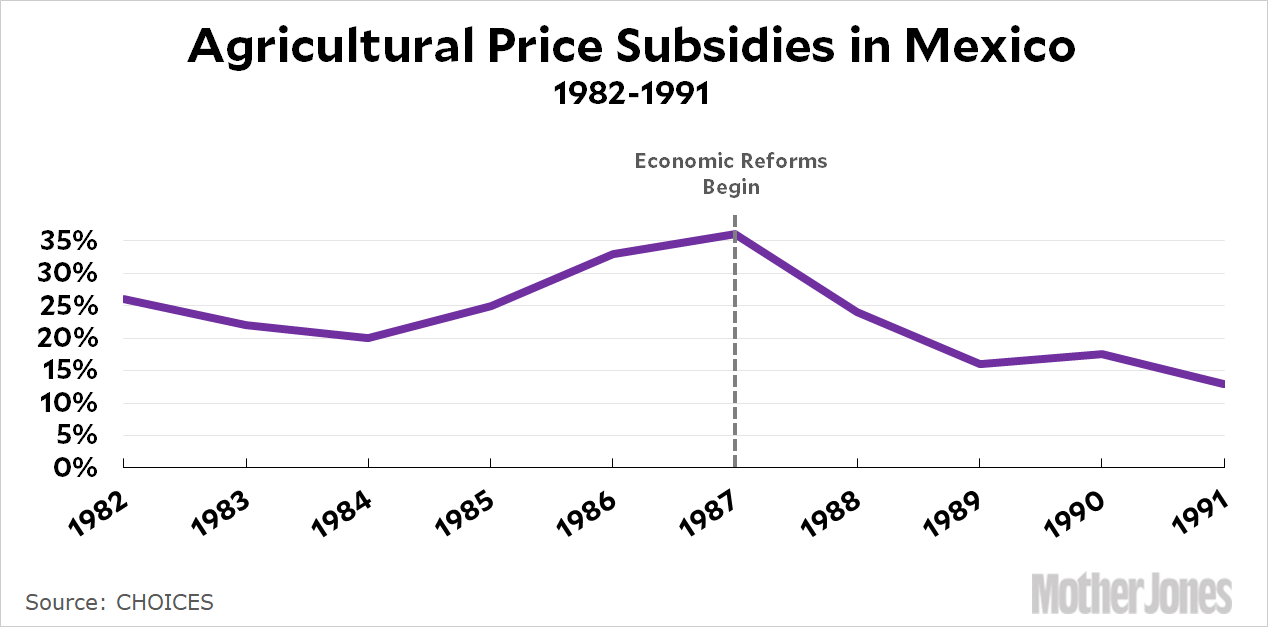
    The bottom line is that Mexico’s rural corn farmers, especially in the poorer south, did have a hard time. But this was due to a whole host of things, and NAFTA was only part of it:

    • Like most developing countries, agricultural production in Mexico has for many decades been shifting to large-scale farms and capital-intensive food processing, which puts pressure on small-scale farms and household farmers.
    • Economic reforms reduced the price of corn, and NAFTA reduced the price further.
    • Access to credit for small farmers became harder after government subsidies and guarantees were removed.

    And now for the key question: was NAFTA responsible for the huge immigration flows from Mexico into the United States during the 90s and aughts? Probably not. Here’s the conclusion of a Carnegie report from 2004:

    NAFTA does not appear to be the culprit in this acceleration of rural out-migration, however. Taylor and Dyer found no indication that NAFTA created any sort of “break point” in the growth of migration from rural areas. Rather, migration from rural Mexico to the United States had been accelerating well before the onset of NAFTA, and the trend continued afterward.

    ….Even as agricultural prices dropped and Mexico’s trade deficit in agricultural goods with the United States widened after NAFTA, Mexico’s agricultural GDP increased. The gains in the value of Mexican agriculture were accompanied, however, by a seemingly paradoxical decline in employment in the Mexican agricultural sector, from 8.1 million jobs in 1993 to 6.8 million in 2001. A number of factors besides NAFTA were at work, however.

    The first, and one that is often overlooked, is the natural, perhaps inevitable, process of rural-to-urban movement that all countries experience as their economies advance. The share of agricultural workers as a proportion of Mexico’s workforce has declined steadily, from over 50 percent in 1960, to 36 percent in 1980, to less than 25 percent and falling since 1995. The second factor is the continued reform of Mexican agricultural policy. Reforms of the ejido system of landownership that began in 1992 have allowed land sales and rentals and have been accompanied by cuts and changes in the structure of agricultural subsidies. Both changes have encouraged increased productivity and production, but not always in ways that have resulted in greater agricultural employment or have encouraged rural people to stay put.

    Thus, NAFTA has played only a minor role in the continuing acceleration of rural outmigration during the decade since its enactment. The choice of whether to migrate within Mexico or to the United States, however, has been shaped by the larger and more structural general migration forces outlined in this essay, and by the unavailability and low quality of jobs in Mexico’s cities.

    This got a little long. Sorry. But too many people see that (a) US corn exports to Mexico spiked after NAFTA and (b) lots of rural farmers pulled up stakes at around the same time and emigrated to El Norte, and conclude that (c) Bill Clinton and big, bad American corn wrecked rural Mexico.

    It’s a good story, and it even has a kernel of truth to it. But that’s all. The real story is more boring, a combination of globalization, economic reforms, and a booming American economy that started long before NAFTA and continued long after it.

  • Map of the Day: Automatic Voter Registration

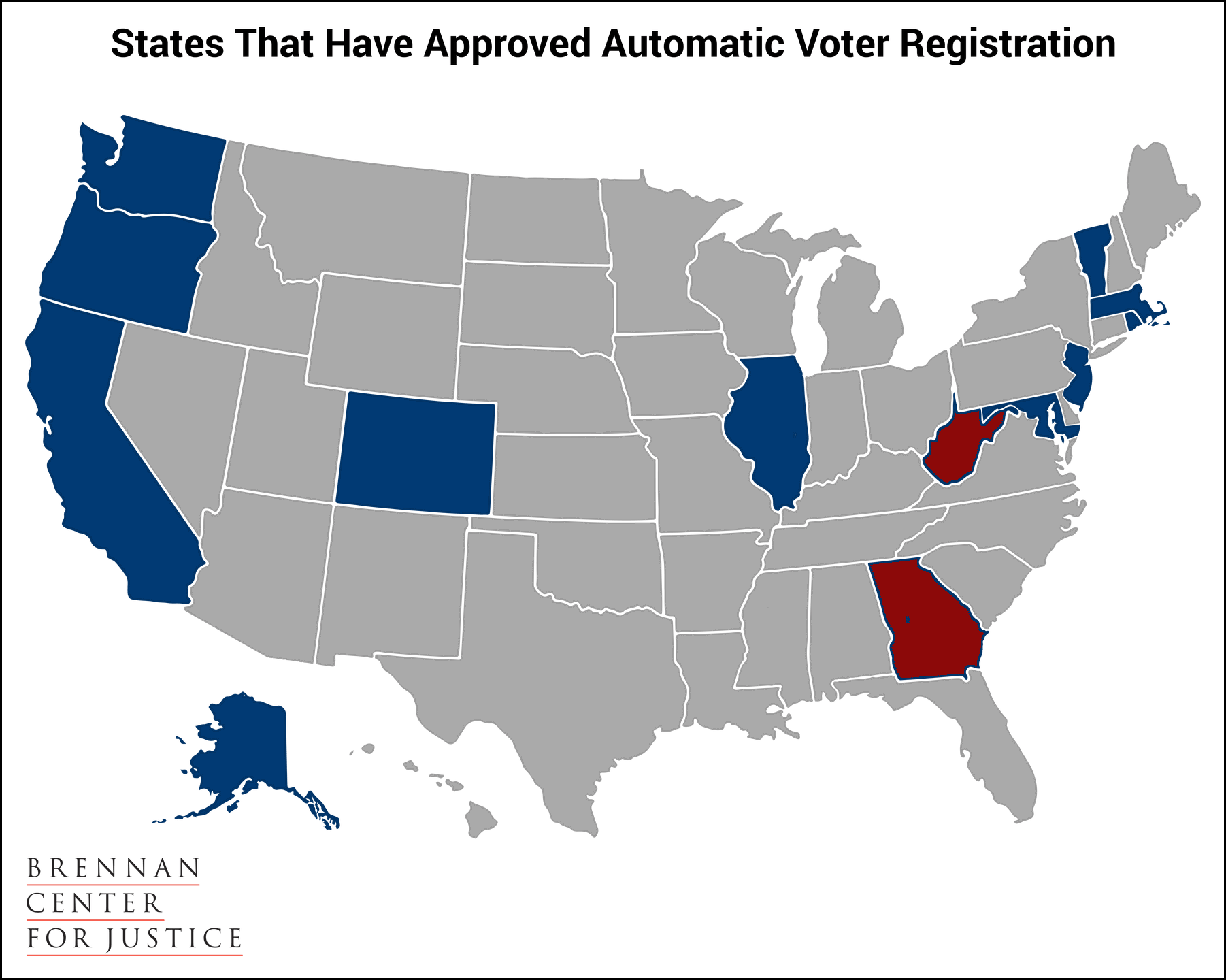
    Oregon gets a lot of attention every election year because it’s gotten rid of polling places and gone to 100 percent mail-in ballots. That’s great, but Oregon’s real contribution was its leadership in something much more important: automatic voter registration. If you have a driver’s license, you’re registered to vote. End of story. It’s a trend that’s now spreading across the country:

    Now, you will notice that Georgia and West Virginia are the only Republican states to have adopted automatic voter registration so far. So this is not quite the bipartisan initiative we might have hoped for. Still, it’s progress.

    Of course, what would really be progress would be national ID cards. Everyone with an ID that marks them eligible to vote gets a ballot by mail, full stop. If you don’t have an address, you drop into a polling place, show your ID, and vote. If you try to vote twice, a computer catches you and a warrant is issued for your arrest. Done.

    Now all I have to is convince all you laggards that a national ID card would be a good—no, a great—thing. So far, I’ve had no luck on that score.

  • Friday Cat Blogging – 2 November 2018

    There are times when I think I’m repeat-posting a picture, but I checked and this one has never appeared before. The problem, I guess, is that I don’t live in a mansion, and there are only so many places the cats can be. In this case, Hilbert is up on the fence peeking out from our neighbor’s bougainvillea plant. You can tell it was taken a while back since this plant has since been hacked away almost to bare stems. Neither of our cats is nearly as interested in the neighbor’s yard as they used to be back when it was a jungle.

  • Voter Fraud: Yes, We’re Still Waiting For It To Happen

    Here’s a piece from Kevin Williamson today. This is the entire post:

    That Thing That Never Happens but Keeps Happening

    While I’m on the subject of Texas politics: You know that voting fraud that our Democratic friends are always indignantly insisting does not exist? A former Democratic-party official in Texas has been named as the financier behind a voting-fraud ring that has resulted in four arrests and dozens of felony indictments. The fax machine that prosecutors say was used to transmit fraudulent voting applications belonged to a former Fort Worth elected official, who, as you will guess, is not a Republican.

    Voter fraud! I figured I had to check it out, which I did via the clever investigatory mechanism of clicking the link. Here’s what I dug up:

    • The fraud that Democrats say “never happens” is a very specific type of voter fraud: in-person voting under a false name. This is the fraud that motivates photo ID laws.
    • The fraud that Democrats say we should take seriously is mail-in ballot fraud. However, Republicans don’t like to worry about this because mail-in voters tend to be middle-class Republicans.
    • The fraud that allegedly happened in Texas was mail-in ballot fraud.

    You can stop now if you want since it’s already obvious that nothing much happened here. But there’s more:

    • The main allegations aren’t related to voting at all. They’re aimed at faxed applications for mail-in ballots. In other words, it’s related to the standard-issue voter canvassing that’s a big part of GOTV operations for both parties in nearly all elections.
    • Vote canvassers are usually paid by the local party, so there’s nothing odd about the fact that they received money “from funds.” In fact, the local party probably paid dozens or hundreds of canvassers.
    • A specific group of four canvassers was indicted. Neither of the Democratic officials Williamson mentions was part of the indictment.
    • It’s not uncommon for aggressive canvassers to push the boundaries of the law, which includes altering ballot applications if the voter filled out part of it wrong. If this actually happened, it’s a bad thing but hardly the end of the world.
    • From the Star-Telegram story: “The state’s notice also accuses Sanchez of illegally voting by marking ballots or encouraging others to mark ballots in more than a dozen instances without the voter’s consent or knowledge. She is only charged, however, with one count of illegal voting and 16 counts of providing false information on an application. She also is accused in the notice of committing, or aiding others in committing, more than 100 counts each of forgery, tampering with a governmental record and providing false information on an application.”
    • Note also that these are only charges. No one has actually been convicted of anything yet.

    According to Texas Gov. Greg Abbot, “Largest Voter fraud Investigation in Texas History Underway in Tarrant County. We will crush illegal voting.” Golly. If this is the biggest voter fraud investigation ever in a state with a population of 30 million, I think we can all breathe a sigh of relief at just how honest our elections are.

    After that we can go back to asking Republicans for examples of in-person vote fraud. Then, after we’ve finished watching the paint dry, the grass grow, and downloaded Facebook over a 300 baud modem, we can go about our business. Because they don’t have any examples. As in this case, it always turns out to be something else.

  • Rent In Big Cities Is High, But Maybe Not As High As You Think

    The LA Times has an interesting op-ed today about housing prices. It’s written by a professor and student pair at UCLA who say that estimates of housing prices are generally much higher than reality:

    The inflated numbers come from private firms such as Zillow, Reis, Apartment List and other real estate brokerage firms, which generate data that are often cited by reporters and political candidates. But the data from these firms, while accurate for their individual listings, can be wildly inaccurate measures of overall price levels because they are based upon only part of the market.

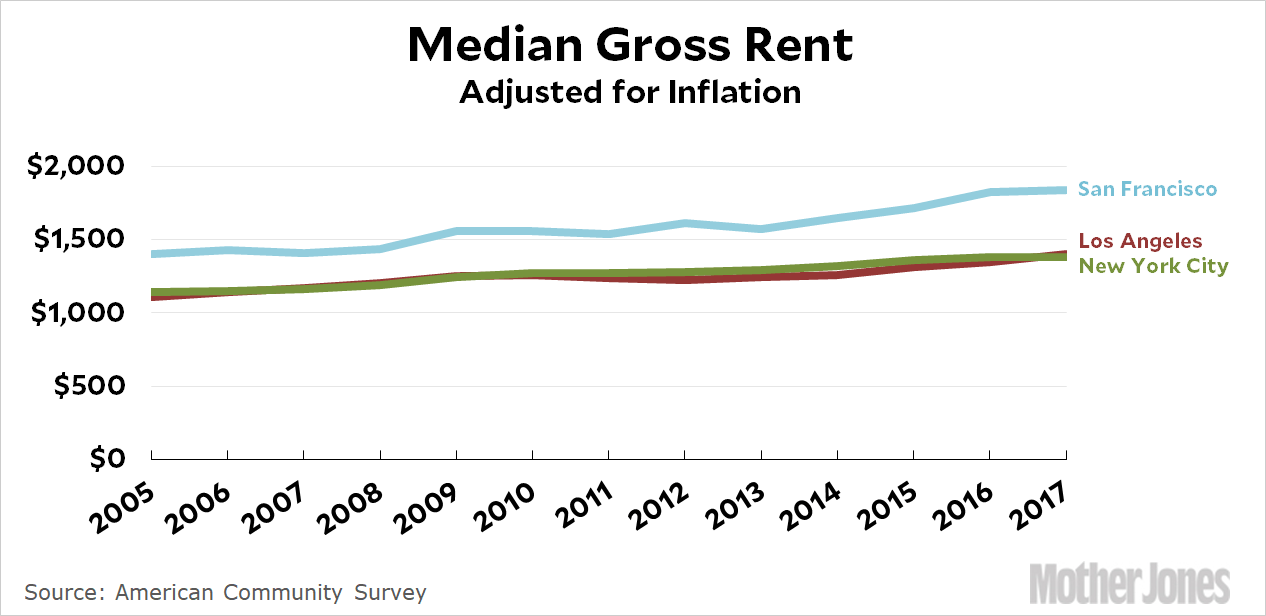
    Sensibly enough, they recommend using figures from the Census Bureau’s American Community Survey instead. I didn’t know the ACS tracked this, but indeed they do. For example, here is average rent since 2005 in the Big Three expensive cities:

    That…doesn’t look so bad. I used gross rent just because it was easy, but the ACS also allows you to search, say, for 2-bedroom apartments or by the year the structure was built. Generally speaking, though, the UCLA folks are right: most pieces I read about housing in big cities suggest that a typical apartment in San Francisco will set you back $3,000 or more. But apparently not.

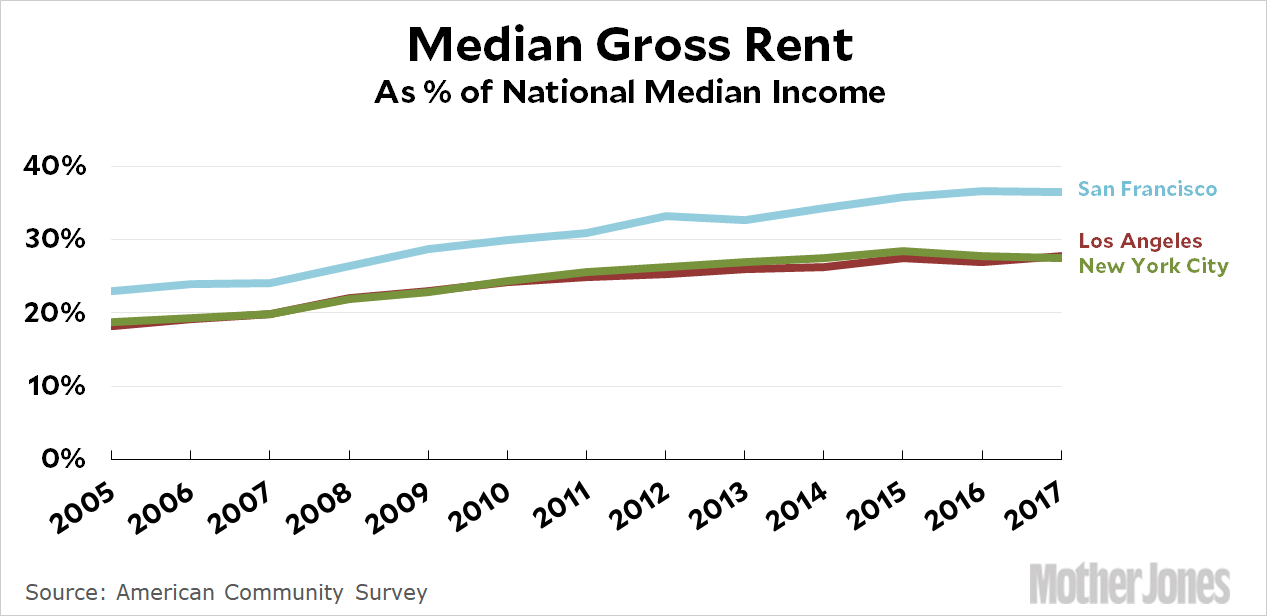
    On the other hand, if you look at rent as a percentage of income, things are a lot worse:

    The ACS provides this directly, but instead I did this chart by hand using national median income, not median income in each city. After all, median income in big cities is artificially high because only people with high incomes can afford to live there, which skews the picture in a way that’s not easy to fix. Instead, this chart shows, on average, what percentage of your income it’s likely to cost you if you decide to move to one of these cities. It also shows that rent as a percentage of income in big cities has increased by about 10 percentage points. That’s because median income hasn’t grown much over the past couple of decades.

    These are very basic charts that I threw together just out of curiosity. If you want to be more careful, you can eliminate things like extremely low rents charged to family members or you can look only at rents for newly occupied apartments. If you do both of these things, median rents increase by about $300.

    I don’t have any big point to make here. I just thought the data was interesting. Here’s how the op-ed concludes:

    We agree that rent affordability in California is a real problem. After adjusting for inflation, median rents in California are about 50% higher than they were in 1980. This is partly because the average quality of housing is much higher today than it was 40 years ago….Housing prices have also risen because of the severe restrictions in many parts of the state on new construction — in other words, there is a housing shortage. High rental prices mean that even among households with incomes above $30,000, nearly a third devote more than 30% of their income to rent.

    The best response to the affordability problem is a matter of legitimate debate. But thoughtful debate must start with accurate data.

    Fair enough.

    POSTSCRIPT: There’s no point in yelling at me in comments about how you live in one of these cities and these figures are obviously wrong. Go yell at the Census Bureau. But before you do, keep in mind that my readers and their circle of friends tend to have higher than average incomes and live in more expensive than average neighborhoods. So that probably biases your view of the rental market.

  • After Only a Few Days, Trump’s Drug Plan Is Already Dead

    Richard B. Levine/Levine Roberts/Newscom via ZUMA

    Do you remember that plan from the Trump administration about making pharmaceutical companies cut the price of some of their most expensive drugs to match prices in Europe? It was, oh, let’s just check here—well, it was last week. An eternity in Trump time, I know.

    Anyway, the fatal flaw in the plan is that it’s all about how much Medicare pays for drugs, but Medicare has no leverage. It can negotiate all it wants, but in the end it’s required to cover virtually all drugs and it’s required to pay whatever the manufacturer says. It’s not allowed to drop coverage of a drug because it’s too expensive.

    Still, you’d expect drug companies to be publicly polite about the whole thing, if only for the sake of PR. But David Lazarus of the LA Times reports that they aren’t even bothering to pretend. Pfizer’s CEO, Ian Read, announced a 45 percent earnings increase this week and was then asked if it would reconsider price hikes in January due to Trump’s proposal:

    “I expect our approach by the end of year will be, what I would characterize as business as normal,” Read answered during a conference call with analysts. “We price to the marketplace,” he said. “We price competitively, and we will make those decisions towards the end of the year and early in January.”

    In other words, no more Mr. Nice Guy. Pfizer will once again reach as deeply as possible into people’s pockets, regardless of what President Trump might want. Because let’s face it: For all his talk of drug companies “getting away with murder,” Trump has been all bark and no bite when it comes to sky-high drug prices. And the industry knows it.

    In fairness to Trump,¹ there’s little he can do on his own. Only Congress can change the law that requires Medicare to cover everything, and Trump has never demonstrated either the desire or the ability to sway Congress. Not that it would probably matter: congressional Republicans just won’t do it, no matter how much their constituents might like the idea. So in only a few days, Trump’s plan is already effectively dead, and he’s unlikely to care much about it after the election is over.

    ¹See? I can be fair to Trump once in a while.

  • Democrats and Latinos: A Followup

    Yesterday I defended Democrats against the charge that they hadn’t done enough to deserve a big Latino turnout on Election Day. I got a couple of annoyed replies to that, which I want to share since they contain widely accepted misinformation. Here are the relevant excerpts, lightly edited:

    First reply: [Gustavo Arellano] says “The North American Free Trade Agreement, courtesy of President Clinton, helped to destroy Mexico’s economy and forced millions to migrate to el Norte.” I think it’s wrong to assume he’s referencing the fall of the peso. Just like here, the dollar is not the economy. The vast majority of Mexican immigrants who’ve come to the US have come from the southern states and they were hit hard by the fall in corn prices as we forced Mexico to open its borders to our subsidized corn.

    Second reply: I had to leave Mexico in 1990 just as NAFTA was starting. Over the next 20 years I saw whole towns empty out of males, because their traditional crops could no longer compete with GRINGO industrial agriculture. There is plenty to analyze in the relationship between Mexico and the USA but your weak cursory defense of the Clintons and the DEPORTER IN CHIEF is not going to sway many Latinos….I don’t know what will happen Tuesday. But one thing is for sure, LATINOS are not going to be a tsunami.

    This is difficult. Everybody feels a lot of different things about this issue, especially those who are deeply invested in it. I’m not. And I’m not Latino. And I’m not here to tell people how they should feel.

    But facts are important too. They matter. They affect us all. It’s certainly true that Democrats haven’t given Latinos everything they’ve wanted, but no party gives anyone everything they want. In the real world you need to judge parties based on what’s possible, and on that score (a) Democrats have provided enormous support for the Latino community while (b) Republicans have been as hostile as any party could be, especially since Donald Trump became president. If—if— it’s true that lots of Latinos are staying home because their leadership has convinced them that both parties suck, that’s an enormous mistake. So let’s briefly review the facts that animate these two emails. They aren’t all the facts, but they’re the big ones.

    NAFTA

    NAFTA was negotiated by George H.W. Bush and approved by Congress under Bill Clinton—and there’s little reason to think it hurt Mexico’s growth. The best evidence indicates that it’s had a modest but positive effect on the Mexican economy—though, as usual with trade agreements, some people benefited more than others. More on this below.

    The Peso Crisis

    I can’t say for sure what Arellano is talking about, but the only event following NAFTA that could conceivably be thought of as “destroying” the Mexican economy is the peso crisis of 1995. This had nothing to do with either NAFTA or the United States. It was a currency crisis, just like the ones we’ve seen from other countries over the past 20 years that have issued debt denominated in dollars. Larry Summers, who was then undersecretary for international affairs, recalls that President Clinton understood just how serious it was:

    Secretary Rubin set the stage for it briefly. Then, as was his way, he turned to someone else, namely me, to explain the situation in more detail and our proposal. And I said that I felt that $25 billion was required, and one of the President’s political advisers said, “Larry, you mean $25 million.” And I said, “No, I mean $25 billion.” … There was a certain pall over the room, and one of his [Clinton’s] other political advisers said, “Mr. President, if you send that money to Mexico and it doesn’t come back before 1996, you won’t be coming back after 1996.”

    Despite this warning, Clinton tried to pass an aid package. What’s more, when Congress turned it down he intervened anyway: in the face of opposition from both parties, he withdrew $20 billion from the Exchange Stabilization Fund—possibly illegally—and was instrumental in getting the rest of the world to approve IMF and World Bank loans that totaled another $30 billion. Bill Clinton was as good a friend to Mexico as they could have asked for.

    Corn Prices

    NAFTA was passed in 1994, so it had nothing to do with farmers migrating north in 1990. What did cause this migration was a unilateral opening of the Mexican economy during the 1980s. Under two successive presidents, Mexico joined the WTO, began removing subsidies and price controls on corn, and allowed foreign corporations easier entry to the Mexican market. This did indeed have an effect on traditional rural corn farmers, but it had nothing to do with the United States. It was, rather, a reaction to Mexico’s economic collapse of the 70s and the growing global tide of neoliberalism.

    NAFTA was the final building block of this economic reform, and today Mexico is considered one of the most open economies in the world. Exports of corn increased after NAFTA was passed and exports of agricultural products have nearly tripled.

    Obama as the Deporter in Chief

    This gets a little complicated. Back in the day, if the US government sent someone back to Mexico, it was a deportation. For the past 20 years, however, we’ve counted removals and returns. A removal usually follows a legal proceeding and applies to undocumented immigrants who are apprehended away from the border by ICE. A return is much simpler: it refers to someone caught near the border by the Border Patrol who is simply escorted back to Mexico. In common use, deportation these days refers only to immigrants who are removed.

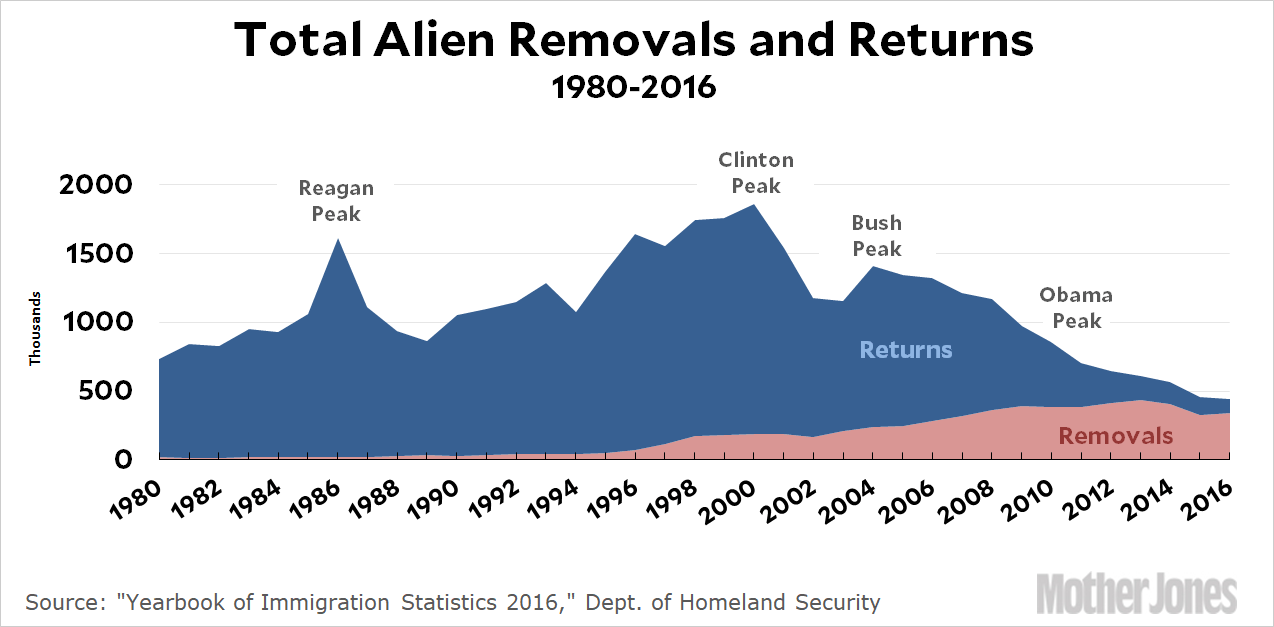
    So: did Obama deport more undocumented immigrants than any other president in history? For starters, here’s a chart showing the total number of all returns and removals:

    There’s something odd here. The total number of undocumented immigrants who were returned to their homes has declined steadily since 2004. At the same time, the number of removals increased steadily through 2013. This means you can truthfully say that (a) the number of “deportations” increased to an all-time high under Obama, and (b) the total number of undocumented immigrants returned to their homes decreased to an all-time low under Obama. What’s going on?

    It’s a trick. Starting in the Bush administration, and continuing under Obama, a lot of people who normally would have been returned were forced through court proceedings and formally removed. There were various reasons for this, which we can skip for the moment, but the bottom line is that the number of undocumented workers returned to their home country plummeted under Obama from about 1.2 million in 2008 to 450,000 in 2016. However, for PR reasons Obama preferred to advertise the fact that “deportations”—i.e., removals—were up under his administration. It made him look tough on immigration.

    Why did Obama accept this state of affairs? That’s easy: he wanted to pass an immigration bill, and to do that he needed to convince Republicans that he was keeping border security tight. Thus, in 2013, when he was hoping to pass the bill, he was happy to say that deportations had increased from 360,000 to 430,000 under his administration.

    There are lots of ways you can spin this. A removal is more serious than a return, so you can argue that Obama was, in some sense, tough on illegal immigration. But in a broader sense, it’s obvious that this is mostly a semantic ploy. Overall border enforcement pretty obviously got weaker under Obama—and more focused on removing felons—even when you account for the drop in border crossings during this period. Painting him as the “deporter in chief” was probably good politics at the time the immigration bill was under consideration, but it doesn’t really have much basis in reality.

    Beyond that, of course, once the immigration bill failed, Obama did everything he could for the Latino community using executive orders. We can argue about whether his plan to win over Republicans was ever a good one in the first place, but his motivations were solid. Like Clinton with Mexico, he was, overall, a good friend to Latinos.

  • Chart of the Day #2: Net New Jobs in October

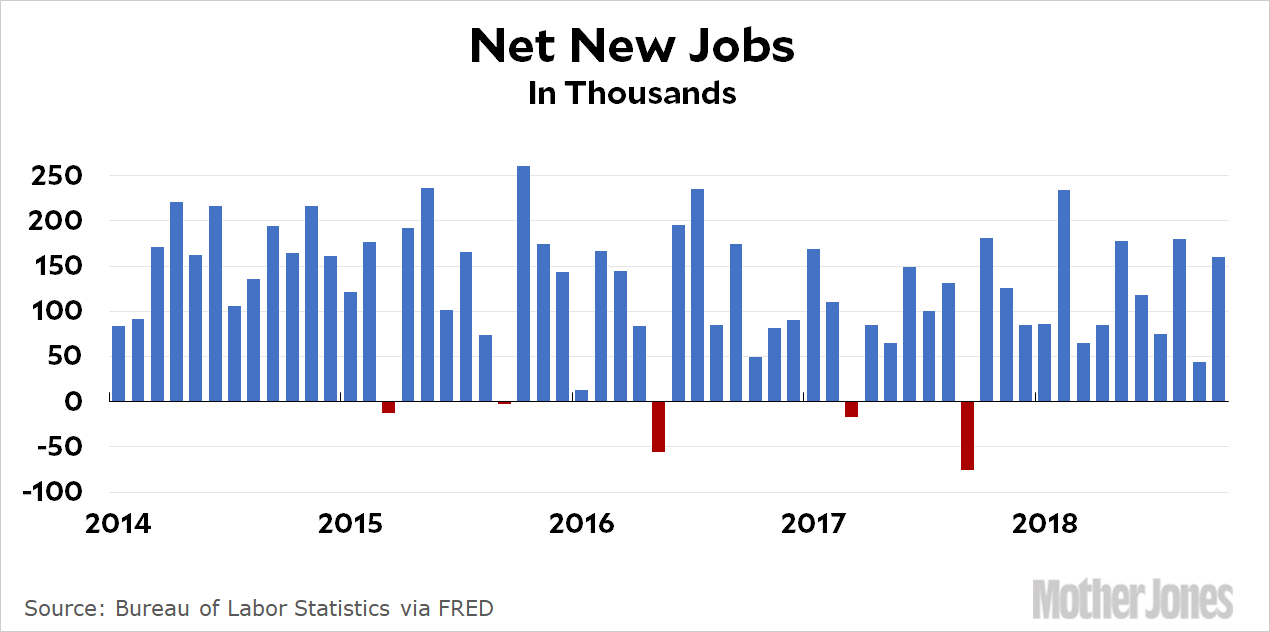
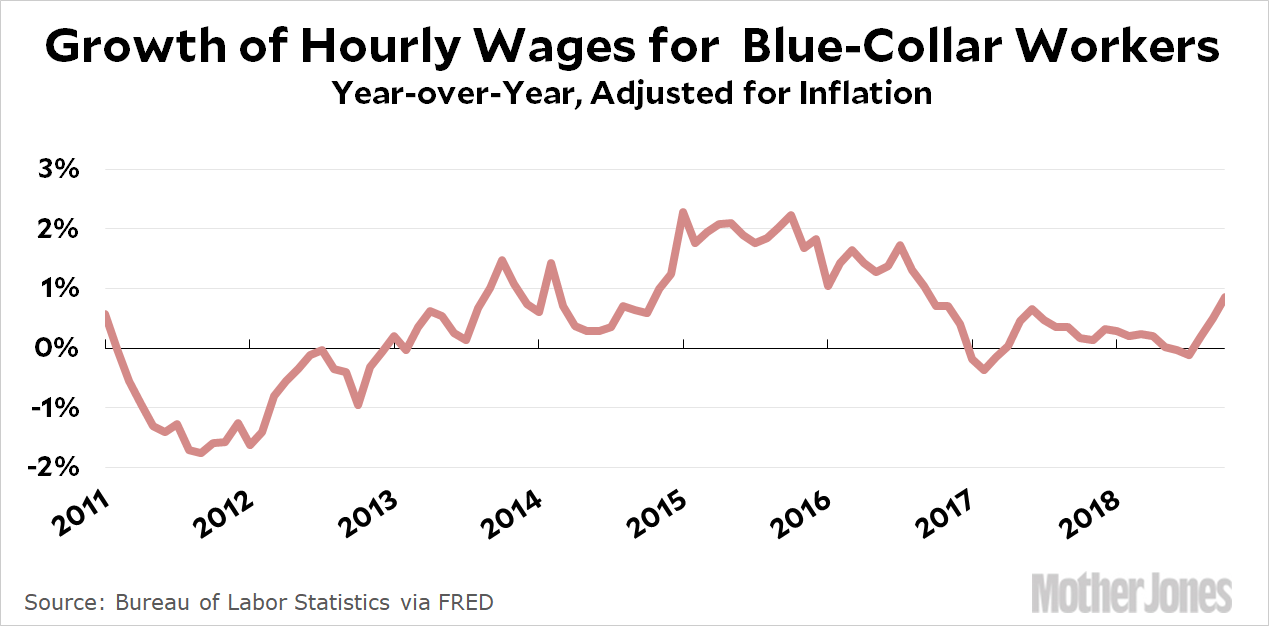
    The American economy gained 250,000 jobs last month. We need 90,000 new jobs just to keep up with population growth, which means that net job growth clocked in at a respectable 160,000 jobs. The unemployment rate stayed steady at 3.7 percent.

    Wages of production and nonsupervisory workers were up at a monthly rate of 0.31 percent and a year-over-year rate of 0.86 percent. That’s not bad at all.

    Finally, the labor force participation ticked up 0.2 percent. Assuming that the increase was the same for prime-age workers (age 25-54), it means that prime-age workers are continuing to enter (or re-enter) the labor force. We’re still about a percentage point below where we could be, but that’s a guess since there’s been a secular decline in the participation rate for both men and women ever since 2000, so we don’t really know where we “should” be in the first place.

    BLS warns that Hurricane Michael may have affected the employment numbers, but probably not significantly. So with the usual caveat that one month doesn’t mean a lot, this was a very nice employment report, especially the wage data.

  • Chart of the Day: YTD Border Apprehensions

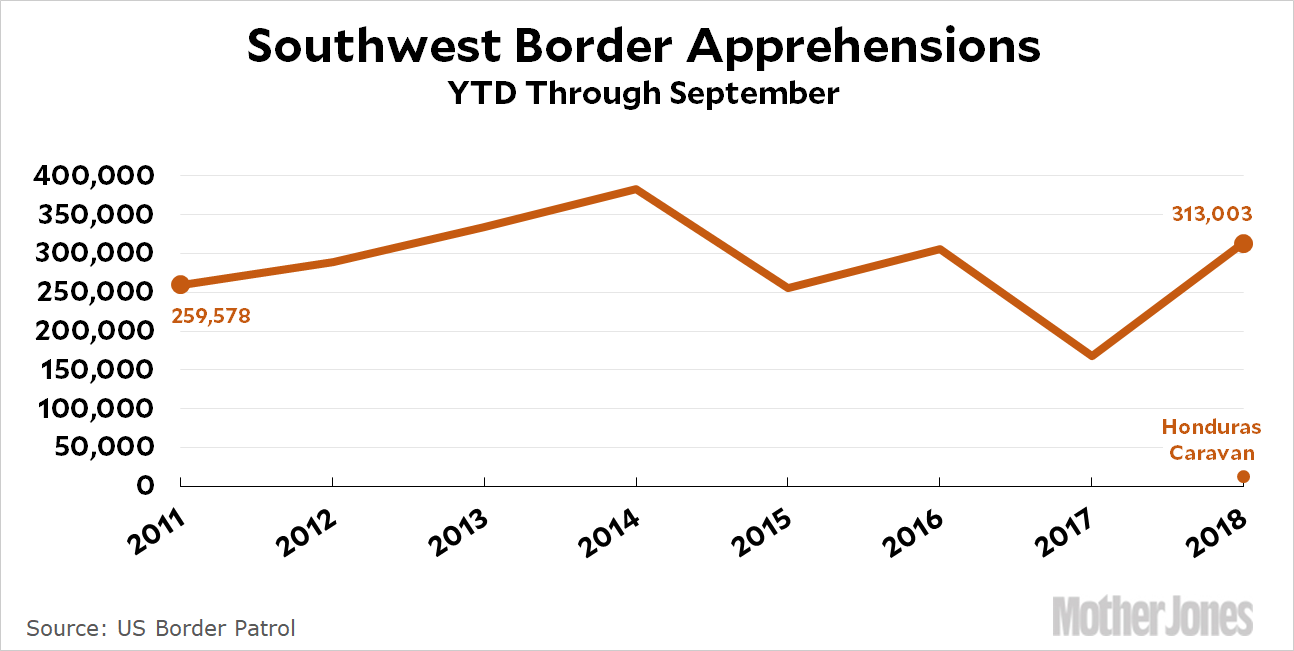
    I haven’t put this up for a few months, and this seems like an appropriate time for an update. Here’s the latest from the Border Patrol for illegal border crossings through September:

    This year looks pretty normal to me. Apprehensions are way lower than they were a decade ago (nearly a million through September) and about the same as they’ve been every year since 2011. We’ll end up the year at around 400,000, which means that the big, mean caravan from Honduras—most of which won’t cross the border anyway—amounts to maybe one percent of our usual yearly total. It’s an obvious nothingburger being milked for political demagoguery, and nothing more.

  • Trump Would Love to Trigger a Brawl. Don’t Let Him.

    Just a quick note: I assume, among other things, that Donald Trump is hoping his immigration demagoguery will trigger some kind of incident. That’s why he keeps amping things up. He wants something, anything, to happen before November 6 that might scare suburban housewives. Even a modest confrontation involving undocumented workers would probably be worth a point or two at the ballot box.

    Keep it cool, everyone. And if you can, make sure everyone else does too.