This is a black-tailed prairie dog peeking up from its burrow at the Prospect Park Zoo. The zoo architects cleverly built the whole prairie dog exhibit on top of a concrete cave punctuated with clear plastic domes, so kids can crawl around inside and get a ground level view. I tried it out myself and nearly broke my leg trying to slither around in a space meant for a ten-year-old. I quickly gave up and took this picture from the outside, like a normal adult.
Before 2016, the closest Katie Kalvoda got to political activism was paying $18 for a Barack Obama T-shirt….But when President Trump was elected, the stakes started to feel different. A mother from her daughter’s school e-mailed a couple of dozen women, including Kalvoda, proposing they get together to vent, drink wine and write letters to Congress. That email planted the seeds of a movement. After dropping off their kids at school, about 12 moms met up at a San Juan Capistrano Mexican restaurant — a favorite of Richard Nixon’s — where they talked about turning their anger and frustration into action. Most had never been politically active before, but with Trump, that had changed.
It’s a story as old as time: suburban housewives look up one day and discover politics. The result is Moms for Goldwater or the Patriots’ Tea Party or Women Against Trump. Either way, you know things are getting serious when the suburbanites get involved:
Two years later, the political action committee — Women for American Values and Ethics — has grown to more than 700 members….“We harnessed the energy of women with these incredibly successful careers who are now stay-at-home moms, tapping into their time, experience and professionalism,” said Joanna Weiss, 46, who sent the initial email that led to formation of WAVE.
….One WAVE member, Cathy Han, 48, a retired ob-gyn with three children, went door to door canvassing for the first time in her life this month. She said she is seeing similar political energy in Facebook groups for physicians who are working mothers. Han said she was particularly motivated by the Brett Kavanaugh hearings because she has treated many sexual assault victims. “Working mothers are good at multitasking. Before they were in the PTA, now they’re in politics,” she said. “Mothers are fired up.”
….Kalvoda said for her, it was about wanting to return decency and humanity to the way the country is run. She also cares deeply about the environment, and is concerned about Trump administration policies rolling back regulations and protections. She used her professional skills from years of investor meetings and put together a “pitch book” about WAVE for prospective members, and cold-called politicians to ask them to headline her fundraisers the way she once cold-called owners of buildings she wanted to buy.
“Our husbands are really afraid of us. They have definitely seen a side of us they haven’t seen before,” Kalvoda said. “Some of them are reconciling that, going ‘Whoa, who are you?’”
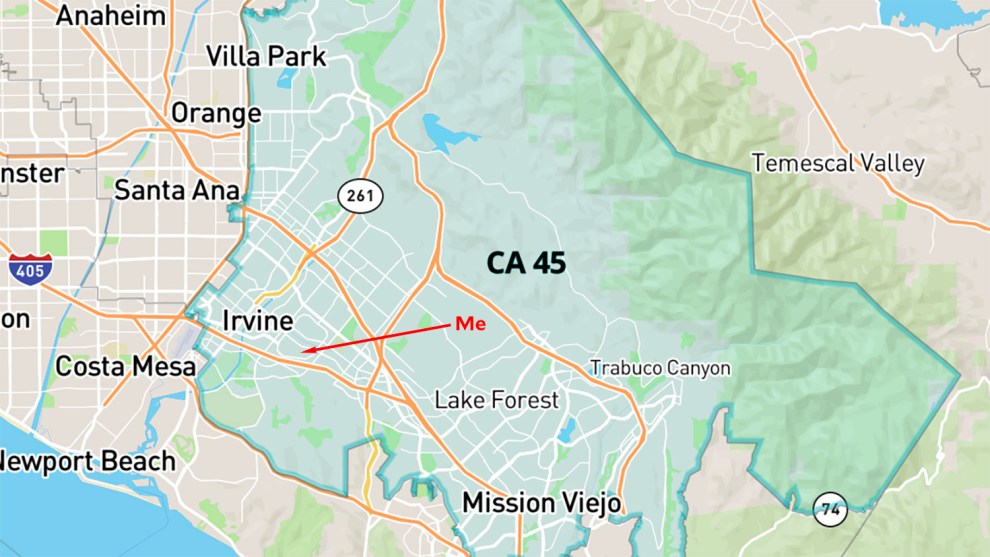
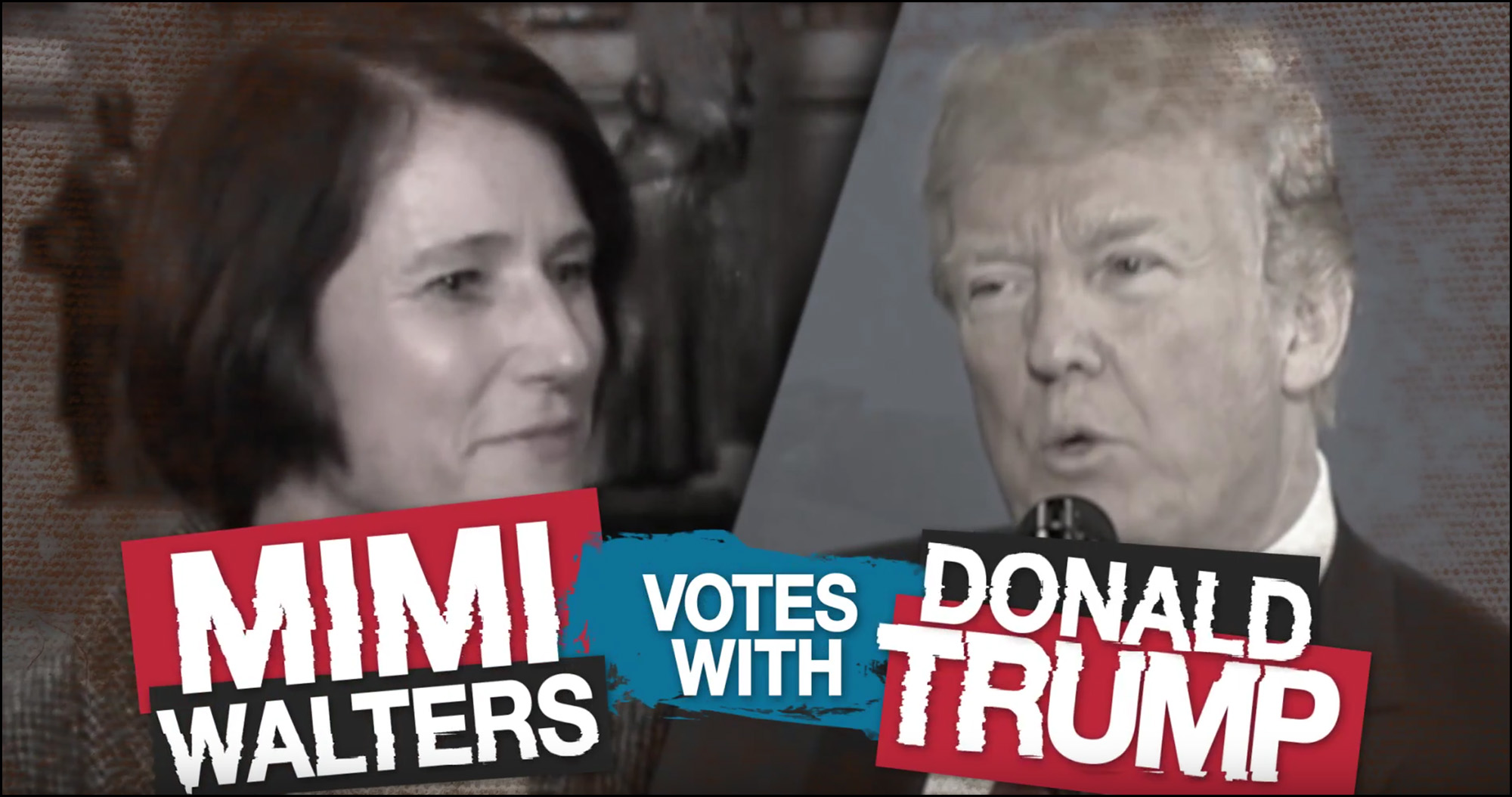
Here in the 45th, Republican incumbent Mimi Walters is trying to pretend she’s never heard of Donald Trump. It’s the right strategy, I suppose, but Democrats have no intention of letting her get away with it. Ads like this one have been running so often that I’m afraid my TV might break:
But that’s only fair. Walters may be pretending not to be a Trumpie, but as the saying goes, when you lie down with dogs, you wake up with fleas.
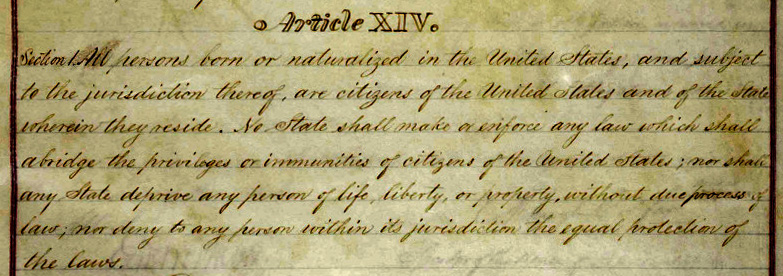
The 14th Amendment guarantees birthright citizenship. That is, if you’re born on American soil, then you’re an American citizen, full stop. This applies to everyone born here—even if their parents are in the country illegally—including people of Hispanic descent like Mexicans and Hondurans.
By an amazing coincidence, Donald Trump has suddenly decided—seven days before an election—that he can repeal this part of the 14th Amendment with an executive order. David Frum explains:
Trump’s birthright citizenship vaporware is intended to prod cable TV into discussing something exciting to him, not boring stuff like pre-existing conditions and why would-be murderers are allowed to amass arsenals that could equip the police department of a small town
A week before the election we have an “invasion” of brown people from the south. We have declarations that these brown people are diseased. We have 5,000 troops ordered to the border. We have dark intimations of “closing off” the border completely. And now we have the end of birthright citizenship.
All of this is designed to bring hate and fear to a fever pitch just before Election Day. If that means a few killings in Pittsburgh and Kentucky, well, it’s the media’s fault.
And for once, Trump has a point. All of Trump’s fear-mongering would be for nothing if the media didn’t report so breathlessly about it. Today will be a test. Repealing the 14th Amendment via executive order is a pure publicity stunt. It has no basis in history or reality, and there’s no reason to give it more than just the briefest dose of oxygen. Let’s see what CNN and the others do about it.
When President Trump placed tariffs on imported aluminum last spring in an effort to protect American producers, European rivals thought their U.S. profits would come under pressure. But months later European aluminum companies have yet to feel much pain.
….“German companies tell us that the tariffs don’t bother them right now,” said Christian Wellner, executive board member of Germany’s GDA association of aluminum companies….The reason, according to Alimex: Many of its U.S. rivals used the tariffs to raise prices, and non-U.S. companies have followed suit, sometimes more than offsetting the 10% duty set by the U.S. government.
It’s still early days, and anyway, Trump’s tariffs were aimed primarily at China.¹ Still, it sure looks as though the tariffs are simply being passed through to consumers, acting like a sales tax and raising the price of everything made with aluminum.
Bottom line: Republicans have cut taxes on the rich and increased them on the middle class. In both cases they’ve done their best to hide their actions, but based on poll readings it looks like they’ve finally failed. For the first time ever, the American public seems to have cottoned on to exactly what “tax cut” means in Republicanese.
¹And Canada. Maybe. It’s kind of hard to know with Trump.
One of the reasons for last weekend’s trip to Big Bear was to check out the turning of the leaves. It turned out that we were too early and didn’t see much color, but there was some color, including this very nice bigleaf maple on Highway 18. This is enough to remind us that we’re already a month into autumn, and you know what that means, don’t you? It means there are only a few days left of daylight saving time and you have to change your clocks next weekend. Tick, tick, tick.
October 21, 2018 — San Bernardino National Forest, California
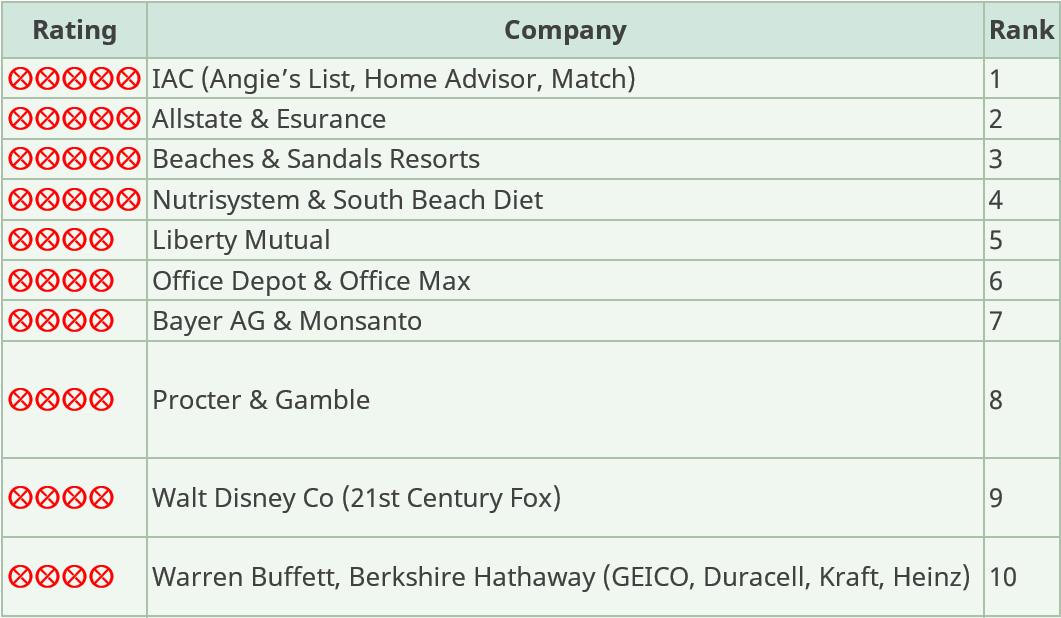
The US editor of the Financial Times is calling for a boycott of companies that advertise on Fox in the wake of the Pittsburgh synagogue shooting and the pipe bombs sent to leading Democrats. “The most effective thing Americans can do is boycott companies that advertise on Fox,” Edward Luce tweeted Saturday. “They bankroll the poison that goes from the studio into Trump’s head. The second is vote.”
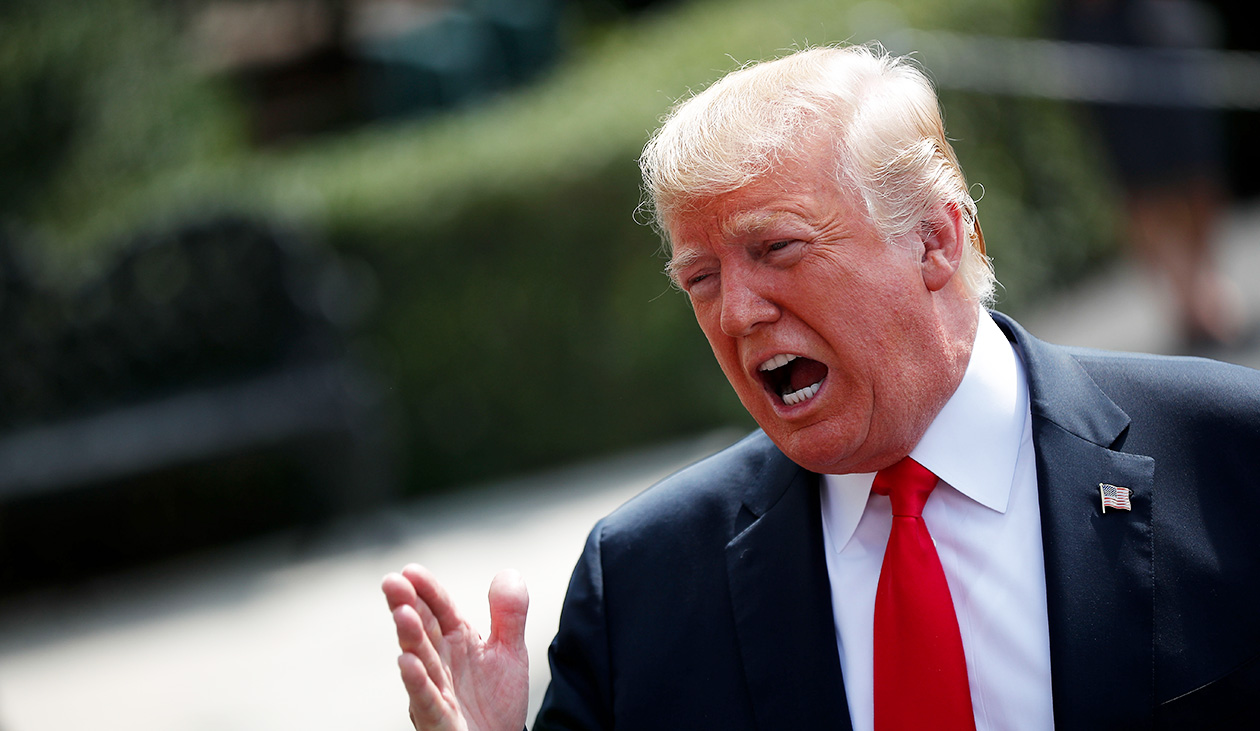
For months, Republican officials have complained privately that President Trump lacks the ability to confront moments of crisis with moral clarity, choosing to inflame the divisions that have torn the country apart rather than try to bring it together. It took the importuning of his Jewish daughter and son-in-law to craft a powerful statement of outrage at anti-Semitism after Saturday’s slaughter at a Pittsburgh synagogue. Then Mr. Trump went back into partisan mode, assailing his enemies. By the evening’s end he was tweeting about baseball, and on Sunday he went after another foe.
Eleven Jews are slaughtered by an anti-Semitic maniac in a synagogue and Trump had to be “importuned” by his daughter to issue a strong statement denouncing it. Normally I might think this is just another example of Ivanka and Jared touting their influence to the press, but this kind of thing doesn’t make anyone look good. So it’s probably true. Unbelievable, but true.
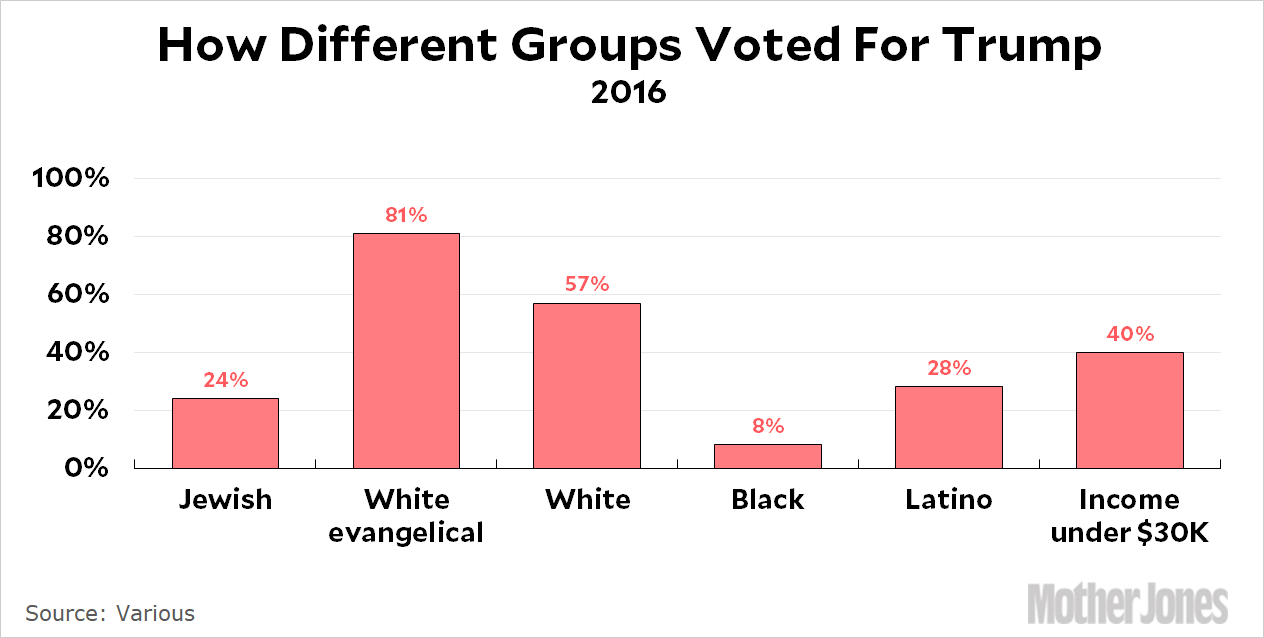
As for why Trump had to be talked into this, that’s simple. Trump believes himself to be the president not of the whole country, but only of those who voted for him. The Jewish community didn’t, so he doesn’t care about them.
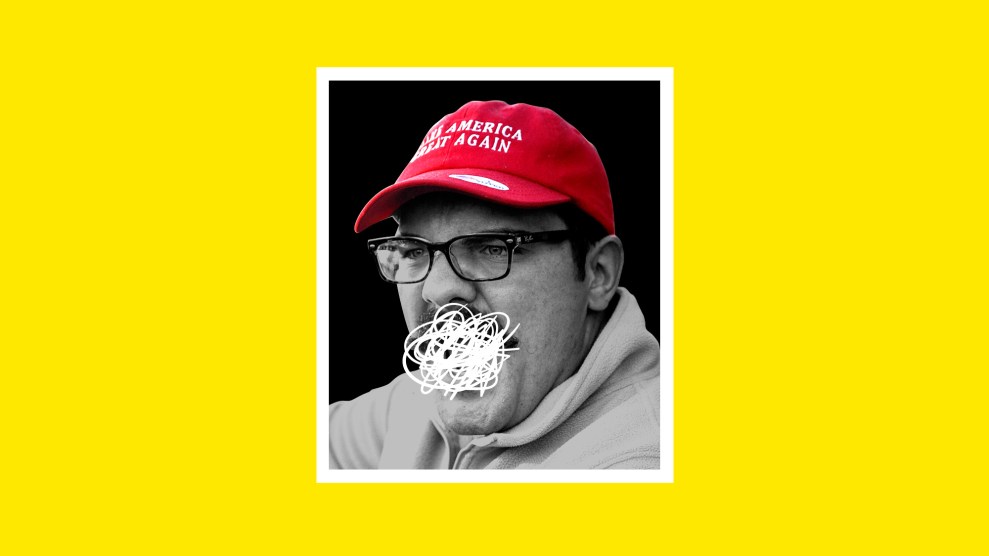
This has been a bad week for hate. On Wednesday, a white man entered a grocery store in Kentucky, shot two black customers, and then tried to force his way into a black church to kill more people. (He didn’t succeed.) The FBI spent the same week tracking down explosive devices that a Trump groupie had mailed to the politicians and media figures who are frequent targets of Donald Trump’s increasingly vicious Twitter feed. And on Saturday, apparently motivated by the right-wing conspiracy theory that George Soros is funding the migrant caravan from Honduras, a white man entered a synagogue in Pittsburgh and killed eleven Jews.
I don’t really want to join the argument about whether conservatives or Trump or Fox News are “responsible” for these acts. It’s too damn depressing. All I know for sure is that the Trump era has produced more and more hate as it becomes more and more desperate, and it’s hardly surprising that this culture of hate coincides with actual acts of murderous hatred. This needs to end, and obviously our first chance to make a real dent in it comes a week from Tuesday. Whatever else you do—no matter what party you belong to—vote for people who aren’t on the side of hate. This is the first step toward taking our country back.
But there are other things we can do, and one of them is to support voices that don’t rely on hatred to motivate people. This doesn’t mean milquetoast voices. It means voices that know what they want and know right from wrong—but don’t have to stoke feelings of hatred and bigotry to make their case. This is one of the reasons I’ve been proud to work for Mother Jones for so long. Ten years and counting!
Everyone here at MoJo knows what we want. We’re progressive and hardheaded but we’re never malicious. We don’t hate conservatives. We don’t hate centrists. We don’t hate socialists. We’re hardly a hotbed of kumbaya, but we don’t feel the need to hate anyone just because they disagree with us—regardless of whether they disagree a little or a lot. We don’t back down from our liberal values, but we want our readers to make the world a better place by working for what’s right, not by hating everyone on the other side.
If you want to join us, how about pitching in for a monthly contribution? It doesn’t have to be much: even $5 per month means a lot. You can set up an automatic monthly contribution here.
Of course, an old-school one-time donation is also great. If you’d prefer that, click here.
I hope to keep working against the voices of hatred for a long time, and anything you can do to help keep that mission going is more appreciated than you can know. Please join us against hate. Please.
Mother Jones illustration; Doug Strickland/Chattanooga Times Free Press/AP; Getty
Former New York Gov.Mario Cuomo said you campaign in poetry but govern in prose. He might have made a similar observation about losing a race: The morning after is swamped by emotion—heartbreak, exhaustion, and above all spasms of blame-mongering. But as the next election looms, it’s time to put away our Klingon rage and call in Mr. Spock to take a dispassionate look at what really happened.
Spock ears in place, then, there are three main lessons. First, although the 2016 outcome was unquestionably a dismal and depressing affair, especially for women and people of color, the data suggests the election was always likely to be close based on the fundamentals. Second, there was a pair of black-swan events: Russian interference during the final three months of the campaign, and then-FBI Director James Comey’s letter 11 days before Election Day. Third, Hillary Clinton was an unusually unpopular candidate, and the contentious primary with Bernie Sanders made her flaws even more conspicuous. But this perfect storm—certainly this specific perfect storm—won’t happen again. So forget it. At this point, the only thing that matters is figuring out what kinds of big-picture trends are dominant and what that means for the crucial elections to come in 2018 and 2020.
By far the trendiest of the trend explanations for the 2016 outcome—like the soccer moms of 1996 or the NASCAR dads of 2004—is that economic anxiety among the white working class was responsible for Donald Trump winning Wisconsin, Michigan, and Pennsylvania, thus handing him the presidency. According to this hypothesis, Democrats need to win back these whites to stand a chance in 2018 and 2020. Trump has kept the white working class loudly in the center of the political conversation ever since his election, but a closer look at what really happened in 2016 suggests this conventional wisdom is critically wrong.
First things first: The white working class didn’t lose its identification with the Democratic Party in 2016. From 1992 to 2008, as the party nominated candidates as different as Bill Clinton, Al Gore, John Kerry, and Barack Obama, party identification bumped up and down but essentially held fairly steady. It was only a few years after Obama was first elected that white working-class identification with the party plummeted by 12 points. By 2016 all the damage had been done, and none of it had anything to do with Trump or Hillary Clinton. It happened before either one ever participated in a primary debate.
White working-class voters who lean Democratic
(by net percentage)
So what happened? In order to weave our way toward an answer, consider a few other things that took place at the same time. The rate of gun sales rose rapidly after Obama was elected, nearly tripling by 2016. Confidence in the accuracy of vote counting dipped suddenly in 2008, and other polls show that trust in the honesty of elections dropped substantially during Obama’s presidency. And of course there was the sudden emergence of the tea party in early 2009, an outbreak of organized white resentment masquerading as a small-government uprising that was unparalleled in both its intensity and the swiftness of its birth, an astonishingly short 30 days after Obama’s inauguration.
These things all point in the same direction: that the alienation of the white working class from the party associated with racial diversity was caused by the simple presence of a black man in the White House. In the same way that racial anxiety among many whites can be triggered by nothing more than a reminder that they’ll be a minority in the future, the constant presence of a black president on their TV probably does the same.
Now take a deep breath. This is where Mr. Spock comes in. None of this means the Democrats’ only path to victory in 2018 and 2020 is to run candidates who are white men. For one thing, there was a lot more going on during the Obama era than just simple racial triggering. Among other factors, there was the financial crisis and the appallingly overt race-mongering of Fox News, Breitbart, and other right-wing media outlets—especially around events like the Ferguson killing and subsequent protests, which produced a huge deterioration in American views of race relations during Obama’s second term.
Still, racial triggering was the core problem. Whites became more sensitive to threats to their status, and at the same time racial anxiety became more predictive of voting Republican. It didn’t happen everywhere and it didn’t happen to everyone. But it happened enough to tip a close election to the guy who most belligerently stoked that racial anxiety.
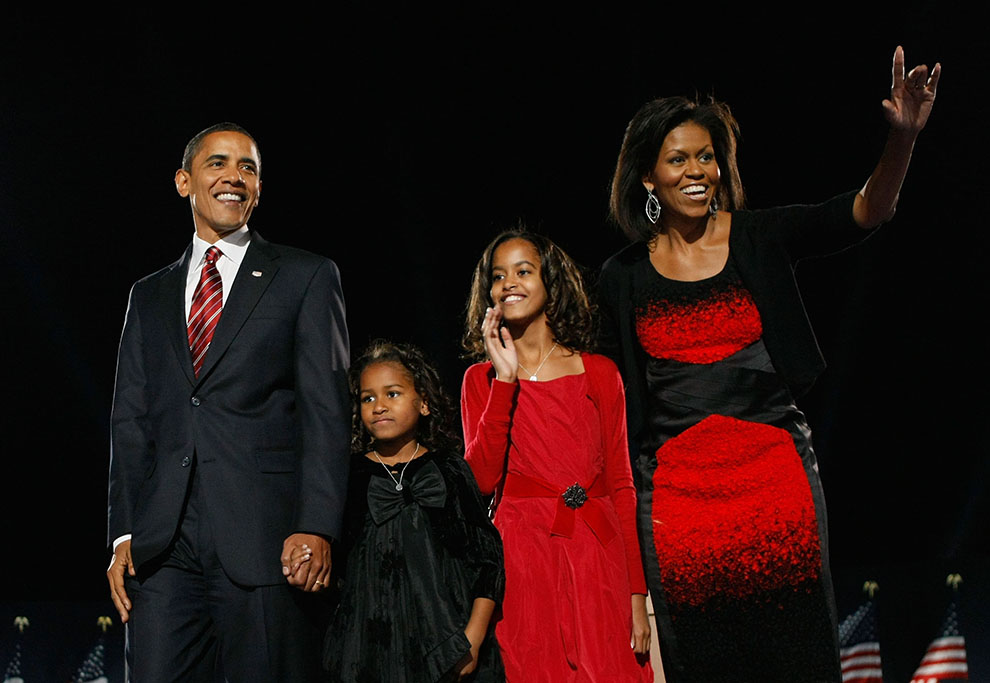
US President-elect Barack Obama with his wife, Michelle, and daughters Malia and Sasha during an election night gathering in Grant Park on November 4, 2008, in Chicago.
Joe Raedle/Getty
For Democrats, this is actually good news. It turns out that fanning white fragility can only get you so far: The American National Election Studies program, which has evaluated American attitudes before and after every presidential election since the 1940s, reports that racial resentment among whites has been pretty stable for decades, which suggests the “Obama effect” is likely fairly shallow. Trump’s race-baiting rants may seem like they’re consuming every pixel on the planet, but as we’ll see, they will likely become less effective in the future because the base level of racism he’s appealing to is subsiding. In fact, his overt bigotry is already starting to cost him more supporters than he gains from it. Put this alongside increasing support for Democrats among educated whites, women, Hispanics, and young people, and race is unlikely to be a net loser for Democrats in the future.
None of this means racism or racial anxiety is going away. But the turmoil of the Obama years almost certainly caused only a temporary blip in a steady, long-term national ebb of racial hostility. There’s plenty of evidence for this, but you can see it most strikingly in Trump’s signature issue: illegal immigration. He can rant about it all he wants, but poll data clearly indicates he hasn’t made a dent in public opinion. Illegal immigration has declined over the past decade, and Gallup surveys show that Americans are correspondingly less worried about it. On immigration more generally, Americans increasingly say it’s a good thing for the country and that immigration levels should be raised. Even Republicans have gotten friendlier toward immigration.
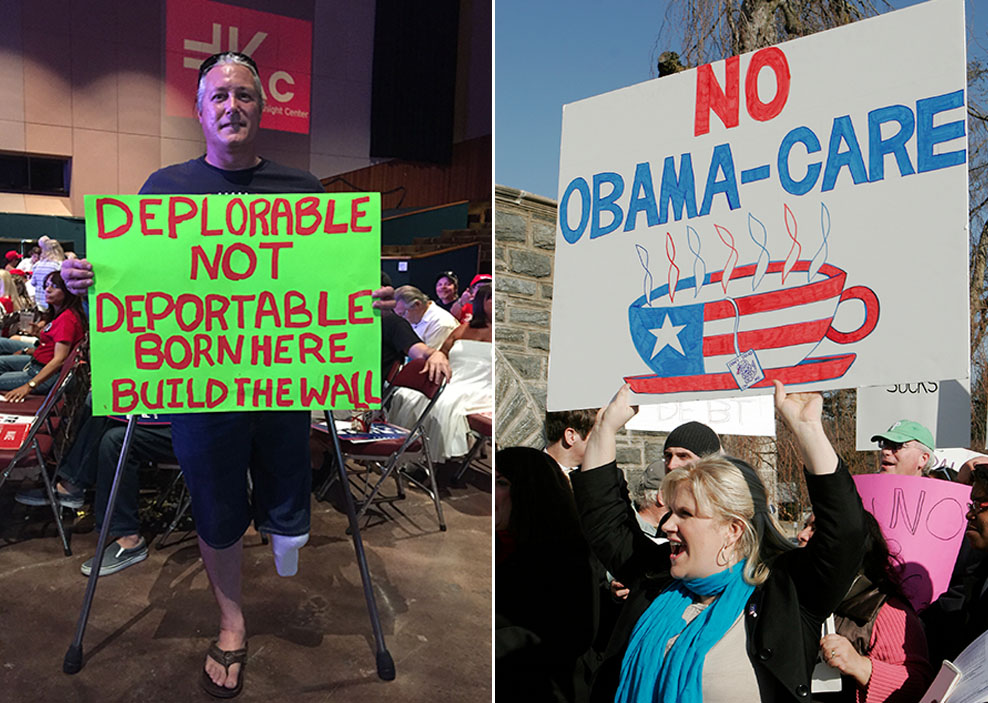
At a guess, perhaps a third of Trump’s supporters—his “core base”—simply detest undocumented immigrants and people of color more broadly. These are the voters Clinton called “deplorables,” and there’s no chance they ever have or ever will vote for a Democrat. But as the Gallup immigration numbers hint, the remaining Republicans are increasingly put off by Trump’s overtly racist appeals.
This is dramatically evident in two gifts that Trump has given Democrats: his attempt to end DACA, and his administration’s policy of family separation. A CBS News poll earlier this year showed that a stunning 87 percent of Americans support the Deferred Action for Childhood Arrivals program, which allows those who illegally entered the country as young children to stay. That figure includes 79 percent of Republicans. As for Trump’s decision to separate small children from their parents at the border, it sparked an instant backlash thanks to its almost wanton cruelty. Polls show that opposition ranges from 55 to 88 percent.
Put all this together—the origin of Trump’s victory in a temporary triggering effect, the steady generational decline of overt racism, public horror at events like the Charlottesville white supremacy rally, protests over Trump’s Muslim ban, and the increase in support for immigration despite the best efforts of Trump and Fox News—and a sober look at the evidence suggests that broad-based racial resentment is not actually on the rise.
More Americans support immigration
This doesn’t mean that Trump’s racist proclamations and policies haven’t had horrible effects, including giving bigots permission to be more flagrant. But it does mean progressive voters and candidates don’t need to feel like they have to choose between racial justice issues and economic issues—no matter how much Team Trump wants them to. After Charlottesville, Steve Bannon practically declared victory: “I want them to talk about racism every day,” he told the American Prospect. “If the left is focused on race and identity, and we go with economic nationalism, we can crush the Democrats.”
He was wrong on both counts. Not only should liberals have little to fear about keeping a sustained focus on racial justice, but Trump’s victory had little or nothing to do with economic anxiety. That may have played a role in the Republican sweep of the 2010 midterms—the global economy had just melted down, after all—but by Obama’s second term it was not as large a factor. There’s endless data suggesting that Americans were getting more economically optimistic during 2016, just as you’d expect during a recovery from a recession.
Because of this, Trump’s right-wing economic populism has gotten little traction. Economists overwhelmingly agree Trump’s trade war will hurt the economy, and the public is decidedly tepid about his tariffs; only 16 percent of Americans think they will help the economy. Last year’s Republican tax cut for corporations and the wealthy has bombed as well. Unpopular from the start, the law is now supported by barely more than a third of voters.
On the progressive side, things are just the opposite: Obamacare continues to become steadily more popular despite Trump’s persistent efforts to undermine it, and a recent poll showed that Medicare for All is now supported by 70 percent of voters—including a majority of Republicans. Even Fox News was forced to admit in its August poll that Obamacare is more popular than the tax cut.
Palm Beach Post/ZUMA; Mark Stehle/AP
This gives Democrats tremendous latitude in November. There’s every reason to think they can take aggressive positions on Trump’s odious racial pronouncements and cruel policies. At the same time, they can take aggressive positions against his widely disliked economic programs and in support of their own increasingly popular ideas—which appeal equally to the working class of all races.
The “deplorables” may be forever out of reach to progressives, but does it matter? They always have been. The center-right isn’t, and a coolheaded look at the best evidence suggests that most voters who fall in that camp won’t be turned off by a vigorous approach to either progressive values on race or progressive proposals for the economy. Needless to say, this is also the approach most likely to increase progressive turnout, especially among the women and people of color who were most distressed by Trump’s victory in the first place.
Donald Trump’s clock is running out, and he knows it. This is no time for progressives to be timid about saying so.
And we respect that! But maybe you’re of a mind to support our work directly instead? We have until December 31 to raise the last $400,000 we need to keep our nonprofit newsroom running at full strength into 2026. Will you make a gift today?
We noticed you have an ad blocker on. Can you pitch in a few bucks to help fund Mother Jones' investigative journalism?
Billionaires own the media,
but they don’t own us.
At Mother Jones we know these aren’t conventional times, and they require unconventional coverage. That’s what deliver every day: fierce, independent journalism you can’t find elsewhere. Perhaps never in the history of our country has that been more necessary than now. But we can’t do it without reader support—your support. Please chip in today.
Billionaires own the media,
but they don’t own us.
At Mother Jones we know these aren’t conventional times, and they require unconventional coverage. That’s what deliver every day: fierce, independent journalism you can’t find elsewhere. Perhaps never in the history of our country has that been more necessary than now. But we can’t do it without reader support—your support. Please chip in today.