• How Should We Talk About Flint’s Lead Problem?


    Dana Milbank writes about Friday’s congressional hearing on Flint’s water:

    In a hearing this week about the poisonous water in Flint, Mich., Rep. Earl L. “Buddy” Carter (R-Ga.) tried to blame the lead-tainted water on the Obama administration’s Environmental Protection Agency. EPA Administrator Gina McCarthy explained that, under the law Congress passed, states are in charge of enforcing drinking-water standards.

    “The law?” Carter replied, contemptuously. “The law? I don’t think anybody here cares about the law.”

    It was an awkward and inadvertent moment of truth. Congress has hamstrung the federal government, giving states the authority to enforce drinking-water standards and all but eliminating the EPA’s power tointervene….It’s a vicious cycle: Washington devolves power to the states. When states screw up, conservatives blame the federal government, worsening the public’s already shaky faith.

    ….In Flint’s case, an official appointed by Gov. Rick Snyder (R) decided in 2013 to save money by changing the water supply, with disastrous results. The EPA had no say….[Nonetheless] Republican members of the House Oversight and Government Reform Committee focused their ire on McCarthy.

    “I heard calls for resignation. I think you should be at the top of the list,” said Rep. John L. Mica (R-Fla.)….Rep. Scott DesJarlais (R-Tenn.) said McCarthy should “consider scrapping” other pending regulations because “it’s clear EPA cannot currently handle the issues on its plate.”

    ….Chaffetz, the chairman, joined this complaint. When McCarthy explained that, under the law, she had to provide elaborate documentation before overriding state officials, Chaffetz was livid. “Why do we even need an EPA? If you can’t do that?” he asked. “If you want to do the courageous thing,” he said, you “should resign.”

    I also wrote about this on Friday, with much the same disgusted tone as Milbank. This prompted an email from a regular reader:

    It has really been disappointing to read your pieces on Flint recently. You are dismissive of not only the lead problem, but also fail to acknowledge there was any other problem. Was Flint worse before? Yes, years ago, but lead is still detrimental to health when using untreated Flint river water. Are there other places worse? Yes, but now you are sounding like Steven Hayward at Power Line in dismissing Flint complaints because there are places worse….Put the statistics in perspective but do not give credence they are unworthy of notice or action.

    I think it’s worth posting my reply, complete and unedited, since I tend to self-censor a bit when I write about this on the blog:

    Here’s the problem: Virtually everyone is in hysteria over this. The only way to push back is to get people’s attention, and that means writing without too much nuance. Under the circumstances, I’ve actually been pretty restrained.

    I’ve repeatedly acknowledged that there were political/bureaucratic problems—though I’m not convinced the EPA had a big role in this. But on a technical basis, although the lead levels in Flint water were higher than they should have been, they were never wildly high even at the height of the crisis. Today, things seem very close to normal.

    Why go on about this? Because we’re at a point where the hysteria is doing real damage. Flint residents are still panicked, drinking bottled water and not taking showers. Aside from one or two dozen houses with very high levels, there’s just no reason for this. They can go back to normal lives, but no one will let them. I understand why everyone is responding this way (on both sides), but it’s genuinely damaging.

    One of the reasons I’ve written about this is because I have some cred on lead poisoning. I very clearly take lead seriously. But the truth is that you can go too far. The 5 m/d level is very conservative, and when you get to the point where there’s only 2-3% of kids above it, it just isn’t a huge problem. (It’s still a problem, and we should aim lower, but it’s not a huge problem.)

    My take: anyone who’s serious about lead should be applauding the improvement in Flint (though it’s perfectly fine to skewer the bureaucrats and politicians) and trying to focus the public’s attention on places where lead levels are still damagingly high. Otherwise we’ll spend a billion dollars replacing Flint’s pipes for no reason, clap ourselves on the back for a job well done, and then do nothing more.

    I don’t expect everyone to agree with this. I’m not sure I always agree with it myself. You can make a good case that generating hysteria is really the only way to get people’s attention for a problem as invisible as lead. And there’s no question that lead pipes are part of this problem (for example, here’s a Post story also from Friday about schools with contaminated drinking fountains).

    And yet….the truth is important too. When most families in Flint can go back to leading normal lives, they should be told so. When the bigger problem is contaminated soil and lead paint, people should be told so. When lots of other places have lead levels far higher than Flint all the time, people should be told so. When real progress is possible, people should be told so—and they should be told what real progress means, not fed a bunch of fairy tales.

    I understand that saying this stuff can sound dismissive sometimes. I try my best not to take that tone. But when a bandwagon starts picking up too much speed, sometimes you need to speak up and suggest that it change direction a bit.
  • In Praise of Feline Brains


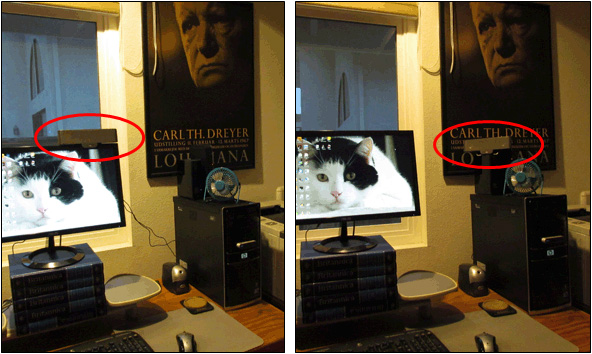
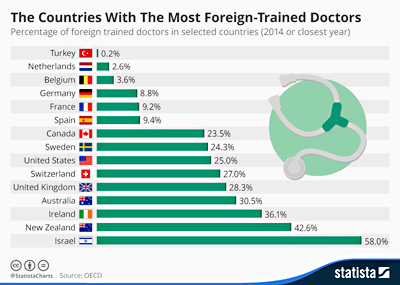
    Every cat owner knows this: whenever something new is brought into the house, your cats have to examine it carefully. Give it a sniff. Jump on top of it. Circle around from all sides. It’s standard feline behavior. But check this out. I’m temporarily using a little clip-on speaker on my PC, and on Friday I got tired of looking at the wires so I moved it a couple of feet and stuck it on top of my external hard drive.

    Thanks to the evil dex, I was sitting downstairs reading at 3 am when Hopper cruised in. She looked around a bit and then made a beeline for the speaker. She jumped up on the desk, got up on her hind legs and gave it a thorough sniffing. She circled around to the side to take another look. Then she went into the kitchen, hopped up on the counter and came up to it from behind to check it out some more. The whole operation took nearly five minutes.

    That’s really pretty impressive. This is a small, gray plastic box. Hopper doesn’t interact with it or sleep on it. It has no odor. It had only been moved two feet. And yet, her mental image of this room was so precise that she immediately noticed the change and spent quite a bit of time checking it out. If cats don’t always seem very bright, maybe it’s just because they’re filling their brains with precision maps of the world.

  • Dean Baker Needs Better Trade Comparisons


    Dean Baker is unimpressed with my argument that US trade deals treat doctors about the same as auto workers because both cars and doctors are required to meet American safety and consumer standards:

    The reason that cars overseas meet American standards is because we negotiated a set of standards for them to meet. In other words, that is what our trade negotiators were doing so that they could place U.S. autoworkers in direct competition with low paid workers in Mexico, China and elsewhere.

    Our trade negotiators could have been negotiating standards for foreign residency programs. (I know Donald Trump says they are stupid, but they can’t possibly be that stupid.) This would mean that other countries could establish residency programs that ensure that doctors in Germany, Canada, and hopefully many other countries were trained to a level where they were as good as U.S. trained doctors. The reason this didn’t happen is because doctors have much more political power than autoworkers.

    Dean is right that foreign doctors face considerable barriers if they want to work in the US. They have to perform their residency in the US, and visa preference is given to doctors willing to practice in “underserved areas”—which tend to be rural and poor. This is especially onerous for experienced doctors who have been practicing for years but aren’t allowed to practice in the US unless they repeat their 3-year residency here.
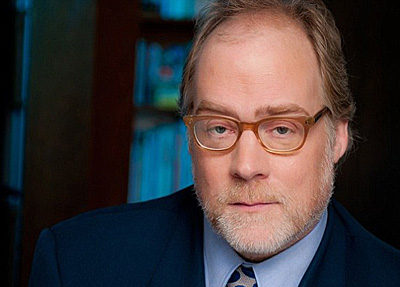
    That said, about 25 percent of US doctors are educated abroad, and about 15 percent of them are immigrants (the others are US citizens who went to med school overseas, typically in the Caribbean). Take a look at the chart on the right and you’ll see that this is slightly above average for rich countries—largely because other countries have similar requirements. The AMA is indeed well organized and powerful, but somehow foreign doctors manage to come to the US in pretty sizeable numbers anyway.

    Or how about another example? A friend writes to say this: “I work in Silicon Valley. Walk into any software development shop, any data center, any IT support shop, any solutions consultancy and try to find somebody who was born in the US, or even has a US passport. If you’re an American coder, you’re going to have to accept much lower wages than you would have unless you’re a real rock star. That’s because we import ’em by the pallet load.” Coders aren’t as well organized as doctors, but they’re still a lot better paid than blue collar auto workers. And yet an awful lot of foreign-born IT workers manage to make it into the country anyway.

    In fairness, I think the real problem here is just that Dean chose a bad example. When you’re talking about people rather than goods, you’re going to collide with immigration law, and that makes the comparison apples to oranges. Instead let’s compare goods to services. Think about it this way: for decades we’ve been signing trade deals that lower tariffs on various goods, including cars, and this directly impacts blue collar manufacturing workers. But what did we get in return? Certainly not nothing. In part, the answer is that we negotiated access to overseas financial markets, which benefited traders and executives on Wall Street—a group that’s considerably richer than doctors. This was an extended process, and when the final protocols were approved in 1997 the head of the WTO congratulated everyone involved for the “courage and commitment to pursue the policies of liberalization which are essential to economic stability, growth and development.”

    Ahem. That’s not exactly how things worked out. But Wall Street sure got rich in the process!

    There’s nothing much left to do on the financial front, so TPP focuses a lot of attention on IP law. This benefits large, patent-heavy corporations and large content providers like Disney. They probably can’t match Wall Street bankers for sheer riches, but they sure make a lot more money than all those poor doctors.

    So I still think Dean is wrong to single out doctors, but all he’d have to do is switch comparisons to make his point. A lot of this stuff would probably have happened regardless, but US trade policy sure helped it along. Generally speaking, manufacturing workers suffered while the rich donor class benefited. It’s hardly any wonder that unions and blue-collar workers aren’t very thrilled at continuing this process.

  • The Head of Jeb’s Super PAC Is Tired of the Endless Conservative Con


    Mike Murphy is a longtime Jeb Bush friend and loyalist, and he’s also the guy who ran Right to Rise, the Super PAC that blew through $100 million in an epically futile effort to sell Bush to the masses. So it’s understandable that he might be a little bitter about the success of Donald Trump, who almost single-handedly destroyed Bush.

    Keep that in mind when you read Matt Labash’s long debriefing of Murphy as he was cleaning up the last remnants of the Right to Rise offices a month ago. At the same time, Murphy is neither a rookie nor a naif, and that gives him a deep perspective on what’s changed over the years in the conservative movement. He acknowledges that Republican voters have grown angrier over the past decade, but he blames a lot of this on Republicans themselves, aided and abetted by a press that barely understands politics anymore and is eager to jack up its ratings by scaring the hell out of people:
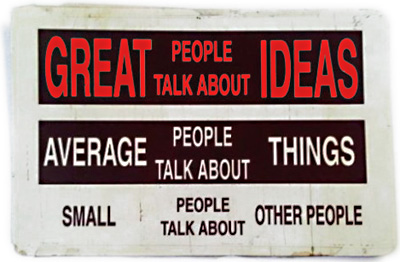
    He says a lot of the anger is springing from people’s fears and hard realities — the middle class not getting a raise in a decade. Generally pessimistic older white voters see the demographic shifts and don’t like it. The media are incessantly “sticking red-hot thermometers in lukewarm water and saying, ‘Wow, that water’s pretty hot!’ “

    ….Still, Murphy adds, the problem with our current antiestablishment climate isn’t that people aren’t correctly identifying problems. It’s that the problem-solvers they’re turning to are bigger snake-oil hustlers than the ones they’re turning away from….Let’s think through Trump, Murphy says. “He doesn’t understand the presidency. You don’t call up the head of Mexico and say, ‘Hey, I’m going to build a fabulous wall with first-class gold toilets and you’re gonna pay for it.’…He has no understanding of presidential powers. He has no understanding of Congress. It’s like putting a chimp in the driver’s seat of a tractor.”

    ….”Then the problem becomes how are we the world’s reserve currency anymore? We get away with a lot of shit because people think we have a stable system….We borrow a lot of f — ing money. Because people think the number one safest instrument in the world is the U.S. Treasury bond. And if we start making reality-show clowns in charge? Run on the American bank. You think the pissed-off steelworker in Akron has trouble now? Wait until we have a financial collapse and they take 25 percent off the dollar. He’ll be serving hot dogs in an American restaurant in China.”

    ….Murphy starts waxing philosophic….Everything is so postmodern and meta that “nothing means anything, because everything is what the scam is….So many simpleton reporters — whose depth of knowledge extends to whatever they read in the Real Clear Politics polls average that morning. Fly-by-night pollsters feeding the media, which is creating news so that they can report on it.

    ….I suggest to Murphy that many of these things he’s decrying have been the tricks of his trade. He’s like a magician denouncing the false-bottomed top hat. “I don’t mind technique,” he says. “I can be shameless. I have a long career at this. But when everything is a short con, then there’s never another short con. Because you need trust, and you’ve destroyed it.“….

    ….The cable-news business establishment who are, whatever they insist, for Trump, since Trump equals ratings….But just as notable, he points out, is the antiestablishment establishment….”Like, Antiestablishment Inc.,” Murphy says. “You can find them at 123 Establishment Lane, Des Moines, Iowa. Often, they’re involved with the postage meter or credit card machine somewhere for small-dollar donations.

    ….Take, for instance, he says, the Tea Party — “a racket, though it’s supposed to be a nonracket,” full of faux four-star generals who say, ” ‘You’ve got to pay me because . . . I represent the Nebraska sub-Army 14 of the Tea Party.’ “…Murphy concedes there are lots of voters who “subscribe to a loose set of principles that D.C.’s broken. They’re tired of the establishment. Tired of people in the racket.” But there’s a racket of people sending them letters asking for money. “The poor old lady sends her $25 to defeat Nancy Pelosi, and $22 of it goes to ‘fundraising costs.’ “

    Rick Perlstein in particular has written a lot about how the modern conservative movement has largely turned into a machine for swindling people—especially the elderly. There’s Glenn Beck pitching gold as a hedge against nonexistent hyperinflation. Fred Thompson hawking reverse mortgages. The acolytes of direct-mail pioneer Richard Viguerie setting up operations that scare the bejeesus out of old people but use most of the money they raise to pay themselves and their consultants. The talk radio hosts who repeatedly insinuate that Hillary Clinton murdered Vince Foster—and then quickly break for a commercial. Mike Huckabee peddling diabetes cures and Ben Carson praising the glories of glyconutrients to their evangelical fans. The endless production of simpleminded right-wing books as a handy income stream, some of them with more than the usual whiff of corruption.

    Even some conservatives have finally started to recognize that the short con—which is elderly enough that it’s become a long con—is hurting the conservative cause. Mike Murphy is apparently one of them, and he considers the rise of Donald Trump little more than just desserts for a party that’s either tolerated or actively encouraged this behavior for decades. In the end, Trump took a look at the conservative movement and decided that they were amateurs. The big con needs more than talk radio or direct mail or scary ads. It needs national TV provided willingly and often—and Trump knew exactly how that game worked. He’s not running his con any differently than conservatives always have. He just knows how to pull it off way better than they do.

  • It’s True: Smart People Would Prefer You Went Away


    Most people are happier when they have a lot of social contact. But Christopher Ingraham points to a new paper suggesting an exception to this general rule: smart people, true to stereotype, prefer being left alone. But why?

    I posed this question to Carol Graham, a Brookings Institution researcher who studies the economics of happiness. “The findings in here suggest (and it is no surprise) that those with more intelligence and the capacity to use it … are less likely to spend so much time socializing because they are focused on some other longer term objective,” she said.

    Think of the really smart people you know. They may include a doctor trying to cure cancer or a writer working on the great American novel or a human rights lawyer working to protect the most vulnerable people in society. To the extent that frequent social interaction detracts from the pursuit of these goals, it may negatively affect their overall satisfaction with life.
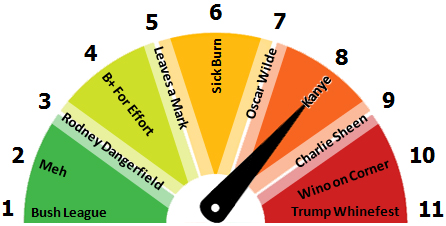
    To put this a little less nicely, average folks don’t really have anything very interesting or enthralling to do with themselves, so getting interrupted by friends represents a net improvement in their daily lives. Smart people do have enthralling—even obsessive—intellectual interests, and social activities take them away from that. So this represents a net loss in happiness.

    (Important note for smart, argumentative people reading this: we’re talking about averages here. There are plenty of extroverted smart people and introverted dumb people. But on average, smart people tend to dislike socializing because it takes them away from work they find more rewarding.)

    But back to the paper. The authors, Satoshi Kanazawa and Norman Li, have a different theory about all this: the measured difference in social preferences is all due to the way we evolved way back on the savanna. Back then, they say, you had a much better chance of surviving if you had lots of friends, so we naturally evolved to value having lots of friends. Things have changed since then—cell phones, computers, cities, houses, etc.—and even though evolution hasn’t yet had a chance to adapt to a world where social contact isn’t as important, “extremely intelligent” people can use their sheer brainpower to adapt anyway:

    “More intelligent individuals, who possess higher levels of general intelligence and thus greater ability to solve evolutionarily novel problems, may face less difficulty in comprehending and dealing with evolutionarily novel entities and situations,” they write….Smarter people may be better-equipped to jettison that whole hunter-gatherer social network — especially if they’re pursuing some loftier ambition.

    This odd thing is that this isn’t really an application of evolutionary psychology, even though the authors are evolutionary psychologists. The hypothesis that humans evolved in hierarchical, medium-sized groups that relied on tight social networks for survival is pretty widely accepted. It’s nothing new. What’s new is the suggestion that smart people can overcome the constraints of cognitive evolution more easily than most people. And that’s not really evolutionary psychology. It’s just regular old psychology, or perhaps regular old neuroscience. It’s pretty likely that this has always been true of smart people, but we just don’t know it. Our social science datasets are shockingly inadequate for dates before 20,000 BCE.

    Now, I don’t have access to the paper itself, and it’s possible that the authors address this. The abstract doesn’t give any hint of it, though. For the time being, then, I’ll take this as a fairly banal observation: people with intense intellectual interests value them more highly than social contact, and almost by definition, it’s mostly smart people who have intense intellectual interests. As a refugee from the tech world who dealt with a lot of programmers, and as a blogger who gets annoyed at being interrupted in the middle of writing a post, color me unsurprised.

  • What’s the Deal With Donald Trump’s Mustache?


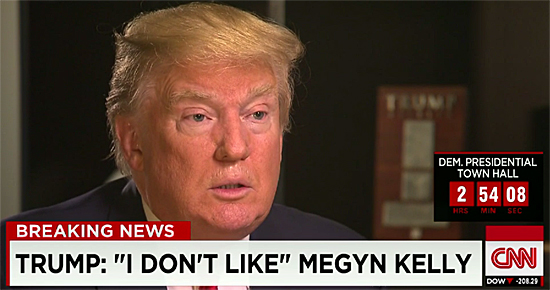
    The last couple of weeks have been pretty hard on Donald Trump, and he’s showing the strain by turning up the insult meter to 11. His favorite quarry, of course, is Megyn Kelly:

    • Crazy @megynkelly supposedly had lyin’ Ted Cruz on her show last night. Ted is desperate and his lying is getting worse. Ted can’t win!
    • Crazy @megynkelly is now complaining that @oreillyfactor did not defend her against me – yet her bad show is a total hit piece on me. Tough!
    • Highly overrated & crazy @megynkelly is always complaining about Trump and yet she devotes her shows to me. Focus on others Megyn!
    • Everybody should boycott the @megynkelly show. Never worth watching. Always a hit on Trump! She is sick, & the most overrated person on tv.

    Plus there’s been all this in just the past couple of days:
    $35M of negative ads against me in Florida…. Stuart Stevens, the failed campaign manager of Mitt Romney’s historic loss…. lyin’ Ted Cruz has lost so much of the evangelical vote…. @WSJ is bad at math….Who should star in a reboot of Liar Liar- Hillary Clinton or Ted Cruz?…. Lyin’ Ted Cruz lost all five races on Tuesday.

    @EWErickson got fired like a dog from RedState…. millions of dollars of negative and phony ads against me by the establishment…. Club For Growth tried to extort $1,000,000 from me…. Lyin’ Ted Cruz should not be allowed to win [in Utah] – Mormons don’t like LIARS!…. Mitt Romney is a mixed up man who doesn’t have a clue.

    I’ll grant that Trump has a point about the Wall Street Journal. Their editorial page really is bad at math. The rest is just a sustained whinefest from a guy who judges everyone in the world by the standard of how sycophantic they are toward Donald Trump. His preoccupation with Megyn Kelly prompted this from the normally mild-mannered Bret Baier:

    Fox favorite Geraldo Rivera, no shrinking violet, said Trump’s obsession with Kelly “is almost bordering on the unhealthy.” Almost? Fox News itself followed up with a barrage of anti-Trump tweets and this statement on Facebook:

    Donald Trump’s vitriolic attacks against Megyn Kelly and his extreme, sick obsession with her is beneath the dignity of a presidential candidate who wants to occupy the highest office in the land….As the mother of three young children, with a successful law career and the second highest rated show in cable news, it’s especially deplorable for her to be repeatedly abused just for doing her job.

    So there you have it. It’s Fox vs. Trump yet again. So far, I don’t think Fox has won any of these street fights, but maybe they’re due. I guess it depends on whether they keep it up, or lamely make amends the way they usually do.

    Finally, in other Trump news, this is from an interview he did a couple of days ago. What’s with the mustache?

  • Friday Cat Blogging – 18 March 2016


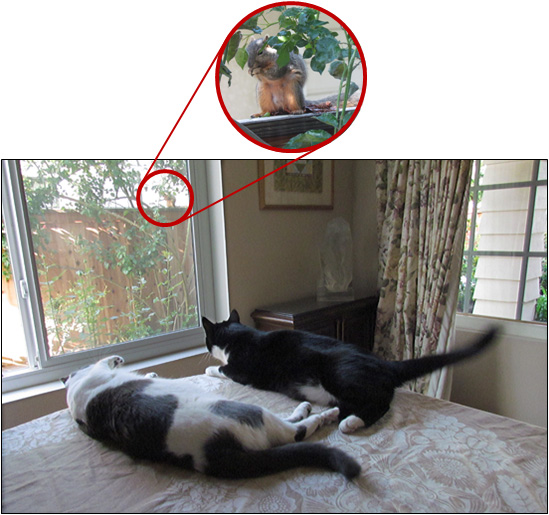
    Today is wildlife watching day. Our squirrel is sitting calmly on our fence snacking on something or other, and the cats are fascinated. They are extremely dedicated to the study of small, local ecologies—with an emphasis on fauna rather than flora.

    In non-feline news, I was prepared to link to some baby rhino cuteness, but instead my sister recommends this video of a dog trying to get its human to play fetch. I hate to admit it, but dogs really are smarter than cats. Until they learn to purr, though, cats will always have the edge.

  • “Free Trade” Is an Election-Year Nothingburger


    Matt Yglesias aggregates a few Gallup polls today to make the point that, press insistence to the contrary, Americans aren’t especially anti-trade. Nor, apparently, are they especially angry about the economy in general or foreign competition in particular. You can always cherry pick interviews from Trump rallies to make it look like voters are frothing with rage, and editors can then order up a series of thumbsuckers using colorful anecdotes to make the case. The Washington Post, for example, has done this, complete with a nifty slogan (“The Great Unsettling”) and an earnest tagline (“With so much anger in America, a pair of reporters took to the road in search of its causes.”) The fact that America quite plainly isn’t all that angry seems to have made no difference to their headline writers.

    Still, some people really are upset about trade deals. The problem is that their arguments always seem pretty thin to me. Here’s Dean Baker a few days ago:

    The trade agenda of administrations of both parties has been to quite deliberately put U.S. manufacturing workers in direct competition with low paid workers in the developing world. [But] we have not sought to impose free trade everywhere. We have only done it for less well paid and less educated workers. We have maintained and in some cases strengthened protectionist barriers that sustain the jobs and paychecks of the most highly paid professionals.
    Take the case of doctors with an average pay of well over $200,000 a year….We prevent foreign doctors from practicing in the United States unless they completed a U.S. residency program. Does anyone believe that we can’t ensure that doctors going through training programs in Canada, Germany, and other wealthy countries get sufficient skills to competently treat patients in the United States?

    There is a similar story for dentists, who get paid almost as much as doctors. They used to be required to get a degree from a dental school in the United States. We just recently started allowing graduates from dental schools in Canada to practice in the United States.

    It’s always dangerous arguing with Baker, but this really doesn’t hold water. Cars made overseas are required to meet American standards. You can’t just build anything you want and sell it here. In the case of doctors, the doctor herself is the product, and we require the product to meet American standards. Aside from the minor jolt of hearing a human being called a “product,” there’s not really much difference. You can argue that standards for cars and standards for doctors are poorly designed, but that’s a much subtler case to make. One way or another, both American doctors and American cars are going to be required to meet American standards.

    Baker also argues that patent protections favor the rich against foreign competition, and here I have a little more sympathy. But only a little. I’m generally in favor of tightening up patent protections somewhat, but these really are reciprocal requirements: they protect American companies from foreign competition and they also protect foreign companies from American competition. That may work in our favor at the moment, but I wouldn’t count on that being true forever.

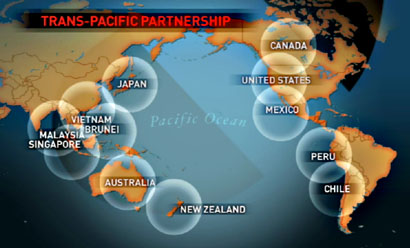
    No matter how much Donald Trump rails against the TPP being the second-worst agreement ever in the history of mankind (Iran is #1, of course), it’s just not that big a deal. Yeah, the IP stuff is noxious. But how many voters even know what IP stands for, let alone care even a whit about it? The rest of the agreement is a mix of OK and moderately not-OK, and that’s about the strongest emotional reaction I can bring to it. If Congress wants to vote it down, fine. It won’t make much difference. If they vote for it, that’s fine too. It won’t make much difference. It certainly hasn’t ignited smoldering anger among blue-collar workers, and it’s not going to. As far as the election is concerned, it’s a nothingburger.

  • Yes, the Press Bears Some of the Blame for Donald Trump


    Kyle Blaine writes today about the news media’s growing uneasiness with the role they’ve played in the rise of Donald Trump. For example, there’s the way they caved in to his campaign’s unprecedented demands about how Trump’s events were to be covered:

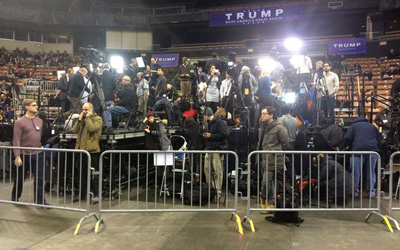
    After several incidents of Trump campaign aides threatening to revoke credentials for reporters who left the fenced-in press pen, representatives from ABC News, CBS News, NBC News, Fox News, and CNN organized a conference call with Trump campaign manager Corey Lewandowski to negotiate access.

    According to two sources familiar with the call, the Trump campaign, citing security concerns from Secret Service, dictated to the networks that their camera crews can only shoot Trump head-on from a fenced-in press pen….The terms, which limit the access journalists have to supporters and protesters while Trump is speaking, are unprecedented, and are more restrictive than those put on the networks by the White House or Hillary Clinton’s campaign, which has had Secret Service protection for its duration.

    Facing the risk of losing their credentialed access to Trump’s events, the networks capitulated….When Trump complains that the media does not “turn the cameras” to show the size of his crowds, it’s because they can’t.

    Josh Marshall tweetstormed a couple of days ago that the press is blameless in Trump’s rise. “Yes there’s tons of crappy coverage,” he concluded. “None of it is responsible for Trump’s ascent. That’s due to 1/4 of voting pop deeply drawn to his message.”

    I think he’s off base. A quarter of the population has always been drawn to Trumplike messages. That’s the reason folks like Sarah Palin and Glenn Beck have such large followings. Trump has done better than them partly because he’s more media savvy—though Palin and Beck are hardly slouches in that department—but also because the press has slobbered over him unlike any candidate in history. They obey his absurd rules forcing them to televise Trump only head on, as if he’s already president. They allow him to call in to their shows constantly, something they don’t do for other candidates. They televise his speeches in their entirety without comment. They respond to every absurd publicity stunt with 24/7 coverage.

    And most importantly, they’ve been doing this since the beginning. It’s one thing to say that Trump is the frontrunner now, so of course he gets lots of coverage. But Trump has been getting round-the-clock coverage since Day 1. This was long before anyone thought he was likely to win the nomination. The cable nets were just chasing ratings.

    As Marshall says, maybe that’s inevitable: “If there’s a really big story w/huge reader interest, news publications will tend to cover it a lot. Not a wave you can swim against.” But inevitable or not, you simply can’t pretend that it had no effect. Network news operations love to crow about their impact whenever they air some dramatic story that uncovers public corruption, but now they’re pretending that thousands of hours of Trump coverage had no independent effect? Spare me.

    I freely acknowledge that it’s hard to pin down Trump when he says ridiculous stuff. But reporters barely even try anymore. They’re apparently afraid that if they truly treat him adversarially, he’ll put them on his enemies list and never talk to them again. Not exactly a profile in courage, is it?