Here’s the latest in my lantana series. This one has the evening sun shining on it, but also benefits from a wee bit of photoshopping to brighten it up compared to the background. Where would we modern artistes be without Photoshop?


Here’s the latest in my lantana series. This one has the evening sun shining on it, but also benefits from a wee bit of photoshopping to brighten it up compared to the background. Where would we modern artistes be without Photoshop?
Like most lefties, I would like the United States to adopt true universal health care. This has been my position for, oh, 30 or 40 years. However, I also accept the reality that this will never happen in one grand swoop. That’s why I was—and am—a big supporter of Obamacare, warts and all.
So if I were president and had to propose health care reform that actually had some chance of passing, what would it be? I’d go with a two-prong approach:
Employers could keep their current private-sector plans if they wanted to, or they could enroll their employees in Medicare. The federal government would make Medicare available at its cost.
There are details, of course. Perhaps Medicare reimbursement rates would have to go up. Employers might need to offer Medigap coverage. Etc. But this would be a big step forward.
GDP growth for the third quarter clocked in at an annual rate of 1.9 percent:
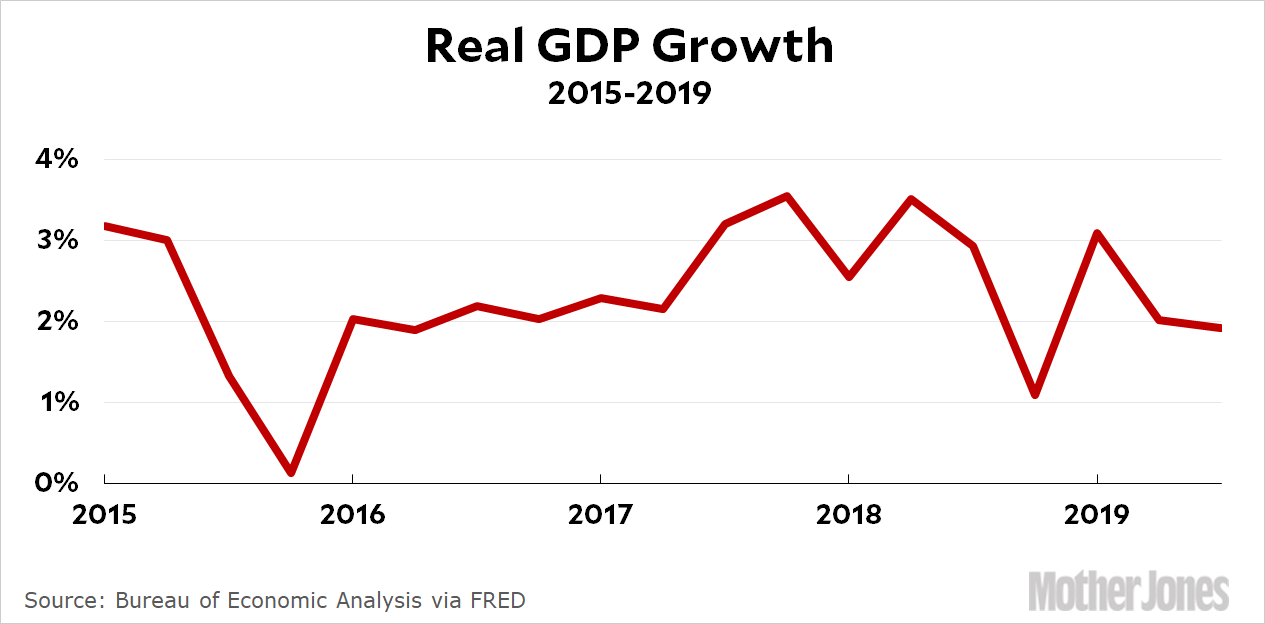
A single quarter doesn’t mean much, but the average growth rate for the past 12 months is 2.0 percent. That’s not the worst thing in the world, but it’s definitely a slowdown. It’s no wonder that Donald Trump wants the Fed to reduce interest rates to -3 percent or so.
The New York Times informs me that ok boomer is the latest meme from disaffected members of Generation Z. You can probably guess what this is generally about, but read the whole piece if you want the details. Clearly, Gen Z has not yet taken my advice that we should all gang up against the Silent Generation instead of attacking each other.
In any case, here’s the basic gripe:
“Gen Z is going to be the first generation to have a lower quality of life than the generation before them,” said Joshua Citarella, 32, a researcher who studies online communities. Teenagers today find themselves, he said, with “three major crises all coming to a head at the Gen Z moment.”
“Essentials are more expensive than ever before, we pay 50 percent of our income to rent, no one has health insurance,” said Mr. Citarella.
One of the great things about living in a modern country is that there are actual statistics about these things collected regularly by the federal government. Let’s see what those statistics have to say about these three claims:
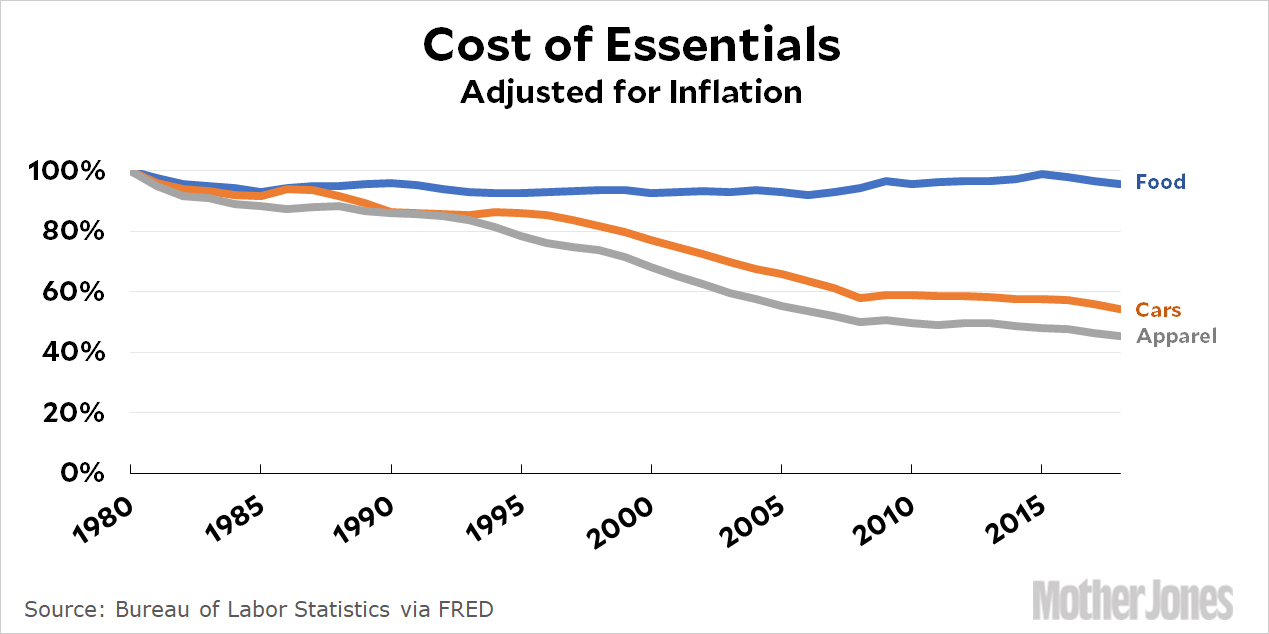
In other words, none of these claims is true. There is certainly a particular group of highly vocal Gen Z folks who insist on living in very expensive urban areas and are forced to pay 50 percent of their income in rent. But it’s a small segment, even if it’s a loud one.
“Essentials,” by contrast, are easier. They’ve done nothing but get cheaper over the years. And Obamacare has cut the uninsured share of young people in half.
I suppose the answer to all this is ok boomer. Fair enough. But the fact remains that Gen Z-ers just aren’t as bad off as they like to think they are.
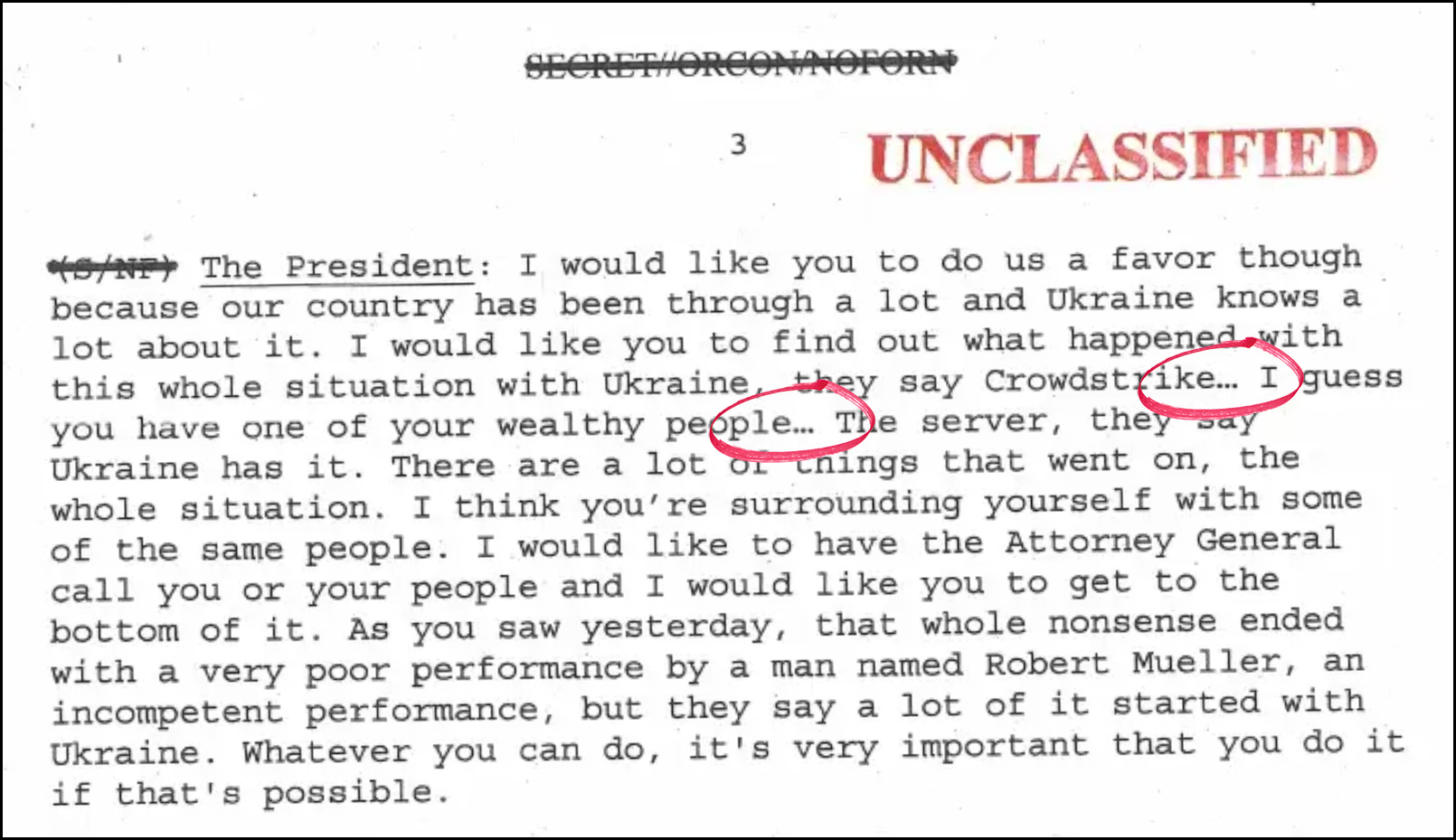
Back when President Trump released the “rough transcript” of his call with Ukrainian president Volodymyr Zelensky, there were several spots where passages seemed to be omitted and replaced with ellipses. However, Trump insisted that the transcript was “word for word,” and folks with experience in this stuff explained that there was probably nothing to this. The ellipses just indicated pauses in the conversation.
Lt. Col. Alexander S. Vindman, the top Ukraine expert on the National Security Council, told House impeachment investigators on Tuesday that the White House transcript of a July call between President Trump and Ukraine’s president omitted crucial words and phrases, and that his attempts to restore them failed, according to three people familiar with the testimony.
The omissions, Colonel Vindman said, included Mr. Trump’s assertion that there were recordings of former Vice President Joseph R. Biden Jr. discussing Ukraine corruption, and an explicit mention by Ukraine’s president, Volodymyr Zelensky, of Burisma Holdings, the energy company whose board employed Mr. Biden’s son Hunter.
Those are pretty relevant omissions! Secret recordings of Joe Biden! An explicit mention of Burisma Holdings! I’ll bet that if we ever get to see a genuine word-for-word transcript with those passages restored, they would make the old quid-pro-quo a wee bit more obvious. After all, why redact them if they weren’t incriminating?
This whole thing just gets more Watergatish by the day.
It's later than you think.Kevin Drum
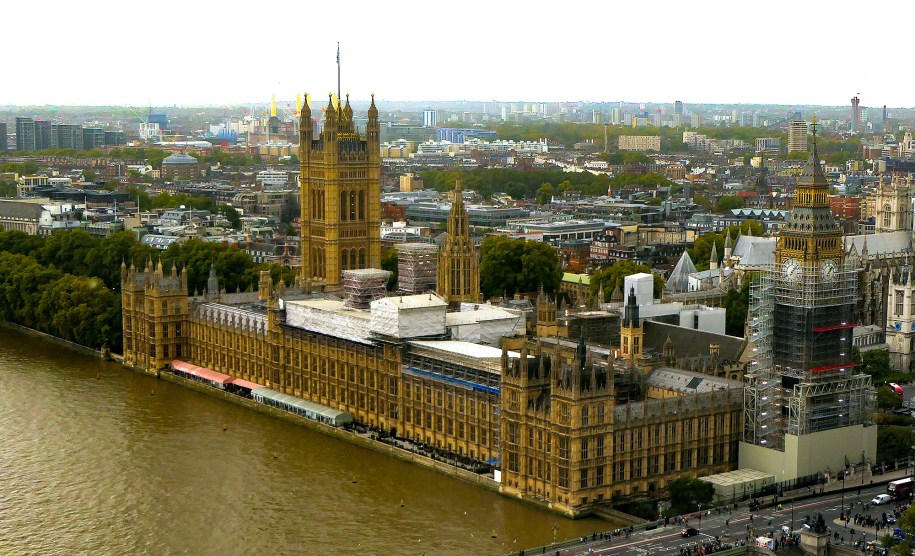
Why bother passing a law that requires a two-thirds majority to call a new parliamentary election when any future parliament can just pass a law (with a simple majority) negating the requirement and calling a new election whenever it wants?
That was today’s question for Brits, and the answer turns out to be: random politics. Back in 2011 the Conservative Party won an election but didn’t have a majority. They teamed up with the Liberal Democrats to form a government, but the Lib-Dems insisted on the two-thirds law as a condition of supporting the coalition. Why? Because they wanted a full five-year term. The new law prevented the prime minister from calling an election the first time the polls looked good and he thought he might be able to win a majority on his own.
In other words, it was always meant as a short-term solution to an immediate partisan problem, not a permanent change to the constitutional workings of the country. This is why no one cares much that Boris Johnson is bypassing it now with a new law passed by a simple majority.
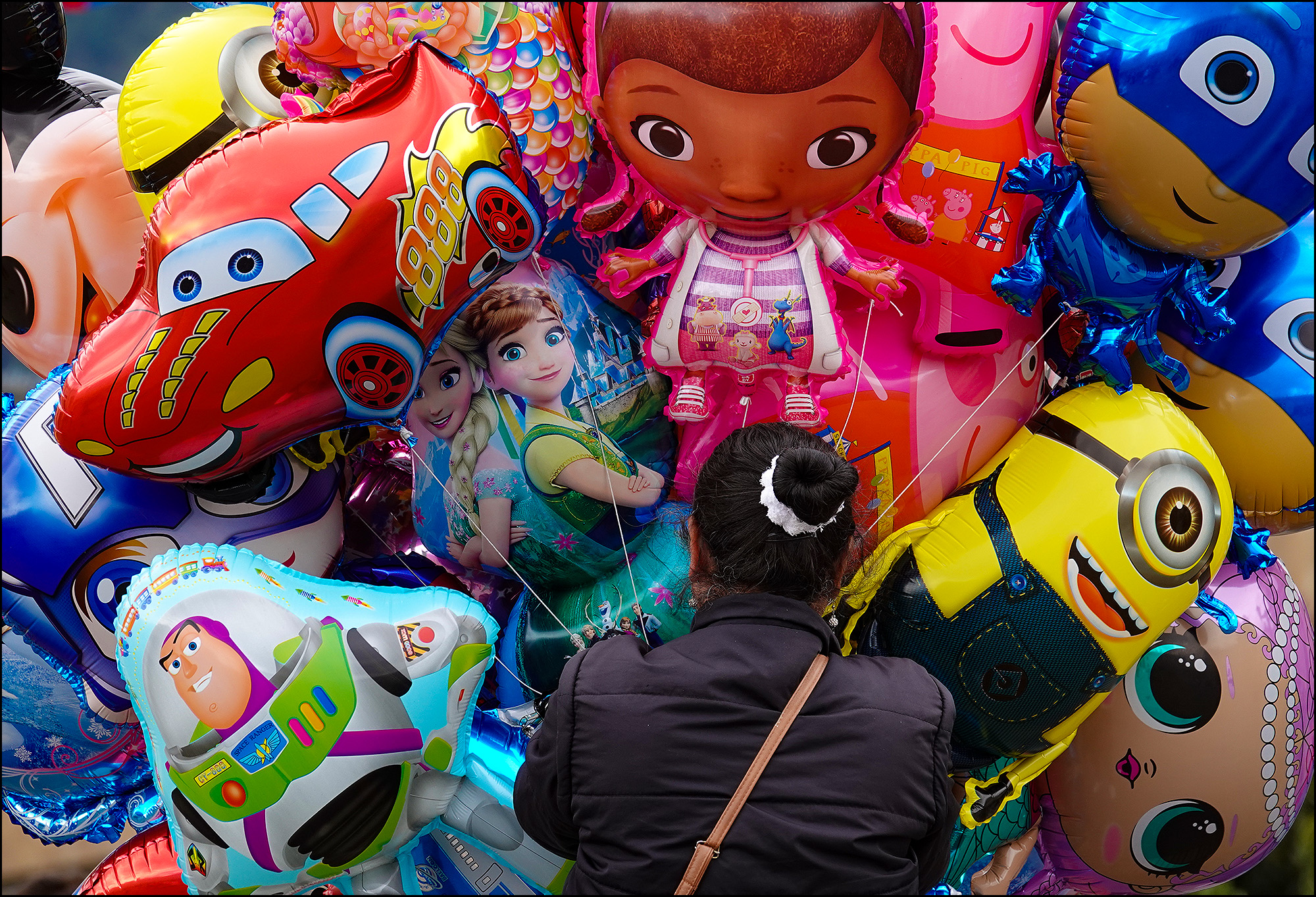
This is a picture of a balloon seller at the Plaza Bolívar in Bogotá. A careful bit of online research revealed that the balloon gazing down on the seller is one Doc McStuffins, a Disney character “who decides she wants to become a doctor like her mother, a pediatrician.” However, unlike ordinary mortals who need to study hard and take organic chemistry to become doctors, Doc M has some extra help: “When she activates her magic stethoscope, she can create a variety of supernatural effects, including traveling through time. Her most regular use of it in the TV series is to cause toys, dolls, and stuffed animals to come to life.”
Well. I suppose I could become a doctor too if I had a magic stethoscope. Or, in any case, as rich as one if I could travel through time and bring toys to life. Frankly, I think Doc McStuffins needs to think bigger.
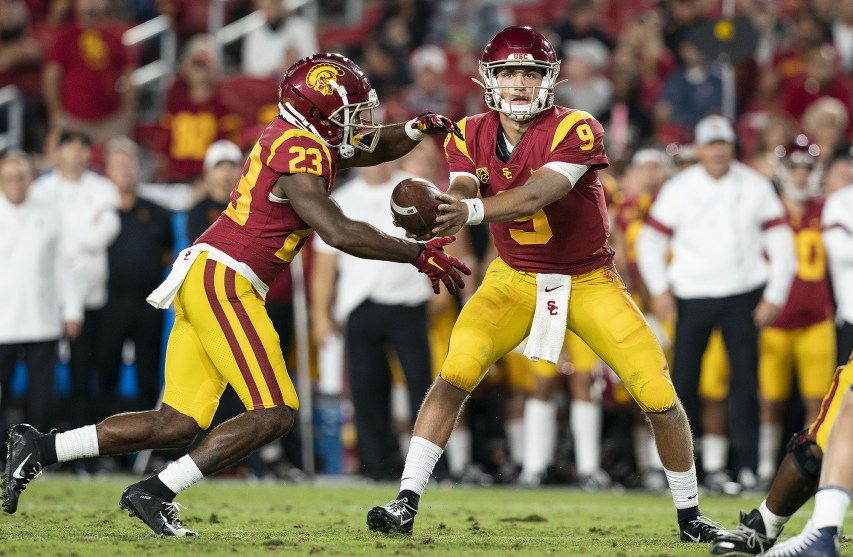
USC freshman quarterback Kedon Slovis hands the ball off to running back Kenan Christon in a thriller against an outmatched Arizona squad.Jon Endow/Image of Sports/Newscom via ZUMA
Here’s a timeline of recent actions in the college sports arena:
September 11: The NCAA Board of Governors wants California Gov. Gavin Newsom to reject a new attempt to pay college athletes….In a six-paragraph letter released Wednesday, the board urged Newsom not to sign the legislation known as the Fair Pay to Play Act, which would allow college athletes to be paid for the use of their names, likenesses and images….The board warned that California schools may be declared ineligible for NCAA competition if the bill becomes law because they would have an unfair recruiting advantage.
September 30: California became the first state to require major financial reforms in college athletics on Monday after Gov. Gavin Newsom signed into law a measure that allows players to receive endorsement deals….Senate Bill 206 by Sen. Nancy Skinner (D-Berkeley) prohibits the NCAA from barring a university from competition if its athletes are compensated for the use of their name, image or likeness beginning Jan. 1, 2023.
October 29: The NCAA is finally embracing “change” and starting the process of allowing student-athletes to profit off of their name, image and likeness, the organization announced on Tuesday. The organization’s top governing board voted unanimously to allow college athletes to be compensated, though the specifics on how college athletes’ compensation will fall on each of the NCAA’s three divisions to craft their own rules.
Whaddayaknow? After five years of futzing around following the O’Bannon decision, all it took was a little nudge by California and within a few weeks the NCAA suddenly decided to cave in. How about that?
Horse racing season has started at Santa Anita and the carnage is already in high gear:
This week, there is plenty more anxiety as attention turns to the Breeders’ Cup races, horse racing’s version of the Super Bowl. There will be 14 races, each with purses of at least $1 million, on Friday and Saturday at Santa Anita — over a track where there have been six horse fatalities in the last six weeks.
Thirty horses died during Santa Anita’s last winter-spring meet, and there was some speculation that the sport’s annual showcase might be moved to another venue. Santa Anita’s owner, the Stronach Group, responded to the crisis by enacting several reforms in medication usage and veterinarian care that will be used for the Breeders’ Cup races.
Let’s do some simple arithmetic. The season lasts 26 weeks, which means that last year 1.15 horses died per week. This year, 1.0 horses have died per week. So things are getting better. However, a more accurate way to measure this is horse fatalities per 1000 starts, which accounts for how many races are run. Here you go:
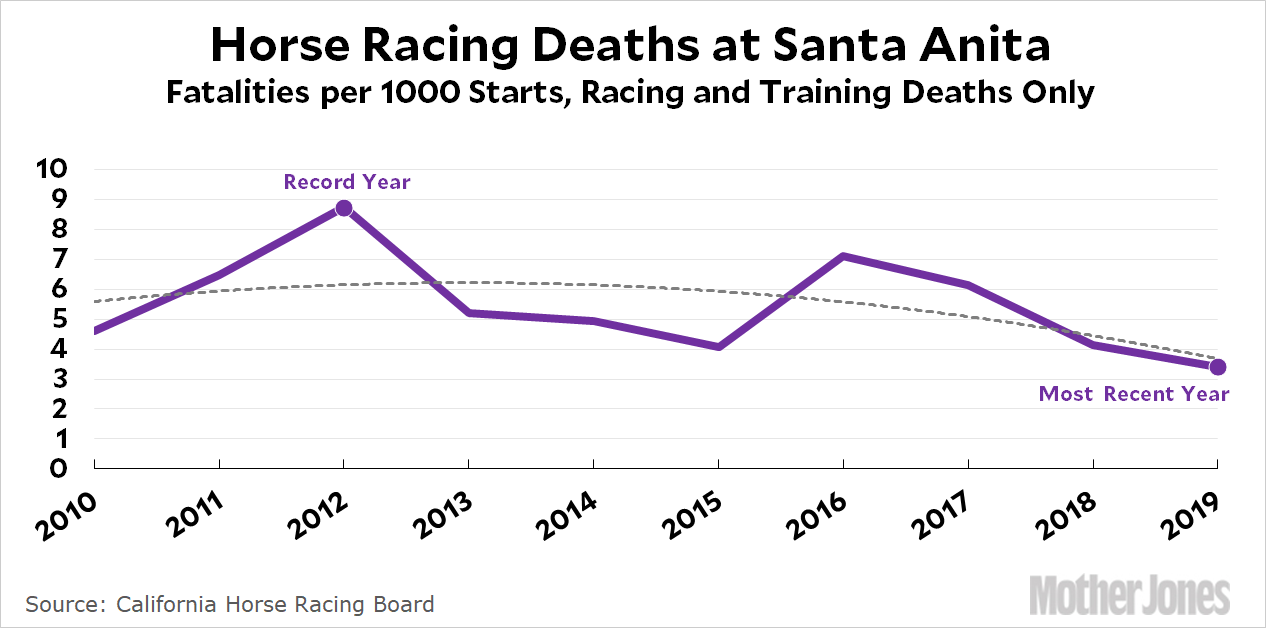
Horse fatalities have been dropping for four years in a row and are currently lower than they were in 2010.
I never really got an answer to my question from last year, namely that the supposed record number of deaths at Santa Anita wasn’t a record at all. It wasn’t even just normal. It was actually less than in any year of the past decade. So why the sudden outcry?
This year it appears that the fatality rate is down even further. And maybe that’s not good enough. Maybe it’s still high compared to other tracks:
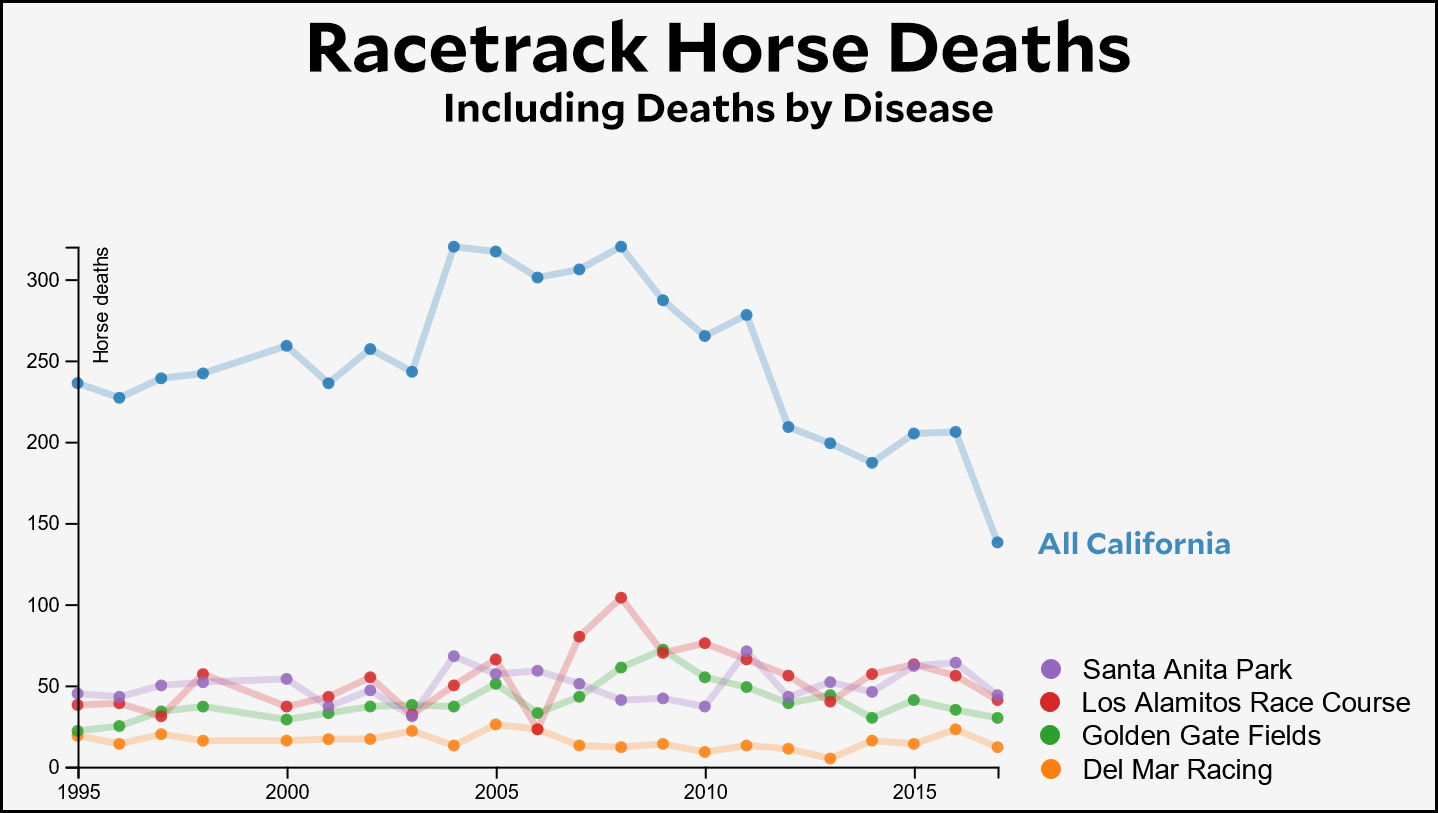
Nope. Del Mar clearly has a low death rate, but the other three California tracks are all in the same general area.
You can get different results if you use different statistics, but this seems like the simplest and fairest. And what it says is that Santa Anita has been improving over the past five years and is now about average for horse fatalities in California. So why the hue and cry?
POSTSCRIPT: The linked article does have some interesting things to say about bisphosphonates, an undetectable drug that can make a horse’s x-rays look better to a buyer, but at a cost of more injuries down the road. That’s worth reading about.
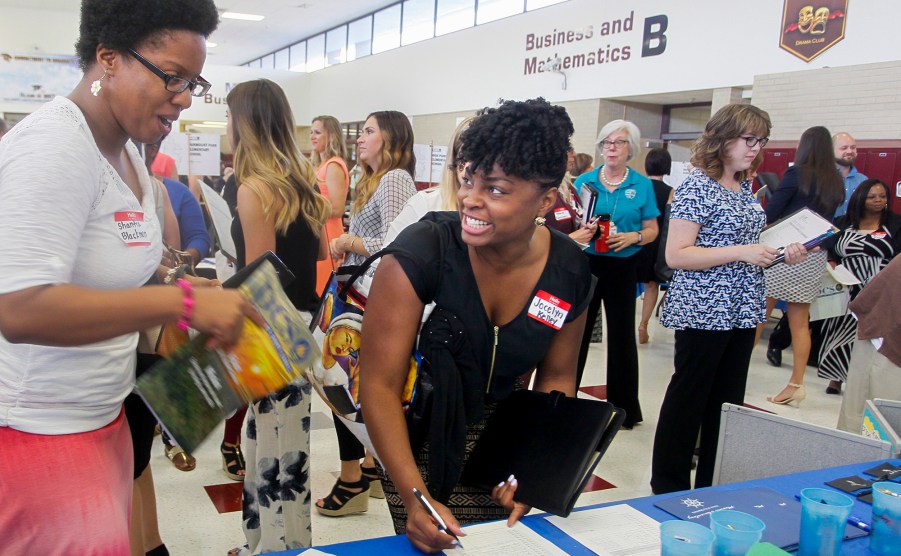
Will they get as many callbacks as the white folks behind them?Dirk Shadd/Tampa Bay Times via ZUMA
A popular way of testing for racist attitudes in employment is to send multiple applications to a single job posting. The applications are generally identical except for one thing: the names of the applicants. One has a sterotypically white name (Madison Nash) and the other has a stereotypically black name (LaShonda Greene). Then you check to see how many of the white names get callbacks for interviews compared to the black names. Generally speaking, the white names get called back at a rate 2-4 percentage points higher than the black names.
Today, Brad DeLong calls my attention to a clever new study that tries to tease out exactly what causes this difference.
The types specification finds that only about 17% of jobs discriminate against blacks….However, the degree of discrimination among such jobs is estimated to be very severe — the odds of receiving a call back are roughly [] 53 times higher for white applications than blacks.
In other words, the vast majority of hiring managers aren’t using a racial filter. Only a small group, about one-sixth of the total, discriminates against blacks, but that sixth is massively racist: they all but flatly refuse to even interview someone who seems like they might be black.
Brad says he’s surprised by this, but I’m not. My mental model of racism in recent decades is that, in fact, most people aren’t especially racist—or at least they genuinely try not to be. However, there’s a segment of the population—yes, these are Hillary Clinton’s “deplorables”—who are still openly and defiantly racist in all things. All by themselves, their racism is so overwhelming that it’s enough to make a noticeable difference in the overall rate.
Now, one thing to note here is that this method of sussing out racism sets a very low bar. To pass, all you need to do is be willing to interview someone with a stereotypically black name. You don’t have to hire them, just set up an interview. In other words, this experiment doesn’t really suggest that 83 percent of hiring managers aren’t racist in any way, just that they aren’t huge, raging assholes.
That said, I’m prone to believe that this result is a general one. The evidence I’ve seen suggests that most Americans are, at most, very mildly racist these days. However, there’s still a sixth of the country that basically wishes Jim Crow could make a comeback. This in turn means that perhaps one-sixth of the jobs in America are all but completely denied to blacks.
There’s value in knowing this, because it provides some idea of what needs to be addressed most urgently: identifying the stone racists, not providing endless diversity lessons for everyone else. This study is well worth a follow-up to see if its results hold up.

Award-winning photojournalism.
Stunning video. Fearless conversations.


