• Donald Trump’s Base Doesn’t Care Much About His Opinion

    Confirmed lunatic Roy Moore won the Republican Senate primary in Alabama last night, which was no big surprise. But it’s a funny thing. Donald Trump endorsed his opponent, and this is yet another sign that Trump has very little sway over his supporters. They like him, but only when he’s telling them what they already want to hear. If he goes off the reservation, they shrug and continue doing whatever they were doing in the first place.

    To some extent this is true of all presidents, of course. The power to persuade is a precious and limited commodity. But Trump seems more than normally unable to move the needle of national opinion. He can spur outrage over things his base is already outraged about. He can gull the media into letting him set the agenda. He can unite everyone in embarrassment. But his support or opposition doesn’t seem to change minds about the wisdom of going to war; whether to approve of Republican health plans; or who to vote for.

    Am I off base here? Or does Trump really have less than normal influence over his followers?

  • Is Politics Killing the NFL?

    I should say right off that I don’t know the answer to this question. It’s been an issue for the past couple of years, gaining momentum in 2016 when Colin Kaepernick’s protest coincided with the tapering off of TV ratings for the NFL. The problem is that ratings are a terrible way to judge league performance. Maybe it’s boring games. Maybe it’s weak teams in big markets. Who knows? It’s especially a problem because ratings are down for all the major sports leagues. Ratings are also down for ESPN. Hell, ratings are down for TV, period.

    I was pondering this a couple of days ago, trying to think of a better way to measure the NFL’s popularity. I gave up on ratings pretty quickly. There’s no question that the league and the owners care about ratings, but it’s a rat’s nest. So what better measures exist?

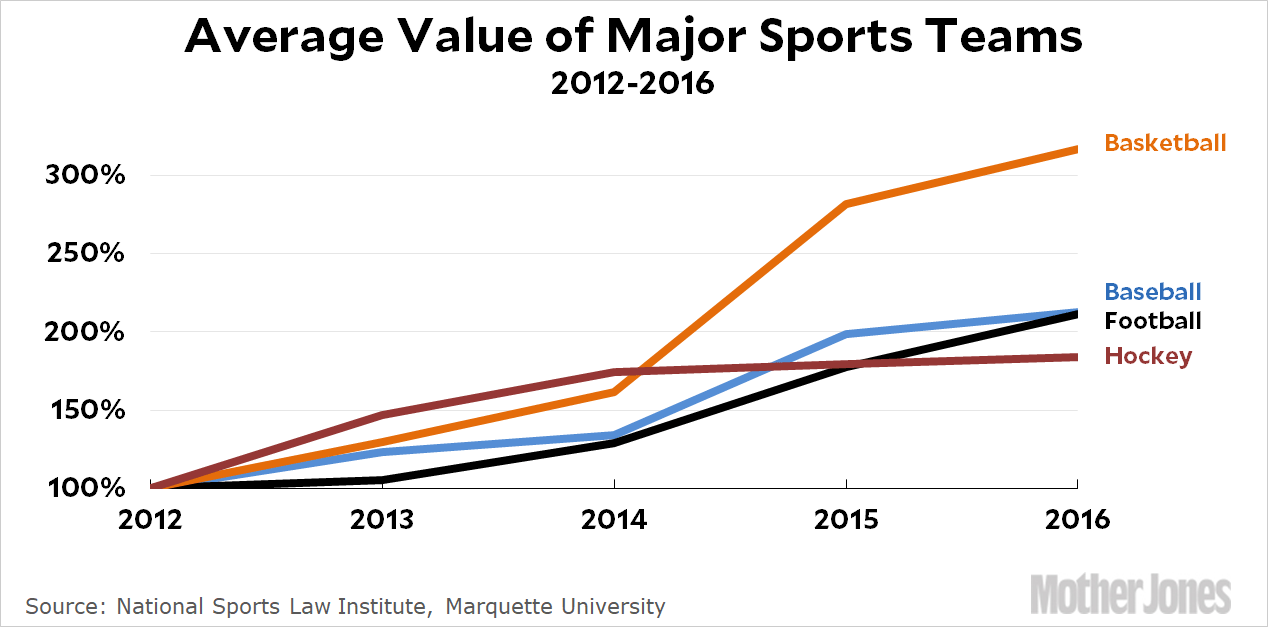
    A reasonable proxy might be the average value of a team franchise. This has issues too—small sample size, contested estimates, and the propensity of billionaires to buy teams for noneconomic reasons—but it’s still probably not bad. Any good capitalist recognizes that price signals incorporate all information about the value of a product, and that should work for sports teams too. The National Sports Law Institute at Marquette University provides estimates since 2000, but we’re mostly interested in more recent valuations. So here they are for the past five years:

    Basketball’s impressive performance is mostly due to Steve Ballmer’s astonishing $2 billion purchase of the LA Clippers in 2014 after Donald Sterling was forced out of the league following the leak of racist remarks.

    Baseball and football have roughly the same performance, with average team value more than doubling in the past five years. Hockey brings up the rear.

    If this is meaningful, it suggests that the NFL is doing fine. Team value has been rising pretty steadily, with no evident slowdown in the past couple of years. In terms of growth, they trail only the NBA, and not by that much if you discount the Ballmer outlier. Obviously this could change, and it’s plausible that inertia might keep team values high for a while even after ratings and popularity have peaked. Tentatively, though, I’d suggest the NFL hasn’t been hurt much by politics so far.

  • Graham-Cassidy Is Dead

    Alex Edelman via ZUMA

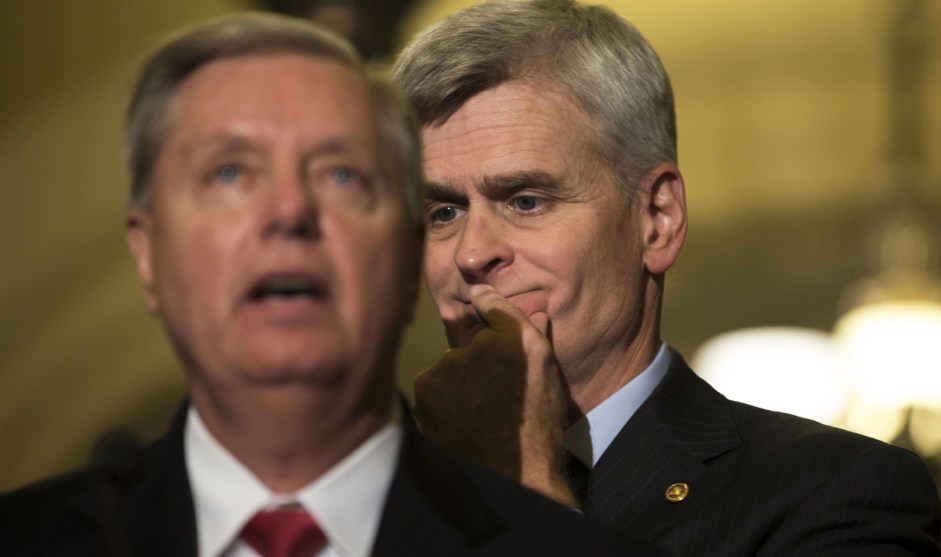
    The Graham-Cassidy health care bill is dead:

    Senate Republicans, emerging from their weekly policy lunch Tuesday, said they would not move ahead with a vote on the most recent repeal legislation, sponsored by Republican Sens. Bill Cassidy of Louisiana and Lindsey Graham of South Carolina.

    ….Graham, however, insisted the effort would be revived later. “We’re coming back at this after taxes,” he said, referring to the tax-cut effort that Republican leaders have pledged to push forward this fall. “We’ll get there,” he added. “We’re going to fulfill our promise.”

    Graham is referring to the possibility of writing reconciliation instructions into the FY18 budget that include both tax cuts and health care. With these guys I’d never say never, but it’s hard to believe that Mitch McConnell wants yet another futile fight over Obamacare heading into the midterm elections. His preference is probably to work on passing a base-friendly tax cut and leaving it at that.

    Ironically, then, it’s turned out that the biggest threat to Obamacare has never been repeal. It’s been the simple election of a Republican president who’s determined to sabotage it. Donald Trump has dithered over CSR subsidies; cut back the enrollment period; slashed the advertising and outreach budget; and—yes, really—declared that the website will be shut down every Sunday for 12 hours for “maintenance.”

    What else can he do? Shutting down the website weekly never would have occurred to me, so I think I just have to admit that Republicans are way better at creative ratfuckery than I am and leave it at that. I have no idea what they’ll come up with next. But I’m sure they’re working hard on it.

  • Lunchtime Photo

    This weatherbeaten house outside of Caherdaniel caught my eye a few days ago. This is the kind of photo where your mileage will vary about how much you like it, but it grew on me. In fact, I briefly thought about doing a series of photos of weatherbeaten Irish houses, but after shooting a half dozen or so I called it quits. They just weren’t that good. This one really was uniquely interesting.

    This picture, by the way, has been Photoshopped to within an inch of its life. I straightened it. I fixed the perspective to get the square-on look I wanted. I brightened the house itself. I eliminated an alarm system above the doorway. I added some color saturation to the foliage in front. And I used haze removal to give the sky a little bit of definition. Then, after it was all done and reduced to 2000 pixels, I sharpened it. Were these the right decisions? There are a thousand different ways you could manipulate this image, all with their own virtues. This is just the one I chose.

    I should also mention that this house is for sale! Like most of the properties around here, it’s represented by Brid Moran, auctioneer, and I’m sure she’d be happy to entertain your offer. Just click here.

  • Pork: The Pragmatic Politician’s Best Friend

    One of the weird things about writing for magazines is the lead time. Before I left for Ireland, I had just finished all the final proofing on my piece for the next issue. It’s been pretty much the only thing on my mind for the past two months.

    But today, up popped “Bring Back Pork” on my RSS feed. What? When did I write that? Oh yeah: back in May. Then it missed the next issue, and ended up in the current one. And now it’s online. I practically don’t even remember it.

    But it’s great! You should read it! It’s all about how pork barrel politics is one of those malodorous things that unfortunately seems to be necessary to well-lubricated dealmaking among homo sapiens. So we should hold our noses and let it happen as long as it stays within reasonable bounds.

    Party polarization is so far gone these days that I doubt it would make much of a difference if the current pork ban were rescinded, but it might someday. For better or worse, we’re humans, not Vulcans, and this is a case where being too virtuous can actually make things worse.

  • American Kids Will Wait 9 Minutes For a Second Marshmallow, Same As Always

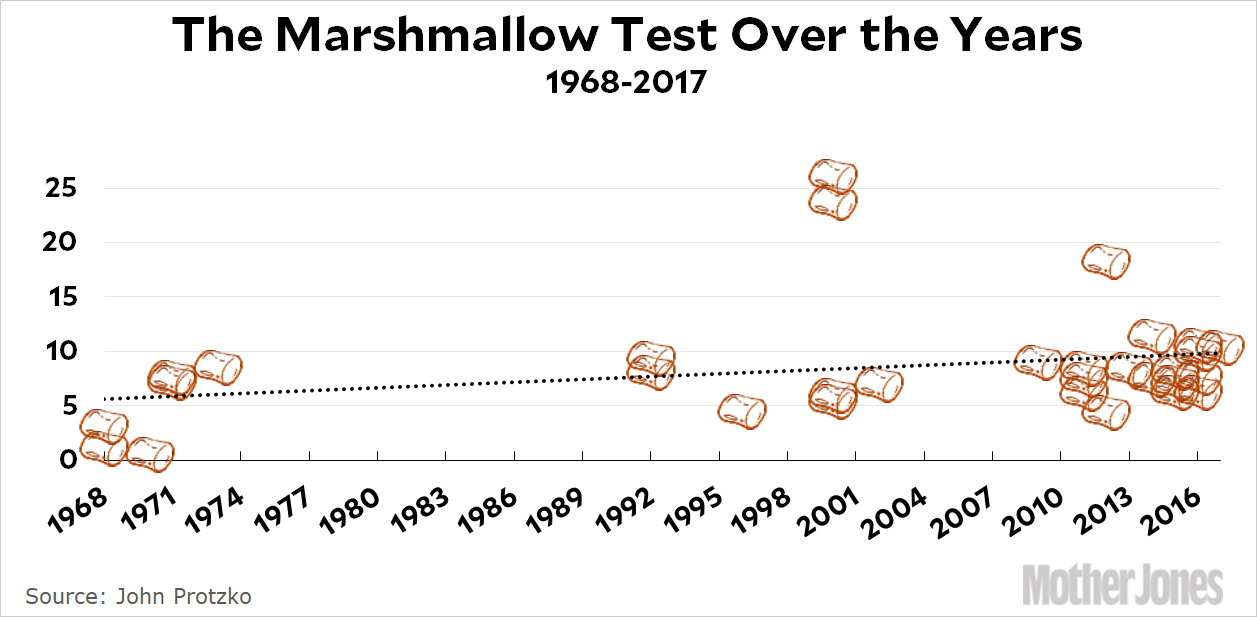
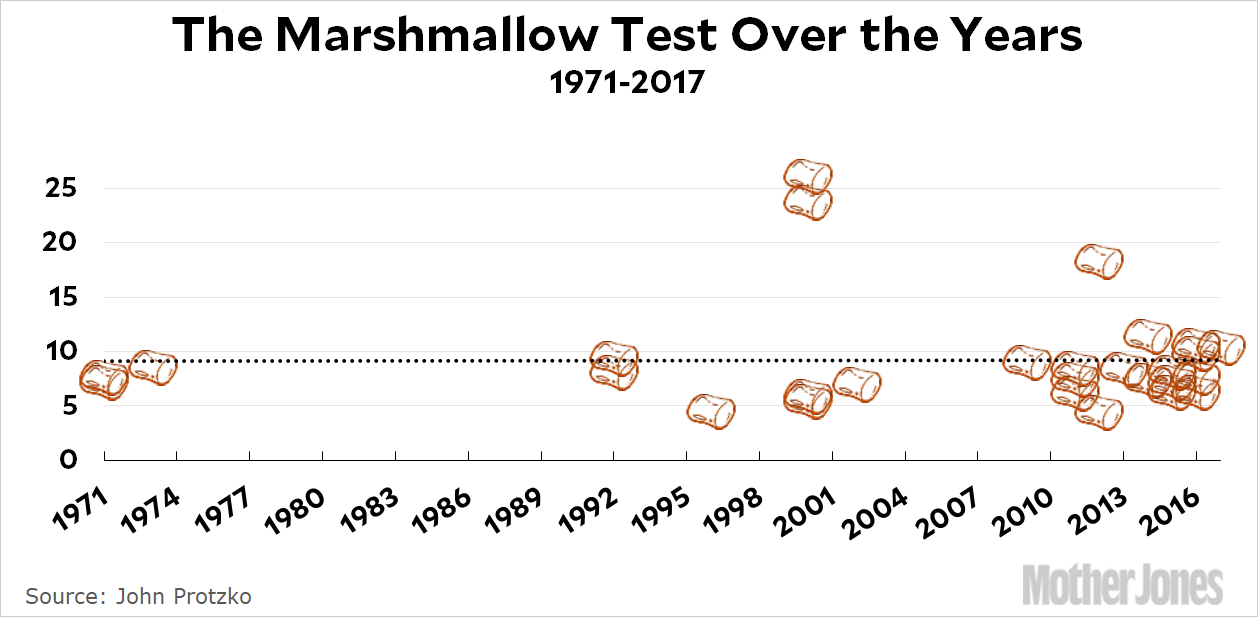
    This reminds me.¹ A few days ago a reader drew my attention to a new time-series analysis of the famous marshmallow test. This is basically a test of delayed gratification in children. They are offered the choice of one marshmallow now or two marshmallows later if they wait until the researcher returns from a break. After a few minutes of waiting, most kids cave in and eat the single marshmallow.

    Here’s the basic result:

    Kids have become more self-disciplined over the past 50 years! In my regression, which is a little cruder than Protzko’s but produces nearly the same results, the average time kids are willing to wait in order to get two marshmallows has gone up from five minutes to ten minutes. Maybe this is the result of the phase-out of leaded gasoline starting in 1975?

    Maybe, but this study has not yet been peer reviewed. When it is, someone might think to remove the first three results. Here’s what you get:

    The trend line is now dead straight. The average has been about nine minutes ever since 1971. Most likely, those first three tests weren’t done all that rigorously since the test was brand new and researchers hadn’t yet figured out all the possible cues that could screw it up.

    In any case, those three results from half a century ago are responsible for 100 percent of the increase. I think it’s safe to say that self-discipline among our nation’s youth has stayed pretty steady over the past few decades.

    ¹What reminds me, you might wonder. I dunno. Maybe writing about Donald Trump earlier this morning.²

    ²It’s morning in Ireland, anyway.

  • Will Anyone Ever Speak Up For Puerto Rico?

    Carol Guzy via ZUMA

    From Sarah Palin:

    Well, I’m sure Puerto Ricans appreciate the sentiment. But considering that their island has been almost literally demolished, and electricity will be out for months, I’ll bet they’d appreciate a concrete expression of concern even more. Like maybe heading up a huge fundraising drive. Or maybe this from our president:

    Puerto Ricans are American citizens just like the rest of us, and their home has been devastated beyond comprehension by Hurricane Maria. Tomorrow I will ask Congress to pass an emergency $10 billion bill to provide temporary housing throughout the island and to rebuild following the devastation. I expect this to have bipartisan support and to pass by the end of the week. It will take time to ramp up this effort, so in the meantime I have ordered the military to begin rescue and resupply missions as its top priority. This is what Americans expect from their government, and we won’t rest until the job is done.

    Yeah, I know. Trump doesn’t have time for this because he’s too busy stirring up outrage over the protests of black athletes. What a goddam embarrassment he is.

    Maybe it’s time for Democratic leadership to say something. I imagine they’ve been relatively quiet because they don’t want to turn this into a partisan affair, but they’ve waited long enough. If Republicans would rather waste their time on a doomed and horrible health bill instead of helping three million American citizens who have lost everything, it’s up to Chuck and Nancy to lead the charge in their place.

  • S&P: Graham-Cassidy Will Cost Half a Million Jobs

    Here is S&P’s estimate of how the Graham-Cassidy health care bill would affect the economy:

    580,000 lost jobs and $240 billion in lost economic activity by 2027, ensuring that the GDP growth remains stuck in low gear of around 2% at best in the next decade.

    So here’s the nickel summary. Graham-Cassidy is—literally—opposed by every single constituency in the health care industry. That includes doctors, nurses, hospitals, patient advocates, and pharmaceutical companies. It is wildly unpopular, polling around 20 percent approval. The Republican base isn’t clamoring for it. It would leave more than 20 million people uninsured without saving very much money. It would remove protections for pre-existing conditions. And it would cost the country 580,000 jobs, tanking the economy for the next decade.

    And yet Republicans are still trying to pass it. Can anyone explain why?


  • Passing a Tax Bill Should Be Easy. Here’s Why It Isn’t.

    Alex Edelman via ZUMA

    Here’s a headline in the Wall Street Journal today:

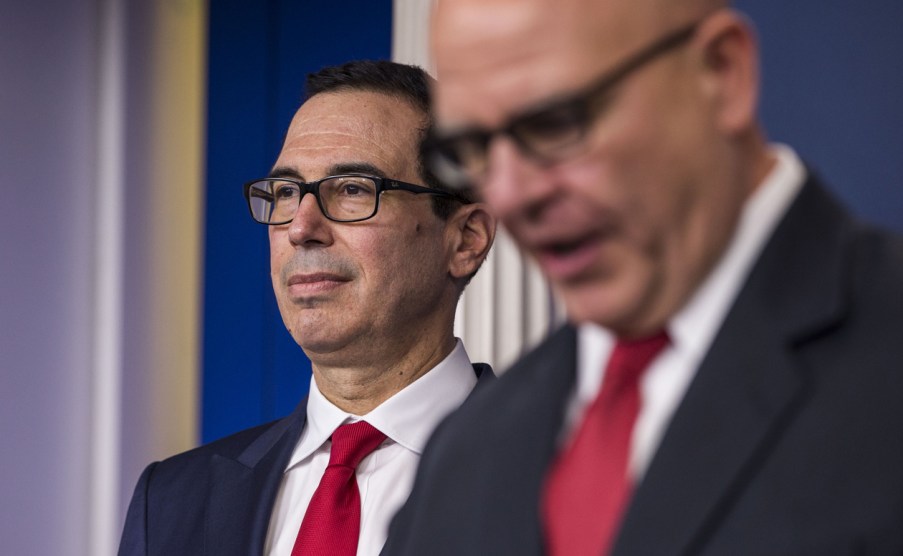
    Steven Mnuchin, a Newcomer, Tilts at Washington’s Hardest Target: The Tax Code

    I’d like to suggest a small rewrite:

    Steven Mnuchin, a Newcomer, Takes a Swing at Washington’s Easiest Meatball: The Tax Code

    Let’s get serious. Ronald Reagan passed three big tax bills and a bunch of smaller ones. George H.W. Bush passed a big tax bill. Bill Clinton passed a big tax bill. George W. Bush passed two big tax bills. Even Barack Obama sort of passed a tax bill.

    Passing a tax bill is the easiest gimme in Washington. Passing a tax bill when Republicans control every branch of government is a hanging curve that a 10-year-old could hit out of the park. The fact that Mnuchin is having trouble with a tax bill is yet another sign of the fundamental incompetence of the Trump administration and the Republicans in Congress.

    So why are people taking seriously the idea that Mnuchin is attempting a triple backflip with sprinkles on top? I think it’s because he’s persuaded everyone that Republicans are trying to pass tax reform, like the 1986 bill. That really was hard. But no one in Congress has ever been serious about tax reform. They just want to pass a huge rate cut, and they’re casting around for various ways to make the total revenue hit a little smaller. That means finding exemptions and tax credits here and there that have weak constituencies and can therefore be killed off without too much blowback. The state tax exemption, which mostly hits blue states, is a perfect example.

    But this kind of aimless target seeking is in no way tax reform. It’s just an attempt to cut rates on zillionaires and big corporations without blowing up the deficit too badly. This lack of any real bearings is one reason why putting the bill together is so hard. Every loophole in the tax code has a constituency of some kind that will fight to keep it, and Republicans aren’t willing to fight back because they’ve never had any real commitment to eliminating them in the first place. This is why they fold at the first sign of resistance. In their hearts, they just want rate cuts, not a more efficient tax code. And needless to say, Donald Trump couldn’t care less either way.

    Steve Mnuchin isn’t having a hard time because he’s a newcomer. It’s because nobody in the Republican Party has any real moorings anymore. They don’t believe in broadening the base. They don’t believe that tax cuts pay for themselves. They don’t believe that reducing top marginal rates supercharges the economy. They don’t believe that corporations are going to use foreign profits to boost US investments if they’re allowed to repatriate it at low rates. They don’t even believe that big deficits—aka “starving the beast”—will rein in spending. They want tax cuts because—well, because they’ve always wanted tax cuts. Wasn’t that Ronald Reagan’s big lesson to the party?

    And so they’re having a tough time. They’re trying to pass a tax bill, but no one really understands why they want a tax bill in the first place. That’s hardly a recipe for success.