Ron Adar/SOPA/ZUMA
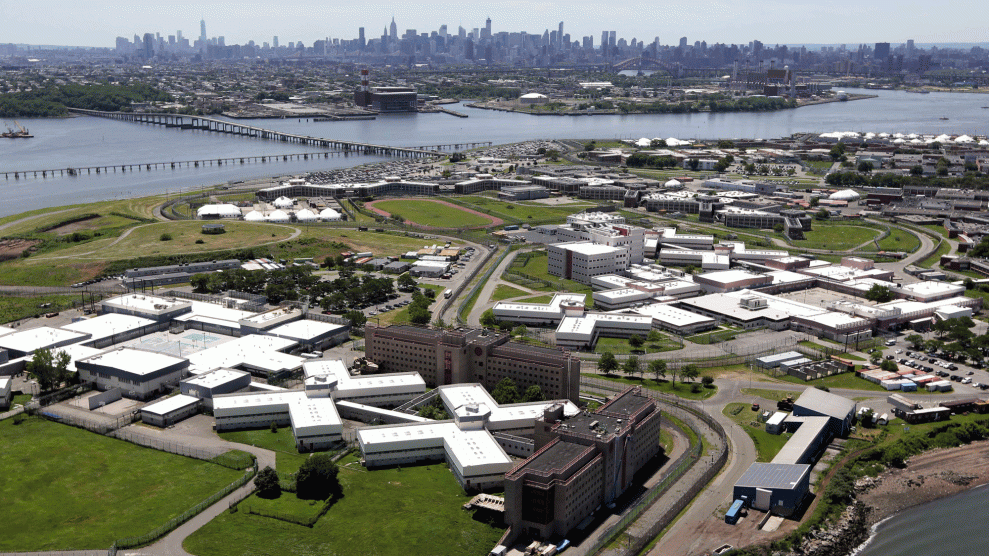
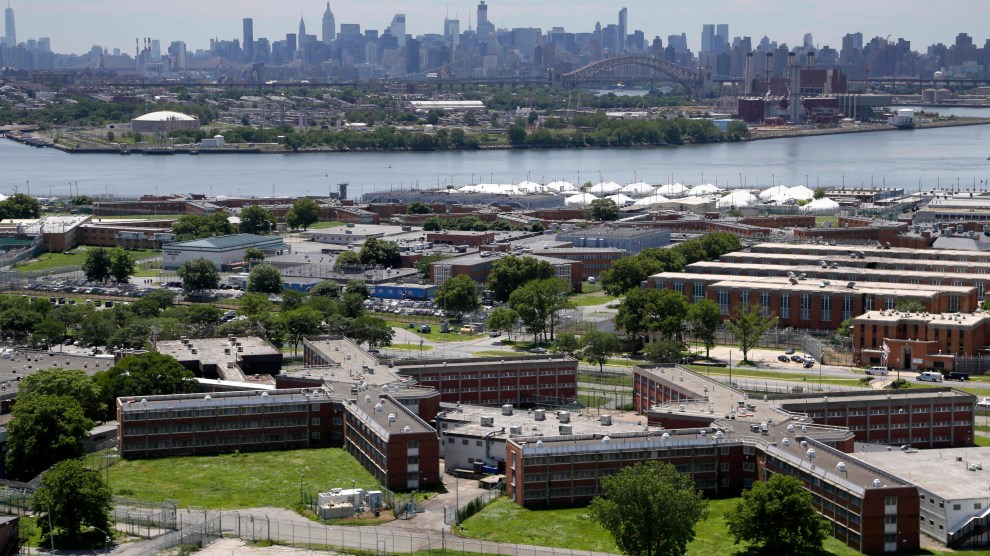
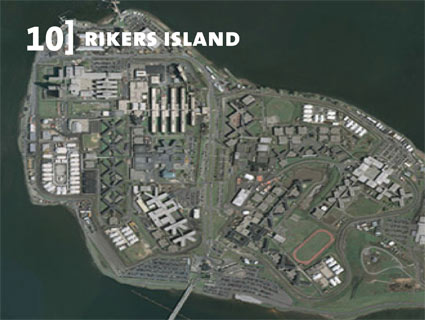
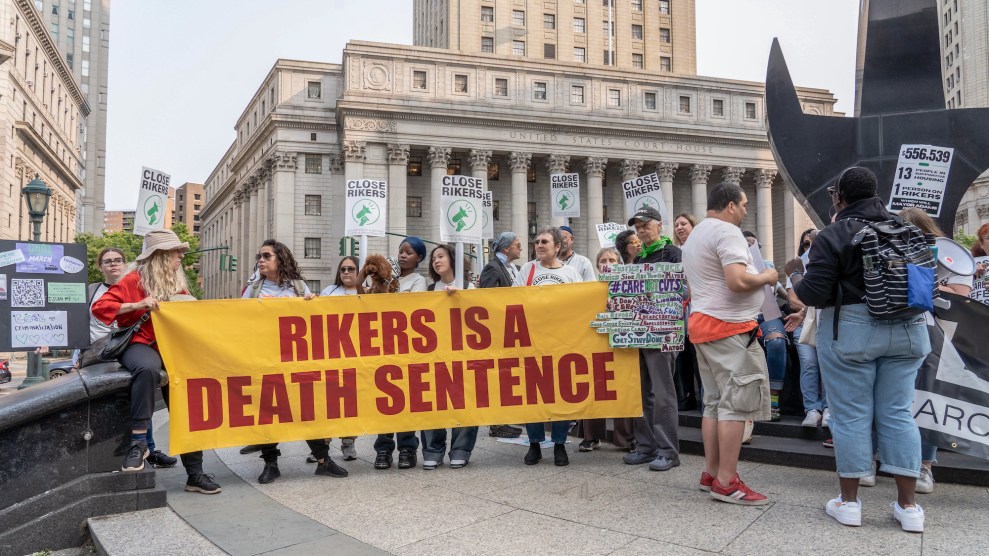
The top federal prosecutor in Manhattan became a key voice Monday in a swelling chorus calling for a federal takeover of Rikers Island—pushing the needle further towards the possibility that a judge could wrest away New York City’s control over its jails.
“After eight years of trying every tool in the toolkit,” US Attorney Damian Williams said in a statement, “we cannot wait any longer for substantial progress to materialize.” He went on to announce that his office “will seek a court-appointed receiver to address the conditions on Rikers Island.”
Williams’ statement comes at a crucial moment in the battle over the fate of the city’s jails. In the past few weeks, a battery of reports has revealed damning evidence that Rikers facilities remain in acute crisis, with little hope that Mayor Eric Adams and his administration can be trusted to make things better. In a ruling last Tuesday, a federal judge opened the door for lawyers—including Williams’ office—to make arguments in favor of appointing an outside official to take over the reins.
New York’s jails—most of which are on Rikers Island—are operated by the city’s Department of Correction. That agency’s leadership has been under federal scrutiny since 2015, when one of Williams’ predecessors, US Attorney Preet Bharara, entered into a consent decree with the city to implement sweeping jail reforms and “dismantle a decades-long culture of violence.”
But nothing seems to be working. Last Monday, an independent monitor found that violence continues to run rampant on Rikers Island, including an “extraordinarily high” number of stabbings, assaults, and deaths over the past few months. The monitor detailed alarming allegations of officers’ excessive use of force, including a recent case in which an attempt to restrain an inmate left him paralyzed from the neck down.
The dangerous incidents occurring at Rikers are beyond the scope of what’s acceptable, the monitor argued: “They are not typical, they are not expected, they are not normal.”
Just days earlier, a separate court-appointed office had documented appallingly filthy conditions in the city’s jails, noting thousands of sanitation violations that ranged from roach infestations and unattended garbage to stopped-up drains that leave fetid water pooled in sinks and showers.
Many are now arguing that New York City is ill-equipped to control the chaos and violence on Rikers Island. A federal takeover would be a serious blow for Mayor Adams, who insists that the city is best equipped to reform its own jails. It’s also a stopgap measure, a tourniquet for the worst abuses, with no way to ensure that changes persist. Once a receivership ends—and there’s no knowing how long that will be—control over the jails will return to the city. Courts have only taken this step about eight times throughout the country, and the track record shows a tough process in which receivers have had to engage in funding and legal battles when trying to make reformss to the system.
Still, the extent of deterioration on Rikers Island, where five detainees have died this year, may convince the court that the intervention is necessary. The decision ultimately comes down to federal Judge Laura Taylor Swain, a Clinton appointee who has so far been hesitant about the idea of receivership.
But after recent events, Swain said in a hearing last week, her “confidence in the commitment of city leadership…has been shaken.”