
From Ezra Klein’s online chat this afternoon:
Wokingham UK: It seems that some employers are persuading their workers to take wage cuts, maybe under the guise of long breaks from work. British Airways is pushing that agenda at the moment. Is this way of dealing with the crisis likely to play a big part over the next twelve months?
Ezra Klein: Yep. I’m hearing a lot about unpaid “furloughs,” too. Essentially, you can do two things when labor costs are too high. You can fire people are you can cut their compensation.
This is a way of cutting their compensation. And it means that the employment statistics are even worse then they look, because people are getting paid less money.
I too feel like I’m hearing way more about this kind of thing than I have during past recessions. My sister had her 401(k) matching cut. My wife’s company is making everyone take furlough days. The Virginia Symphony Orchestra took a month off. Etc. And of course, this is all on top of good old fashioned rising unemployment.
But what’s the right metric to measure this? The 401(k) stuff doesn’t show up in wage figures but furlough days should, shouldn’t they? (Although many of them just end up eating into vacation time, which helps corporate accounting but doesn’t affect official wage figures.) Obviously wage freezes show up too. On the other hand, layoffs usually hit the most recently hired workers first, who are also the lowest paid, which makes average wage figures go up even as total wages go down.
So consider this an assignment desk post. Are furloughs and benefit cuts more widespread than they have been in past recessions? What’s the best way to measure that? Surely some enterprising economist can answer this.
POSTSCRIPT: Someone also asked Ezra about Matt Taibbi’s takedown of Goldman Sachs in the latest issue of Rolling Stone. I finally got around to reading it the other day, and my verdict is simple: it was terrible. Taibbi wrote a terrific article about AIG a couple of months ago, but the Goldman piece was just phoned in, a long series of blustery assertions with essentially nothing to back up any of them. If he wants to claim that Goldman was the wizard behind the curtain of everything from the dotcom boom to last year’s oil spike, he really needs to produce some evidence for it instead of just saying so.
POSTSCRIPT 2: I just learned that Rolling Stone didn’t actually post Taibbi’s article. They only posted a set of excerpts, which is why the online version reads like a long series of blustery assertions with essentially nothing to back up any of them. Unfortunately, unless you read the intro very carefully, it’s not clear that these are merely excerpts. Instead, it just seems like a very badly written article.
So: I retract what I said for now. I still suspect that Taibbi is considerably overstating things, trying to construct a dramatic narrative by blaming Goldman for things that are actually sins of the investment community as a whole, but I won’t know for sure until I read the entire piece.
 My understanding has always been that if they could get away with it they’d basically merge every piece of software they own into a single platform and then make it next to impossible to use anything else. But they can’t.
 One of the most alarming aspects of climate change is
 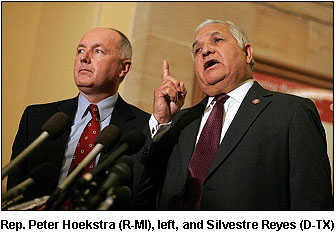 Continuing until late June? As in, two weeks ago? As in, right up to the time that Panetta testified before the committee?
 Last week I went to see Transformers: Revenge of the Fallen. I did this because the movie had gotten such mind-bogglingly bad reviews that I was curious to see if anything could really be that bad. Unfortunately, the sound system in the theater kept cutting in and out, and after about 45 minutes I finally gave up and asked for my money back. Sadly, the only thing I had learned up to that point was that I had no idea what was going on since I never saw the first Transformers movie.
 and to make a long story short, it turns out there are lots of different treatments for it but pretty much zero evidence about which one works best. However, the price tags range from about $2,000 for doing nothing (“watchful waiting”) to $50,000 for the latest whiz bang proton radiation therapy.



