• Why Healthcare Costs Keep Growing

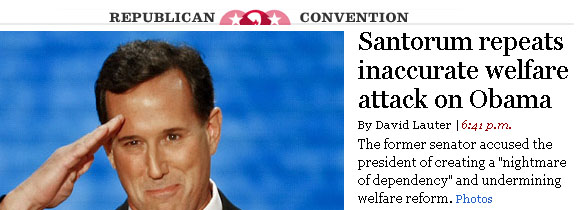
    I don’t have much of an instant reaction to this, but the chart below from Austin Frakt is pretty interesting. It shows three different estimates of what has contributed most toward the growth in healthcare spending. Two of the estimates (blue and red) are for 1940-1990 and one of them (green) is for 1960-2007. All of them lay a big part of the blame on all the shiny new technology that we’re so eager to use (and use and use and use), and the most recent estimate also lays a lot of the blame on rising incomes (as incomes go up, we actively want to spend a bigger share of our income on healthcare). The other categories get smaller, but somewhat different shares of the blame from each of the three studies.

    Austin has a few more comments at the link.

  • You Can Type This Shit, But You Sure Can’t Say It

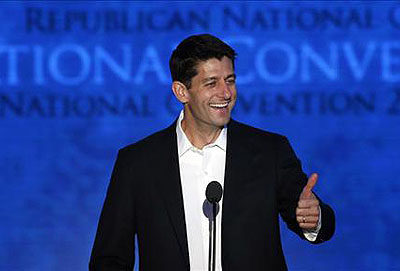
    I don’t have the energy to fact check Paul Ryan’s convention speech because, really, who cares? It’s a convention speech. It’s designed to rally the troops, not get all the fiddly details right. As Dan Amira says, “Most of the millions of people who watched the speech on television tonight do not read fact-checks.” So there’s really not much incentive to tell the truth, is there?

    (Though I will admit that his whopper about the closure of the Janesville GM plant had me looking around for something to throw at the TV set. Luckily, nothing came to hand.)

    Anyway, Dan has a fact check here, Dave Weigel has one here, and Jon Cohn has one here, if you’re feeling masochistic. I’ll just say that my favorite part of the speech was this:

    College graduates should not have to live out their 20s in their childhood bedrooms, staring up at fading Obama posters and wondering when they can move out and get going with life. Everyone who feels stuck in the Obama economy is right to focus on the here and now….None of us have to settle for the best this administration offers — a dull, adventureless journey from one entitlement to the next, a government-planned life, a country where everything is free but us.

    Damn! That’s a helluva bleak country we live in right now. On a purely professional level, I have to admire the speechwriter who came up with this. He found a way to clearly imply grim Soviet-era socialist hellhole without actually saying the word “socialist,” which would have earned him much tsk-tsking from the chattering classes. Bravo, sir! But even more, I have to admire Ryan for having the balls to deliver this kind of turgid, John Galtesque line straight. As Harrison Ford famously told George Lucas during the filming of Star Wars, “George, you can type this shit, but you sure can’t say it.” But he was wrong, and Ryan proved this once again tonight. You can type that shit, and you can say it. You just have to believe.

  • Final Apple vs. Samsung Post: There’s No Patent on Pinch-to-Zoom

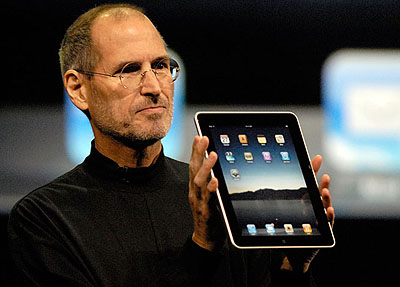
    One final (I hope!) post on the Apple vs. Samsung patent case. Here’s what I now believe about the three utility patents:

    • Patent 381 covers inertial scrolling (the faster you move your finger, the faster a list scrolls) and the “bounce,” or “rubber band” effect when you reach the end of a list.
    • Patent 163 covers tap-to-zoom (on an iPhone, if you double tap a document, that section of the document is zoomed and centered; if you tap once with two fingers, that section of the document is de-zoomed).
    • Patent 915 covers the programming interface for both the bounce effect and tap-to-zoom.

    That’s it. The pinch-to-shrink and spread-to-zoom feature of the iPhone isn’t part of the case at all. If you read through the patents you’ll find descriptions of lots of things, including pinch-to-zoom, but don’t let that throw you. What matters is what’s in the actual claims, and the only claims at issue were Claim 19 of the 381 patent (page 58), Claim 50 of the 163 patent (page 49), and Claim 8 of the 915 patent (page 51).

    As for the design patents, it’s a mistake to think that Apple won a patent for “rounded corners.” What they showed wasn’t a single infringement, but that Samsung had slavishly copied the physical design, icon design, home page design, and packaging design of the iPhone — and then left behind an email trail showing what they’d done. That’s why Samsung lost, not because their phones have rounded corners.

    For more on this, Cassidy James had an interesting piece a few days ago showing how Google designed around Apple’s patents. It turns out that it’s not all that hard.

    BOTTOM LINE: I don’t think this case is nearly as important as it’s being made out. (1) The bounce effect is a nonobvious invention, and something that really is unique to Apple. It’s also easy to design around. (2) The tap-to-zoom patent is unfortunate. I don’t think it’s unique enough to deserve protection. (3) And the design patents aren’t for individual design choices (like rounded corners), but for the totality of Apple’s design. That kind of thing has been protectable for a long time, and isn’t hard to design around.

    In the end, then, tap-to-zoom is really the only part of the case that seems overbearing, and who knows? It might get overturned on appeal. But even if it’s not, it’s just one feature. It’s not the end of the world.

  • Yokelism Still Going Strong in the Pro-Life Movement


    NRO’s Kevin Williamson reports from the floor of the Republican National Convention:

    The name “Akin” is a byword for disgust and anger, nowhere more than among pro-lifers, who have been fighting a 30-year campaign against both the perception of yokelism in the ranks and yokelism itself. There is no getting around the fact that Akin has set back both Republican Senate prospects and, more important, the pro-life movement itself.

    I imagine that the “perception of yokelism” is just a product of the liberal media. We all know how they can be, don’t we? But Williamson also tells us that actual yokelism has been a serious problem for the pro-life movement for the past three decades. Fascinating! I’m glad we got that cleared up. I imagine that fighting the perception of yokelism is hard when actual yokelism stubbornly remains the core of your movement.

  • Hold On: Maybe Apple Doesn’t Own Pinch-to-Zoom After All

    Oh hell. Steve Wildstrom says I was right the first time: the pinch-to-zoom feature wasn’t part of the Apple vs. Samsung patent case, and Apple has never asserted exclusive rights to it:

    Apple only has a limited patent (US 7,812,826) on the pinch to shrink, stretch to zoom gesture that is a core element of touch interfaces. And the ’826 patent wasn’t in dispute in the Samsung case because Apple never asserted it.

    ….I’m not sure where the idea that pinch and stretch was at stake originated. It seems to have crept into the trial coverage at some point and become part of the folklore of the case. And when the jury announced that it had found infringement by Samsung on all three utility patents, a large number of writers seemingly assumed that one of those covered the gesture.

    I guess you can put me back in the “confused” category again, because Wildstrom is right: everyone else in the world sure seems to think that pinch-to-zoom was part of the jury’s verdict in the case. He and I appear to be the only holdouts.

    My original confusion stemmed from the fact that I had actually read through the patents and the jury verdict, and they didn’t seem to match the press reports. I think there are three problems here:

    • If you read the entire 381 patent, you’ll find pinch-to-zoom described (p. 17-28 and 55-56). However, if you look at claim 19, which was the only one at issue in the court case, it describes only the “bounce” feature that you see when you scroll a list past its top or bottom. The descriptive stuff may have thrown some people off, but it doesn’t really matter. Only the claims matter.
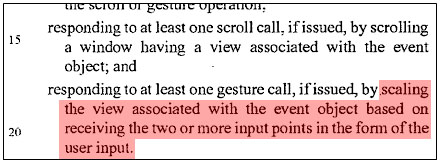
    • However, claim 8 of the 915 patent does make a reference to “scaling the view” if the operating system receives “two or more input points.” That sounds like pinch-to-zoom, but it’s not crystal clear. What’s more, this is strictly a patent on the programming interface, not on the feature itself.
    • The jury verdict merely states whether Samsung violated a particular patent claim or not. It doesn’t say specifically which feature of the patent has been upheld. So if Samsung is held to have violated a claim, that might mean that it violated everything in the claim or only one part of the claim.

    Put all of this together, and it spells confusion. I’m certainly confused, anyway, and while I honestly didn’t intend for this blog to become pinch-to-zoom central, I guess that’s what it’s become whether I like it or not. I’ll keep you updated if I learn more.

    UPDATE: In comments, Trippie offers a possible explanation of the 915 patent:

    The “scaling the view” if the operating system receives “two or more input points” part you reference could be the two-finger tap to zoom out. It’s a pretty nice feature that not a lot of people know about. In maps, just as you double tap with one finger to zoom in, you can single tap with two fingers to zoom out. I use it all the time.

    In other words, the 915 patent is about tap-to-zoom, not pinch-to-zoom. The 163 patent describes tap-to-zoom as a feature, while the 915 patent describes the programming interface that implements it. Likewise, the 381 patent describes the bounce effect as a feature, while the 915 patent describes the implementation. This sounds like the right explanation to me.

  • Lies, Damn Lies, and Mitt Romney


    As long as the Republican convention is the topic of conversation today, Dave Weigel reports that in their frenzy to make “We built it” last night’s convention theme, Republicans are still lopping out a big section of Obama’s famous “you didn’t build that” speech and splicing together the two sections in bold:

    Let me tell you something — there are a whole bunch of hardworking people out there. If you were successful, somebody along the line gave you some help. There was a great teacher somewhere in your life. Somebody helped to create this unbelievable American system that we have that allowed you to thrive. Somebody invested in roads and bridges. If you’ve got a business — you didn’t build that.

    I know, I know: politics ain’t beanbag. And past campaigns have hardly been simon pure. But there’s something more….what? Cavalier? Routine? Brazen? Don’t give a shit? What’s the right word to describe the Romney campaign’s approach here?

    This is hardly the worst campaign attack ever. Swift boating was worse. Willie Horton was worse. The endlessly twisted quotes of Al Gore were worse. But those attacks were all based on at least a kernel of truth that was twisted for political ends. That’s not admirable, but it’s hardly unusual either. But Romney’s lies aren’t even remotely defensible, and the campaign barely even bothers to try. The welfare attack works, so they’re going to use it. If you have a problem with that, go pound sand. You don’t think it’s right to just excise a big chunk of Obama’s quote in order to make him say something he didn’t? Tough titties. It’s flatly not true that any money has been taken from the Medicare trust fund? Meh. And these are the centerpieces of his campaign.

    I struggle to describe this. It’s not worse than past attacks, but it is different. In the past, you felt that maybe campaigns were at least a little bit embarrassed about this kind of thing. They’d blame it on someone else. They’d try to produce some lame defense. They’d haul out some fake white paper to give themselves cover. They’d do something. The Romney campaign just doesn’t seem to care. If it works, they use it. It’s like the campaign is being run by cyborgs.

    I dunno. What’s the right word to describe this?