• Here’s Obama’s Plan to Make College More Affordable


    President Obama laid out a new plan today to make college more affordable:

    A draft of the proposal, obtained by The New York Times and likely to cause some consternation among colleges, shows a plan to rate colleges before the 2015 school year based on measures like tuition, graduation rates, debt and earnings of graduates, and the percentage of lower-income students who attend…“All the things we’re measuring are important for students choosing a college,” a senior administration official said. “It’s important to us that colleges offer good value for their tuition dollars, and that higher education offer families a degree of security so students aren’t left with debt they can’t pay back.”

    Mr. Obama hopes that starting in 2018, the ratings would be tied to financial aid, so that students at highly rated colleges might get larger federal grants and more affordable loans. But that would require new legislation. “I think there is bipartisan support for some of these ideas, as we’ve seen in states where the governors have been working on them,” said the administration official, who spoke on condition of anonymity in order to disclose information not yet made public.

    The basic idea here is that endlessly increasing the amount of federal student aid just isn’t working anymore. At this point, all it does is encourage universities to raise their prices, which means that students are no better off than they were before. In fact, maybe worse, since they end up graduating with ever more gargantuan loans to pay off. Instead we need to reward universities that actually provide a good bang for the buck: a solid education and high graduation rates at a reasonable cost.
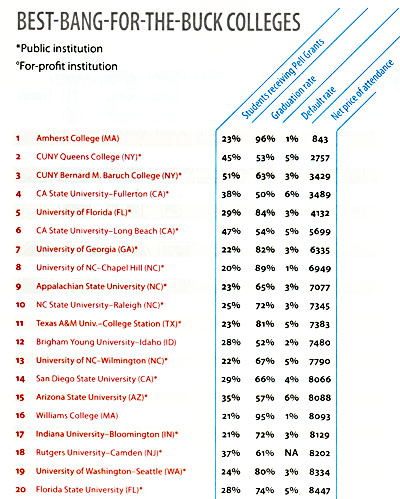
    Interestingly, this is very similar to the Washington Monthly’s “bang for the buck” ranking of colleges, which they started last year. Now, I have to confess that I’ve been sort of skeptical from the start of the Monthly’s attempt to rank colleges not on the basis of pure academic excellence but on the basis of how useful they are to society. I figured it was just spitting into the wind and would never catch on. Luckily, no one asked me and they kept plugging away at it. This year, in addition to pulling in lots of useful advertising dollars, I think they can legitimately feel like they’ve done something to advance the national conversation on higher education. The formula that the feds come up with will undoubtedly be different from the Monthly’s, but the idea will be the same. The Obama administration is basically proposing to do what they’ve been recommending for the past few years.

    If you’re curious to see how various universities rank, click here. The top 20 are on the right, and I’m happy to see my alma mater coming in at #6. Nice work, 49ers!

    Now about Obama’s belief that there’s “bipartisan support” for some of these ideas…
  • Obama Names 4 to Review Group on NSA Surveillance


    ABC News reports that President Obama has chosen a group of four people to “assess whether, in light of advancements in communications technologies, the United States employs its technical collection capabilities in a manner that optimally protects our national security and advances our foreign policy while appropriately accounting for other policy considerations, such as the risk of unauthorized disclosure and our need to maintain the public trust.” Here they are:

    A group of veteran security experts and former White House officials has been selected to conduct a full review of U.S. surveillance programs and other secret government efforts disclosed over recent months, ABC News has learned.

    The recent acting head of the CIA, Michael Morell, will be among what President Obama called a “high-level group of outside experts” scrutinizing the controversial programs. Joining Morell on the panel will be former White House officials Richard Clarke, Cass Sunstein and Peter Swire. An announcement is expected Thursday, a source with knowledge of the matter told ABC News’ Jon Karl.

    I don’t think any of us expected Glenn Greenwald or Noam Chomsky to be appointed to this review group, but it would have been nice to have at least one person on board who’s a strong voice for reining in the surveillance state. The closest we have among this group is Peter Swire, who was Bill Clinton’s privacy guy. I don’t know much about him, but here are some excerpts from an interview he gave last month about Edward Snowden’s disclosure of NSA surveillance programs:

    The telephone information database story, to me, is big news….In human history, the government has never really had a database of your location that way, and this database apparently does that….The problem with great big databases is, once they exist, people find ways to use them….Having studied the uses and abuses of the data during the anti-communist era up through the 1970s that led up to Watergate, I think that having those kinds of databases is a real problem.

    ….I think it’s really time for a re-evaluation of whether the FISA rules are the ones we should have going forward….We should have less secrecy about the legal theories. A Freedom of Information Act request suggests that we’ve actually had secret court decisions that say something is unconstitutional, but we don’t know what the court said was unconstitutional and we don’t even know its legal theories. When it comes to secret law, that shouldn’t be the way that it works in the United States.

    ….Another area that’s ripe for change [is] to have more reporting in public, especially of summary statistics, so we have a sense of how much the investigations are about some particular person or small group of people, and how much instead the investigations are really about, “Give us every e-mail that you have in this huge database.” In a world of clouds, [that] an investigation can get the whole database is really going too broad. The whole idea in the Fourth Amendment is we’re supposed to avoid general warrants. We’re supposed to have particularity for the searches.

    This is fairly mild stuff, but at least these are the right noises to make. We’ll see how hard he pushes these ideas and whether the rest of the group agrees to take them seriously.

  • Karl Rove Pretends That Conservatives Have a Health Care Plan


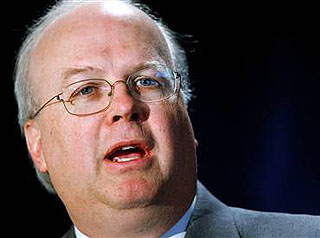
    Karl Rove stamps his feet today and insists that conservatives do too have a plan to replace Obamacare:

    The president and his liberal posse have a fundamental, philosophical objection to conservative ideas on health care. They oppose reforms that put the patient in charge rather than government, that rely on competition rather than regulation, and that strengthen market forces rather than weaken them.

    ….In the past, with a few exceptions, Republicans talked too infrequently and with insufficient passion about health-care reform, leaving the field to the Democrats. There’s a different political reality today.
    Actually, liberals have a fundamental, philosophical objection to the tired repetition of stale ideas that (a) plainly won’t work, (b) have no political support, and (c) contra Rove, inspire no genuine passion among Republicans other than as a way of pretending that they have a health care plan.

    Rove’s “plan” would blow a huge hole in the deficit; wouldn’t reduce costs; and quite likely would decimate the current employer-based system without covering any of the people with pre-existing conditions who are tossed out on their asses. And the worst part of it is that Rove knows all this perfectly well. He just doesn’t care. He needs words on a page, so he’s put some words on a page.

    In any case, if you want more than just a peevish rant from someone (i.e., me) who’s too tired to bother going through Rove’s collection of gimmicks and evasions point by point, we’ve got you covered. Aaron Carroll has the detailed version here. Paul Krugman has the short version here. Enjoy.

  • The Great Bubble Era Was Caused by Financial Deregulation, Not Easy Money


    Paul Krugman has an interesting post up today asking why we’ve had so many bubbles over the past few decades:

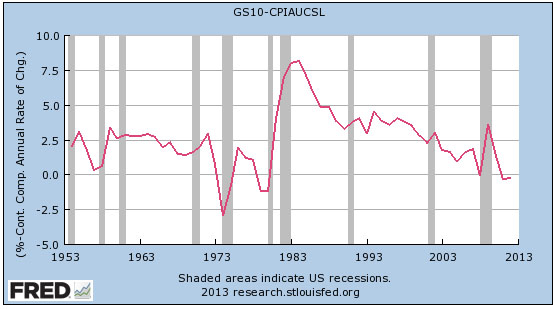
    The answer you hear from a lot of people is that it’s all caused by excessively easy money. But let’s think about the longer-term history for a bit. Here’s long-term U.S. interest rates since the early 1950s.

    What follows is a chart showing that 10-year treasury maturities went up from 1950-80 and then went down from 1980-2013. But it was pretty symmetrical: rates didn’t fall below their 50s/60s level until the mid-aughts. Historically speaking, the two eras were about the same, so easy money doesn’t seem like much of an explanation.

    But isn’t it actually even more striking than that? Shouldn’t we look at real interest rates?1 Here’s a rough look at real 10-year maturities since 1950:

    Real long-term interest rates during the past 30 years have been consistently higher than in the 50s and 60s. It wasn’t until 2008 that they fell noticeably below their 1950-1970 average. And yet, as Krugman says:

    The whole era since around 1985 has been one of successive bubbles. There was a huge commercial real estate bubble (pdf) in the 80s, closely tied up with the S&L crisis; a bubble in capital flows to Asia in the mid 90s; the dotcom bubble; the housing bubble; and now, it seems, the BRIC bubble. There was nothing comparable in the 50s and 60s.

    And don’t forget the Nordic property bubble of the early 90s. That’s a lot of bubbles. So if it wasn’t easy money, what was it? Krugman again:

    So what was different? The answer seems obvious: financial deregulation, including capital account liberalization. Banks were set free — and went wild, again and again.

    I’ll buy that up to a point. It’s not as if financial regulation can prevent bubbles entirely, but it can tame them. For the past 30 years, they’ve been running wild because we haven’t done anything to stop them. Maybe we should start.

    1This is a real question. I’m actually not sure. I’m posting this partly in the hopes that if I’m wrong, someone will explain why.

  • Ubiquitous Surveillance, Police Edition


    In the city of Rialto, about 50 miles from where I live, every police officer is now equipped with full-time videotape capability. The New York Times reports:

    It is a warning that is transforming many encounters between residents and police in this sunbaked Southern California city: “You’re being videotaped.”….In the first year after the cameras were introduced here in February 2012, the number of complaints filed against officers fell by 88 percent compared with the previous 12 months. Use of force by officers fell by almost 60 percent over the same period.

    ….“When you put a camera on a police officer, they tend to behave a little better, follow the rules a little better,” Chief Farrar said. “And if a citizen knows the officer is wearing a camera, chances are the citizen will behave a little better.”

    ….William J. Bratton, who has led the police departments in New York and Los Angeles, said that if he were still a police chief, he would want cameras on his officers. “So much of what goes on in the field is ‘he-said-she-said,’ and the camera offers an objective perspective,” Mr. Bratton said. “Officers not familiar with the technology may see it as something harmful. But the irony is, officers actually tend to benefit. Very often, the officer’s version of events is the accurate version.”

    I imagine that in the fairly near future, convictions will be all but impossible without videotape evidence. Likewise, complaints of police brutality will become almost prima facia credible if videotape of the incident mysteriously goes “missing.” All in all, this is probably a good thing. But I wonder if courts will eventually rule that all police videotape, like all 911 calls, are public record?

  • Court Slams NSA for “Third Instance in Less Than Three Years” of Substantial Misrepresentation


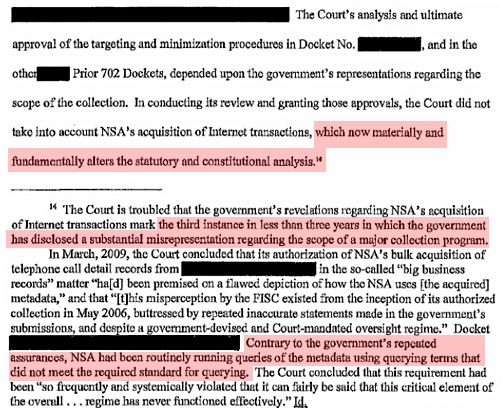
    I’m still plowing my way through the declassified FISA court ruling from 2011 that found one of the NSA’s surveillance programs unconstitutional. However, the gist of the opinion is that NSA had misled the court about whether U.S. persons could be caught up in the program’s dragnet, and the court was not happy about it. According to a footnote, it represented “the third instance in less than three years” in which a program had been misrepresented to the court. One of the other two instances is described below. The third one is redacted.

    President Obama says he’s eager to have a national conversation about the NSA’s surveillance programs. I assume, then, that he’ll order the declassification of the other two FISA court opinions which found “substantial misrepresentations” by the NSA.

  • Chart of the Day: We’re Now Well Into Our Second Decade of Stagnant Incomes


    The New York Times reports that household income is still in the doldrums:

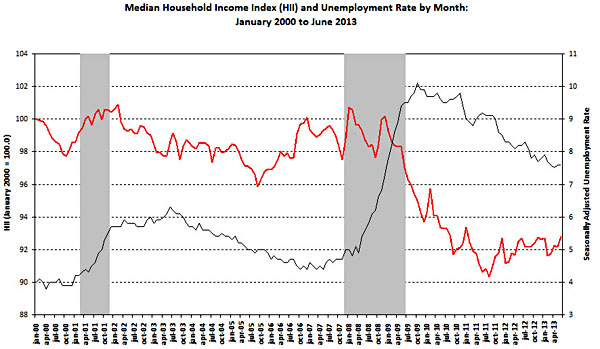
    Median household income has begun to recover over the last two years, but households still have not come close to regaining the purchasing power they had before the financial crisis began, a new study says. The study, issued on Wednesday by two former Census Bureau officials, suggests why many people remain glum even though the economy is growing and unemployment has declined.

    In fact, it’s worse than that. The study in question comes from Sentier Research, which calculates a Household Income Index going back to January 2000. As you can see below, incomes were pretty stagnant during the entire aughts, which means that median household income today isn’t just below the level of 2007, it’s below the level of 2000. If you add in health benefits, the picture is brighter, but only modestly: Total household compensation today is still below its level in 2000 even when you count healthcare premiums. We are now well into our second decade of flat incomes for the non-rich.

  • Declassified Court Document Describes Unconstitutional NSA Surveillance Program


    In 2011, the FISA court ruled that an NSA surveillance program was unconstitutional. The court’s opinion has now been declassified, and the Washington Post describes the program:

    Under the program, the NSA diverted large volumes of international data passing through fiber-optic cables in the United States into a repository where the material could be stored temporarily for processing and for the selection of foreign communications, rather than domestic ones. But in practice the NSA was unable to filter out the communications between Americans.

    A month after the FISA court learned of the program in 2011 and ruled it unconstitutional, the NSA revised its collection procedures to segregate the transactions most likely to contain the communications of Americans. In 2012, the agency also purged the domestic communications that it had collected.

    More later after I’ve had a chance to read the opinion itself.

  • Maureen Dowd Twists Yet Another Quote Just Because She Feels Like It


    Maureen Dowd has been an embarrassment for a long time. Today, though, she raised her personal bar even further. Here’s a quote in today’s column from an interview she conducted with Chirlane McCray, wife of New York City mayoral candidate Bill de Blasio. McCray is talking about one of de Blasio’s rivals, Christine Quinn:

    She’s not the kind of person I feel I can go up to and talk to about issues like taking care of children at a young age and paid sick leave.

    Since Quinn is openly gay, this seemed like an obviously insensitive slam, an interpretation that Dowd encouraged by spending the next several paragraphs talking about McCray’s and Quinn’s sexual orientation. But here’s what McCray actually said after being specifically asked why Quinn wasn’t catching on among women:

    Well, I am a woman, and she is not speaking to the issues I care about, and I think a lot of women feel the same way. I don’t see her speaking to the concerns of women who have to take care of children at a young age or send them to school and after school, paid sick days, workplace; she is not speaking to any of those issues. What can I say? And she’s not accessible, she’s not the kind of person that, I feel, that you can go up and talk to and have a conversation with about those things. And I suspect that other women feel the same thing I’m feeling.

    Dowd seems to think she’s the cleverest writer on the planet, but this doesn’t give her a license to twist quotes and elide context to serve her own purposes. Enough is enough. This isn’t the first time Dowd has done this, and the Times needs to put a stop to it.

  • On Believing 2 Things at Once About Edward Snowden


    Jeffrey Toobin is not a fan of Edward Snowden:

    The assassinations of Martin Luther King, Jr., and Robert F. Kennedy led directly to the passage of a historic law, the Gun Control Act of 1968. Does that change your view of the assassinations? Should we be grateful for the deaths of these two men?

    Of course not. That’s lunatic logic. But the same reasoning is now being applied to the actions of Edward Snowden. Yes, the thinking goes, Snowden may have violated the law, but the outcome has been so worthwhile. According to Glenn Greenwald, the journalist who was one of the primary vehicles for Snowden’s disclosures, Snowden “is very pleased with the debate that is arising in many countries around the world on Internet privacy and U.S. spying. It is exactly the debate he wanted to inform.”

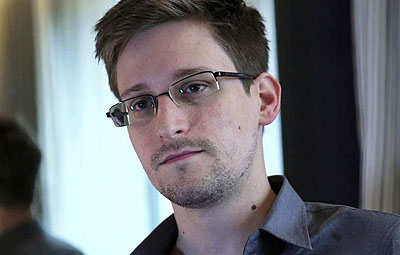
    The rest of Toobin’s piece is surprisingly unpersuasive, but the question he asks above is a worthwhile one. Leaving aside the obvious provocation of his assassination analogy, he’s asking whether any of us think that we should actively approve of what Snowden did just because we like the results. And if we do, does that mean we think that anyone working in the intelligence community who dislikes America’s surveillance policies should feel free to disclose whatever information they feel like?

    For anyone who’s not already a full-blown Snowden hater or defender, this may seem like a troubling question. But it shouldn’t be. You might not know this if you subsist on a diet of cable news shouting matches, but it really is possible to believe two things at once:

    • Intelligence agencies are a necessary fact of life and governments have a legitimate interest in keeping their operations secret. Anyone who works in the intelligence community knows this, and knows that security breaches are a serious business that will lead to prosecution.
    • Americans have recently learned a lot about how pervasive our surveillance operations are, and it’s laughable to think we would have learned any of it if Snowden hadn’t done what he did. In the end, even if he’s made some mistakes along the way, he’s done a public service.

    I believe both these things. I believe that 30-year-old contractors shouldn’t be the ones who decide which secrets to keep and which ones to reveal. I also believe that, overall, Snowden has been fairly careful about what he’s disclosed and has prompted a valuable public conversation.

    So how do you prevent an epidemic of Snowdens while still allowing the salubrious sunlight of the occasional Snowden? The answer to the former is that intelligence workers need to be afraid of prosecution if they reveal classified documents. It can’t be a casual act, but a deeply considered one that’s worth going to prison for. The answer to the latter is that prosecution needs to be judicious. There’s no question in my mind that Snowden should be prosecuted for what he did. That’s the price of his actions. But he shouldn’t be facing a lifetime in a Supermax cell. The charge against him shouldn’t be espionage, it should be misappropriation of government property or something similar. Something that’s likely to net him a year or three in a medium-security penitentiary.

    In other words, I don’t think Toobin’s implied question is as hard as he thinks it is, especially since the rest of his piece is remarkably unconvincing about the possible damage done by Snowden. The bottom line is that I’d like to see Snowden come back to America and make a public case by standing for trial. It would be a sign of how strongly he believes that he was right to do what he did. But I can hardly expect that under the current circumstances. The wild overreaction of my own government to the notion of allowing the public even the slightest knowledge of what it’s up to has made it impossible.