• Rubio: Pass Immigration Reform or Obama the Tyrant Will Do Even Worse

    Greg Sargent draws my attention to the latest from Sen. Marco Rubio:

    I believe that this president will be tempted, if nothing happens in Congress, he will be tempted to issue an executive order, like he did for the Dream Act kids a year ago, where he basically legalizes 11 million people by the sign of a pen. Now, we won’t get any E-Verify, we won’t get any border security, but he will legalize them.

    As Sargent mentions, Rubio’s latest effort isn’t likely to cut much ice with opponents of immigration reform. Rather, it’s interesting for what it says about how Rubio views his tea party base. Basically, he’s given up on reasoning with them. Instead, he figures the only way to win them over is to appeal to their paranoid belief in Obama the tyrant, the man who’s unilaterally ruining America by running roughshod over Congress with his dictatorial executive order powers. Reason might not work, but perhaps they hate and fear Obama even more than 11 million undocumented immigrants.

    And who would know better than Rubio? After all he helped build this base.

  • Kevin Drum Smackdown Watch: Judge Scheindlin Didn’t Care If Stop-and-Frisk Reduced Crime


    “Wow this is a terrible @kdrum post,” says Adam Serwer about my comment on yesterday’s court ruling putting a halt to New York City’s stop-and-frisk program. When Adam speaks, I listen! Here’s the offending bit:

    If stop-and-frisk really is the reason crime has dropped so dramatically in the Bronx, then a judge would be justified in weighing this against the legal issues on the other side. Even decisions based on fundamental constitutional rights aren’t rendered in a vacuum.

    Adam correctly points out that Judge Scheindlin didn’t consider the effectiveness of stop-and-frisk in her decision, so in this case, and with this judge, it wouldn’t have mattered if the policy reduced crime. Point taken.

    What happened here is a common blogging sin: I used a specific case to make a general point without making it clear that I had switched gears. In general, even fundamental constitutional rights are never absolute. There are different shades of violation and there are competing interests, and judges routinely take those into account. That was the point I wanted to make.

    Now, even in this case, the judge’s ruling was hardly absolute. She ruled that New York’s policy was so extreme that it amounted to effective racial profiling, and that was flatly unconstitutional regardless of whether it reduced crime. But a modified program would be OK, and it’s possible that the degree of modification might depend on how effective various versions of stop-and-frisk are. If not for this judge, then quite possibly for another one. For that reason—not to mention the effect it should have on policy in the first place—the actual reason for New York’s crime decline really does matter. Apologies for the confusion.

  • Quote of the Day: “The Reality Is All About High Prices”


    If there are lots of buyers of a service in a particular region but you’re the only supplier, you have a lot of leverage to charge high prices. Conversely, if there are lots of suppliers but you’re the only buyer, you have a lot of leverage to bargain prices down. In the healthcare world, hospitals are the suppliers and insurance companies are the buyers. So if there are only one or two hospitals in your region, then prices are likely to be high. Thus this comment about the trend toward consolidation of hospital chains:

    “The rhetoric is all about efficiency,” said Karen Ignagni, the chief executive of America’s Health Insurance Plans, a trade group that represents insurers. “The reality is all about higher prices.”

    Ignagni obviously has a dog in this fight, but she’s basically right. A 500-hospital chain might be more efficient than a 100-hospital chain. But it’s definitely able to charge higher prices.

  • Did Stop-and-Frisk Reduce Crime in New York City?


    Jack Dunphy, a pseudonymous LAPD police officer, writes today about a judge’s decision to halt New York City’s “stop and frisk” program:

    Today’s Fox Butterfield Award goes to the New York Times, whose story on the ruling includes this: “These stop-and-frisk episodes, which soared in number over the last decade as crime continued to decline . . .”

    I do not endorse, nor should any police officer endorse, extra-constitutional means to achieve law-enforcement ends, no matter how noble. But in the Bronx, a week ago Sunday, an NYPD officer shot and killed 14-year-old Shaaliver Douse as he, Douse, was attempting to shoot some rival gang member. Would it not be preferable that the police had stopped and frisked Douse before his crime than shot him after?

    ….Liberals, especially those who would never dare set foot in the Bronx, can rejoice at Judge Scheindlin’s ruling, then watch the bodies begin to pile up.

    Dunphy obviously thinks the Times is being ridiculous: Crime is going down because of stop-and-frisk, so it takes some serious chutzpah to suggest that this is a good reason to end it. It’s similar to liberal complaints about the Supreme Court’s decision gutting the Voting Rights Act: How can you cite reduced voting discrimination as a reason that we no longer need the VRA when it’s the VRA itself that was responsible for reduced voting discrimination?

    Now, as it happens, Judge Scheindlin didn’t ban stop-and-frisk. Pretty much every police department in the country does it in one form or another. She merely concluded that New York City had gone too far and turned it into de facto racial profiling. But Dunphy’s comment illustrates why evidence is so important here, and in particular why I think the lead-crime link is worth further study even if most environmental lead is already gone and there’s little chance of getting funding to clean up the rest.

    If stop-and-frisk really is the reason crime has dropped so dramatically in the Bronx, then a judge would be justified in weighing this against the legal issues on the other side. Even decisions based on fundamental constitutional rights aren’t rendered in a vacuum. But if reductions in atmospheric lead are the primary reason for the drop in crime, then stop-and-frisk really has no justification at all, and the judge’s decision becomes an easy one. That’s why it’s worth getting a more definitive answer about this. Other cities have seen dramatic crime drops without expanding their stop-and-frisk programs as aggressively as New York, and it would sure be worthwhile to find out how and why that happened.

  • Texas AG: We Don’t Hate Blacks, Only Black Democrats


    Ever since the Voting Rights Act was passed in 1965, Texas has been required to preclear any changes to its voting laws to ensure that they don’t discriminate against blacks or other ethnic minorities. That ended in June when the Supreme Court voided the preclearance formula of the VRA, so Eric Holder has gone to court to ask that Texas be required once again to get preclearance. The current leaders of Texas, naturally, object. So in the face of mountains of evidence of discriminatory practices lasting all the way to the present day, what are their arguments?

    Aside from some technical issues, there are two. And they’re great! The first, according to Texas attorney general Greg Abbott, is that, sure, Texas has tried to discriminate as recently as 2011, but their efforts were overturned by a court. So that means there are no current violations, and thus no reason to grant any kind of “equitable relief.” Second, there was never any racial intent to begin with:

    DOJ’s accusations of racial discrimination are baseless. In 2011, both houses of the Texas Legislature were controlled by large Republican majorities, and their redistricting decisions were designed to increase the Republican Party’s electoral prospects at the expense of the Democrats….The redistricting decisions of which DOJ complains were motivated by partisan rather than racial considerations, and the plaintiffs and DOJ have zero evidence to prove the contrary.

    There’s much more where that came from, including pages and pages of detailed defenses of various districting decisions and how they hurt white Democrats too. Will this argument pass judicial muster? You never know. The Supreme Court has indeed taken a pretty casual attitude recently toward voting laws in which states argue that blacks are just a kind of collateral damage. Mainly, though, Abbott’s brief is notable for the gusto he brings to his defense of gerrymandering. As Jon Fasman notes, “Rarely does one see political gamesmanship admitted so openly, and I have to admit it’s kind of refreshing to hear a politician decline to even pay lip-service to fairness. Mr Abbott seems to think that the VRA allows him to abrogate minority voting rights as long as he does so for partisan rather than overtly, provably racial reasons.”

    Abbott’s arguments are pretty strained, as Fasman notes. Whether a court will strain to accept them is anyone’s guess. They sure seem to be in a pretty straining mood these days, though.

  • California Bullet Train Update


    Just thought you might like to know the latest:

    In early 2012, state officials said construction would begin that year. Early this year, officials adjusted their sights, saying they would begin building the massive new transportation network in the spring, later announcing the groundbreaking would take place in July.

    Now, it appears that serious construction may not begin this year, and could be delayed into 2014….”It is not as shovel-ready as they thought it was,” said Bill Ibbs, a civil engineering professor at UC Berkeley who consults on major construction projects.

    For the record, this is just for a single 29-mile segment from Fresno to….29 miles north of Fresno. It’s pretty much the easiest section of track on the entire route. I can’t wait to see what happens when they start trying to build some of the hard stuff.

  • On Friday, the President Treated Us Like 5-Year-Olds

    Christy Bowe/ZumaPress


    This is ancient news by blog standards, but I still feel the need to comment on President Obama’s singularly disingenuous remarks on Friday about Edward Snowden and the surveillance state. The fact that Obama doesn’t consider Snowden a patriot comes as no surprise. Presidents don’t generally approve of people who release large volumes of national secrets. But this was really too much:

    Back in May…I called for a review of our surveillance programs….My preference — and I think the American people’s preference — would have been for a lawful, orderly examination of these laws, a thoughtful fact-based debate that would then lead us to a better place. Because I never made claims that all the surveillance technologies that have developed since the time some of these laws had been put in place somehow didn’t require potentially some additional reforms. That’s exactly what I called for.

    ….There’s no doubt that Mr. Snowden’s leaks triggered a much more rapid and passionate response than would have been the case if I had simply appointed this review board to go through, and I had sat down with Congress and we had worked this thing through. It would have been less exciting. It would not have generated as much press. I actually think we would have gotten to the same place, and we would have done so without putting at risk our national security and some very vital ways that we are able to get intelligence that we need to secure the country.

    Please. Only a five-year-old would read that May speech and believe that Obama had any intention of either releasing significant information about our surveillance state or proposing any kind of serious reforms. That speech was mostly about drones—because, tellingly, Obama had been forced into it by recent news stories. In a 7,000-word speech, he devoted approximately three sentences to surveillance. It was little more than an afterthought, and his only concrete proposal, after four years in office, was a laughably buck-passing decision to set up a commission and then hope everyone would forget about the whole thing. Roger McShane called Obama’s Friday press conference “surreal, in a Kafkaesque sort of way,” but it was worse than that. It was a president treating us all like idiots. Does anyone seriously believe that even the very moderate reforms Obama has proposed so far would have seen the light of day if he hadn’t been forced into it?

    On a related note, Andrew Liepman, a former career CIA officer, says the NSA’s surveillance programs are both useful and highly constrained:

    Let me break this to you gently. The government is not interested in your conversations with your aunt, unless, of course, she is a key terrorist leader. More than 100 billion emails were sent every day last year—100 billion, every day. In that vast mass of data lurk a few bits that are of urgent interest and vast terabytes of tedium that are not. Unfortunately, the metadata (the phone numbers, length of contact, and so forth, but not the content of the conversations) that sketch the contours of a call to your family member may fall into the same enormous bucket of information that includes information on the next terrorist threat. As Jeremy Bash, the former chief of staff of the CIA, memorably put it, “If you’re looking for a needle in the haystack, you need a haystack.”

    Unfortunately, during the Snowden affair, many news outlets have spent more time examining ways the government could abuse the information it has access to while giving scant mention to the lengths to which the intelligence community goes to protect privacy. We have spent enormous amounts of time and effort figuring out how to disaggregate the important specks from the overwhelming bulk of irrelevant data.

    This misses the point entirely. Speaking for myself, I believe Liepman. There are probably abuses here and there, but basically the intelligence community really isn’t interested in you unless you’re a likely terrorist.

    But someday there will be another attack. Maybe something homegrown. And Liepman won’t be in charge. Some future administration will be in power at the time, and in the midst of national panic they might decide, in secret, to vastly expand the scope of how we make use of all this surveillance and who we decide to spy on domestically. That happened as recently as 2001, so it’s not as though it’s some kind of paranoid leap to think it could happen again if the capabilities exist. This is why I’d prefer to keep our capabilities constrained, and it’s why I’d like rules set in public by Congress and the courts. That’s no guarantee that we won’t go crazy, but at least it forces us to take some time and deliberate over things. It’s a thin reed, but at least it’s a reed. Right now we’ve got nothing to rely on except the political courage of a single person we don’t even know yet, and that’s worth almost nothing at all.

  • We Need Better Painkillers


    One of the interesting things I’ve learned from various injuries and painful medical procedures over the past couple of decades is that my body apparently doesn’t react at all to Vicodin and related painkillers. Every time I’ve broken something or had a minor surgical procedure the doctor always writes me a scrip for some kind of opioid painkiller, and I always fill the prescription and give it a try. This time I had some Vicodin still left over and unexpired from my last little accident, so I took one last night. No dice. If anything, I think it might have amplified the pain a little. Plain old Tylenol works better, though even that barely has any effect.

    I wonder how common this is? It’s kind of a drag that there doesn’t seem to be any non-exotic way for me to relieve pain. I guess I can always try the supposed healing effects of having  a cat sit on my elbow and purr at it.

  • Personal Injury Report


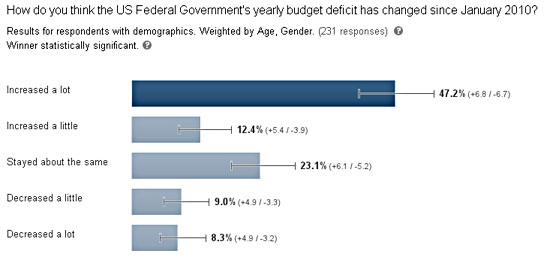
    So I had an interesting morning. I went out frisbee golfing and I was doing great. I birdied #4 for the first time ever, and then threw a couple of perfect birdies on #5 and #6. What a great start! Then I took a step back to make room for my partner to throw, stepped on a rock, twisted my right ankle, and came crashing down on my left elbow. Seven X-rays later I learned that I had a bone chip in my ankle and a small fracture in my elbow. I can’t use crutches to get around because my left arm is in a splint and a sling, and a wheelchair is no good because my house has steps and stairs all over the place. For now I’m hopping around on one foot with the aid of a cane and typing this blog post one-handed.

    I think it’s safe to say that blogging will be a little lighter than usual for a while. On the bright side, at least it’s August, when nothing interesting happens anyway.