
• Stephen Kim Agrees to Plea Deal in North Korea Leak Case


    Yesterday I wondered whether the infamous “Friday afternoon news dump” was overblown. Put simply, does releasing embarrassing stuff on Friday really reduce the amount of coverage it gets? I’m skeptical.

    Today, bmaz says the news dump is alive and well. Stephen Jin-Woo Kim, who was fingered last year as the guy who leaked North Korean intel to a reporter, agreed to a plea deal this afternoon:

    As you may recall, this is the infamous case where the Obama/Holder DOJ was caught classifying a journalist, James Rosen of Fox News, as an “aider and abettor” of espionage….The fully justifiable uproar over the Rosen treatment by DOJ eventually led to “new guidelines” being issued by the DOJ. The new guidelines are certainly a half step in the right direction, but wholly unsatisfactory for the breadth and scope of the current Administration’s attack on the American free press.

    But now the case undergirding the discussion in the Stephen Kim case will be shut down, and the questions that could play out in an actual trial quashed. All nice and tidy!

    You can read more about it here. But I’m not sure this says much about the Friday news dump. I don’t think anyone really expected this case to go to trial, given the fact that Kim basically confessed, and I doubt that today’s announcement would have gotten a lot of attention no matter when it had happened. It’s the kind of thing that bmaz and I are interested in, but for most people it’s just a routine follow-up to a story they barely even heard about in the first place.

    Plus the news dump didn’t work! This story isn’t getting banner headlines or anything, but right now it’s on the front page of the New York Times, the Washington Post, Fox News Politics, Politico, and USA Today. On the wire service side, both AP and Reuters have moved pieces about the plea deal. That’s about as much attention as something like this was ever likely to get.
  • In Rare Break With Tradition, Congress Might Actually Do Something Constructive Soon


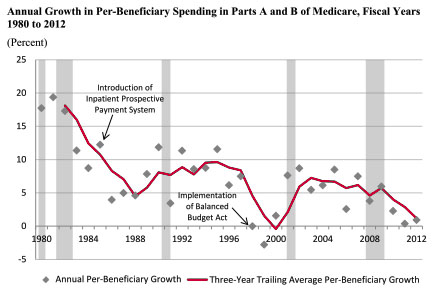
    In 1997, in an effort to rein in rising Medicare spending, Congress created a formula for paying doctors called the “sustainable growth rate” (SGR). Unfortunately, a few years later, this formula started calling not for sustainable growth, but for actual pay cuts. Doctors went ballistic, and Congress hastily passed a “doc fix” that deferred the scheduled cuts. Then they did the same thing the next year, and the year after that—and then in every year since then. At this point, the SGR is obviously deader than the proverbial doornail, but officially killing it would also officially count as a spending increase, which would officially increase the deficit by a lot. Nobody wants to face up to that, so every year Congress just passes a temporary extension to the doc fix and calls it a day.

    But wait! In a rare display of constructive bipartisanship, Congress might actually do something about this. Sarah Kliff explains:

    The problem with the sustainable growth rate is it isn’t sustainable at all….But because the doc-fix could cost as much as $300 billion to fix, legislators have stuck with [] short-term patches, which cost significantly less and are a whole lot easier to find offsets to pay for. The math changed this year, however, as health care cost growth has slowed, and the Congressional Budget Office has essentially cut in half the amount it thinks fixing the doc-fix would cost. Now, the CBO says it will cost $153 billion to repeal the sustainable growth rate, and legislators see that lower price tag as making it easier — although by no means certain — to pass legislation.

    The proposal released Thursday is a thorough outline of the policies that would replace the doc-fix. What Congress wants to do differently this time around is, by 2021, put as much as nine percent of doctors’ reimbursements at stake if providers can’t hit certain quality standards. It would also include a bonus pool of $500 million for the doctors who do provide really great care.

    This is no slam dunk. Congress still has to find $153 billion in offsets, after all. And it’s certainly possible to put a cynical spin on this: there’s no money available for the long-term unemployed, but for doctors? No problem! But I’d be less cynical. After all, it’s not as if doctors won’t get their current pay rates one way or another. This is just a matter of facing up to reality and admitting that SGR didn’t work and never will. That’s basic good governance, and we can use all of that we can get.

  • Big Brother Turns Out to Be a Little Less Big Than We Thought


    Here’s the latest on the NSA’s phone record collection program:

    The National Security Agency is collecting less than 30 percent of all Americans’ call records because of an inability to keep pace with the explosion in cellphone use, according to current and former U.S. officials.

    ….In 2006, the officials said, the NSA was collecting nearly all records about Americans’ phone calls from a number of U.S. companies under a then-classified program, but as of last summer that share had plummeted to less than 30 percent.

    ….The bulk collection began largely as a land-line program, focusing on carriers such as AT&T and Verizon Business Network Services. At least two large wireless companies are not covered — Verizon Wireless and T-Mobile U.S., which was first reported by the Wall Street Journal.

    Wait a second. If you’re a terrorist planning, say, the destruction of electric power west of the Rockies, all you have to do is make sure everyone on your team has a Verizon cell phone? Huh.

  • Rick Santorum is Still the Same Creepy Guy He Was in 2012


    A quick note on the Republican presidential field. In the course of making the case for Paul Ryan as the front runner a few days ago, I failed to mention Rick Santorum as a possible challenger. That was a mistake. He’s going to run, and he belongs on the list.

    That said, come on. Is anyone taking him seriously? Yes, he won a few primaries in 2012, but only as the last man standing in the Anyone But Romney marathon. That doesn’t demonstrate an ability to win, it just demonstrates an unusual level of pigheadedness. Santorum was willing to stay in the race for months even though he never polled more than a few percent and was obviously widely disliked. Only when everyone else was gone did conservative voters reluctantly turn to him as their final, forlorn hope of stopping the Romney juggernaut.

    So sure, Santorum is going to run. He might do better this time around because his name recognition is higher. But he’s still the same creepy dude he was last time and he still has the charisma of a sea slug. Even the Christian Right obviously finds him a little too self-righteous and a little too shudder inducing. I wouldn’t put him even in the top five of possible 2016 contenders.

  • Chart of the Day #2: The Madness of Austerity


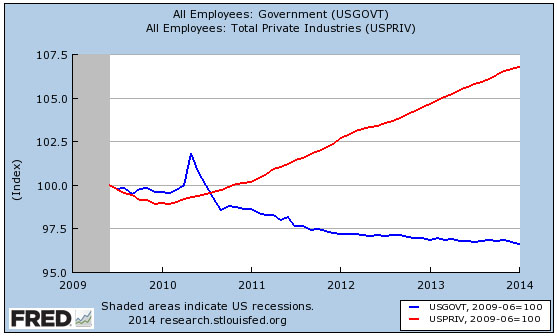
    January’s job numbers were fairly dismal, but the bad cheer wasn’t equally spread. Private sector employment, as usual, increased—by 142,000 jobs last month. At the same time, public sector employment declined. Government employment at all levels was down 29,000 in January.

    Aside from the brief census blip in early 2010, this has been the usual state of affairs for the past four years, ever since the recession officially ended. The chart below shows public and private sector employment indexed to 100 at the end of the recession. Private sector employment is up 6.8 percent. Public sector employment is down 3.4 percent. And that’s during a period when population grew 2.3 percent. On a per capita basis, government employment has declined more than 5 percent since 2009, and it’s still declining.

    This is the price of austerity. If public sector employment had been growing normally during this period, we’d have about a million more jobs than we do now and the unemployment rate would probably be below 6 percent. We are our own worst enemies.

  • Chart of the Day: Net New Jobs for January


    The American economy added 113,000 new jobs in January, but about 90,000 of those jobs were needed just to keep up with population growth, so net job growth clocked in at 23,000. That’s two consecutive months of dismal job growth numbers.

    On the bright side, the headline unemployment rate declined from 6.7 percent to 6.6 percent, and this wasn’t just a matter of people dropping out of the labor force. The number of employed persons was up over 600,000 and the labor force participation ratio ticked up a couple of tenths.

    As always, though, the unemployment numbers come from the household survey, while the job growth number comes from the payroll survey, which is much larger and thus more reliable. The employment numbers hint that things might be better than we think, but it’s only a hint. Overall, this is a very weak jobs report, and coming on the heels of a weak December report, they suggest that the American economy is still pretty fragile.

  • US-Russian Relations Now At Approximately 7th Grade Level


    My goodness. Such language:

    America’s new top diplomat for Europe seems to have been caught being decidedly undiplomatic about her EU allies in a phone call apparently intercepted and leaked by Russia.

    “Fuck the EU,” Victoria Nuland apparently says in a recent phone call with the US ambassador to Kiev, Geoff Pyatt, as they discuss the next moves to try to resolve the crisis in Ukraine amid weeks of pro-democracy protests which have rocked the country.

    State Department spokeswoman Jen Psaki said Nuland “has been in contact with her EU counterparts and of course has apologized for these reported comments”. She said that if the Russians were responsible for listening to, recording and posting a private diplomatic telephone conversation, it would be “a new low in Russian tradecraft.”

    It’s possible that “Fuck the EU” might have been an appropriate sentiment under the circumstances. Who knows? I’ll try not to be judgmental here. Still, given the vast surveillance apparatus in daily use by the United States, it’s a little rich to call the Russian action “a new low” in espionage tradecraft. Unless, of course, Psaki meant that the Russians should have listened and recorded—that part was OK—but then released it a bit more discreetly. Certainly the United States would never leak something like this to YouTube. That just isn’t done. We’d leak it to someone reliable at the New York Times, for God’s sake. Show some class, people.

    And while we’re on the subject of class, Vladimir, will you please let our Olympians’ yogurt shipment through? This is all getting just a little petty, isn’t it?

  • Getting to the Bottom of David Wildstein


    What exactly was David Wildstein’s job at the Port Authority of New York and New Jersey? His official title was Director of Interstate Capital Projects, which isn’t much help since building and managing interstate capital projects is pretty much all the Port Authority does. The position was invented in 2010 after Chris Christie became governor, and it was eliminated after Wildstein resigned following the Bridgegate revelations. It doesn’t appear to have much of an official job description. So what did Wildstein do? Here’s what Shawn Boburg of the Bergen County Record said about him in a 2012 profile:

    [Wildstein] is playing a key behind-the-scenes role in Governor Christie’s effort to get more control over the Port Authority, the bi-state transportation agency that has come under increased scrutiny since raising bridge and tunnel tolls in September….Several executives said Wildstein has played a role in placing some of those recommended by the Christie administration in jobs and that he seems to serve as the administration’s eyes and ears within the byzantine agency.

    ….Eight current and past Port Authority colleagues agreed to speak about Wildstein, but insisted that their identities remain undisclosed because they feared retribution. They described Wildstein, one of 50 recommended for jobs by the Christie administration, as intimidating, hardworking, intelligent, private and fiercely loyal to the governor.

    Some bristle that a senior executive post is occupied by someone with more experience with campaigns than with transportation issues. “He became the watcher of the entire agency,” one person said. “What he was watching for was strict adherence to the Christie agenda.”

    Hmmm. Via Bob Somerby, here is what WNYC’s Andrea Bernstein said on Lawrence O’Donnell’s show last night:

    This wasn’t a nothing job. This was a really important position where he was in charge of doling out billions of dollars for capital projects, much of that in New Jersey.

    And what we know now is that David Wildstein was taking money and putting them into projects that solved other problems for Chris Christie, lots and lots of money….There was a project lifting up the Bayonne Bridge….There was also billions of dollars that went into the Pulaski skyway….Now, this seems like a mundane project, but the key thing about it is that it meant that Chris Christie didn’t have to spend New Jersey funds. So it solved a big budget headache.

    ….Now, as you mentioned, the top of the segment, I learned and some other reporters learned this week, that this position had been eliminated. Which sort of goes to, was it key? Was it important? Or was it something that was created so that David Wildstein could carry out Chris Christie’s will at this authority? Which is, let’s not forget, a bi-state authority, New York and New Jersey. It runs the airports. It runs the bridges and tunnels between New York and New Jersey. That’s its function.

    The Christie take on this is that the Port Authority was a mess and badly needed better oversight, which Wildstein provided. Everyone else’s take is that Christie wanted more personal control over which projects were and weren’t approved, and Wildstein was his inside guy, the enforcer who made sure that Christie loyalists were installed in key positions and Christie priorities were taken care of.

    And I guess that job is no longer necessary. That’s either because Wildstein did a bang-up job and the Port Authority no longer needs extra oversight, or because Bridgegate made it politically impossible to keep a Christie enforcer on the Port Authority payroll. I guess you can make up your own mind about which seems more likely.

  • Friday Afternoon News Dumps: Myth or Reality?


    Here is Jeremiah Goulka on the Obama administration’s announcement last week that the Keystone XL pipeline won’t increase greenhouse gas emissions:

    Chances are that you missed the State Department releasing the final environmental review of the Keystone XL pipeline last week. You were meant to: it came out on 4pm on the Friday before Super Bowl Sunday. The mainstream media only had a few moments to glance at the executive summary—the report itself is an un-skimmable eleven volumes long—before the news cycle moved onto the big game.

    I’m just curious: does anyone really believe this anymore? I’m talking about the infamous Friday afternoon news dump. It’s an article of faith that bad news is always released on Friday afternoon, where it will get lost in the weekend news cycle, but isn’t the evidence pretty strong that this doesn’t work? Maybe for small stuff it does, but it sure doesn’t seem to be the case for anything that people would otherwise care about. The Keystone XL report is a pretty good example. It seems to me that it got about as much attention as it was ever likely to get no matter when it was released.

    I think some enterprising graduate student needs to write a dissertation about this. Create a metric that predicts how much attention a piece of news “deserves”—we can call it DQ—and then check to see if news dumps on Friday underperform the DQ metric over, say, the next 30 days. Let’s find out if this is myth or reality.

