• Traffic in LA Is Both Terrible and Kind Of Weird


    Well, it looks like Trump and Clinton are winning just about everything tonight. But you didn’t need me to tell you that. My job is to distract you from the horror show that has become the 2016 presidential primary. So let’s talk about traffic.

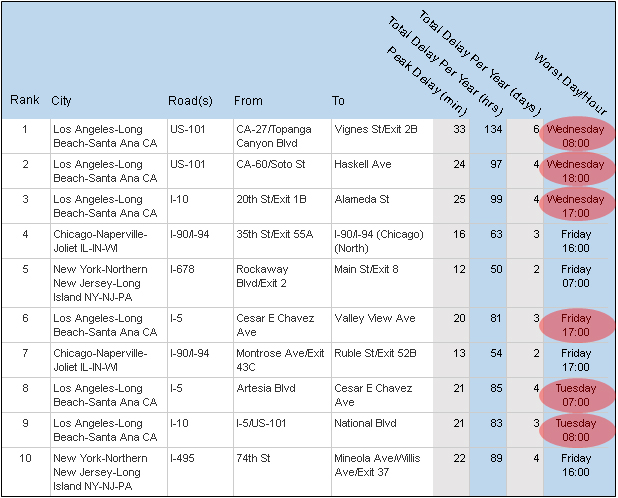
    For the millionth year in a row, Inrix announced today that Los Angeles has the worst traffic in the nation.1 This isn’t really news, but I did notice something odd about the rankings. Take a look at the table below:

    These are the ten worst stretches of highway in the country, and they’re found, unsurprisingly, in our three largest cities. But in Chicago and New York City, the most rage-inducing time of the week on these extended parking lots is Friday. In LA, it’s mostly Tuesday and Wednesday; Friday takes the top spot in only one out of six. Why is that? Please leave your guesses in comments.

    1But not the worst anywhere: London beats Los Angeles by a wide margin. And if Inrix collected data for Africa and Asia, I’ll bet no US city would even make the top 100.

  • CDC Wants to Curb Opioid Use For Chronic Pain


    With opioid painkiller addiction now at epidemic levels, the CDC has finally issued new guidelines for primary care doctors:

    The guidelines recommend what many addiction experts have long called for — that doctors first try ibuprofen and aspirin to treat pain, and that opioid treatment for short-term pain last for three days, and rarely longer than seven. That is far less than current practice, in which patients are often given two weeks or a month worth of pills.

    The guidelines are meant for primary care doctors, who prescribe about half of all opioids but often have little training in how to use them. They call for patients to be urine tested before getting prescriptions and for doctors to check prescription drug tracking systems to make sure patients are not secretly getting medicine somewhere else. Currently, 49 states have such systems, but only 16 require that doctors use them, according to experts at Brandeis University.

    It’s worth noting that the actual text of the guidelines makes it very clear that they’re aimed at chronic pain sufferers. There are 12 recommendations, and only one addresses acute pain:

    Long-term opioid use often begins with treatment of acute pain. When opioids are used for acute pain, clinicians should prescribe the lowest effective dose of immediate-release opioids and should prescribe no greater quantity than needed for the expected duration of pain severe enough to require opioids. Three days or less will often be sufficient; more than seven days will rarely be needed.

    This sounds like sensible advice. In the past, opioid painkillers were reserved for very serious acute pain (post-op, for example), but that’s changed over the past few decades. A lot of kids grow up today expecting powerful painkillers for things like sprained ankles, which just aren’t all that painful. Is this because doctors have changed their habits? Because parents are more demanding? I don’t know. But it probably doesn’t make sense. If you sprain your ankle, ice it down and take some aspirin. You’ll live through it.

    Beyond that, there are obviously cases where acute pain can last longer than seven days. When I broke a bone in my back, I took morphine on and off for a couple of months. But I’m naturally skeptical of opioid painkillers, and my doctor had to talk me into taking more pills, not fewer. I can easily imagine someone with a different attitude who’s determined to rid themselves of any pain whatsoever and gobbling down more pills than they should.

    As usual with laws and guidelines, the actions of a modest number of abusers is likely to make life more annoying for everyone else. Hopefully, doctors will take these rules seriously, but will still be allowed to use their common sense to decide when the rules need to be bent.

  • Our Four-Decade Antitrust Experiment Has Failed


    David Dayen brings hope to my withered soul. A few days ago he described a Senate hearing that seemingly brought both liberals and conservatives together on a subject close to my heart: antitrust law. “The fact that both parties want the government to stop monopolies,” he says, “could finally force the agencies to get aggressive and protect the economy”:

    We have four airlines serving 80 percent of all passengers. We have four cable and Internet companies providing most of the nation’s cell-phone and television service. We have four big commercial banks, five big insurance companies (only three if two proposed mergers go through this year), and a handful of producers selling every major consumer product. Even when you think you have a choice, like in the array of online travel-booking sites, two companies (Expedia and Priceline) own all the subsidiaries.

    ….Senator Mike Lee, the Utah Republican who chairs the subcommittee, worried that the agencies lack the resources to deal with the merger wave. Ranking member Amy Klobuchar, the Minnesota Democrat, questioned the “conduct remedies” agencies use in lieu of blocking mergers—for instance, forcing the merged company to sell off retail outlets or business lines to maintain competition.

    ….Iowa Republican Chuck Grassley brought up consolidation in the market for seeds, and how that creates issues in the food-supply chain—if one set of seeds is tainted and a monopoly controls seed distribution, the consequences of safety hazards magnifies. Al Franken, the Minnesota Democrat, expressed concern about “platform monopolies”—Internet giants like Facebook, Google, Apple, and Amazon, who “use their positions … to stifle competition and inhibit the free flow of ideas.”
    Over the past few decades, America has undergone a sea change in antitrust law. It’s now all about “consumer welfare”—which means, in practice, that big mergers are fine as long as the mergees can make a credible case that the combined entity will be good for consumers. You will be unsurprised to learn that high-powered marketing departments are very good at collecting data to show exactly that, and that high-powered attorneys are extremely good at turning this data into bulletproof legal arguments. The result is that very few mergers are ever turned down.

    But this siren call has led us down a long, blind alley. It turns out that in the short term, plenty of big mergers really can be good for consumers. In the longer term, though, very few are. All the promises and regulations in the world will never change the fact that once a market is dominated by three or four huge corporations, competition becomes flabby and listless. In markets with low barriers to entry, this isn’t too big a deal. New entrants will build new markets regardless. But in markets with high capital costs or other barriers to entry, it can cause unhealthy and needless stagnation.

    We’d be better off returning to an older, cruder rule: ensuring that there are plenty of competitors in every market and refusing to allow any single company to become too dominant. As near as I can tell, there’s a real tipping point around the number three or four. If a market is dominated by four companies or less, that’s when it starts to wither.

    Even a single company can make a big difference. Take a look at the cell phone market: T-Mobile tried several times to engineer a merger with another provider, but couldn’t get approval. So instead they adopted a strategy of genuine competition, hoping that lower prices and better features would upset the market and bring them new customers. This has had a huge impact on the mobile phone industry, and it never would have happened if the number of providers had made that final, fatal slide from four companies to three.

    Needless to say, even a crude market share rule doesn’t make things simple. You’ll still have arguments over what counts as a single market (online advertising or the entire advertising industry?). You’ll have arguments over just how big a single company should be allowed to get (30 percent share or 50 percent share?). You’ll have industries where it’s not easy to have lots of competitors. And you’ll have some industries where the returns to scale to are so potent that small companies just flatly can’t compete.

    There’s no easy panacea. But “consumer welfare” is an open invitation to thousand-page regulatory filings that dive deep down a rabbit hole and never come up for air. A smart team of attorneys can make a credible case that just about anything is good for consumers if you look at it in just the right way. A simple market dominance test, however, isn’t so easy to game. It may not be perfect, but it would be a lot better than what we have now.

    Competition is the core engine of capitalism. If you have plenty of it, you can make do without a lot of other regulations. But once you allow competition to wither, there’s little choice left. The remaining companies have lots of market power, lots of political power, and not much desire to see markets get disrupted. They have to be heavily regulated—and even that won’t work very well. You just end up in an endless game of cat and mouse.

    Why bother? The federal government should do its best to ensure that markets have plenty of competition, and then it can afford to get out of the way and regulate fairly lightly. Other companies will do their work for them. What’s not to like?

  • Bank Thieves Think Big, But Maybe Too Big


    Here’s a weird story. Somebody with access to the proper codes managed to steal $100 million from Bangladesh’s account at the Federal Reserve. But that’s not the weird part. Lots of people would steal $100 million if they could. The weird part is trying to figure how they thought they could get away with it:

    The breach began on a quiet Friday last month, when a series of payment instructions arrived at the New York Fed seeking the transfer of nearly $1 billion out of the Bangladeshi account….By the time officials at Bangladesh Bank, the country’s central bank, returned to work, five requests moving about $100 million had gone through. Further transfers totaling roughly $850 million were blocked after “the American bank raised a money laundering alert,” a spokesman for Bangladesh Bank has said.

    ….The wire transfer of $20 million to Sri Lanka went to the account of a newly formed nongovernmental organization, according to officials in Dhaka. The Sri Lankan bank handling the account reported the unusual transaction to the country’s central bank under that country’s anti-money-laundering laws and authorities reversed the transfer.

    The Philippines’ Anti-Money Laundering Council is preparing charges against a number of people allegedly involved in the illegal transfer, council Chairman Amando Tetangco, who is also the governor of the Philippines’ central bank, told The Wall Street Journal in a brief interview late Saturday. He refused to identify those who may be charged but said more details would be revealed later.

    So the thieves tried to steal $1 billion, but the Fed got suspicious at the prospect of that much money being transferred into private accounts. Big surprise. Still, that was only after $20 million got sent to accounts in Sri Lanka and $80 million to accounts in the Philippines—which was then deposited in a Manila businessman’s bank account and transferred to three large casinos. But these transfers were identified and nobody got their hands on that money either.

    In the movies, the thieves would never have been caught because the tech-savvy member of their crew would immediately start routing the money through dozens of proxies and hundreds of accounts. After 30 seconds of laptop argle bargle, the money would be untraceable.

    In real life…it turns out wire transfers don’t work that way. So here’s the weird part: why did these guys think this plan would work? Did they seriously think they could transfer $1 billion to private accounts around the world and no one would notice? Or was this heist even more interesting than it sounds, with a whole lot of very high-ranking government officials involved in covering it up? One way or another, this caper was either dumber than it sounds or a lot smarter than it sounds. I can’t wait to find out which.

  • Say It With Me: Voters Aren’t Any Angrier This Year Than Usual


    I’ve periodically argued that, conventional wisdom notwithstanding, Americans aren’t especially angry at the moment and the country isn’t in especially bad shape. My most recent post along those lines is here.

    The obvious pushback is that averages don’t tell the story. Even if 80 percent of Americans are relatively content, the other 20 percent might be mad as hell—and with good reason. Wages are down over the past decade. Globalization has taken away lots of good, semi-skilled jobs. Illegal immigration has taken away the unskilled jobs. Culturally it feels like traditional values are under attack. Etc.
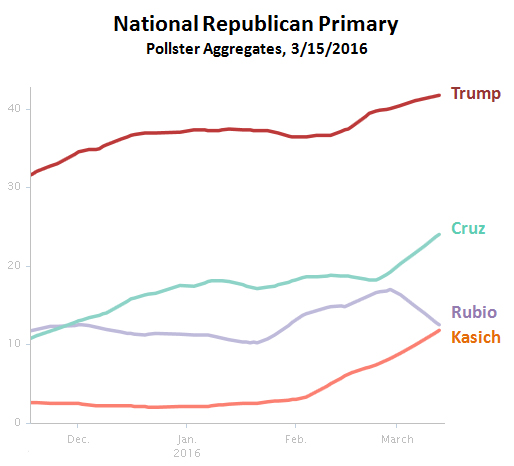
    All fair points. But the question isn’t whether some voters are angry. Some voters are always angry. The question is whether they’re angrier than usual. On that score, Ed Kilgore passes along an excerpt from Michael Cohen’s upcoming book on the 1968 presidential election, American Maelstrom: The 1968 Election and the Politics of Division. The scene is a George Wallace rally at Madison Square Garden:

    Outside the arena shoving matches and fistfights broke out repeatedly as Birchers, Nazis, and Klansmen tussled with Trotskyists, Yippies, and Black Power activists….With the crowd inside at a fever pitch, the guest of honor arrived….”It was uncontrolled release of frenzied, pulsating passion that seemed almost more sexual than political … It may have been the loudest, most terrifying sustained human din ever heard in New York,” wrote Robert Mayer in Newsday.

    ….Then, with the traditional airing of grievances, the sermon began. Wallace fired broadsides against the “pseudo-intellectuals” and “theoreticians” ….”All you need is a good barber!” he yelled at the dozens of hecklers in the crowd. “Why don’t you come down here … and I’ll autograph your sandals!” As yet another fight broke out in the balcony, Wallace offered no quarter. “Well, you came for trouble and you got it!”

    Kilgore notes that the grievances of Wallace voters and Trump voters aren’t identical, though there’s considerable overlap. “The most powerful parallel, however, is perhaps the most dangerous: the joy of the crowds over the sheer demagoguery of their candidate.”

    Exactly. In 1968 the economy was booming. It wasn’t globalization driving the Wallace crowds. In 2016 the civil rights revolution is 50 years old. It isn’t riots on the streets of Baltimore and Chicago driving Trump’s crowds. What drove Wallace crowds was Wallace. What drives Trump crowds is Trump.

    It’s never been my argument that Trump voters don’t have anything to be angry about. But when has that not been true? When was the last time that 10 or 20 or 30 percent of the country didn’t have something eating at them? The difference this year is not that the electorate is “finally” fed up. We hear that every four years. It’s not that they’re angrier than usual. The evidence just doesn’t support that. It’s not gridlock, it’s not wage stagnation, it’s not gay marriage, and it’s not ISIS. The difference is simple: Donald Trump. If you base your campaign on demagoguery—and you’re good at it—you’ll always find a receptive audience.

    That’s all that’s happened this year. America isn’t in worse shape than usual, and voters aren’t angrier than usual. We need to stop saying this. The difference—the only difference— is that we have a candidate willing to cynically mine the anger that’s always out there waiting to be tapped, consequences be damned. That’s it.

  • Russia Decides It’s Time to Declare Victory and Get Out of Syria


    Vladimir Putin announced today that he would begin withdrawing most of his forces from Syria. The move came as a complete surprise—sort of:

    But U.S. officials also said that there had been evidence over the last several months that appeared to suggest that Moscow didn’t have plans for a long-term stay at the bases it used in Syria.

    For instance, the Russian military didn’t appear to be rotating its equipment—tanks, aircraft and artillery—among bases throughout the country in a way that would be consistent with a military’s plans for a sustained presence. Equipment wasn’t being withdrawn for maintenance, for example, and Russian forces weren’t being rotated in and out, according to U.S. officials.

    It’s unlikely that Putin ever really intended to stay for a long time in the first place. His goal wasn’t to help Assad win his civil war, but merely to prevent him from losing—just as there’s a reasonable case to be made that this is basically our goal too on the other side of the fight. It’s realpolitik at its nastiest and most cynical. And while the recently convened peace talks in Geneva provided Putin with a convenient pretext to get out, there was more to the timing than just that:

    Russia is also facing deepening economic problems caused by the collapse in global oil prices, and the announcement may reflect Mr. Putin’s desire to declare victory and extricate his country from a costly military venture….There have been growing signs of differences between Russia and the Syrian government over the Geneva talks, which Moscow has pressed hard for, along with Washington. And for Mr. Assad, the prospect of Russia’s leaving him to fend for himself is sure to focus his mind on following its lead — advice that Russian officials have publicly offered him in recent days.

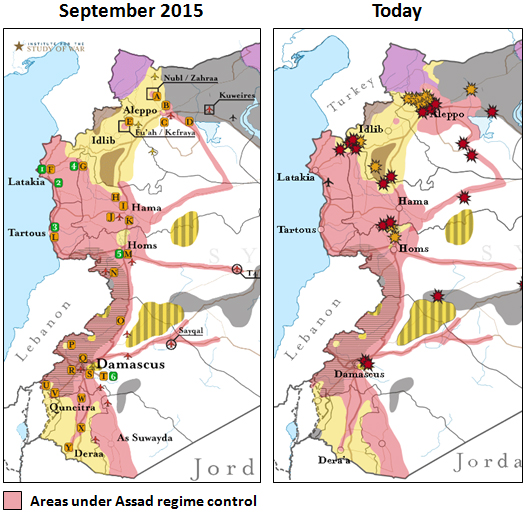
    In the end, Putin managed to prop up Assad for a little while longer and reassert control over Russia’s only military base outside of its own territory. He also earned a place at the negotiating table and, perhaps, kept Iran’s influence over Syria at bay. In terms of pure military achievement, however, it was a modest affair. The maps below, from ISW, show what’s happened over the past six months. Syrian forces have made progress toward retaking Aleppo, which is significant but hardly tide turning. And that’s about it. What’s more, with Russian air support gone and Kurdish forces also advancing on Aleppo, it’s unclear if Assad can hold this ground in the long term. Stay tuned.

  • Here’s How Donald Trump Treats the Little People

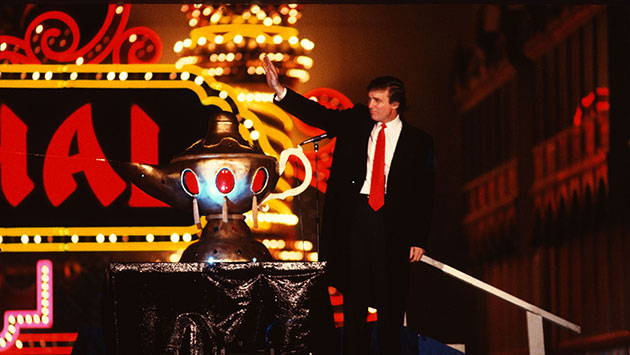
    Donald Trump at the Taj Mahal Casino in Atlantic City, New Jersey in 1990.Sonia Moskowitz/Globe Photos via Zuma Wire


    It’s pretty common knowledge that Donald Trump lies routinely about his wealth and his businesses. He can get away with this because he runs a private company and isn’t required to open his books to the public.

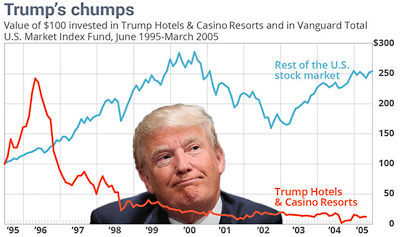
    But there was one period in his life when he ran a public company. Here’s the backstory: During the ’80s, Trump invested heavily in Atlantic City casinos. He ended up owning three of them, culminating in the Trump Taj Mahal, a billion-dollar monstrosity that was ill conceived and poorly run, hemorrhaging money from the day it opened. Trump had borrowed heavily during this period, guaranteeing many of the loans personally, and this was the last straw. His company was bankrupt.

    He would have been personally bankrupt, too, but his creditors decided to put him on a leash and let him try to work his way out. He made steady progress, but the casinos continued to be a millstone around his neck. By the mid-’90s, however, the stock market was getting hot and lots of small investors, then as now, were mesmerized by the Trump name. So Trump decided that as long as there were lots of rubes who still thought he was a great businessman, he might as well take advantage of them. Timothy O’Brien tells the story in TrumpNation:

    In a masterstroke of financial maneuvering, and in a tribute to the sucker-born-every-minute theorem, [Trump] managed to take two of the Trump casinos—the Plaza and the Taj Mahal—public in 1995 and 1996, at a time when Donald was unable to make his bank payments and was heading toward personal bankruptcy. The stock sales allowed Donald to buy the casinos back from the banks and unload huge amounts of debt. The offering yanked Donald out of the financial graveyard and left him with a 25 percent stake in a company he once owned entirely.

    In one fell swoop someone else became responsible for the debts that almost sank Donald…Exactly what investors thought they might get for their Trump Hotels investment wasn’t entirely clear. Donald had already demonstrated that casinos weren’t his forte, and investors were buying stock in a company that was immediately larded with debts that made it difficult, if not impossible, to upgrade the operations.

    …Allan Sloan, the financial writer who had opined with great accuracy on many things Trump, offered a fair warning to Trump Hotels’ investors: “Shareholders and bondholders have to be total fools ever to think that Donald Trump will put their interests ahead of his own.”…Donald spent several years proving Sloan correct.

    …Just a few months after Trump Hotels absorbed the Taj, Donald sold his last Atlantic City casino, the Castle, to the public company. That is, Donald sold his own casino, with all of its heavy debts, to a public company he controlled. The $490 million price tag for the Castle was about $100 million more than analysts thought it was worth…sending the company’s stock into a nosedive from which it never recovered.
    Although Trump Hotels’ shares were sinking and there were no earnings to be seen, Donald paid himself $7 million for his handiwork at the company in 1996…Jerry Useem at Fortune took note in 2000 of Donald’s “disquieting” tendency to “use the casino company as his own personal piggy bank.” In addition to the multimillion-dollar bonuses Donald was lifting out of Trump Hotels, Useem pointed out that “the pilots of his personal 727 are on the casino company’s payroll” and that in 1998 Donald “had the already cash-strapped company lend him $26 million to pay off a personal loan.”

    Trump’s fans were conned into buying up his debt-laden properties and turning them into a public company. Trump, who plainly had no interest in running a casino and had demonstrated no corporate management skills during the prior decade, paid himself millions of dollars from the company’s coffers for doing essentially nothing. He then unloaded his third casino onto the public company at an inflated price.

    The public company didn’t show a profit during a single year of its existence. In 2004 the stock was delisted and the company forced into Chapter 11 reorganization. It was renamed Trump Entertainment Resorts, but with Trump still at the helm it continued to pile up losses and amassed debts of nearly $2 billion. In 2008, after missing a $53 million bond payment, it declared bankruptcy yet again and Trump resigned as the company’s chairman. Its investors lost all their money.

    In case you’re curious, this is how Trump treats the little people. Some of the investors in his casinos were big guns who should have known better. But plenty of them were moms and pops who believed Trump when he insisted he was the greatest businessman the world had ever known. Trump didn’t care: He figured he could fleece them, and he did. That’s what happens to people who trust Donald Trump.

  • Weekly Flint Water Report: March 4-11


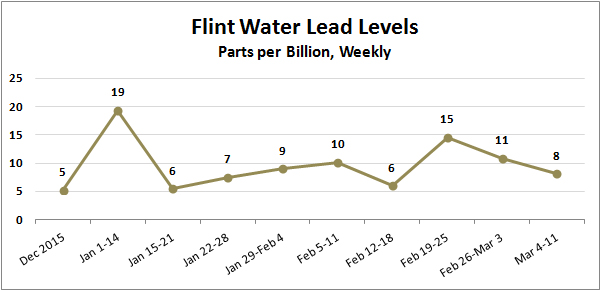
    Last week I posted a chart showing the average lead levels in Flint’s water since the beginning of the year. This is an easy chart to update, so I figure I’ll make it a weekly feature on Monday morning for a while. As usual, I’ve eliminated outlier readings above 2,000 parts per billion, since there are very few of them and they can affect the averages in misleading ways. The average for the past week was 8.08. The average since mid-January is 10.07.