• The Kids These Days Are…In Surprisingly High Spirits


    Republican pollster and language guru Frank Luntz has a new poll out. The bottom line is that young people are pretty damn liberal, which really shouldn’t surprise anyone. But considering the relentless parade of stories about how terrible life is for the kids these days, these three questions might very well surprise some people:

    • Optimistic about their “personal future”: 88 percent
    • Expect to be better off financially than their parents: 75 percent
    • Believe America’s best days are ahead of it: 61 percent

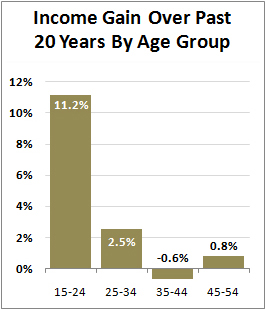
    That doesn’t sound like a generation in the throes of existential angst and financial Armageddon. The last few decades—and the most recent one in particular—have been pretty lousy for a lot of people. But millennials haven’t done any worse than anyone else, and in some respects they’ve actually done a little better. Sometimes I wonder if we oldsters are projecting more of our own mopiness on them than they actually feel.

  • Facebook Is Still Intolerant Toward the Emotionally Stunted


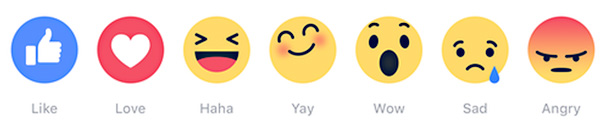
    When I took German in high school, our go-to reaction for anything our teacher asked us was “Sehr interessant”—mainly because none of us knew enough German to say much of anything else. In this, we were much like Facebook, which allows you to respond to posts only by liking them. Today, though, Facebook’s command of emotional language got a big upgrade. Check out all the new responses:

    That’s all fine, but what happened to “interesting”? Shouldn’t there be at least one icon that acts as a recommendation for a post without requiring you to commit to it one way or the other? Some of us are uncomfortable wearing our hearts on our sleeves, after all. I demand equal time for the emotionally stunted.

  • When Did Americans Get So Gullible?


    Once again last night, Donald Trump won a landslide victory. He didn’t win just “economically anxious” blue-collar voters; he won everybody:

    Trump’s victory was propelled by a broad coalition of voters, including evangelicals, voters without a college education, and people who said they were looking for a candidate outside the Republican establishment.

    Trump appealed to voters across the ideological spectrum. He won 38 percent of people who describe themselves as “very conservative,” beating Cruz in Cruz’s own territory. And he also led among voters who describe themselves as “somewhat conservative” and even “moderate.” Rubio came in second with both those groups…The broad scope of Trump’s victory paints a dire picture for Republican establishment types hoping his support can be confined to a particular demographic or corner of the country.

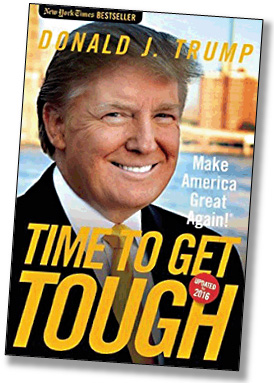
    The thing that knits all these Trump supporters together isn’t low wages or jobs disappearing overseas or xenophobic fear of anyone nonwhite. You can find each of these qualities in some of Trump’s supporters, but not in all of them. As near as I can tell, the only thing that all of them seem to share is a desire for someone “tough.” Mostly they want someone who’s tough on foreigners of various stripes, but Trump also does well by insisting he’ll be tough on crime, tough on insurance companies, tough on hedge fund managers, and tough on a slew of other malingerers.

    And…now I’m trying to think of what to say next. It’s not that I’m surprised toughness sells to a certain audience. What I’m surprised by is that so many people buy the idea that Trump is tough. To me, it looks like a reality show schtick. It’s so obviously phony that it barely seems conceivable that so many people are taken in by it. Is that really all you have to do? Just a lot of blustery talk and that’s that? When did so many Americans get that gullible?

    It’s puzzling. Trump is hardly the first demagogue to become popular, so maybe I’m overthinking this. But it feels different this time, as if we’ve become so sucked in by reality TV that we now accept reality TV as reality itself. So that’s what we want: the faux toughness of a reality TV star.

    Trump’s act seems so obviously childish to me that I have a hard time accepting the fact that so many people apparently take it seriously. But what else explains him?

  • Clinton Derangement Syndrome Is Alive and Well


    Memories:

    A federal judge ruled Tuesday that top aides to Democratic presidential front-runner Hillary Clinton should be questioned under oath about her use of a private email server as secretary of state, raising new political and legal complications for Clinton as she tries to maintain momentum for her campaign.

    ….The judge said that months of piecemeal revelations to date about Clinton and the State Department’s handling of the email controversy created “at least a ‘reasonable suspicion’ ” that public access to official government records under the federal Freedom of Information Act was undermined. “There has been a constant drip, drip, drip of declarations. When does it stop?” said Sullivan, a 1994 Bill Clinton appointee who has overseen several politically sensitive FOIA cases. “This case is about the public’s right to know,” he said.

    This is all courtesy of Judicial Watch, the Scaife-funded outfit that brought us so much endless Clinton paranoia in the 90s. To this day, most people—including an awful lot of reporters who ought to know better—still don’t realize just how deliberate and manufactured the effort to destroy Bill Clinton was back then. Despite thousands of hours and millions of dollars of investigation, virtually none of the “scandals” turned out to be real. They were just an extended effort to throw mud at the wall and see if something stuck. Ironically, the only one that did stick had nothing to do with any of the mud. It was just an old-fashioned sex scandal.

    And now we’re back where we started. Hillary obviously blew it when she set up her own email server, but once again, thousands of hours of investigation have turned up nothing. It was dumb, but there’s no scandal, no national security threat, and no cabal of silence. Hillary Clinton has been required to make her entire email record public, something that’s never happened before to a secretary of state, and still there’s nothing. She’s undergone hours of House questioning, and still nothing. But the mud keeps coming. Maybe Huma Abedin will finally provide the smoking gun! Maybe if we demand to see her personal emails! Maybe if we recover bits and pieces from the server! There just has to be something there.

    There isn’t. Hillary didn’t order the assassination of Vince Foster and she didn’t set up a personal email account so she could conceal her orders to stand down the rescue effort in Benghazi. But thanks to the obsessive Clinton hatred of Judicial Watch and the assistance of credulous judges like Emmet Sullivan, the “drip drip drip” will keep on coming. We never learn.

  • Nevada Set to Hold 2016’s First Instagram Caucus


    I’m not sure the Nevada GOP truly understands how the digital revolution works:

    In Clark County, which includes greater Las Vegas and 73% of the state’s population, Republican volunteers at each of the 36 caucus locations will count ballots by hand, write the results on an envelope, take a photograph of the envelope and text the photo to Ed Williams, the Clark County Republican Party chairman, and to state GOP officials. The state party is also allowing the Associated Press to monitor the results as they come in from precincts; in 2012 the party announced results itself on Twitter.

    “The official number will be whatever is photographed,” Mr. Williams said.

    The scary part is that this is an improvement over 2012, when they emailed Excel spreadsheets around. And this is all for fewer than 50,000 votes.

  • Republicans Decide to Boycott the Supreme Court Vacancy. Does This Remind You of Anyone?


    The Republican members of the Senate Judiciary Committee have officially announced that they aren’t willing to even hold hearings for President Obama’s Supreme Court nominee—no matter who it is.1 Their letter includes all the usual argle bargle about needing to “protect the will of the American people” blah blah blah, but none of that matters. They’re doing this because they want to do it and they have the power to do it. I doubt that Democrats would act much differently under similar circumstances.

    That said, you can add me to the huge crowd of observers who are puzzled by the political tactics here. The obvious question is: Why refuse to even hold hearings? That just makes Republicans look sullen and obstructionist. Why not hold hearings normally, drag them out a little bit, and then vote down whoever Obama nominates? The result is the same, but Republicans look more like senators and less like small children throwing a temper tantrum.

    I suppose the answer is that this is a good way of firing up their base, and they think that’s more important than appealing to the center. Fair enough. But that raises another question: What’s the best way to fire up the Republican base? I’m not trying to troll anyone here, but it seems like the answer is to hold hearings. That would keep the whole Supreme Court issue front and center for months on end. The base would be faced almost daily with the prospect of what a liberal justice would do; talk radio would go nuts; and there would be endless chances to find specific problems with the nominee—many of which would coincidentally require the production of reams of files and records to trawl through.

    Democrats, conversely, would have less to get fired up about. Sure, they’d be unhappy, but they wouldn’t be able to carp endlessly about Republican obstruction. Their guy is getting a hearing, after all.

    So it seems like holding hearings normally would be a better way to fire up the GOP base and a better way to keep the Democratic base a little quieter. It probably wouldn’t make a huge difference either way, but it’s still a win-win. What am I missing here?

    1After which they undoubtedly went out for a beer and shared their bewilderment about the fact that so many Republicans have been trained to vote for a guy like Donald Trump. What could possibly have driven them in such a direction?

  • Here’s the Latest on Flint’s Water


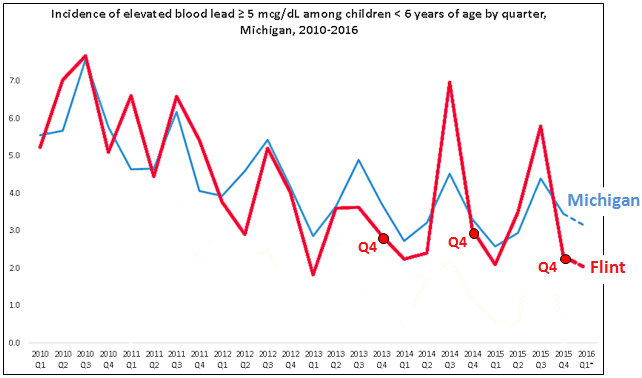
    How is Flint doing these days? Here’s the most recent report from Michigan’s Department of Health and Human Services:

    Blood lead levels tend to be seasonal, going up in the summer thanks to old lead in the soil getting kicked up during dry weather. As you can see, those summer peaks have been higher than normal since 2014 thanks to the ongoing contamination of Flint’s water supply. However, the 2015 summer peak was below the 2014 peak, and the Q4 level for 2015 is below the Q4 level for 2014. This suggests pretty strongly that Flint’s water pipes are returning to their pre-crisis state.

    And how many houses still have lead concentrations above the EPA’s “action level” of 15 parts per billion? According to the residential testing report through Sunday, 786 out of 11,785 homes tested had levels above 15 ppb. That’s 6.7 percent. About 140 homes had levels above 100 ppb and 19 were above 1,000 ppb.

    This is….sort of normal, actually. The number of homes with very high lead levels is unusual and needs to addressed immediately, but the overall number of 6.7 percent above the action level is well within the federal limit of 10 percent. Flint’s water appears to be in fairly good shape, and I wouldn’t be surprised if the 2016 summer spike is no higher than it was before 2014.

    But nobody trusts the EPA or the Michigan DEQ, so probably none of this matters. If I lived in one of the 11,000 houses in Flint that tested below 15 ppb, I’d drink the water. But it’s hard to blame the residents for feeling otherwise.

  • Being Leader of the Free World Is Now “The Presidential Thing”


    Whatever else you can say about Donald Trump, you have to give him credit for not avoiding the press. Take today’s mythbusting story in the New York Times, for example:

    While Trump remains a visible brand name around the city’s five boroughs, it is much harder to discern his imprint as a classic power broker, someone who is feared and can make things happen with a phone call or a quiet aside with the right person at the right time.

    His real estate holdings in New York are modest….He rarely interacts with top politicians or government officials, or contributes to campaigns….Though he portrays himself as a major developer, his companies’ highest profile ownership stakes in real estate in New York include an office building on Wall Street; part of another on Avenue of the Americas; commercial space at Trump Tower on Fifth Avenue, where he lives; and parking below the Trump Plaza on East 61st Street.

    ….The major banks, for their part, say they are leery of lending to him after having lost millions of dollars on past deals. Lawyers and contractors he has hired in the past say he is slow to pay his bills, and often shortchanges them. Even the few Wall Street executives who say privately that he is a friend are loath to speak publicly about him.
    If you called the Rubio or Cruz press shops for reaction to a story like this, they’d probably decline comment. They certainly wouldn’t put the candidate himself on the line. But Trump? No problem. He was happy to respond:

    On the parking below Trump Plaza: “It’s a very successful garage.”

    On his low New York profile: “I’m less focused on New York now. I started going international and national, which is what we are doing now, and then I did the presidential thing, so that to me is cooler than all of it.”

    On not paying his contractors promptly: “If they do a bad job, they have to suffer.”

    On the reluctance of banks to extend loans to him: “I don’t use Wall Street much because I don’t need money.”

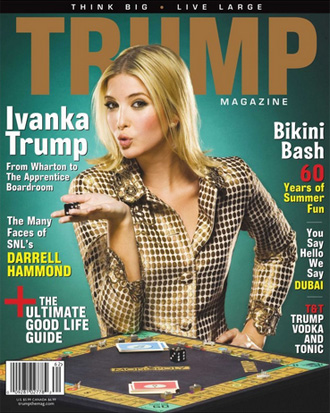
    This is all BS, of course, just like his “Cash is king” nonsense in the early 90s when he was liquidating everything he could lay his hands on—not because cash was king, but because his businesses were all failing. As for going international, he didn’t have much choice. No one would loan him money that would just get flushed down the toilet on failed development projects, so instead he licensed his name to rubes from the Middle East. And since he was still desperate for money, he cranked up every penny-ante, late-night shill he could think of to bring in a few bucks: Trump water, Trump vodka, Trump magazines, Trump steaks, Trump mortgages, Trump university, Trump energy drinks. As near as I can tell, they were basically all failures. If they weren’t, surely Trump would be trumpeting how much money he made from them.

    Anyway, none of that matters anymore. He’s now doing the “presidential thing,” which is “cooler” than any of his other hustles. And the rubes are still buying it.

  • Would You Buy a New Car If Your Neighbor Won the Lottery?


    A new study of Canadian lottery winners concludes that winning a big prize increases the likelihood of subsequent bankruptcies. But not for the prize winners themselves. Just for the folks who live next door: “We find that a C$1,000 increase in the lottery prize causes a 2.4% rise in subsequent bankruptcies among the winners’ close neighbors.”

    OK. That’s interesting. The problem is what comes next when the researchers try to explain why the neighbors of lottery winners go bust. Here is Tim Lee’s nickel summary:

    The clever study is one of the first to provide statistically rigorous evidence for a claim that seems plausible but is hard to prove: that rising inequality causes people to spend beyond their means in an effort to “keep up with the Joneses.”…And while big lottery winnings are rare, the study could have much broader implications. Critics of income inequality have long argued that large income disparities make people unhappy. The Philly Fed study provides further evidence for this point of view. While it focuses on lottery winners, the same basic problem is likely to arise anytime some people enjoy rapid income growth at the same time that others’ incomes are not rising.

    I’m not so sure about that. The researchers actually found two things:

    • Bankruptcies increased among the winners’ near neighbors.
    • Bankruptcies didn’t increase among neighbors who were slightly farther away.

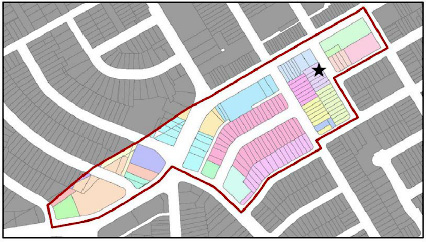
    And when I say “slightly,” I mean slightly. The map on the right shows the difference. A typical lottery winner is shown by the star. “Inner ring neighbors” are ones with the same postal code, in purple. “Outer ring neighbors” are the rest of them. In other words, a separation of literally 50-100 feet is enough to wipe out the entire effect. If large income disparities really do make people unhappy, it only seems to do so if they live within a few doors of some conspicuously consuming rich person. Needless to say, this is fairly rare given the fact that rich people tend to live in entirely different neighborhoods than poor people.

    Now, I suppose you can argue that being exposed to conspicuous consumption on TV produces the same feelings of envy as living next door to a friend who just won the lottery and bought a shiny new car. But you’d have to produce some evidence for that, since they’re very different things. For the time being, count me as skeptical.

  • We Are Now in the 4th Stage of Trump Grief


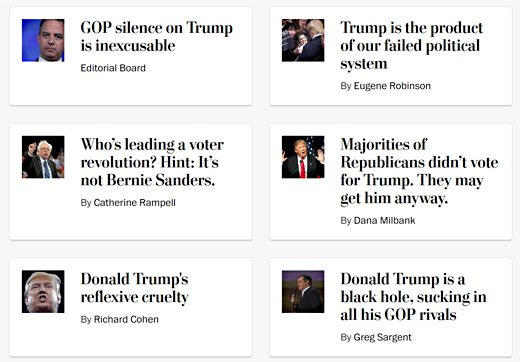
    Do you think people are starting to freak out over the possibility that Donald Trump might win the Republican nomination? Yes indeed. Over at the Washington Post editorial page, it’s literally all they can talk about this morning.