• Support for Abortion Rights Among the Young Hasn’t Changed Much

    Ed Kilgore draws my attention to a new PRRI survey which suggests that young people are becoming friendlier toward abortion rights.

    Most Americans say their own views have not changed on the issue in recent years….The pattern among young Americans, however, is unique. Approximately one-third of young Americans say their views on abortion have changed in recent years, and nearly three times as many say their views have become more supportive of abortion rather than more opposed to abortion (25% vs. 9%).

    This is good news, but I found myself a little dubious. I’d rather see a plain old trendline of young people’s attitudes toward abortion rights over time, but PRRI doesn’t provide that. Neither do most pollsters. But the biannual General Social Survey does, so I went there.

    GSS asks questions about whether you support abortion in case of rape, in case of birth defects, etc. The closest we can get to a general question is whether you support abortion no matter why the woman wants one. However, the thing to look at here isn’t the raw numbers, which always depend strongly on question wording, but on the trend over time. Here it is:
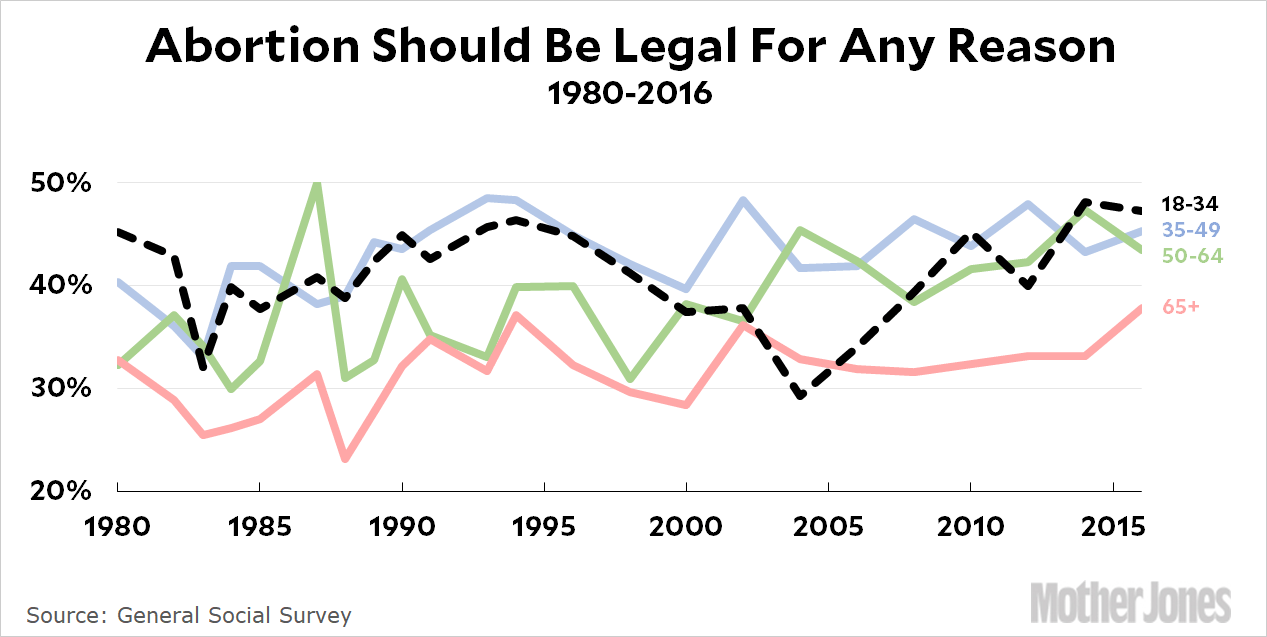
    The data is surprisingly variable and hard to read, but you can run a trendline through it. Here’s a summary of the trendline changes since 1980 in percentage points:

    • Age 18-34: up +1 pp
    • Age 35-49: up +6 pp
    • Age 50-64: up +10 pp
    • Age 65+: up +6 pp

    There is, for some reason, a huge, decline and recovery in abortion support between 1995-2010 among the youngest age group, but in the end, virtually no change since 1980. It’s actually the older age groups that have changed the most.

    Perhaps this is on the cusp of changing, but given the long-term trends and the year-to-year variability of opinions, I’m sort of skeptical. If I find more data that directly shows abortion attitudes by age group, I’ll pass it along.

  • Lunchtime Photo

    Over the last year I’ve taken several long-exposure photos of rivers and waterfalls. I have a soft spot for them, but I admit that I also sort of enjoy tweaking all of you who think this kind of thing is about on a level with clowns painted on black velvet. However, this picture I really and truly like. I took it at Yosemite, on the Vernal Fall footbridge, and I was quite taken with the color of the rocks, its harmony with the color of the water, and the lovely effect of the water swirls. Needless to say, your mileage may vary.

    February 14, 2018 — Yosemite National Park, California
  • Donald Trump Has No Idea What China Is Doing

    Here’s the latest from our president:

    Hmmm. Here’s what his Treasury Secretary had to say about China a few days before:

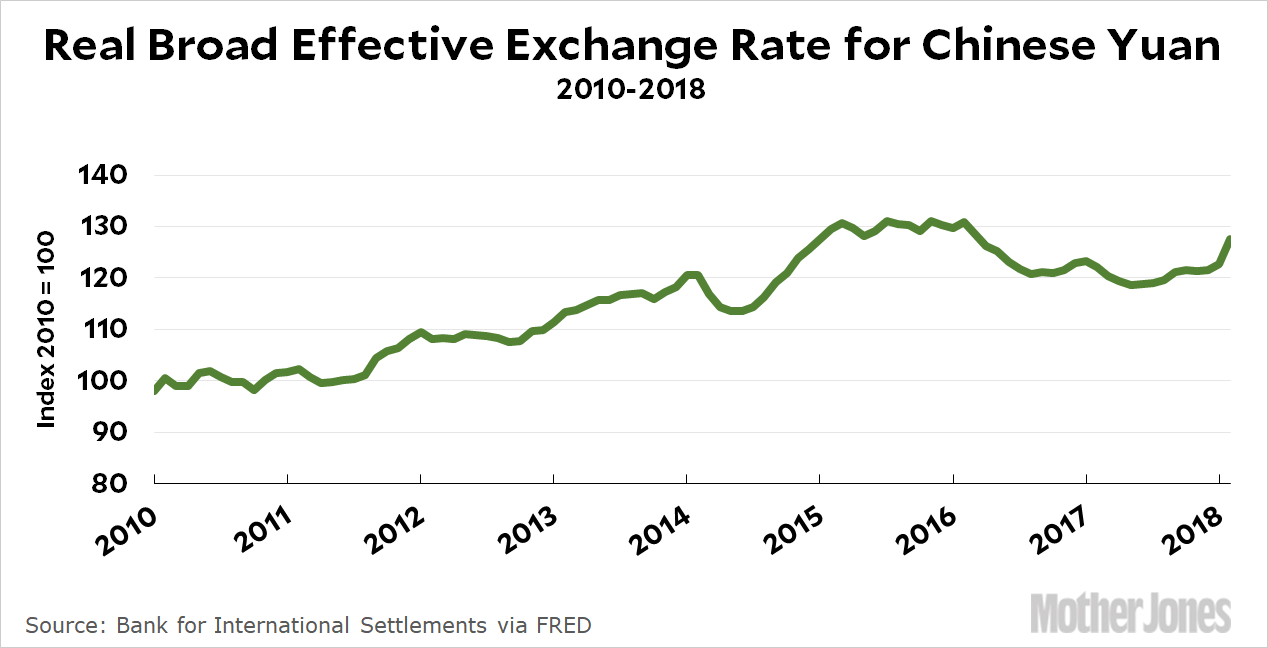
    Over 2017, the Chinese currency generally moved against the dollar in a direction that should, all else equal, help reduce China’s trade surplus with the United States….More recently, since the beginning of 2018, the renminbi (RMB) has continued to strengthen against the dollar, up 3.7 percent as of end-March.

    ….China does not publish its foreign exchange market intervention, but Treasury estimates that Chinese authorities significantly curtailed intervention in the second half of 2017 that they had been undertaking to support the value of the RMB. Foreign exchange reserves sold in the second half of the year are estimated at $6 billion, a significant decline compared to estimated sales of close to $250 billion during the second half of 2016.

    Here it is in chart form. First, the exchange rate:

    And market interventions to prop up the renminbi:

    In other words, according to Trump’s own Treasury Department, the value of China’s currency has increased and the level of intervention has been nearly zero during Trump’s entire term in office. In the grand scheme of things, perhaps this doesn’t really matter. Still, WTF? Does Mnuchin even talk to his boss about this stuff?

  • American Kids Keep Getting Better and Better at Reading

    My Twitter feed is glutted with Michael Cohen snark right now, and he is undoubtedly the most entertaining news of both today and the past week. But I don’t have anything nonobvious to say about him, so let’s talk about something else. Last week I promised to write again about the latest NAEP scores, and today Bob Somerby reminds me to do that. Bob and I may have a fraught relationship, but one thing we agree on is a tiredness over the knee-jerk narrative that interprets all test scores at all times as evidence that American schools are failing. So let’s take a look.

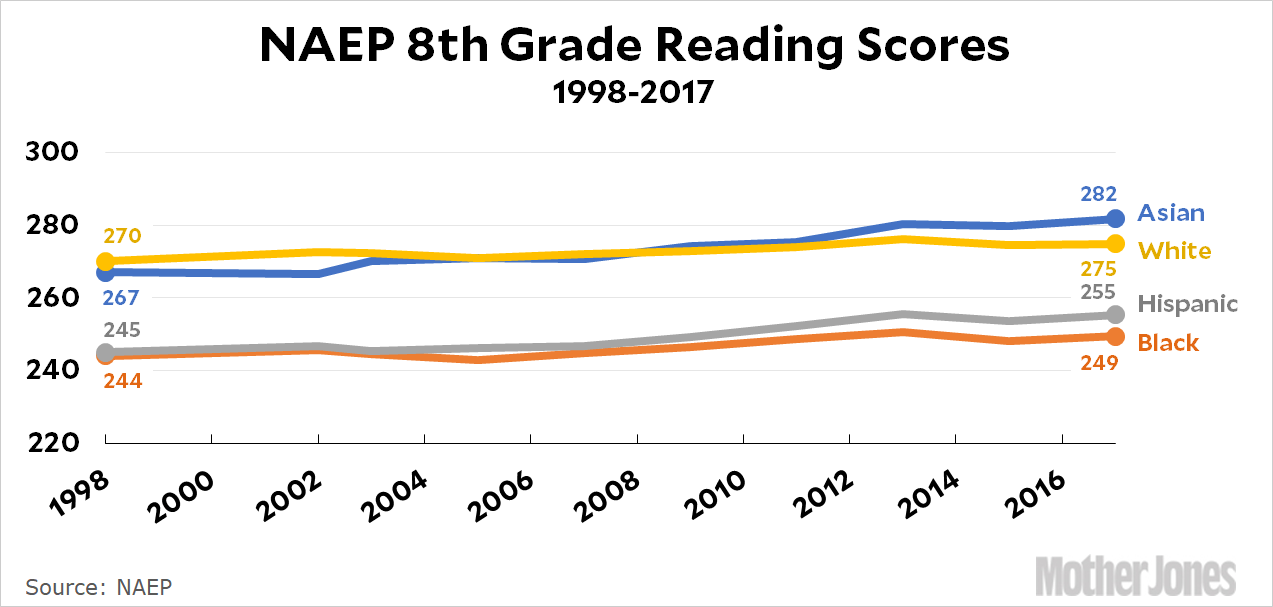
    Over at the Atlantic, Natalie Wexler has a piece titled “Why American Students Haven’t Gotten Better at Reading in 20 Years.” Her theory is that it’s related to the way we teach reading, and I had it open in a tab over the weekend but eventually closed it because I don’t have any special knowledge of how best to teach reading. However, Bob points out that the first order of business is to see if it’s even true that American students have flatlined over the past 20 years, as Wexler claims. Here’s the NAEP data:

    For those of you too lazy to do your own arithmetic, here’s the comparison between 1998 and 2017:

    • Asian: +15 points
    • White: +5 points
    • Hispanic: +10 points
    • Black: +5 points

    There are a number of points you can make with this data, but one point you can’t make is that kids haven’t gotten better at reading.¹ Using the usual rule of thumb that 10 points equals one grade level, black and white kids have improved half a grade level; Hispanic kids have improved a full grade level; and Asian kids have improved 1½ grade levels.

    That’s not too bad in the space of only 20 years, and it comes on top of similar improvements between 1975 and 1999. So here’s my question: how fast should reading scores be improving? For that matter, is there any special reason that reading scores should be improving at all? Poverty hasn’t changed much. Average incomes haven’t changed much. The phonics wars have been raging for decades, but I’m not sure that reading pedagogy has really changed very much down on the ground.

    So why do we expect reading scores to be skyrocketing in the first place? Why do we almost universally refuse to acknowledge that scores are up at all, let alone up a fair amount? Why are we so determined to believe that kids in the past were better educated than kids today, even though the evidence says nothing of the sort? It is a mystery.²

    ¹And before anyone asks: if you restrict yourself to public schools only, the 20-year gains have actually been a little higher.

    ²The usual dodge at this point is to suddenly decide that NAEP scores don’t matter, and the only important thing is how our kids compare to kids in other countries. That, however, is an extremely tricky subject on a variety of levels, and it’s genuinely not clear what the limited data tells us. In any case, I’m not willing to even discuss this with anyone who lacks either the math skills or the intellectual honesty to first acknowledge the steady and significant score gains among American kids over the past few decades.

  • Lunchtime Photo

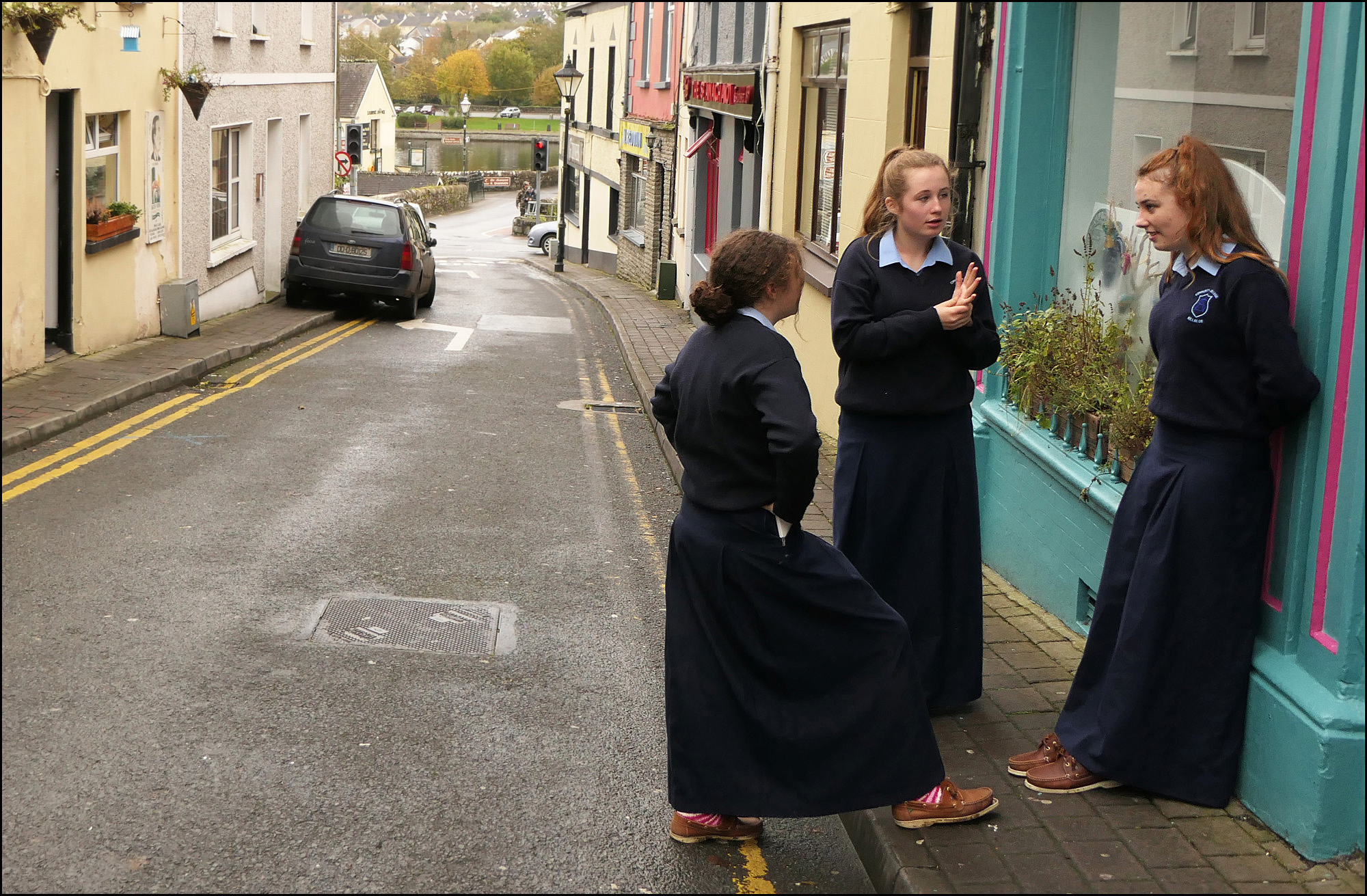
    In the cities, uniforms for Irish schoolgirls generally run toward the usual knee-length skirts. Out in the country, as you can see, they don’t put up with such immodest notions. This picture was taken in Killaloe, County Clare, a village of about a thousand people that boasts of being home to some of Ronald Reagan’s ancestors. Across the river is Ballina, County Tipperary, which boasts of being home to some of Kevin Drum’s ancestors.

    October 24, 2017 — Killaloe, Ireland
  • Michael Cohen’s Mystery Client Is Sean Hannity Because of Course It Is

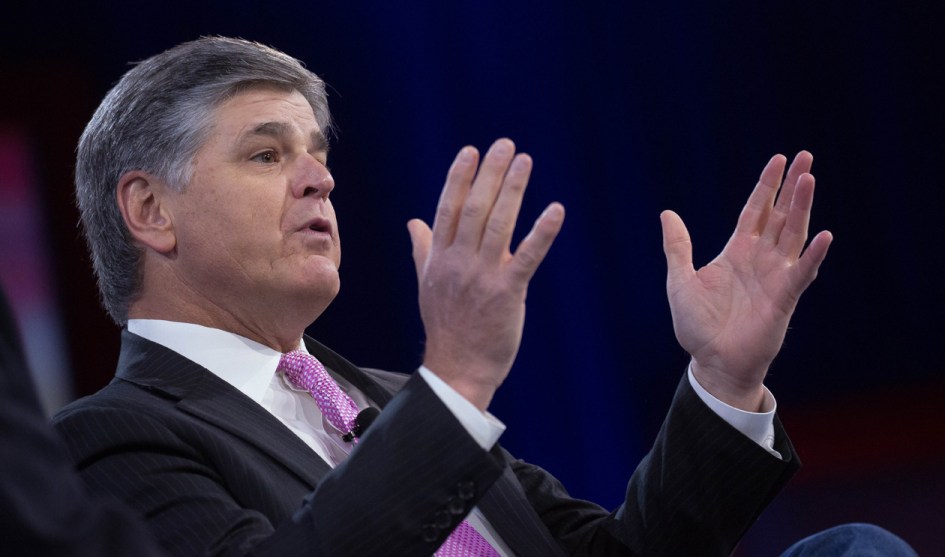
    "...this big. No, really, that's what Trump said. So I went on air with it, and the lamestream media just mocked it. That's how much they hate the guy."Jeff Malet/NC via ZUMA

    Michael Cohen’s mystery client has been revealed:

    An unnamed client of Michael Cohen, President Donald Trump’s longtime personal attorney, has been revealed as Fox News host Sean Hannity.

    ….A lawyer for Cohen at the Monday hearing said that Cohen performed secret legal work for Hannity. “We have been friends a long time. I have sought legal advice from Michael,” Hannity said in response to being revealed as Cohen’s third client, according to a Wall Street Journal reporter.

    I would never have guessed this, but now that I know it seems somehow inevitable.

  • Donald Trump Changes His Mind on Russia Sanctions

    Luiz Rampelotto/Europanewswire/DPA via ZUMA

    Wut?

    President Trump on Monday put the brakes on a preliminary plan to impose additional economic sanctions on Russia, walking back a Sunday announcement by U.S. Ambassador to the United Nations Nikki Haley that the Kremlin had swiftly denounced ss “international economic raiding.”…Trump conferred with his national security advisers later Sunday and told them he was upset the sanctions were being officially rolled out because he was not yet comfortable executing them, according to several people familiar with the plan.

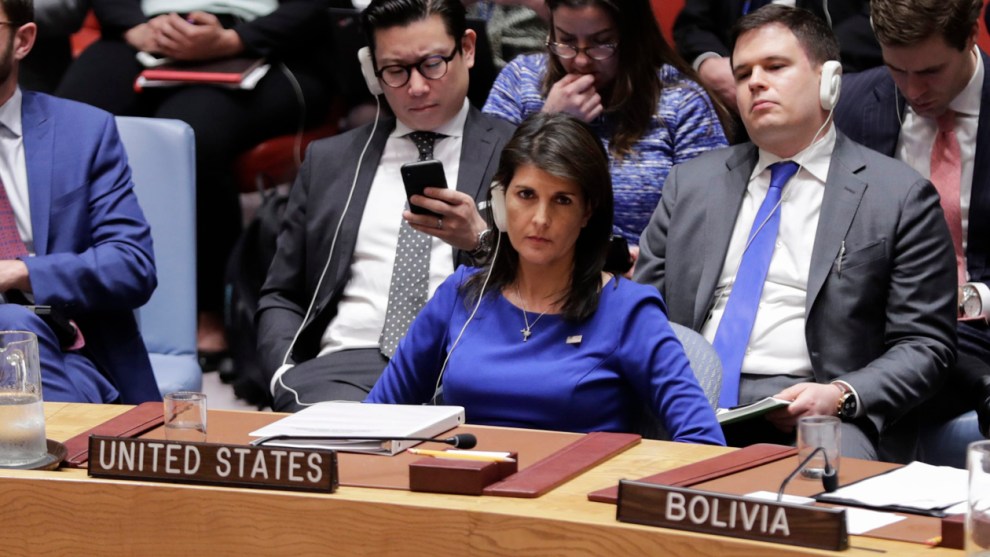
    Officially, Haley “misspoke.” In reality, she obviously did nothing of the sort. So what happened?

    Some officials said the misunderstanding could have been the result of Haley’s tendency to speak directly with the president, sometimes outside of the normal policy process. “She’ll usually talk to the president without the rest of the White House and get her remarks cleared directly,” said the administration official. “Often we don’t know about them.”

    So in this administration, talking directly to the president is likely to lead to remarks that the president doesn’t like. This is presumably because:

    1. The president changes his mind about what he likes on an hourly basis.
    2. The president freewheels about stuff without knowing what it means.
    3. The president is too consumed with the Mueller investigation to care about anything else.
    4. The president is a moron.
    5. All of the above.

    Take your pick.

  • Trump’s Syria Strike Was Constitutional

    Vox features an interview today with constitutional lawyer Stephen Vladeck:

    As a matter of US law, was the latest American military strike on Syria legal?

    Almost certainly not. To be legal, the strike would have to authorized either by some act of Congress or by the president’s own powers under Article II of the Constitution. And neither of those conditions appear to have been met here.

    I’ve seen lots of versions of this opinion, but it’s wrong. In dorm-room-bull-session terms there might be something to it, but in practical terms there isn’t. If an action is approved, either implicitly or explicitly, by the executive, the legislative, and the judicial branches, then it’s constitutional. That’s how our legal system works. Full stop.

    In this case, the executive obviously approved the action. Congress has had many opportunities to rein in these kinds of strikes, and they haven’t. Ditto for the Supreme Court, which has always given the president wide latitude in matters of military force.

    Until this changes, lobbing missiles at anyone we want is constitutional.