Hey, look! It’s a cat in a box!
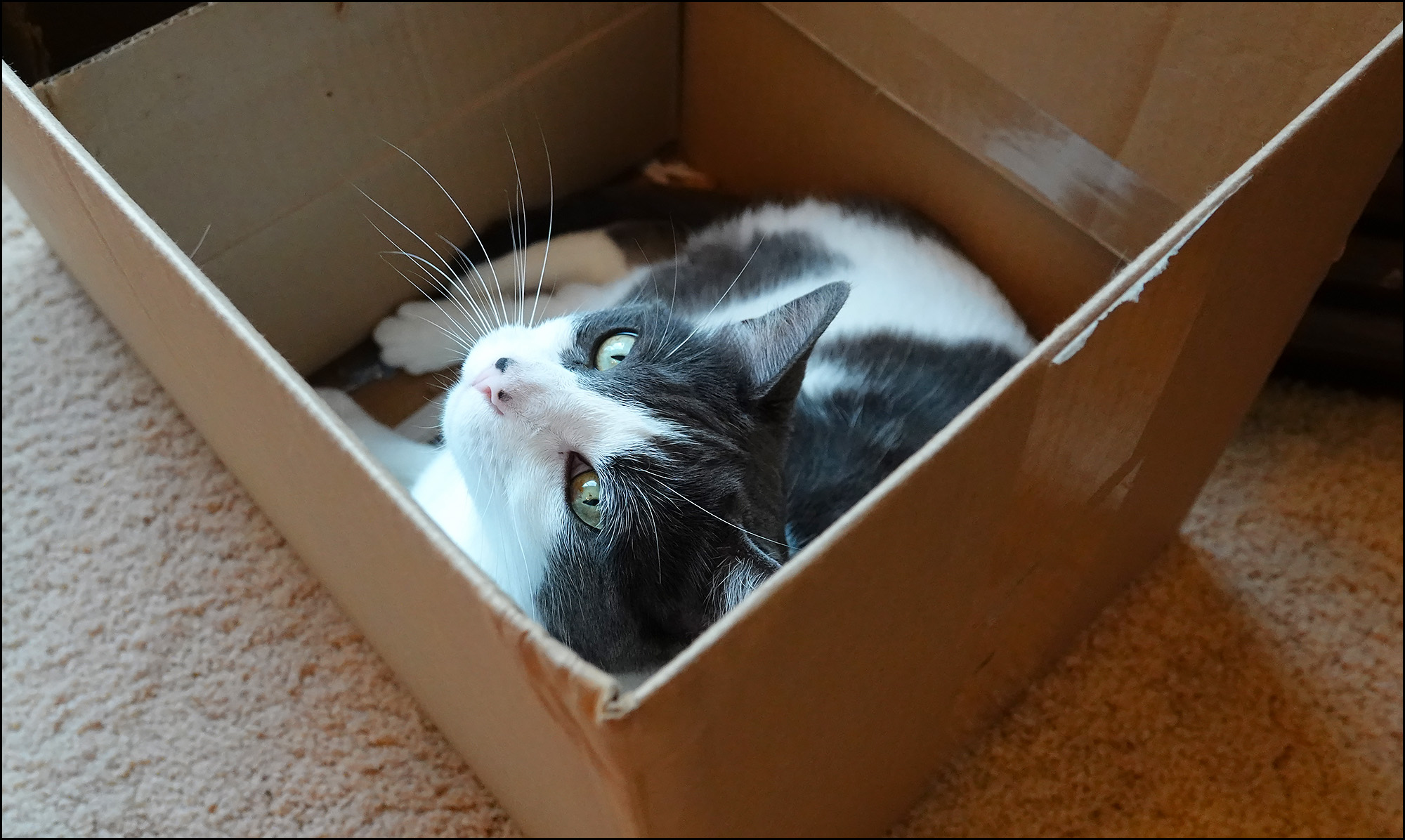

Hey, look! It’s a cat in a box!
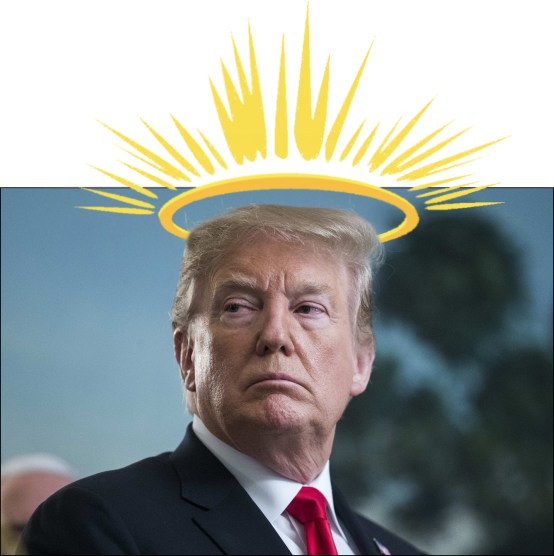
Michael Reynolds/CNP via ZUMA
Over at National Review, Yuval Levin remarks on the fact that the Mueller report has confirmed the dangerous way the White House works these days: Donald Trump rants and raves and spits out orders, and then his aides decide which of his orders to take seriously and which to ignore:
It is not hard to see why Trump’s senior staff treat him as they do. They understand better than any of us that in some crucial respects Trump is a special-needs president, and that his distinct disabilities as a decision maker have to be accommodated in some extraordinary ways to prevent them from exacting terrible costs. But these extraordinary accommodations are unlikely to be sustainable in truly extraordinary circumstances.
….The peculiar willingness of Trump’s people to ignore or disobey him is a blessing and a curse. But more than anything it is a warning sign that ought to be taken seriously by anyone in Congress or in the executive branch who is in any way in a position to help prepare our government to handle serious emergencies.
Unfortunately, no one who matters takes this seriously at all. This was made crystal clear by, among other things, the reactions to the Mueller report published by . . . National Review. Nearly all of them have been spittle-flecked defenses of Trump and outraged attacks on Democrats and the media. Only a few of them took the more sober approach that Levin recommends, namely that even if the report didn’t uncover criminal acts, it sure uncovered lots of behavior that ought to be inexcusable in a president.
And that was from a publication that famously opposed Trump during the 2016 primaries. Among the Fox News set, you’d think the Mueller report was a canonization recommendation from the Congregation for the Causes of Saints—and the only reason it was so long was because Trump had performed so many miracles.
They just don’t care. As long as he keeps sending conservative judges to the Senate, Trump can do anything he wants.
Martin Rickett/PA Wire via ZUMA
I have never gone to the dentist for a cleaning every six months. I figure once a year is enough, and sometimes I don’t even do it that often. Ferris Jabr tells me that this is fine. The whole 6-month thing is basically just a way for dentists to make more money:
Consider the maxim that everyone should visit the dentist twice a year for cleanings. We hear it so often, and from such a young age, that we’ve internalized it as truth. But this supposed commandment of oral health has no scientific grounding. Scholars have traced its origins to a few potential sources, including a toothpaste advertisement from the 1930s and an illustrated pamphlet from 1849 that follows the travails of a man with a severe toothache. Today, an increasing number of dentists acknowledge that adults with good oral hygiene need to see a dentist only once every 12 to 16 months.
Hmmm. This sounds a lot like my good friend, the “drink eight glasses of water every day” nonsense.
I’ve never been afraid of the dentist or anything like that. But I have to say that my recent encounters with the dental profession have been less than confidence inspiring. Several years ago I dropped my dentist after beginning to wonder if their advice was based a wee bit too much on sales goals from the head office. I had started to get a little uneasy after listening in on a scene near the waiting room that sounded more like a hawker at a Turkish bazaar than a dentist recommending treatment. I got more uneasy when they started replacing fillings awfully frequently. And then I got really uneasy when it suddenly turned out that every time I went in they discovered an “infection” that required a new kind of antibiotic treatment. The third time this happened, I tried to ask about just what this “infection” really was and what dentists did about them before this new treatment came on the market. I was unable to get a straight answer, so I left.
I switched to a dentist recommended by a friend, but last year I dropped her too. The primary reason was a fairly egregious mistake she had made, but it was also because she told me, in a conversational aside, that she had been replacing several of my old fillings because they were metal and she thought that was bad. What she had said at the time was that they were coming loose. Guess what?
The Cochrane organization, a highly respected arbiter of evidence-based medicine, has conducted systematic reviews of oral-health studies since 1999….Little medical evidence justifies the substitution of tooth-colored resins for typical metal amalgams to fill cavities….When Cochrane researchers tried to determine whether faulty metal fillings should be repaired or replaced, they could not find a single study that met their standards.
I would never have bothered getting the fillings replaced just to get rid of the metal, and now it looks as though they probably didn’t need to be replaced even if they were faulty. (Which I now doubt, based on the egregious mistake I mentioned earlier.)
Anyway, I guess it’s time for me to find a new dentist. All I want is someone who will do what’s necessary, but only what’s necessary. Unfortunately, I’m not sure how you figure that out ahead of time.
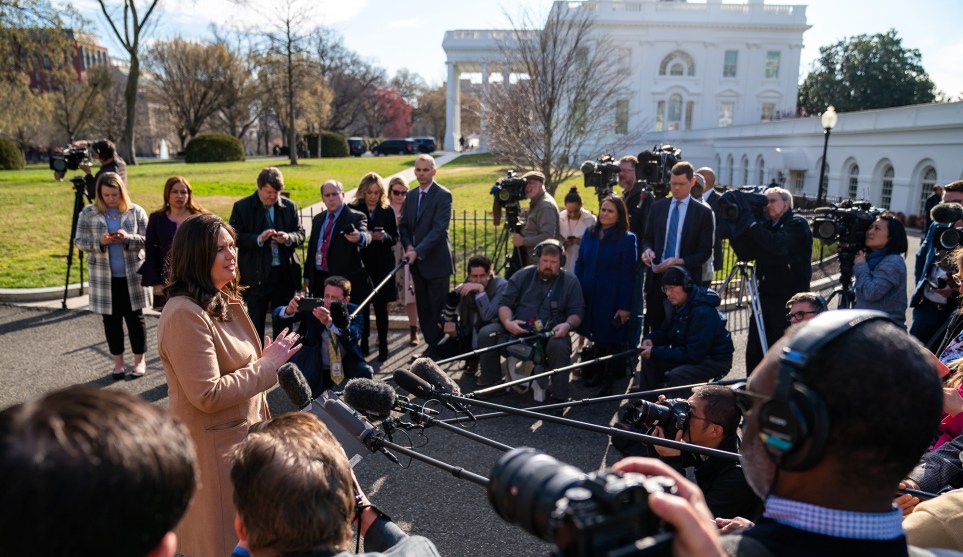
White House/ZUMA
President Trump’s spokeswoman, Sarah Huckabee Sanders, pushed back Friday against allegations that special counsel Robert S. Mueller III’s Russia report exposed a culture of lying at the White House.
Sanders also disputed allegations that she misled the media when she said that “countless” members of the FBI had lost confidence in FBI Director James B. Comey….She told ABC’s “Good Morning America” that her word “countless” was a “slip of the tongue” made in the “heat of the moment.”
Sure, Sarah. You meant to say that, um, an accountant in the FBI had lost confidence in Comey, but it came out as countless. It could happen to anyone.
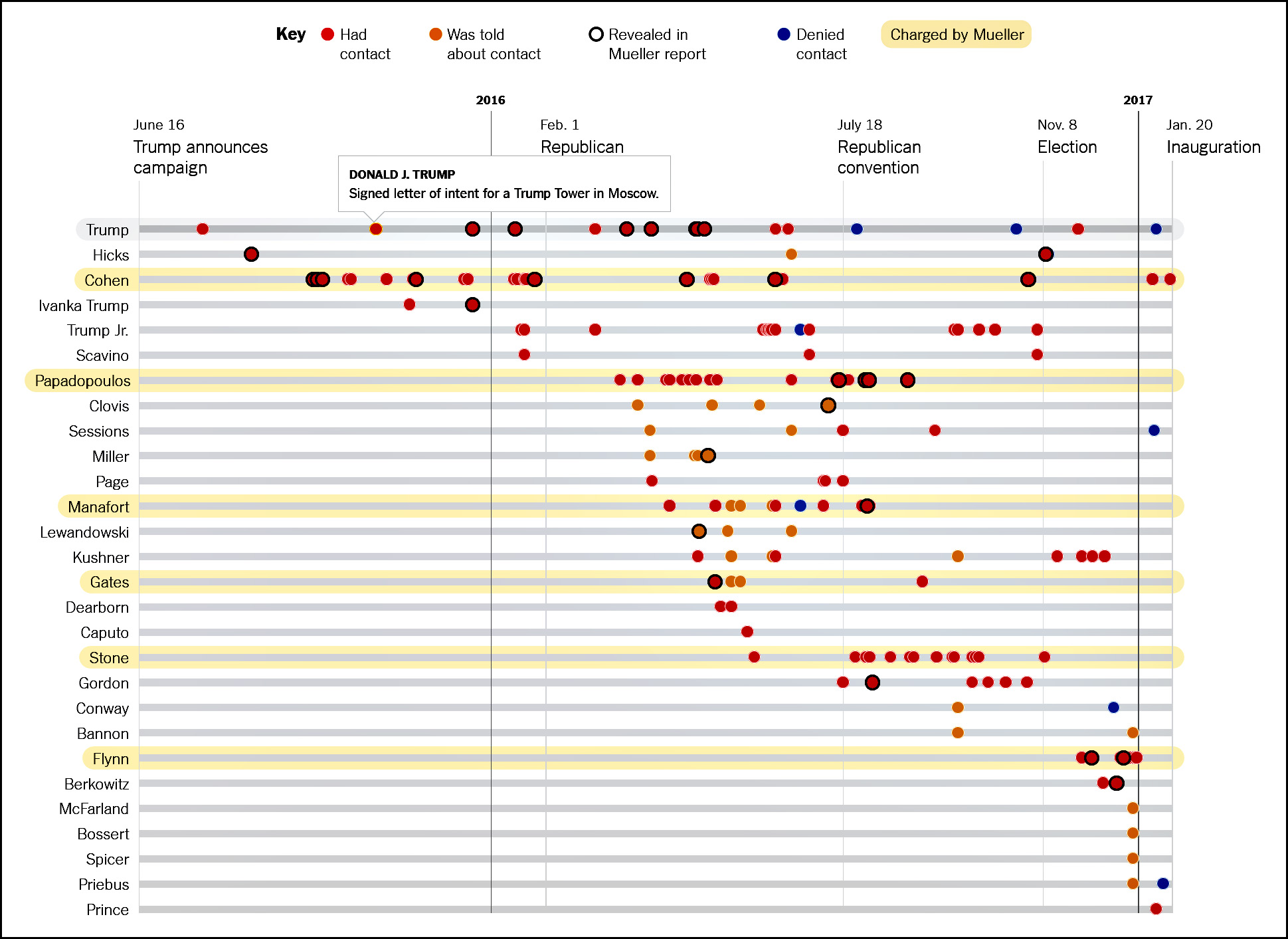
The New York Times counted up every contact in the Mueller report between Team Trump and either Russians or WikiLeaks. They figure it comes to at least 140, of which 30 hadn’t been known before. That’s a lot of Russians! Here’s the whole thing in graphical form:
Here’s a quick note about the Mueller report. This bit is getting a lot of play:
According to notes written by [Jody] Hunt, when Sessions told the President that a Special Counsel had been appointed, the President slumped back in his chair and said, “Oh my God. This is terrible. This is the end of my Presidency. I’m fucked.” The President became angry and lambasted the Attorney General for his decision to recuse from the investigation, stating, “How could you let this happen, Jeff?”…Sessions recalled that the President said to him, “you were supposed to protect me,” or words to that effect.
Why would Trump say this if, in fact, he wasn’t guilty of collusion with the Russians and had nothing to fear? I think that’s pretty simple. My guess all along has been that although others in the campaign may have colluded with the Russians,¹ Trump himself didn’t. This is mostly because he’s shrewd enough to know what lines he can’t cross, but also because his staff tried to protect him from this stuff.
However, Trump knew there were plenty of other things to worry about. He was probably worried about the hush money payments to Stormy Daniels. He was probably worried about his tax returns. He was probably worried about various corporate shenanigans he had been involved in over the years. He may have been worried about his past association with mob figures.
In other words, when Trump says that obstruction of justice is impossible because there was no underlying crime, he’s wrong on two counts. First, Mueller made it clear that, in fact, you can obstruct justice even if there’s no underlying crime. Second, Mueller found only that Trump wasn’t guilty of colluding with the Russians. He didn’t investigate anything else, and therefore drew no conclusions about other possible crimes Trump may have been guilty of.
Most likely, there were underlying crimes that Trump was worried about, and that’s why he tried to obstruct the investigation. He knew that Whitewater, for example, had morphed from an investigation of a small-time real-estate deal into a carefully crafted perjury trap involving illicit sex with a White House employee. If that could happen, surely an investigation of collusion with Russia could morph into questions about hush money payments to a porn star. In the end, it turned out that Robert Mueller was far more honest and fairminded than Ken Starr ever was, and no such thing happened. Trump, however, who assumes that everyone is as corrupt as he is, never realized that.
¹Or they wanted to, anyway. But apparently they were too incompetent to pull off anything that was clearly illegal.
Nicolas Liponne/NurPhoto via ZUMA
We get questions:
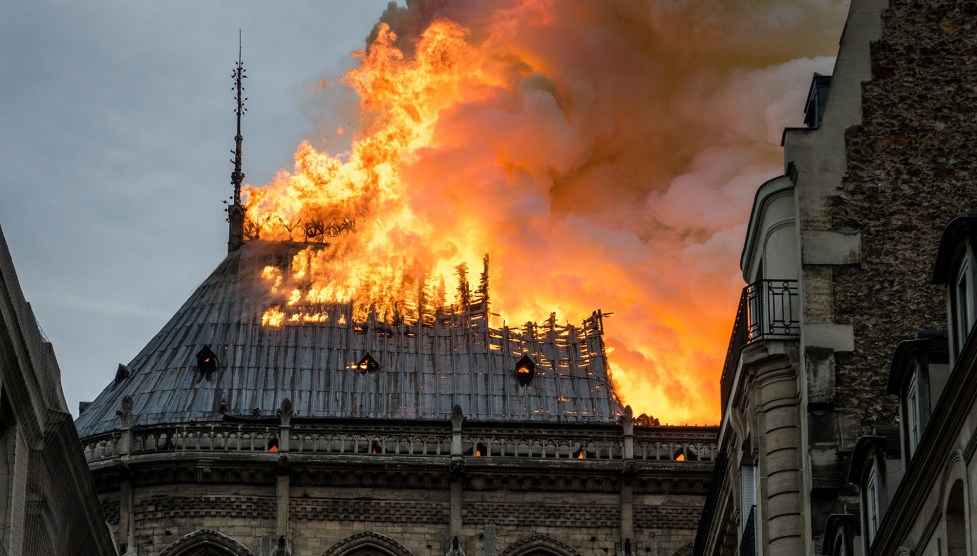
@ClaraJeffery @marynmck Know any environmental journos who want to take this story? I’ve been slightly obsessing about if for days now. It was 210 TONS of lead. It went *somewhere* … https://t.co/EaY1ly2qUG
— Charlotte M. Freeman (@charlottemf406) April 18, 2019
That’s a lot of lead. And I am not an expert in how lead circulates in the atmosphere. However, for two reasons I suspect this isn’t too big a concern:
I too would like to hear from an expert about this, but in the meantime my best guess is that the release of lead into the atmosphere is a fairly minor issue.
Note that I’m talking here about the effect on the area surrounding the cathedral. Needless to say, lead contamination inside the cathedral is likely to be a big problem for the cleanup crew.
¹As opposed to the lead in gasoline, which comes in the form of tetraethyl lead. This molecule contains 20 hydrogen atoms, 8 carbon atoms, and one lead atom, which makes it relatively light. It’s still heavier than air, but not so much that it can’t drift quite a distance on wind currents.
Joe Camporeale/CSM via ZUMA
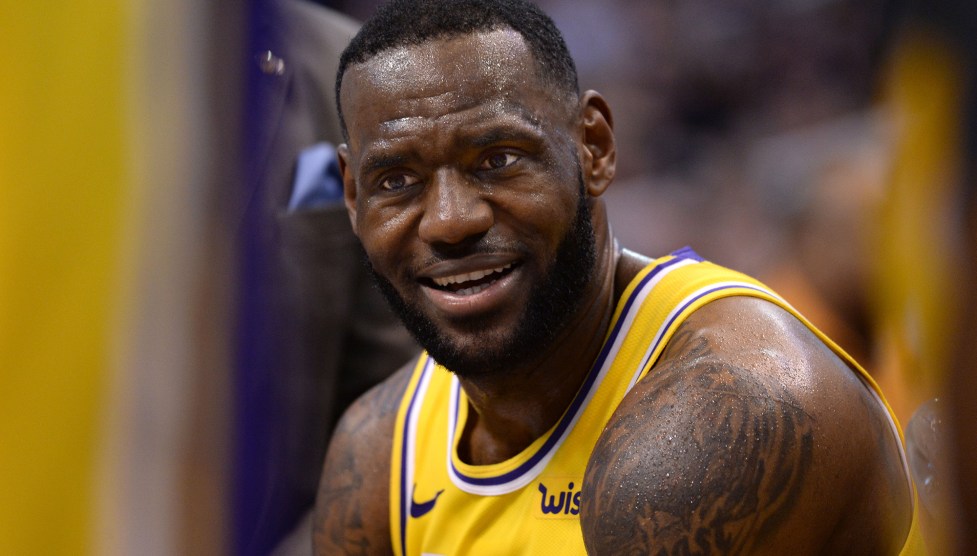
As a quick aside from Mueller-mania, Bob Somerby points out this remarkable sentence from a New York Times story about the great news coming out of a new school opened last year by LeBron James:
Nataylia Henry, a fourth grader, missed more than 50 days of school last year because she said she would rather sleep than face bullies at school. This year, her overall attendance rate is 80 percent.
Short of reporting the results in hexadecimal, I don’t think it would be possible to make it more difficult to figure out what this means. You could say that Nataylia missed 50 days of school last year and is on track to miss 36 days this year. Or you could say her attendance rate has gone from 72 percent last year to 80 percent so far this year. The problem, I guess, is that both of those constructions make it pretty obvious that (a) Nataylia is still missing a lot of school, and (b) her attendance rate is only a little better than last year. So her attendance was fudged to make it hard to figure that out. This is journalistic malpractice.
As Somerby points out, this sentence is part of a story that’s the latest example of an evergreen narrative in our nation’s newspapers: the credulous feel-good feature about an amazing new school that’s kicking ass among kids everyone else has given up on. But it’s especially egregious in this case because the new school is in its first year. The story is literally based on eight months of operation. The school also explicitly refuses to accept any kids in the bottom 10 percent. I think every elementary teacher in the country would sell their big toe to have the option of getting rid of their three or four slowest and most troublesome students. And even at that, it’s not clear if the school’s performance is all that remarkable:
Ninety percent met or exceeded individual growth goals in reading and math, outpacing their peers across the district….The students’ scores reflect their performance on the Measures of Academic Progress assessment, a nationally recognized test administered by NWEA, an evaluation association. In reading, where both classes had scored in the lowest, or first, percentile, third graders moved to the ninth percentile, and fourth graders to the 16th. In math, third graders jumped from the lowest percentile to the 18th, while fourth graders moved from the second percentile to the 30th.
I don’t quite get this. The story says that students were initially in the 10th to 25th percentile on their second-grade assessments, but the classes as a whole were in the first percentile? I guess that’s possible, but it seems a little unlikely. And even at that, their progress suggests only that they went from functionally illiterate to . . . slightly literate. That’s better than no progress, but still not a lot to hang this feel-good story on.
Then there’s this:
Unlike other schools connected to celebrities, I Promise is not a charter school run by a private operator but a public school operated by the district….The school’s $2 million budget is funded by the district, roughly the same amount per pupil that it spends in other schools. But Mr. James’s foundation has provided about $600,000 in financial support for additional teaching staff to help reduce class sizes, and an additional hour of after-school programming and tutors. The school is unusual in the resources and attention it devotes to parents, which educators consider a key to its success. Mr. James’s foundation covers the cost of all expenses in the school’s family resource center, which provides parents with G.E.D. preparation, work advice, health and legal services, and even a quarterly barbershop.
That’s—what? At least a 30 percent increase in the school’s budget, and probably more like 50 percent. In other words, replicating this performance would most likely require a 50 percent increase across the board in every other school for at-risk students. How likely is that?
If you read between the lines, here’s what you get:
If:
Then:
Believe me when I say that I know how cynical this sounds. I’m sorry about that. But I don’t think anyone should be surprised about getting results like this from a program with this framework. Programs similar to this one have been started up before and have often shown promise, just as you’d expect. The problem is getting them to scale; getting them to work when you have to take all comers; and getting them to continue working over the long term. We have very few success stories like that.
I’d be thrilled if LeBron’s school works well and lots of poor kids are helped. And I think it’s great that he’s funding this stuff, regardless of whether it turns out to work. But it’s just crazy for the New York Times to give his school star treatment like this based on the thinnest possible evidence of success. American journalism should do better.
What kind of flower is this? A California lotus? A hill lotus? A bird’s-foot trefoil?
None of the above! It’s a strigose lotus growing along the side of Santiago Canyon Road, identifiable by its thin leaves. See how much better I’m getting at identifying my local wildflowers? But I still have a few mystery blooms that I can’t seem to place. I’ll figure them out eventually.


Mother Jones; James Berglie/ZUMA Press; Getty
In his report, Special Counsel Robert Mueller concludes that nothing in statute or the Constitution shields a president from obstruction-of-justice charges. Such charges, he says, wouldn’t have a “chilling” effect on a president’s ability to govern because they require a showing of corrupt motive, which “sets a demanding standard.” That standard rules out obstruction charges related to actions a president takes for political or policy reasons. “For instance, the President’s decision to curtail a law-enforcement investigation to avoid international friction would not implicate the obstruction-of-justice statutes.”
However, direct or indirect action to influence an investigation in order to avoid “personal embarrassment or legal liability” for himself or his family would qualify as corrupt. With that in mind, here’s a selection of conclusions from the report about President Trump’s corrupt intent related to different aspects of the investigation. There are no redactions in the sections I’m quoting:
Firing of James Comey
Substantial evidence indicates that the catalyst for the President’s decision to fire Comey was Comey’s unwillingness to publicly state that the President was not personally under investigation….Some evidence indicates that the President believed that the erroneous perception he was under investigation harmed his ability to manage domestic and foreign affairs….Other evidence, however, indicates that the President wanted to protect himself from an investigation into his campaign….[T]he evidence does indicate that a thorough FBI investigation would uncover facts about the campaign and the President personally that the President could have understood to be crimes.
Attempt to fire the Special Counsel
Substantial evidence indicates that the President’s attempts to remove the Special Counsel were linked to the Special Counsel’s oversight of investigations that involved the President’s conduct—and most immediately, to reports that the President was being investigated for potential obstruction of justice.
Attempts to influence Jeff Sessions
Substantial evidence indicates that the President’s effort to have Sessions limit the scope of the Special Counsel’s investigation to future election interference was intended to prevent further investigative scrutiny of the President’s and his campaign’s conduct….There is evidence that at least one purpose of the President’s conduct toward Sessions was to have Sessions assume control over the Russia investigation and supervise it in a way that would restrict its scope….A reasonable inference […] is that the President believed that an unrecused Attorney General would play a protective role and could shield the President from the ongoing Russia investigation.
Attempts to have Don McGahn fire the Special Counsel
Substantial evidence indicates that in repeatedly urging McGahn to dispute that he was ordered to have the Special Counsel terminated, the President acted for the purpose of influencing McGahn’s account in order to deflect or prevent further scrutiny of the President’s conduct towards the investigation.
Trump’s actions related to Michael Cohen
In analyzing the President’s intent in his actions towards Cohen as a potential witness, there is evidence that could support the inference that the President intended to discourage Cohen from cooperating with the government because Cohen’s information would shed adverse light on the President’s campaign-period conduct and statements.
It’s hard to read the report in its entirety without coming to the clear conclusion that Mueller believed Trump was guilty of obstruction of justice on many, many occasions. In multiple cases, all three parts of his three-part test are present: the obstructive acts are there, the “nexus” to official proceedings is there, and corrupt intent is there.
However, he decided not to recommend charges because he knows the Attorney General disagrees with him about whether the law and the Constitution allow a sitting president to be indicted. Based on the evidence he lays out, this appears to be the sole reason he balked at recommending charges.¹ If this case had been about any other person on the planet—or if the AG didn’t have such strong protective instincts—Mueller would have recommended charges.
In the end, Mueller appears to have backed off because he didn’t want to be involved in a big political fight. This does not speak very well for his willingness to do what’s right regardless of how it might affect him personally.
¹From the introduction to Volume II:
The Office of Legal Counsel (OLC) has issued an opinion finding that “the indictment or criminal prosecution of a sitting President would impermissibly undermine the capacity of the executive branch to perform its constitutionally assigned functions” in violation of “the constitutional separation of powers.” Given the role of the Special Counsel as an attorney in the Department of Justice and the framework of the Special Counsel regulation, see 28 U.S.C. § 515; 28 C.F.R § 600.7(a), this Office accepted OLC’s legal conclusion for the purpose of exercising prosecutorial jurisdiction.

Award-winning photojournalism.
Stunning video. Fearless conversations.


