• Mueller “Unable” to Say Trump Didn’t Commit Obstruction of Justice

    TNS via ZUMA

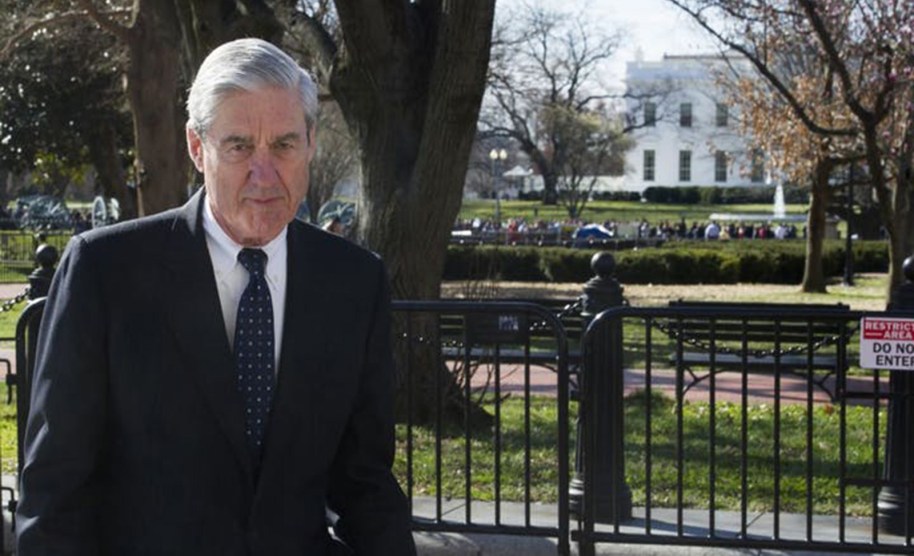
    The Mueller report is out. Here’s an excerpt from the executive summary of Volume II, which covers obstruction of justice on the part of President Trump:

    [T]he actions we investigated can be divided into two phases, reflecting a possible shift in the President’s motives. The first phase covered the period from the President’s first interactions with Comey through the President’s firing of Comey. During that time, the President had been repeatedly told he was not personally under investigation.

    Soon after the firing of Comey and the appointment of the Special Counsel, however, the President became aware that his own conduct was being investigated in an obstruction-of-justice inquiry. At that point, the President engaged in a second phase of conduct, involving public attacks on the investigation, non-public efforts to control it, and efforts in both public and private to encourage witnesses not to cooperate with the investigation.

    ….[I]f we had confidence after a thorough investigation of the facts that the President clearly did not commit obstruction of justice, we would so state. Based on the facts and the applicable legal standards, we are unable to reach that judgment.

    There are only three short redactions in the executive summary of Volume II, and none in the section I quoted. The full report is here.

  • Don’t Worry About the 2020 Primaries. They Won’t Hurt the Progressive Movement.

    How worried should we be about all the dissension among progressives these days? We have Nancy Pelosi vs. AOC. We have centrists vs. lefties. We have Bernie bros vs. CAP. We have purists vs. compromisers. We have the young vs. the boomers. We have Glenn Greenwald vs. everyone.

    But here’s the thing: I can’t remember a presidential campaign in which people didn’t worry about a nasty primary ruining the out party’s chances to win in November. And yet Jimmy Carter won. Ronald Reagan won. Bill Clinton won. George Bush won. Barack Obama won. Donald Trump won. Big, loud, bruising primaries don’t historically seem to do any serious harm. I think you’d have to go back to 1968 to find an election where you could argue that a rough primary kept a party from winning the presidency—and “rough” barely begins to describe the melee surrounding Democrats that year.

    So for now, I wouldn’t worry too much. The big question is whether progressives can put the primaries behind them and support the eventual nominee. That may seem unlikely right now, but it will probably start to look like a sure thing once the reality of running against Donald Trump sets in.

    Just remember: a brutal primary cycle producing a “damaged” candidate is an evergreen concern. We hear it like clockwork every four years. But it never seems to come true.

  • WaPo: Mueller Report Will Be “Lightly” Redacted

    This is obviously not the place to go if you want an instant response to the release of the Mueller report tomorrow, but I’ll try to keep up with the latest news. Today the Washington Post reports that the report will be “lightly” redacted:

    The report — the general outlines of which the Justice Department has briefed the White House on — will reveal that Mueller decided he could not come to a conclusion on the question of obstruction because it was difficult to determine Trump’s intent and because some of his actions could be interpreted innocently, these people said. But it will offer a detailed blow-by-blow of the president’s alleged conduct — analyzing tweets, private threats and other episodes at the center of Mueller’s inquiry, they added.

    I don’t think it’s really all that hard to figure out Trump’s intent here, but whatever. The redactions are supposed to be limited to grand jury testimony and matters of national security, so they should be pretty light. And the summary pages ought to be almost completely clear of redactions. We’ll see.

    WARNING: No matter your point of view, don’t let yourself get locked into the first narrative that hits your eyeballs. Wait until multiple sources have had time to read the whole report and provide a few different takes on it. There’s no rush on this.

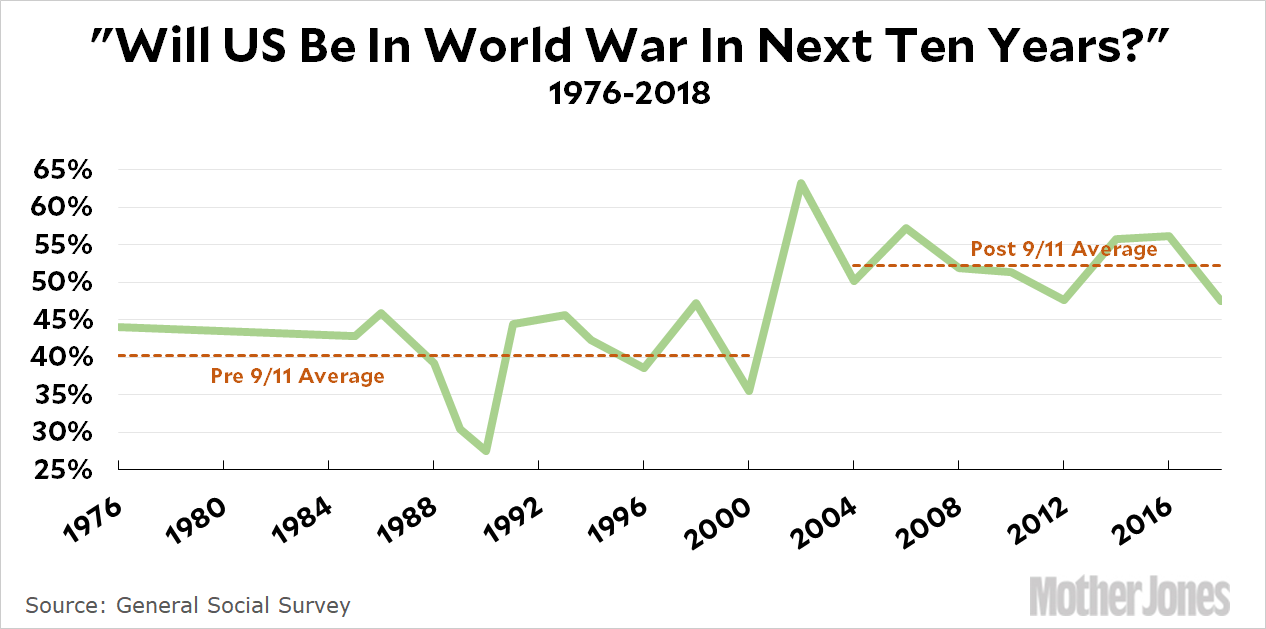
  • Americans Are Really Afraid of a Looming World War

    Here’s another interesting GSS chart for you. I still haven’t extracted the data I went there for, but I’ll get to it eventually. In the meantime, check this out:

    There are several surprising things here:

    • First, that the numbers in general are so high. Half the population expects us to be in a world war sometime in the next decade? Wow.
    • Second, that the number spiked after 9/11 and stayed high. More people today expect a world war than they did during the actual Cold War.
    • Third, that responses have stayed so consistent even though we haven’t been in a world war. You’d think that after years and years of this prediction not coming true, people would start to figure that a world war was unlikely. But no.

    I don’t know what to make of this. Either Americans are way more pessimistic than I thought, or else they have a very different idea of what a “world war” is than I do.

    POSTSCRIPT: It’s worth noting that this fear of a world war changes a little bit if you break things out by demographic group, but not by much. Men and women, blacks and whites, Democrats and Republicans, young and old—they all have roughly the same fear that we’ll be in a world war sometime soon.

  • The Power of Words, Social Welfare Edition

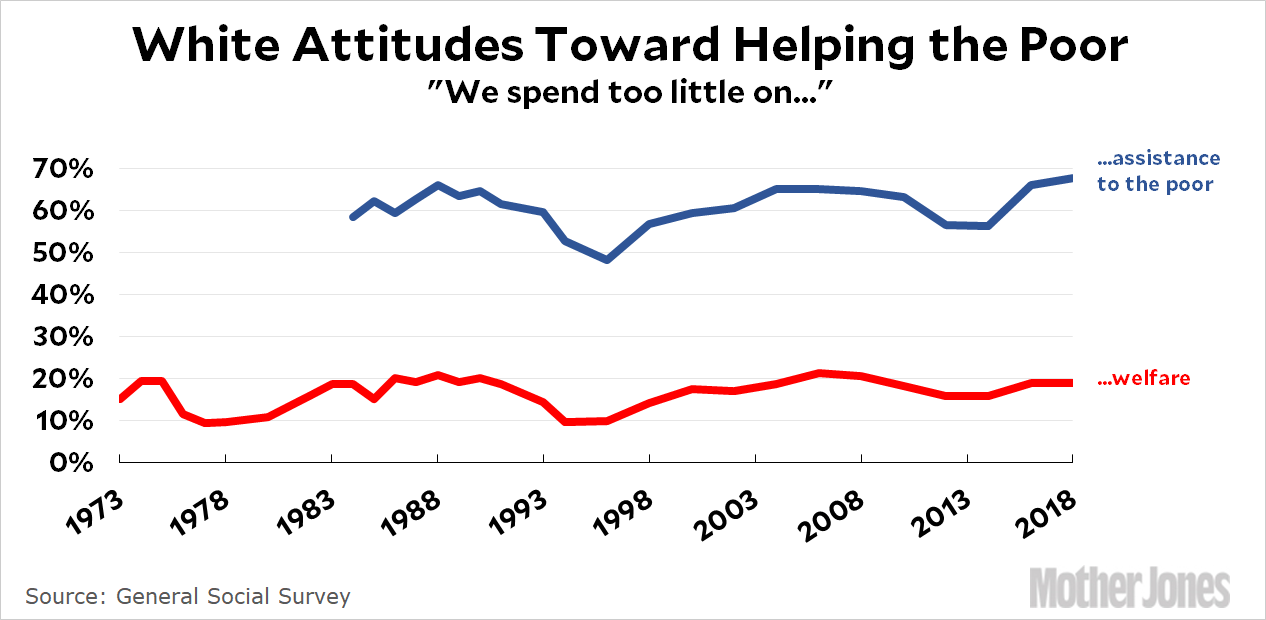
    I was browsing through the 2018 General Social Survey again and happened to come across a pretty astounding example of how important question wording can be. Or, perhaps, how important words can be in general. GSS nerds will be unsurprised by this, but here’s how white people feel about helping the poor. It all depends on precisely how you ask:

    This is a pretty astounding difference considering that welfare and assistance to the poor are pretty much the same thing. I’m tempted to say that the difference is that whites associate welfare with black families, but it turns out that African Americans show the same gap in attitudes toward the poor. In fact, the gap among African Americans is even bigger than it is for whites.

    So how do people really feel about spending on safety net programs? It’s impossible to say. I doubt very much that 70 percent of whites are truly in favor of spending more, but I also doubt very much that only 20 percent are truly in favor of spending more. I guess it all depends on how you sell it.

    POSTSCRIPT: It’s also worth noting that these responses are completely divorced from actual spending levels. Spending on poor families has increased by about 300 percent since 1973, but the answer to these questions has stayed rock steady the entire time.

  • Lunchtime Photo

    This is sunset over the 405, taken from the Jeffrey Road overpass. Once again, I did it a few days too late to get the sun directly over the freeway. Eventually I’ll learn to check this stuff before I go out to take pictures. Eventually.

    April 15, 2019 — Irvine, California
  • The North Pole Continues to Shrink

    Oh look, the North Pole is shrinking yet again this year, setting a new record for lack of ice:

    A few months ago it looked like 2019 might not be a record-breaking year after all. But now it is. In another 30 or 40 years, arctic ice will be gone completely during the summer months.

    But hey, there’s no telling why this is happening. Maybe it’s sunspots. Or volcanoes. Or gamma rays. Or greedy scientists who are deliberately mismeasuring the ice so they can scare people into giving them bigger grants. There are lots of possibilities.

  • School District Secession Is a Pretty Minor Issue in 48 States

    The 74 reports that we’re seeing an epidemic of suburban areas seceding from big urban school districts:

    EdBuild argues that residents who push to create their own school systems are often motivated by one overarching factor: school funding. “We are seeing over and over that it’s about the money,” said Zahava Stadler, director of policy at EdBuild, a think tank focused on education funding equity.

    ….When one district splits into two, the move often creates a wealthy school system that leaves behind one with high poverty and poor funding. Since 2000, at least 128 communities have launched campaigns to secede from their local school districts to create their own, smaller education systems. Of those, 74 have been successful, 11 of them finalized in just the past few years. Another 16 secession efforts are currently underway.

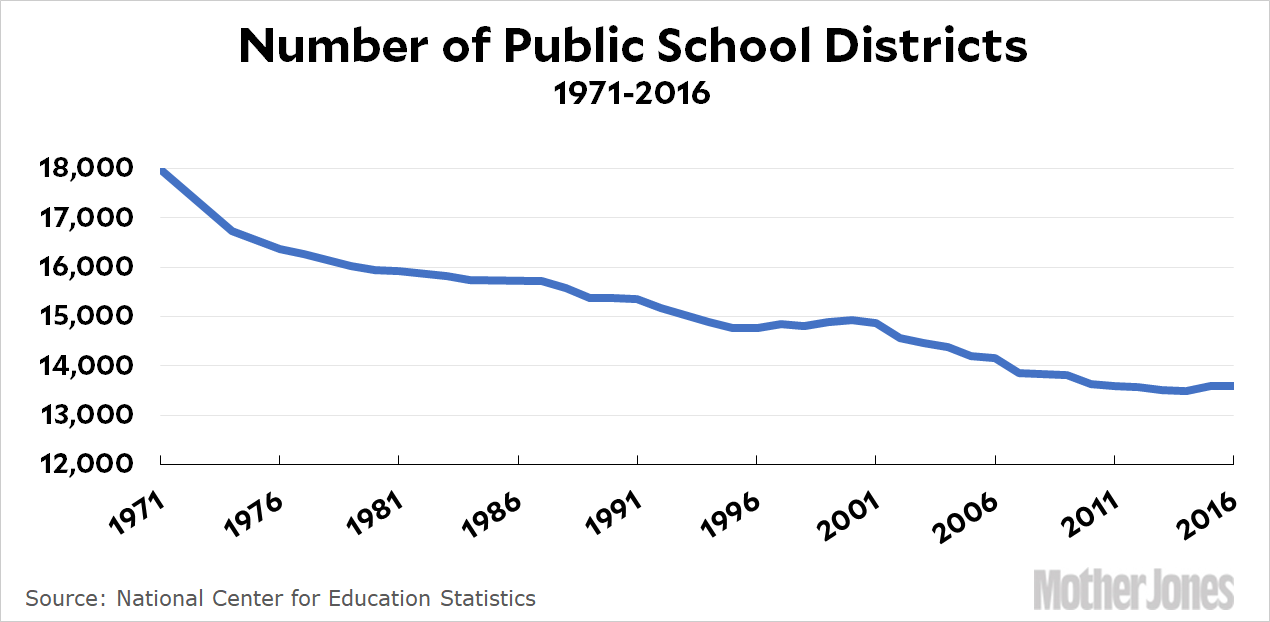
    Secession efforts of any kind are almost always about money.¹ Rich areas want to keep their money to themselves, and the way to do it is to secede. They generally also want to stay white, and secession paves the way for that too. The whole thing is loathsome and offensive.

    However, it’s not really very widespread. It turns out that of the 74 school district secessions, 47 are in Maine and Alabama and another six took place in Shelby County, Tennessee, a year after a school district merger. Outside of that, there have been 21 secessions since 2000, or about one per year in a country with more than 13,000 school districts. In other words, we might have a Maine and Alabama problem, but in the other 48 states there’s not really much going on.

    ¹On a national level, language often plays a role too. But even then, there’s usually a money angle as well.

  • Raw Data: Usual Weekly Earnings for Men and Women

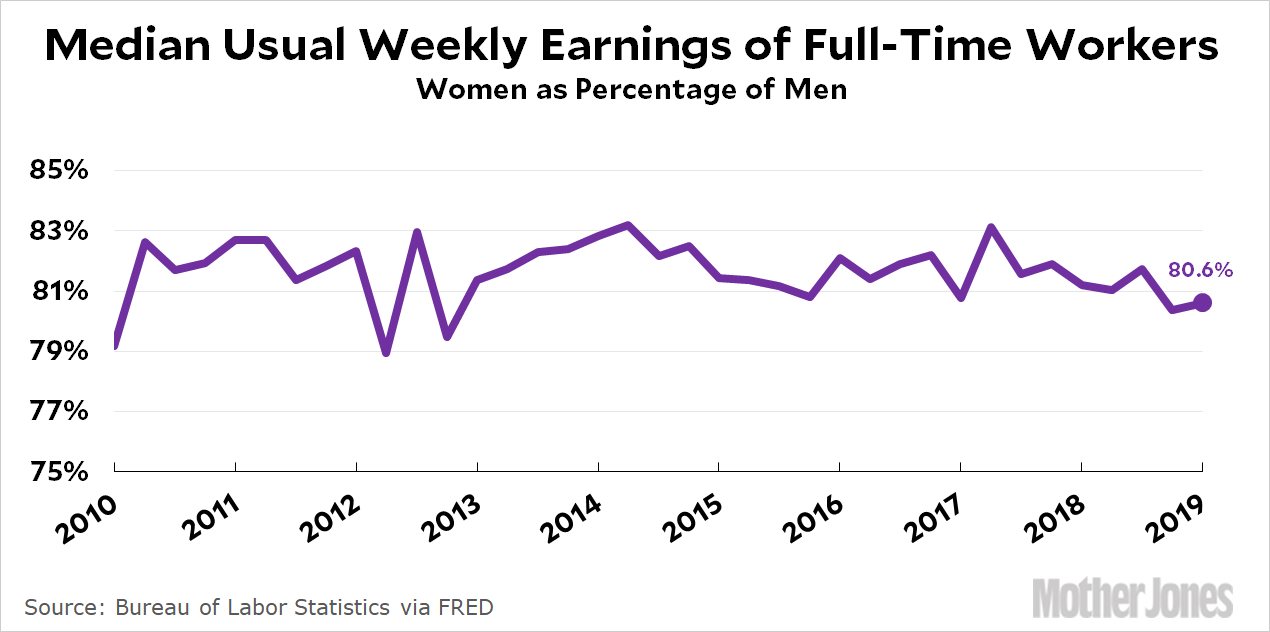
    The Bureau of Labor Statistics released its quarterly estimate of usual weekly earnings yesterday. So how are women doing these days?

    For a few years it looked like women were making a bit of progress, but that’s disappeared. Their relative earnings have been drifting down since 2017 and are now 80.6 percent of men’s earnings.

  • It’s Now Time to Get Serious About Ending US Support For the Yemen War

    Nieyunpeng/Xinhua via ZUMA

    This is only phase one of any serious effort to end our involvement in the Yemen war:

    President Trump on Tuesday vetoed a resolution that would have ended U.S. support for the Saudi-led military campaign in Yemen….The measure had passed the House on a 247-to-175 vote this month and was approved by the Senate last month with the support of seven Republicans.

    This month’s House vote marked the first time both chambers had acted to invoke the same war-powers resolution to end U.S. military engagement in a foreign conflict. It also represented the latest instance of Congress’s challenging Trump’s decisions as commander in chief.

    If Congress really wants the US out of Yemen, it will remove funding for any military activity associated with Yemen, and it will do so in a must-pass budget bill. If this doesn’t happen, it means that a lot of the folks who voted to end our support of the war were just cheap talkers who were only willing to do so when they knew the bill would be vetoed and their vote wouldn’t really matter. We’ll find out later this year.