• Surface Pro 7 Review

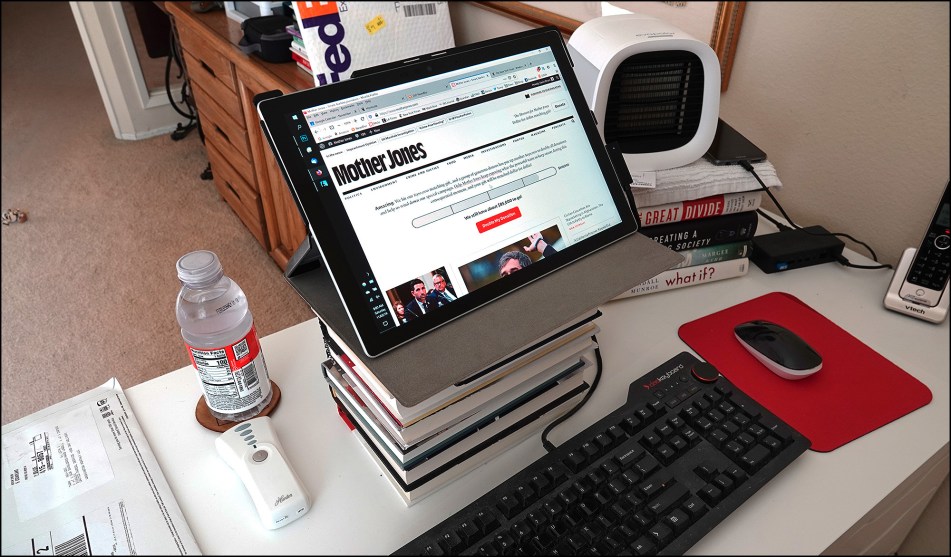
    This is the temporary nerve center of my blogging empire while the rest of our house is being torn apart and put back together again.Kevin Drum

    I am now on my seventh tablet and my third Surface Pro. There are probably three or four of you who are interested in this, so here’s my review of my shiny new Surface Pro 7.

    I finally caved in and bought the top-of-the-line model, for reasons that have little to do with performance but are too complicated to spend any time on. It’s got a Core i7 processor, 16 GB of RAM, and 512 GB of SSD hard drive. Performance is very snappy indeed, about as good as my desktop computer. It connects to WiFi networks quickly and reliably and download speeds are excellent.

    The only physical change from previous models is the addition of a USB-C port, which is very handy. I transfer files from my camera to the tablet all the time, and the combination of high performance and the USB-C port makes transfers about 10-20x faster than with my previous Surface Pro 5.

    Battery life is finally acceptable. I haven’t run the Pro 7 down to zero yet, but it looks to me like it gets a legit eight hours of battery life based on moderate, everyday use: mostly browsing, e-reading, and photoshopping. (I don’t do any gaming, so I have no idea how well it performs or how long it lasts for gamers.)

    Everything else is about the same as before. The screen resolution is great; it weighs about a pound and a half; and it costs a fortune. My last two Surface Pros have both developed screen problems after about 18 months, so I highly recommend getting the 2-year extended warranty.

    This is my first tablet that I truly have no complaints about—aside from the $2,000 price tag, that is. Here’s hoping that it lasts me a good long time.

  • Friday Cat Blogging – 1 November 2019

    Every morning—every. single. morning.—Hopper demands that I open the back door as soon as I get up. She immediately zips out into the backyard, circles around the house, and then demands to be let in the front door. She does this before I even have a chance to pour out my bowl of cereal. But I guess it makes her feel safer to know that the house is in pretty much the same shape that she left it in the night before.

  • Elizabeth Warren Presents Her Plan to Pay for M4A

    Elizabeth Warren is finally out with her detailed Medicare For All Plan. It is, as near as I can tell, the most complete plan in the known world, paying literally 100 percent of all health care expenses. That means medical, dental, vision, and mental; and it means no premiums, no copays, and no deductibles. No country in the world does this, so we’d be top dogs for sure if something like this passed.

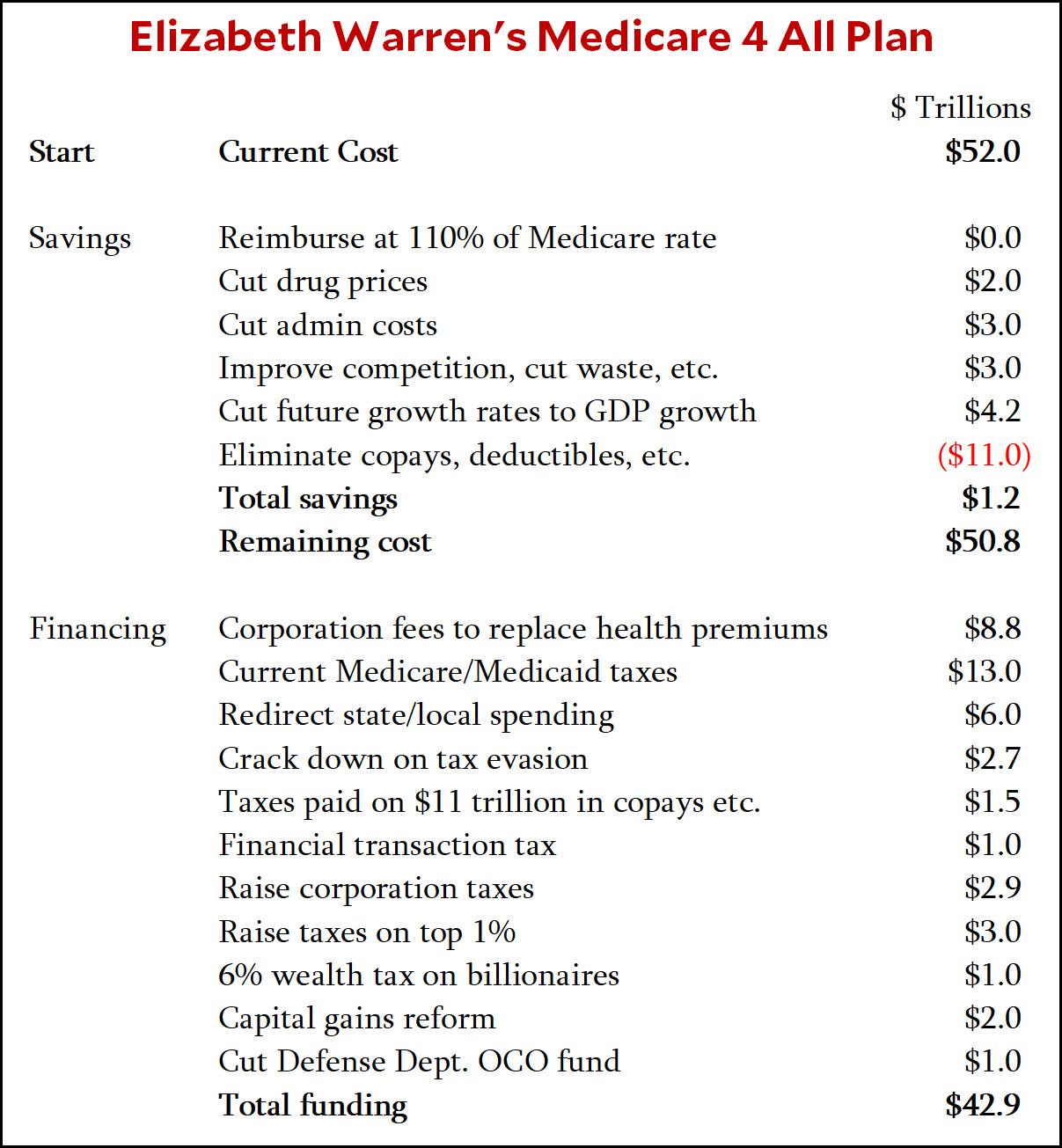
    And now for the nitty gritty. At great cost to my sanity, I have created a spreadsheet laying out the costs and payments for Warren’s plan. Some are taken directly from her white paper while others are estimates based on current costs and some slightly vague statements on Warren’s part. All of them are 10-year costs. Here it is:

    As you can see, it doesn’t add up, but I can’t quite tell if that’s my fault or hers. You see, Warren says that she’s going to return all the copays and deductibles we currently pay back to us. That’s an $11 trillion hit. But nowhere does she specifically account for how she’ll make up that money in other funding:

    I asked top experts — Mark Zandi, the Chief Economist of Moody’s Analytics; Betsey Stevenson, the former Chief Economist for the Obama Labor Department; and Simon Johnson — to examine options for how we can make up that $11 trillion difference. They conclude that it can be done largely with new taxes on financial firms, giant corporations, and the top 1% – and making sure the rich stop evading the taxes we already have.

    Sure enough, those taxes are there, but if you apply them to the $11 trillion you can’t also apply them to the rest of the $39 trillion that needs to be paid for. So it looks to me like, one way or another, Warren is short by about $8 trillion.

    But I might have a few numbers wrong or miscalculated here, so I’ll wait a bit to see if someone else produces a more detailed accounting. In the meantime, I’ll note that $8 trillion amounts to about $600 billion in the first year of operation, which is not insurmountable. I also note that there’s no line item for recouping current spending on Obamacare, which amounts to about $1 trillion over ten years.

    In other words: don’t take this too seriously yet. This is the best I could do with the document Warren posted, but I might have some line items wrong. Alternatively, Warren might have some line items wrong. Everyone stay cool for a while until it’s all worked out.

  • Fossil Fuel Use in Southeast Asia Is Projected to Increase 60% By 2040

    American conservatives are fond of saying that we should stop worrying so much about carbon emissions in the US. The real problem is carbon emissions in places like China and India, which are growing faster than ours and, in China’s case, already much higher.

    The motivation for this attitude is obvious: conservatives don’t want to address climate change, and this is a good excuse for doing nothing. But motivation aside, do they have a point?

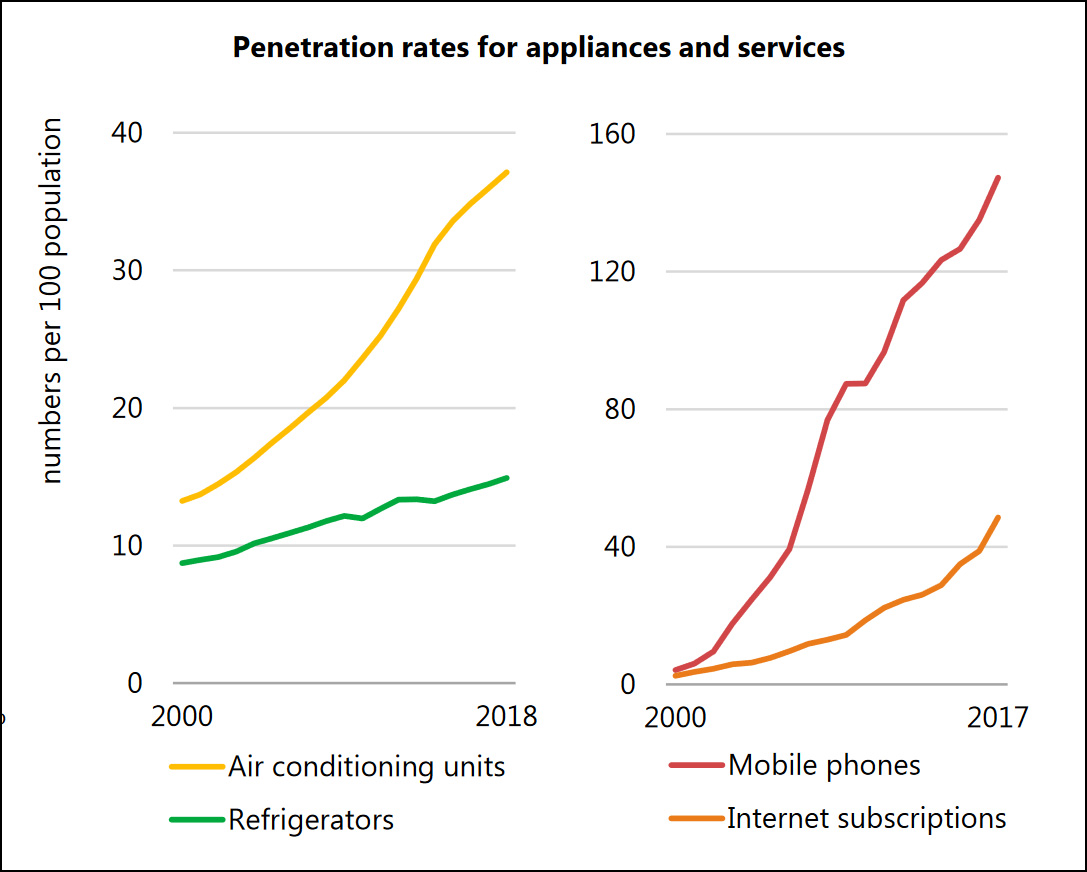
    The International Energy Agency recently released a series of reports about energy use in southeast Asia. Here is the penetration rate of air conditioners over the past two decades:

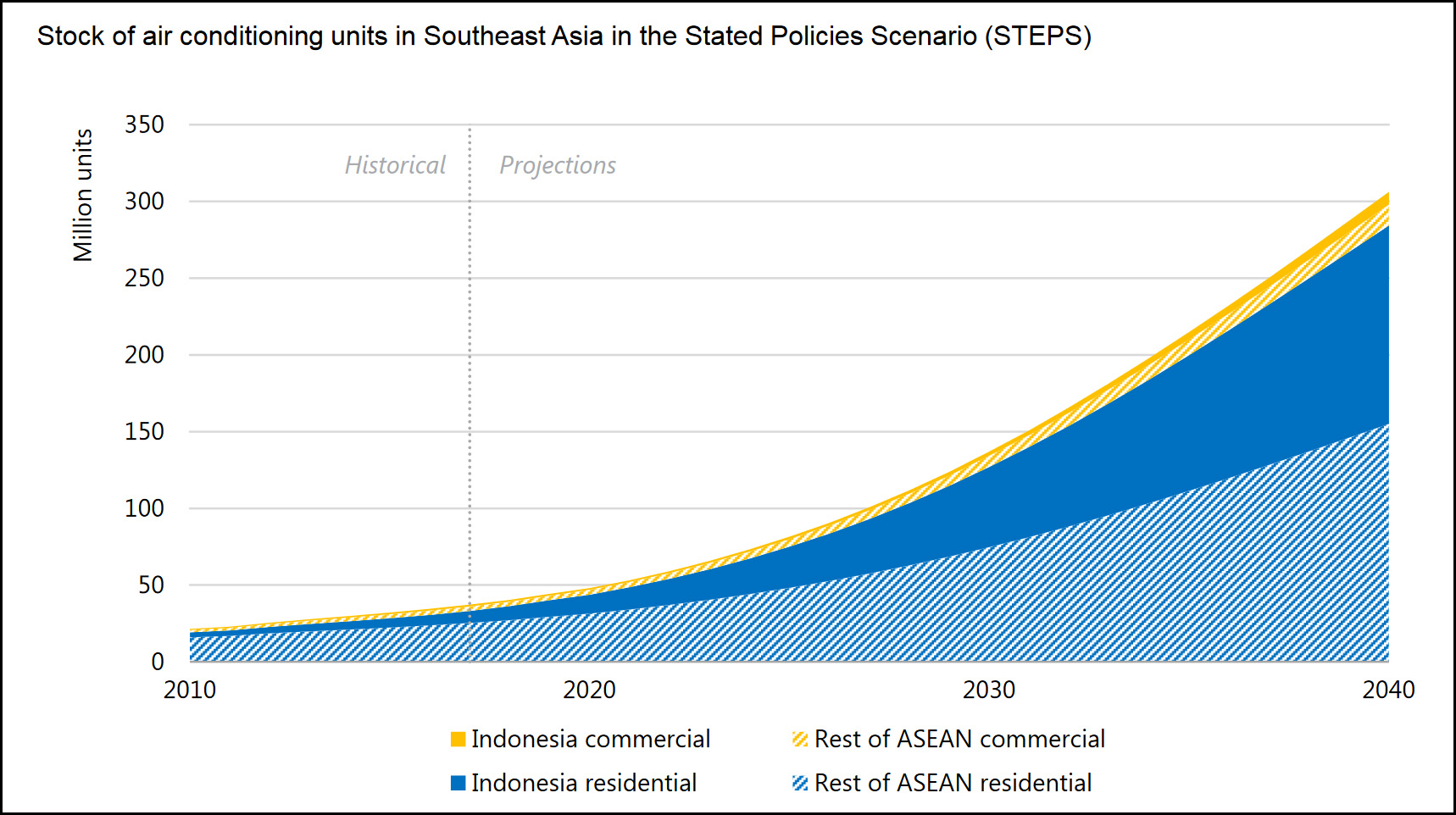
    Air conditioner penetration has tripled and refrigerator penetration has nearly doubled. Here is the IEA’s projection for the next two decades:

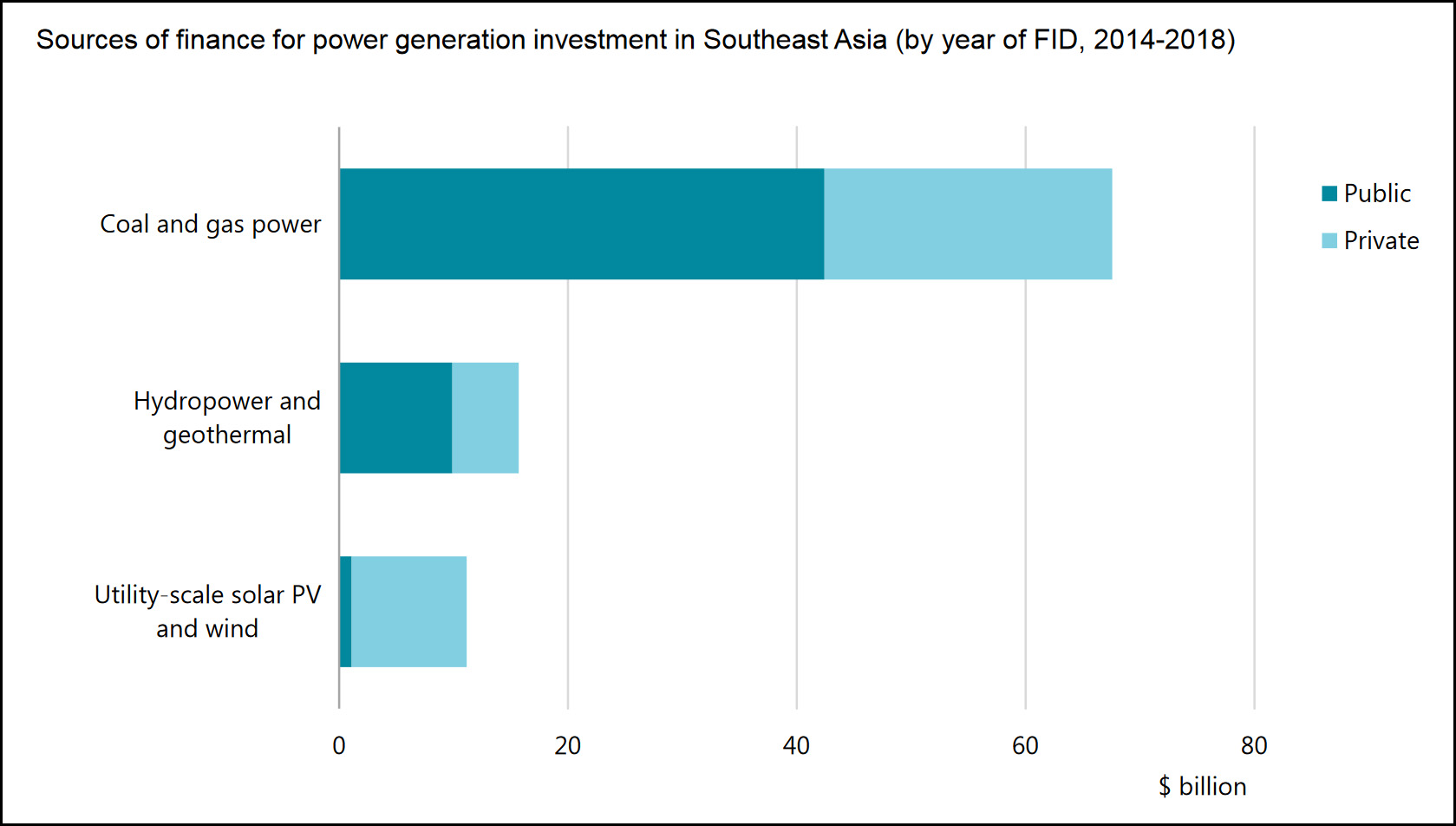
    As the usual aphorism goes, “They all want air conditioners too.” (And cars and refrigerators and so forth.) This might not be too bad if all these air conditioners were going to be powered by solar panels, but that’s not where the investment is:

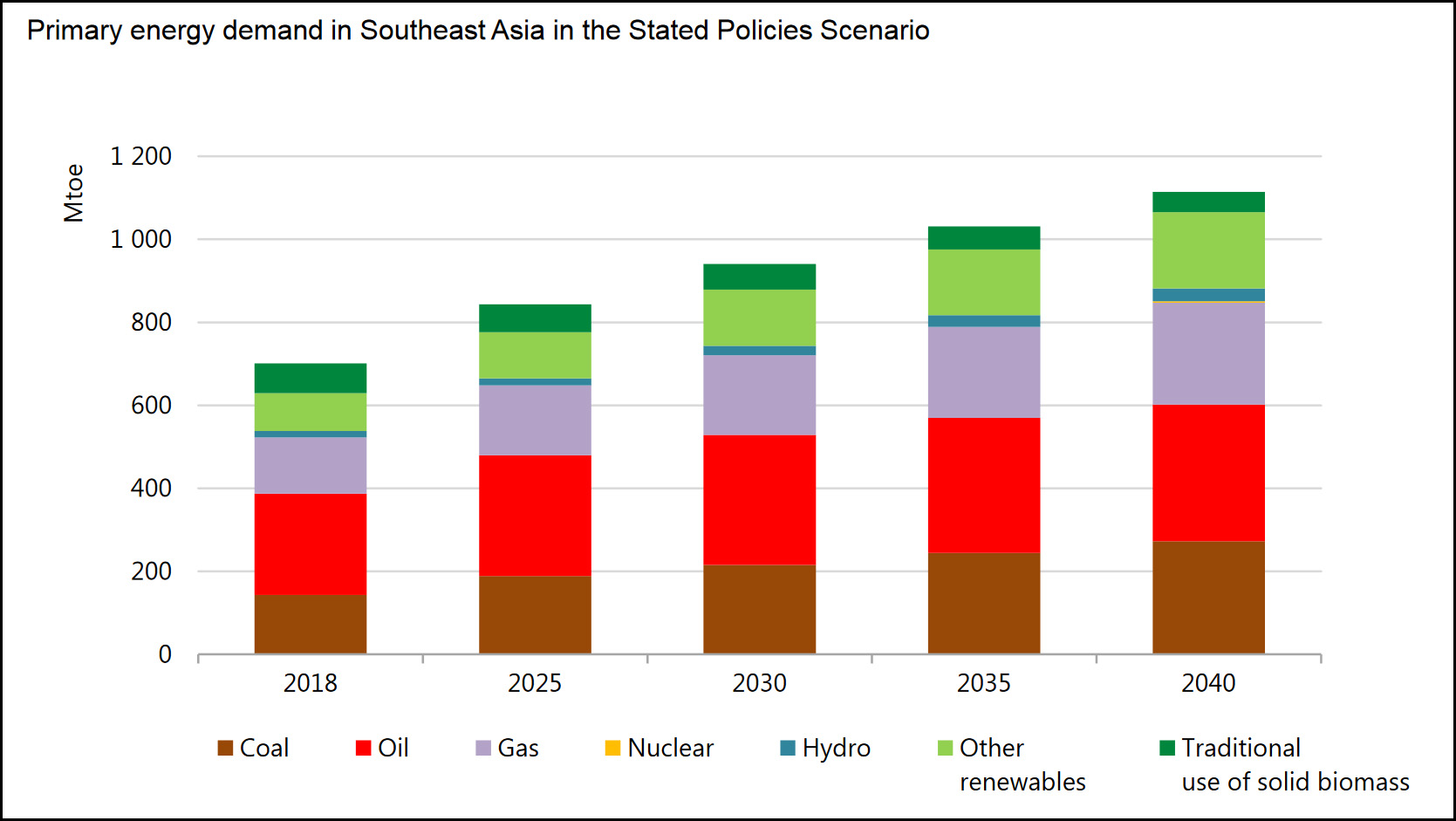
    The end result is this:

    Energy use is projected to increase by half and fossil fuel use is projected to rise by 60 percent. If nothing happens to change this, it will dwarf any reduction in carbon emissions from the developed countries of the West.

    And this is only southeast Asia, which doesn’t include India or China. It’s at most #3 in the fossil fuel race.

    In other words, American conservatives have a point. Their motives may be suspect, but that doesn’t mean they’re wrong. The Green New Deal is all well and good, but the real challenge for climate change hawks is the skyrocketing growth of fossil fuels in the developing world. That should be the single biggest focus of our attention. Everything else is a nit by comparison.

  • Chart of the Day: Net New Jobs in October

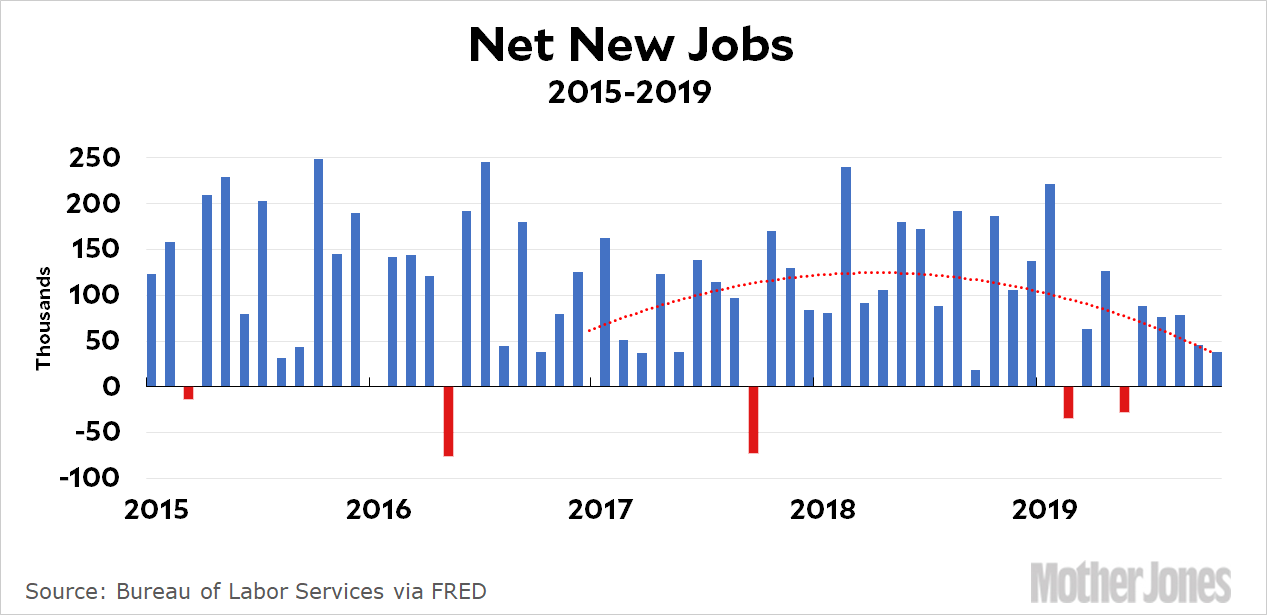
    The American economy gained 128,000 jobs last month. We need 90,000 new jobs just to keep up with population growth, which means that net job growth clocked in at a sluggish 38,000 jobs. The labor force increased nicely, suggesting that people are coming in off the sidelines to look for jobs, but the employment-population ratio stayed the same as last month. The headline unemployment rate ticked up slightly to 3.6 percent.

    The biggest loser was motor vehicles and parts, thanks to the GM strike. The biggest gainer was leisure and hospitality. Overall, goods-producing jobs were down by 26,000 while service sector jobs were up 157,000 jobs. Government jobs were down 3,000.

    Hourly wages for blue-collar workers were up 2.1 percent. With inflation running at roughly 1.7 percent these days, that’s a real hourly wage increase of about 0.4 percent. That’s nothing to write home about, but at least it’s positive.

  • Black Reading Scores Plummet in 2019 Testing

    The latest NAEP scores are out for 4th and 8th graders. For 8th graders, they show that the average reading score dropped three points and the average math score dropped one point over the past two years. Obviously that’s not good news, but these are small changes on a single test and it’s hard to draw any longer-term conclusions from them. They certainly don’t represent a “student achievement crisis,” as Education Secretary Betsy DeVos put it.

    Besides, if I’ve taught you anything, it’s this: at a minimum, you have to decompose the scores by race to see what’s really going on. Often it turns out that—

    Yikes! The 50th percentile is basically the median score, and among African American 8th graders it dropped five points. That’s roughly half a grade level. And the results were even worse among low performers.

    I don’t have any special explanation for this, but that’s a big drop. I can’t say whether this counts as a “crisis,” but considering the already grim test gap between white and black students it sure comes close to one. Let’s see if Betsy DeVos gives it the attention it deserves.

    POSTSCRIPT: For the record, 8th grade math scores were unchanged for all races and all performance levels.

  • Here Is the Challenge for Democrats

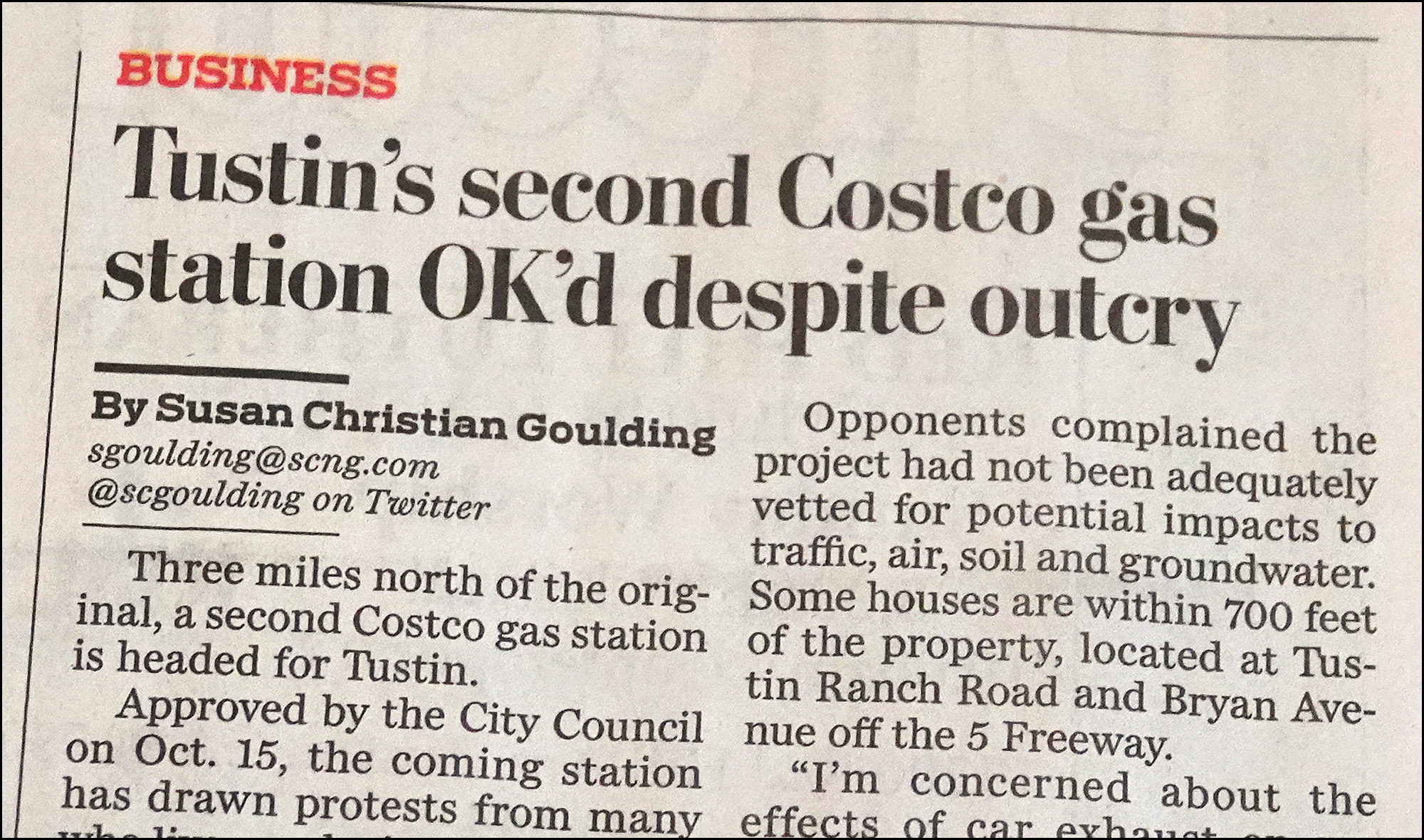
    Here’s a headline on the front page of our local paper this week:

    Why am I showing you this? Because every local paper in the country runs stories like this and they are our competition. In order for impeachment to be successful, more people have to care that President Trump abused his office for personal gain than care about whether Costco should be allowed to open a second gas station.

    This is Nancy Pelosi’s challenge, and it mostly explains why she’s doing the things she’s doing. Keep this in mind at all times.

  • Is 150 Million Gallons a Lot? It Depends.

    A question from my Twitter feed:

    Well, we use about 150 billion gallons of gasoline per year and the linked presentation says that FE.gov has reduced consumption by about 150 million gallons per year. That’s 0.1 percent. So sure, that seems plausible. But then again, I could probably womp up a case that practically anything you care to name has a 0.1 percent effect on anything else you could name. Go ahead and test me.

  • Judge William Alsup Is the Man Behind California’s Rolling Blackouts

    Qian Weizhong/Xinhua via ZUMA

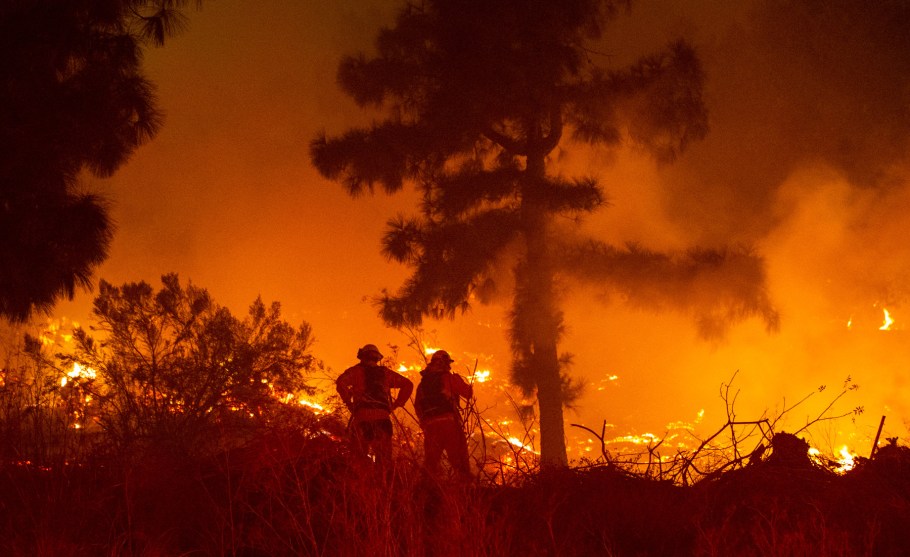
    Many of you might already know this, but I gather from my reading that a lot of people don’t. The question is: why is PG&E suddenly cutting power during high winds in California? After all, California has always had high winds. It’s always had lots of wildfires. And utility lines have always been a leading cause of those fires. So what changed?

    A small part of the answer is that climate change and other factors have made wildfires more common over the past decade. Another small part of the answer is that more people live in areas that are vulnerable to damage from wildfires.

    But the biggest part of the answer is: Judge William Alsup. You see, PG&E has been under probation ever since it was convicted of negligence in a pipeline explosion that killed eight people in San Bruno a decade ago. Alsup is the judge overseeing the probation, and after the Camp Fire killed 86 people and destroyed the town of Paradise last year he got fed up. He’s been after PG&E for years to cut back trees and other vegetation near its power lines—as required by state law—and finally demanded that they stop making excuses and just do it. This coincided with PG&E declaring bankruptcy in expectation of billions of dollars worth of claims from victims of the fire, claims that were highly likely to succeed given that a federal judge was already on record accusing PG&E of years of negligence and disregard for public safety.

    PG&E can’t immediately cut back all those trees, of course, so as a stopgap they decided to institute rolling blackouts during periods of high winds, even though they’ve never done that before. Other utilities then followed suit.

    There’s much more to the story, but this is the nutshell version. It’s not so much that anything has changed on the ground—2018 was a record fire year, but 2019 is actually below average so far—or that California’s electrical infrastructure has suddenly collapsed. What’s changed is that a judge finally said enough is enough.