
• A 9-Year-Old Just Improved the World. What Did You Accomplish Before Your 10th Birthday?

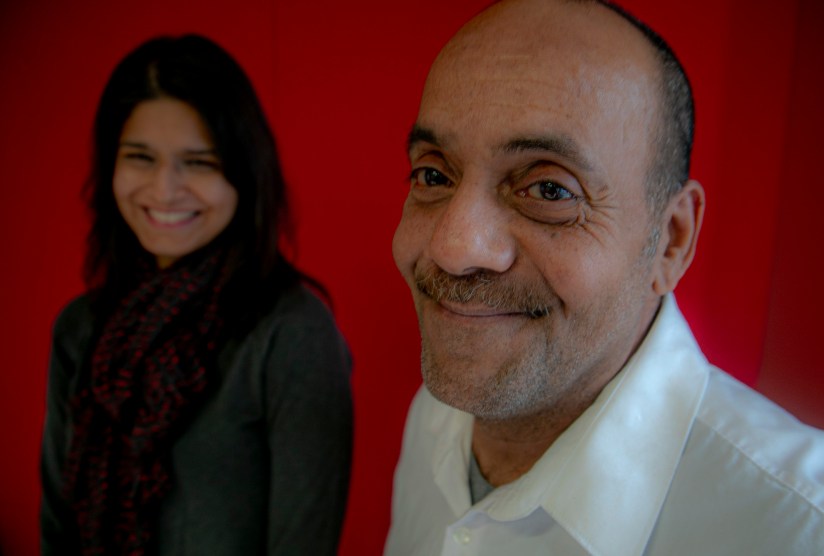
    9-year-old Bellen WoodardCourtesy Tosha Woodard via Theresa Vargas/Washington Post

    Welcome to Recharge, a weekly newsletter full of stories that will energize your inner hellraiser. See more editions and sign up here.

    Bellen Woodard was the only Black girl in her third grade class in a Virginia school. “My friends were asking for the ‘skin color’ crayon,” she said, knowing what that meant, what it implied—and what it didn’t.

    After talking with her mom later that day, Bellen came up with a response other than handing over a peach-color crayon. “I think I just want to ask them what color they want because it could be any number of beautiful colors,” 9-year-old Bellen, now in fourth grade, recounted to the Washington Post’s Theresa Vargas.

    Bellen gave that answer to her classmates. And her teacher did, too. Soon her entire class came around to change not just their speech, but their assumptions and views. That quick sign of recognition inspired Bellen to come up with a project to help other kids challenge unexamined attitudes: “More Than Peach,” her new project, donates kits to students with a note from her, a drawing pad, and crayons or colored pencils that include, among many, “apricot,” “burnt sienna,” and “mahogany.”

    Donations and offers of help are coming in from all over the country to her “More Than Peach” website. “It’s been crazy,” her mom says. “They just come all day.” The Virginia Museum of History and Culture asked if it could add one of Bellen’s kits to its collection.

    Bellen said she’d first seen more inclusive crayons in second grade but hadn’t thought much of them. “Now, they are more than just a pack of crayons,” she said. “Now, they are a kind of change.”

    Here are more Recharge stories to get you through the week:

    R.I.P. She was an American hero, NASA’s administrator said. But before the 2017 movie Hidden Figures, few Americans knew about NASA mathematician Katherine Johnson, who died Monday at age 101. Johnson, who broke racial barriers at NASA, hand-calculated America’s first missions with astronauts and helped bring the stricken Apollo 13 back home. How did she do it? “I didn’t allow their side-eyes or annoyed looks to intimidate or stop me…If I encountered something I didn’t understand, I’d just ask,” Johnson wrote in her autobiography, Reaching for the Moon. (NBC News)

    Helping a parent get home. Mike Good had a nightmare travel day. He was stuck in the last row of a plane delayed by storms and wouldn’t be arriving home in Nashville until his father-daughter dance with his twin girls was due to begin. But a flight attendant’s announcement about his circumstances prompted the rarest thing from passengers—they remained in their seats while he sprinted out first. “I grabbed my bag, ran down the aisle, and thanked everybody. I was wishing everyone a happy Valentine’s Day as I ran down the aisle,” Good said. He got there only 50 minutes late and quickly joined his daughters and wife. (People)

    Give Paris one more chance. Anne Hidalgo wants to make France’s capital better. The Paris mayor knows her constituents want to live in dignity and work in decent conditions, get provisions easily and have access to education and leisure. Hidalgo hopes to turn Paris into a “15-minute city” for residents, providing what they need within a 15-minute walk or bike ride from their homes. Sounds like a worthy aspiration for other cities I know. (City Lab)

    Recharge salutes: Longtime neonatal nurse Lissa McGowan, who was treating young Zayne Caldwell when she learned she’d also treated Zayne’s dad, David Caldwell, in the same New Jersey hospital three decades ago; and Florida’s Miami-Dade County, which renamed its stretch of Dixie Highway to honor Harriet Tubman. “It’s never too late to do the right thing,” Commissioner Rebeca Sosa told the Miami Herald. Lastly, Parker the Snow Dog, a 3-year-old Bernese mountain dog, was unanimously voted by a public board to be honorary mayor of Georgetown, Colorado.

    I’ll leave you with this image from Arizona’s Horseshoe Bend, suggested by reader Robin Baker Barr. This is from colleague Kevin Drum, and it’s pretty impressive. Have a great week ahead.


    Kevin Drum/Mother Jones
  • “Go Back to Your Country” Is Heard More and More. Here’s a Powerful Reply.

    Screenshot of a high school protest after a teacher allegedly told a US-born Mexican American student to “go back to [her] country"@kylehillman/Twitter

    Welcome to Recharge, a weekly newsletter full of stories that will energize your inner hellraiser. See more editions and sign up here.

    “Go back to your country,” a Chicago high school teacher allegedly told a 17-year-old Mexican American student, who was born in the United States, after the student and her classmate refused to stand for the national anthem. The students said they were exercising their rights—and expressing their beliefs in free speech.

    The second student, 18, said the teacher told her she had no respect for those who’d given their lives for this country (and inquired if she was getting free lunches).

    After word spread last Wednesday, students at the school, which is predominantly Latino and Black, held a sit-in (captured on video) and demanded the teacher be fired. The next day, the school said he was removed from the classroom and told to remain home with pay until an investigation was completed. The alleged comments were “unacceptable language that violated the district’s anti-discrimination policy,” a school spokesperson said.

    The 17-year-old student said she felt the teacher had racially profiled her, and said the teacher’s personal politics got in the way of his job. The other student said the teacher approached the students while “we were silently exercising our rights, our beliefs, and our opinion.” The school principal said a group of students had raised previous questions about the same teacher’s behavior, which will be investigated as well. The teachers union had no comment on the case.

    Here are more Recharge stories to get you through the week:

    Enlightening a community. For 9-year-old Anmol, the teasing began in kindergarten. “Tomato head,” they called him. Coming home from school, he asked his mom, Sukhvir Kaur, “Do I look American?” The target of the teasing, Anmol said, was the turban, or patka, the head covering that members of the Sikh faith wear. It symbolizes equality by democratizing a style of headwear traditionally worn only by India’s elites. Anmol didn’t get a chance to tell that story while he was teased at school in Visalia, California, but he did get to share it for a PBS public service announcement, which is being broadcast throughout the region. The exposure has bolstered Anmol. “It’s great,” his mother said, “to see my shy, quiet kid become more confident.” A reader response from @JoannSarcinella: “Anmol you do look American. American to me…are many beautiful shades, ethnicity, cultures, languages, religions, foods, all in this amazing pot of soup. We are all diff but the same. We are one people and together we make America one of a kind. I hope you see this.” (Fresno Bee)

    The possibility of joy. It took 50 straight days of running for Kayla Williams to begin to feel better, and to realize that what she’d felt for years was more than blue. The former Army sergeant was working a high-stress job, raising kids, and dedicating herself to her husband, who’d sustained a traumatic brain injury in Iraq and needed treatment for symptoms of PTSD. Finally, Williams realized she needed help, too. “In my 40s,” Williams writes, “at last I am open to the possibility of living a life of joy.” (The War Horse)

    Gratitude: She stopped at the police station and dropped off baked goods—and this note: “I went to detox the next day and haven’t used since,” she wrote. “Due to you guys saving my life through CPR, and Narcan, I got my life back.” That meant holding down a steady job and regaining custody of her daughter, said the woman, who police did not identify. A lieutenant for the Natick, Massachusetts, Police Department, Cara Rossi, said the gesture touched the officers deeply. (MetroWest Daily News)

    Recharge salutes: Taxi driver Rajbir Singh, who intervened to stop a 92-year-old California woman from being scammed out of $25,000; the state of Florida, which has removed guns from the hands of hundreds of high-risk people under a law passed after the Parkland school massacre; and members of North Dakota’s Native American population, who won a settlement after years of fighting that would allow many to vote. The state had passed a voter ID bill that required a form of identification many Native Americans did not have.

    I’ll leave you with this quote from columnist and author Connie Schultz: “Gentle courage is the strongest, because it is one’s essential nature, needing no reason to prove itself.” And here’s a majestic sunset from Big Bend National Park in Texas, via the Interior Department’s Twitter feed.


  • Opponents Second-Guessed This All-Muslim Girls Basketball Team. Bad Move.

    Welcome to Recharge, a weekly newsletter full of stories that will energize your inner hellraiser. See more editions and sign up here.

    Their opponents are in gym shorts and jerseys on the court. The Salam Stars, in long-sleeve shirts, sweatpants, and hijabs, huddle and stretch before taking their positions. “Sometimes we see [our opponents] laughing” at us, says Jumana Badwan, captain of the Stars, the girls basketball team at an Islamic academy in Milwaukee. “Sometimes we see them whispering to each other [about us].”

    The Stars have found ways to confront and see through the looks of suspicion and surprise from opponents: Last year the team finished 14–4. This year their goal is simply to play their hardest.

    Badwan, a senior, tells Great Big Story that the team gains strength and solidarity from a disciplined coach, Kassidi Macak, who grew up five minutes from the school but had no connection with the Muslim community whose players she is training.

    The history of exclusion and inclusion in basketball and sports broadly is never far from the mind of Macak, who doesn’t let up on her players. She challenges them on and off the court to play for more than points: The students team up to break boundaries in basketball, but also dispel myths and challenge assumptions about what Muslim girls and women—in hijabs or not—are setting out to tackle.

    “We’re a small family, and we take on any task together,” Macak says. “We support each other.”

    Here are more Recharge stories to get you through the week:

    Shutting down poison. Scientists at the Environmental Protection Agency wanted to ban a neurotoxic pesticide suspected of causing lower birth weights, lower IQ, and attention deficit disorder. Higher-ups at the EPA, however, were fine with chlorpyrifos, although California, Hawaii, and New York banned it. Now, the pesticide’s biggest US supplier, Corteva, has decided it will stop making it. Corteva’s decision to halt pesticide sales came on the same day that California’s ban on the chemical took effect. “Due to this reduced demand,” the company announced, “Corteva has made the strategic business decision to phase out our production of chlorpyrifos in 2020.” Jennifer Sass, a senior scientist at the Natural Resources Defense Council, called the move “a victory for our kids, farmworkers, and rural communities nationwide.” (Mother Jones)

    Stopping Russian hackers. Estonia, right on Russia’s border, could teach the United States a thing or two about stopping Kremlin disinformation. Russia launched cyberattacks on its neighbor in 2007, but Estonians fought back. Now there’s a growing nationwide volunteer organization devoted to stopping Vladimir Putin’s campaigns of disinformation and deception—and it would be willing to help the United States, if Americans wanted. “We decided we just have to become much more resilient, and make sure, in case something similar happens again, we will be ready,” says Heli Tiirmaa-Klaar, Estonia’s ambassador at large for cyberdiplomacy. (Christian Science Monitor)

    Equal time. Finland has decided: seven months of paid family leave for each parent. The decision was made by 34-year-old Prime Minister Sanna Marin and her four other governing coalition parties, all led by women. A single parent will have access to the seven-month allowance for both parents. The decision was lauded inside and outside the country. That’s “what happens when women lead politics,” NPR’s Diaa Hadid tweeted. The goal is to promote gender equality and raise the birth rate. Last year, Finland had the fewest babies born since 1868, when a famine struck. (NPR)

    Recharge salutes: The Kansas City Chiefs’ Derrick Nnadi, who made good on his promise to pay for 100 dog adoptions if his team won the Super Bowl; and 91-year-old scientist Dr. Ananda Prasad, who challenged conventional wisdom to show that zinc could cut the duration of the common cold.

    I’ll leave you with a big welcome back to NASA’s Christina H. Koch, who set a women’s astronaut record of 328 consecutive days in orbit. Have a great week ahead!

  • Refusing to Lie, an Innocent Man Spent 22 Extra Years in Prison to Protect the Truth

    Rafael Ruiz, exonerated of a rape charge that sent him to prison for 25 years, with his lawyer from the Innocence ProjectBebeto Matthews/AP

    Welcome to Recharge, a weekly newsletter full of stories that will energize your inner hellraiser. See more editions and sign up here.

    He could have gotten out of prison years earlier. But he wouldn’t take a plea—because he didn’t do the crime.

    Last week, after 25 years behind bars and 10 more years outside of prison shadowed by his unjust “record,” a judge in New York vacated Rafael Ruiz’s rape conviction in light of DNA evidence exonerating him. Ruiz had been convicted despite the fact that he did not match the description of the attacker.

    If he would have pleaded to a lesser charge, he would have been out in three years, he was told. That’s the coercive calculation that leaves many innocent people with a criminal record, unable to vote in many cases, and tarnished as they search for jobs.

    “I was thinking about my freedom all the time I was in there, the best way I could,” Ruiz said. “I didn’t want to take no deal, because I’m not a criminal. I’m glad I ain’t took no bid, I’m glad I tried to prove my innocence, I’m glad people came along and helped me.”

    To Ruiz’s sister, Maria, the exoneration means the two of them can “walk together with no shame in the street now. We’re able to go to the beach and show our face. We don’t have to hide under dark glasses and big umbrellas.” (NY Daily News)

    Here are more Recharge stories to get you through the week:

    Improving the United States, one building at a time. John Henry Boalt called Chinese people unassimilable liars, murderers, and misogynists. He pushed the Chinese Exclusion Act of 1882, the first US immigration ban on a specific group of people. Last Thursday, after protests at the University of California, Berkeley, Boalt’s name was taken off a law school building. For student Ryan Sun, the removal couldn’t have happened too soon. Walking into the building without Boalt’s name, Sun said, gave him “a sense of closure.” (Los Angeles Times)

    An angel, punished. Emily James was a senior official at a US Bank call center. On Christmas Eve, a caller from a nearby gas station said he’d deposited money in his account but couldn’t draw on it to pay for gas or Christmas presents for his two kids. James checked; he was right. She couldn’t fix the problem immediately, but she got permission from her boss to take a break, drove over, and gave him $20 of her own money. It was the kind of thing you see on bank commercials about employees going the extra mile. But US Bank fired James. And her boss, too. James has been reduced to selling her blood plasma for money. Three articles from the Oregonian and a New York Times column by Nick Kristof prompted a widespread outcry—and Saturday night calls from the bank’s CEO to James and Kristof. The CEO accepted responsibility for what went wrong, telling Kristof, “I will fix this.” Stay tuned. (New York Times)

    Respecting the heart. For nearly half of his life, Mike Cohen had been plagued by cancer, a heart attack, and chronic heart failure. Then, in February 2018, he got a new heart, one that had belonged to James Mazzuchelli, a Navy flight surgeon who’d died in a helicopter accident. Mike got stronger in cardiac rehab after the surgery, developed a fondness for pizza, and hatched a bold plan: He would bike cross-country, from San Diego to Jacksonville, to pay his respects at the grave of his heart donor. He wrote to James’ mom, Christine Cheers, who met Mike at the gravesite when he pedaled in. She hugged Mike. And got a stethoscope to hear his heart, James’ heart. (Bicycling)

    I’ll leave you with a stunning sunset over Virginia’s Shenandoah National Park via the Interior Department’s Twitter feed. Have a great week ahead!

  • Yes in My Backyard: A Radical Approach to Improving Homeless Encampments

    An Oakland, California, tent encampment similar to the one at 37th and Martin Luther King Jr. WayJane Tyska/Digital First Media/The East Bay Times via Getty

    Welcome to Recharge, a weekly newsletter full of stories that will energize your inner hellraiser. See more editions and sign up here.

    For a decade, she lived two doors down from a vacant lot that was overgrown and ignored. One day in August, Stefani Echeverría-Fenn pushed through a hole in the chain-link fence and started sweeping, clearing the brambles, and pitching a tent. Since then, the lot has become a welcoming community for people priced out of housing, or who could never afford it to begin with, in Oakland, California.

    Echeverría-Fenn and other neighbors with homes take out the trash, make sure the 21-person area has clean water, and empty the lot’s toilets in their own apartments. The camp also has a pump sink and a solar shower.

    The site, known as 37MLK (it’s on the corner of 37th and Martin Luther King Jr. Way) has become a model for communities of people with or without housing to come together and improve conditions and care for unhoused families in the city.

    “There are people who are living with their adult kids here,” Echeverría-Fenn says. “There are people who have their younger kids visit them here, and it doesn’t feel like a depressing sad place the way that other encampments do.” (Guardian)

    Here are more Recharge stories to get you through the week:

    Standing up for decency. The customer was spewing racist, anti-Muslim language in an Applebee’s restaurant. Manager Amanda Breaud asked him to leave. Then, Breaud said, her boss chastised her—and she was eventually fired. Other customers (and readers who have read Breaud’s story) have rallied to her defense. One left a note on a receipt that read: “To the Manager — Thank you for standing up to hate + Racism. Thank you for your service.” Breaud, who has filed suit to get her job back, told the Asbury Park Press she hopes her actions help others fight bigotry. “I’m a gay woman and I’ve been at the bar before or out in public and had people say things about me,” she said. “A lot of my life I wish that someone would have stood up for me. Now that I’m able to stand up for myself, I want to stand up for other people.” (NBC News)

    Restoring history. There are more than 95,000 national historic sites. Only about 2 percent are devoted to African American history and culture, reports the New Yorker’s Casey Cep. For generations, resources weren’t devoted to preserving these spaces, says poet and Mellon Foundation president Elizabeth Alexander, and people of color have had “to carry around knowledge and stories in our bodies.” After the 2017 attack in Charlottesville, Virginia, by white supremacists, a new fund was established to empower historians and archeologists to more clearly mark and honor these spaces. (New Yorker)

    Go libraries! What’s the most common cultural pursuit in the United States? Going to the library, by a 2-to-1 margin over things like going to a movie theater or attending a sporting event, according to a Gallup poll. Women go to the library about twice as much as men do, and people from 18 to 29 even more so. Since a similar 2001 survey, there have been small increases in the percentages in Americans going to a museum, a live music or theatrical event, or a national or historic park. (Gallup)

    Recharge salutes: Fauzia Lala, a black belt in tae kwan do, who, after she faced harassment, began teaching self-defense to other Muslim women in Washington state; Terrance Lewis of Philadelphia, exonerated after 21 years in prison, who is trying to free others wrongly behind bars; Scotland, whose power grid is on track to be run 100 percent by renewable energy this year.

    eI’ll leave you with the northern lights over Alaska’s White Mountains National Recreation Area, via the Interior Department’s Twitter feed. Have a great week ahead!

  • Saved at Sea, a Family of Nurses Reunite 4 Decades Later With Their Rescuers

    Thao Nguyen and Chip Reichert reunite almost 40 years after a rescue in the South China Sea.WGN-TV

    Welcome to Recharge, a weekly newsletter full of stories that will energize your inner hellraiser. See more editions and sign up here.

    In 1981, the USS John Young spotted a motorless fishing boat filled with people in the South China Sea—and saved their lives. They were without food, without water. That rescue was the first of hundreds for the Navy ship that year. Veterans carried those memories for decades, and recently, a group of those Vietnamese refugees, now US citizens, joined the veterans at a reunion in Mobile, Alabama.

    One retired sailor, Chip Reichert, had a gasp of recognition when a girl they’d rescued, Thao Nguyen, now an adult, walked to the podium.

    “I want to say thank you,” she told the veterans. “You all made a difference, and what you did mattered.”

    Reichert hugged Nguyen, who came to the reunion with her mother, her aunt, and a cousin. “She looked at me, and all we did was cry,” Reichert told WGN-TV. “Twenty minutes of just seriously crying.” She and several family members, all rescued by the Navy ship, had become nurses in the United States, inspired by the kindness of those who’d saved them.

    “If I can help someone else, I want to,” Nguyen said, “because I know I wouldn’t be where I am if people didn’t save me.”

    Here are more Recharge stories to get you through the week:

    Who we are. After a 2018 neo-Nazi rally on Hitler’s birthday in the town of Newnan, Georgia, progressive portions of this fast-growing town came together to resist racism and honor the broad diversity of people living there peacefully. The community commissioned a photographer to create large portraits of its racially diverse residents to put on walls of its buildings—and challenge assumptions about Newnan. The 17 larger-than-life portraits, including one of two Georgia-born Muslim sisters wearing hijabs, opened up public conversations that drove the town to come to terms with residential change. “We need to talk about who lives in our community and, if they are different, why does that make us uncomfortable?” said David Jones II, pastor of Newnan Presbyterian Church. The display prompted the Rev. Jimmy Patterson to take to the pulpit of his First Baptist Church to decry racism and reveal a secret: a family will that once bequeathed enslaved people to him. He read the will from the pulpit, as some in the audience shed tears. Readers, I don’t know about you, but I’d like to see those portraits in person before the installations come down in June. (New York Times)

    Buckin’ broncos. She’s 13 years old, 4-foot-10, and 70 pounds, but she’s turning heads in professional bull riding. Najiah Knight, who started riding sheep at age 3, is the only girl on the Mini Bull Riders tour around the country. “I kind of earned the boys’ respect the first year I competed, because I ended up on some of the rankest bulls—I was one of the first ones who came close to riding some of them,” Najiah said. She’s already received a big endorsement from the Ariat boot company. Thanks to colleague Dru Sefton for suggesting this story. (Vogue)

    I stuttered; so what? As a kid, he was bullied and humiliated when he couldn’t get his words out. Chesley “Sully” Sullenberger III worked hard to transcend his stuttering, and his voice was clear and steady as he safely landed his failing jetliner in the Hudson River in 2009, saving the lives of everyone aboard. Sullenberger was heralded as a hero, played by Tom Hanks in the Hollywood tribute. “A speech disorder is a lot easier to treat than a character defect,” Sullenberger writes. “You become a true leader, not because of how you speak, but because of what you have to say—and the challenges you have overcome to help others. Ignore kids (and adults) who are mean, or don’t know what it feels like to stutter.” (New York Times)

    Recharge salutes: Doris Miller, a Navy hero at Pearl Harbor who, almost 80 years later, will have a $12.5 billion aircraft carrier named after him; 6-year-old Owen Colley, who has raised more than $260,000 to help animals affected by bushfires in Australia by making and selling little clay koalas; a community in Newfoundland that got behind a third grader named Yaman, originally from Syria, teaching him how to skate and giving him money for hockey gear. Yaman chose tape with the design of a maple leaf for his hockey stick because he wanted the Canadian flag close to him, wrote journalist Muhammad Lila.

    I’ll leave you with this wintry sunrise at Maine’s Moosehorn National Wildlife Refuge, via the Interior Department’s Twitter feed. Have a great week ahead!

  • You Don’t Need an Olympic Medal to Stand Up for Human Rights, but How’s This for a Protest?

    Kimia Alizadeh, the first woman from Iran to win an Olympic medal, before announcing her decision to defect in protest.Andrew Medichini/AP

    Welcome to Recharge, a weekly newsletter full of stories that will energize your inner hellraiser. See more editions and sign up here.

    They told her where to go, what to wear, how to act, what to say. Iran’s only female Olympic medalist has said enough is enough: She’s defected in protest.

    “My troubled spirit does not fit into your dirty economic channels and tight political lobbies,” said Kimia Alizadeh, announcing her defection. “I have no other wish except for taekwondo, security, and a happy and healthy life.” In her weekend announcement to her 400,000-plus followers on Instagram, Alizadeh, 21, included an image of her from the 2016 Summer Olympics, where she became Iran’s first woman to win an Olympic medal.

    She also spoke of “oppressed people of Iran” and the “obligatory veil” required of women. The New York Times quoted reports that she has moved to the Netherlands and hopes to compete in the 2020 Olympics for another country.

    Alizadeh said she was looking forward to not being used as a “tool” by Tehran’s authoritarian government. “They took me wherever they wanted,” she wrote. “Whatever they said, I wore. Every sentence they ordered, I repeated.” She said she “didn’t want to sit at the table of hypocrisy, lies, injustice, and flattery.”

    Here are more Recharge stories to get you through the week:

    A (Michelin) star. Mariya Russell, a fledgling chef in Charleston, South Carolina, moved back to Chicago after her father died. She ended up running the kitchen at Kumiko, a cocktail bar, and at Kikko, in its basement, which offers seven-course omakase dinners. Two days shy of her 30th birthday, Russell became the first Black woman ever to be awarded a Michelin star. After returning to Chicago, Russell had taken the only position available, a back server, and had worked her way up to sous chef and then executive chef. Among Russell’s standouts: her agedashi tofu and her Japanese milk bread. (Eater)

    Saving lives. The shutdown of hundreds of coal-fired power plants over the past decade has saved more than 26,000 American lives, a new study says. The move saved the planet more than 300 million tons of carbon dioxide, according to Nature Sustainability. Levels of nose- and throat-irritating nitrogen dioxide? That went down 60 percent. Sulfur dioxide? Down 80 percent. (Guardian)

    Students sue to stop climate change. By failing to develop a plan on climate change, Florida officials are violating the constitutional rights of teenagers and putting their future at risk, according to a group of Florida students. The students demand that the state develop an energy plan that won’t make climate change worse. “The time has come for real action,’’ says one plaintiff, Delaney Reynolds. The students say Florida is the second-highest emitter of carbon dioxide in the country, and third in energy consumption. (Tampa Bay Times)

    Recharge salutes: Wolf Cukier, a 17-year-old NASA intern who discovered a planet nearly seven times larger than Earth on his third day of work. “At first I thought it was a stellar eclipse, but the timing was wrong,” Cukier told NBC 4 New York. “It turned out to be a planet.”

    I’ll leave you with this wintry image of the skinny shafts of rock, known as hoodoos, that rise from the basin of Utah’s Bryce Canyon National Park. The image, courtesy of the Interior Department’s Twitter feed, shows the seasonal mix of the orange rock with white snow. Thanks for reading Recharge, and have a great week ahead.


  • The Nazis Couldn’t Destroy This Joyful Concerto

    Violinist Janusz Wawrowski brings to life a lost World War II–era concerto whose music sheets had been buried by its composer before fleeing the Nazis.Cezary Aszkiełowicz/Szczecin Philharmonic Symphony Orchestra

    Welcome to Recharge, a weekly newsletter full of stories that will energize your inner hellraiser. See more editions and sign up here.

    When the Nazis were advancing toward his home, composer Ludomir Różycki stuffed the pages of his violin concerto in a suitcase and buried it in his yard in Warsaw, Poland, before fleeing. His home was destroyed near the end of World War II, and he died in 1953 without knowing the fate of his concerto.

    But his composition was unearthed by builders after the war. Poland’s top classical violinist discovered it in the archives of the national library, and after years of work, the upbeat piece—reminiscent of Gershwin in places—was performed recently to great acclaim in the northwest Polish city of Szczecin, the Guardian reported.

    Violinist Janusz Wawrowski, who brought it to life onstage, tried to channel the hopeful exuberance of the work and of the once-prominent Różycki. “To me it’s full of the energy and life of Warsaw before the war,” Wawrowski said, “and I think he was trying to conjure and convey this positive energy as he wrote it in 1944 in a very dark time, as the artillery of the Nazis rained down on the city.”

    Różycki’s relatives were stunned upon hearing the concerto. “It’s like getting to know my great-grandfather for the first time,” said Ewa Wyszogrodzka, an economist. “To think, these pieces might have been lost forever.”

    Here are more Recharge stories to get you through the week:

    One bright spot. The wildfires devastating swaths of Australia were bearing down on the zoo with the country’s largest collection of primates. So the staff took the monkeys and pandas home. The Mogo Wildlife Park saved each one—about 200 of them. “Right now, in my house,” zoo director Chad Staples said last week, “there’s animals of all descriptions in all the different rooms so that they’re safe and protected.” (Washington Post)

    Positions of power. Princeton University has displayed 10 oil paintings of not-so-famous members of its community: dining hall staff, security guards, grounds workers, and cleaning crew. Painter Mario Moore said he wants to pay tribute to unsung heroes of the campus community and “put them in positions” of greater power, starting with African American workers as painting subjects. Princeton has purchased some of the 8-foot-high portraits for its permanent collection, and Moore is teaching a drawing class this semester. Both endeavors are helping to “heal some of the lasting wounds of racial division that have long marred this institution’s history,” said Tracy K. Smith, chair of Princeton’s Lewis Center for the Arts. (CNN)

    Late bloomer. Rose Valdez loves the sunshine. Each year, often sitting in the sun, the 94-year-old in Pueblo, Colorado, crochets wool caps. Since taking up the craft at 90, Valdez has supplied hundreds of the cozy hats for people in need. “I don’t do nothing else, so I might as well do something for somebody,” Valdez says. She is a blessing, says the Pueblo Cooperative Care Center, which distributes the caps. (My Modern Met)

    Recharge salutes other late-blooming artists such as Amy Sherald, Stan Lee, Paul Cézanne, and Yayoi Kusama. Sherald, best known for her portrait of Michelle Obama, didn’t get that break until she was 43, Artnet News reported. Lee’s own star turn came at 43, when he began drawing The Fantastic Four. Cézanne didn’t get a solo show until he was 56. Kusama, whose Instagram-friendly installations are now wildly popular, was 60. Fortitude as well as ability is key, said critic Jerry Saltz. He should know. Saltz, 68, a self-described “failed” artist and a long-haul trucker into his 40s, won the Pulitzer Prize for Criticism in 2018.

    I’ll leave you with this image from the Pacific Crest Trail in California, courtesy of the Bureau of Land Management’s Twitter feed. Thanks for reading, and happy trails.

  • A Story Your New Year’s Hangover Could Use: $5.3 Million in Debt Wiped Out

    Valeriya/Getty

    Welcome to Recharge, a weekly newsletter full of stories that will energize your inner hellraiser. See more editions and sign up here.

    It was a startling announcement: A California church had raised enough money to pay off the medical debts of 5,555 struggling Los Angeles–area residents in time for Christmas, wiping out more than $5 million in bills.

    Parishioners at Christian Assembly Church donated more than $50,000 and then worked with a debt-forgiveness nonprofit to reach the staggering $5.3 million amount, the Los Angeles Times reported. Reporter Colleen Shalby told me the church has already gotten calls from ministers in Chicago, San Diego, Seattle, and Portland who want to do the same thing.

    Everyone, regardless of religion or resources, is vulnerable to a capricious health care system that can erase life savings in a flash or saddle people with crushing debt, says Pastor Tom Hughes: “Basically, every person I’ve ever met has probably known someone who has a medical condition that’s come out of the blue.”

    Hughes worked with the nonprofit that helped comedian John Oliver and his HBO Last Week Tonight erase $15 million in medical debt for 9,000 people in 2016. Next up for the church: working with credit agencies to repair people’s credit scores.

    Here are more Recharge stories to get you through the week:

    Teaching her mom hope. Charlotte Nebres, 11, knew she had to give it all she could. Charlotte is the first Black dancer to perform the role of Marie in more than a half century of New York City Ballet productions of The Nutcracker. “It sunk in that, ‘Well, if I’m going to be doing this role and I’m the first person, then I want to make it count,’” Charlotte said. Her mother, Danielle, says she’s learning about hope from her daughter. “It’s sort of magical for me to see that sort of just hopefulness and just realizing that there is no limits. So I’m sort of learning through her that maybe the way things were aren’t what they are any longer.” The ballet runs through Sunday. (CBS News)

    He made a difference. Because of federal investigator Jack Mitchell, cigarettes are more tightly regulated. Former FDA chief David Kessler said Mitchell, who died December 5 at age 69, “broke open tobacco” by cultivating a whistleblower inside the tobacco industry. That whistleblower detailed how tobacco companies manipulated nicotine levels to keep people addicted to the cancer-causing substance. Mitchell’s investigation, Kessler said, led to greater FDA regulation of the industry and “changed how this country views tobacco.” The percentage of Americans who smoke has dropped by more than a third since 2005, the CDC says. (Washington Post)

    When NASA called. David Myers was one of 11 deaf men who helped America get to the moon. The Gallaudet Eleven, nicknamed for the college they attended, did the same training as the astronauts but did not experience the same motion sickness. Their work helped show that motion sickness was caused in the inner ear. With that knowledge, scientists created medications to help the astronauts. Myers told TV host and podcaster Emily Calandrelli that he’s still waiting for a call from NASA to go to space. Calandrelli says Myers and the Gallaudet Eleven remind us that “even though astronauts are the ones we spotlight when it comes to space exploration, many of our brave explorers—who help push the boundaries of exploration in the solar system—remain firmly on the ground.” (Twitter)

    Recharge salutes: Shane Sheil, once among the oldest kids in a Florida foster care system, has overcome incredible hurdles and childhood trauma to make an inspiring, self-determined life for himself, and built a family, in the 13 years since a newspaper first profiled him; Julieanne Kost, who dealt with her fear of flying by taking stunning landscape photographs from her window seat; and the 300,000 additional people worldwide each day who first get access to electricity, and the 200,000 who get access to piped water.

    I’ll leave you with an Ohia Lehua blossom, the first plant to grow after lava cools in Hawaii. This image is from the Interior Department’s Twitter feed. Thanks for reading, and I hope 2020 blossoms for you!