• Colombia Diary — Wednesday

    I’ve already told the story of my first disastrous attempt to go north from Bogotá, and on Wednesday I pondered whether I should try again or just skip it and go south and west on my two remaining days. The concept of sunk costs guided me. North had been my first choice all along, and Monday’s debacle was a done deal no matter what I did now. So I went north again. My eventual destination was Villa de Leyva, a town that has carefully preserved its old buildings and now does a booming tourist trade.

    It was a breezy day—and also Battle of Boyacá Day, a national holiday—and as I headed up Highway 45 I came across numerous kite vendors.
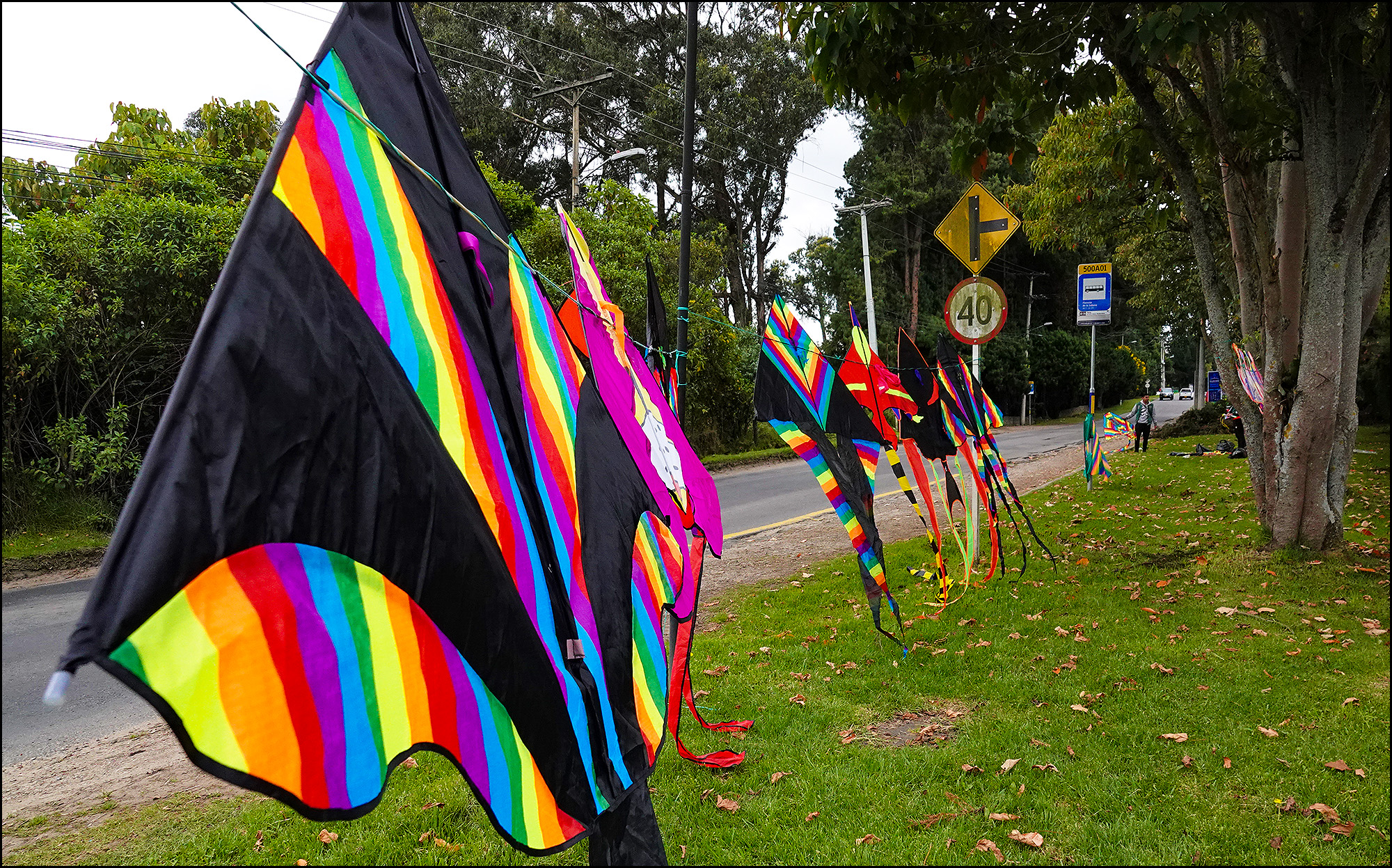
    A kite vendor on the road north of Bogota.

    A few minutes later, while passing the town of La Naveta, I noticed a plume of smoke in the distance. I figured someone was burning crops, but as I headed toward it the smoke seemed to keep getting farther away. This turned out not to be an optical illusion: the smoke was belching out of a restored old coal-burning locomotive carrying holiday revelers. I took this picture just outside the village of Juncalito.
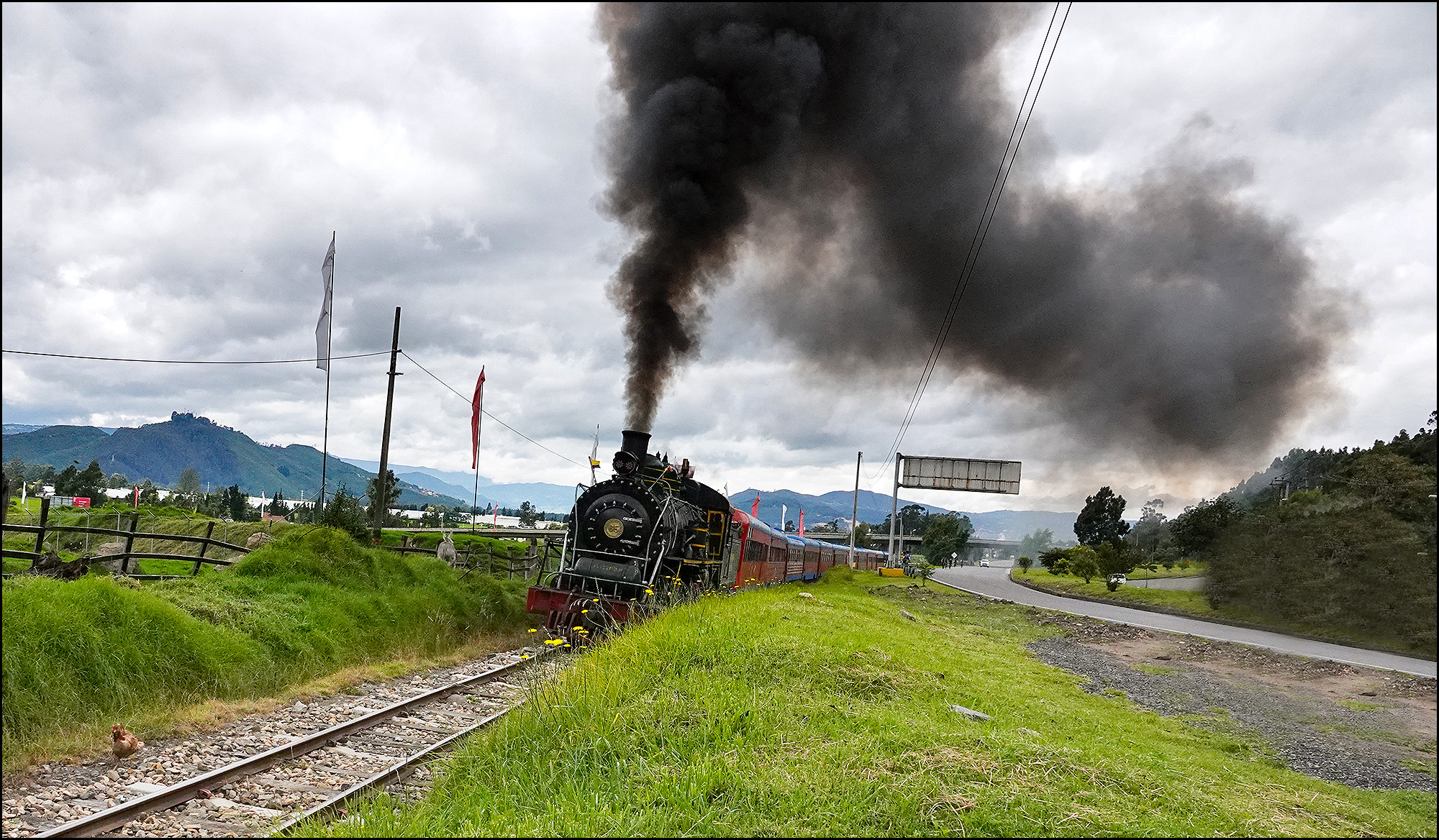
    An old coal-fired train carrying holiday-goers to wherever the train goes.

    Where were these people going? Perhaps to Zipaquirá to visit the famous Catedral de Sal, an old salt mine that has been converted into a church. I myself decided to keep going and catch it on my way home, which didn’t work out in the end. Still, if you want pictures of that, you can find thousands of them via Google. I am after loftier stuff, like this lovely view looking east from near the town of Tausa.
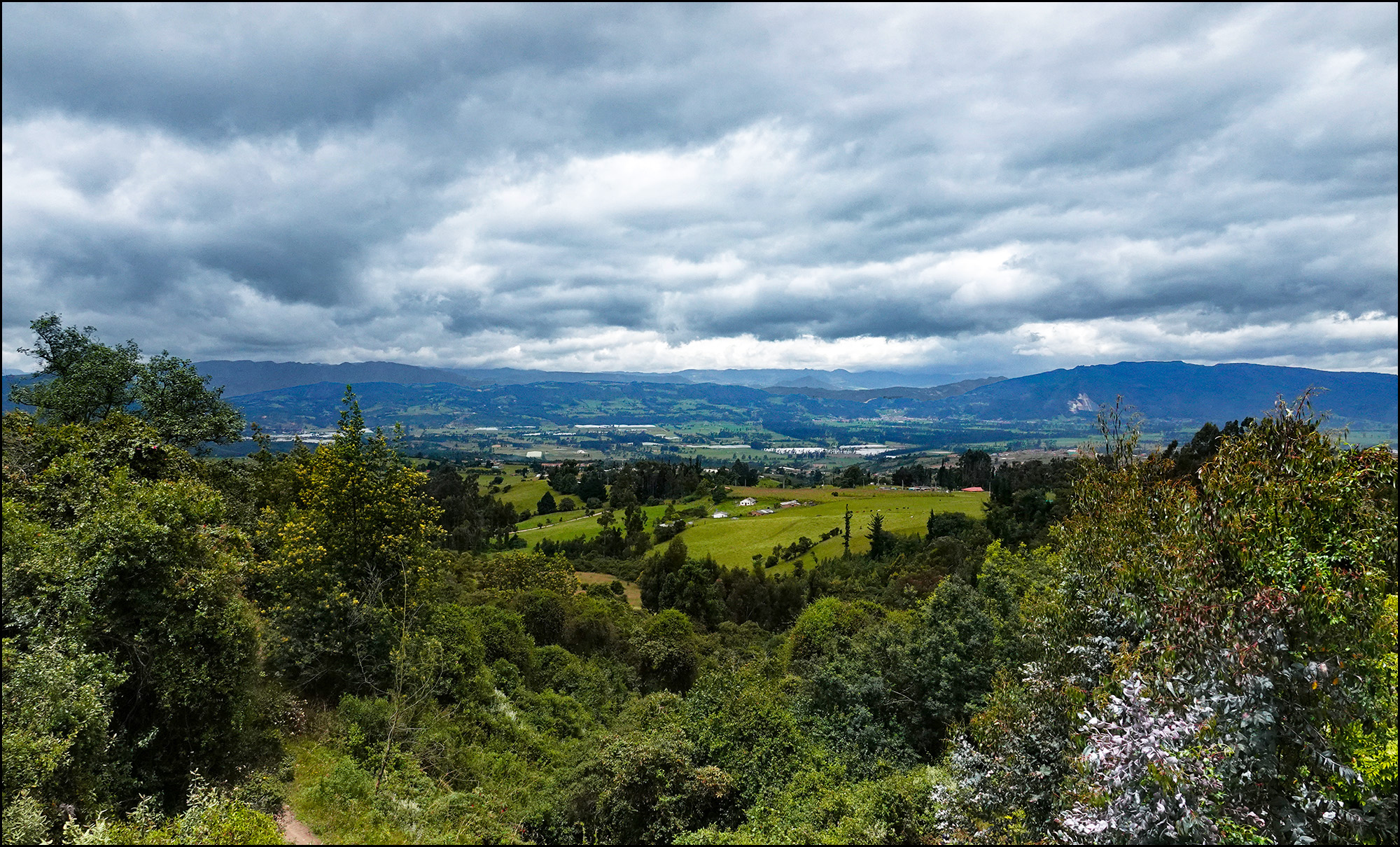
    The view east from Highway 45A near Tausa.

    I got to the town of Ubaté around noon and figured it would be a good place to stop for lunch and stretch my legs. Ubaté is home to the Basilica de Santo Cristo de Ubaté, which seems like it should be a cathedral but isn’t. It’s just a church.
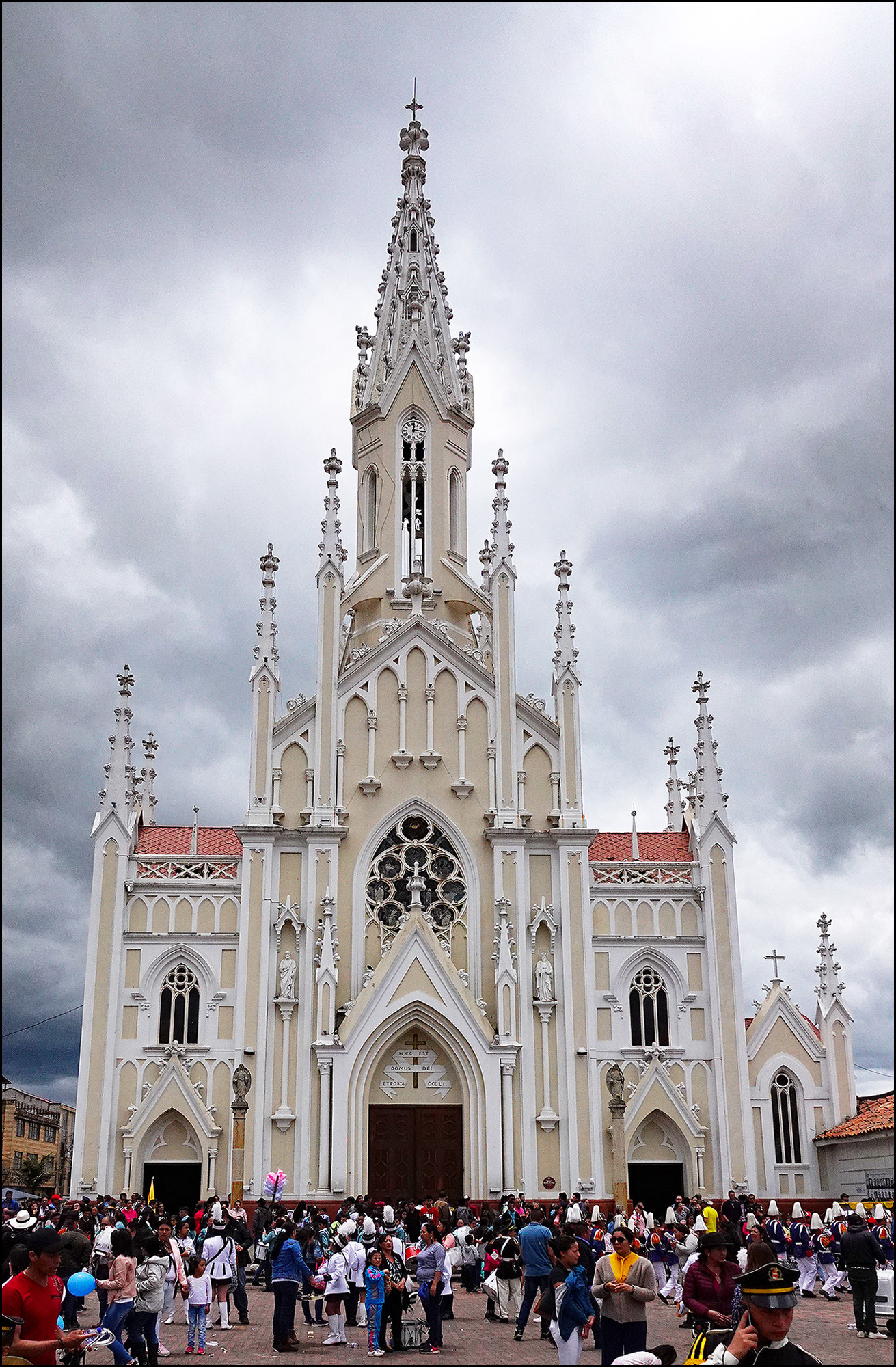
    The basilica of Ubaté.
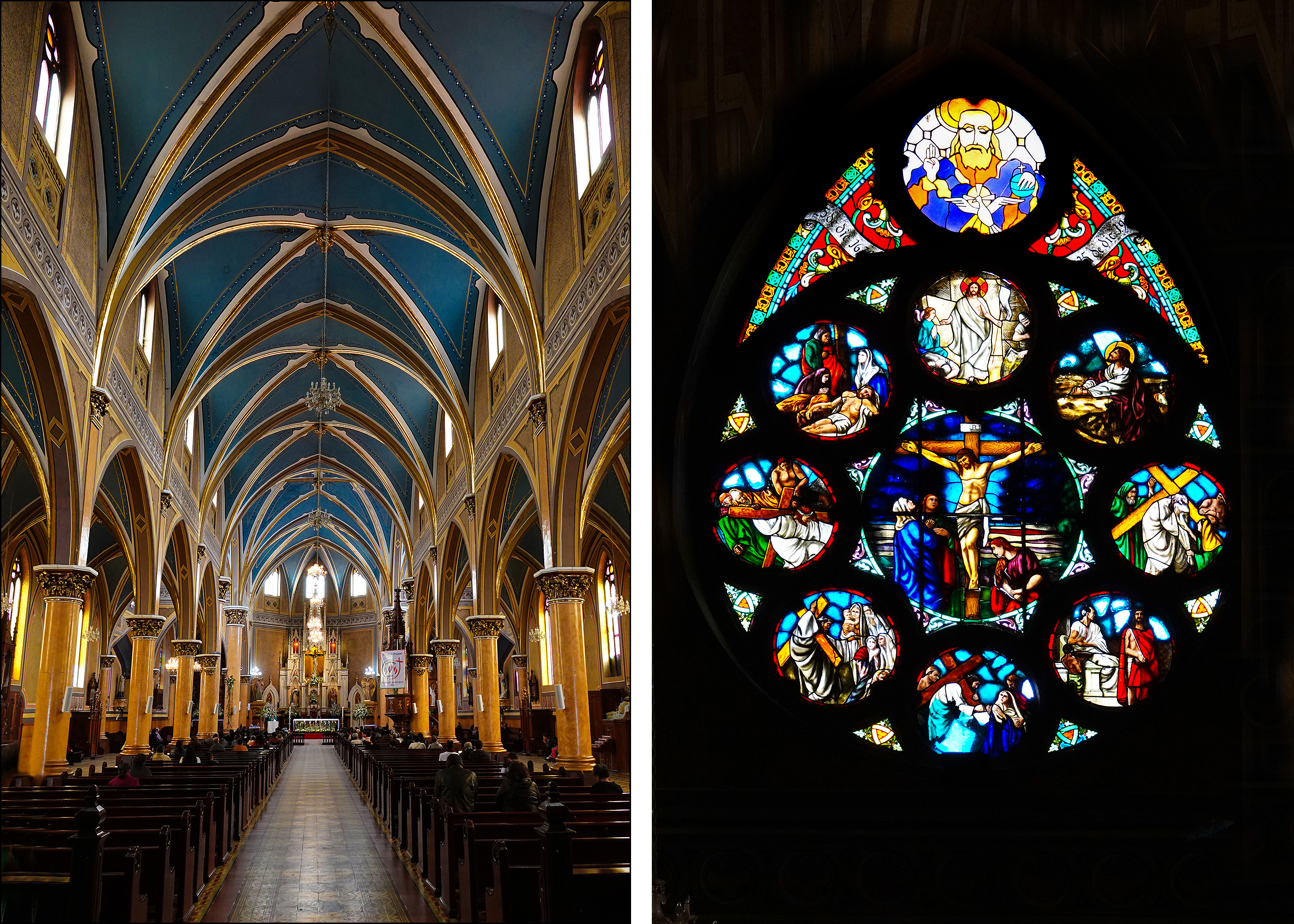
    The interior of the basilica of Ubaté.

    Ubaté turned out to be an excellent stopping point. Thanks to the national holiday it was hosting marching bands from schools all around the region, ranging from high schoolers to little kids no more than seven or eight. All of them were wearing extremely new and/or extremely cleaned-and-pressed uniforms. The bands were heavy on marching glockenspiels, which provided a very nice bell-like accompaniment to all the other instruments—though YMMV of course. I happen to like bell tones. The glockenspielers all twirled their sticks in sync, which perhaps is standard for glockenspielers? I don’t know. In any case, here’s the drum major for the Bandade de Honor of (I think) the school of San Juan Bautista De La Salle in Zipaquirá.
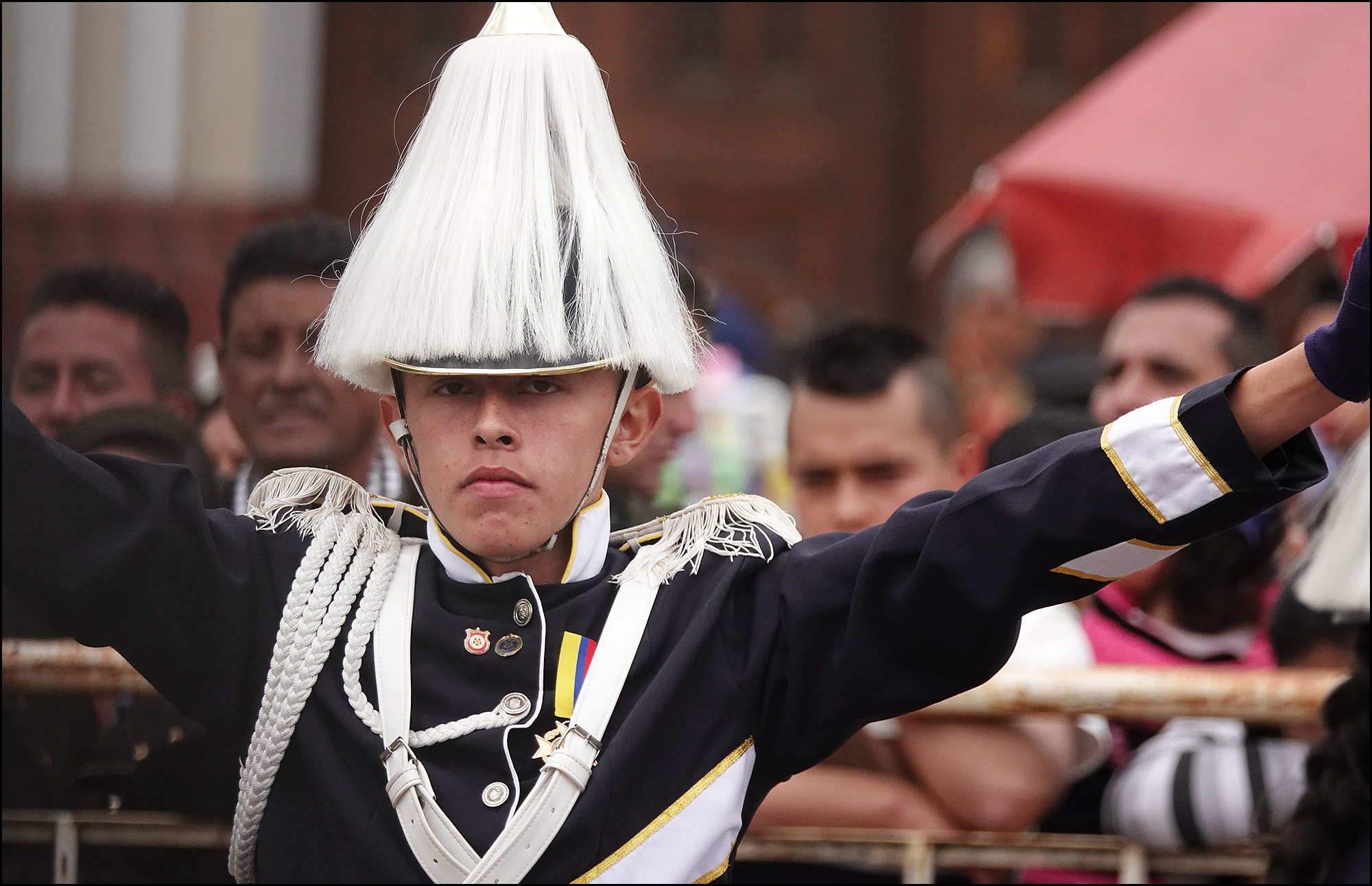
    The drum major of the Bandade de Honor from Zipaquirá

    I spent a couple of hours in Ubaté and ate a hot dog on a stick from a street vendor for lunch. Then I continued north to Chiquinquirá, where I immediately did something stupid. I took the wrong fork in the road leading out of town and passed through a toll booth. A couple of miles later I realized what I had done, but rather than turn around and pay another toll, I figured I’d just keep heading north to Barbosa and then cut south to Villa de Leyva. What could go wrong?
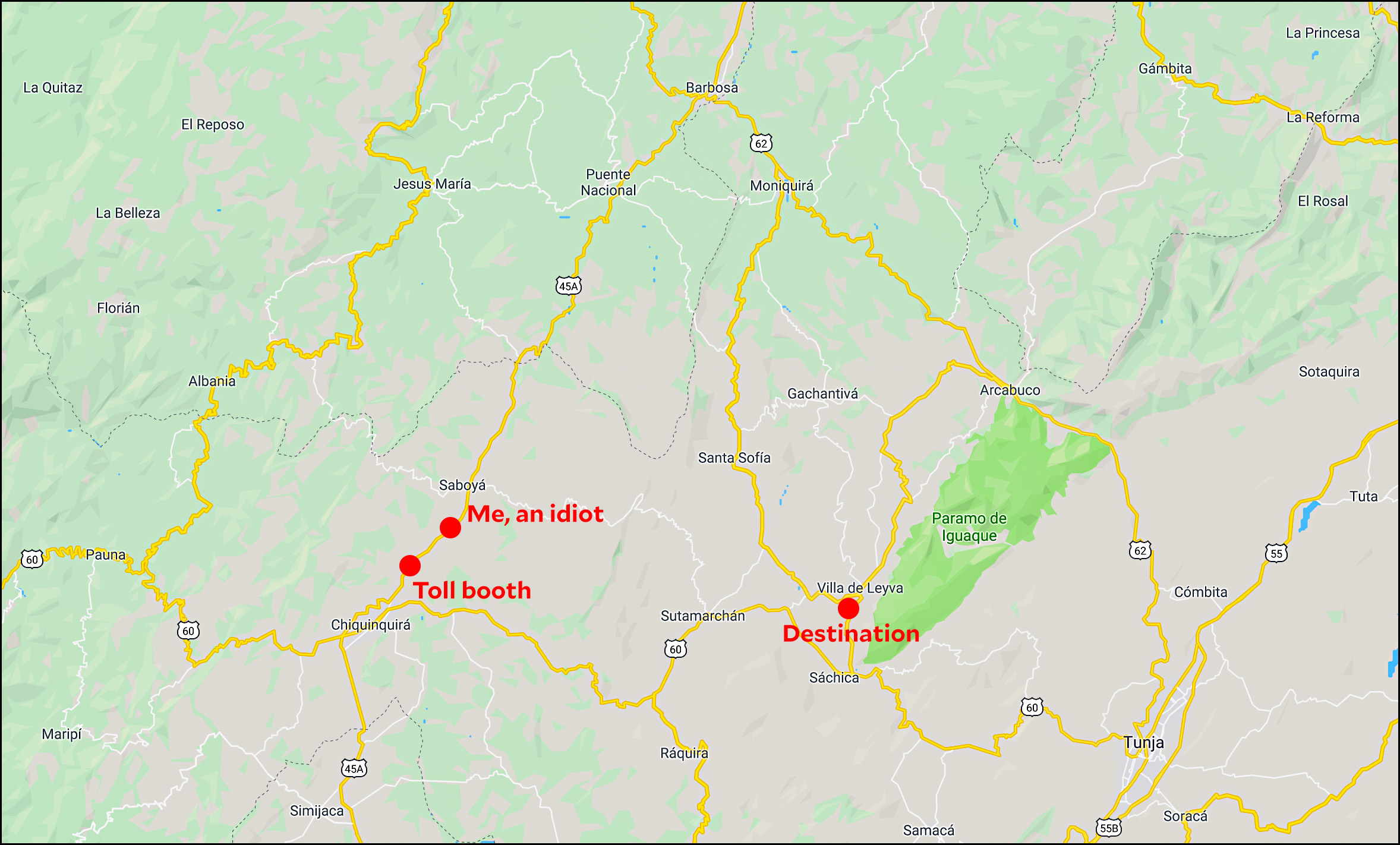
    The road to Villa de Leyva

    The road to Barbosa was no big deal, but it turned out that the road south from there to Villa de Leyva was mostly an unpaved bone-shaker with a top speed of maybe 20 mph or so. The end result of all this was that I did finally make it to Villa de Leyva, but not until 6 pm. This is a little before sunset, but thanks to the mountains and the overcast it’s nearly dark by then. The buildings around the town square are indeed old school, as advertised, but that’s about it for the place aside from lots of tourist shops selling ponchos and shawls. However, there were lots of kite flyers in the town square eking out a few last minutes of daylight.
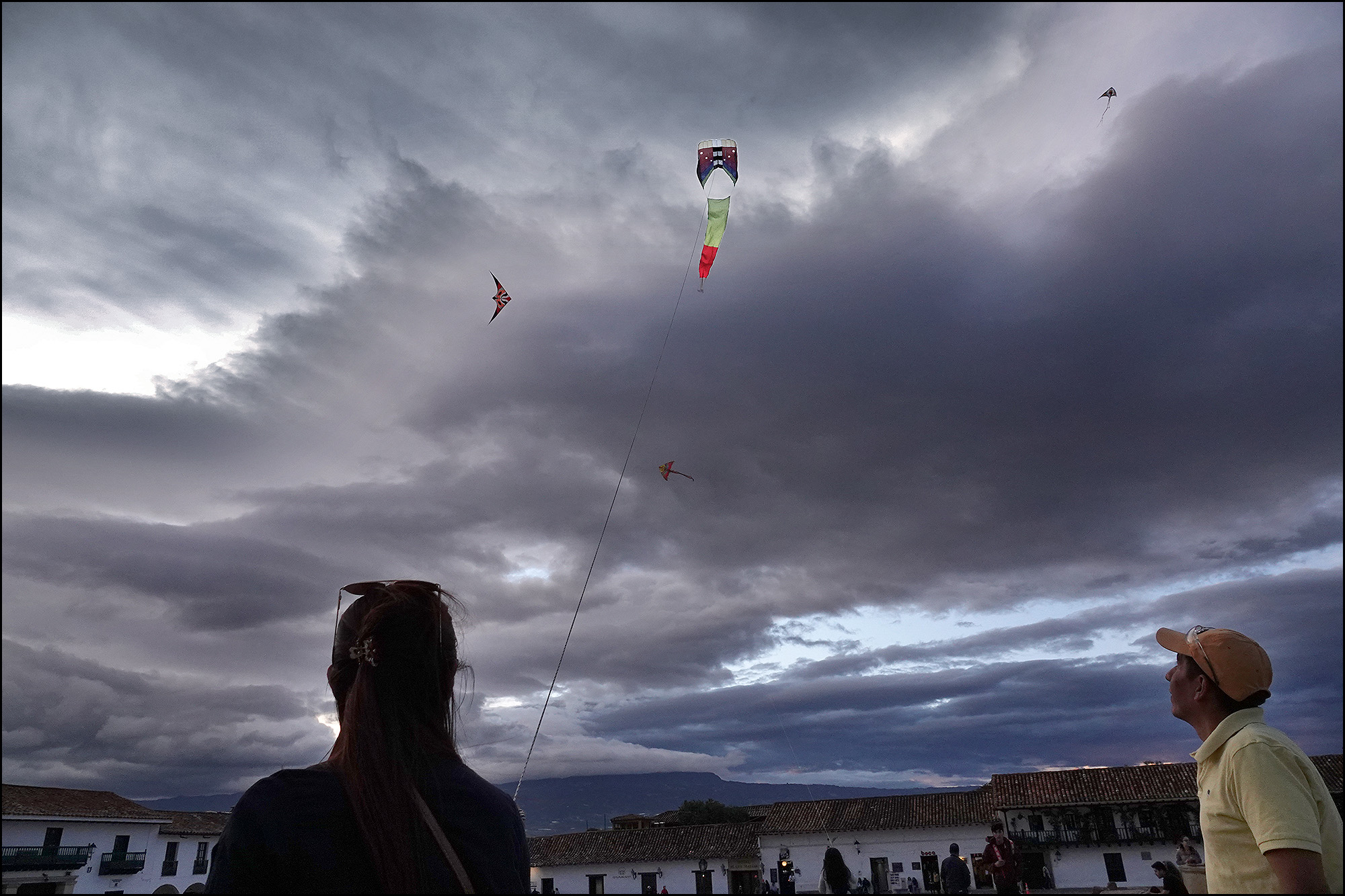
    Flying kites in the town square of Villa de Leyva.

    So I made it! But there was nothing much to do in Villa de Leyva, so I bought a can of peanuts and a bottle of coke and ate them in my car during the three-hour drive back to Bogotá.

    NEXT: Thursday! Kevin goes to a national park.
  • Lunchtime Photo

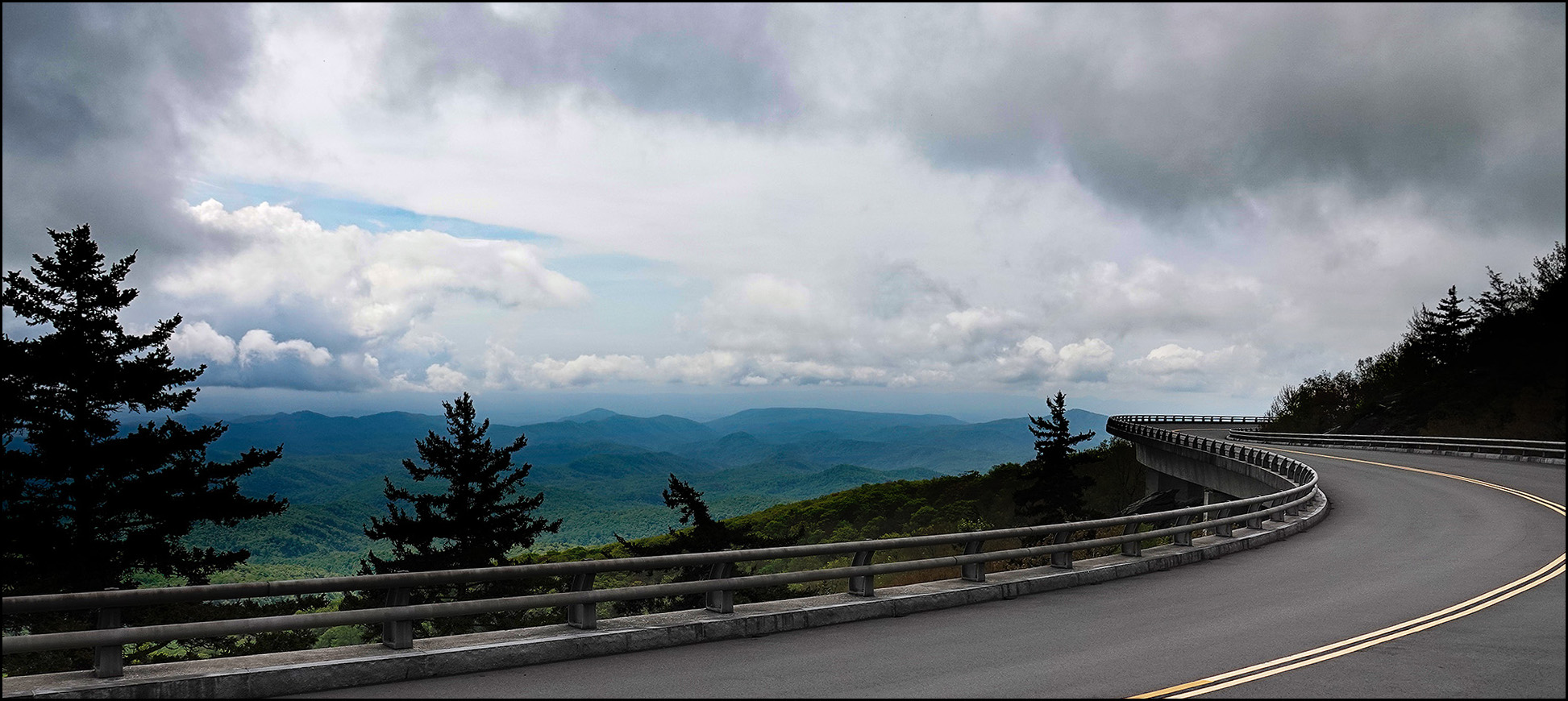
    This is the Linn Cove Viaduct, completed in 1987 as the final piece of the Blue Ridge Parkway. It curves around Grandfather Mountain and apparently took a long time to finish because the original route was much higher on the mountain and the owner of the property didn’t like it. When a lower elevation route was approved, he donated the land to the National Park Service and the viaduct was finished a few years later.

    The viaduct is only a few hundred yards long, and I almost missed it the first time I drove over it. I’m sure it’s beautiful in the fall, but I was lucky to go over it on a nice day with some lovely clouds forming.

    May 9, 2019 — Linn Cove Viaduct, Blue Ridge Parkway, North Carolina
  • Close the Streets, Improve the City?

    Atrios had this to say over the weekend:

    Had to go to NYC briefly and randomly encountered their “making Park Avenue free of cars” day. I’d guess more cyclists and pedestrians traveled on it than people to do normally in cars (I’d guess a lot more, actually, but don’t know if I am good at estimating such things) and the city didn’t grind to a halt.

    You don’t have to close all the streets to cars all the time, but pretty sure you could randomly close 5% of them and improve life immensely. Give it a bit more thought and even better.

    By coincidence, I spent the past week in Bogotá, a city that seems to do precisely this. I don’t know if it improves urban life in general, but I can report that it’s hell on tourists trying to leave or return to the city.

  • Is Social Media Making Us Afraid?

    Mark Helenowski

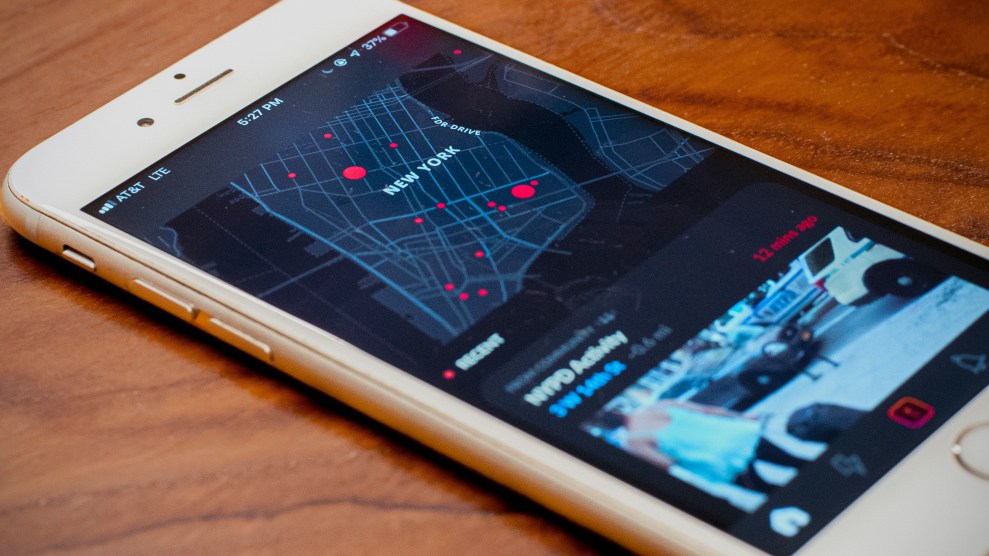
    Abigail Weinberg reports that a banned iPhone app called Vigilante has been rebranded as Citizen:

    Now, the app is back up and running in New York, San Francisco, Baltimore, Los Angeles, and Philadelphia, where it operates with a nearly identical layout and the stated mission “to keep people safe and informed.”

    Users who have turned on push notifications receive alerts, often multiple times a day, about the most pressing nearby incidents, determined using geo-tracking data based on the locations of users’ phones. The app’s homepage shows a map of a user’s metro area where red dots correspond with the locations of incidents. Clicking on a dot (or a mobile push alert) brings up an incident page with details about the emergency and the number of people notified, a chatroom, and a “whoa” button users can click to express amazement. There’s also a “record” feature that lets users stream video of incidents happening near them. All together, the app gives users a mix of verified and crowdsourced information about neighborhood emergencies.

    This is a lot like Nextdoor, the “social networking app for neighborhoods,” which allows neighbors to chat about whatever’s on their minds. And what’s on their minds, it turns out, is often local break-ins, police activity, and “suspicious” folks who have been sighted. The result is to make everyone more paranoid.

    A couple of years ago a friend installed one of those video doorbell devices that allows you to use your smartphone to see who’s knocking on the door. We both live in Irvine, which is famously one of the lowest crime cities in America, so I asked her why. Over and over, the answer was that some guy a couple of streets over had almost had his house broken into. I pressed a little bit, but that was pretty much it. She had probably heard about it via Nextdoor or some similar app and couldn’t get it out of her mind.

    Different people have different levels of concern about crime, and that’s fine. It’s what makes the world go round. But I would love to see a PhD student do some research on this topic. Do apps like this stoke fear? Or is it only the fearful who get them in the first place? Is there any correlation between racial diversity and use of these apps in a particular neighborhood? Etc.

    A decade ago I would have asked these questions about the insane preoccupation of local news programs with crime reporting. But times change, and social media has taken over that function for a lot of people. We ought to be interested in exactly what kind of impact they really have.

  • Here’s How Donald Trump Can Fix His Racist Branding Problem

    Wang Ying/Xinhua via ZUMA

    The Washington Post has a headline today that makes you go hmmm:

    I think we all have a pretty good idea of how Trump could avoid being called a racist. He could stop saying racist stuff all the time. Easy peasy.

    For my money, I probably wouldn’t call Trump a racist and I definitely wouldn’t call him a white supremacist. I’d call him a race-baiter. I know I’m out of sync with leftist orthodoxy on this, but words and phrases have actual meanings and I think language works better when we respect their differences:

    • A white supremacist is someone who believes as an ideology that the white race is inherently superior to and should dominate all other races. Adolf Hitler was a white supremacist. Jefferson Davis was a white supremacist. For that matter, pretty much everyone in Europe (or descended from European stock) before about 1900 was a white supremacist.
    • A racist is someone who believes different races have different inherent abilities but doesn’t have any consistent ideology to back it up. They just don’t like folks from other tribes (and they do like being top dog).
    • A race-baiter is someone who may or may not be personally racist but is perfectly happy to make money or win political office by appealing to racists.

    Trump is a race-baiter. But is he personally racist? Beats me, and I almost don’t care anyway since I think a race-baiter is generally worse than a racist. Racism comes in various degrees, but sometimes it’s just the result of upbringing and expresses itself as little more than a casual, personal, low-level hostility. Race-baiting, by contrast, is invariably cold-blooded and mass-focused almost by definition. It’s cynical and selfish and demonstrates a willingness to stoke hatred for little more than short-term personal gain.

    Genuine white supremacists are thin on the ground these days and don’t wield any serious political power. Racists come in all stripes, but their power has been dwindling for decades and their attitudes have largely been driven out of the public square. They’re still dangerous but getting less so—and that trend will continue as long as political elites make racism publicly intolerable. The only thing that can change this is a resurgence of race-baiting, and that makes race-baiters the most dangerous of them all. Fox News is far worse than their viewers and Donald Trump is far worse than his base.

    Those are the people to fight, not the yahoos who yell “Send them back!” at Trump rallies. Without Trump, they’d just be sitting at home and occasionally telling off-color jokes to their buddies. It’s only with people like Trump around that they become toxic.

  • Colombia Diary — Tuesday

    By Tuesday I was older and wiser. My phone had a nice, fast connection to the internet and I knew to never leave my car without the keys in my pocket. And I never did again!

    Here’s a tip: Colombians know how to make scrambled eggs. Breakfast huevos are invariably scrambled and they’re never overcooked. They have a lovely, slightly soft but never runny consistency, and are mixed up with just a hint of veggies or ham or whatnot. They are far superior to the stiff, dry crap that American hotels serve. So that’s what I had for breakfast every morning along with some rolls and a bowl of fruit.

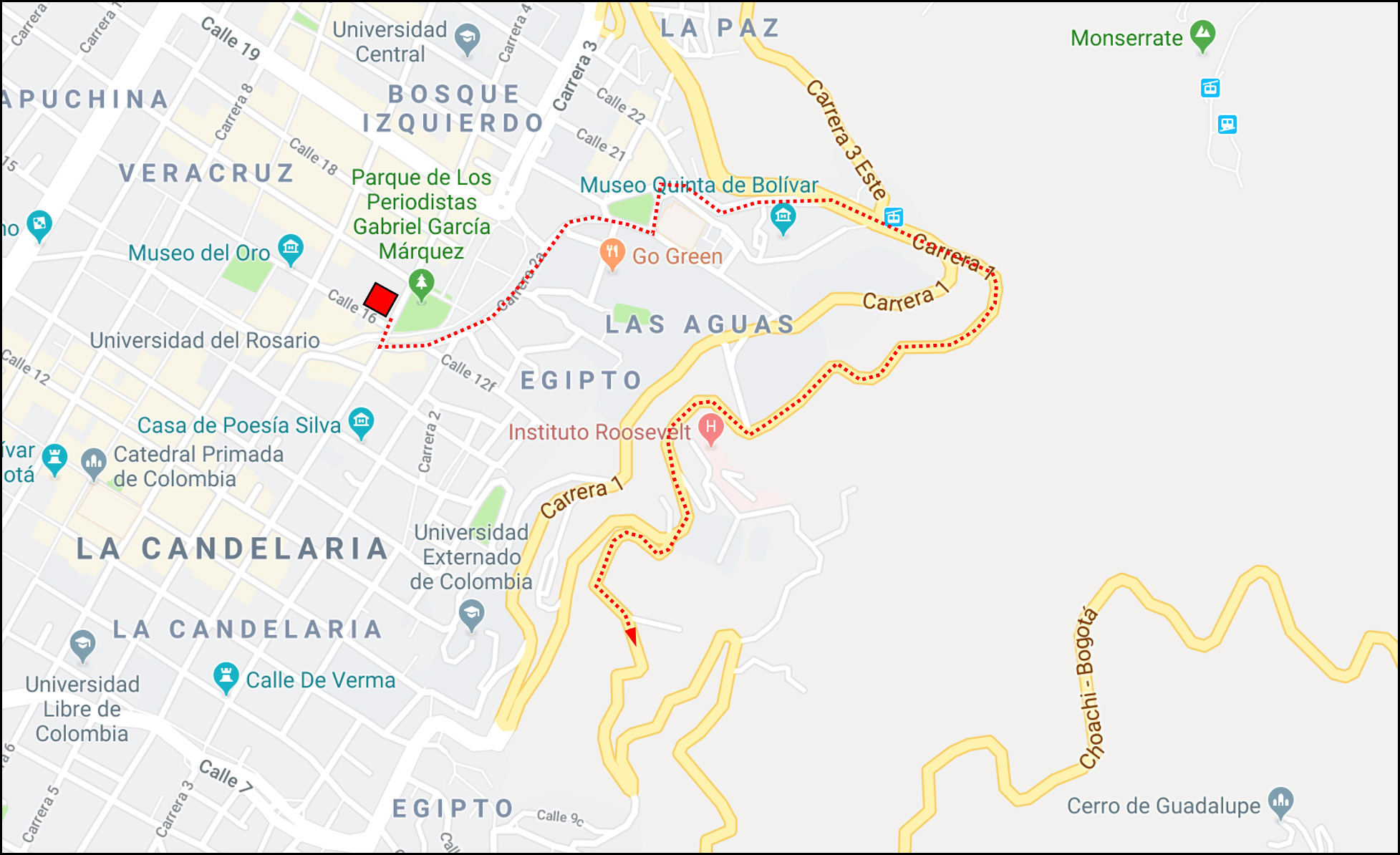
    Tuesday was east day, which is easy to do from the city center where I was staying: just turn right out of the hotel; make a quick, hard left onto Calle 13—the big one, not the little one; follow it around as it becomes Carrera 2a; head up to the Universidad de los Andes; make a quick left on Carrera 1 Este, avoiding mobs of students going to class; follow Calle 20, which shortly becomes Calle 22; merge onto Carrera 1; turn left onto Calle 10; and you’re home free! But if you make any kind of mistake at any time, you’re screwed. You will likely spend half an hour shunted onto one-way streets and tiny alleys that take you the wrong way until you finally find your way back to somewhere you can start over from.

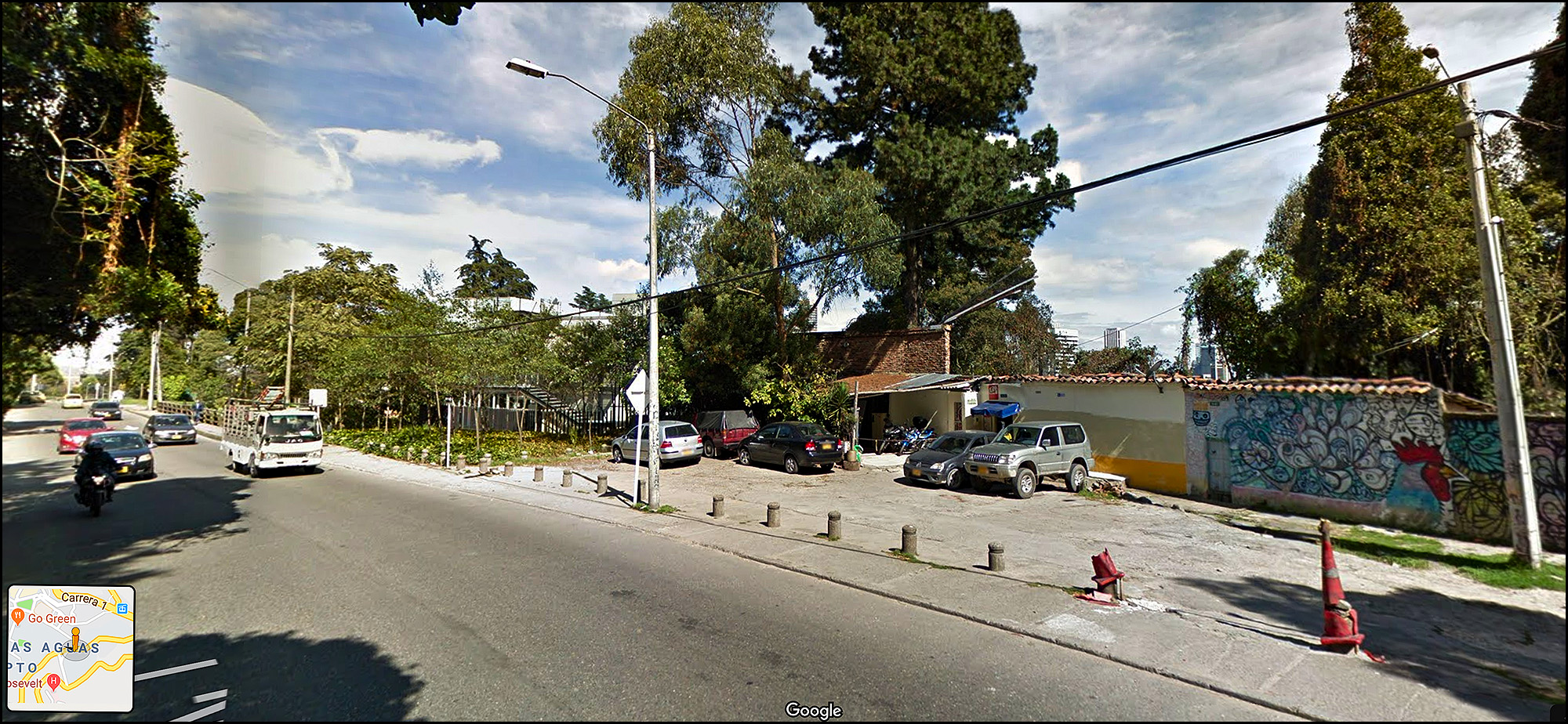
    I didn’t avoid any mistakes this day. Somehow I ended up climbing the very steep, very cobblestony Calle 19, which then becomes about 50 feet of dirt called Carrera 5 Este, and then dead ends at a little house that abuts Carrera 1. Here is a picture from Google maps:

    This little piece of dirt is technically Carrera 5 Este, but the family there rents it out to university students as parking.

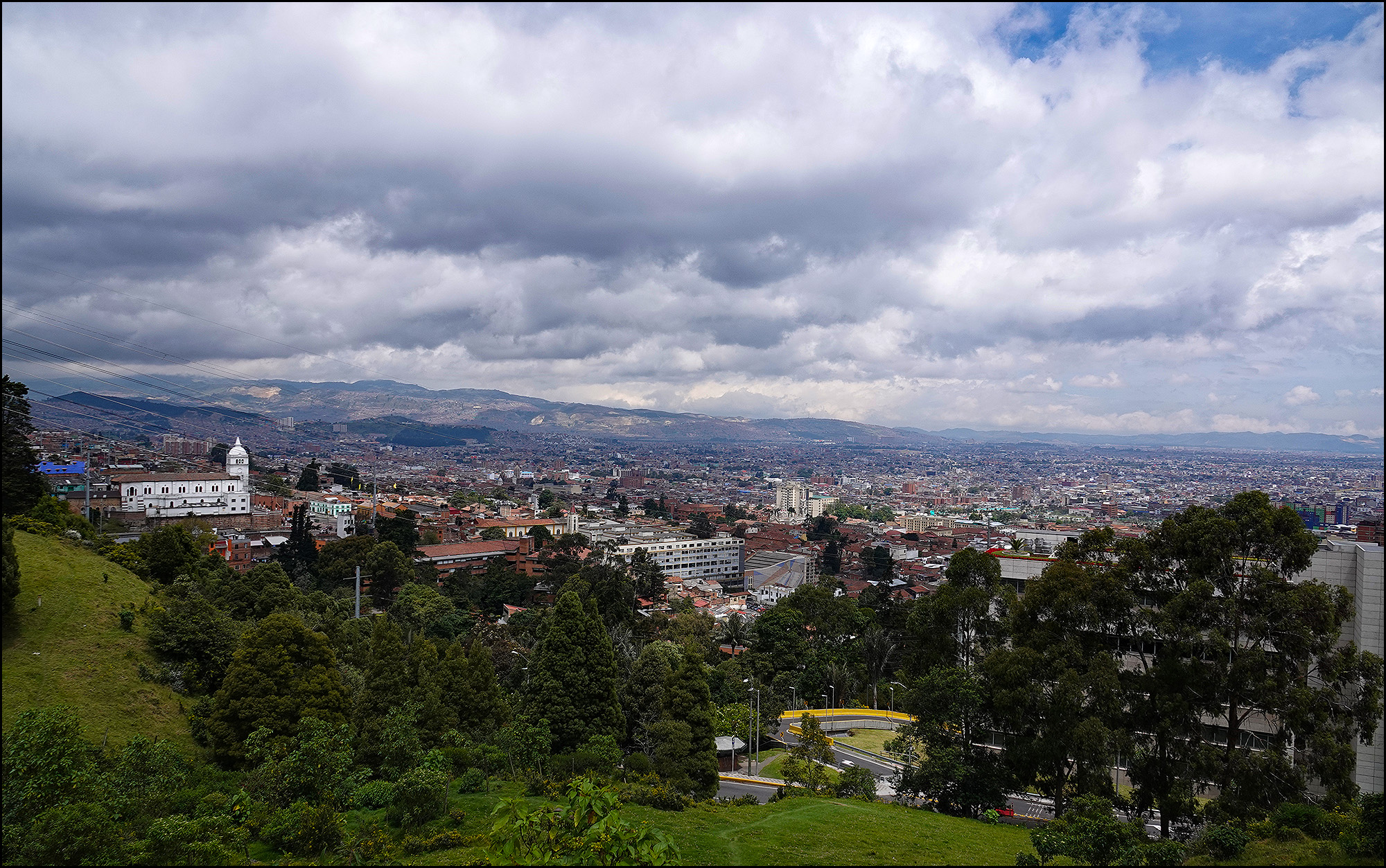
    On the morning I ended up there, this dirt lot was full of cars. The family apparently rents out their front yard to university students as parking, and since someone drove up behind me I couldn’t even turn around to get out. I finally managed, barely, to push my car between the concrete barriers that separated their house from Carrera 1, but unfortunately this was the section of Carrera 1 heading into the city, not out of it. About a mile later I made an illegal U-turn and got onto Carrera 1 heading in the right direction. This shortly turned into Calle 10 and then into the Choachí-Bogotá road, a very pleasant, mildly twisty parkway with almost no traffic. Here is Bogotá from a little ways up:

    The city of Bogotá from the Choachí-Bogotá road.

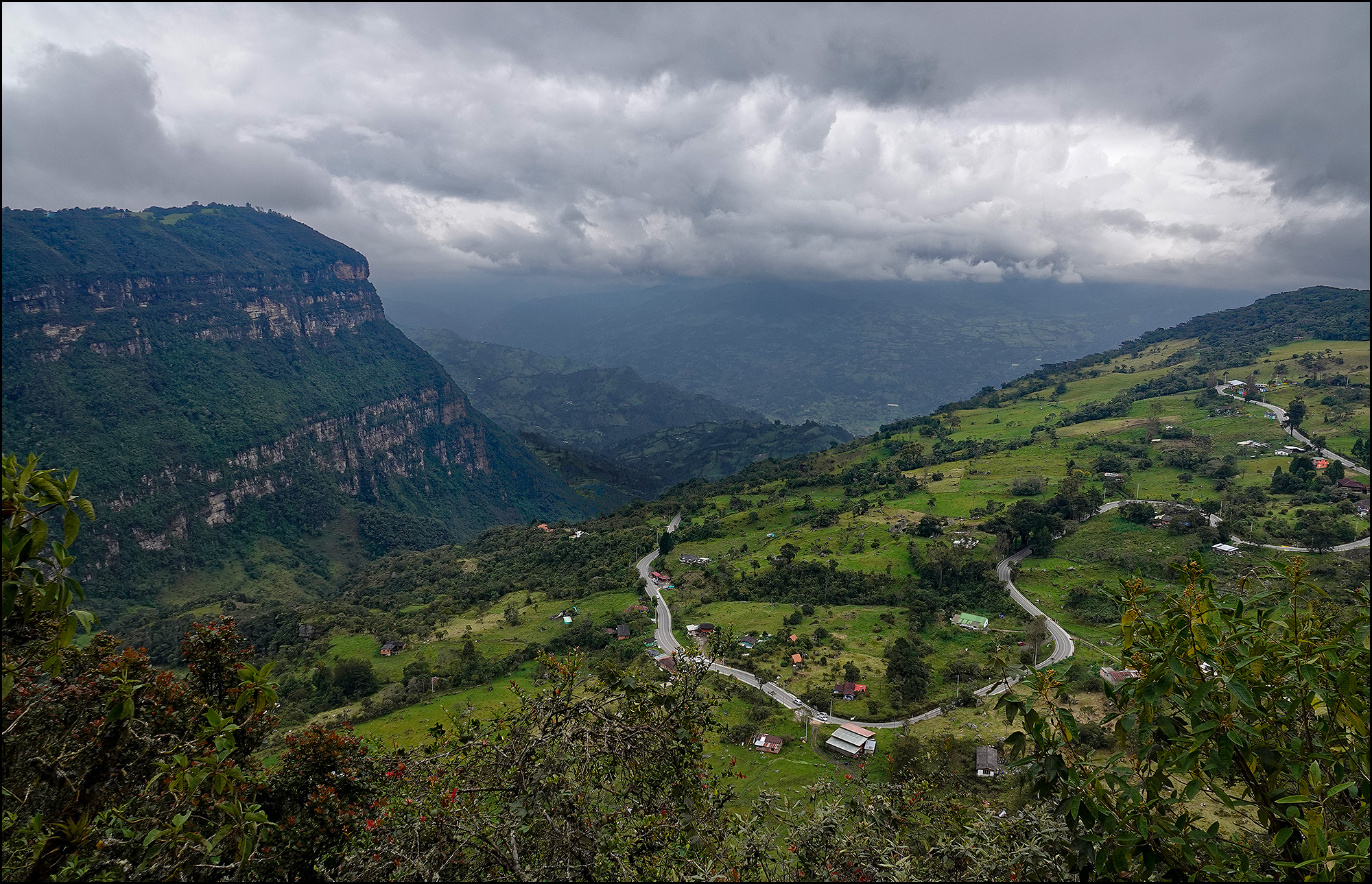
    With the rigors of Bogotá behind me this turned into an absolutely lovely drive. The road was excellent, there was almost no traffic, and the scenery was gorgeous. At the top you’re actually a bit higher than Monserrate and you can see the church there from above. When you start to descend, there’s valley after valley that look like this:

    This valley opens up on the road over the mountains after you get to the top and begin to descend.

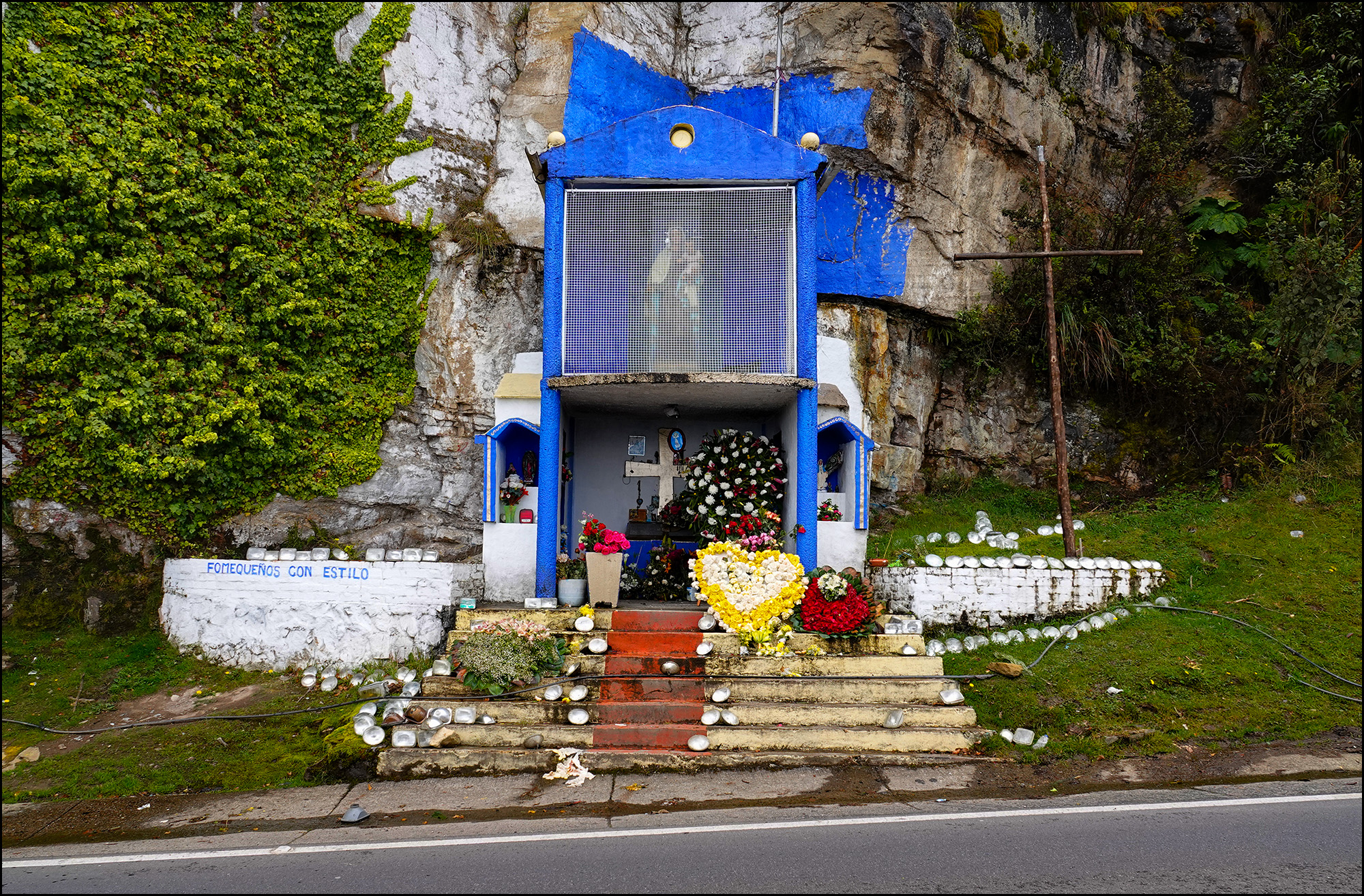
    The day was mostly cool and overcast. Little roadside shrines dot the road, plus this one gigantic shrine:

    A shrine to outshine all the other shrines.

    Now that’s a shrine! The scattering of headlights is common and I’m not sure what it means. Nor do I know what the rules are for building these things. Most of them are modest affairs laid into the rock, but what law governs the construction of a huge edifice like this?

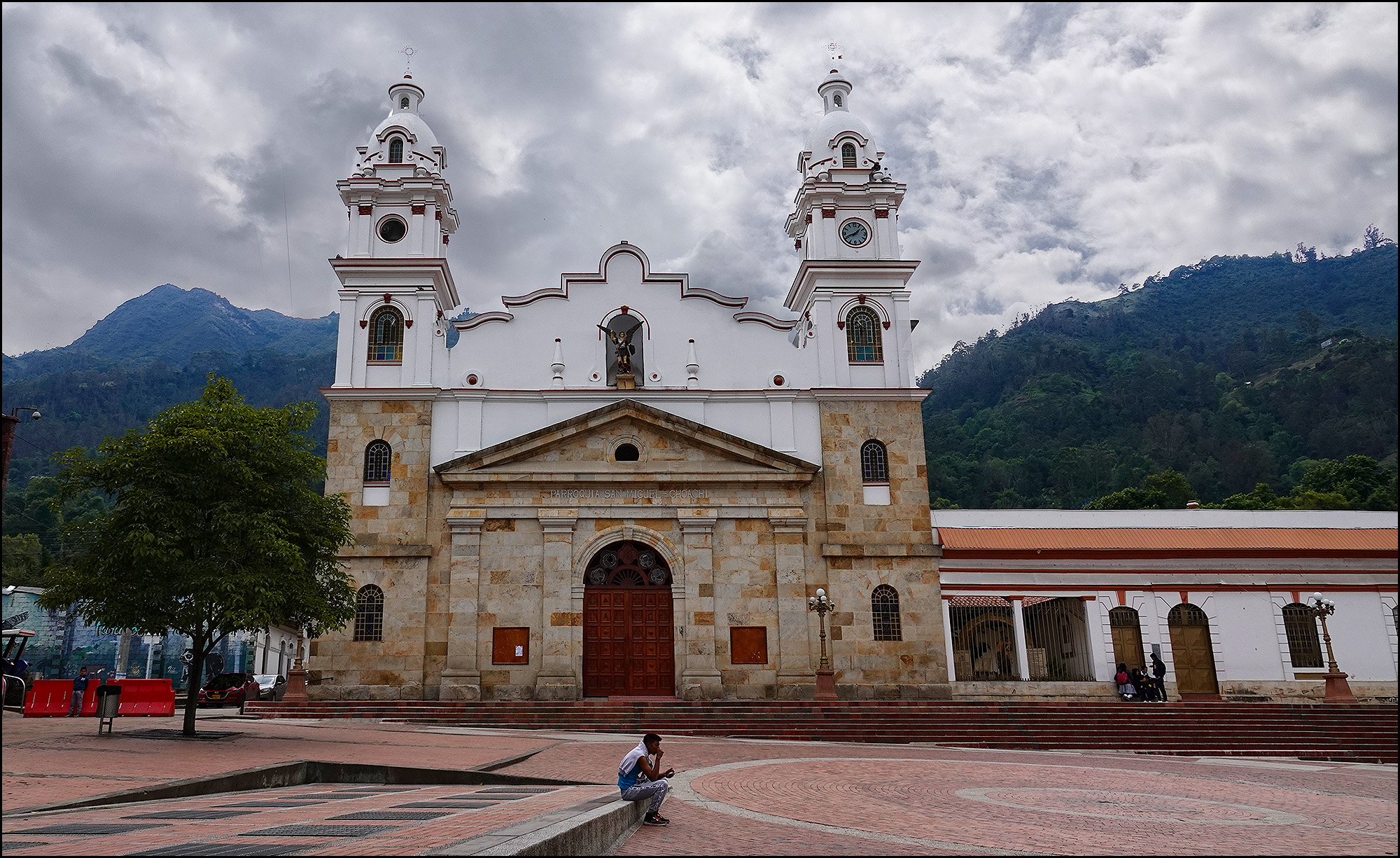
    I was headed toward Choachí and got there a little after noon. Here’s the inevitable town square dominated by a large church:

    The church of San Miguel in Choachí.

    There is not a lot in Choachí, but it’s a perfectly pleasant little town. It also offered me the only real lunch I had the entire time I was in Colombia. I decided to stop for a while and eat at Restaurante El Campanario on Carrera 2, an actual sit-down restaurant which turned out to be very nice. I basically threw a dart at the menu since I understood none of it and the staff spoke no English. I ended up with a huge steak, which was a little more than I bargained for but very tasty. It was accompanied by a couple of corn doodads, which seems to be a national law: all meals in Colombia must be accompanied by a corn-based baked good of some kind.

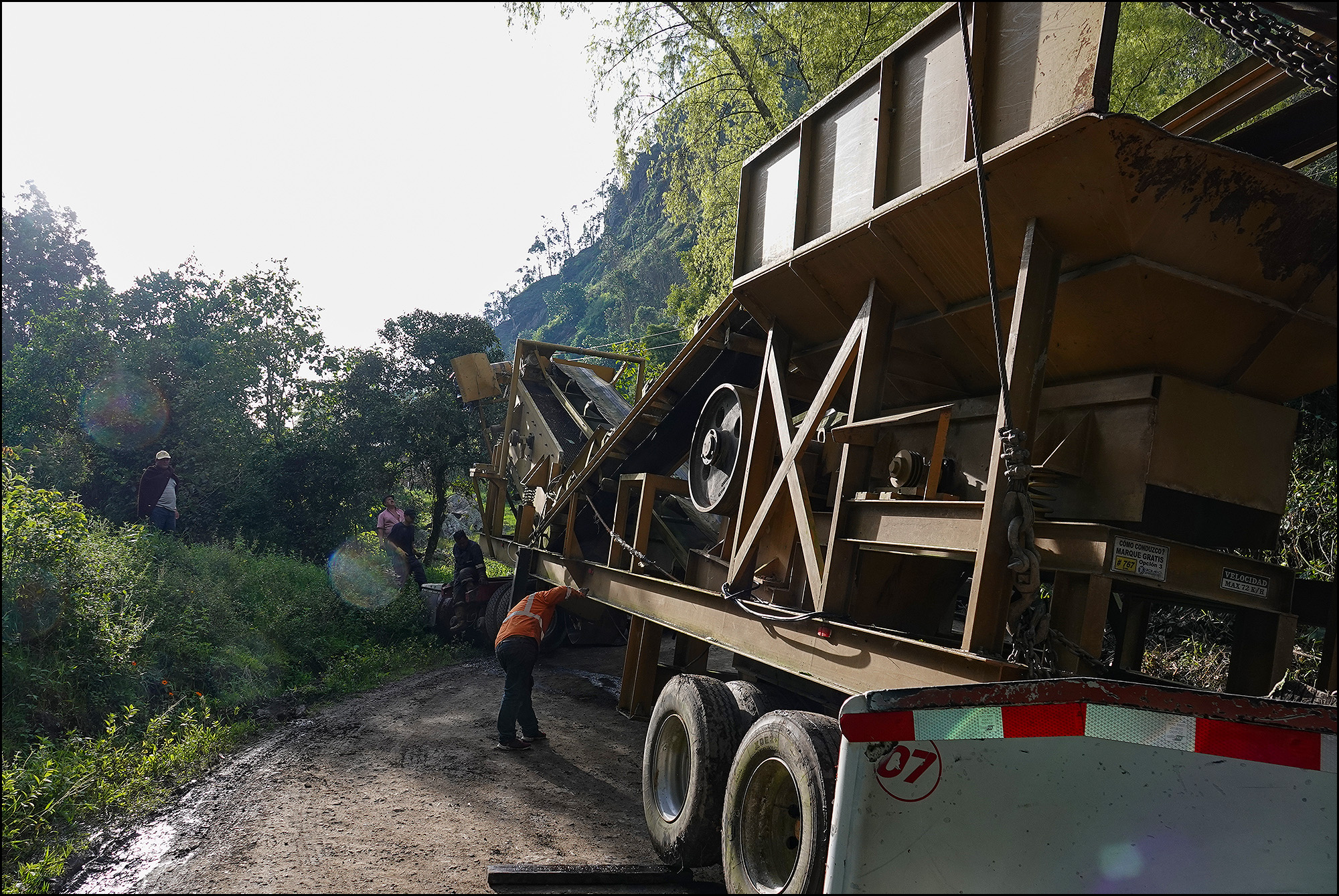
    After lunch I kept going, intending to visit Villavicencio in order to peer down the escarpment into the valley below. But this was not to be. After about an hour I ran into this:

    Some kind of enormous road construction vehicle overturned on the road.

    This looks to be a huge road grader or paver that turned over after taking a curve slightly too fast. A wrecker truck had already been there for a while and a gang of workmen was yelling and cursing as they tried to get the grader upright and in position to either be towed away or to continue on its way. In any case, it was obvious they had at least another hour of work left, so I turned around and headed home.

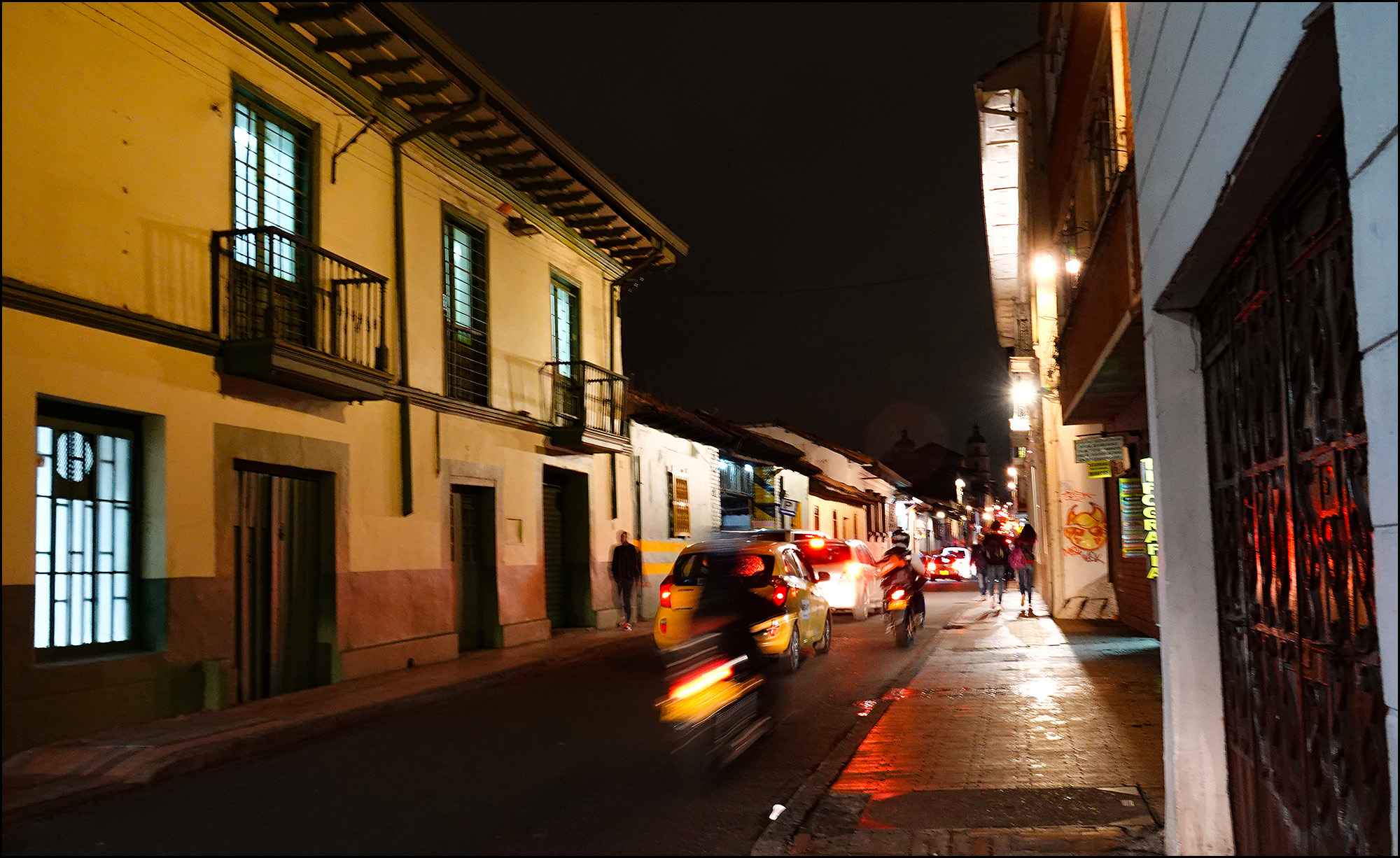
    This was too bad, but Villavicencio probably wasn’t worth seeing anyway and getting back early rewarded me with a spectacular picture of Bogotá at night that I showed you last week. It also meant that it was a good opportunity to take some nighttime pictures of the city with my monopod. As it happens, this didn’t work out as well as I’d hoped, but it gives you at least an idea of what Bogotá looks like at night. This is Carrera 4 looking south toward La Candelaria, the old town:

    The corner of Carrera 4 and Calle 12d, looking south toward La Candelaria.

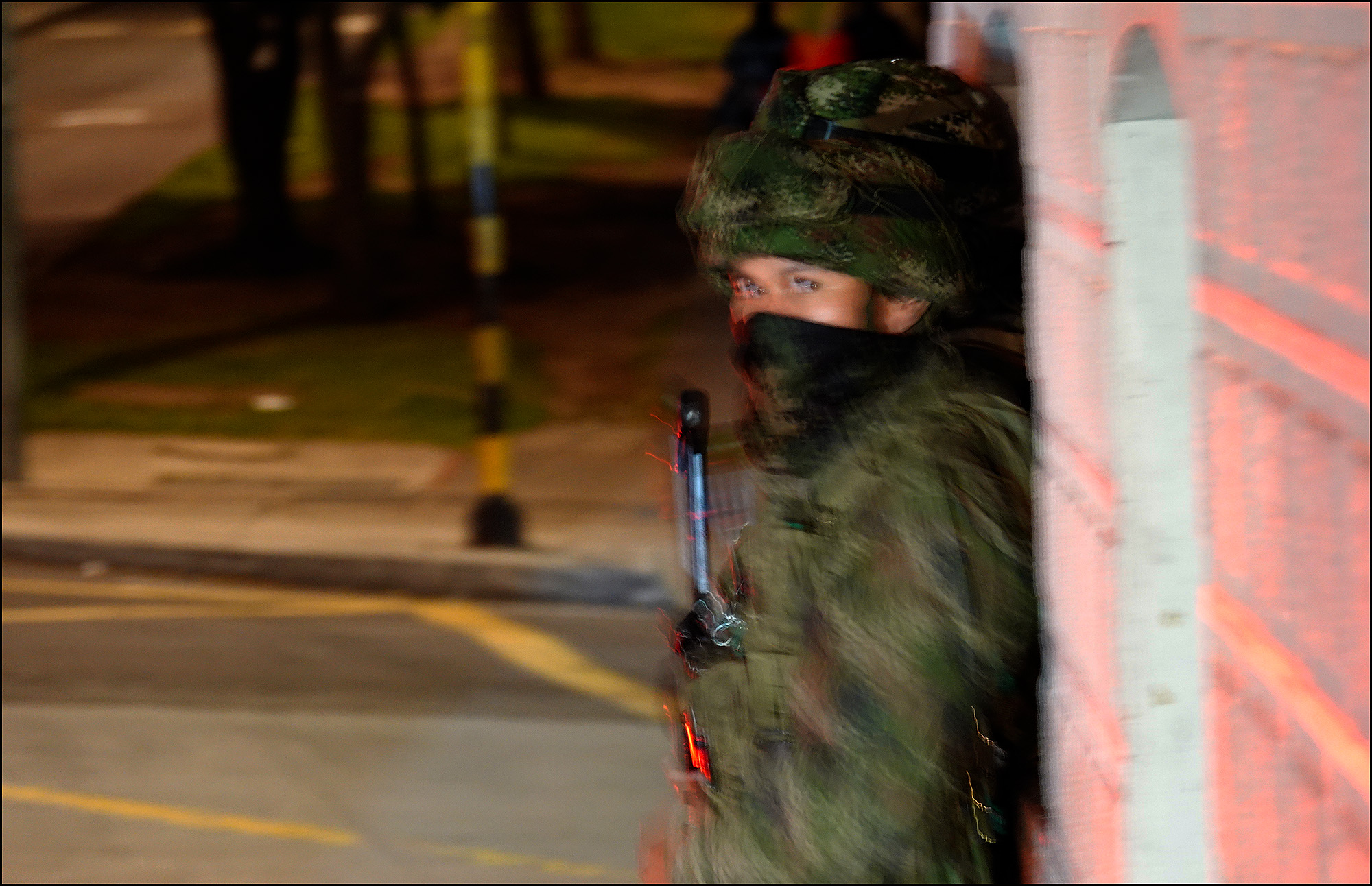
    I mentioned the other day that Bogotá—and everyplace else I went—struck me as utterly safe, but it’s also true that military guards were visible all over the place.

    A couple of military guards at the intersection of Carrera 4 and Calle 7. Another one was on the other side of the street, and a group of three more were hanging out on the median strip on Calle 7.

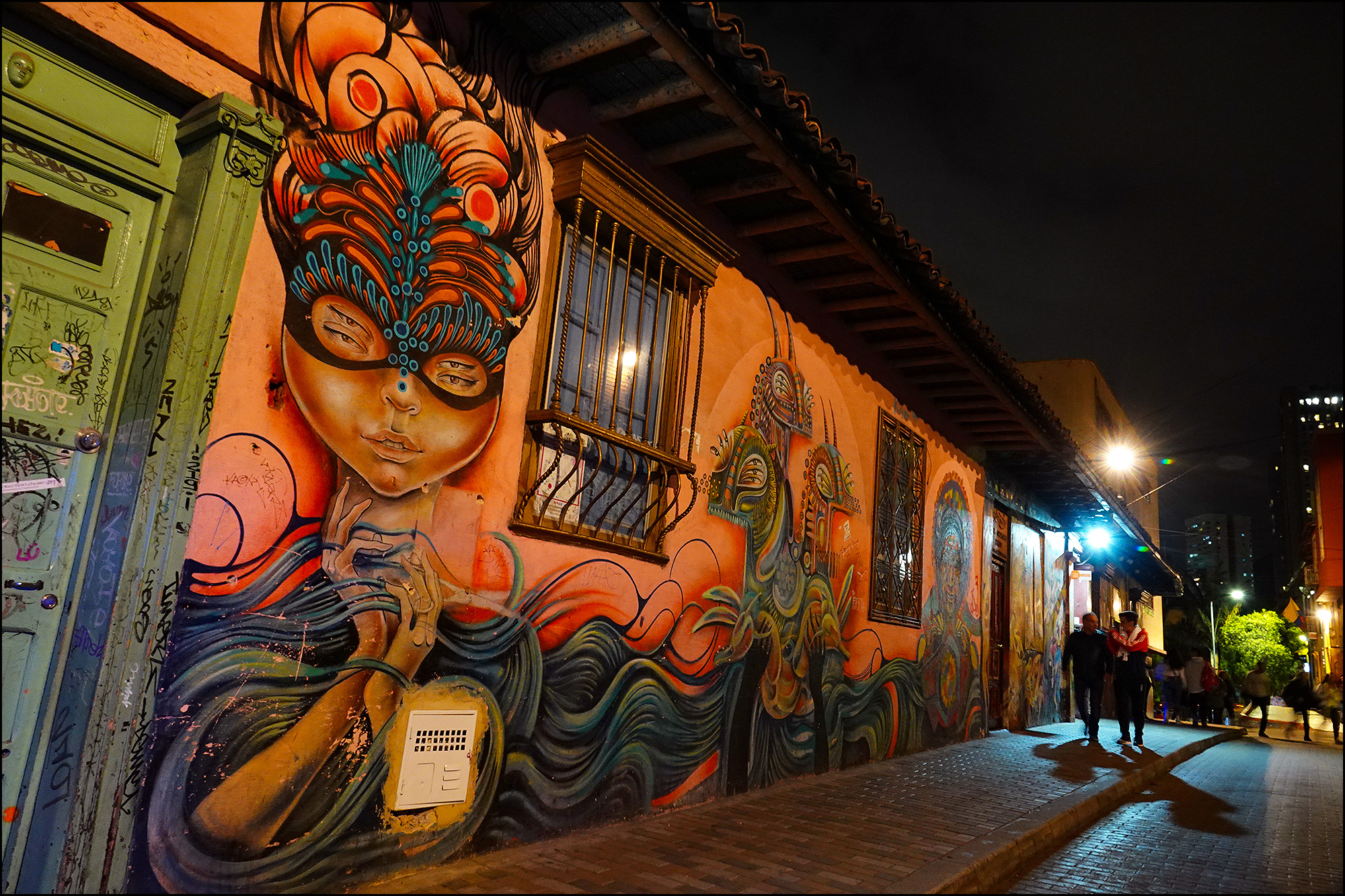
    At this point I headed back and then wandered around the streets a bit. This piece of street art is on Carrera 3 just across from the Gabriel Garcia Márquez park:

    Some street art on Carrera 3.

    After that I bought a couple of pieces of fried chicken from a local takeout place and headed back to my room.

    COMING UP: Wednesday! Kevin heads north again.

  • It’s Long Past Time to End the Delta Smelt Demagoguery

    Randy Pench/Sacramento Bee/ZUMA

    Over at National Review, Jack Fowler takes on a bill pending in the California legislature to save the Sacramento-San Joaquin Delta:

    For years, California’s bureaucrats, who are even more radical than Obama-era natural-resources federal regulators were, have shown great determination to deny the flow of fresh water from mountain snowpacks, watersheds, and reservoirs to the famous Central Valley, which, when supplied H2O, puts fruits and vegetables on the world’s tables.

    ….In years past, enough of the Delta’s accumulated fresh water was pumped and piped south, to the dependent, rain-scarce Valley, where farmers — or, in the jargon of the Left, “billionaire farmers” — grow your tomatoes, celery, almonds, pears, peaches . . . you name it. Now, rather than allow that pumping — because the pumps kill a threatened fish, the infamous Delta smelt (the farmers’ offer to hatch and repopulate the fish in the Delta is met with a bureaucratic no) — billions of gallons of fresh water instead flow from the Delta west, much of its passing under the Golden Gate Bridge on its way into the Pacific Ocean. In other words, a tiny fish trumps America’s food needs and the economy of the Central Valley.

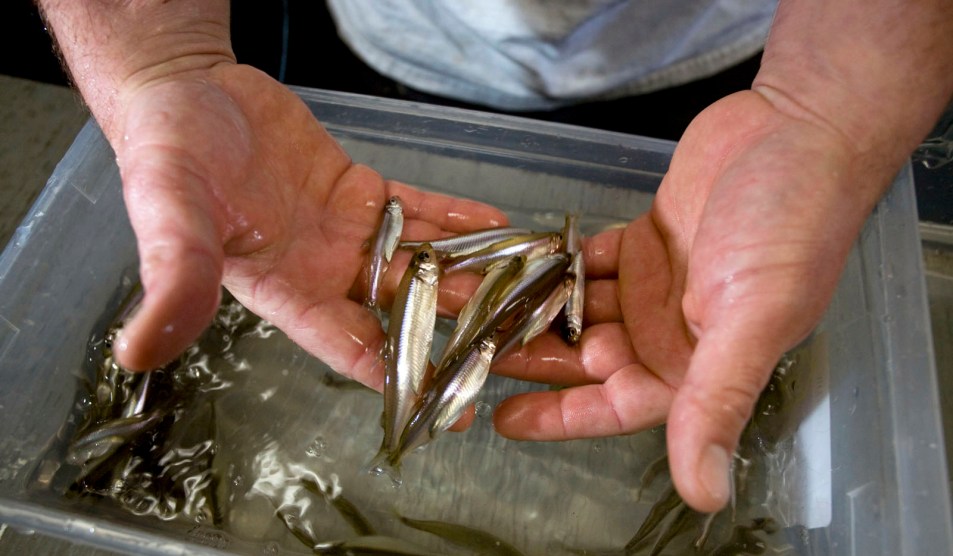
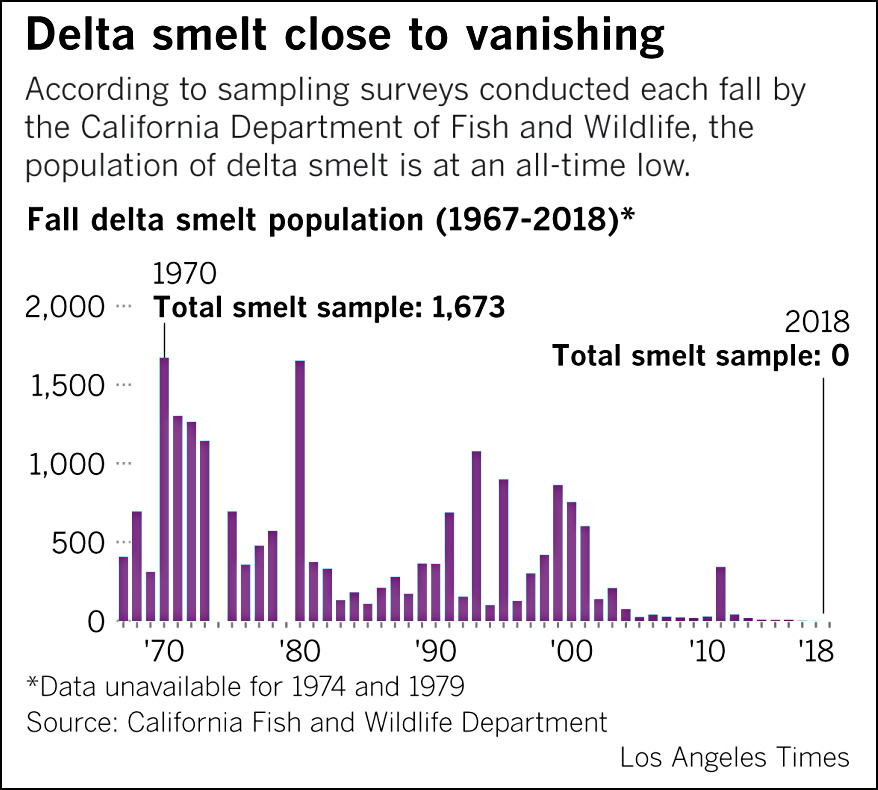
    This is so tiresome. Why not just tell the truth and argue your point honestly? Here is the latest inventory of the “infamous” delta smelt:

    The delta smelt is practically extinct in the wild already. So could the delta be repopulated by taking up the farmers’ offer to “hatch and repopulate the fish,” as Fowler says? That certainly sounds like common sense!

    Except that the delta smelt war has never really been about the delta smelt at all. That just makes a convenient whipping boy for the right. The smelt is a bellwether for the entire delta ecosystem, which is getting saltier and more brackish every year because the natural spring flow of freshwater from the mountain snowpack through the delta has increasingly been diverted to Central Valley farmers. The fight over the smelt is really a fight over the health of the entire delta ecosystem.

    Now, you can argue that we shouldn’t care so much about the delta. Central Valley farming and Southern California families are more important. Fine. But make the honest argument: abandon the smelt demagoguery and defend the proposition that the health of the delta isn’t a big deal and we should stop worrying about it. What’s wrong with having an honest debate about whether we should allow the delta to degenerate in order to feed the country?

  • Colombia Diary — Monday

    Earlier in the week I wrote about my first day in Colombia, but there hasn’t been much since then. The reason is that going places in Colombia takes a lot longer than you expect, which means I rarely got back to my hotel in Bogotá before 9 or 10 at night. At that point, I just wanted to get a little something to eat and then get to bed.

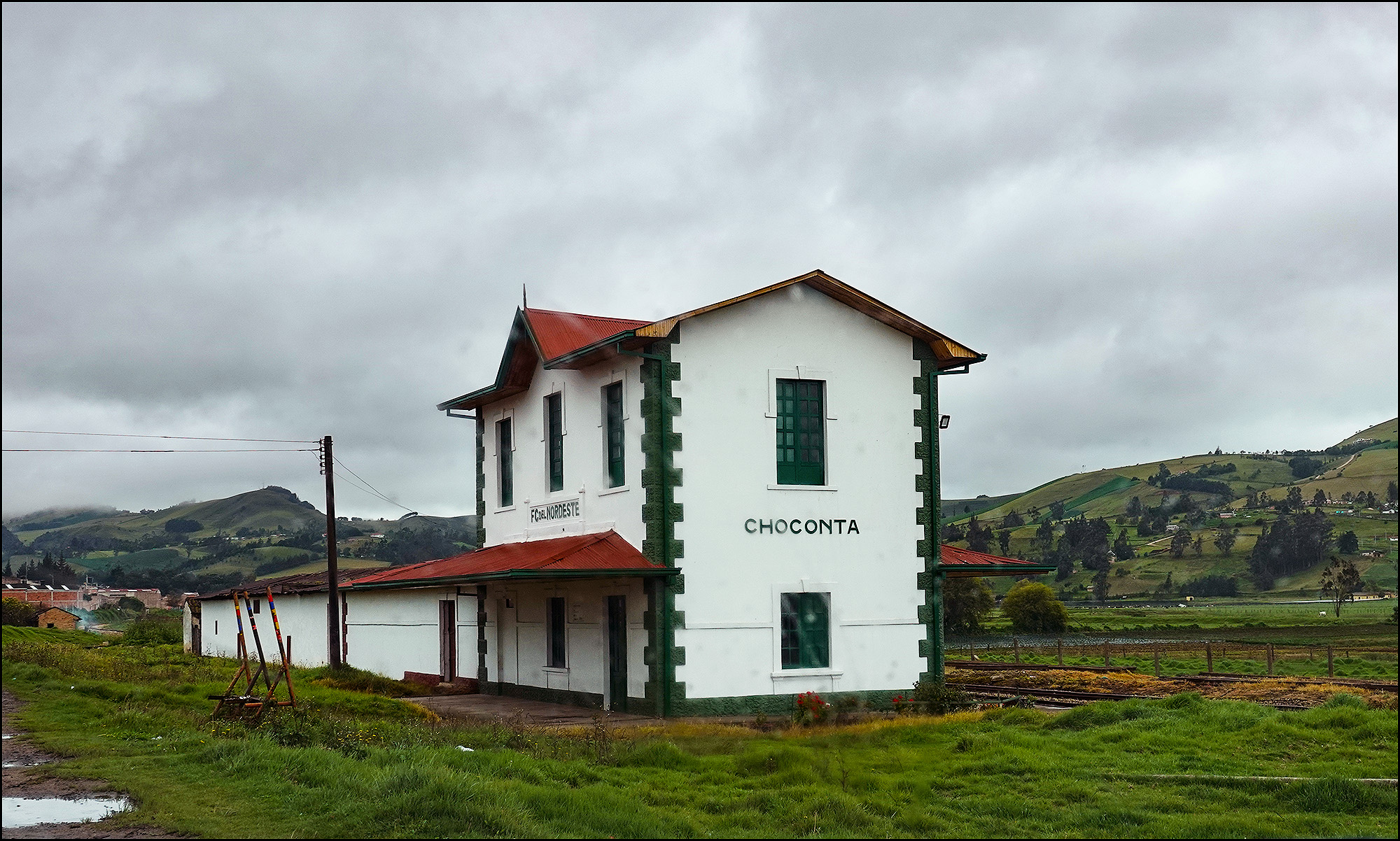
    But now I’m home and recovered, so let’s continue. Monday was—well, not the highlight of the trip. My plan, if it can be dignified with the word, was to drive north, south, west, and east of Bogotá in the four days I had. That meant Monday was north day, so off I went, heading up the Autopiste Norte in the direction of Villa de Leyva. About halfway there I drove past the town of Chocontá and pulled off the road to take a quick picture of something.

    The train station at Chocontá.

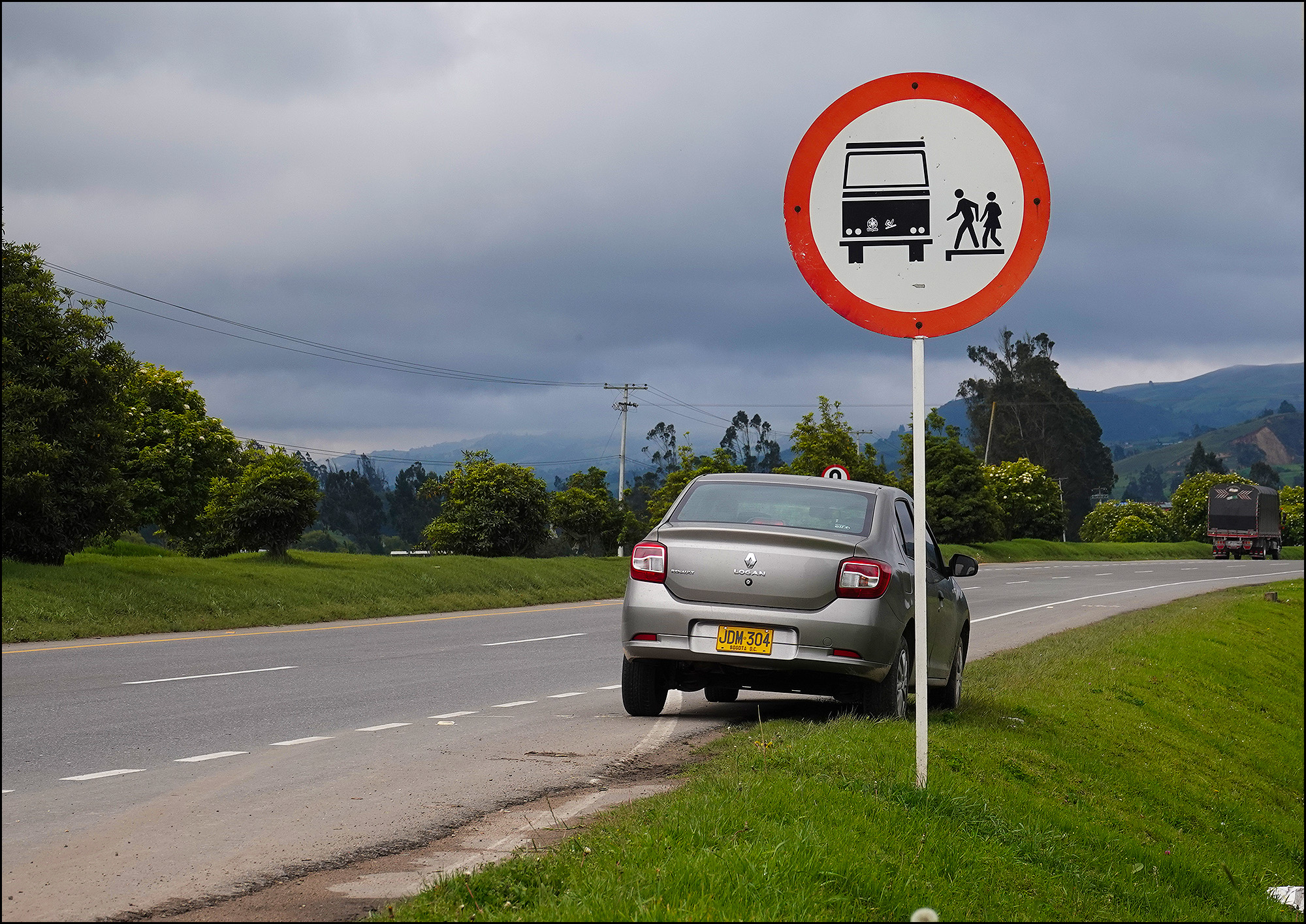
    Avis had rented me a Renault Logan, the cheapest car they had. It was about what you’d expect: horsepower similar to your average lawnmower and a shifter that made jello seem solid. But it was a perfectly serviceable car and it was kind of fun driving a stick for a while. But as cheap as it was, it turned out the car had a great security feature: it automatically locked itself after 30 seconds. It did this even if the key was still in the ignition.

    You can see where this is going, right? I stepped out to take a quick picture, didn’t bother taking the keys with me, and 30 seconds later I heard a loud beep. I. Was. Screwed.

    My car, with the keys safely inside.

    I was about half a mile north of town, so my first thought was to walk there and see if I could find an auto mechanic who would come out to jimmy the door. I found three or four places that seemed vaguely car-related and tried to pantomime my problem, but no dice. No one there spoke English, I spoke no Spanish, and my Charades skills were of no use.

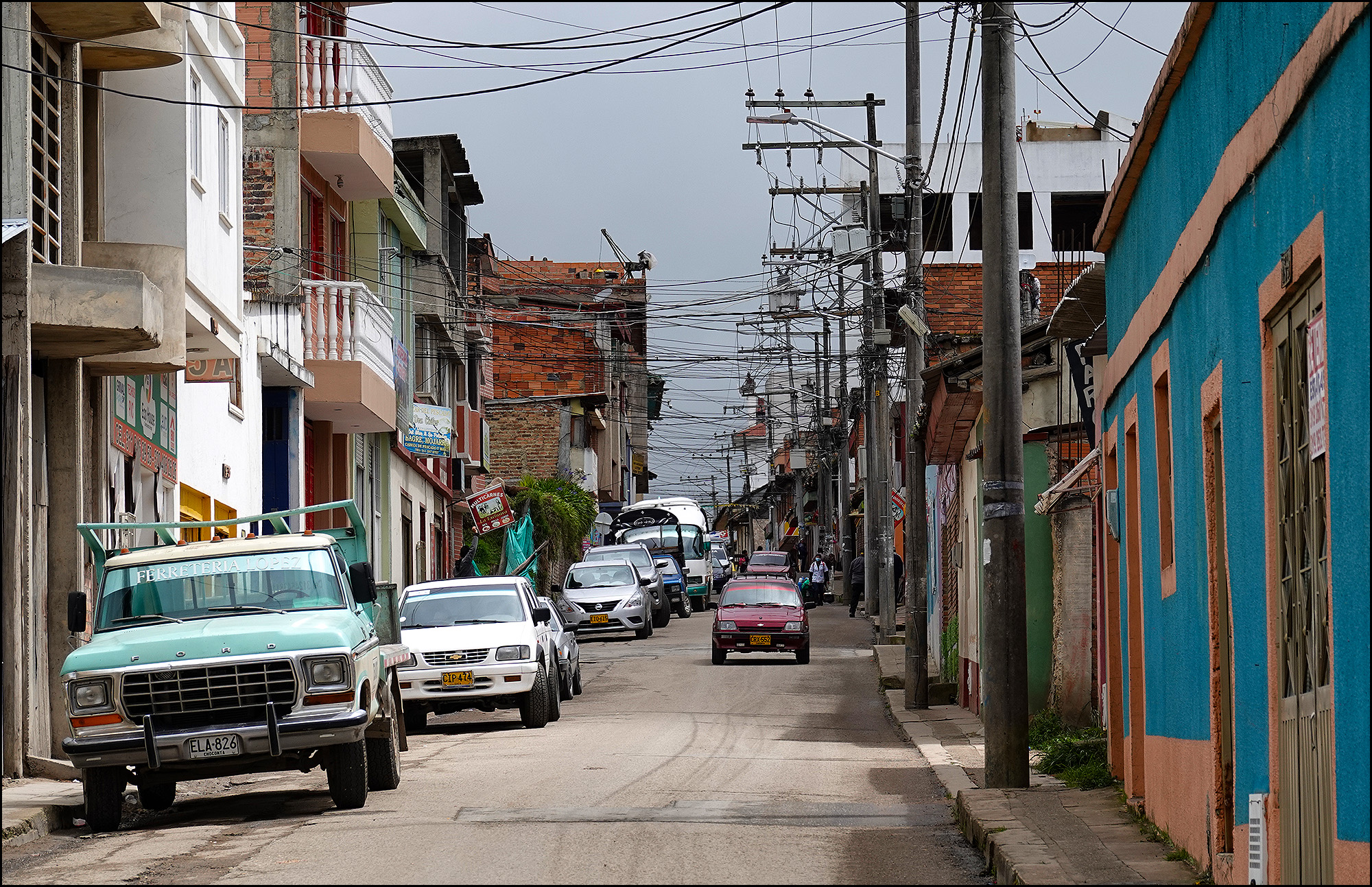
    One of the streets in lovely Chocontá.

    Now, Avis had of course given me a number to call for roadside assistance. Unfortunately, it was in the car. As a backup, I figured I could look up the number on my phone. Unfortunately again, despite having purchased a 10-day international data plan from T-Mobile, my phone wouldn’t connect to the internet. So I did the only thing left: I phoned a friend. After a few tries I found someone at home back in Irvine who agreed to research the number for Avis roadside assistance in Colombia. Avis USA was no help, but eventually he found a number for the Avis counter at Bogotá airport, where I had rented the car. There, I finally made contact with someone after pressing 2 for English. She tried to open my car via GPS, but my Logan wasn’t advanced enough to have that feature. Instead, after going back and forth for a while, I was given to understand that someone would come by, but since I was so far outside the city it might be a few hours.

    Luckily (relatively speaking) the weather was nice and it didn’t rain. The Avis assistant called me back several times to make sure I was still OK and to ask if the technician had come yet, so hooray for Avis Colombia. Eventually, a guy drove up on a motorcycle and opened my car. That was pretty interesting, and I wish I’d taken pictures. First he slid a black plastic sheet into the door jamb, and then pumped it up with a little hand pump. This pushed the door slightly away from the body of the car and allowed him to stick a flexible little claw inside the car. After a minute or two he got it solidly fastened onto the door lock, tightened the claw, and pulled it up. Voila. I was back in business.

    Then I made my second mistake. It was still only 5 pm, so I figured I’d continue north for a while. Why not? I ended up in Tunja, and if you’re ever planning a trip to Colombia this is an absolute must-miss city. It’s just a mid-sized little industrial town with absolutely nothing interesting to see. I got lost wandering around Tunja for a while, stopped at a grocery store for a bag of potato chips, and headed home.

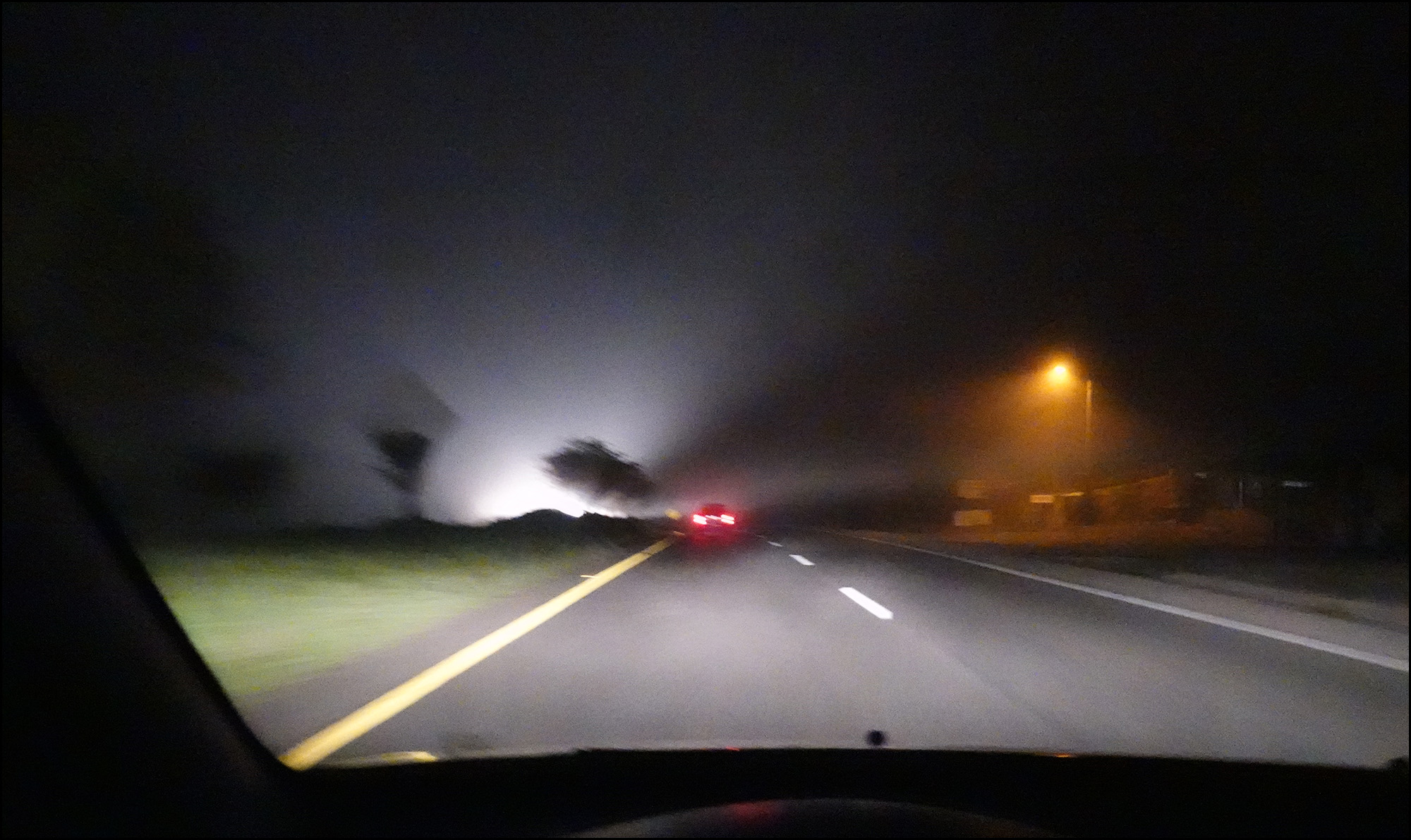
    The journey home.

    I finally got back to Bogotá around 10, got lost several times trying to get to my hotel—more about that later—and finally got back to my room around 11. And that was my day.

    BONUS FUBAR: Back at the hotel, I called T-Mobile to find out why I couldn’t connect to the Internet. It turned out that I just needed to reboot my phone. I sure wish I’d known that right from the start.

    NEXT: Tuesday in Colombia! Things can only get better, and they did.

    LATE UPDATE: A Colombian acquaintance informs us that all Colombian cars have an automatic locking system and that she has been locked out of her car on occasion herself. I’m not sure if this makes me feel better or not. Either way, though, this is definitely something that car rental companies should tell unsuspecting tourists.

  • Viernes Blogging de Gato – 9 agosto 2019

    You guys are lucky this feature isn’t called Friday Dog Blogging. It would probably exceed MoJo’s server allocation. I swear, I have never seen as many dogs as I have this past week in Colombia.

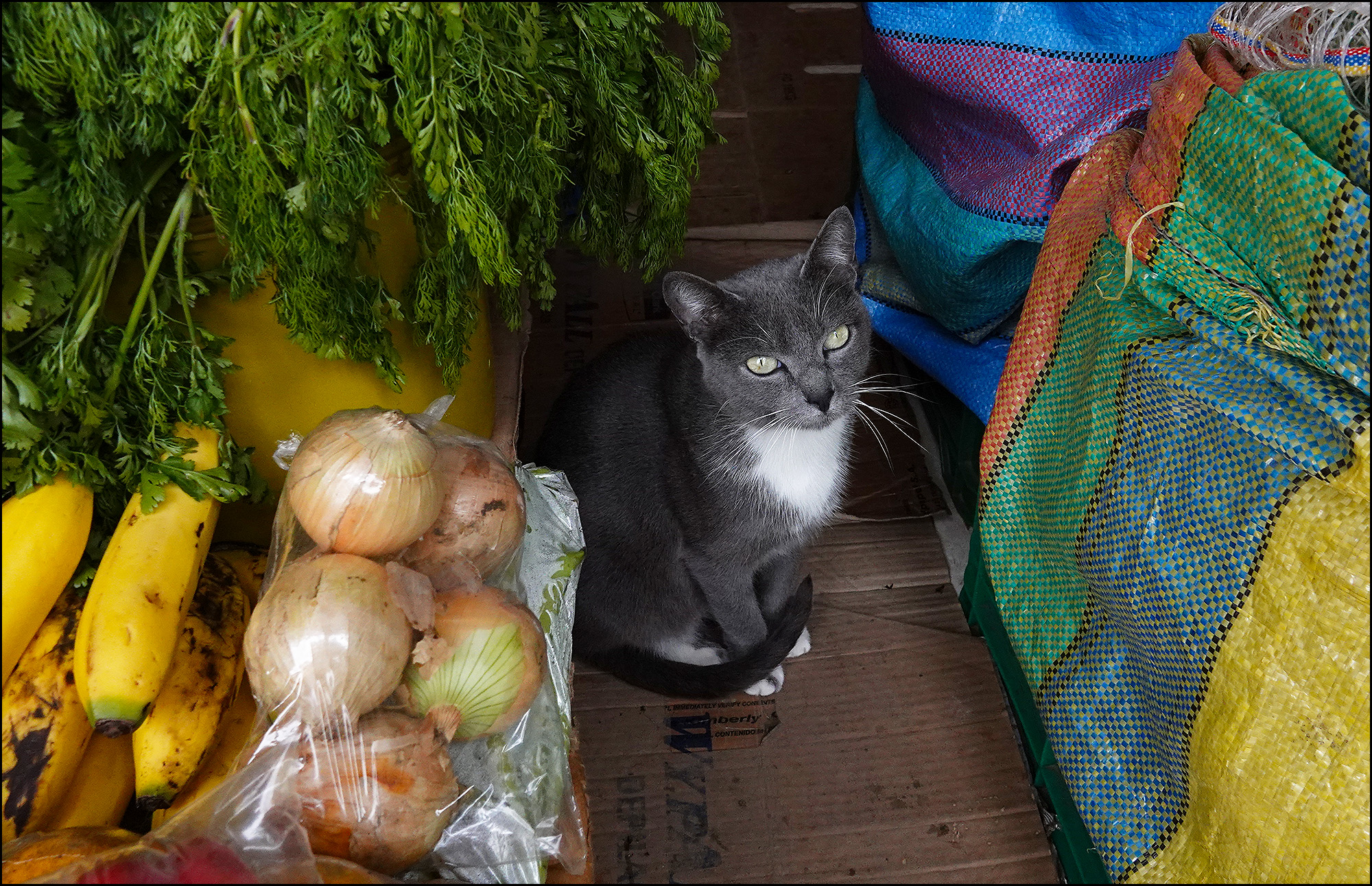
    Cats, on the other hand, are hard to come by. This sweet little critter owns a fruit shop in Ubaté, though of course he’s co-opted a human to actually run the place.

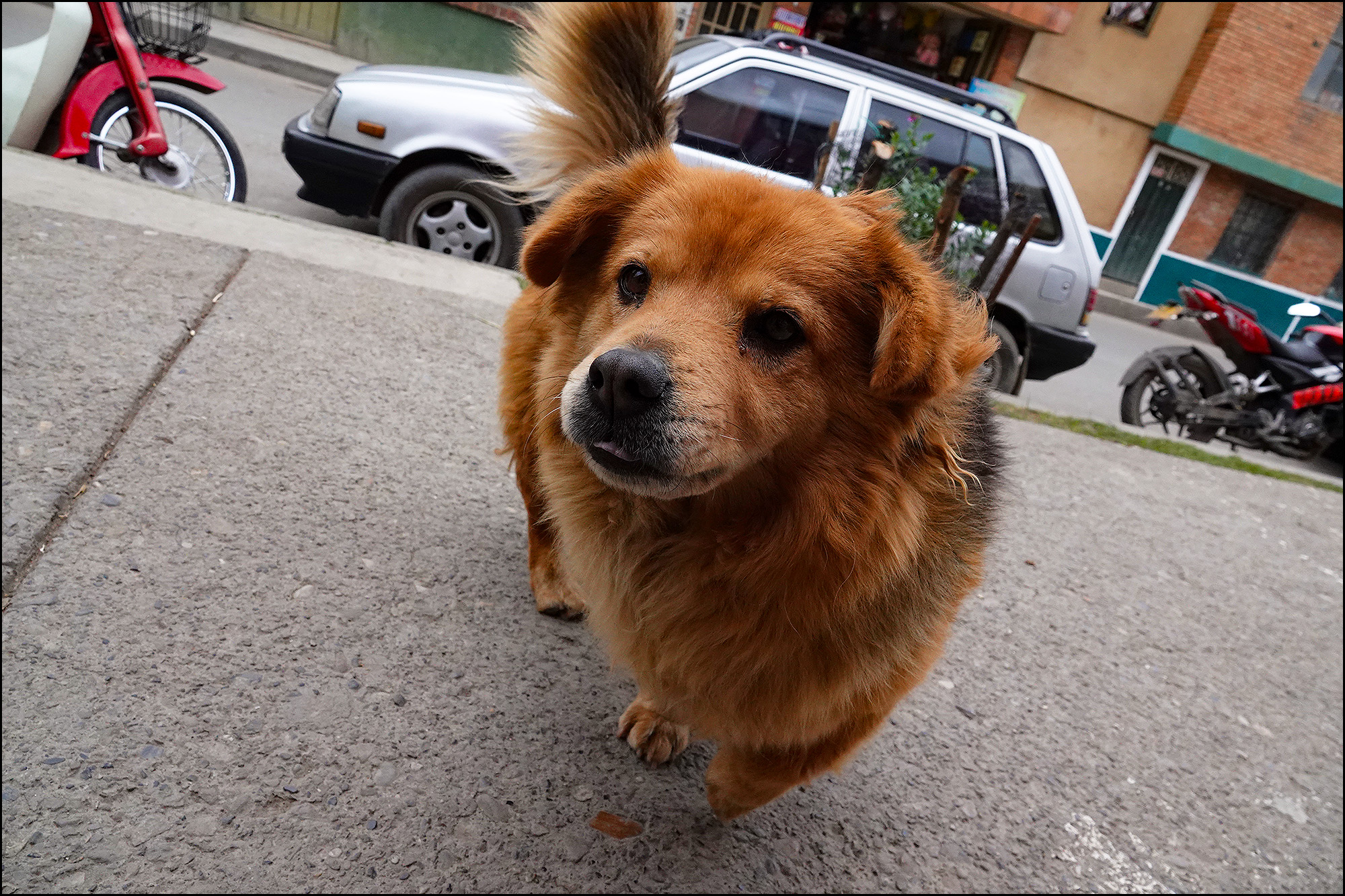
    This was a sociable cat, but was sort of overrun by its next door neighbor, below. The cat was obviously accustomed to ridiculous dog behavior, but even so this guy was bouncing around so much that it put the cat a little ill at ease. Even in a still photograph, you can practically see its tail wagging.

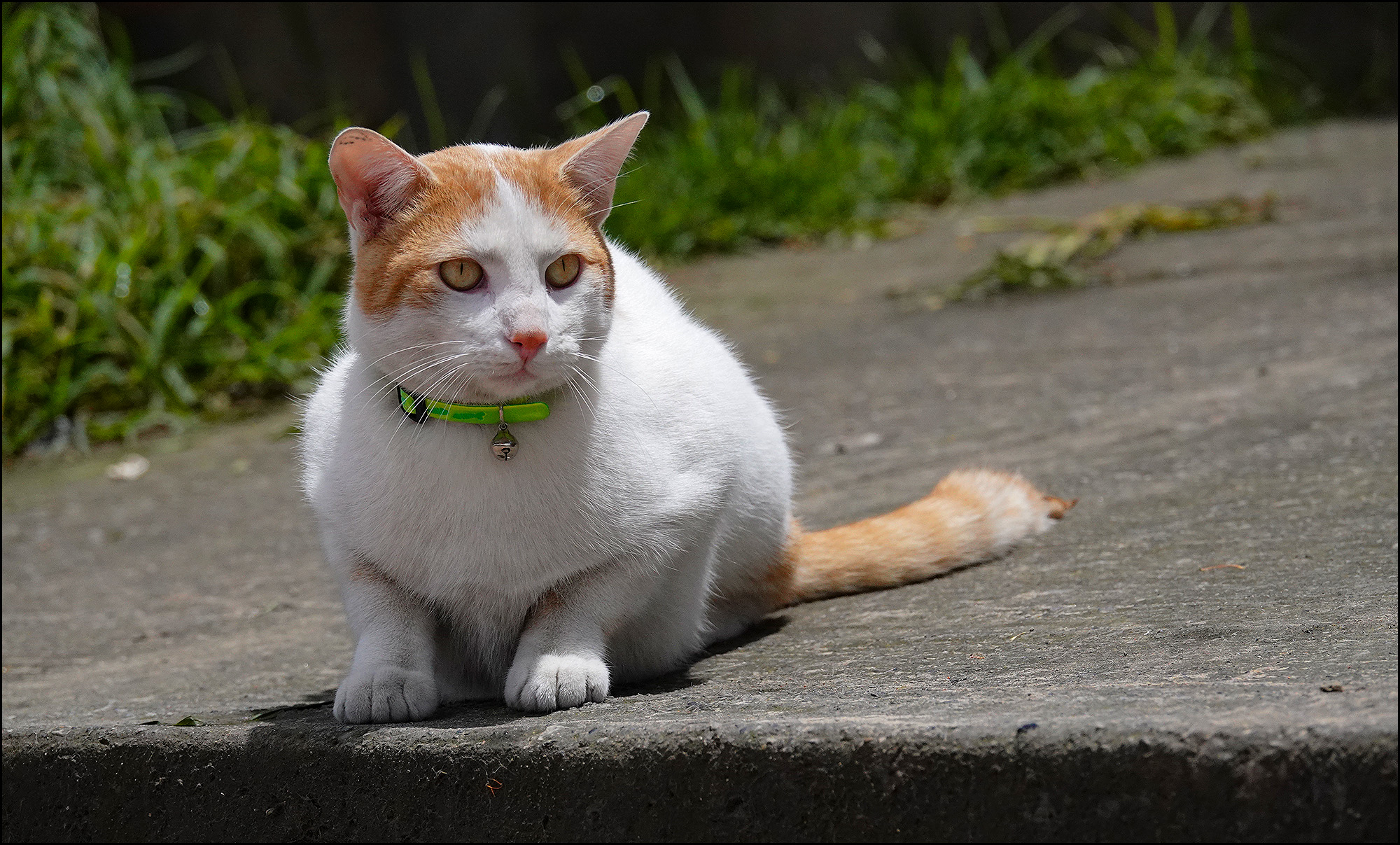
    That was on Wednesday, and given my luck so far I thought it was likely to be the only cat I’d see. But on Thursday I came across three cats. The first was in Usme:

    This cat was very sociable and allowed me to pet her, but completely ignored everything I did. You see, there was a pigeon that commanded 100 percent of its attention. That was much more interesting than yet another human admirer.

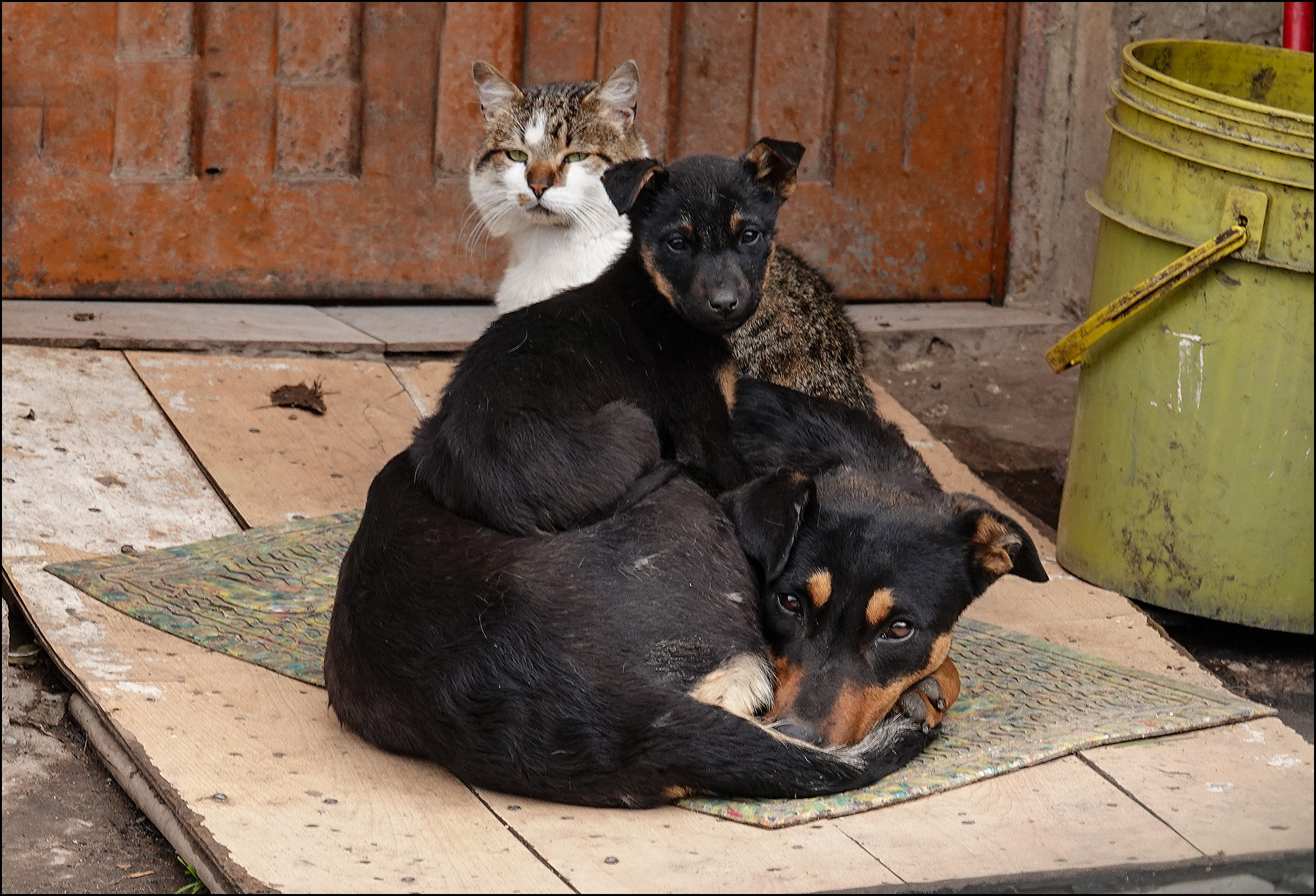
    I was on my way to Parque Nacional Natural Sumapaz when I took this picture. More about that later. On the way back, near the village of Madrid, I stopped in the middle of road and took this adorable picture out the car window:

    Isn’t that the cutest thing you’ve ever seen? A puppy and her mother, along with a cat to order them around. Such domestic bliss.

    The third cat was in a different part of Usme on my way home. It was slowly working up the nerve to come see me, and I was encouraging this instead of taking a picture while the taking was good. That was a mistake. A moment later a dog bounded up and two donkeys came clacking up the street. That was too much, and the cat rushed back into the sanctuary of its shop. So no picture.

    Despite this Thursday bounty, the apparent ratio of dogs to cats in Colombia is still about a thousand to one.