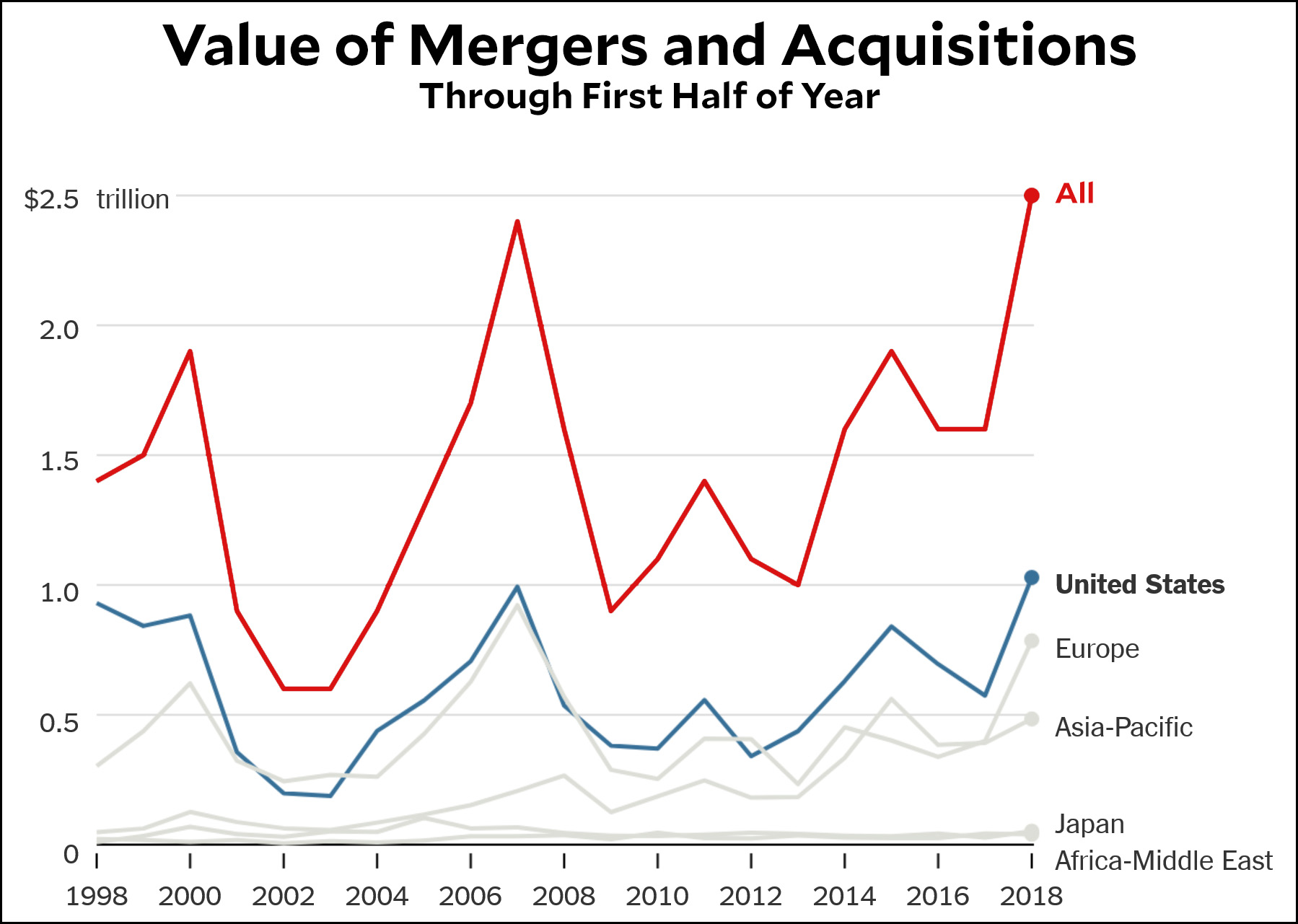
The New York Times has tallied all the corporate merger activity through the first half of the year and compared it to first-half activity over the past two decades:
We’ve set a new record, surpassing even the insane bubble year of 2007. Or have we?
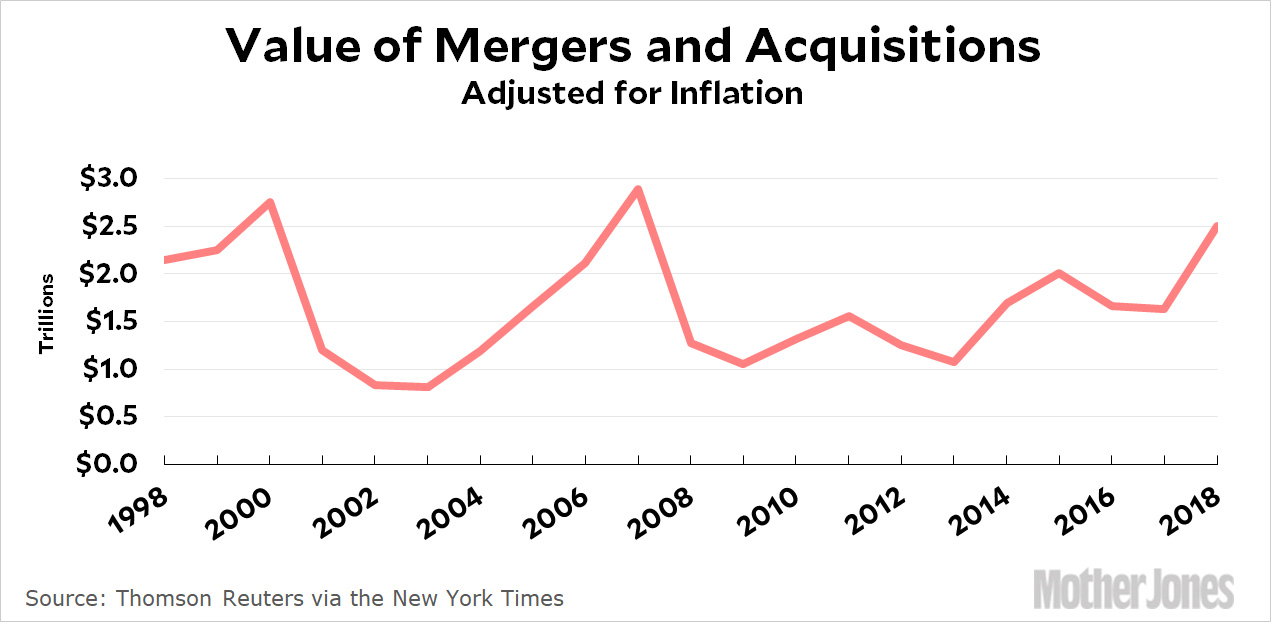
As always, these comparisons over time need to be adjusted for inflation. M&A activity is certainly looking frothy, but it’s not record-setting. Not yet, anyway. But if it continues to rise at the current rate, it will be next year.
Big corporations are earning record profits and have just gotten a huge tax cut. Unfortunately, they still seem to be spending their money mostly on stock buybacks and defensive mergers. This is not what we’d see if they were truly bullish on long-term growth prospects.
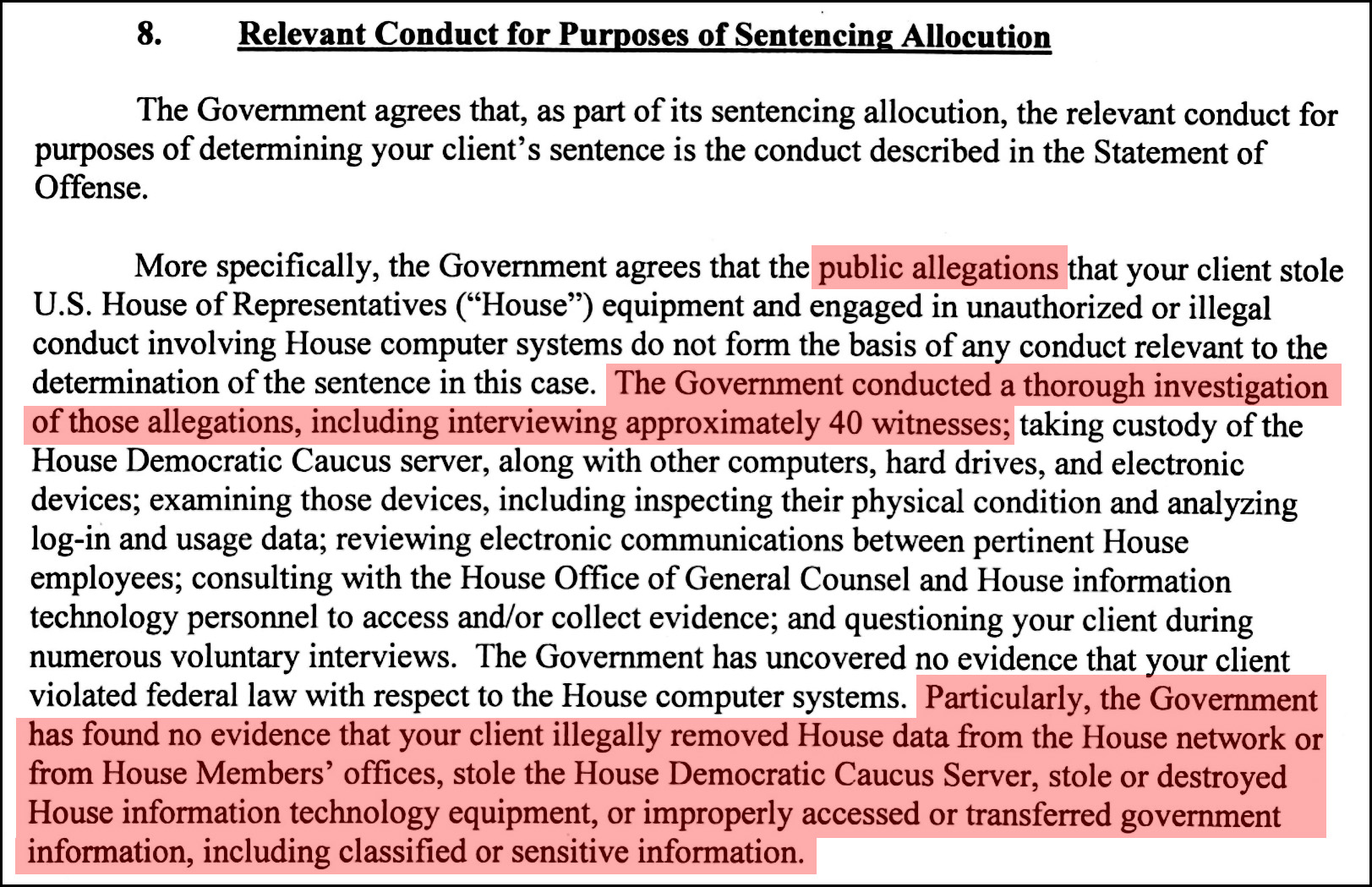
Earlier today the DC office of the US Attorney concluded a plea agreement with a guy named Imran Awan. Awan agreed to plead guilty to making a false statement on a loan application, for which he’ll probably get probation and pay a modest fine. Oddly, though, the plea agreement also includes this:
That’s peculiar. Why are prosecutors going out of their way to explain that Awan didn’t steal a Democratic Caucus server; didn’t destroy any House equipment; and didn’t hack any classified information? Probably because of this:
Just heard the Campaign was sued by the Obstructionist Democrats. This can be good news in that we will now counter for the DNC Server that they refused to give to the FBI, the Debbie Wasserman Schultz Servers and Documents held by the Pakistani mystery man and Clinton Emails.
Our Justice Department must not let Awan & Debbie Wasserman Schultz off the hook. The Democrat I.T. scandal is a key to much of the corruption we see today. They want to make a “plea deal” to hide what is on their Server. Where is Server? Really bad!
That’s our president lobbying his own Justice Department for the prosecution of a man who did nothing wrong but nonetheless found himself in the middle of yet another stupid conservative conspiracy firestorm. Awan (the “Pakistani mystery man”) supposedly moved terabytes of information off a Democratic server and smashed a bunch of hard drives while working as an IT specialist in the office of Debbie Wasserman-Schultz, something that conservative lawmakers found deeply troubling. Trump then took it a step further and claimed that the whole thing was a massive scandal related to the Clinton emails and should be vigorously prosecuted.
In reality, Awan was an ordinary IT guy who was guilty only of taking out a home equity loan and then sending the money to his father in Pakistan, who was gravely ill at the time. That’s it. But the president of the United States went after him publicly for no reason except that it was politically useful as a cudgel against other people. He knew nothing about Awan and couldn’t have cared less.
Congratulations, America. This is your chief law enforcement officer at work.
It is a staple of conspiracy theorists that international treaties all have secret protocols known only to a select few. The Iranian nuclear deal is no exception. American conservatives, for example, have long insisted that the agreement’s confidential IAEA annexes provide all sorts of secret exemptions for Iran’s nuclear development. But this kind of thing isn’t limited to Americans. Iran has its own conservatives who oppose the agreement too, and today one of them advanced his own conspiracy theory:
The Obama administration granted citizenship to 2,500 Iranians, including family members of government officials, while negotiating the Iran nuclear deal, a senior cleric and member of parliament has claimed.
Hojjat al-Islam Mojtaba Zolnour, who is chairman of Iran’s parliamentary nuclear committee and a member of its national security and foreign affairs committee, made the allegations during an interview with the country’s Etemad newspaper, cited by the country’s Fars News agency. He claimed it was done as a favor to senior Iranian officials linked to President Hassan Rouhani, and he alleged the move sparked a competition among Iranian officials over whose children would benefit from the scheme.
That’s from Fox News, of course, which suddenly decided this morning that hardline clerics formerly in the Revolutionary Guards are credible sources for their news programs. Minutes later President Trump hopped on board:
Just out that the Obama Administration granted citizenship, during the terrible Iran Deal negotiation, to 2,500 Iranians – including to government officials. How big (and bad) is that?
There’s no evidence this is true. Trump could have checked with his own State Department, but he didn’t bother. He just said it because he felt like it. In other words, it’s like everything else he says: a lie until proven otherwise.
This is our lovebird pair of mourning doves. They groom each other and play with each other and then fly away to parts unknown. But the next day, they’re usually back for a little while in the morning, flitting around outside my window while I blog.
Now that they have their tax cut safely in hand, corporate America has apparently gotten fed up with Donald Trump. Even the US Chamber of Commerce, which has become a reliably hyper-Republican operation over the past couple of decades under its firebrand conservative leader, Tom Donohue, has declared war on Trump. “The administration’s new tariffs threaten to spark a global trade war,” blares a headline on the Chamber’s website today:
Tariffs imposed by the United States are nothing more than a tax increase on American consumers and businesses–including manufacturers, farmers, and technology companies–who will all pay more for commonly used products and materials.
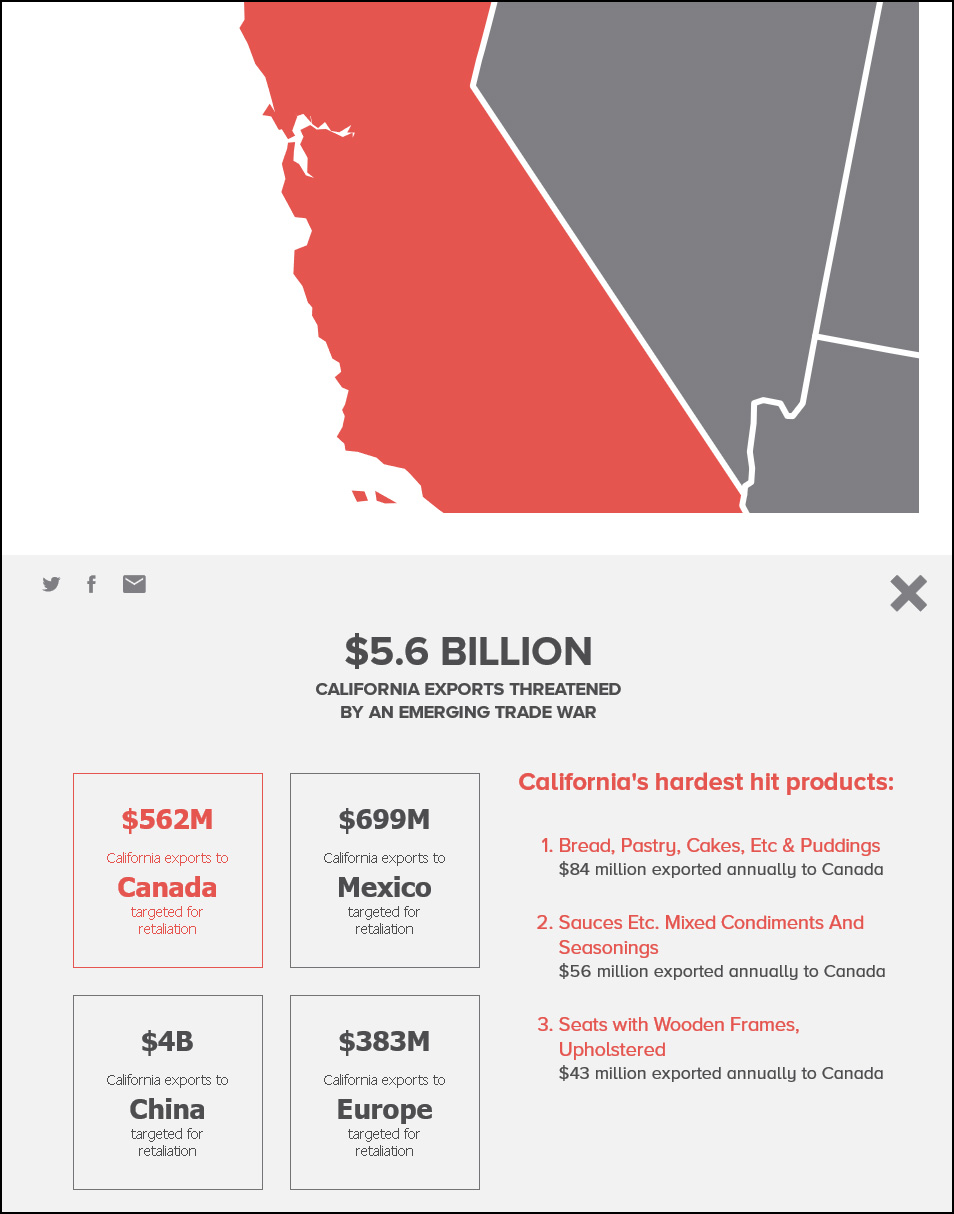
A tax increase! Them’s fighting words! And the site has a helpful interactive map so you can see just how badly Trump’s tariffs will affect your state. Here’s California:
Trump hasn’t responded with a devastating tweet yet, but I’m sure he will eventually. At this point, though, China has retaliated against Trump. Canada has retaliated against Trump. Europe has retaliated against Trump. And now the Chamber of Commerce has retaliated against Trump. The battle is finally fully engaged.
How’s Obamacare doing? CMS reports that it tanked in 2017 thanks to declines in the number of people willing to buy unsubsidized health insurance. But let’s examine this more closely. First, Andrew Sprung notes that it’s not really Obamacare itself that’s been affected:
One peculiarity: all of the drop in unsubsidized enrollment was apparently off-exchange. In fact, unsubsidized enrollment on HealthCare.gov and the state exchanges rose slightly in 2017, from 2.1 million to 2.2 million (though the “unknown” subsidy status of 83,516 enrollees all but closes the gap).
So the decline in 2017 was entirely outside Obamacare, not within the exchanges themselves. Second, CMS also provides some 2018 numbers, and they show that although initial Obamacare enrollments were down this year, the number of people who are actually paying for coverage is up:
As of March 15, 2018, 10.6 million individuals had effectuated coverage through the Federal and State-Based Exchanges for February 2018, meaning that they selected a plan, paid their first month’s premium, if applicable, and had coverage in February 2018….The number of individuals with effectuated coverage for February 2018 is approximately 3 percent higher than February 2017 effectuated enrollment of 10.3 million individuals, as of March 15, 2017.
The truth is that we don’t know yet what’s happening. Donald Trump’s sabotage efforts led to higher prices, and it makes sense that this would mostly affect people who don’t qualify for subsidies. After all, they’re the only ones who were hit with an actual price increase. Poorer people, who qualify for subsidies, pay a percentage of their income that stays the same no matter what the actual monthly premium is.
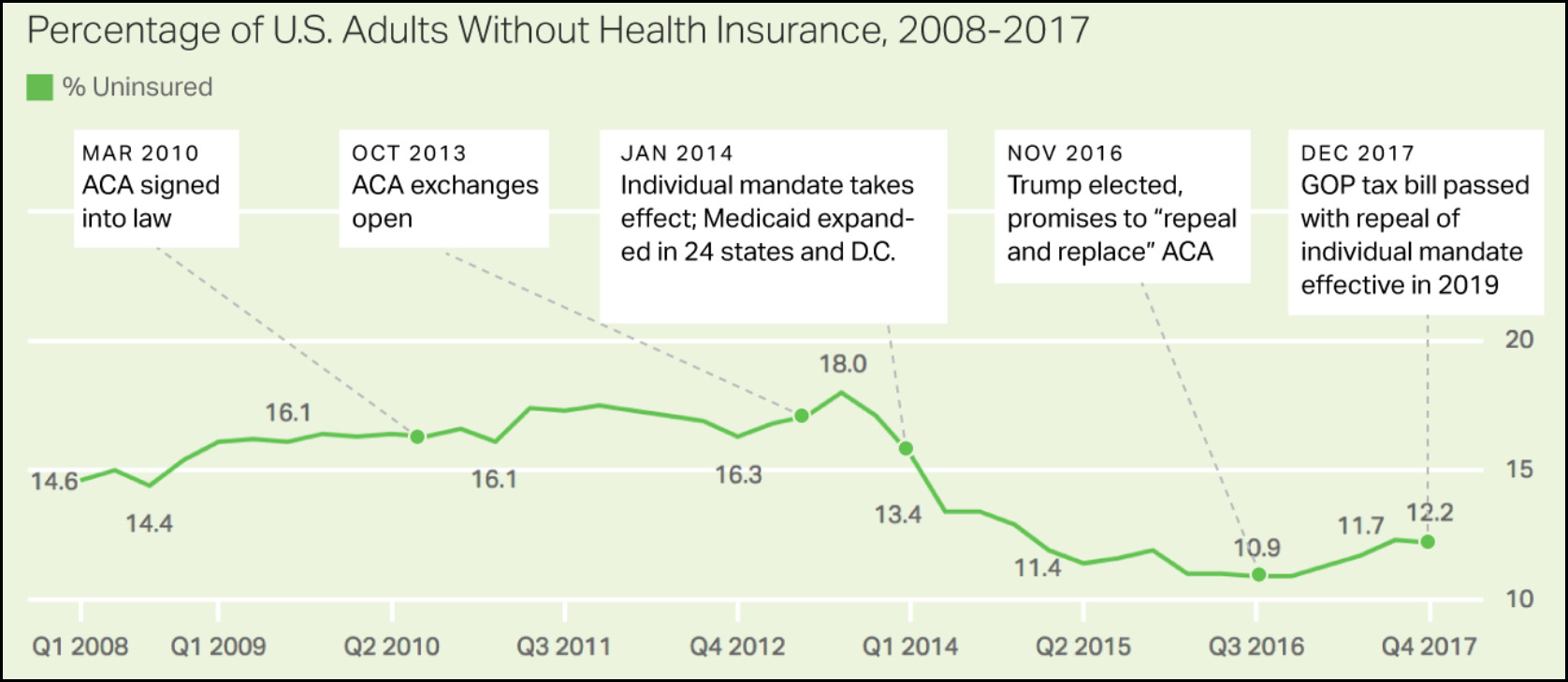
That said, with the unemployment rate continuing to drop, it’s possible that some of the decline in the off-exchange market was due to people getting jobs and switching to employer insurance. We won’t know for sure about this until we get survey results for the number of uninsured. The CDC’s numbers, which I consider the most reliable, are still months away, but we should get an early read from Gallup pretty soon. As a baseline, here’s the Gallup report up through the end of 2017:
If the 2018 number stays around 12.2 percent, it means the rising off-exchange premiums probably led to changes in health insurance, not declines. If it goes up more than a few tenths of a percent, it means the higher premiums are having a real effect on the number of people who have health insurance. We’ll see.
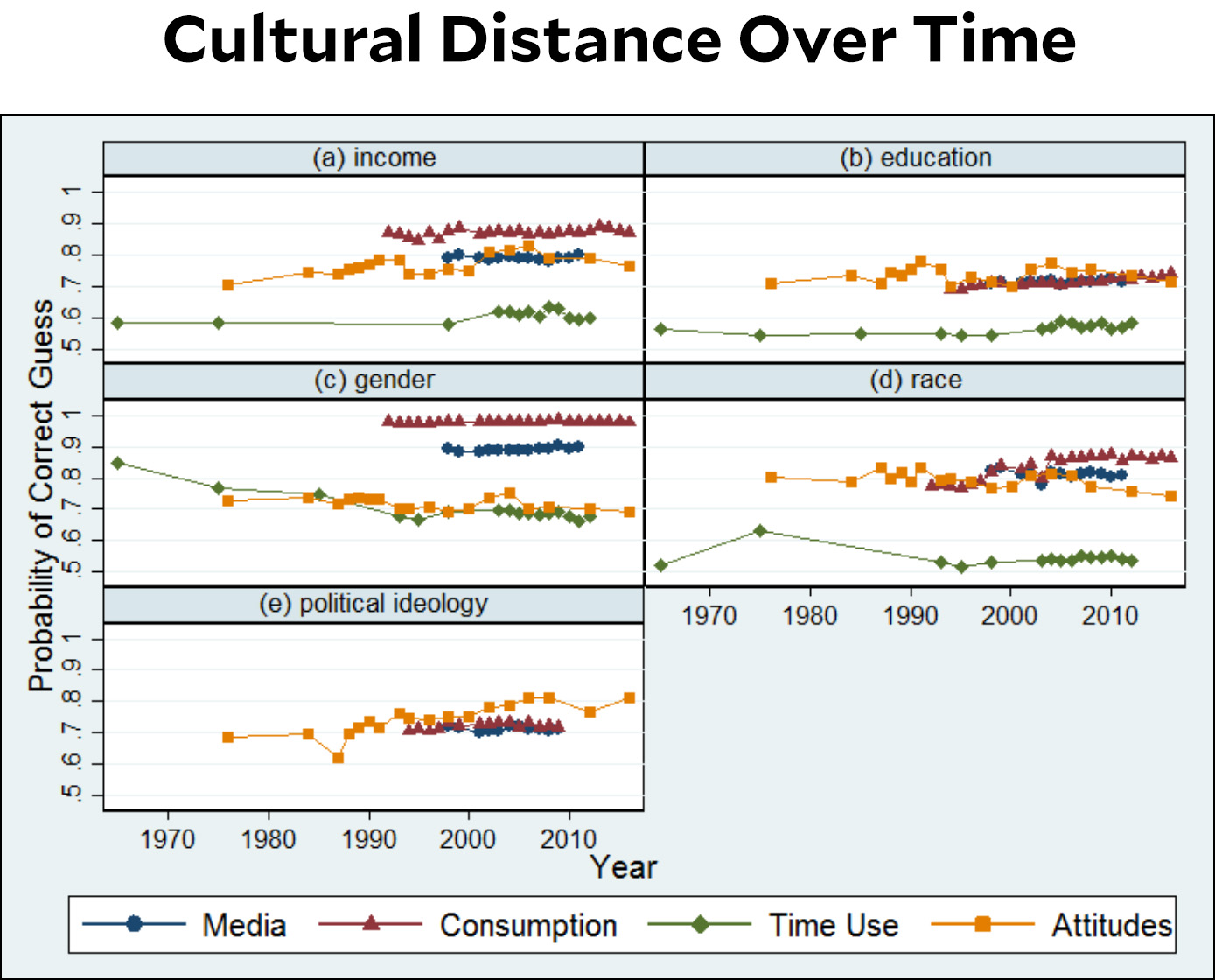
The authors use a simple metric for this: how easy is it to predict who you are? For example, if I know your five favorite TV shows, how well does that predict whether you’re male or black or high income? If different groups watched similar shows in the past but now they all watch different shows, this kind of prediction becomes more accurate because we’re moving apart in our tastes. But it turns out we aren’t. The basic conclusion of the paper is that nothing much has happened:
For the most part, these lines are pretty flat. For example, take a look at the red line in the top left panel. It represents the consumption pattern of rich vs. poor, and it’s around 0.9. This means that the rich and poor are very different in the products they buy, but also that they’ve always been very different. The size of the difference, or “cultural distance,” is about the same as it’s always been.
There are a few lines that have changed modestly over time, but the biggest changes have come down in the details. Here are the specific attitudes that have changed the most over the past few decades:
Between high and low income:
Views on law enforcement have diverged by 9 points.
Between men and women:
Views on life and trust have diverged by 9 points
Between whites and non-whites:
Views on law enforcement have diverged by 9 points
Views on politics and religion have diverged by 12 points
Views on government spending have diverged by 18 points
Views on life and trust have diverged by 16 points
The biggest divergence, by far, has been between whites and non-whites. Not only have they diverged by large amounts, but they’ve diverged in four categories. The races in America have become noticeably more culturally distant from each other since 1976.
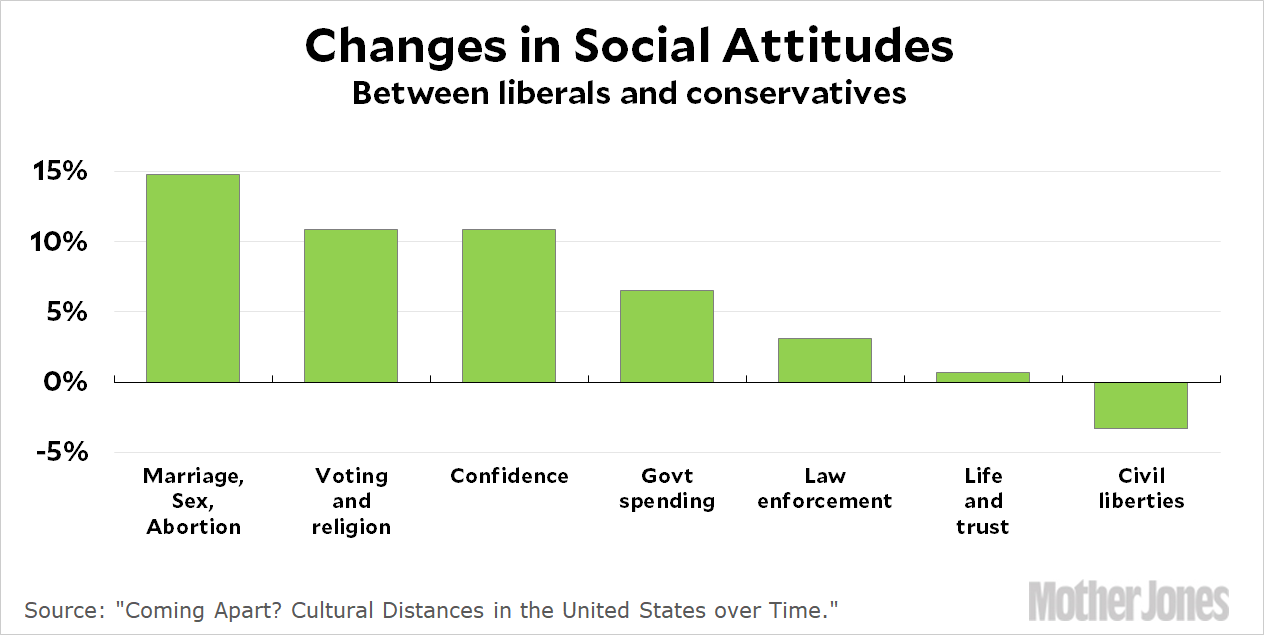
Finally, here’s a chart that shows the divergence in social attitudes between liberals and conservatives:
The biggest changes have been in gender issues, party affiliation, religion, and confidence in institutions. This isn’t surprising, nor is the fact that the divergences have been relatively large, since ideology is self-selected. The increasing political polarization of Americans has been a topic of endless discussion over the past decade, and it’s a real thing.
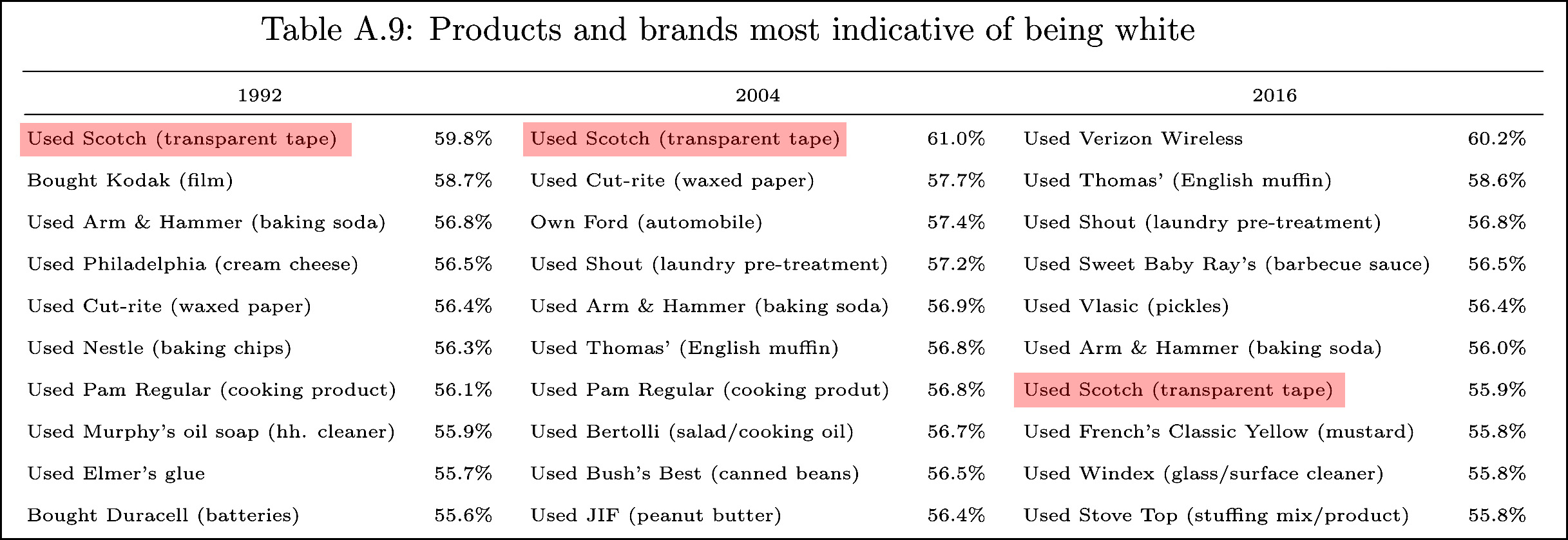
Finally, on a less serious side, here are the products that most distinguish whether or not you’re white:
A question for my black and Hispanic friends: what’s up with the scotch tape? Why is that a white thing? What do you use when you need to tape two pieces of paper together?
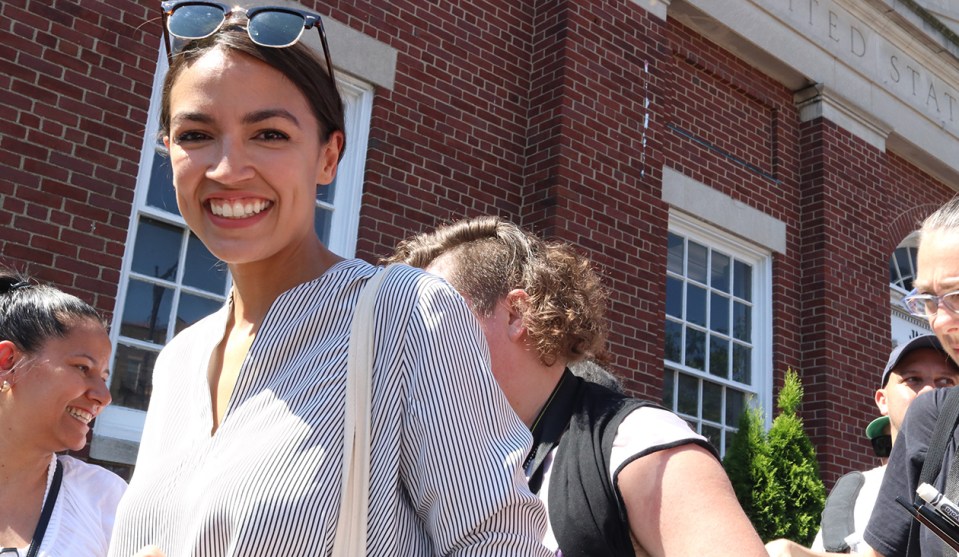
It’s been a week since Alexandria Ocasio-Cortez beat Joe Crowley in New York’s 14th congressional district, and she’s still getting monster attention in the press. I have to admit I’m a little unclear on why this is. Her win was impressive, and Crowley was part of the Democratic leadership team, but does she really represent some kind of sea change in the party? I’m not sure I see it.
Nevertheless, I’m interested in just what she means when she says she’s a socialist. I’m starting to wonder if, like “neoliberal,” it’s becoming a useless term that means whatever you want it to mean. To me, “real” socialism is about the state owning the means of production, but Ocasio-Cortez seems to have different ideas. Here’s what she told Stephen Colbert:
I believe that in a modern, moral, and wealthy society, no person in America should be too poor to live. What that means to me is health care as a human right, it means that every child no matter where you are born should have access to a college or trade-school education if they so choose it. I think that no person should be homeless if we have public structures or public policy to allow for people to have homes and food and lead a dignified life in the United States.
Briahna Gray, who says that “socialism is inextricable from Ocasio-Cortez’s success,” approvingly passes along the following definition:
When we talk about the word socialism, I think what it really means is just democratic participation in our economic dignity, and our economic, social, and racial dignity. … It is about direct representation and people actually having power and stake over their economic and social wellness, at the end of the day. To me, what socialism means is to guarantee a basic level of dignity.
These statements are both so indistinct that I have a hard time associating them with anything, let alone socialism. Mostly, it just sounds like the left wing of the Democratic Party but without trade unions. What kind of socialism doesn’t care about the means of production and doesn’t mention unions once in a 5,000-word platform?
It’s funny. I guess what really gets me is that we already have a perfectly good term to describe people like Ocasio-Cortez (and Bernie Sanders): social democrat. That’s basically the European left, which is why Ocasio-Cortez’s platform would sound pretty ordinary if she were running for office in Sweden or Germany. It’s what I call myself if I’m talking to someone who understands what it means. But the fact that it’s foreign makes it taboo in America. Instead we make up a new term and then struggle to define exactly what it means.
But the truth is that American liberals aren’t becoming either socialists or Bernie-bots. American liberalism is simply moving once again in the direction of Europe. This is something that conservatives have been accusing us of for decades, mostly because it’s true. Our progress in that direction is slow and halting, and sometimes it just stops dead for a while, but American liberals have always admired the social democratic model of Europe. Maybe sometime soon it will become acceptable to just say so.
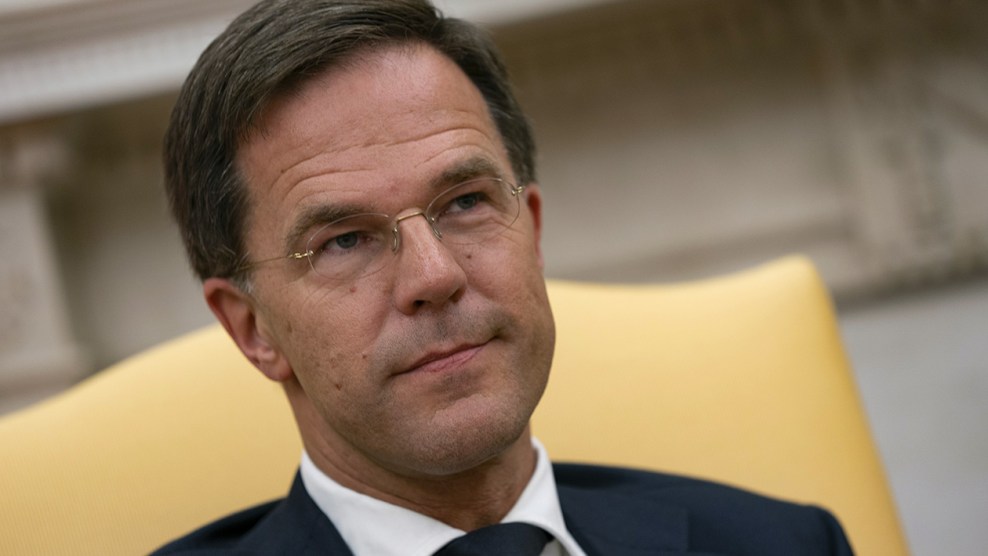
TRUMP: I think the EU — we’re going to be meeting with them fairly soon. They want to see if they can work something out, and that’ll be good. And if we do work it out, that’ll be positive. And if we don’t, it’ll be positive also. Because —
RUTTE: (Laughs.) No.
TRUMP: — because we’re just thinking about those cars that pour in here.
RUTTE: It’s not positive.
I guess Rutte won’t be getting a return invitation to the White House anytime soon.
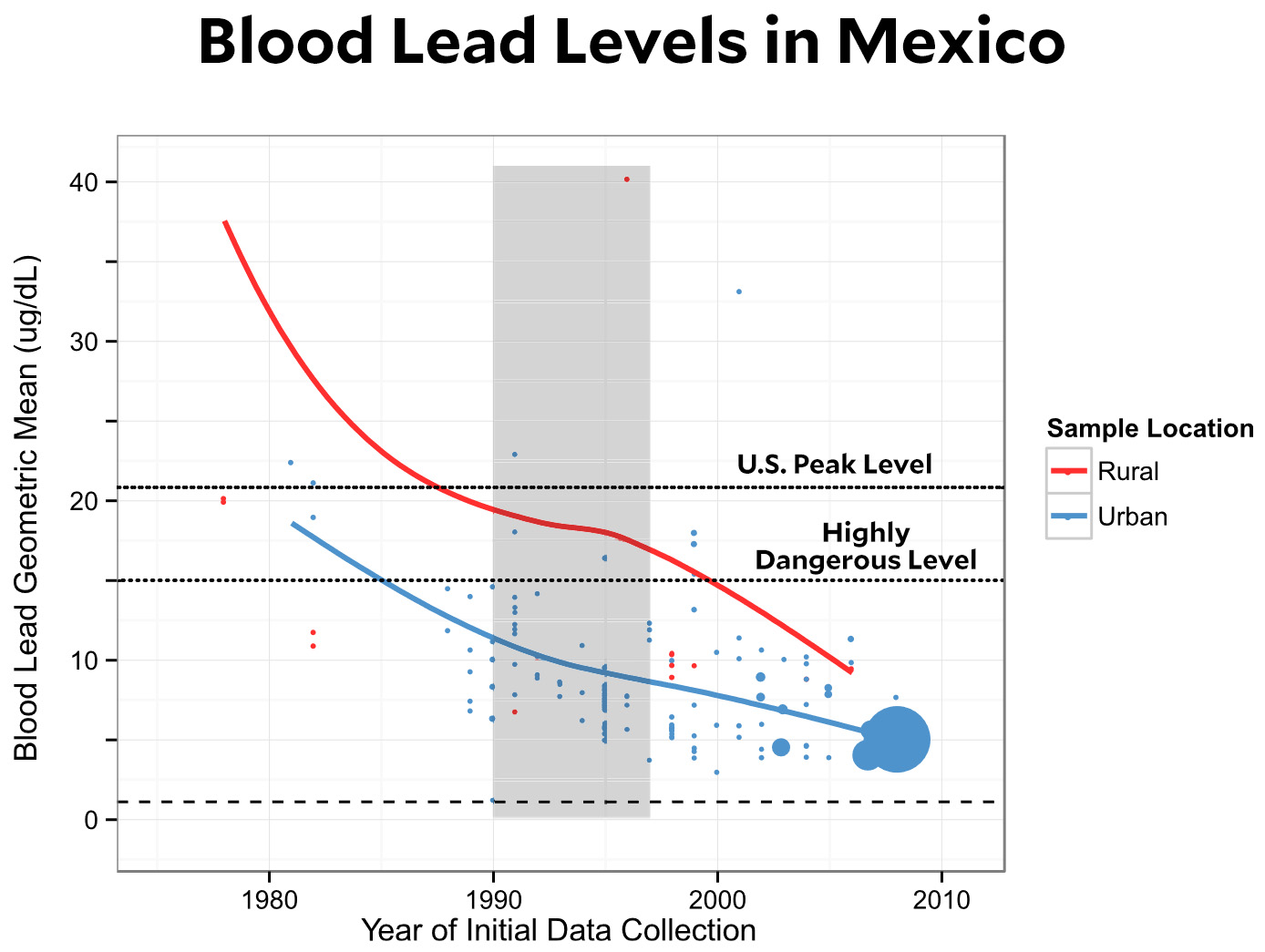
Mexico didn’t start to phase out leaded gasoline until 1990, and average blood lead levels were at or above 15 μg/dl until then, especially in rural areas. In America, the generation of children born during the era of BLLs that high (1970-1980) was the same generation that later produced the “superpredator” hysteria of the 90s—except that it’s a little unfair to call it hysteria, since many of these kids really were unusually vicious and dangerous.
Mexico, by contrast, had a generation of kids born as late as 2000 with BLLs this high. The fact that violence is endemic 18 years later is no big surprise. In another decade, things should be a lot better.
And we respect that! But maybe you’re of a mind to support our work directly instead? We have until December 31 to raise the last $400,000 we need to keep our nonprofit newsroom running at full strength into 2026. Will you make a gift today?
We noticed you have an ad blocker on. Can you pitch in a few bucks to help fund Mother Jones' investigative journalism?
Billionaires own the media,
but they don’t own us.
At Mother Jones we know these aren’t conventional times, and they require unconventional coverage. That’s what deliver every day: fierce, independent journalism you can’t find elsewhere. Perhaps never in the history of our country has that been more necessary than now. But we can’t do it without reader support—your support. Please chip in today.
Billionaires own the media,
but they don’t own us.
At Mother Jones we know these aren’t conventional times, and they require unconventional coverage. That’s what deliver every day: fierce, independent journalism you can’t find elsewhere. Perhaps never in the history of our country has that been more necessary than now. But we can’t do it without reader support—your support. Please chip in today.