• Here’s the Joint Fundraising Agreement Between Hillary Clinton and the DNC

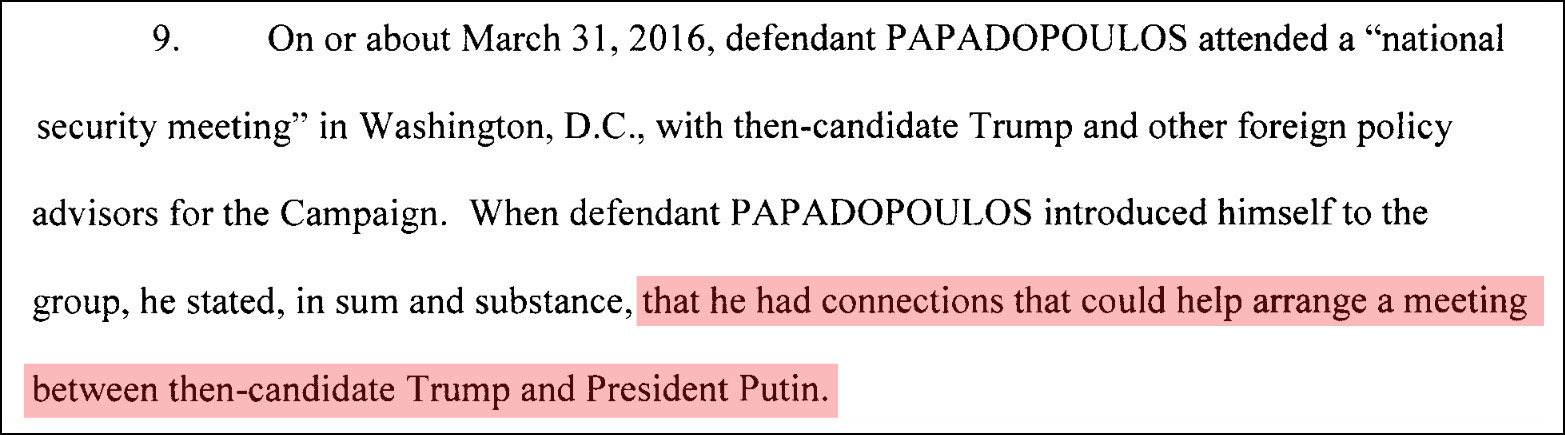
    Following up on yesterday’s post about Hillary Clinton’s joint fundraising agreement with the Democratic National Committee, here is the memo itself:

    So the bottom line is this: The DNC was broke, and Clinton agreed to raise enough money to fund its data, technology, analytics, research, and communications functions. In return, the Clinton campaign got a veto power over hires in these areas, as well as the power of review over “strategic” and “general election related” decisions and communications in these areas. Both sides agreed that “all activities” performed under the agreement would be focused solely on the general election, not the primaries.

    I’m still dithering over whether this was appropriate. Partly it depends on whether the DNC offered Bernie Sanders a similar deal, but apparently things never progressed enough for us to find out. ABC News has the Sanders JFA here, but it’s obviously just boilerplate. Sanders didn’t guarantee any funding to the DNC and the DNC therefore didn’t offer him any particular say in its hiring and decisionmaking. There’s no telling what kind of JFA they would have had if Sanders had decided to take it seriously.

    In any case, this was the deal. Comment away.

    UPDATE: Either Donna Brazile—who took over the DNC during the general election—is a nutbag or else the Clinton campaign genuinely treated her like shit. I have no idea which it is. But hoo boy, she sure does have a massive grudge against Hillary and everyone associated with her.

  • USA! USA! We’re (Almost) #1 in Machines That Go Ping

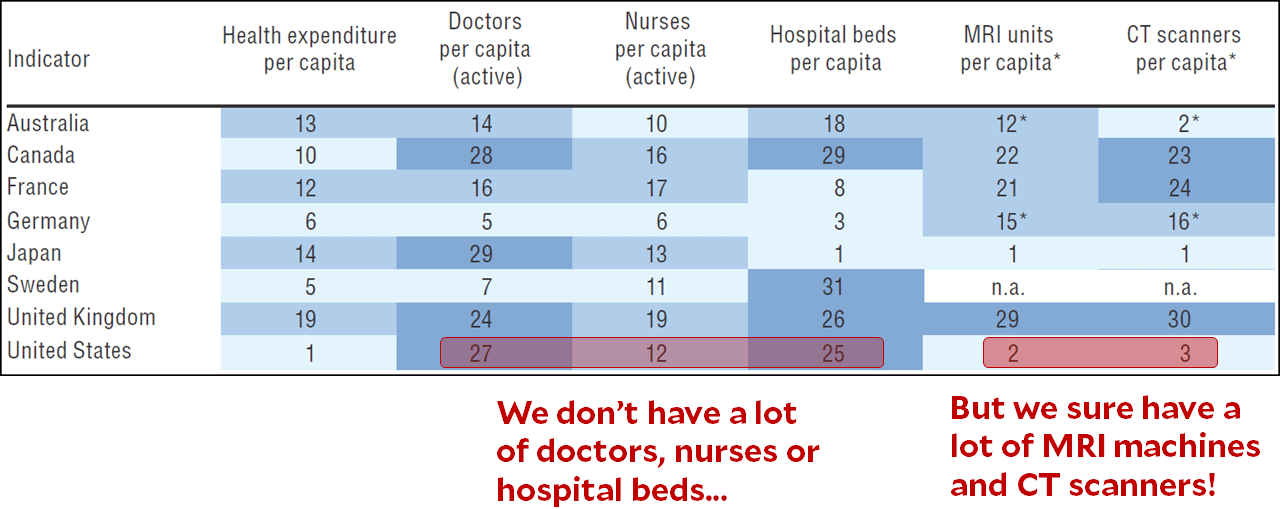
    I was fiddling around looking for something unrelated, and happened to run across this chart from the latest OECD “Health at a Glance” report. We’re #1 in health spending, of course, and we pay inflated prices for just about everything. But what’s equally interesting is what we spend all that money on. More doctors? Nope. More nurses? Not really. More hospital beds? Nah.

    So what do we spend our money on? Technology, baby! Who cares about having plenty of doctors as long as we have lots of machines that go ping? The Japanese may be serious technophiles too, but at least they also have plenty of hospital beds and reasonable spending levels.

  • No Movies For You!

    Every year the LA Times publishes a special section about all the end-of-year movie releases. This year someone is missing:

    The annual Holiday Movie Sneaks section published by the Los Angeles Times typically includes features on movies from all major studios, reflecting the diversity of films Hollywood offers during the holidays, one of the busiest box-office periods of the year. This year, Walt Disney Co. studios declined to offer The Times advance screenings, citing what it called unfair coverage of its business ties with Anaheim. The Times will continue to review and cover Disney movies and programs when they are available to the public.

    The story about Disney’s relationship with the city of Anaheim—which, believe me, is hardly a secret in Southern California—is here. With no offense meant to its author, it’s a fairly routine piece of conflict reporting, pitting people who are pro-Disney, because they bring in tons of money to the city, versus activists who think Anaheim should take a tougher line in negotiations with the Mouse. It’s hardly Woodward and Bernstein material.

    But in the era of Trump, apparently the answer to every single grievance is to be an asshole—not that Disney has ever needed any help in that area. So there will be no advance screenings for the Times. What a bunch of infants.

  • What’s Really Going On With the Republican Tax Bill?

    What’s up with the Republican tax bill, anyway? The Senate voted to approve a maximum increase in the deficit of $1.5 trillion over ten years, which is why it took so long to cook up the legislation. When you’re planning to give away a few trillion dollars in pass-through taxes to small businesses like, um, The Trump Organization, it’s hard to find offsets that will get your deficit down to a mere $1.5 trillion. But apparently they did.

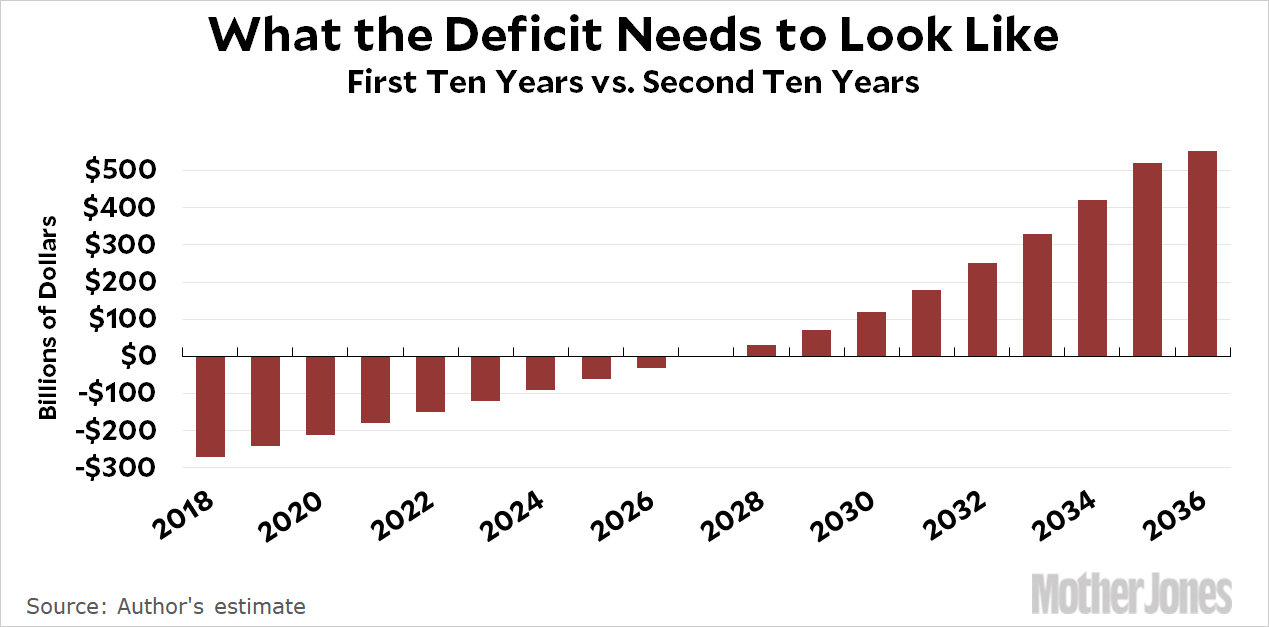
    But here’s the thing: thanks to the usual reconciliation rules, they still have to reach a deficit number of $0 in the long-term. One way to do that is to have the bill expire after ten years, but that’s not what it does. Another way is to declare that your bill will supercharge the economy so much that it will pay for itself down the road. That means they need CBO to score the bill something like this:

    This is unlikely in the extreme. CBO just isn’t going to end up with something like this. So the only way the bill works is if Republicans override CBO and have the Finance Committee chair invent his own numbers and then everyone just votes to accept them. But I’m guessing that there are at least three Republicans who won’t go along with a charade this blatantly and obviously fraudulent. And if the Senate GOP leadership can’t get 50 Republican votes, they can’t pass the bill.

    So what the hell is going on? They must have something in mind, but what?

  • Donald Trump Is Unhappy That He Can’t Use the Courts to Persecute His Enemies

    Donald Trump does not like the civilian justice system:

    “What we have right now is a joke and it’s a laughingstock.”

    Trump also does not like the military justice system:

    And he’s also unhappy with his own Justice Department:

    Yesterday he wrapped this all up and explained to WMAL host Larry O’Connor just how unhappy he is:

    “The saddest thing is that because I’m the President of the United States, I am not supposed to be involved with the Justice Department,” Trump said. “I am not supposed to be involved with the FBI.”

    …. “I look at what’s happening with the Justice Department. Well, why aren’t they going after Hillary Clinton with her emails and with her, the dossier?” Trump said…. “I’m very unhappy with it that the Justice Department isn’t going,” Trump said. “I am not supposed to be doing the kind of things that I would love to be doing. And I am very frustrated by it.”

    He really does think the entire federal government should be directly under his personal control. I can’t wait for his next interview, where he goes after the IRS for not auditing people he doesn’t like.

  • Donna Brazile and the Latest Great Hillary Scandal

    Tom Williams/Congressional Quarterly/Newscom via ZUMA

    I’ve gotten lots of requests to comment on Donna Brazile’s “sensational,” “shocking,” “blockbuster” book excerpt in Politico yesterday. The reason I haven’t, to be honest, is that the more I dive into it the less sure I am what really happened. So let’s start with a short summary of what went down:

    • After 2012, President Obama basically left the Democratic National Committee broke.
    • Debbie Wasserman-Schultz, the DNC chair, did little to address this. Also, pretty much everyone agrees she was a crappy chair for a variety of other reasons.
    • In mid-2015, Hillary Clinton set up a “joint fundraising agreement” with the DNC.
    • The gist of the JFA was that Clinton would raise tons of money by asking rich donors for roughly $350,000 each in both 2015 and 2016. This is way above normal contribution limits, but it was legal because it bundled together donations to Clinton, the DNC, and 33 state parties. Clinton’s campaign would then split up the money and send it to the appropriate places.
    • However, the money for the state parties was mostly routed immediately back to the DNC for things like building voter lists. That was the deal the states accepted when they signed onto the JFA. Depending on your outlook, this is either slightly shady or just a smart way for state parties to help finance things that will help them in the long run.
    • Although states didn’t get much actual cash from the JFA during primary season, they did get it during the general election. So states did pretty well in the end.
    • Bernie Sanders was also offered the opportunity to set up a JFA, but he decided to go the small-dollar route instead.

    So far, there’s nothing new here. It was all reported long ago and litigated during the campaign. Whatever you thought about it back then, feel free to continue thinking. But then Brazile added one more thing:

    • In return for raising lots of money, Clinton’s JFA gave her substantial authority over hiring and administration of the DNC.

    Here’s how Brazile describes it:

    The agreement—signed by Amy Dacey, the former CEO of the DNC, and Robby Mook with a copy to Marc Elias—specified that in exchange for raising money and investing in the DNC, Hillary would control the party’s finances, strategy, and all the money raised. Her campaign had the right of refusal of who would be the party communications director, and it would make final decisions on all the other staff. The DNC also was required to consult with the campaign about all other staffing, budgeting, data, analytics, and mailings.

    ….The funding arrangement with [the Clinton campaign] and the victory fund agreement was not illegal, but it sure looked unethical. If the fight had been fair, one campaign would not have control of the party before the voters had decided which one they wanted to lead. This was not a criminal act, but as I saw it, it compromised the party’s integrity.

    So how do you view this? On the one hand, in 2015 everyone assumed that Hillary Clinton was the obvious nominee since she had no serious opposition.¹ So, since Clinton would have control of the DNC before long anyway, what difference did it make? And anyway, if Clinton was going to raise huge sums for the DNC, it’s hardly surprising that she’d want some control over the organization, especially if she had little faith in Debbie Wasserman-Schultz.

    On the other hand—well, the other hand is obvious. During the primaries, one of the candidates had significant control over the party apparatus. That often happens de facto, but it’s not supposed to happen de jure.

    But now let’s add one more thing. Here is Brazile again on what she found aside from the JFA:

    I had tried to search out any other evidence of internal corruption that would show that the DNC was rigging the system to throw the primary to Hillary, but I could not find any in party affairs or among the staff. I had gone department by department, investigating individual conduct for evidence of skewed decisions, and I was happy to see that I had found none.

    And this:

    So Brazile herself, though she obviously disapproves of the JFA, says the primaries weren’t rigged and there was no internal corruption at the DNC that favored Clinton. In something that suprises me not at all, it appears that even though Clinton had substantial authority and could have rigged things, she instead used this authority to raise lots of money; make sure the DNC hired competent people; and try to get the party apparatus working again.

    In the end, then, this strikes me as almost classic Hillary: she did nothing wrong, but practically went out of her way to make it look like she was doing something slippery. I have never seen another human being do this so frequently. But, in fact, it looks like she really didn’t do anything seriously unscrupulous here, and nearly everyone agrees that, in the end, the primaries weren’t rigged in any serious way.²

    So the more interesting thing about all this is: why did Brazile write this? Her prose is so melodramatic that you’d think she had discovered Hillary was a child molester. Finding the JFA “broke my heart,” she says. She called Bernie Sanders to tell him about all this, but first “I lit a candle in my living room and put on some gospel music. I wanted to center myself for what I knew would be an emotional phone call.” (In fact, it turned out not to be an emotional call. Apparently Bernie didn’t care much.)

    In the end, I’m more curious about this than I am about the facts of the case, which turn out to be fairly pedestrian. Obviously Brazile wrote about this the way she did for a reason, but what is it?

    ¹This was long before the Bernie phenomenon, back when he was considered mostly a Ron Paul-esque vanity candidate.

    ²The primary evidence in favor of rigging was the short debate schedule. But there’s nothing new about this, so again, whatever you thought about that before, feel free to keep thinking.

  • It’s Time for Congress to Protect Robert Mueller

    A few days ago I praised Sen. Jeff Flake for publicly slamming President Trump, and then suggested that there was little more that conservative politicians could do. There’s no reason to expect conservatives to vote against conservative bills just because Trump happens to like them, after all.

    But now along comes this:

    Three conservative House Republicans are expected to file a resolution Friday calling on special counsel Robert S. Mueller III to recuse himself from his probe of Russian meddling in the 2016 U.S. presidential election, accusing him of conflicts of interest. Rep. Matt Gaetz (R-Fla.), who wrote the resolution, accuses Mueller of having a conflict of interest because he was serving as FBI chief when the Obama administration approved a deal allowing a Russian company to purchase a Canada-based mining group with uranium operations in the United States, according to a draft obtained by The Washington Post.

    This is about what we’ve come to expect from the ultras in the House, but it’s not going to stop with them. Fox News will jump on board; the Wall Street Journal editorial page will nod wisely; Trump will toss out a barrage of tweets; and momentum will build. So here’s something the Flakes and Corkers of the world can do: introduce legislation making it clear that Trump better not interfere with Mueller—and writing language that will make it impossible for him to do so. Even if Trump vetoes it, it sends a strong message that the rule of law matters more than Donald Trump’s address.

  • Chart of the Day: Net New Jobs in October

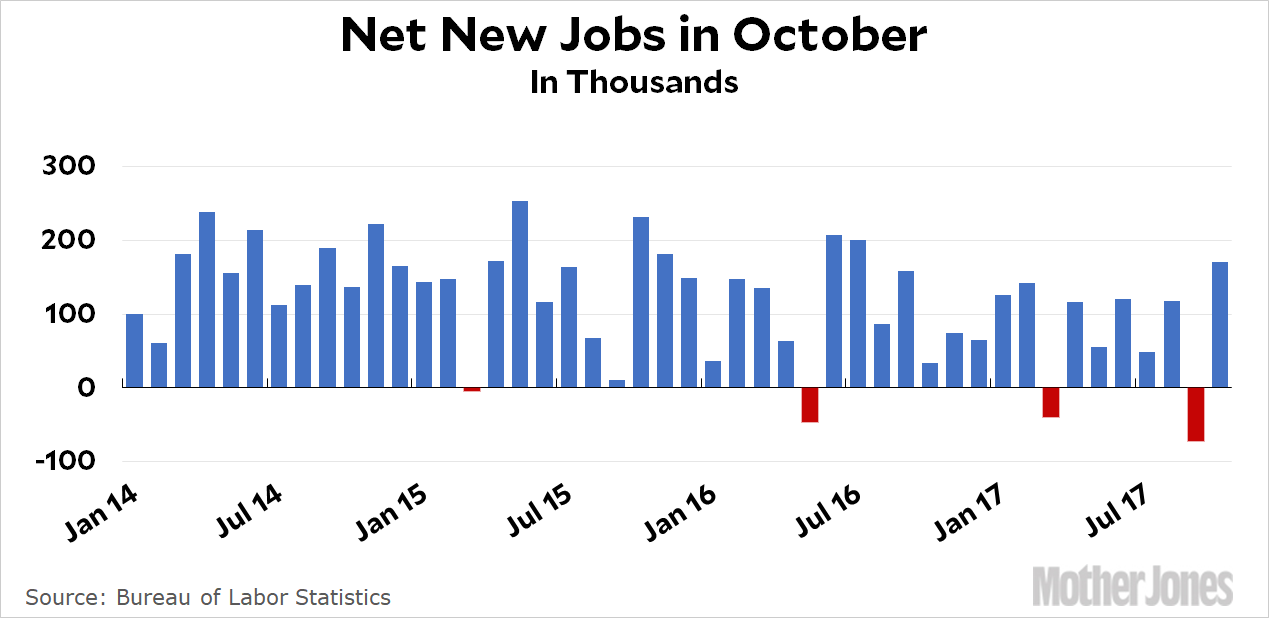
    The American economy gained 261,000 jobs last month. We need 90,000 new jobs just to keep up with population growth, which means that net job growth clocked in at 171,000 jobs. That’s not bad. The unemployment rate ticked down to 4.1 percent—also not bad except that it was for the wrong reason: there are half a million fewer people employed this month compared to September, but nearly a million people dropped out of the labor force. The labor participation rate decreased substantially to 62.7 percent.

    Because of the recent hurricanes, our best bet is probably to average the (revised) September and October figures. If you do that, we’ve added an average of 140,000 jobs per month over the past two months, barely enough to keep up with population growth. The labor force participation rate has declined 0.1 percent per month and about 300,000 people dropped out of the labor force each month. This is weak but not disastrous performance.

    On the earnings front, hourly earnings of production and nonsupervisory employees declined at an annual rate of 0.5 percent. Over the past two months, then, hourly earning have risen at an average rate of about 2.2 percent, which is just a little above inflation. Again, this is weak but not disastrous.

    Overall, the past two months haven’t been great. We’ll see how things go over the holiday season.

  • A Little Bit of Pushback on the Jeff Sessions Story

    Cheriss May/NurPhoto via ZUMA

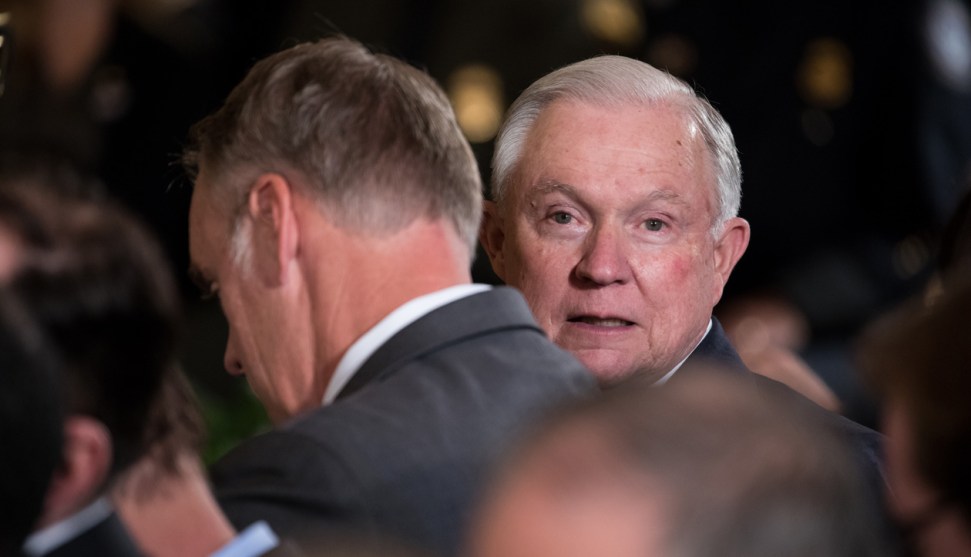
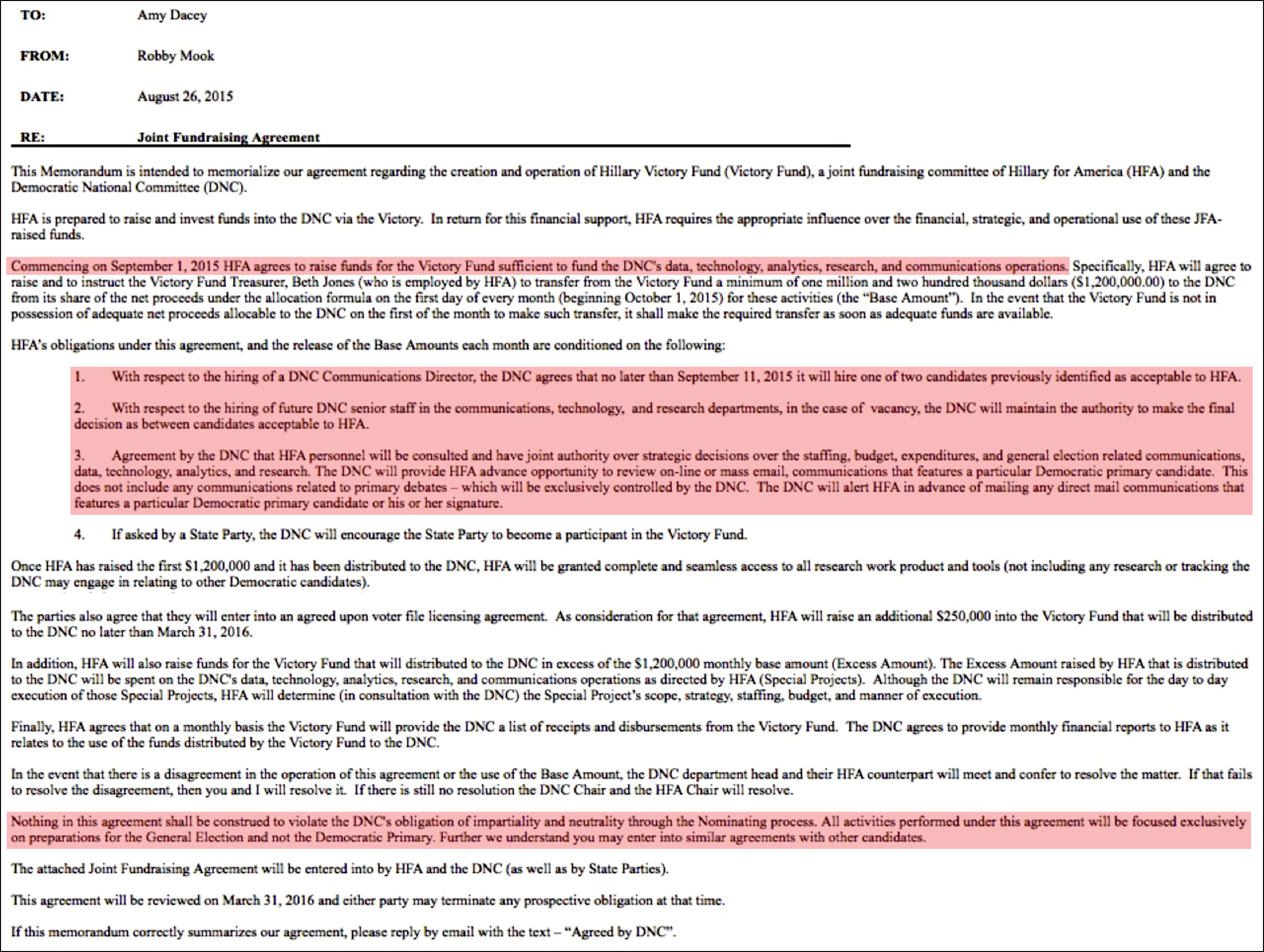
    Donald Trump and Attorney General Jeff Sessions have both said they were unaware of any connections between the Trump campaign and Russian officials. However, the New York Times is running with a story today saying that recently unsealed court documents “cast doubt” on this. They’re talking about the charging document against George Papadopoulos, and this is the relevant paragraph:

    I considered writing about this yesterday, but backed off. Both Trump and Sessions were at this “national security meeting,” but all this document says is that Papadopoulos claimed he had contacts in Russia and could set up a meeting. Other sources say that Trump asked a few questions and Sessions urgently advised against any talks with Russians. Given this, I figured that both men could truthfully say they were unaware of any contacts. They were aware that a staffer said he knew people and could set something up, but he was shut down and nothing ever happened.

    At least, that’s all we know based on this document—though it’s certainly possible that something more happened later on. This is obviously something that’s worth following up, but for now it should be treated with a bit of caution.