• Fire Dispatch #3: I’m Escaping the Fires for the Coast—Along With the Hawks and Ravens

    While Kevin’s on vacation, we’ve invited other Mother Jones writers to contribute posts.

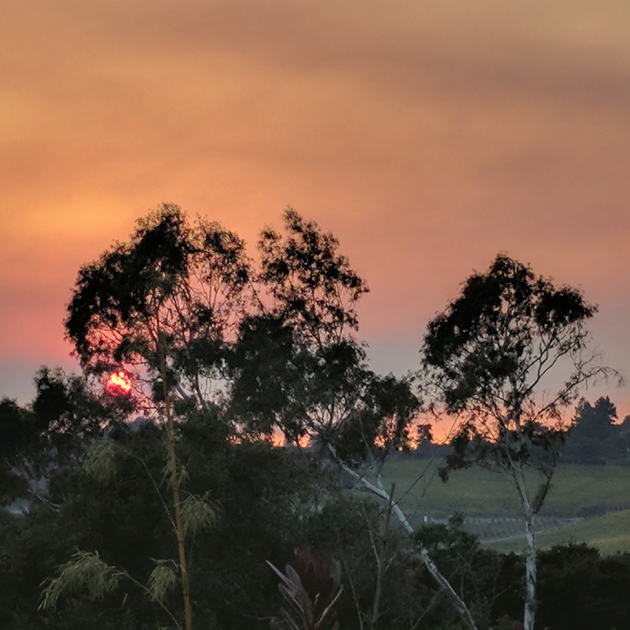
    I packed more bags yesterday, worried about the red flag warnings, which forecast wind gusts to 50mph in the fire zones overnight. Aside from Yahweh, the cat, who packed himself in a Whole Foods bag, it was oddly difficult to choose what to take. My thinking didn’t feel one hundred percent rational and I wasn’t sure I’d appreciate my choices later—arrowhead collection or photos?—if it came to that.
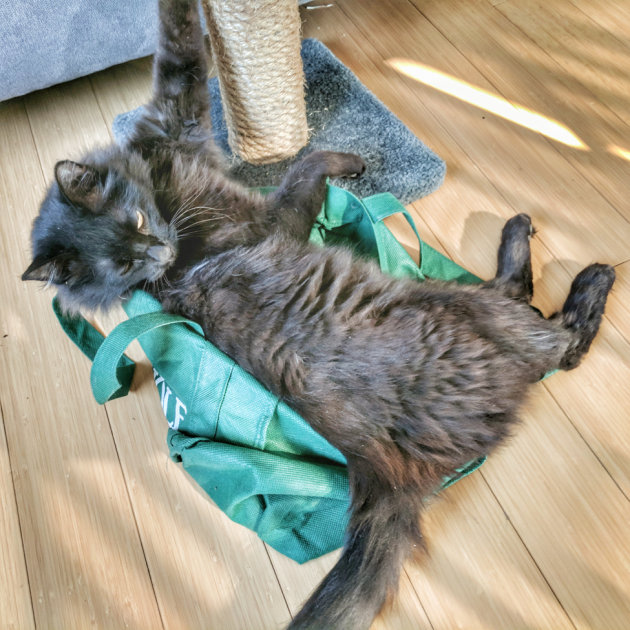
    Yahweh the black cat.

    Julia Whitty

    I also felt sort of guilty that I had so much time to ponder choices when so many others couldn’t. And people weren’t the only ones running for their lives. Reports of wild animals escaping the fires and wandering through neighborhoods, traumatized and thirsty, led the Forest Service to suggest that people leave out buckets of water. I did. A friend also told me she heard coyotes singing outside her house for the first time ever the other night, and she’s lived in the same house for twenty-one years. It was eerie, she said, and sad.

    One of the many burnt eucalyptus leaves in flight on the wind.

    Julia Whitty

    A lot of people fled for the coast and I went out this morning to see what it would be like as an evacuation place. All the Sonoma Coast State Park campgrounds were full. Some of the people lucky enough to find a camping spot told me they came out to escape the smoke; they had asthma or COPD. Others were escaping the fires. Some couldn’t find camping spaces and slept in their cars. Sadly most of these evacuees will have to vacate the campgrounds tomorrow when the people who booked them for a weekend holiday will arrive. That seems weird to me. Maybe the vacationers could donate their camping spots to the people in need for a weekend or three?
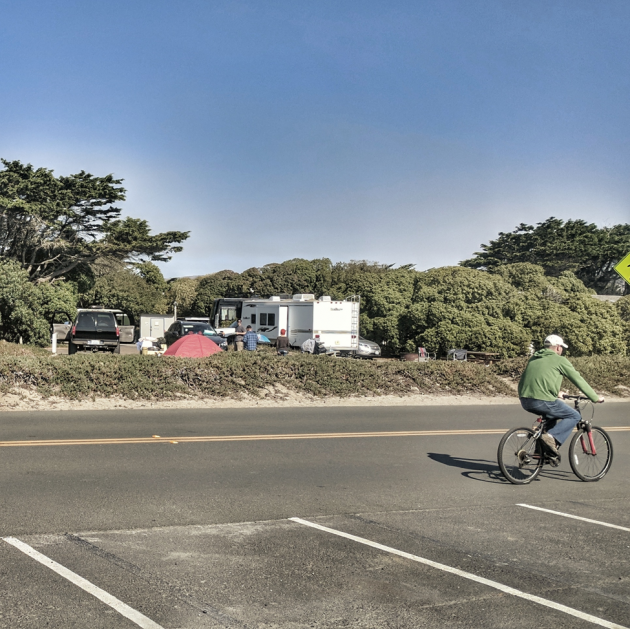
    Doran Beach campground.

    Julia Whitty

    Also out at the coast was a seemingly abnormally high numbers of birds. Lots of hawks and falcons, ravens. The air was much clearer. It would be a great place to fly to, albeit potentially strange hunting grounds. This great blue heron—normally an extremely skittish bird—was apparently hungry enough that I could walk right up to him or her and leisurely take photos.

    A great blue heron.

    Julia Whitty

    Thankfully the high winds didn’t materialize last night, at least not enough for the fires to blow up into another firestorm. The longer term forecast suggests rain a week from today. Let’s hope. Rain, a lot of it, is the only thing that’s going to extinguish these infernos.
    Julia Whitty


  • Obama Cut the National Debt By $9 Trillion

    On Wednesday, President Trump freestyled some stuff about the federal debt:

    Just in the stock market alone, we have increased our economic worth by $5.2 trillion dollars….But listen to this because we’ve doubled — in the last eight years of the previous administration, the debt doubled, so that in eight years our debt — literally hundreds of years of debt — doubled in eight years to $20 trillion. But since the election on November 8th, I’ve increased the value of your U.S. assets by more than the $20 trillion that we currently owe. You haven’t heard those numbers.

    Well, no, I had never heard those numbers in quite that way. Nor does this really make sense, even by Trumpian standards. Has Trump increased the value of our assets by $5.2 trillion or by “more than” $20 trillion?

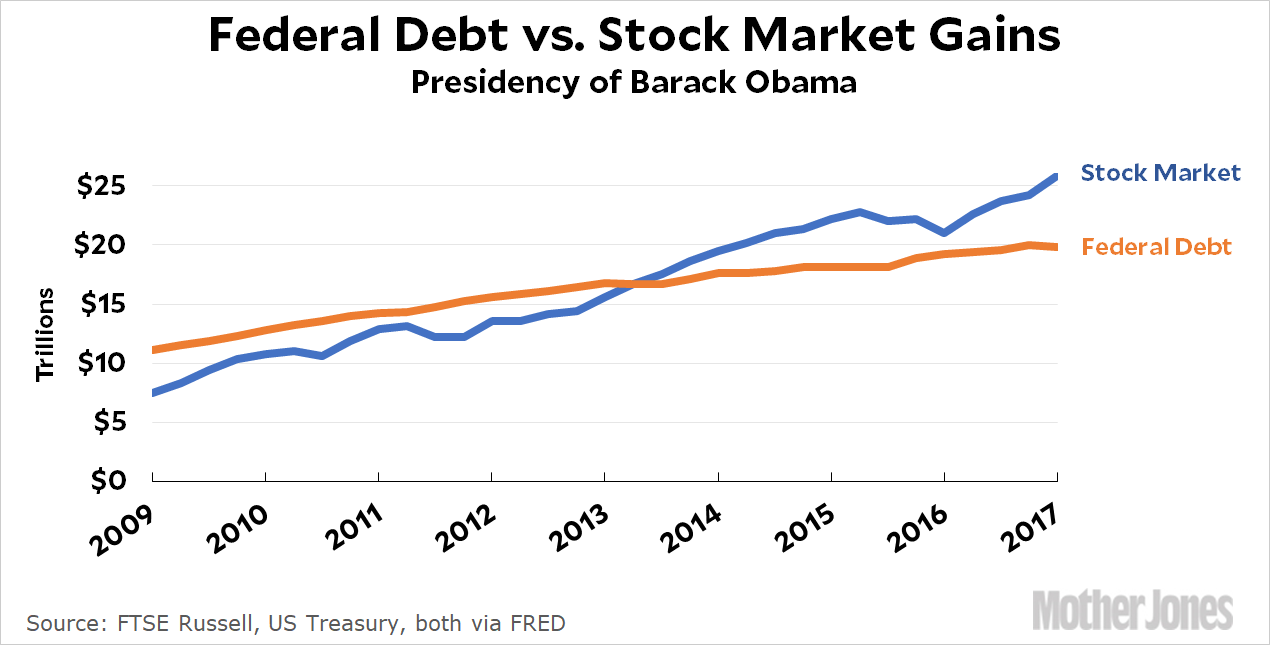
    Who knows? But let’s stick with the $5.2 trillion in stock market value. While all the rest of you have been moaning and groaning about how this comparison of the stock market to federal debt is “wrong” or “ridiculous” or “total nonsense,” I’ve been making concrete use of this new standard. Check it out:

    This is great. It’s a whole new way of looking at the Obama era. Sure, federal debt went up by about $9 trillion, but the stock market went up by $18 trillion. That means Obama reduced our federal deficit by $9 trillion. Not bad!

    Thanks to Trump, I guess Republicans are going to have to change their tune about Obama. Not only did he guide us out of a huge recession, but he slashed our national debt by trillions of dollars. It’s an amazing job, really. Thanks, Obama.

  • Trump Signs Order to Destroy the Individual Insurance Market

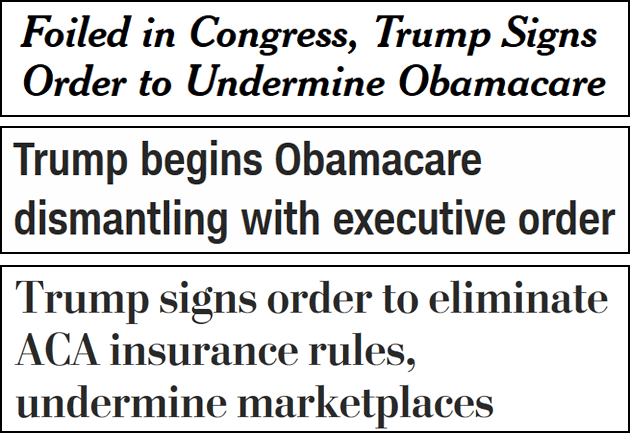
    Today, President Trump took his biggest step yet to sabotage Obamacare. My congratulations to three news outlets that had the courage to write proper headlines for their stories:

    From top to bottom, these are from the New York Times, CNN, and the Washington Post.

    Trump’s executive order is the one I wrote about last week. It basically reclassifies “association” health plans for small businesses as health plans for big businesses, which aren’t required to obey Obamacare rules that protect pre-existing conditions. This allows association plans to legally sell policies only to healthy customers, which will make them much cheaper. Naturally, healthy customers will flock to these policies, leaving the Obamacare exchanges with only the old and sick.

    The logical next step is to say that Obamacare premiums will skyrocket, but I’m not sure that will happen. The exodus of healthy customers will be so dramatic and so unpredictable that I can’t imagine any insurer continuing to sell on the Obamacare exchanges. They’ll just stop, and that will be the end of Obamacare.

    The same thing will happen outside the exchanges too. Individual health policies will still be required to insure anyone who applies, including those with pre-existing conditions. But with all the healthy customers scampering off to cheaper association plans, it will be all but impossible to figure out the likely composition of the remaining risk pool. So insurers will just exit the individual market completely. It’s only 7 percent of the whole market anyway.

    Trump’s plan, obviously, is that this chaos will force Congress to respond. Anything will be better than a collapse of the entire individual market. Even Democrats will be forced to support a Republican plan that will at least prevent the market from imploding.

    We’ve never before had a president who used millions of the poor and sick as pawns like this. It’s just plain evil. Our only real hope at this point is that Trump can somehow be stopped before the rulemaking process finishes and this goes into effect. That’s probably about a year or so. Time to get cracking.

  • Republicans Eager to Ditch Blue-Slip Tradition, But Chuck Grassley Isn’t So Sure

    Bill Clark/Congressional Quarterly/Newscom via ZUMA

    In a rare occurrence, it looks like I might have been too cynical about Republican devotion to procedural abuses. A few months ago, when there was some chatter about eliminating the blue-slip requirement for judicial nominees, I wrote:

    Republicans have a two-decade history of flipping the blue-slip rule whenever it conveniences them. Is there really much doubt that Grassley is going to nuke it just as soon as a single Democrat fails to return a blue slip on a Trump nominee and Fox News starts screaming about obstruction? I don’t think so.

    As it turns out, Republicans do want to flip the blue-slip tradition now that a Republican is president, but it turns out that Chuck Grassley himself isn’t so sure:

    Mitch McConnell wants to further erode Democrats’ influence over lifetime judge appointments, floating plans to jam through judicial nominees opposed by their home-state Democratic senators. But the Republican Senate leader’s own Judiciary Committee chairman, Sen. Chuck Grassley, is warning McConnell: Not so fast.

    …. “The chairman of the Judiciary Committee will determine how to apply the blue-slip courtesy for federal judicial nominees, as has always been the practice,” Grassley spokesman Taylor Foy said Wednesday. “Over the years, chairmen have applied the courtesy differently, but the spirit of consultation has always remained.”

    ….Grassley’s immediate predecessor as chairman, Sen. Patrick Leahy (D-Vt.), abided by the blue-slip tradition during his six years leading the panel under former President Barack Obama. That allowed Republicans to block more than a dozen nominees to the bench.

    Leahy said in a statement Wednesday that Grassley has promised to “respect the blue slip tradition, just as I did.”

    “I trust him to keep his word,” Leahy added.

    We’ll see about that. Sen. Al Franken is currently refusing to return a blue slip on a Trump nominee, so there’s a test case already at hand. If Grassley abides by the blue-slip tradition and blocks the nominee, Trump will start tweeting and Fox News will go on a rampage. Can Grassley stand up to that?

  • Fire Dispatch #2: The Agony of Watching My Favorite Sonoma Hills and Neighborhoods Burn

    Julia Whitty

    While Kevin’s on vacation, we’ve invited other Mother Jones writers to contribute posts.

    Annadel State Park in Santa Rosa is probably Sonoma County’s most beloved and well-used park. I’ve hiked and mountain biked countless miles on its many trails. So it’s deeply distressing to see it on fire from the Nuns Fire, to imagine the wildlife trying to flee up there. It’s even more alarming to see the hundreds of homes in its shadow, which have now been evacuated.

    Julia Whitty

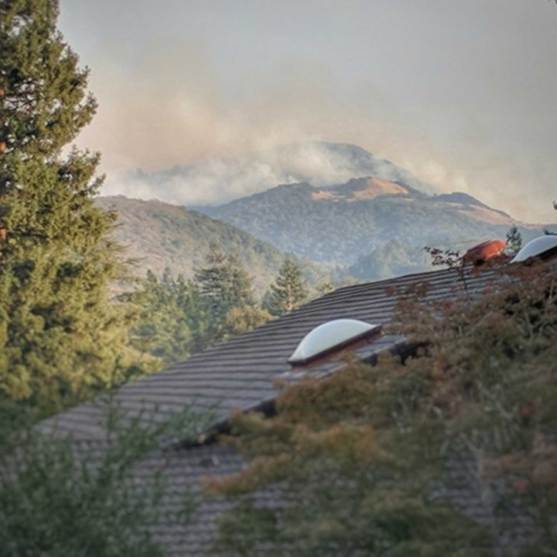
    Most of the park, including its highest point, Bennett Mountain, is actively on fire and neighborhoods all around it have been evacuated. Some have already burned.

    Julia Whitty

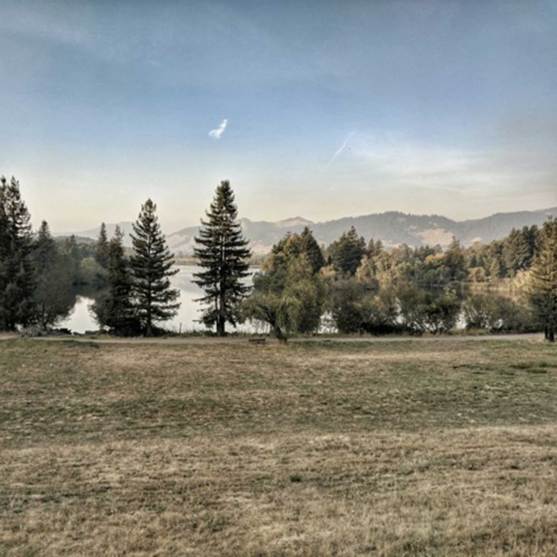
    Spring Lake Regional Park, adjacent to Annadel, is ordinarily full of dog-walkers, skate-boarders, cyclists, runners, and walkers. But it’s closed—and empty—now too.

    Julia Whitty

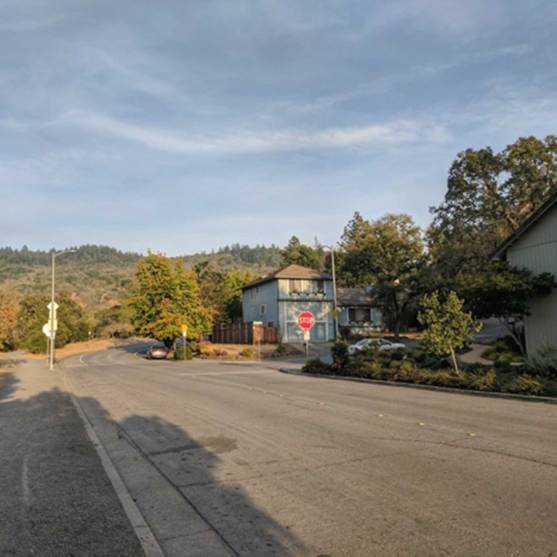
    This street is one of the most popular trailheads into Annadel State Park. On an otherwise beautiful day like today it would be packed with cars as people jog, mountain bike, hike, and ride their horses up the trails. Now it’s deserted, the entire neighborhood under a mandatory evacuation order.

    Julia Whitty

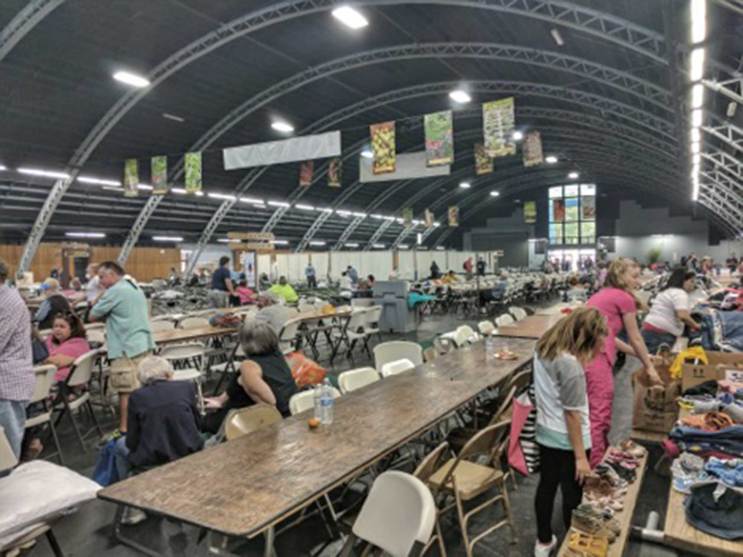
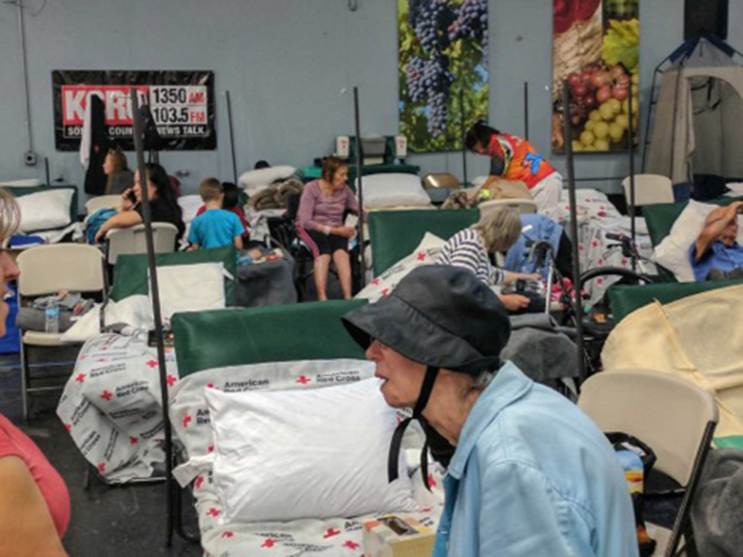
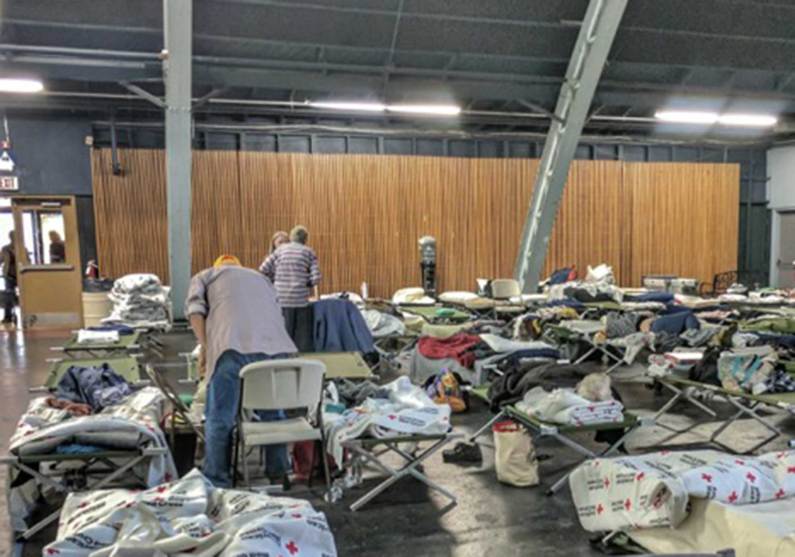
    Some of the people who fled the fires in Santa Rosa Sunday night and Monday morning are now living in the evacuation center at the Sonoma County Fairgrounds. It’s a large and soulless space where there’s little do do but sort through donated clothes for something to wear and wait in line for a meal from the food trucks outside.

    Julia Whitty

    The elderly and those in need of medical attention are living in an area partially screened off from the rest of the building. It’s safe and there’s a modicum of privacy, but it’s pretty depressing. I can feel the free-floating anxiety in the air.

    Julia Whitty

    Everyone else is jammed into cots equipped with a thin pillow and one small blanket. I came here with pillows and blankets to donate—and I left them in mounds of stuff outside—but I realize they’re not going to make it into the sterile confines of the Red Cross world. Maybe they’ll go to people when they begin to repopulate the burned out areas.

    Julia Whitty

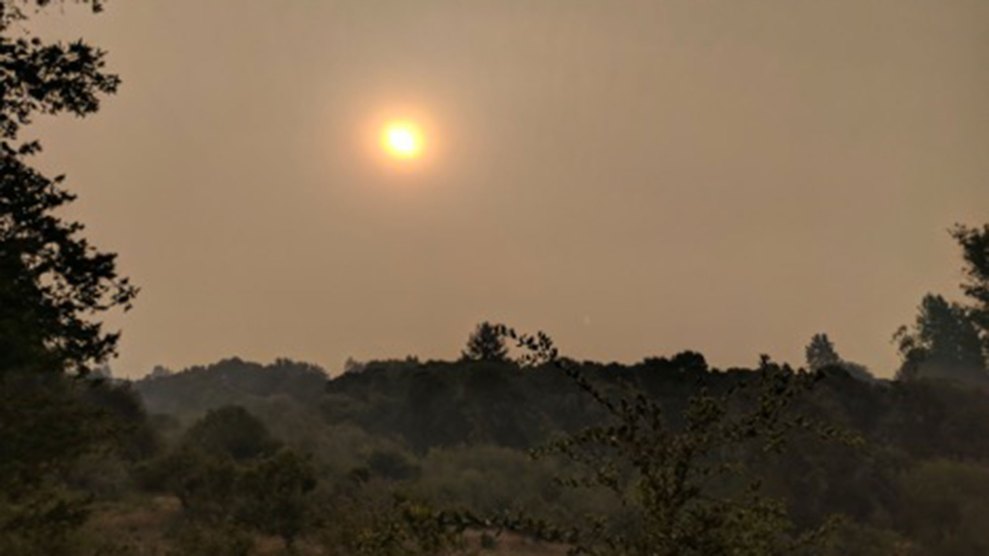
    The Sonoma County Fairgrounds are close to Annadel Park—and the Nuns Fire. Now the winds are kicking up sharply, rising towards predicted gusts of 50 mph in the mountains this afternoon, tonight, and tomorrow. Skies are getting much smokier. Ash is falling. I can’t help but worry that the evacuees at the fairground are going to need to evacuate again.

    Julia Whitty
  • Surprise! The Federal Government Spends More On Housing Assistance For The Rich Than Housing Assistance For The Poor.

    A large house, likely eligible for a Mortgage Interest Deduction credit.Perry Mastrovito/ZUMAPress

    In 2015, the federal government spent about $71 billion on the Mortgage Interest Deduction (MID) tax credit, more than twice the $29.9 billion it spent on the Section 8 subsidized rental voucher program, according to a report released Wednesday by Apartment List, a rental listing and policy organization.

    Section 8 and the Mortgage Interest Deduction are aimed at opposite ends of the income ladder, and it’s startling to see a study that illustrates how federal housing priorities are actually reflected in the budget. 

    In 2015, almost 90 percent of the deduction’s benefits went to households earning more than $100,000. Section 8 recipients, by contrast, usually have to earn less than half of their local area’s median income to qualify for a voucher. The national annual median income is about $31,000.

    The GOP’s current tax proposal would make the MID available to fewer, and richer, homebuyers. Real estate analysts at Zillow determined that, if passed as-is, the deduction would apply on purchases of $801,000 or more, up from $305,000 under the current tax code. The change in eligibility would reduce the cost of providing the deduction, and limit its benefits to the wealthiest taxpayers.

    The Apartment List study also determined that while 53 percent of high-income American households receive some sort of federal housing benefit like Mortgage Interest Deduction, only 11 percent of low-income households receive any kind of federal housing assistance. Earlier this month, Los Angeles announced plans to notify 96 percent of the city’s Section 8 applicants that they would not get one of city’s limited vouchers.

  • Trump’s Obamacare Sabotage: A View From Two States

    From the LA Times:

    California’s health insurance exchange said Wednesday it has ordered insurers to add a surcharge to certain policies next year because the Trump administration has yet to commit to paying a key set of consumer subsidies under the Affordable Care Act. The decision to impose a 12.4% surcharge on silver-level health plans in 2018 means the total premium increase for those policies will average nearly 25%, according to Covered California.

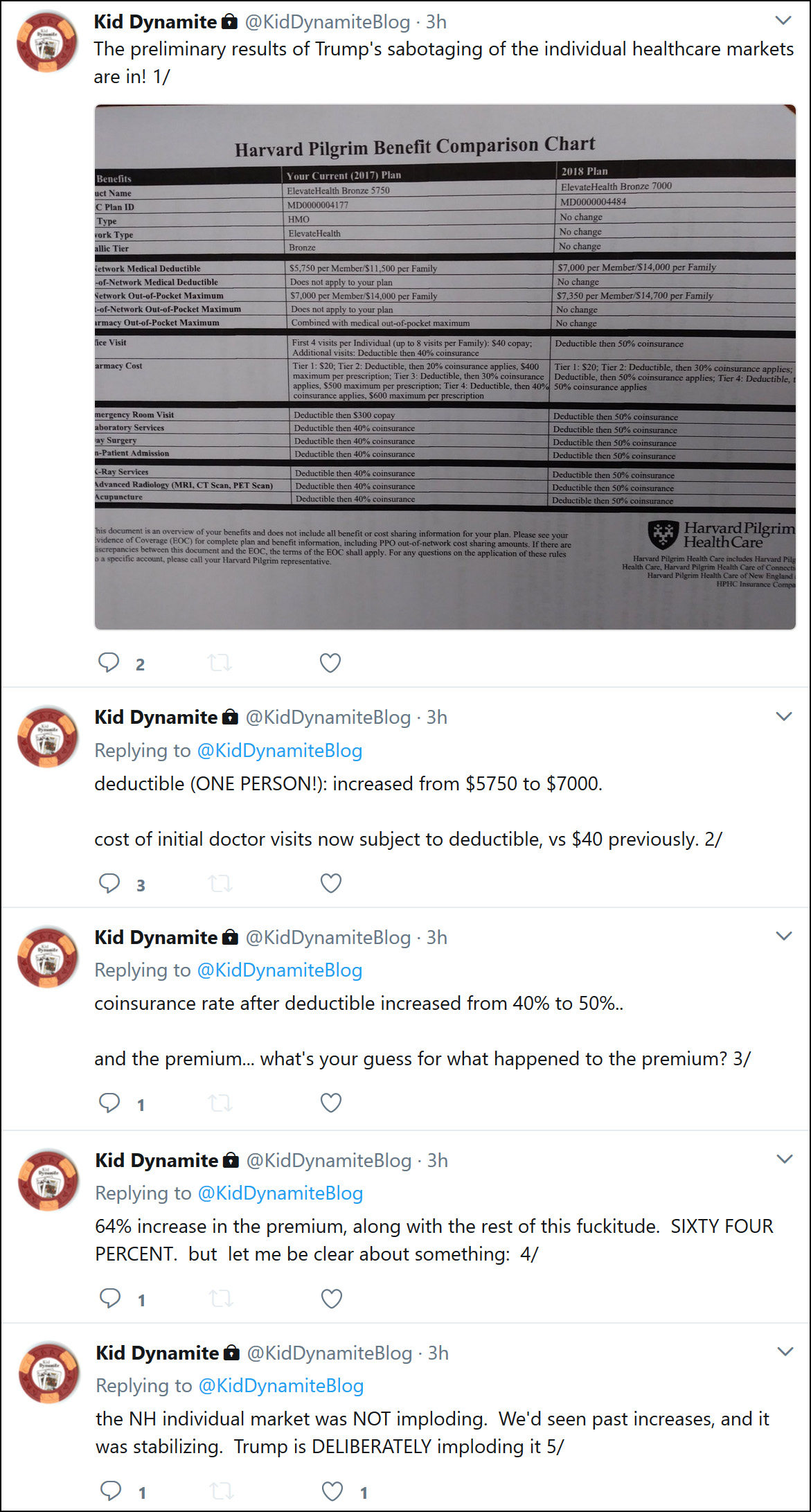
    Thanks to Trump, Californians will see a big premium increase. But that’s probably not all. Here’s a view of Obamacare from New Hampshire:

    I expect to hear from a bunch of folks saying that this is what happens when you pass a highly partisan bill that depends on a good-faith effort by the president to execute it. And sure: in a technical sense that’s true. But have we ever seen anything like this? Could anyone have reasonably foreseen it? We’ve had presidents in the past who let programs languish. We’ve had attempts by Congress to change or cut back on programs. But have we ever had a president who deliberately set out to immiserate millions of people as a means of getting his way?

    And by the way: even if Trump succeeds in destroying Obamacare, it’s still the law of the land. Insurers will still be required to insure anyone who asks for coverage, regardless of pre-existing conditions. That’s untenable, and the only response from the insurance industry will be to eliminate individual insurance coverage completely. Somebody on Capitol Hill better cotton to this pretty quick and—somehow—get Trump to lay off. If the Republican Party literally ends up eliminating the entire individual health insurance market, there aren’t words in the dictionary for how big a loss they’ll suffer in 2020.

  • Lunchtime Photo

    This photo was taken in St. James’s Park. I watched for about 20 minutes as this guy stood stone-faced the entire time while he was feeding the gulls. His expression never changed.

    The gulls don’t change either. It’s hard to tell in person, but in a photo you can see that they look wide-eyed and delighted to get their treat. It’s kind of cute. Also, they have amazing control of their beaks, plucking tiny bits of food while in flight, but never touching the guy’s fingers.

  • Why Have Interracial Marriages Shot Up Since 1997?

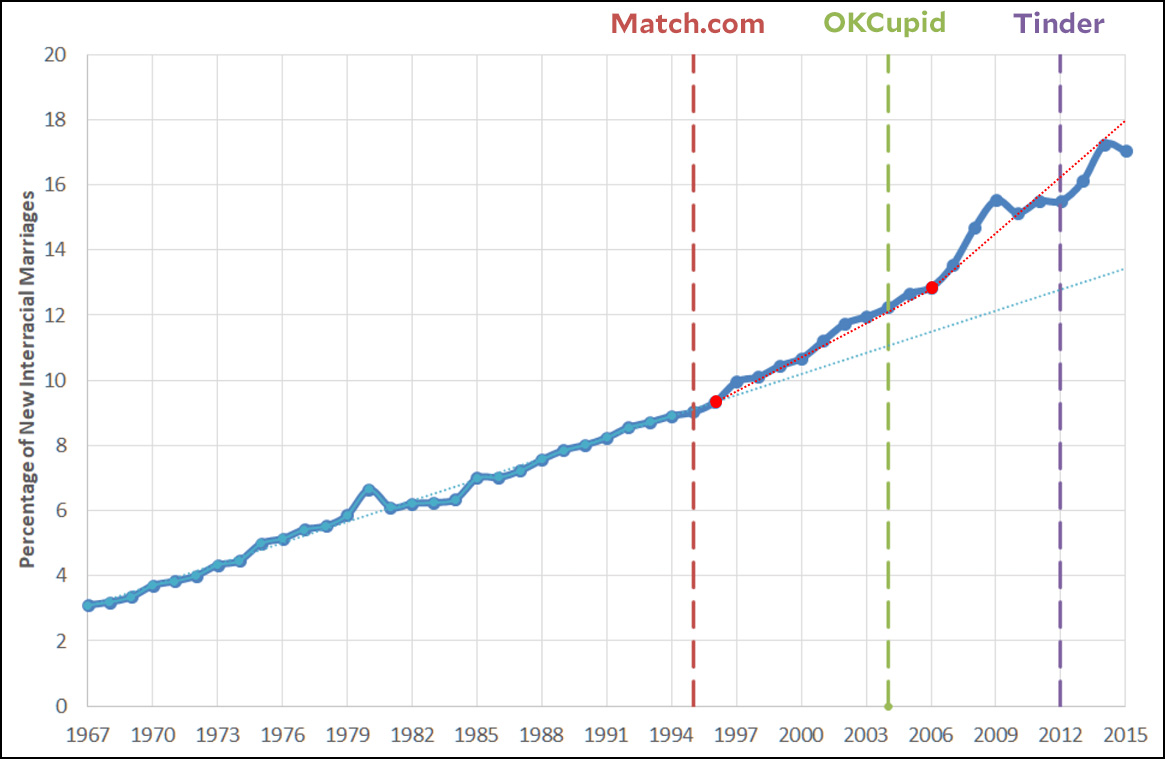
    Alex Tabarrok pointed today to a paper that caught my eye. In it, the authors offer an explanation for why interracial marriages, which had been increasing at a steady rate for decades, suddenly accelerated in the mid-90s. Their answer: the rise of online dating played a big role.

    The reasons for this are a little complicated, and you can read the paper if you’re interested. However, here’s the basic chart that motivates the analysis. It shows the percentage of interracial marriages among newlyweds:

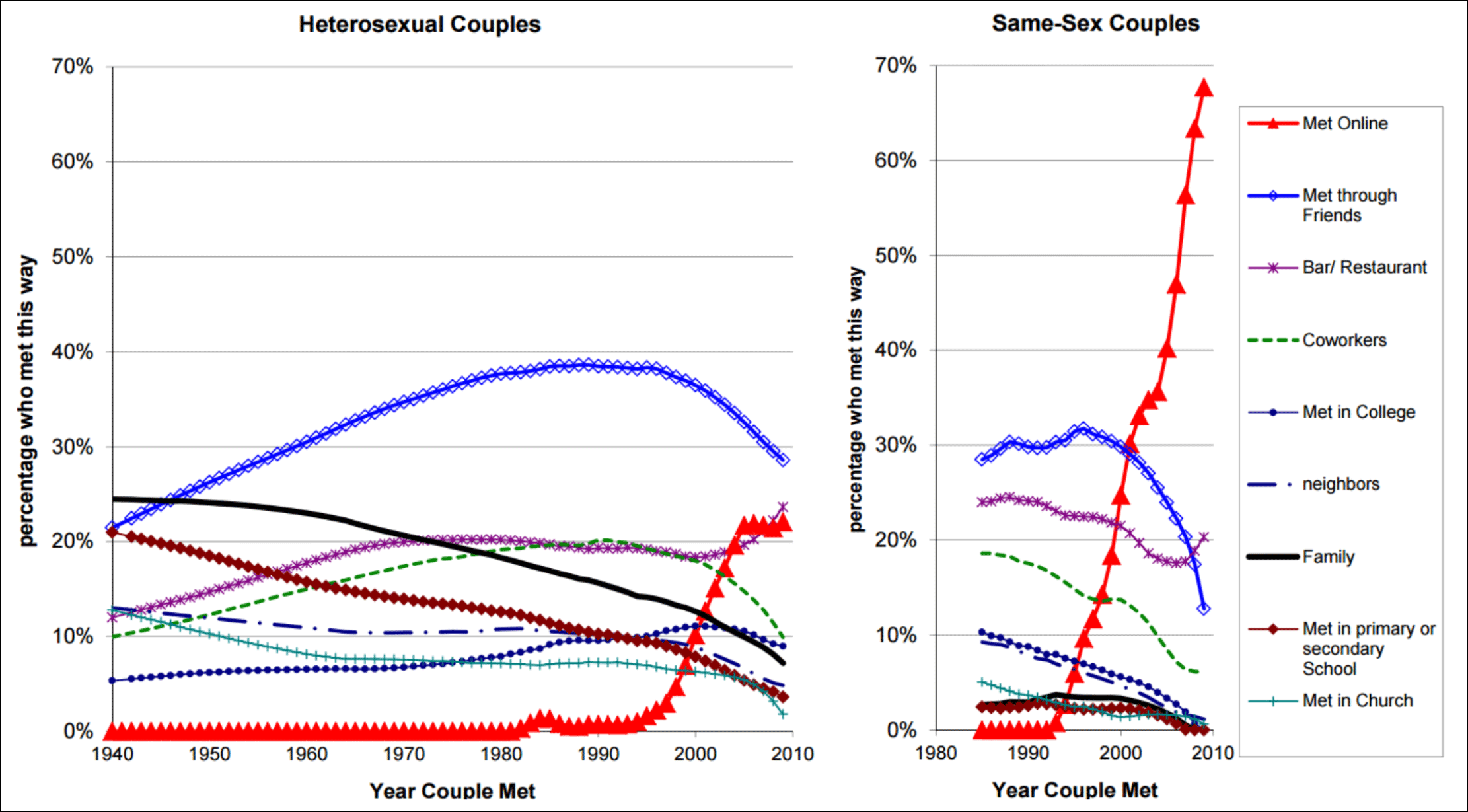
    This is interesting, and I don’t really have any special reason to doubt the online-dating hypothesis. But there’s an odd thing: the trendline accelerates first in the mid-90s, and then accelerates again around 2007. (The red line is my eyeball trendline.) So does that mean online dating also accelerated in 2007? It turns out the answer is no:

    At the very moment that online dating plateaued among hetero couples, the growth rate of interracial marriages took a big jump, from 0.35 percent per year to 0.58 percent per year. This doesn’t fit the online-dating model.

    So either it’s wrong or it’s incomplete. If it’s incomplete, it means something happened around 2007 in addition to online dating that caused a big jump in the number of interracial marriages. What do you suppose it could be? An Obama effect? A Facebook effect? Something else?