• Trump Threatens Iran as JD Vance Announces “Great Progress” on Ceasefire

    JD Vance holding a microphone.

    As Donald Trump threatened to bomb Iran, JD Vance spoke of peace in Switzerland.Urs Flueeler/Getty

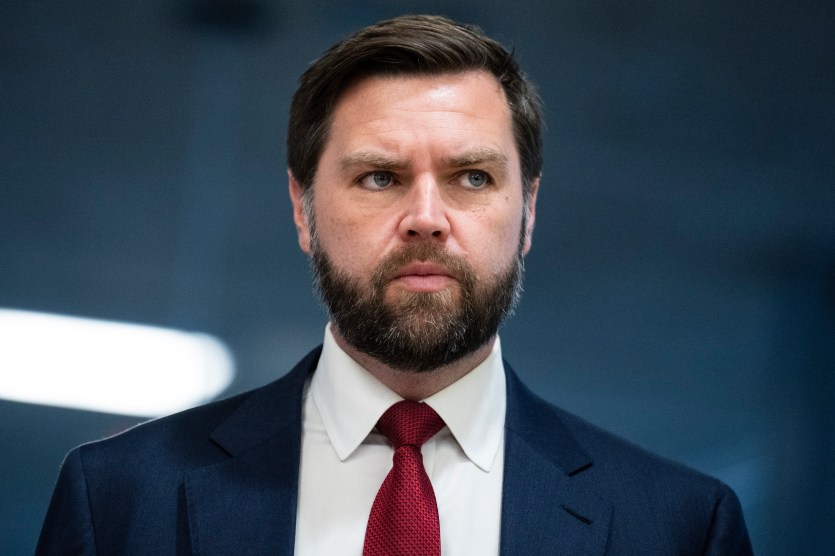
    This morning, Vice President JD Vance touched down in Switzerland for the first round of talks with Iran. The stated goal: extending last week’s interim mediated ceasefire and the Memorandum of Understanding signed by President Donald Trump into a more permanent peace in the 110-day US-Israeli war on Iran. But as those talks continued, Trump lost no time in taking to social media and Fox News to threaten Iran.

    “Iran must immediately stop their highly paid PROXIES in Lebanon from causing trouble,” Trump wrote on his platform Truth Social Sunday morning. “Iran must immediately stop their highly paid PROXIES in Lebanon from causing trouble. If they don’t, we’ll hit Iran very hard again, just like we did last week, only harder!!!”

    Lebanon’s civil defense reported that Israeli strikes had killed at least 16 people on Saturday morning, and the country’s health ministry said at least 47 people were killed on Friday. In response, Iran once again closed the Strait of Hormuz shipping pathway, which before the war carried a fifth of the world’s oil and gas, saying the US violated its deal to end the war by allowing Israel to continue to bomb Lebanon.

    Meanwhile, in the Bürgenstock resort near Lake Lucerne where the talks are being held, Vance said that “great progress” was being made, without being explicit about the steps that had been taken. He noted that the gathering would “allow us to sit together as teams for the first time in history,” with the goal of turning “over a new leaf to transform our relationship with the people of Iran, and to extend an outstretched hand.” 

    Iranian Parliament Speaker Mohammad Bagher Ghalibaf, a lead negotiator, said Iran’s military is prepared to react to Trump’s verbal aggression. “They better be careful with their statements; our armed forces are ready to respond in a different way,” he wrote on X. Iranian officials reportedly walked out of Sunday’s talks, protesting Trump’s threats.

    A Washington Post report today reveals the devastating human toll of the war. “Months after the war began with a wave of US and Israeli airstrikes on February 28, the scale of civilian casualties and destruction in Iran remains difficult to measure,” Post reporters Dylan Moriarty and N. Kirkpatrick wrote. 

    In a single airstrike, 100 buildings were damaged in one civilian neighborhood in Tehran. Almost a third of the city has been hit by US and Israeli missiles. One report on civilian harm puts the death toll from late February to mid-April at 1,701 civilians, including 307 children. Across both Iran and Lebanon, over 7,000 people have been killed since mid-February, according to official casualty figures. 

    In a Sunday morning phone interview with Fox News, Trump expressed some willingness to continue the carnage. “You close it, and you won’t have a country,” he warned. Fox News reporter Trey Yingst said the president told him that he told Iranian officials. “You won’t even make it back to your fucking country,” if they did not open the essential transportation lanes for oil in the Strait of Hormuz.

    Trump has repeatedly referred to himself as the “Guardian Angel” of this particular body of water. “We may take over the Strait, if we have to,” Trump told Yingst.

    Hawks like Sen. Lindsey Graham (R-S.C.) are pushing in that same direction. Graham reportedly spent over four hours with the President on Friday, outlining a plan to “take the Strait of Hormuz over by force” even as the clock starts on a 60-day negotiating period. On Face the Nation Sunday, Graham told host Margaret Brennan, “If Iran contests control of the Strait of Hormuz by the United States, we will obliterate them.” He added, “Let’s try a diplomatic solution. I think it’s going to fail. What happens next?” 

  • The Reflecting Pool Mess Is Right Out of Trump’s Destructive Playbook

    A man wearing thigh-high waders maneuvers a tube mounted on a metal pole while standing calf-deep in the murky water of DC's reflecting pool. The Washington monument can be seen behind him.

    A worker removed algae on Thursday.Gent Shkullaku/Zuma

    President Donald Trump is blaming “Vandalism” by “Radical Left Lunatics” for some of the struggles of his beloved Lincoln Memorial Reflecting Pool remodeling project.

    “Just like three days ago, they destroyed the grass outside of the Pool, they’ve also done everything possible to hurt the inside surface that was just installed,” Trump posted to Truth Social on Friday night. “Law Enforcement is actively investigating this situation.”

    Just six minutes later, he posted an image of what appears to be a green-haired protester wearing a shirt with the words “TEAM ALGAE,” presumably as evidence of said vandalism.

    This appears to be the president’s "proof" that vandals are sabotaging the Refelecting Pool.

    Justin Baragona (@justinbaragona.bsky.social) 2026-06-20T03:00:18.373Z

    Although Trump announced the renovation in April—which he initially said would take one week and cost just $2 million—the Reflecting Pool is still not “American flag blue,” as fighting the algae has proved to be a larger task than the administration can handle.

    As the Washington Post noted that month, major projects on the National Mall not only typically require congressional authorization, but are subjected to federal reviews. That doesn’t appear to have happened with Trump’s pool makeover.

    Indeed, the sequence of events here follows a pattern characteristic of many of the presidents’ projects and policies. While the steps may occur in different orders, they end in the roughly the same place: failure, with regular people paying the price. Let’s take a look at Trump’s destruction playbook:

    1. Make the thing in my image and promise perfection

    After vowing to clean “Biden filth and incompetence” from the Reflecting Pool last November, he posted on Truth Social in April that although he was warned it could take years to make it “much more beautiful,” it would in fact only “take a fraction of that time, at a fraction of the cost.”

    2. Sprinkle some inside dealing

    According to a Thursday report by the New York Times, a company with connections to a longtime Trump supporter was handed a no-bid contract worth $1.7 million to install a new water purification system. A larger $14.7 million-contract to put blue waterproofing material on the Reflecting Pool’s floor also had no other bidders.

    3. Declare success, despite overspending

    The Trump administration said it finished the renovation on June 4 and it would fill the pool with water within days. According to a summary of the Department of Interior’s contract with Atlantic Industrial Coatings reviewed by CNN, the price ballooned up to $14.7 million, despite promises it would cost a seventh that figure.

    4. Trouble emerges

    CNN reported on Thursday that blue material on the bottom is starting to peel off. Also, the algae is back.

    5. Blame the left

    Ludicrous claims of sabotage? With Trump’s Friday night post, it looks like we’re at this step right now.

    6. Forget it

    Trump has publicly downplayed previous failed projects, dating back to his US-Mexico border wall through, most recently, his Kennedy Center takeover.

    Last month, after a federal judge ruled his name be removed from the performing arts institution, Trump said he had “no interest” in continuing his remodeling project there. “Unless I am free to do what I do better than anyone else,” he posted, “we are going to be working with Congress to transfer this failing Institution back to them.”

    As nature clearly outpaces efforts to clean the pool, keep your eyes peeled for this one.

  • Trump DOJ Outlines Dubious Path to Force People Into Psychiatric Institutions

    Donald Trump gesturing with his hands while sitting down on a chair.

    Advocates are concerned that the memo presages a White House effort to ramp up institutionalization.Aaron Schwartz/CNP/Zuma

    On Thursday, the Department of Justice quietly released a memo pertaining to the landmark 1999 disability civil rights case Olmstead v. L.C., which curtailed states’ power to institutionalize people diagnosed with mental illnesses, and related federal civil rights laws. That precedent, the Trump administration memo argues—in conjunction with federal civil rights and disability rights statutes—increases homelessness, a claim that likely signals a push to expand institutionalization in restrictive psychiatric facilities.

    The administration’s claims, according to University of Michigan law professor Sam Bagenstos, are not rooted in fact.

    “It’s just absurd,” says Bagenstos, general counsel for the Department of Health and Human Services and the Office of Management and Budget during the Biden administration, calling the Olmstead decision “one of the most effective tools in combating homelessness” by encouraging states to augment mental health and housing services outside institutions.

    More concerning is the fact that the White House instructed the Justice Department to produce the document, which Bagenstos says “suggests we might potentially be seeing an executive order” directing DOJ and the Department of Health and Human Services to roll back rules meant to avoid institutionalization. The memo, however, does not change laws itself.

    “This administration is trying to take away one of the most fundamental rights that people with disabilities have fought for,” said George Washington University law professor Alison Barkoff.

    In December, for instance, the Department of Justice reached an agreement with South Carolina to expand supportive services for people with psychiatric disabilities to reduce rates of institutionalization.

    Bagenstos describes the White House move as “part of the incredibly punitive approach toward homelessness and mental illness that Trump has taken from the beginning of his administration,” including a July executive order that called for unhoused people with mental health conditions to be forced into long-term care settings in contravention of Olmstead and disability civil rights laws.

    “Their interpretation is completely inconsistent with virtually all courts,” says Barkoff, a DOJ special counsel on Olmstead enforcement during the Obama administration.

    Barkoff and Bagenstos are both concerned that the memo presages a White House effort to ramp up institutionalization—one that could, ironically, also increase homelessness—by chipping at the Olmstead legal framework. The White House did not immediately respond to a request for comment on its plans for Olmstead enforcement, or lack thereof.

  • Republicans Question the US-Iran Deal. But Many Are Only Blaming JD Vance.

    US President Donald Trump's head, shoulders, and upper chest are shown in the photo. He is holding his right pointer finger to his mouth in a shooshing motion.

    President Donald Trump at the G7 summit, an intergovernmental economic and political forum in Evian-les-Bains, France, on June 17, 2026.Julia Demaree Nikhinson/AP

    Many Republicans across the right are bashing interim deal between the US-Iran as an unnecessary surrender. 

    “This is the worst foreign policy blunder in decades,” Sen. Bill Cassidy of Louisiana wrote in a Wednesday post on X. “Iran’s nuclear ambitions were not curbed, and they have learned that threatening the Strait of Hormuz works.”

    “Now, Iran gets to build brand-new infrastructure under this deal,” he continued. 

    Other Republicans, like Sen. Thom Tillis of North Carolina, have balked at the amount of resources the US is giving to Iran—including sourcing at least $300 billion to fund reconstruction in Iran. The Trump administration has repeatedly said this week that the money would come from other Gulf countries

    The Trump administration read the agreement to journalists on Wednesday and both countries are expected to sign it in a formal ceremony on Friday. While extremely vague in how it will be achieved, the “memorandum of understanding” provides financial and political concessions to Iran for the country to reopen the Strait of Hormuz and reaffirm that it will not develop nuclear weapons: immediately allowing Iran to sell its oil and terminating all sanctions against Iran, among others. 

    But as I wrote on Wednesday, Trump seems to be aware of the dissatisfaction from his own party, stating that the deal isn’t “final,” he may resume bombing if Iran doesn’t “behave,” and that Vice President JD Vance—and definitely not the president—is responsible for the negotiated deal.

    While Sen. Cassidy lost last month’s primary election to two Republicans, including Trump’s choice, Julia Letlow, even the president’s allies voiced opposition (although in a less direct way). 

    “The president is getting, I think, very poor advice when it comes to this deal,” Sen. Ted Cruz told the Daily Wire on Wednesday. “History teaches that giving billions of dollars to theocratic lunatics who want to murder us is a bad idea.”

    Likewise, on Wednesday, far right political commentator Ben Shapiro said on Fox News that the agreement looks like a disaster and “does not achieve any of the signal goals that were set by the administration at the beginning,” including ending all nuclear enrichment, ballistic missiles, and support of terrorism.

    “In my opinion, the Vice President of the United States, the chief negotiator on this particular project, has not well served the president,” Shapiro concluded. 

    On Thursday afternoon, the US military announced that it had officially lifted its blockade on ships entering and exiting Iranian ports. The Trump administration stated that the blockade, which started in April, was designed to stop Iran from profiting off its closure of the Strait of Hormuz and put further pressure on the country to reopen the passageway.

    Just after the deal was announced on Sunday, Sen. Lindsey Graham, one of the president’s most devoted loyalists, wrote on X that he was “somewhat concerned that Iran’s view of the agreement seems different than what the American negotiating team is claiming.” The senator didn’t elaborate on what specific worries he had but said on Wednesday that it was worth seeing whether Iran would follow through on its word, as the agreement would significantly help his and Trump’s “ultimate goal” of normalizing relations between Israel and several Arab countries.

    But JD Vance, who has seemingly become the fall guy if the deal with Iran fails, has, at least publicly, chosen to stand by the negotiations, saying in a White House press conference on Thursday that critics should, “number one, have a little bit of faith in the president.”

    JD Vance: "What I would say to any of the critics is number one, have a little bit of faith in the president"

    Aaron Rupar (@atrupar.com) 2026-06-18T16:11:02.442Z

    And Trump, who notably didn’t name anyone specific, wrote on Truth Social on Thursday that any opponents to how his administration has handled Iran are “fools” given that “the Stock Market Just Hit A RECORD HIGH, and Oil prices are “tumbling” down.”

    For the record, the rising stock market is largely down to the most wealthy investors who avoid the struggles of everyday costs and the average oil price in the US is still 34 percent more expensive than when the US and Israel started bombing Iran again in February.

  • RFK Jr. Will Oversee Disability Education Policy

    RFK Jr standing in a suit with a yellow wall behind him

    Robert F. Kennedy Jr. has spent the past two decades villainizing autism.Raphael Liy/Zuma

    On Tuesday, the Trump administration announced that it would move two key functions of the Department of Educationdisability education oversight and the department’s Office for Civil Rights—to the Department of Health and Human Services and the Department of Justice, respectively, in a move that would give HHS Secretary Robert F. Kennedy Jr. oversight over the nation’s disability education system.

    In a press release, Education Secretary Linda McMahon, who is overseeing the Project 2025–mandated dismantling of the department, said without elaborating that the decision was made after “careful deliberation and collaboration with stakeholders.” Many disability and other equity-focused organizations have been afraid since President Trump resumed office that he would go through with threats to eliminate the department, long a target of right-wing institutions like the Heritage Foundation.

    Even setting aside who runs them—Kennedy at HHS, Acting Attorney General Todd Blanche at the Justice Department—the new agencies aren’t appropriate choices to oversee those functions, experts say. “HHS and DOJ have important roles, but they weren’t built to replace the Department of Education’s school-specific expertise,” said Robyn Linscott, The Arc’s director of education and family policy, in a statement. “Moving [Individuals with Disabilities Education Act] oversight into HHS pushes students with disabilities toward a medical model, where disability is treated as a diagnosis to manage instead of a natural part of human life.”

    The National Down Syndrome Congress also called for Congress to halt the changes. “For decades, IDEA, vocational rehabilitation, and the Office of Civil Rights have helped expand educational opportunities, employment, and community inclusion for people with disabilities,” roles that would now be under threat, said Stephanie Smith Lee, the group’s policy and advocacy co-director and former director of the Office of Special Education Programs under George W. Bush, in a press release opposing the plan.

    At HHS, disability education would fall under the oversight of an agency head, Kennedy, who has spent decades spreading disinformation about autism and villainizing autistic people.

    “As autistic people, we don’t feel safe having RFK Jr. in charge of our education,” Autistic Self-Advocacy Network policy analyst Cameron Lynch said to me. “Autistic students deserve to have their education accommodated for them and provided with the services and supports that they need, rather than trying to be cured from their autism, as RFK Jr. has suggested.”

    Carrie Gillispie, New America’s project director of early development and disability, voiced similar concerns. “Successfully supporting the education of students with disabilities requires a scientific and social understanding of disability and learning science,” she said, “neither of which is reflected in [Kennedy]’s rhetoric and policy decisions.”

  • She Froze After Being Released by ICE. The Medical Examiner Ruled It a Homicide.

    A black-and-white photo placed on a light background that centers a woman in cold-weather coat and gloves holding a sign that reads "Died by exposure. Dumped by ICE far from home. Daphy Michel." A photo of Daphy Michel, a young Black woman, is centered on the sign. Daphy has shoulder-length black hair. And she's looking straight forward with a neutral expression.

    ICE denies responsibility for Daphy Michel's death by hypothermia.Mother Jones; Gina M Randazzo/ZUMA

    Daphy Michel, a 31-year-old Haitian asylum seeker, was found dead of hypothermia at a Pittsburgh bus stop March 2, three days after being released from ICE custody 30 miles from her home. 

    This week, the Allegheny County Medical Examiner’s office ruled her death a homicide. 

    “Ms. Michel was a vulnerable adult, suffering from untreated severe mental health issues and a significant language barrier when she was released from federal custody on February 27,” spokesperson Jim Madalinsky said in a statement. “Based on all available information during the investigation, the pathologist ruled Ms. Michel’s death a homicide.” 

    A medical examiner’s homicide declaration, Madalinsky added, is “not to be interpreted as a declaration of criminal guilt.” It simply indicates that “ the death was caused by the actions of another individual.” 

    Michel started the asylum process after arriving at the southern border in 2022, Joseph Patrick Murphy, her family’s attorney, told the Associated Press. She was granted humanitarian parole based on urgent need. In the year before her death, she spent six months in Washington County Jail, Murphy said, until a judge said he could not hold her for trial for threatening imaginary people. Then, she was arrested by ICE and taken 30 miles away to Pittsburgh.

    “She had mental challenges,” Murphy told Pittsburgh’s KDKA-TV on Friday. “She was arrested for at one point screaming at imaginary people, and they knew this. They just dumped her in a bus shelter — language barrier, educational barrier, and psychiatric barrier — and left her to fend for herself. The bus shelter, she never figured out how to leave. She sat there for days, and ultimately froze to death.”

    “The ruling by the medical examiner, that is a homicide, means that the death was caused by the action or omission of someone,” Murphy said. “That means there’s some sort of culpability.” DHS, however, denies responsibility: “ICE had NOTHING to do with this woman’s death. She passed away THREE days after ICE encountered her,” they wrote on social media in mid-March. DHS also accused her of “terroristic threats and harassment,” charges which were dismissed in September of 2025.  

    Advocates are now calling on ICE to answer for Michel’s death.

    “Daphy’s death was preventable and is the result of a violent system that cages people, surveils them, abandons them, dehumanizes them in life, and smears them in death to escape accountability,” said Rep. Summer Lee (D-Pa). “She deserved care, shelter, language access, and medical support. ICE and every agency that failed her must answer for this.”

    The Trump administration announced last week that they would stop publishing data on the deaths of people recently released from ICE detention. But Michel’s is just one of multiple high-profile cases in which detainees were released and allegedly left to die. 

    In late February, Nurul Shah Alam, a blind Rohingya refugee from Burma, was found dead in Buffalo, New York five days after Border Patrol dropped him off on a street corner without notifying his family. His death, too, was ruled a homicide. Like Michel, Alam was disabled; and like Michel, he was jailed for some time before his death. 

    “Daphy was a person with a kind heart, who loved her family very much,” Michel’s family wrote in her obituary. “Since she was a child, she showed great respect, courage, and love for everyone. She was always ready to help those who needed her help and her presence brought joy and happiness and light into the lives of all who knew her.”

  • The Oligarchy Attends a Cage Fight

    UFC arena at the White House

    A "once in a generation celebration of the American fighting spirit." Andrew Thomas/Zuma

    While New Yorkers nurse Knicks-championship hangovers in Donald Trump’s hometown, the president is celebrating his 80th birthday tonight by inviting his friends to a party designed to honor himself: a multimillion-dollar cage fight on the White House grounds. The UFC Freedom 250 event is being billed (by its promoters, anyway) as “the most historic sporting event of all time.”

    “From the Revolution to the Octagon,” the extravaganza’s Crytpo.com-sponsored website declares, “this historic event will connect fans through cinematic storytelling and unrivaled competition on the world’s greatest proving ground.” According to the Guardian, fighters will earn bonuses to be paid out in a digital asset issued by the Trump family’s crypto company, World Liberty Financial.

    Yesterday’s scenes—motocross dirtbikers doing flips against a backdrop of the White House, on a lawn torn up to become a fight stage—were surreal. There were parachute team performances and at least one bald eagle.

    One particularly notable aspect of tonight’s fights will be who is in the audience. David Ellison, whose $111 billion Paramount-Warner Bros. merger was approved by Trump’s Justice Department late last week, will be there. The president and top Republican officials are also expected to personally attend, even as Trump attempts to negotiate a long-awaited agreement with Iran.

    “We are very close to a Deal that will bring peace to the region, including to Lebanon, and all sides should stand down,” Trump wrote on Truth Social at 10:46 am, as he criticized Israel for striking Lebanon “on a special day when we are so close to a Peace Deal.”

    Whatever happens abroad, Trump will spend the evening watching the title fight between Ilia Topuria and Justin Gaethje. On the off chance that you weren’t invited, it’ll be streamed on Ellison’s Paramount+.

  • “I Love Inflation,” Trump Says, As Rates Rise Thanks to Iran War

    trump

    Are you loving the inflation?Aaron Schwartz/Zuma

    At a press conference this afternoon, a reporter asked President Donald Trump if he is concerned about inflation rates after new data showed the consumer price index at a three-year high of 4.2 percent.

    “I love the inflation,” Trump said. In Februrary, before the US began bombing Iran, inflation was at 2.4 percent. Trump predicted that inflation will “come down like a rock” once the war is over.

    Q: Are you concerned about the latest inflation numbers that came out this morning?TRUMP: No, I love it. I love the inflation. You know why? Because as soon as this war is over — do you know we've been taking out millions of barrels of oil? You know who doesn't know? Iran until right now.

    Aaron Rupar (@atrupar.com) 2026-06-10T16:08:03.927Z

    Meanwhile, Trump suggested that the US has been ferrying oil out of the Strait of Hormuz. “We’ve been taking out millions of barrels of oil,” Trump said. “Every night…now I’m going to tell you because they just figured it out. It was very hard for me, I wanted to say it so badly, but I didn’t want to ruin it. But millions of barrels of oil has come out, and that’s why it’s at 85, $90 a barrel instead of 250.”

    About an hour later, he reiterated this point via social media post: “Last month, I directed our Great U.S. Military to execute a secret mission to support Oil Tankers and other Commercial Ships through the Strait of Hormuz.”

    When the war is over, “You will see oil drop to where it was before,” Trump said at today’s press conference.

    It’s not clear when that will happen, though: today, Trump also vowed to continue attacking Iran. “We’re going to be attacking them…very hard,” he said. Almost 3,500 Iranians have been killed in the US and Israel’s war on the country since February 28.

  • How Delaney Hall Went from Rehab Center to National ICE Flashpoint

    A lone protester, seen from behind, stands at night in front of Delaney Hall — a detention facility in Newark, New Jersey. The figure, wearing a dark hoodie and jeans, holds a small American flag over one shoulder and a glowing flashlight or lantern in their other hand. They face a Newark Metro Precinct police cruiser (unit 212) with its brake lights casting a red glow across the scene. A second black-and-white emergency vehicle marked "911" is visible to the right. In the background, a person in a purple jacket and face shield stands near the facility's entrance, which is lined with razor wire. The building's sign, "Delaney Hall," is clearly visible in the upper right. Scattered papers litter the ground near the police vehicles.

    An anti-ICE protester stands outside Delaney Hall detention center in Newark, N.J., during a May demonstration at the facility.Angelina Katsanis/AP

    Delaney Hall has been many things: a jail, a halfway house, a rehabilitation facility. For the past year, however, it’s been something more fraught: an ICE detention center and the site of ongoing clashes between federal law enforcement and protesters. Reporters aren’t allowed in, health inspections are rare, and congressional oversight has been obstructed—as my recent interview with Rep. LaMonica McIver revealed. She’s now a year into a battle against criminal charges stemming from her attempt to inspect the facility.

    So much of what we know about the inner workings of Delaney Hall comes from the letters that detainees have smuggled out with allegations of wormy food, denied medical care, and unsafe working conditions. In December 2025, 41-year-old Jean Wilson Brutus, died inside.

    With Delaney Hall now thrust into the national spotlight, there’s still so much we don’t know. That’s why I wanted to talk to two reporters who have been watching this closely.

    I sat down with journalist Amanda Moore and my colleague Sophie Hurwitz, both of whom have reported from outside Delaney Hall for Mother Jones.

    I asked them how this place became a flashpoint, what protesters and detainees are demanding, and who is ultimately to blame.

    WATCH:

  • Trump Told Prosecutors to Target ICE Protesters. A Chicago Jury Wasn’t Buying It.

    Congressional candidate Katherine "Kat" Abughazaleh, right, and her deputy campaign manager Andre Martin, far left, leave with their attorneys and supporters from Dirksen U.S. Courthouse in Chicago on Jan. 28, 2026, after a hearing for charges of conspiracy during a protest outside the Broadview ICE facility in September. (Eileen T. Meslar/Chicago Tribune/Tribune News Service via Getty Images)

    Congressional candidate Katherine "Kat" Abughazaleh, right, and her deputy campaign manager Andre Martin, far left, leave with their attorneys and supporters from Dirksen U.S. Courthouse in Chicago on Jan. 28, 2026.

    The grand jury transcripts from the “Broadview Six” case, in which the federal government tried to charge six Chicagoans with felony conspiracy for their participation in an anti-ICE protest, were released this week, offering a rare look inside an aggressive federal prosecution. 

    The Broadview case collapsed in late May amid prosecutorial-misconduct allegations, a month after the harshest charges against the protesters were dropped. The transcripts show unnamed jurors repeatedly pressing prosecutor Sherri Mecklenburg on why defendants faced assault and conspiracy charges when the ICE agent whose vehicle they blocked was unharmed.

    “This person wasn’t harmed, but by extension impeding and assaulting his vehicle, that constitutes simple assault?” one juror asked. “The law doesn’t require that you actually touch him,” Mecklenburg said. 

    The juror then asked whether the ICE agent had the right to drive into the protesters. “So if the person comes and stands in front of my car, do I have the right to drive against him?” the juror asked. Mecklenburg brushed it off. “That didn’t happen.”

    “It happened,” the juror responded. “He moved.” In video from the protest, the ICE agent’s car can, indeed, be seen driving towards the crowd of protesters. 

    In another interaction, Mecklenburg explained the requirements of a charge of “conspiracy to impede or injure a federal officer,” which the Trump administration has repeatedly brought against ICE protesters. 

    “Are you actually presenting any new actual facts or just a different viewpoint on your side?” an unnamed grand juror asked.

    “Okay. I’m feeling the skepticism already. Are you going to be able to listen with an open mind? Tell me the truth,” Mecklenburg said.

    “I heard this case like last week, and I thought it was a crock of shit then and I still think it is,” the juror said. Prosecutors required multiple attempts across three separate days to secure an indictment—and a visit from Chicago’s U.S. Attorney Andrew Boutros, who gave a speech to the grand jury on the importance of impartiality, according to a special report released by his office. 

    The Broadview case is part of a larger federal effort to silence dissent. Last September, Donald Trump explicitly directed federal prosecutors to target ICE protesters, telling US attorneys’ offices to “charge all such persons with the highest provable offense available under the law.” Some prosecutors resigned rather than comply. Others followed orders: in Chicago, in Los Angeles, and in Washington State, prosecutors came for ICE protesters. 

    “The right does have a bloodlust to imprison dissenters,” Kat Abughazaleh, a former congressional candidate and Mother Jones contributor, said in an interview May 27. “I and a bunch of other people got hit by a car while exercising our First Amendment rights, and then the federal government tried to charge us with conspiracy.” 

    The conspiracy charges could have put the six defendants, who are all involved in local Democratic politics, in jail for the better part of a decade, all for standing in the way of one ICE vehicle. “The conspiracy charge got dropped about a month ago when we asked to see the unredacted grand jury transcripts,” Abughazaleh said. 

    “The government was embarrassed, just as they were embarrassed that ICE shot Joselyn Walsh, my co-defendant’s, guitar. And they should be embarrassed. This is absolutely pathetic behavior from supposedly the strongest government in the world.” 

    In Spokane, Washington, three people were found guilty last month of the same charge the Broadview protesters were charged with: “conspiracy to impede or injure a federal officer.” Cases against ICE protesters in Texas and Minnesota are ongoing. 

    “I think the goal is to make an example out of us,” Abughazaleh said. 

  • US Denies Entry to Africa’s Referee of the Year Ahead of World Cup

    A soccer referee blows his whistle and points forward with his right hand, signaling a penalty. One player behind the referee, wearing a yellow jersey, protests the decision.

    Referee Omar Artan signals a penalty during the Confederation of African Football Champions League final soccer match in Morocco on May 24, 2026.Mosa'ab Elshamy/ Associated Press

    A World Cup referee from Somalia confirmed on Tuesday that US border patrol officials denied him entry into the country.

    “I am very, very disappointed,” Omar Abdulkadir Artan, one of 52 referees chosen in April for the upcoming FIFA Men’s World Cup, told the New York Times. “I’m just simply a referee who’s trying to live his dream, the biggest dream of my life, to come to the World Cup.” 

    Artan added that he “had the right papers” and “the right visa.” According to the Associated Press, the Somalia embassy in Kenya said it processed his travel visa to the US last week.

    US border officials said on Monday that Artan would not take part in the soccer tournament. Artan would have been the first Somali referee to officiate a World Cup game and was named the men’s referee of the year by Africa’s soccer federation in 2025. 

    According to a statement from the US Customs and Border Protection, Artan flew to Miami International Airport from Istanbul International Airport on Saturday. CBP inspected him “to verify information or determine admissibility” and was denied entry “due to vetting concerns.” 

    The federal agency did not disclose what specific “vetting concerns” it found. 

    Artan told the New York Times that his immigration interview lasted for 11 hours. Afterward, he was put in a holding cell for several hours before being forced on a flight back to Istanbul.

    Last June, the White House labeled Somalia as “a terrorist safe haven” with a government that “lacks command and control of its territory.” President Donald Trump has repeatedly hurled abuse at Somali immigrants, calling them “garbage” last December and using fraud cases in Minnesota involving them to justify cuts to social services like child care and the massive ICE raids in the state.

    According to the Council on Foreign Relations, an American foreign policy and international relations nonprofit, the US gave 3,196 visas to travelers from Somalia between May 2024 and April 2025. In January 2025, Trump fully restricted people from Somalia from entering the US, noting national security and public safety concerns over “foreign terrorists.”

    The CBP preventing Artan from refereeing at the World Cup is just one story in a series of US visa denials of national team players, staff, and other sports officials from making it to the tournament. As I wrote last week, according to Iran’s football federation chief, the players had not yet received their US visas. Since then, all of Iran’s players have received visas, but more than a dozen staff members—which can include coaches, medical professionals, and trainers—were rejected.

  • How the Flamingo Became a Potent Protest Symbol

    A woman waves an albanian flag next to an inflated flamingo.

    Albanians don't want Jared Kushner building resorts in their nature reserves. Vlasov Sulaj/Getty

    It’s not unusual for a protest movement to involve absurd-looking symbols. Unions deploy giant rat inflatables to picket companies using non-union labor, people at “No Kings” protests don puffy frog or dinosaur costumes, and Gen Z protesters worldwide can be seen waving a cartoon pirate flag from the show One Piece to symbolize anti-authoritarianism.

    In Albania, the latest image of popular revolt against billionaire excess is the flamingo. For the past week, Albanians have protested Trump son-in-law Jared Kushner’s plan to pave a protected nature reserve and turn it into a luxury resort—a plan which, protesters say, could put the pink birds in jeopardy. Albania’s prime minister, Edi Rama, told Reuters Monday that he plans to continue backing the project.

    The Kushners first encountered the island of Sazan, a former military base off Albania’s coast, back in 2021. While on a yacht trip, Ivanka Trump saw Sazan, and reportedly became convinced she would be able to “help realize its potential.” Now, Jared Kushner’s investment firm, Affinity Partners, is spending $1.6 billion to construct an “eco-resort” on Sazan and the nearby Vjosa-Narta lagoon. Environmentalists, however, aren’t sure how eco-friendly the resort will be. Thousands of protesters across Albania have rallied for days, waving cardboard and inflatable flamingos while clashing with police.

    Ornithologist Ledi Selgjekaj told Reuters that more than 1 percent of the ​global population of flamingos is in Albania.

    “Of course, it’s very important to have investments in the country. It’s very important ​for the economy, but you have to choose very wisely where to build it. There is a reason why this area is called a protected area,” she told Reuters.

    BirdLife International, a global bird conservation NGO, has come out against the project.

    “A protected landscape of global importance is under attack, and people are demanding an end to the devastation,” said Anouk Puymartin of BirdLife International in a statement. “Nature belongs to everyone, not a handful of investors.”

  • Greg Bovino Keeps Posting to Get His Job Back. No One Is Listening.

    Greg Bovino speaks into a microphone.

    Greg Bovino speaks to reporters at CPAC, March 2026.Laura Brett/ZUMA

    Greg Bovino, the Nazi-garbed former Border Patrol commander, was ousted in January after CBP and ICE agents during his tenure killed Minneapolis protesters Renée Good and Alex Pretti.

    These days, Bovino has a lot of time on his hands, and he’s using that time to post about wanting his job back—and offering to go to New Jersey to “handle it himself.”

    For the past week, work and hunger strikers detained at ICE megajail Delaney Hall in New Jersey—and their supporters on the outside—have protested for safer conditions and, ultimately, for their freedom.

    Allegations of ICE agent violence, expired food, and refusal to provide medical care continue streaming out of the detention center, where most people detained have not been charged with a crime. 300 people detained at Delaney Hall signed a letter earlier this month saying they are “tortured physically and psychologically” at the facility.

    ICE agents—and, later, New Jersey state police—have met protesters inside and outside Delaney Hall with violence, pepper-spraying people, beating them with batons, tasering them, and in one instance, pushing one person into the path of an oncoming eighteen-wheeler.

    To Bovino, though, that’s not going far enough. During an apparent layover at Newark Airport on Thursday, he asked his followers: “Should I just handle this myself?”

    Between posts, he admired Hunger-games themed fanart of himself and replied “Yep” to accounts begging that he be returned to his old gig.

    “ICE Agents at Delaney, hang in there,” he wrote Friday. “Every one of us wants to be shoulder to shoulder with you.”

    “Give them hell, and live the moment!!!”

    Neither DHS nor any other leaders actually in charge seem to be listening to Bovino. On Friday, New Jersey’s Democratic Gov. Mikie Sherrill announced that she would be sending in state police to “lower the temperature” and create protected protest zones at Delaney Hall.

    ”We all need to do everything we can to cool things down now,” Sherrill, who has repeatedly called for Delaney Hall to be shut down, said at a press conference announcing the state police takeover. “I will not give ICE the pretext to expand operations in our state.”

    But conditions inside and outside Delaney Hall remain dangerous. Last night, state police “lived the moment,” as Bovino would say, by moving in on horseback and pushing protesters back with riot shields and, reportedly, pepper balls and rubber bullets. The work strike inside Delaney Hall, according to organizers with the No ICE In North Jersey Alliance, is ongoing. And Greg Bovino is still unemployed and posting, but state violence pushes on with or without him.

    Anyone who works in digital media knows two painful truths. First, depending on how your billionaire boss is feeling, you could wake up jobless anytime. Second, as fun as posting online might be, it rarely changes anything in the real world; you have to go outside to do that. But Bovino doesn’t seem to have learned what every former Buzzfeed listicle laborer knows just yet.

  • Watch: Is Trump’s Party Stranglehold Actually a Death Grip?

    Donald Trump wearing a navy blue suit with an American flag lapel pin holds a large gray patterned umbrella while descending airplane stairs in heavy rain, gripping the handrail with his other hand. His face is obscured by the umbrella.

    Weather ahead.

    It pays to earn an endorsement from Donald Trump.

    Across 118 endorsement, the president boasts a perfect score in 2026’s midterm primaries, ousting a number of longtime Republican lawmakers (and Trump-irritants) in the process.

    In Texas, election-denier Ken Paxton took out Sen. John Cornyn. In Kentucky, Trump-backed Ed Gallrein unseated Rep. Thomas Massie—one of the members of Congress who forced the release of the Epstein files—in the most expensive House primary in history. In Georgia, Brad Raffensperger—the secretary of state who refused to “find” 11,780 votes for Trump in 2020—lost his gubernatorial bid to two election deniers.

    On paper, Trump is winning.

    But these victories might, just might, be losses in disguise. In Georgia, more Democrats than Republicans voted in the primary for the first time since 1998. Texas saw a similar Democratic turnout surge a few months ago, helping James Talarico secure his party’s nomination for US Senator.

    What’s clear is that the base of the Republican Party is still deeply loyal to president Donald Trump—despite the war in Iran, broken promises, rising gas prices, and an uneven job market. What’s unclear is how much that loyalty will cost Republicans, who are now anchored to a slate of election-denying Trump loyalists, this November.

    Watch the full breakdown here:

  • Elizabeth Warren Has Some Questions for the Private Prison Executive Running ICE

    Elizabeth Warren gestures

    "Americans should not have to wonder whether ICE enforcement priorities are being driven by the financial interests of politically connected detention contractors," Warren wrote. CQ Roll Call/ZUMA

    Sen. Elizabeth Warren has a few questions for the head of ICE. On Wednesday, the Massachusetts Democrat sent a letter to David Venturella, the new acting director of Immigration and Customs Enforcement, asking him to disclose any financial entanglements with the private prison giant GEO Group, where Venturella previously worked.

    GEO Group is a major ICE contractor that operates a network of immigration detention centers, including Delaney Hall in New Jersey, where reports of detainee mistreatment have led to days of protests. The company has told investors that it is “preparing for what we believe is an unprecedented opportunity to help the federal government meet its expanded immigration enforcement priorities.”

    In her letter, shared exclusively with Mother Jones, Warren asked that Venturella recuse himself from all matters that could benefit GEO Group, such as contract negotiations; that he make his ethics disclosures and related documents public; and that he answer a series of questions to clarify his potential ethics conflicts.

    “Americans should not have to wonder whether ICE enforcement priorities are being driven by the financial interests of politically connected detention contractors,” Warren wrote to Venturella. “Your career can be characterized as a continuous, decades-long trip in and out of the revolving door between ICE and the private prison industry.” 

    Venturella is one among many past and present ICE officials with deep ties to the private prison industry, but his connections are among the most egregious. He spent more than a decade as an executive at GEO Group, eventually managing the company’s federal contracts. Now, as Venturella takes the helm at ICE—he was appointed May 12 and is slated to start the job May 31—GEO Group is having a great year. 

    “Last year was the most successful period for new business wins in our company’s history, and we expect 2026 to be a very active year as well,” said GEO Group CEO George Zoley on a May 6 earnings, call touting the “new growth opportunities” that the firm “captured in 2025 and are normalizing in 2026.”

    ICE contracts drove a year in which GEO made “up to approximately $520 million in new incremental annual revenues…the largest amount of new business” the company has ever drawn in a single year, Zoley said on that call. With Venturella leading ICE, he could now be in a position to negotiate contracts with his own former employer.

    “Given your track record and previous employment at GEO Group, I request that you recuse yourself from all matters that could directly or indirectly benefit GEO Group, including through the award, writing, and execution of federal contracts,” Warren wrote. “Additionally, I request that you make your ethics disclosures, waiver agreements, recusals, and all related ethics guidance public.”

    Venturella, legally, will eventually have to release some of this information—as a senior government official, he’ll theoretically be compelled to file a public financial disclosure document within 30 days of his May 31 appointment. There, he’ll list other positions held and money earned. (Venturella’s predecessor, Todd Lyons, filed a very sparse disclosure, featuring only funds related to his spouse’s employment by the Pentucket School District.) 

    “Communities across the country are increasingly alarmed that the Trump Administration is building a deportation machine designed not only to terrorize immigrant families, but also to enrich a small network of politically connected contractors and former officials,” Warren charged. “Your longstanding ties to GEO Group and the resulting ethics concerns surrounding your appointment only deepen those fears.”

    While employed by GEO Group, Venturella made at least $6 million and negotiated major contracts to reopen shuttered facilities. Venturella and ICE did not answer requests for comment prior to publication.

  • What the Hell Is That Thing?

    scaffolding arch over the White House

    This rules.Kevin Dietsch/Getty

    At first, when I saw these photos of curling scaffolding outside the White House, I thought construction was beginning on the Trump Arch. That assumption, however, shows my limited fluency in Donald Trump’s vanity projects.

    This is actually something else entirely: a tarantula-like stage being built for the president’s birthday cage fight extravaganza, called UFC Freedom 250. The fights, which will be part of Trump’s America 250 celebration, will reportedly cost $60 million. Trump announced the event last year during a visit to the Iowa State Fair. This summer, it’s happening for real, featuring boxers Ilia Tupuria and Justin Gaethje.

    Scaffolding from far away.
    Construction continues for the upcoming UFC match alongside the ballroom addition on the South Lawn of the White House on May 26, 2026 in Washington, DC. President Donald Trump is hosting a UFC match on the White House grounds in honor of the 250th anniversary of the United States.Kevin Dietsch/Getty

    Oh, you didn’t realize a cage fight was happening at the White House soon? Neither did many of us. Here is a list of things that people at the Center for Investigative Reporting’s New York office think the arena, at least in its current iteration, resembles instead:

    1. Alien egg
    2. Elon Musk’s first installation on Mars
    3. Mall bungee jumping setup, near the food court, right around the corner from Claire’s, probably smelling faintly of cheese.
    4. Rollercoaster, but little
    5. Church carnival in a parking lot
    6. The millionth Transformers film
    7. The launch celebration for a new and improved NuvaRing. This one is sort of high-concept, and I don’t really understand it, but I believe my colleagues and here’s a link where you can judge for yourself.
    8. St. Louis Arch (a.k.a The Gateway Arch, but a Lego Technic version.)
    9. McDonald’s Arches.
    10. Installation purpose-built for a mid-sized city’s bid to host the Olympics
    Scaffolding looming.
    The arena scaffolding looms over the White House. Kent Nishimura/Getty

    I’m no architecture critic, so there’s not much else for me to add here. If tickets to the fight didn’t (reportedly) cost $1.5 million, I’d check it out. I think the Transformers movies are pretty neat, and I think that there are many worse things the president could be wasting his time on than a UFC fight.

    Another view of the scaffolding.
    I want to bungee jump off the Freedom 250 scaffolding. Kevin Dietsch/Getty
  • The ACA Affordability Crisis Congress Won’t Fix

    A woman holding up a poster at a protest that says "ACA saves lives"

    "Our politicians like to say that farmers and independent business people are the backbone of our economy,” a farmer told Mother Jones. “They are doing this and breaking our backs.”Albin Lohr-Jones/Pacific Press/Zuma

    Pennsylvania bike shop owner John Ronca has been buying health insurance through the Affordable Care Act marketplace for over a decade. Last year, with enhanced ACA tax credits enacted under the Biden administration, the premiums for his gold plan—the second-highest tier, which includes lower deductibles and often more flexibility in seeing specialists—tripled. Ronca decided to go for a bronze plan with a higher deductible to make sure he, his wife, and his young daughter were still insured. Now he’s putting off surgery for carpal tunnel syndrome because he can’t afford to pay for it in full. His family’s combined deductible is $14,000.

    “I was really hoping to have that taken care of, but with the new deductible and the new plan, I’m pretty much pushing that off,” Ronca told me, “and owning the bike shop, my hands are my money makers.”

    “If Congress had to have a Bronze ACA plan…it would change immediately.”

    Americans are facing an affordability crisis, and health care costs are a major contributing factor. According to a new report from the nonpartisan health policy organization KFF, the average ACA marketplace deductible grew by about $1,000 per person, or around $3,000 per family, since 2025. That’s in part because families like the Roncas are switching to lower-tiered plans with higher deductibles as the premiums for platinum, silver and gold plans become simply unattainable. It’s an unsurprising response, says KFF senior policy analyst Emma Wager, but it comes with a risk.

    Families who switch are taking a chance “based on the fact that they’re assuming that they’re healthy, and that their family is healthy, and they won’t need that much care,” Wager says, “but they’re not all going to be correct about that for the coming year.”

    Earlier this year, for example, when Ronca’s daughter had an infection and abscess in her lip, the required procedure ended up costing his family more than $2,000.

    Already on a bronze ACA plan for his family, Iowa-farmer Seth Watkins seriously considered forgoing health insurance for himself this year so that his wife and two children—both adults under the age of 26—could better afford it. Their combined deductible this year is around $20,000.

    When Watkins’ family had employer-provided insurance through his wife’s job as a teacher, getting an X-ray was easy. Now, he says, there’s always a debate as to whether or not it’s worth it, cost-wise, and whether insurance will even cover it.

    “If Congress had to have a Bronze ACA plan,” Watkins tells me, “They would not like it one bit. It would change immediately.”

    Anthony Wright, the executive director of Families USA, a nonprofit pushing for health care reforms that benefit everyday people, told me that the premium spike is causing a “huge health care affordability crisis” and will continue to until enhanced tax credits—an extension for which passed the House in January, but the specific proposal died before it could be voted on in the Senate, a fault of Republicans—are restored.

    There’s also the added pressure of Medicaid work requirements, which serve in part to push more people—often those who already work, but cannot afford insurance—into the marketplace.

    “We’re going to have a dramatic [increase] in the people who are uninsured and also underinsured,” Wright said, “and that’s going to put strain on the health care system that we all depend on.”

    Watkins is very concerned about how his local hospital will fare under those circumstances, and about the effects of health crises on people like family farmers.

    “Our politicians like to say that farmers and independent business people are the backbone of our economy,” Watkins says. “They are doing this and breaking our backs.”

    Ronca is in full agreement with Watkins as a fellow small business owner. “Now you’ve got a ballroom coming, we’re in a war that’s billions of dollars,” Ronca said, “but no one talks about what we need—healthcare.”

  • Is Pope Leo Joining the Anti-AI Resistance?

    Pope Leo holds paper in his left hand as he speaks into a microphone on a stand from a window. He is wearing white robes, a ring on the fourth finger of his right hand, and glasses.

    Pope Leo XIV addresses the crowd from the window of the apostolic palace overlooking St. Peter's square during the Regina Caeli prayer in The Vatican on May 24, 2026.ANSA/Zuma

    Having spoken out for the welfare of immigrants and against the war in Iran—and drawn the ire of some American conservatives in the process—Pope Leo XIV is now calling on the world to safeguard human dignity in the AI era.

    His upcoming address on Monday, alongside a co-founder of artificial intelligence company Anthropic and a collection of religious leaders and theologians, will serve to launch Leo’s first encyclical, a papal letter sent to all bishops in the Catholic Church. 

    In a speech last May just days after being elected, Leo framed the rise of AI as “another industrial revolution” where “developments in the field pose new challenges for the defense of human dignity, justice and labor.”

    And on Friday, the pope noted “the unbridled promotion and implementation of technology at the expense of human dignity and the damage caused when chatbots and other technologies exploit our need for human relationships” at a Vatican conference on AI.

    In response to the announcement of Leo’s letter, Anthropic co-founder Chris Olah wrote last week on X that “the questions posed by AI are bigger than the AI community. We urgently need the world—religions, civil society, academics, governments—to participate in creating a positive outcome.” Olah will be a speaker at the encyclical presentation.

    Anthropic, which develops the AI chatbot Claude, has advertised itself as an AI giant that values risk mitigation. In February, the company refused the Defense Department’s demands to remove safety precautions on its technology, including mass surveillance of US citizens and autonomous weapons. The day after, President Donald Trump ordered federal agencies to stop using Anthropic’s products.

    But the relationship between the Vatican and Anthropic poses risks of laundering the AI company’s image with religious and moral leaders. 

    Last fall, Anthropic paid $1.5 billion to settle a copyright infringement lawsuit—compensating authors $3,000 for each of the 500,000 estimated books it was accused of training its AI technology on. In February, Anthropic said it was valued at $380 billion, putting it as a direct rival to Sam Altman’s OpenAI.

    According to a Friday report in Religion News Service, AI companies have been speaking with the Vatican as far back as 2016 about ethics—including tech leaders like former Google CEO Eric Schmidt (who University of Arizona students booed at multiple times for drawing similarities between the rise of AI and the beneficial impact of the first computers).

    Massive investment in AI companies is continuing at a rapid pace despite its unpopularity among the public. As my colleague Sophie Hurwitz has tracked across the last couple of months, most Americans don’t want data centers in their area, believe AI does more harm than good in their day-to-day lives, and broad adoption of the technology will shrink the number of available jobs.

    Whether Pope Leo XIV’s entrance into the AI ethics debate moves the needle remains to be seen. But it’s not the first time a pope’s encyclical has been injected straight into a roiling planetary debate: Pope Francis used a 2015 papal letter to call for action on climate change to prevent the “unprecedented destruction of the ecosystem,” arguing that our planet was starting to “look more and more like an immense pile of filth.”

  • Republican Infighting Erupts Over Trump’s Emerging Iran Deal

    A tight close-up of Donald Trump's face as he speaks into a black podium microphone, set against a solid blue backdrop. He wears a dark tie with a white shirt collar visible.

    On Sunday, Trump said the US will not "rush into a deal" with Iran as talks continued across the weekend. Just yesterday he said the final deal would be "announced shortly."Alex Brandon/AP

    Is there a deal? Is there not a deal? The fawning quarters of the right-wing press have spent the weekend so far gushing about how late and hard President Donald Trump is working on a deal to end his war on Iran—even missing his own son’s wedding for “circumstances pertaining to Government.”

    But for all that work, come Sunday morning, Trump posted on Truth Social that he will not “rush into a deal” and that “time is on our side.” The not-so-subtle code: There’s no deal just yet.

    Just yesterday, Trump posted that “Final aspects and details of the Deal are currently being discussed, and will be announced shortly.” But the New York Times reported on Sunday that while both sides have agreed in principle to end the Iranian blockade of the Strait of Hormuz, both are still describing the proposed deal differently, and even if Iran committed to giving up its enriched uranium, details about how and when would have to be hammered out later.

    So, as I write, a peace deal seems no closer, and as my colleague Anna Merlan documented yesterday, the president is spending an inordinate amount of time counterprogramming his eldest son’s nuptials with his usual blend of ominous AI slop; worse for Trump, for all the trumpeting of a deal, his efforts have now pushed some prominent Republicans to break ranks and publicly accuse him of Iranian appeasement.

    Sunday’s delay came amid incoming fire from top allies like former Secretary of State Mike Pompeo, Sen. Ted Cruz (R-Texas), and Trump’s former national security adviser, Gen. Mike Flynn.

    Amid reporting that the deal would unlock billions of Iranian dollars frozen abroad in exchange for Iran giving up its nuclear stockpile, Pompeo slammed the talks as “not remotely America First”: “It’s straightforward: Open the damned strait. Deny Iran access to money. Take out enough Iranian capability so it cannot threaten our allies in the region.”

    The White House hit back: “Mike Pompeo has no idea what the fuck he’s talking about,” Trump’s communications chief Steven Cheung posted to X last night. “He should shut his stupid mouth and leave the real work to the professionals.”

    Cruz was also scathing: “If the result of all that is to be an Iranian regime—still run by Islamists who chant “death to America”—now receiving billions of dollars, being able to enrich uranium & develop nuclear weapons, and having effective control over the Strait of Hormuz, then that outcome would be a disastrous mistake.”

    Flynn warned Trump, “The regime in Iran is lying to you and your negotiators (period, stop!). Do not believe a word they say,” adding that “if we pay tribute to the regime to the tune of $25B, I’m concerned they’ll use it for nefarious purposes down the road.”

    An even closer ally of the president, the hawkish Senator Lindsey Graham (R-SC) also warned on Saturday that Iran would retain the ability to terrorize the region: “It is important we get this right,” he wrote on X.

    Meanwhile, as updates continued to roll in, Fox News reported that no deal would be signed on Sunday.

  • There are 50,000 Words in the DNC Autopsy. “Gaza” Isn’t One.

    Group of people standing outside a convention center in the evening.

    Uncommitted delegates protest in a sit-in outside during the third day of the Democratic National Convention (DNC) at the United Center in Chicago, August 21, 2024.Joel Angel Juarez/The Washington Post/Getty

    Among the more than 50,000 words in the DNC’s 192-page autopsy of why it lost the 2024 presidential election, here are a few that do not appear even once: Gaza, Israel, Palestine, Jewish, Muslim, foreign policy, protest, genocide.

    The report—which was released today, and simultaneously disavowed by DNC Chair Ken Martin—is already generating its fair share of controversy for its typo-ridden, unfinished nature.

    “For full transparency,” Ken Martin said in a note released alongside the report, “I am releasing the report as we received it, in its entirety, unedited and unabridged. It does not meet my standards, and it won’t meet your standards, but I am doing this because people need to be able to trust the Democratic Party and trust our word.”

    It is understandable that an unedited and unendorsed draft would include numerical and grammatical errors, as well as notes saying things like “No sourcing provided for this claim” and “Methodology appears internally inconsistent.” Paul Rivera, the Democratic strategy consultant hired to write the autopsy, arguably can’t be blamed for his spelling errors—that’s what first drafts are for. But there are also more substantial omissions to consider: the report appears to neglect any of the actual policy reasons some Democrats might have chosen not to vote for Harris.

    During the 2024 election cycle, tens of thousands of Palestinians were killed by the Israeli military, often using US-supplied bombs. At every turn, when confronted by protesters asking her to do more to stop the slaughter, the party’s nominee, Kamala Harris, demurred. When Democrats outraged by the war asked that a single Palestinian speaker be allowed to speak onstage at the DNC—and endorse Harris in doing so—they were snubbed.

    In February, Axios reported that some of the strategists conducting the autopsy report believed that Gaza cost Harris votes. That did not make it into the now-published version. As horrifying testimonies of violence emerged from Gaza, and sources from the United Nations to the Israeli human rights group B’tselem agreed this was a US-aided genocide, Harris did not promise to stop the flow of arms to Israel. In key swing states like Michigan—where thousands of voters cast “Uncommitted” ballots—that made a difference.

    Hamid Bendaas, a spokesperson for the Institute for Middle East Understanding Policy Project, told Axios in February that his organization met with DNC officials. “The DNC shared with us that their own data also found that policy was, in their words, a ‘net-negative’ in the 2024 election,” Bendaas said at the time.

    According to polling by the IMEU, 29 percent of former Biden voters who did not choose Harris—equivalent to roughly 122,380 votes across six swing states—were influenced by Gaza. There were of course other factors: broad economic dissatisfaction, as well as a late-game candidate switch, among them—but to omit mention of Gaza is avoidant at best and dishonest at worst.

    The release of the autopsy raises as many questions as it answers. Why is there no discussion of Palestine or Israel? Was Rivera told not to include them, or did he leave them out of his own accord? Neither option is flattering to Democrats. In the former, they are still in denial—trying to paper this over won’t make it go away. In the latter, they still can’t pick the right person for the job at hand.