• What Will Trump Do About Working-Class Pensions?

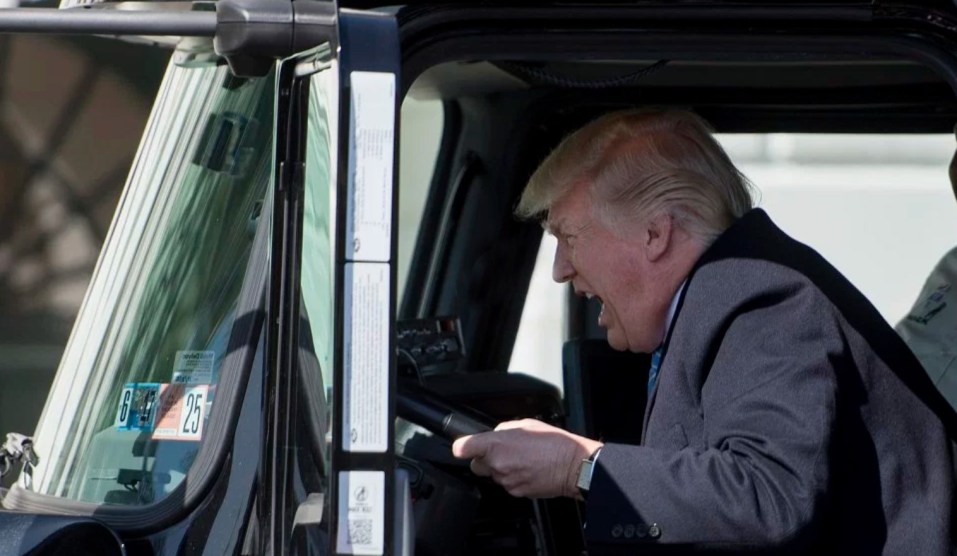
    Fun and games is great, but will Trump come through when truck drivers really need his signature?

    As we all know, Donald Trump is a champion of the common man, the truckers and miners and butchers and bakers who keep our great nation running. That makes it odd that he’s been so silent about this:

    U.S. senators are gearing up for a battle over how to fix the pensions of about 1.3 million retirees and workers in trucking, mining and other industries. These workers are covered by what are known as multiemployer pension funds, which are maintained under collective-bargaining agreements between a union and several different employers. The plans in the worst financial condition are short an estimated $100 billion to pay out retirees.

    Late Wednesday, the Democratic-controlled House of Representatives approved a $48.5 billion package that offers forgivable loans to the most troubled plans. Senate Democrats introduced the same legislation Wednesday. But the Senate proposal is unlikely to gain the necessary votes from Republicans, according to analysts and government officials.

    As usual, when it comes down to actually helping the working class, Republicans head for the hills. A trillion-dollar tax cut for corporations and the rich is one thing, but $50 billion for the retirements of miners and truck drivers who have been screwed by corporations and the rich? That’s a budget buster, my friends.

  • Car Industry Goes Behind Trump’s Back, Cuts Mileage Deal

    Kevin Drum

    Oh my, what will Donald Trump do now?

    Four automakers from three continents have struck a deal with California to produce more fuel-efficient cars for their U.S. fleets in coming years, undercutting one of the Trump administration’s most aggressive climate policy rollbacks. The compromise between the California Air Resources Board and Ford, Honda, Volkswagen and BMW of North America came after weeks of secret negotiations and could shape future U.S. vehicle production, even as White House officials aim to relax gas mileage standards for the nation’s cars, pickup trucks and SUVs.

    So the car folks were meeting in secret to avoid Trump’s wrath and now they have a deal to increase mileage standards. This means that California has something they like, the car folks have something they like, and Trump is left with nothing to do except hold his breath until his face turns blue. Will Mr. “cleanest air in the world” insist on killing an agreement that would clean up the air even more and reduce our dependence on foreign oil?

    Probably. Wait and see.

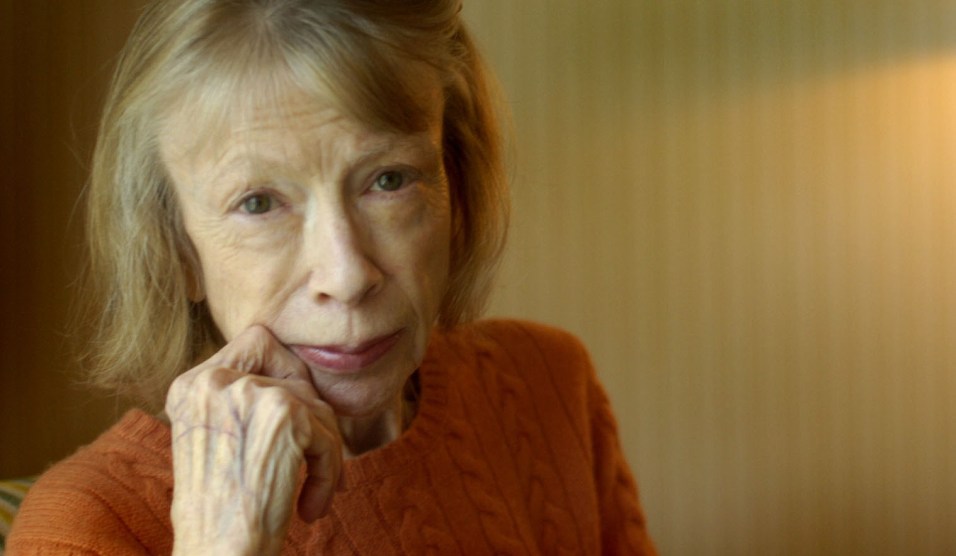
  • California and Joan Didion

    Michael A. Jones/Sacramento Bee/ZUMA

    For some reason, a few days ago I started musing about which people best represented California in various endeavors. That is, not which people did the most or were the most influential, but the ones who make you go “Ah, yes, California!” when you hear their names.

    Obviously everyone’s list would be different, but I’d toss out Ansel Adams (photography), Walt Disney (filmmaking), the Beach Boys or Dr. Dre (music), John Steinbeck (writing), David Hockney (painting), Steve Jobs (business), Billie Jean King (sports), and Sean Penn (acting).

    But what about nonfiction essayists? There are a bunch of candidates, but I’d most likely choose Joan Didion. And yet, I’ve never read any Joan Didion. So I decided to do that. And I was surprised.

    What surprised me was how uninsightful her essays were. I started with The White Album, written in the ’70s, and most of the pieces struck me as little more than well-crafted book reports. The Getty museum is controversial. Diamond lanes are clogging up the Santa Monica Freeway. Water is important to California farmers. Random folks in LA do ordinary, random stuff. There’s no serious reporting in any of them and nothing that goes more than an inch beneath the surface. Even when Didion has a chance to talk to people and learn something that might not be obvious, she foregoes it.

    All of this is gussied up with absurdly melodramatic descriptions of ordinary life. After a few days in hot, humid Cartagena, for example, she decides she has to go to Bogotá. She just has to go:

    Maybe that is the one true way to see Bogotá, to have it float in the mind until the need for it is visceral, for the whole history of the place has been to seem a mirage, a delusion on the high savannah, its gold and its emeralds unattainable, inaccessible, its isolation so splendid and unthinkable that the very existence of a city astonishes.

    This was written in 1974, at which point Bogotá was 400 years old and had a population of over 3 million. And it’s not just Bogotá. In shopping malls, “one moves for a while in an aqueous suspension not only of light but of judgment, not only of judgment but of ‘personality.’ ” Hoover Dam would someday be “a dynamo finally free of man, splendid at last in its absolute isolation, transmitting power and releasing water to a world where no one is.” Also: migraines are bad, Hollywood accounting is weird, and Doris Lessing is sort of didactic.

    I could have saved myself some of my surprise if I’d read Slouching Toward Bethlehem first. In the preface, she tells us all about herself: “I am bad at interviewing people. I avoid situations in which I have to talk to anyone’s press agent. I do not like to make telephone calls, and would not like to count the mornings I have sat on some Best Western motel bed somewhere and tried to force myself to put through the call to the assistant district attorney.”

    And that’s not the half of it. For a profile of John Wayne, she actually does conduct an interview: she and her husband have dinner with Wayne and his wife. But if she gained even a scintilla of insight during that dinner, it never made its way into print. Instead, after a few drinks, we get this: “And then something happened. Suddenly the room seemed suffused with the dream, and I could not think why. Three men appeared out of nowhere, playing guitars. Pilar Wayne leaned slightly forward, and John Wayne lifted his glass almost imperceptibly toward her.”

    I wouldn’t mind the purple prose so much if there were some real meat underneath. And some of the essays are fine. The title piece of Slouching Toward Bethlehem is pretty good, though its one note doesn’t really sustain its length. There’s a piece on Joan Baez that’s interesting (and one on Howard Hughes that isn’t), and a nice, short meditation on Georgia O’Keefe. And there are bits and pieces strewn around that are worth reading.

    But overall? It’s a veneer of craftsmanship hiding an almost total lack of substance. And that surprised me. Based on Didion’s reputation, I expected more.

    Why bring up a couple of books that are half a century old just to gripe about them? No reason, really, except that I happened to have read them this week. And if Joan Didion is no longer on my list as the best representative of California essayists, who should it be? Carey McWilliams? Rebecca Solnit? Mike Davis? No one?

  • Quote of the Day: Amazon Has Destroyed Retail Sales

    Our Treasury secretary is all in favor of the Justice Department’s antitrust review of online platforms:

    Treasury Secretary Steven Mnuchin said Wednesday that he supported the Justice Department’s efforts to look into Amazon, because the tech giant has “destroyed the retail industry.”

    “I think if you look at Amazon, although there are certain benefits to it, they’ve destroyed the retail industry across the United States, so there’s no question they’ve limited competition,” Mnuchin said during an interview on CNBC. “There’s areas where they’ve really hurt small businesses.”

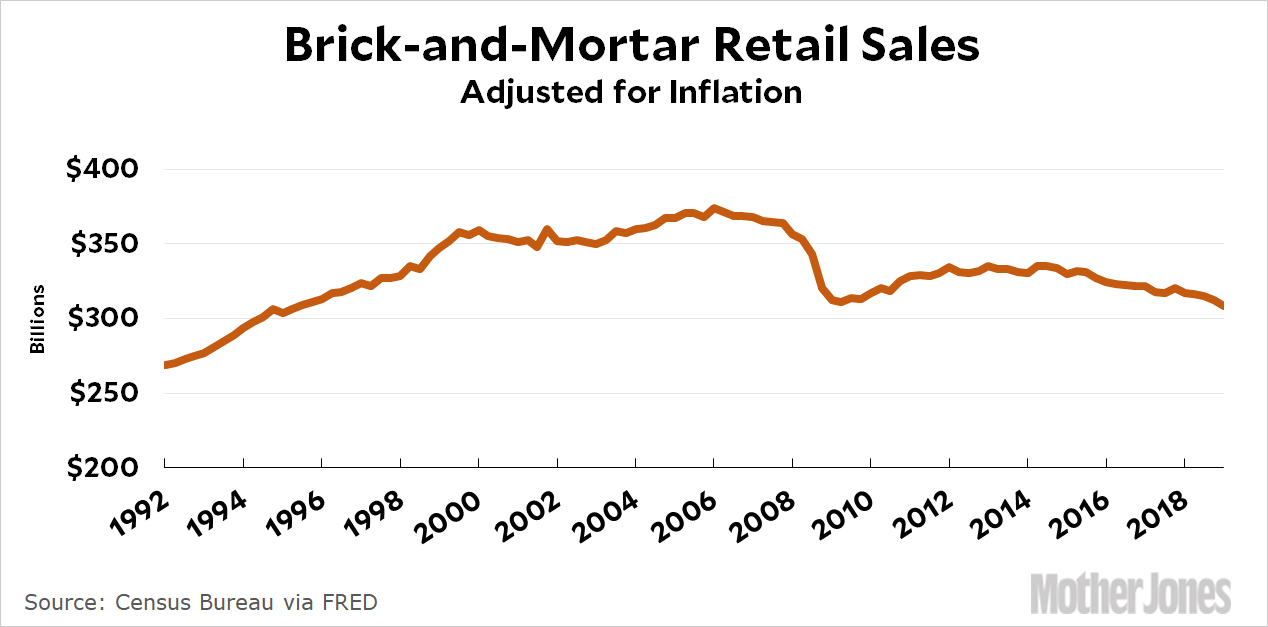
    Is this true? Here’s the raw data:

    There’s no question that online shopping has hurt traditional retail sales, but “destroyed” seems a little apocalyptic, no?

    If the Justice Department wants to investigate Amazon for, say, unfairly monopolizing the e-commerce space, that’s fine. Go get ’em. But if the “problem” is that consumers have a growing preference for shopping one way rather than another, then forget it. That’s not something the federal government needs to be involved in.

  • Kamala Harris Is Working In a Great American Tradition

    Jeremy Hogan/SOPA Images via ZUMA

    Jim Geraghty thinks that Kamala Harris is vulnerable:

    The soft underbelly of the Harris campaign is her flip-flops and the general sense that she’ll say whatever she needs to say to please the audience in front of her. She hit Joe Biden for opposing a federal mandate for bussing but later said she herself wouldn’t support a federal mandate. In a January town hall, she said she supported eliminating private insurance but then backtracked a few days later. At the first debate, she raised her hand indicating she would eliminate private insurance, then said afterwards she misunderstood the question. She said she wouldn’t raise middle-class taxes to pay for Medicare for All, a stance that Jeff Weaver of the Sanders campaign amounts to “unicorns and magic wands.”

    She’s flipped positions on some parts of immigration enforcement policy as well. She now says she supports independent investigations of police shootings, when she opposed them as a Senate candidate in 2016.

    I don’t think Geraghty is wrong, precisely, but I do think he’s drawing the wrong conclusion here. As much as we all hate to believe it, vagueness and pandering on the campaign trail are generally helpful. It certainly helped Trump, who flip-flopped on so many things it was hard to tell if he was even the same person as he was a few years before. It helped Bill Clinton and it helped George Bush. Conversely, candidates like Bernie Sanders and Elizabeth Warren are the ones who will probably get into trouble eventually for being too stubborn to water down proposals that turn out to be albatrosses.

    There’s a case to be made that this is fine: as president we want someone who’s flexible and willing to make deals, not a rigid ideologue. There’s an equally obvious case to be made that it shows a lack of firm character. Take your pick. But as long as it doesn’t get out of hand, I don’t think there’s much of a case to be made that it’s an electoral weakness. In fact, it’s practically a great American tradition.

  • Trump and Article II, Explained

    Earlier today Donald Trump gave a speech at the Turning Point conference where he said, “I have an Article II where I have the right to do whatever I want as president.” But what was this all about? What was the context?

    It turns out that Trump was freewheeling about the Mueller report, telling the rapt audience that Mueller interviewed 500 people, issued 2,500 subpoenas, etc:

    They did everything. The collusion, no collusion, they have no collusion. Then I have an Article II where I have the right to do whatever I want as president, but I don’t even talk about that. Because they did a report, and there was no obstruction. After looking at it—our great attorney general read it, he’s a total professional—he said there’s nothing here, there’s no obstruction.

    So what was Trump talking about? As always, there’s no telling, really, but I assume he was referring to the fact that he’s allowed to fire executive branch officers if he wants to. In other words, firing James Comey was within his Article II powers, so it can’t represent obstruction of justice. Likewise, he could have fired Mueller if he’d wanted to.

    That’s my best guess, anyway.

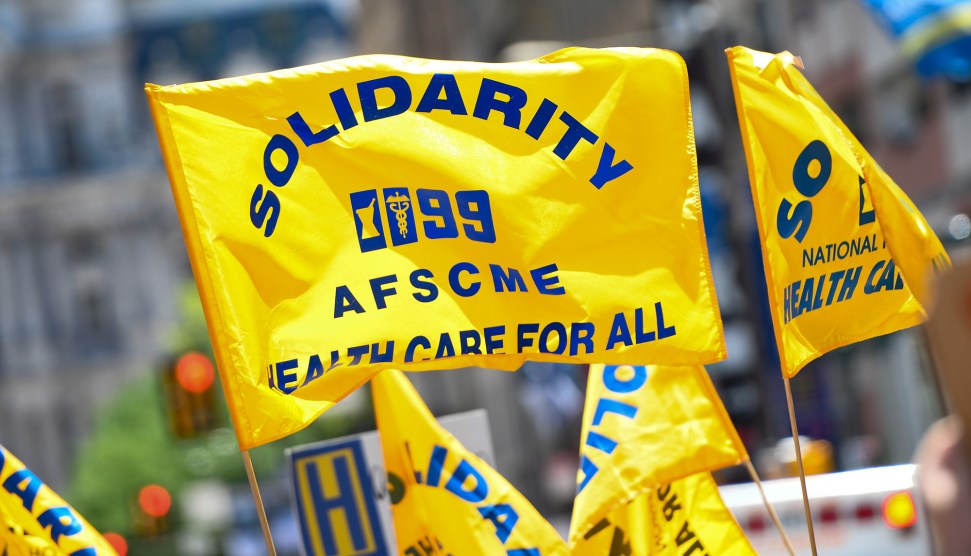
  • National Health Care Is Free

    Better not tell these guys that you want to cut health care costs by paying nurses less.Ricky Fitchett/ZUMA

    This is your periodic reminder that national health care is free.

    Here’s what I mean. This year we’ll spend about $3.8 trillion on health care. Of that, about half comes from the government in the form of Medicare, Medicaid, CHIP, the VA, etc. The other half is mostly paid by consumers, either directly or via their employers.

    If we had a national health care plan today, we would spend about . . . $3.8 trillion. The only difference would be in how we pay it. We could make employers pay a head tax. We could take employers out of the picture altogether and pay for it via income tax or a VAT or a payroll tax. Or we could invent some insane Rube Goldberg system of raising the money, which is probably what would happen in real life.

    There are, of course, optimists out there who think that national health care would save us money. These people are dreamers. You see, the vast bulk of health care spending goes to providers. This means that the only way to reduce spending is to pay doctors less, pay nurses less, pay drug companies less, and pay device manufacturers less. This will not happen, and anyone who’s serious about national health care would be insane to try. Why put up an enormous barrier to success, after all?

    The one thing we probably could do is get rid of insurance companies, which would save a bit of money—probably about enough to make up for the cost of adding the remaining uninsured to the system. So in the end it comes out even after all.

    And that’s that. Within a reasonable range of error, national health care is free. It doesn’t matter if it’s Joe Biden’s plan or Bernie Sanders’ plan or anyone else’s plan. We’d still spend $3.8 trillion. The only question is precisely where and from whom the money comes from.