• Facebook F’s It Up Again

    Here’s the latest from Facebook:

    For years, Facebook has been badgering its users to set up two-factor authentication, which is indeed considered best practice for online security. This requires you to give Facebook your phone number so that they can text you a passcode to log in to your account.

    But last year we learned that Facebook had made all these phone numbers available to advertisers so they could target ads. Now it turns out that even if you never added it to your profile, other people can still look you up via your phone number.

    Is this a big deal? In and of itself, maybe not. But there are two big harms here anyway. First, Facebook has once again revealed personal information without asking permission. The default should be to keep security information completely private unless you explicitly give permission to share it. But in this case it’s not. And not only is the default set to make it shareable, there’s not even a way to change it once you discover what’s going on.

    Second, this kind of behavior will rightfully make people suspicious of security enhancements. It’s in everyone’s best interest to improve online security, and we should always feel confident that online companies are at least doing their best to keep our security information safe and private. Once again, though, Facebook has blown up this implicit contract in order to improve its bottom line by a few dollars. Nice work, guys.
  • Raw Data: The US Inflation Rate Is Currently 1.5%

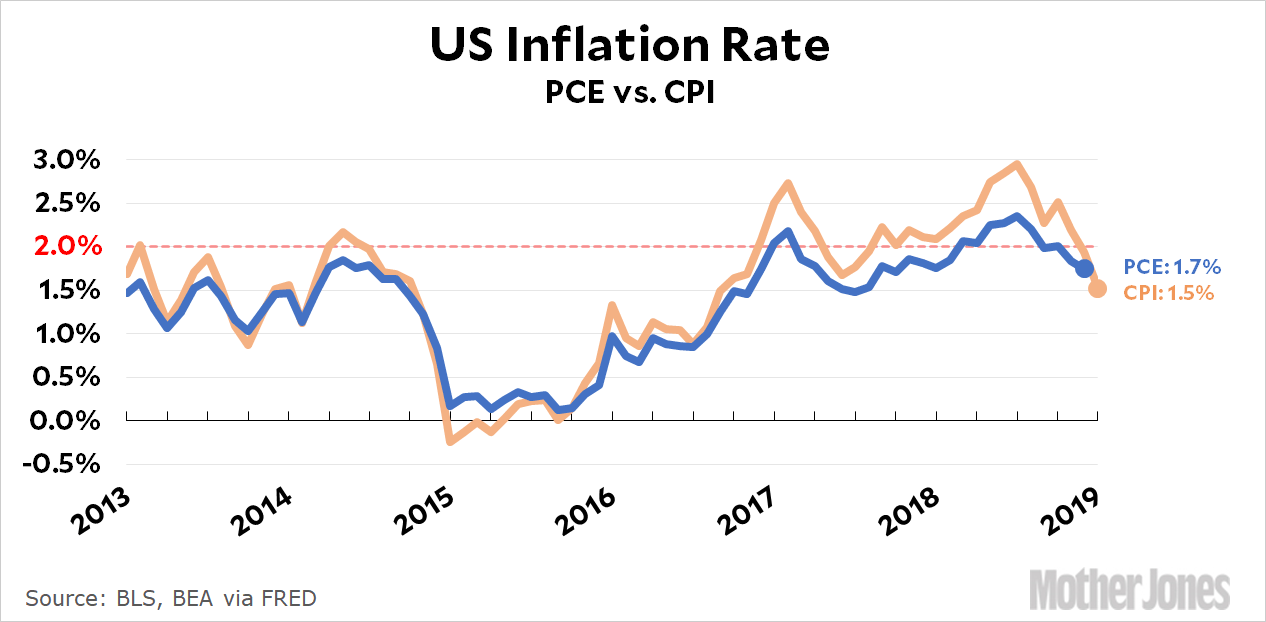
    In case you’re curious, here are the latest measures of inflation in the United States:

    CPI is the usual Consumer Price Index, the one you see reported in your newspaper every month. PCE is the Personal Consumption Expenditure price index, the one used by the Fed when they set monetary policy. It’s available only through December, but it’s likely that when we get the January number it will be pretty close to the CPI figure of 1.5 percent.

    Both measures peaked last July and have been dropping ever since. In particular, the PCE index was above the Fed’s target of 2 percent for only a few months. It fell below the target in September and has stayed below it ever since.

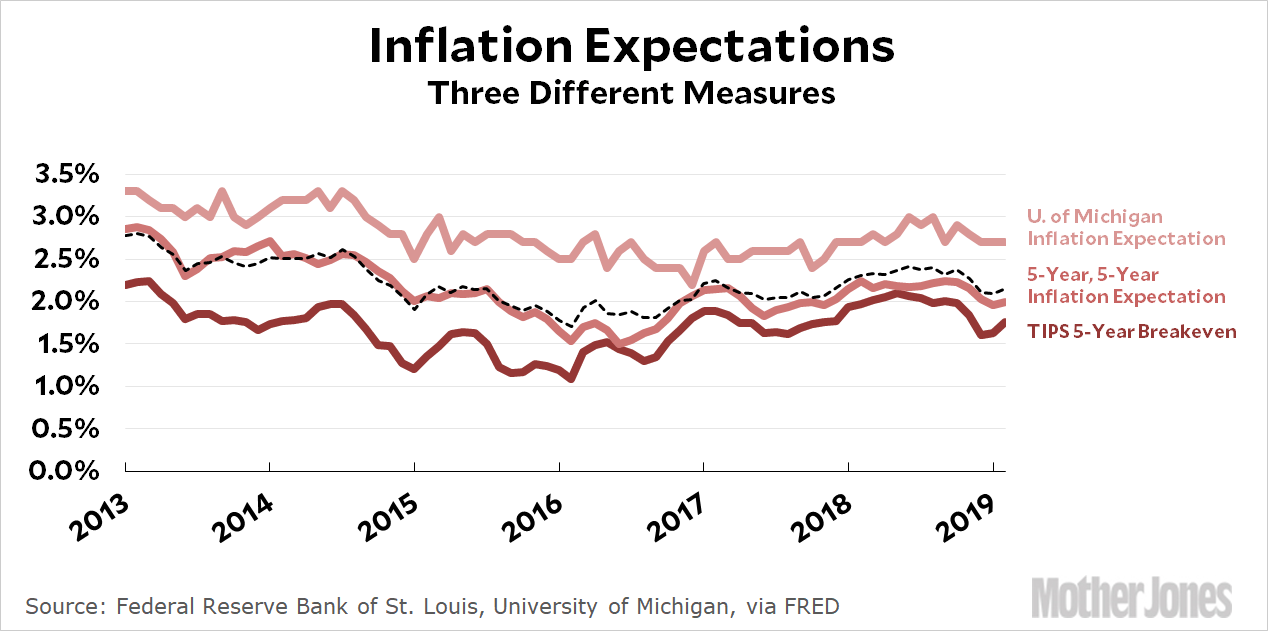
    Future inflation expectations have hovered between 2-2.5 percent for the past two years. The average of three different measures (the dashed line in the chart below) is currently a hair above 2 percent:

  • Raw Data: Incomes of Wage and Salary Workers

    Here’s the latest from the president’s Council of Economic Advisers:

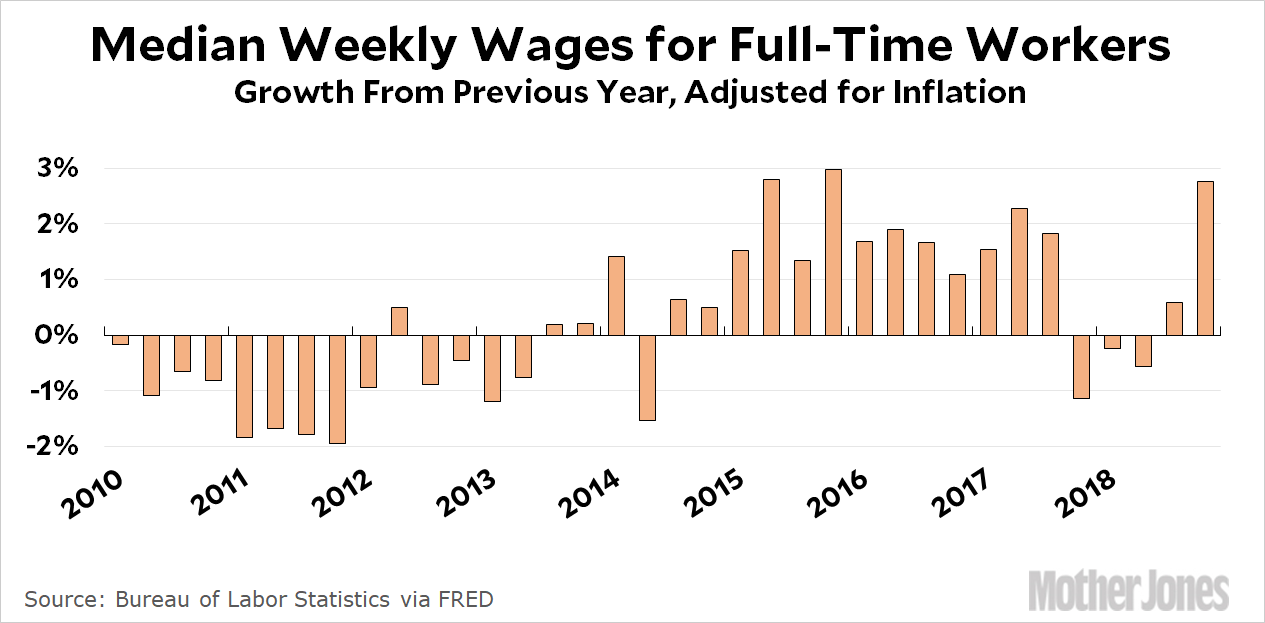
    It goes without saying that this is misleading. After all, it’s from the White House. If you’re interested in actual wage growth—i.e., adjusted for inflation—here it is:

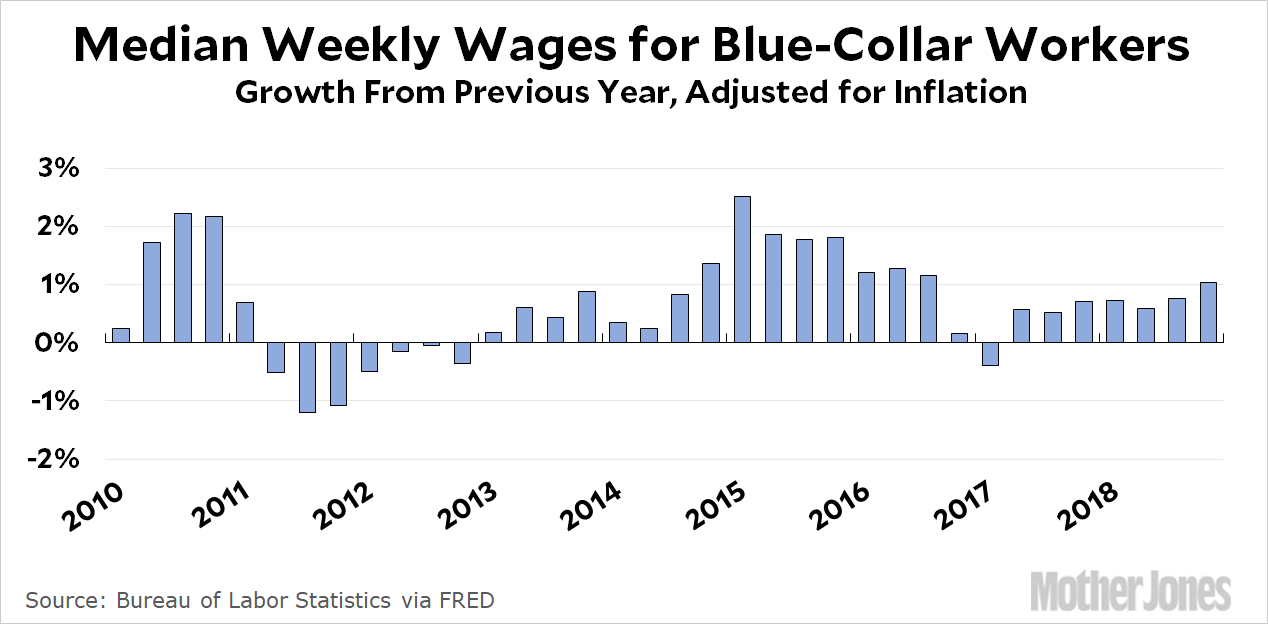
    The last quarter of 2018 was pretty good, but it’s the only quarter of decent wage growth in the past year. Here’s the same chart for blue-collar (i.e., production and nonsupervisory) workers:

    This is supposedly Trump’s base, and he’s done nothing for them. He talks a good game, but that’s all.

  • Atlanta Fed’s Robot Gets Suddenly Skittish About the Economy

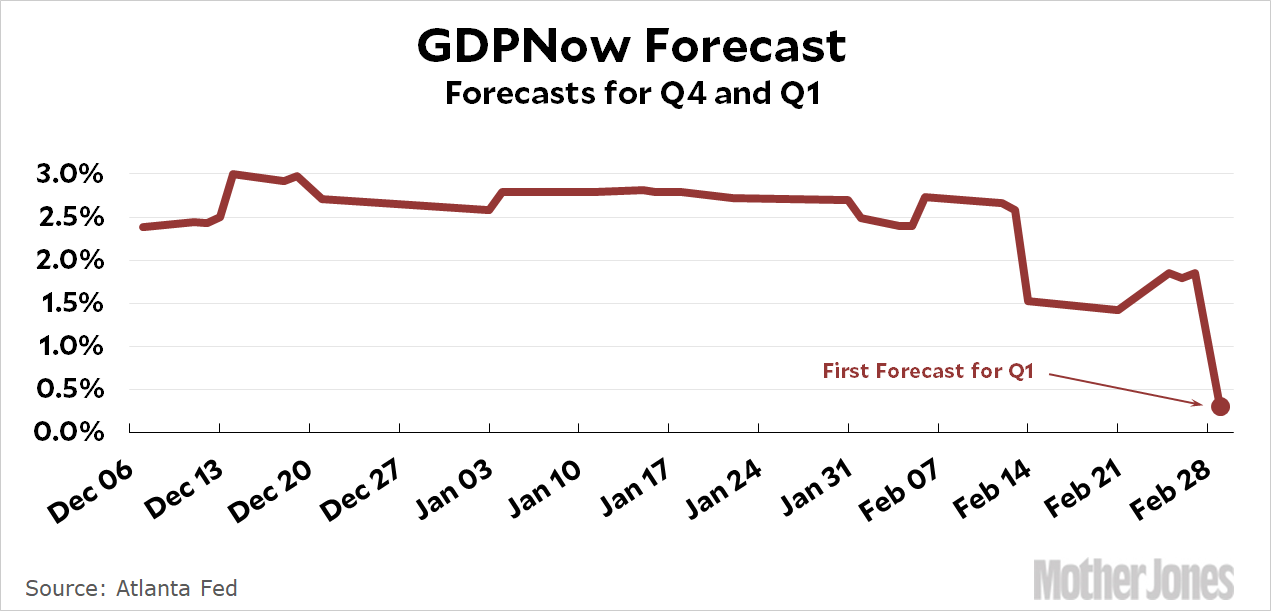
    Every few days the Atlanta Fed releases an estimate of GDP growth as of that moment. It’s normally in rough agreement with the blue-chip consensus, but not always. Take today, for example:

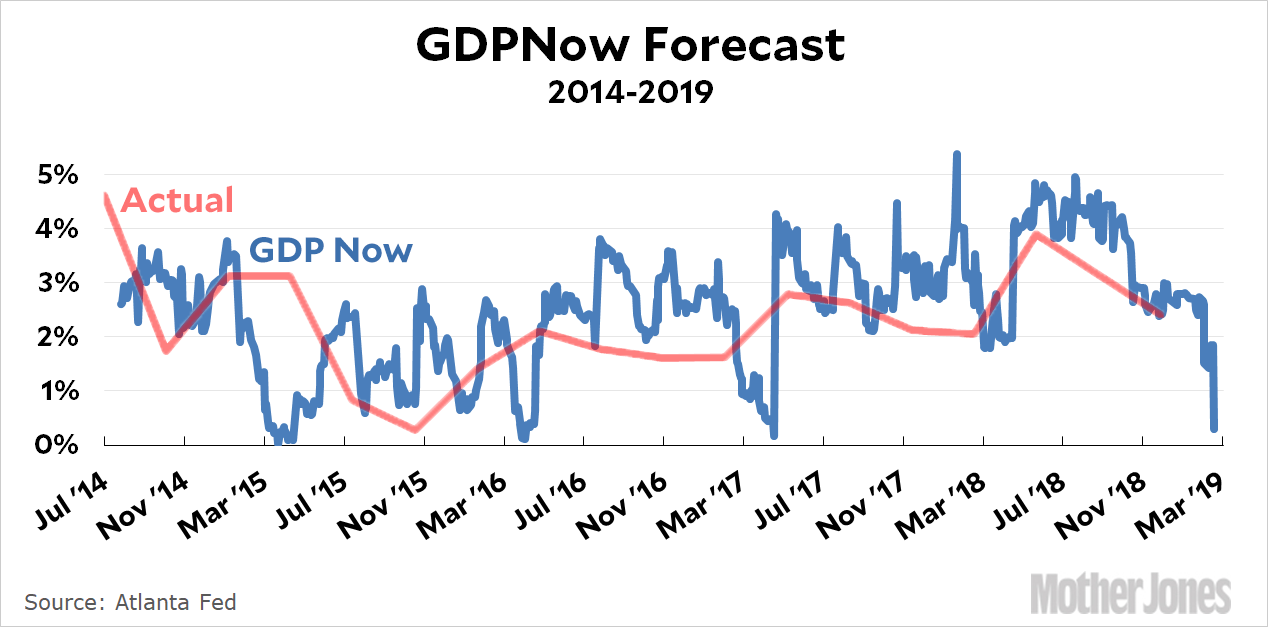
    Two weeks ago, the GDPNow forecast dropped dramatically when the retail trade report for December came out. As it happens, that led to a less accurate forecast, since GDP growth in Q4 of 2018 ended up at 2.6 percent, well above the final GDPNow forecast of 1.9 percent.

    But if the GDPNow algorithm got suddenly bearish two weeks ago, it slid into the abyss today: its initial “nowcast” for the first quarter of 2019 has plummeted to 0.3 percent. This is recession territory. You can decide for yourself how seriously to take this, and maybe on Monday we’ll get a sunnier forecast. But if you’re curious about how accurate the GDPNow forecast is, here’s a quick look:

    Obviously GDPNow is much more volatile than the actual quarterly estimates from the BEA, but they’re usually in the same ballpark. Sudden spikes up and down are sometimes accurate and sometimes not. On the other hand, the three previous drifts downward to near zero were all missed calls, so maybe this one will be too. Stay tuned.

  • Why Is Teen Suicide Up?

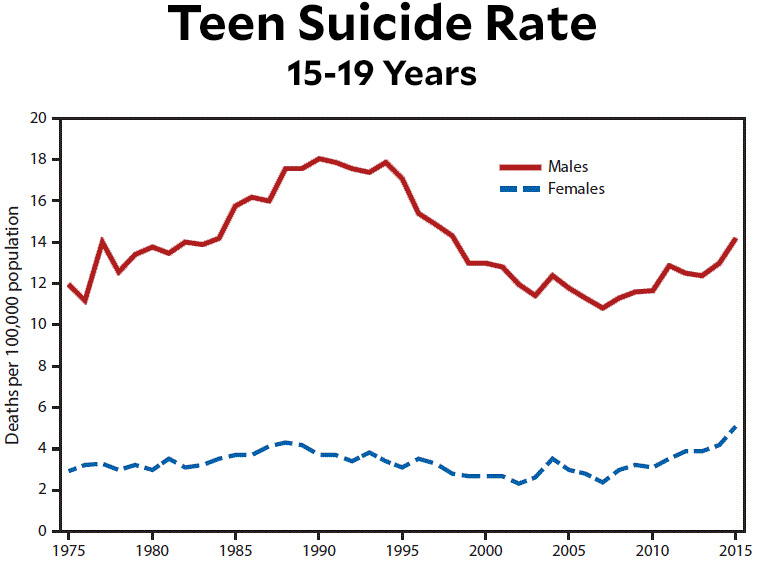
    Over on Twitter, I was in a conversation that mentioned the notion that Facebook (or social media in general) has contributed to a rise in teen suicide. This got me curious about what the teen suicide rate really is. Here are the numbers from the CDC:

    For both boys and girls, the teen suicide rate has increased steadily since 2007, which makes social media a plausible cause at first glance. However, among boys this means only that the teen suicide rate has bounced back to its rough average over the past 40 years. Among girls, the rate is still quite low, but clearly higher than it’s ever been before.

    It’s obviously bad news that the teen suicide rate is increasing, but the context of 40 years makes it a little less clear if we’re in the middle of an “epidemic” of teen suicide. Among teen boys, the suicide rate is now 25 percent lower than it is for middle-aged men, compared to 20 percent lower in 1999. Among teen girls, it’s 40 percent lower than it is for middle-aged women, compared to 50 percent lower in 1999. Put all this together, and it looks more like we have a general suicide problem, with nothing too special about teens compared to other age groups. This in turn suggests that we need to look for a more general cause, not one that’s specific to teens (or to other age groups, for that matter).

  • Lunchtime Photo

    Marian says this is a canna, which sounds to me more like the name of a Roman battle site than the name of a flower. The cats think it sounds like half of a cannatuna. The British think it sounds like a hobo version of a cuppa. But I guess it’s none of those things. It’s just a plain old canna.

    December 9, 2018 — LA County Arboretum, Arcadia, California
  • The Great Rehab Scam

    This is from the latest issue of the print magazine:

    I’ve already read Julia’s piece because I’m special and I get early copies of the magazine. If you subscribe to Mother Jones, you’ve seen it already too. But if you don’t, it’s now online and you really ought to read it. It’s an eye-opener.