• Here’s How Trump Blew $100 Million on His Inauguration

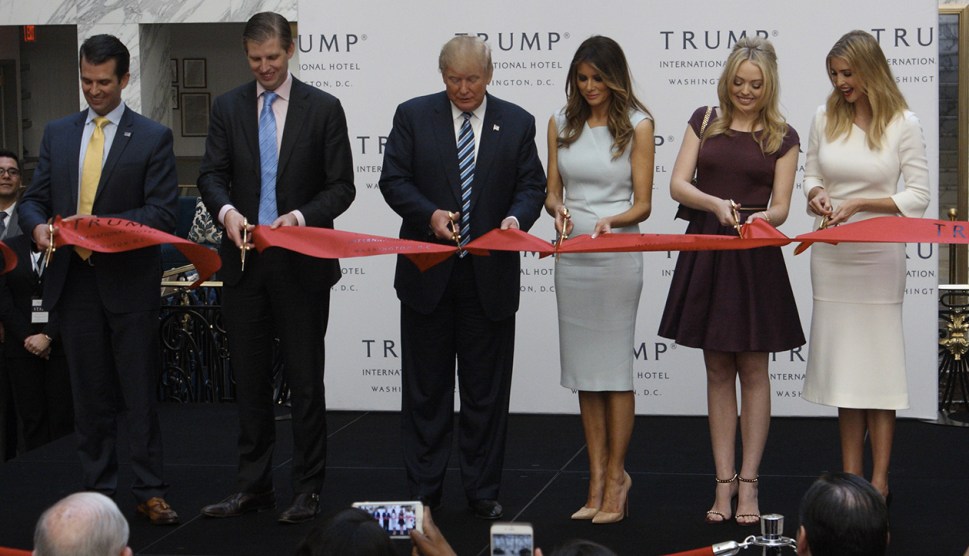
    Remember this delightful scene a month before the election? It came just a few weeks after Trump conned every cable news network into giving him big coverage for a "birther announcement" that turned out to be just Trump announcing the opening of his hotel.Evan Golub/ZUMA

    How did Donald Trump’s inauguration committee manage to blow through $100 million, more than twice as much as any other inauguration in history? Part of the answer, apparently, was that they essentially kicked back big chunks of it to the boss:

    A spokesman confirmed that the nonprofit 58th Presidential Inaugural Committee paid the Trump International Hotel a rate of $175,000 per day for event space — in spite of internal objections at the time that the rate was far too high….“Please take into consideration that when this is audited it will become public knowledge,” wrote Stephanie Winston Wolkoff, an experienced New York-based event planner, suggesting a fair rate for the event spaces would be at most $85,000 per day, less than half of what was ultimately paid.

    They used the hotel for four days, so that comes to about $360,000 in pure extra profit for Trump’s Hotel. And since Trump owns the hotel outright, that means $360,000 went straight into his pockets. Ka-ching!

    But I’m sure there was nothing wrong with this because when the president does it, it’s not illegal. Amirite?

  • Are We Making Progress on the Border Barrier?

    K.C. Alfred/San Diego Union-Tribune via ZUMA

    The Washington Post claims that congressional negotiators are nearing a compromise deal on the wall:

    Two people familiar with the talks said the understanding among Republicans is that the deal would offer around $2 billion for border barriers. The people spoke on the condition of anonymity to describe the private deliberations.

    Democrats disputed that figure. “Negotiations are ongoing and both sides are exchanging offers. Throughout the talks, Democrats have insisted that a border security compromise not be overly reliant on physical barriers. We will not agree to $2 billion in funding for barriers,” said Evan Hollander, a spokesman for House Appropriations Chairwoman Nita Lowey (D-N.Y.).

    Hmmm. The Democratic position seems to have changed from “not one penny for a wall” to “no overreliance on physical barriers.” Progress!

    The rough consensus seems to be that a wall barrier on the southern border costs about $20 million per mile, so $2 billion would buy us another 100 miles or so. That would be 1/13th of the 1,300 miles that are currently unfenced, or about 8 percent. That seems like it might count as “not overly reliant.” Or, looked at another way, if the compromise included a large total sum of money—say $10 billion or so—then the barrier money would account for only 20 percent of the total. That might also count as “not overly reliant.”

    Of course, it also sounds like we might have to come up with a new name for “barrier.” How about “material instantiation of multi-component international border restriction,” or MIMCIBR? It kind of rolls right off the tongue, doesn’t it?

  • An Urban Plan Nearly Everyone Can Love: “Yes In Your Backyard”

    I really and truly have nothing against former LA Times editor Bill Boyarsky, but I wonder if he really understands how his recent op-ed in the Times comes off. He starts by describing the leafy, bucolic neighborhood near UCLA that he moved into 40 years ago when such places were still affordable to middle-class families:

    My neighborhood is exactly the kind of place urban planners think should be part of the solution. With an Expo Line station less than a mile away, it’s near transit….I would like to be part of the solution, but I’d also hate to see the quiet streets of my neighborhood suddenly sprouting four- and five-story apartment houses….One possible way forward is being championed by a new movement of Californians who call themselves YIMBYs (for Yes In My Backyard).

    ….Leading the YIMBY effort legislatively is Democratic state Sen. Scott Weiner, who represents San Francisco, a city hard hit by high housing costs. He has introduced a bill, SB50, that would require cities to incentivize construction of four- to five-story apartment houses within half a mile of transit train stations and within a quarter-mile of heavily used bus lines.

    ….Many of today’s neighborhoods zoned strictly for single-family homes are rooted in [our racist] past. It’s time for homeowners across the city to open them up, adding housing that will make all parts of the city more economically and ethnically diverse — and make the city work better for all its residents.

    In short, Boyarsky lives a mile away from transit, so he supports a plan that would spur higher density construction only within half a mile of transit. Under this plan, his neighborhood will be untouched, while others will get exactly the kind of development he says he doesn’t want near him.

    This isn’t YIMBY, it’s YIYBY—Yes In Your Backyard. In other words, it’s exactly what we have now. It hardly needs any help.

  • Here Is the Green New Deal in Handy List Form

    I gather that Matt Whitaker is being quite the asshole in his testimony before Congress today:

    Sadly, I didn’t watch the hearing. However, Hannah Levintova has more here.

    In the meantime, I thought I would compile a list of everything included in the Green New Deal that was released yesterday. This is just for future reference:

    1. Commit to net zero greenhouse gas emissions within ten years
    2. Provide “millions” of good, high-wage jobs
    3. Repair and upgrade US infrastructure
    4. Provide everyone with access to clean air and clean water
    5. Repair historic oppression of indigenous peoples, communities of color, migrant communities, deindustrialized communities, depopulated rural communities, the poor, low-income workers, women, the elderly, the unhoused, people with disabilities, and youth
    6. Protect against extreme weather events
    7. Eliminate pollution and greenhouse gases “as much as technologically feasible”
    8. Meet 100 percent of power demand via renewable and zero-emission sources
    9. Upgrade to smart grids
    10. Upgrade all existing buildings for maximum energy efficiency
    11. Invest in public transit and high-speed rail
    12. Mitigate the long-term health effects of pollution and climate change
    13. Restore fragile ecosystems
    14. Clean up hazardous waste sites
    15. Provide higher education to all
    16. Invest in R&D of new energy technologies
    17. Build wealth, community ownership, and good jobs in marginalized communities
    18. Create union jobs that pay prevailing wages
    19. Guarantee living wage to everyone
    20. Guarantee family and medical leave, paid vacations, and retirement security to everyone
    21. Improve union bargaining strength
    22. Strengthen labor and workplace safety standards
    23. Enact trade rules that increase jobs but don’t transfer pollution overseas
    24. Reform the use of eminent domain
    25. Ensure that all business are free from unfair competition
    26. Provide all people of the United States with high-quality health care
    27. Provide all people of the United States with good housing
    28. Provide all people of the United States with economic security
    29. Provide all people of the United States with healthy and affordable food
    30. Provide all people of the United States with access to nature

    This is really more of a social democratic manifesto than a climate change plan. Perhaps instead of Green New Deal, it should just be called “Finish Up the New Deal”?

  • Have You Chosen the Right Preschool For Your Kids Yet?

    Pamela Druckerman reports that helicopter parenting works a treat. It turns out that in a world dominated by huge income inequality, obsessing over your kid’s preschool is totally the right thing to do:

    For the most part, the new parenting efforts seemed effective. Dr. Doepke and Dr. Zilibotti can’t prove causality (to do that, you’d have to randomly assign parenting styles to different families). But when they analyzed the 2012 PISA, an academic test of 15-year-olds around the world, along with reports from the teenagers and their parents about how they interact, they found that an “intensive parenting style” correlated with higher scores on the test. This was true even among teenagers whose parents had similar levels of education.

    It’s not enough just to hover over your kids, however. If you do it as an “authoritarian” parent — defined as someone who issues directives, expects children to obey and sometimes hits those who don’t — you won’t get the full benefits. The most effective parents, according to the authors, are “authoritative.” They use reasoning to persuade kids to do things that are good for them. Instead of strict obedience, they emphasize adaptability, problem-solving and independence — skills that will help their offspring in future workplaces that we can’t even imagine yet.

    And they seem most successful at helping their kids achieve the holy grails of modern parenting: college and postgraduate degrees, which now have a huge financial payoff. Using data from a national study that followed thousands of American teenagers for years, the authors found that the offspring of “authoritative” parents were more likely to graduate from college and graduate school, especially compared with those with authoritarian parents. This was true even when they controlled for the parents’ education and income.

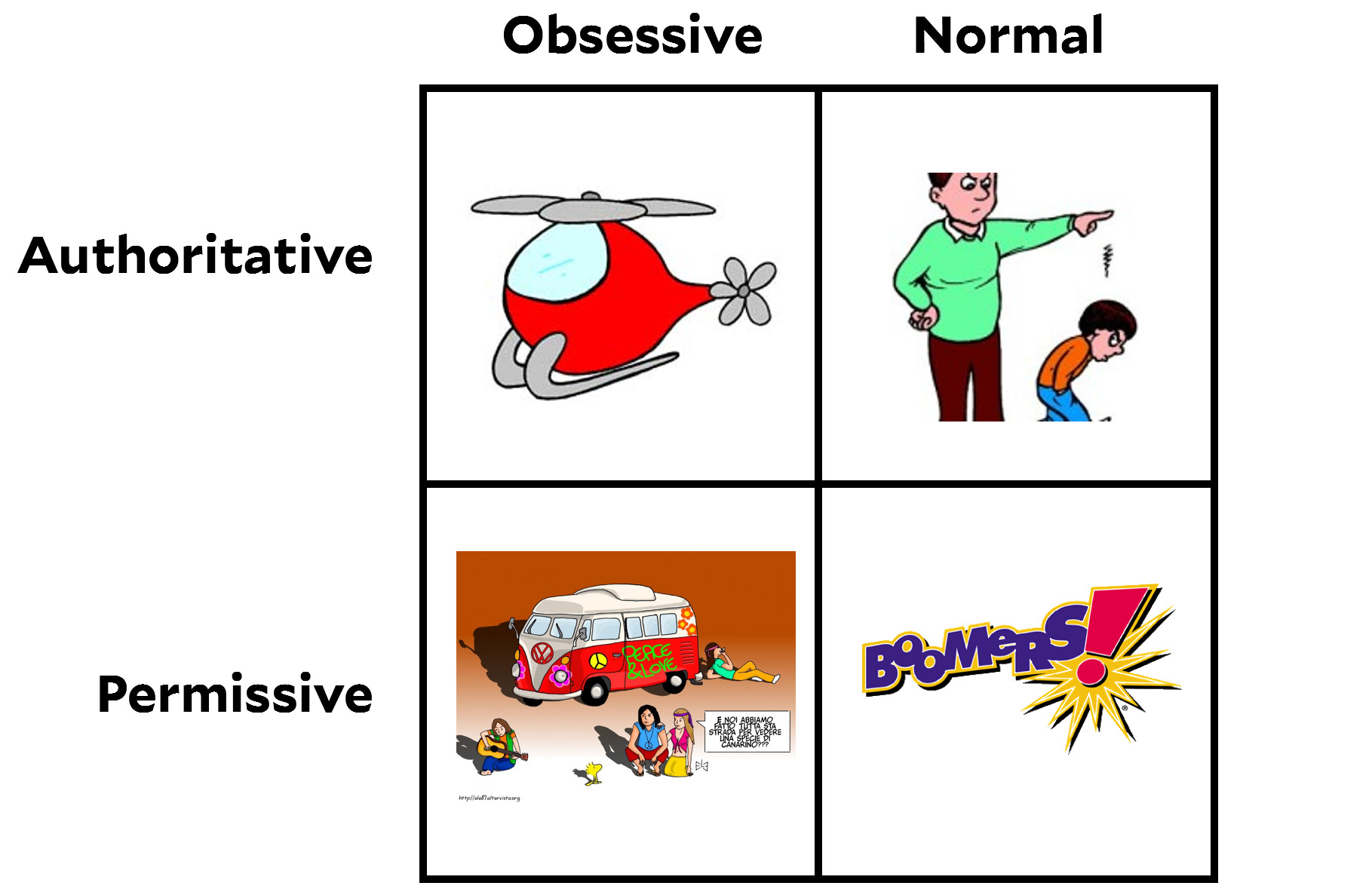
    Hmmm. I’d say my parents were authoritative but not obsessive. In fact, I feel a BCG matrix coming on:

    Which kind of parent are you?

  • Lunchtime Photo

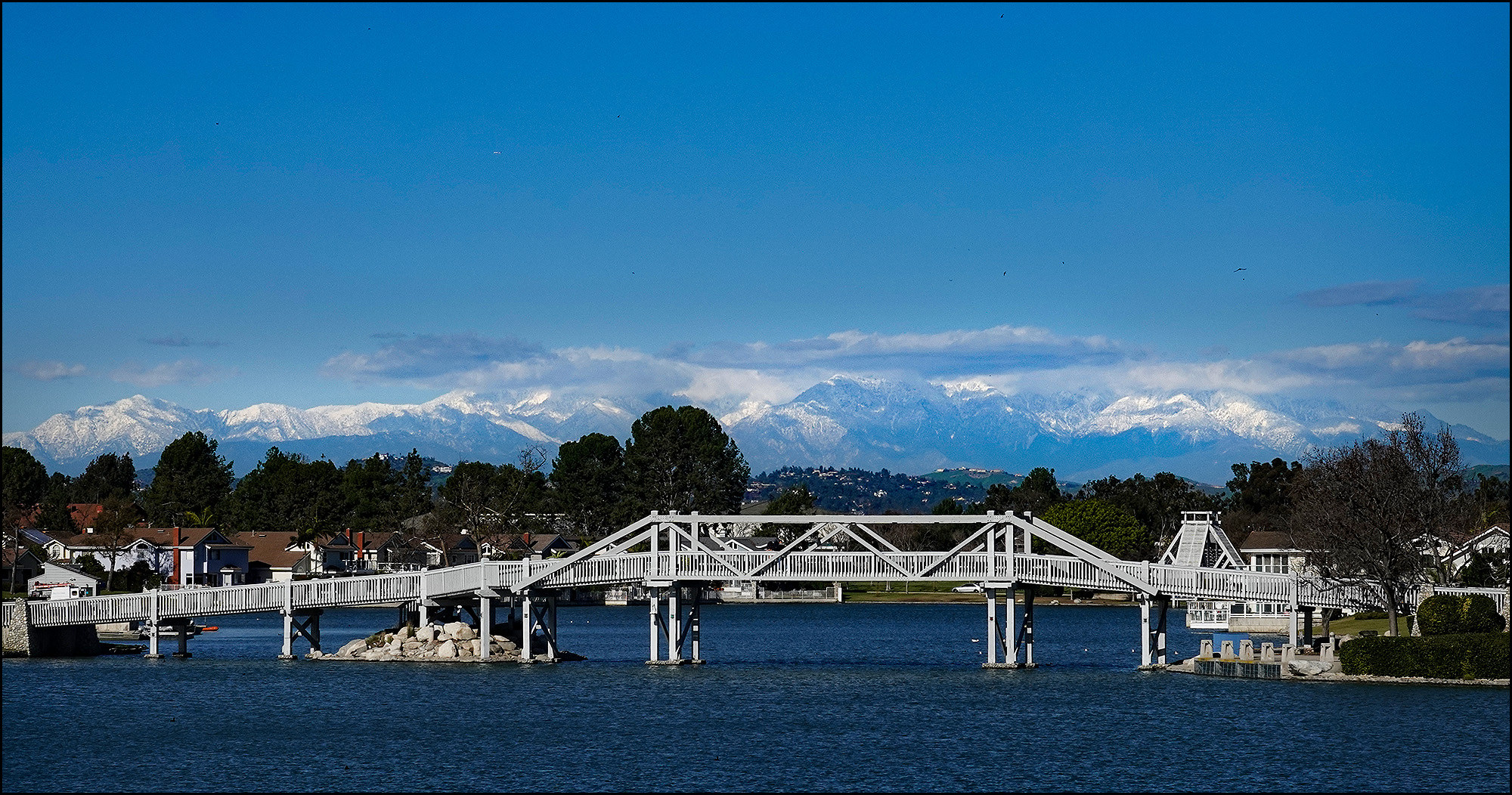
    Here’s a view of our local mountains taken on Wednesday after a week of rain and snow. To get a sense of what a relief this is, compare it to a similar photo from last year, which was the best I got all winter. Instead of just a light dusting of snow on Mt. Baldy, this year we have lots of snow covering all of the San Gabriel mountains. Not only is it lovely, but it means that for this year, at least, reservoirs will be full and everyone will have plenty of water.

    February 6, 2019 — Irvine, California
  • The Green New Deal Is Out—But It’s Still Kind of Hazy

    The Green New Deal is out. It’s a “sense of Congress” resolution, not actual legislation, so it doesn’t contain the kind of detail you’d find in a real bill. Section 2 contains the meat of the resolution:

    (A) building resiliency against climate change-related disasters, such as extreme weather, including by leveraging funding and providing investments for community-defined projects and strategies;

    (B) repairing and upgrading the infrastructure in the United States, including—(i) by eliminating pollution and greenhouse gas emissions as much as technologically feasible; (ii) by guaranteeing universal access to clean water; (iii) by reducing the risks posed by climate impacts; and (iv) by ensuring that any infrastructure bill considered by Congress addresses climate change;

    (C) meeting 100 percent of the power demand in the United States through clean, renewable, and zero-emission energy sources, including—(i) by dramatically expanding and upgrading renewable power sources; and (ii) by deploying new capacity;

    (D) building or upgrading to energy-efficient, distributed, and “smart” power grids, and ensuring affordable access to electricity;

    (E) through (H) achieve maximum energy efficiency in buildings, manufacturing, agriculture, and transportation;

    (I) mitigating and managing the long-term adverse health, economic, and other effects of pollution and climate change, including by providing funding for community-defined projects and strategies;

    (J) removing greenhouse gases from the atmosphere and reducing pollution by restoring natural ecosystems through proven low-tech solutions that increase soil carbon storage, such as land preservation and afforestation;

    (K) restoring and protecting threatened, endangered, and fragile ecosystems through locally appropriate and science-based projects that enhance biodiversity and support climate resiliency;

    (L) cleaning up existing hazardous waste and abandoned sites, ensuring economic development and sustainability on those sites;

    (M) identifying other emission and pollution sources and creating solutions to remove them; and

    (N) promoting the international exchange of technology, expertise, products, funding, and services, with the aim of making the United States the international leader on climate action, and to help other countries achieve a Green New Deal.

    I understand that this is primarily an aspirational document, but I’m still disappointed that it doesn’t focus more strongly, and in more detail, on climate change, rather than encompassing every possible thing that can go under the rubric of “green.” Even for a working document like this, I’d like to see:

    • A goal for when we’ll get to 100 percent clean power generation. UPDATE: Whoops, there is a timeline: ten years for everything. Unfortunately, that’s not even in the ballpark of realistic.
    • A set of goals for specific kinds of power generation like wind and solar.
    • At least a mention of funding for science efforts to develop new methods of clean power.
    • A nod toward carbon taxes or cap-and-trade.

    I suppose the goal here is to propose something vague enough that no one will object to it. (No one who’s a Democrat, anyway.) Perhaps this is the right way to go, but I hope it’s not so fuzzy that it turns into a meaningless document that everyone can cosponsor in order to feel good about themselves, but without really making any real commitment to doing anything.

  • Enough Howard Schultz, Already

    For godssake, can we please stop paying attention to Howard Schultz? This is getting ridiculous. He’s done nothing except say that he’s thinking of maybe running for president. That might be worth a blurb on A3, but that’s about it.

    If he actually runs, he should be covered if he has anything interesting to say. So far, he hasn’t. Until then, please just shut up about him.

  • What’s Wrong With a Women-Focused Workspace?

    The Wing

    Over at Vox, Anna North and Chavie Lieber write about The Wing, a coworking space designed exclusively for women:

    When The Wing opened in 2016, coworking spaces like WeWork were already popular. But the pool tables, free booze, and what some have described as a “frat boy” culture at WeWork don’t always make women feel comfortable.

    Meanwhile, public spaces aren’t always a better option for women. Take Bracey Sherman, the reproductive justice activist, who says that because of her job, working in a coffee shop can be difficult. “It’s really exhausting to be on a conference call in a cafe and people looking at me funny because I’m saying the word ‘abortion,’” she told Vox.

    At The Wing, she said, that isn’t a problem. “The fact that I can work on a comfy couch, it smells really nice, I can say the word abortion over and over and no one side-eyes me, and that men aren’t asking me stupid questions and trying to hit on me while I’m trying to read and get my shit done, is huge,” she said.

    Sounds great! But this being the 21st century, there’s a problem:

    This sanctuary, of course, isn’t available to everyone. It’s application-only, and its $215 monthly price tag (or $250 to access all locations), though affordable in the realm of coworking spaces, puts it out of reach for many women. Per critic Kaitlyn Borysiewicz, the Wing focuses on “the advancement of a certain type of woman.”

    ….“Women of color are more likely to occupy low paying or working poor jobs,” Borysiewicz wrote, meaning they’re unlikely to be able to afford The Wing’s membership fee, and the promise of upward mobility and networking offered by The Wing is closed to them.

    ….The Wing pointed to women of color, including Nicole Gibbons, who started their businesses out of The Wing. These women say they recognize The Wing as a space that is invested in diversity. The Wing also offers two-year scholarships for those who can’t afford its membership….But, Borysiewicz asks, “why are you making underserved women compete for access to these valuable resources?” And speaking of The Wing’s founders, she asked, “why are these socioeconomically elite white women setting the criteria on what an underserved woman deserves?”

    The intersection of feminism, racism, and class is a fraught one. But it’s unclear what the problem is here. If you’re running a business in an expensive urban area—any business—it’s going to have a high price tag. There’s no way around that. And if it’s a for-profit business, that high price tag gets passed along to customers. Even at $215, my guess is that The Wing is losing money in order to build market share. There’s just no way they could cut their price to $50 or $100.

    More generally, though, there are all kinds of business models. Some are aimed at people with modest incomes (Walmart, used cars), some are aimed at the middle class (Starbucks, Toyota Camrys) and some are aimed at the rich (penthouse suites, yacht mooring). These are all perfectly legitimate businesses, and their business models are designed with their target customers in mind. The Wing’s target market is the middle class, and there’s nothing wrong with that. Shared workspaces aimed at a higher or lower price point would also be fine. But there are millions of businesses with products that are too expensive for the working poor, and that’s hardly any reason to criticize them. They fill their part in the business ecosystem.

    But then Borysiewicz gets worse, snarking about The Wing’s scholarships: “Why are these socioeconomically elite white women setting the criteria on what an underserved woman deserves?” she asks. Seriously? They make an effort to serve a certain number of lower-income women, and all they get is that?

    Has the conflict between white feminism and black feminism always been as strong as it appears to be today? I don’t know the history well enough to say. But from the outside, at least, it sure seems to be getting nastier and more destructive all the time.

  • A Morning Listicle: The Top Ten Democratic Candidates

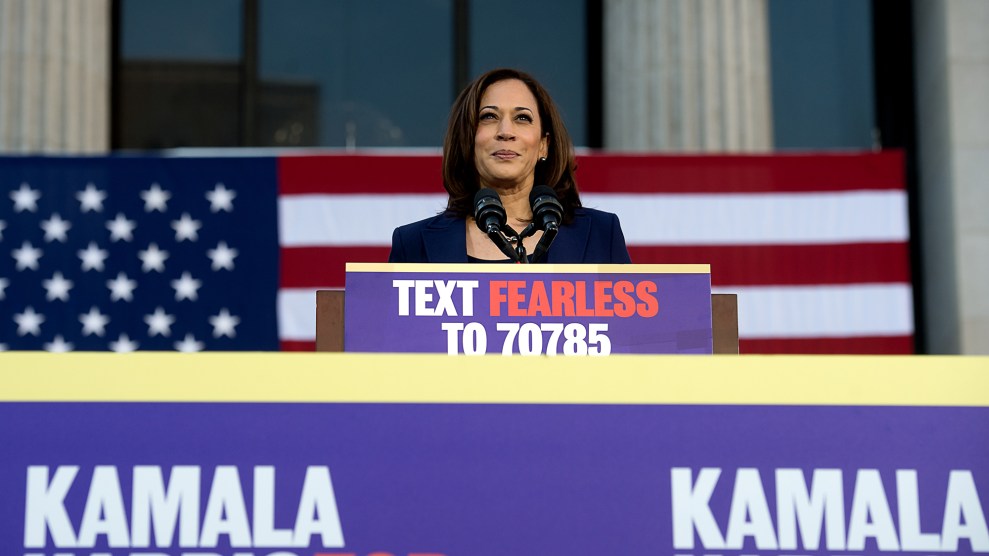
    Sen. Kamala Harris (D-Calif.) kicks off her 2020 presidential campaign with a rally in Oakland on January 27.Paul Kitagaki Jr./ZUMA

    I am so lacking in inspiration this morning that I’m going to start things up with a listicle. And it’s not even my listicle. It’s the Rolling Stone leaderboard of Democratic presidential candidates: Here’s their top ten:

    1. Kamala Harris
    2. Bernie Sanders
    3. Sherrod Brown
    4. Joe Biden
    5. Beto O’Rourke
    6. Elizabeth Warren
    7. Cory Booker
    8. Kirsten Gillibrand
    9. Amy Klobuchar
    10. Julián Castro

    I’m not saying this list is wrong, necessarily, but it’s sort of amazing that all four of the white men manage to crack the top five. I mean, is Beto really #5 ahead of Warren and Booker?