I’ve been shooting pictures of bugs lately. It just seemed topical, somehow, even though it doesn’t really show off my camera much. The Lumix has good but not red hot macro capabilities, although I appreciate its ability to focus pretty close even at long focal lengths.
Anyway, it’s the season for green fruit beetles, aka fig beetles, and they’re buzzing all over the place around here. Here’s one having a lunchtime snack of yummy pollen from our Rose of Sharon bush. When the light hits it right, it’s really quite shimmery and beautiful. However, in different light, you can more easily see why it’s called a green fruit beetle.
Erik D. Prince, a founder of the private security firm Blackwater Worldwide, and Stephen A. Feinberg, a billionaire financier who owns the giant military contractor DynCorp International, have developed proposals to rely on contractors instead of American troops in Afghanistan at the behest of Stephen K. Bannon, Mr. Trump’s chief strategist, and Jared Kushner, his senior adviser and son-in-law, according to people briefed on the conversations.
On Saturday morning, Mr. Bannon sought out Defense Secretary Jim Mattis at the Pentagon to try to get a hearing for their ideas, an American official said. Mr. Mattis listened politely but declined to include the outside strategies in a review of Afghanistan policy that he is leading along with the national security adviser, Lt. Gen. H. R. McMaster.
At great personal expense and after conducting interviews with dozens of Mattis confidants, I have painstakingly reconstructed what Mattis was thinking while Bannon pitched this idea to him:
Blackwater …. DynCorp …. wait …. is he serious? …. that’s fucking brilliant, Steve …. what could go wrong? …. maybe we should ask Putin for Russian troops? …. jfc …. stay steady Jim …. nod your head …. uh huh …. uh huh …. what’s that? …. Prince thinks his boys can operate “cheaper and better than the military”? …. I’ll bet he does …. hey, how about if we just nuke the place? …. that would be cheaper and better …. is this guy ever going to leave? …. does he think I work weekends for my health? …. I wonder how much money these guys would make if we actually did outsource the war to them? …. gotta be billions …. give ’em credit for balls, anyway …. hmmm …. what? …. “Oh yeah, great meeting with you Steve” …. “Sure, sure, anytime” …. fuck fuck fuck fuck fuck.
Mattis is either the world’s biggest sellout or the world’s biggest hero. Time will tell, but probably the latter.
Yeah, that’s a tough job. I guess Trump hasn’t noticed that nobody wants the Olympics anymore. There are only two cities on the planet still dumb enough to bid for the right to lose billions of dollars, and the IOC is so scared about this that they’ve already decided to let them both win. Paris will get the Olympics in 2024 and Los Angeles will get them in 2028. Whew. Bullet dodged, for another few years, anyway. At this point, the only thing that could stop Los Angeles from getting the 2028 games would be some kind of galactically stupid threat from the dealmaker-in-chief.
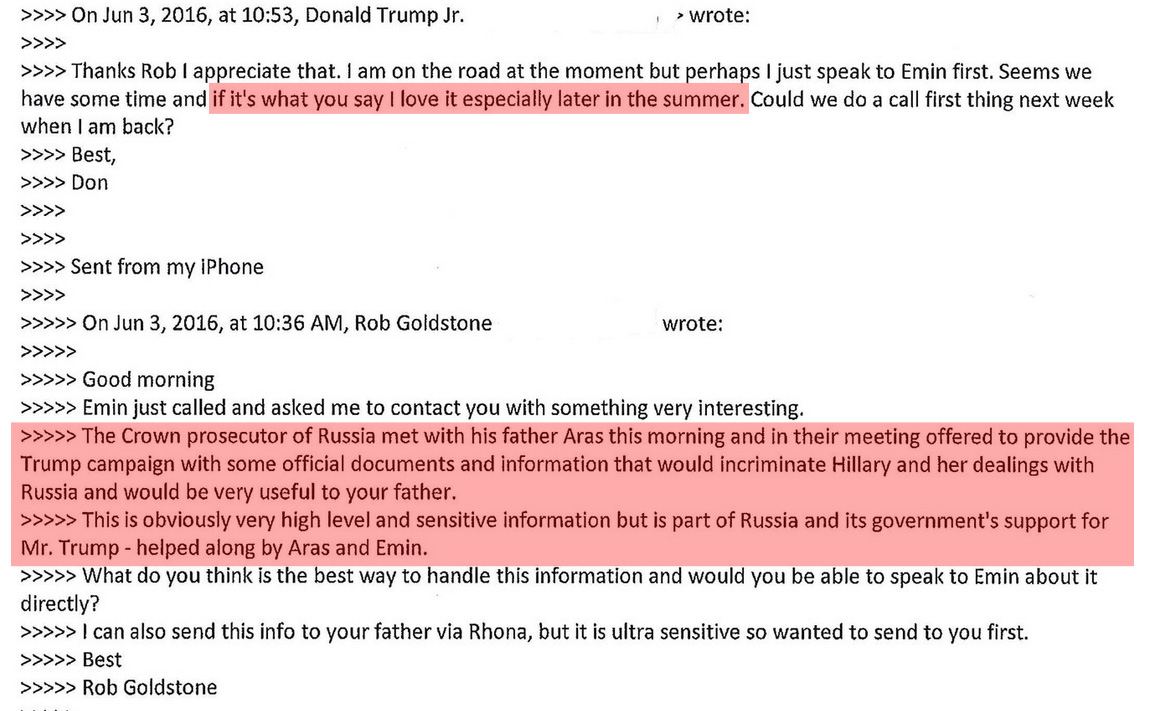
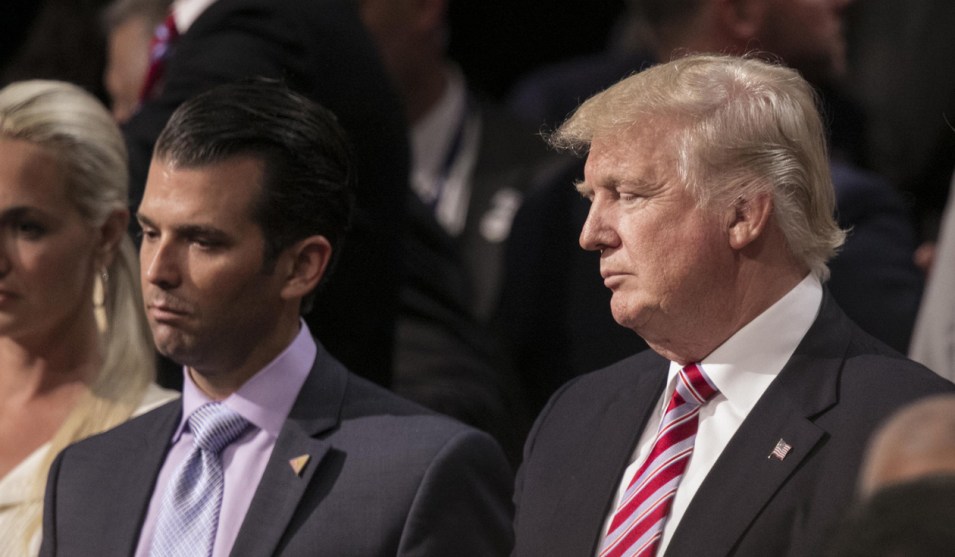
Donald Trump Jr. has helpfully confirmed this morning’s New York Times story by tweeting out the damaging emails himself. Here’s the key excerpt:
“The Crown prosecutor of Russia.” No reason that should set off any alarm bells, is there?
BY THE WAY: In case you’re wondering, “Rhona” is Rhona Graff, Trump Sr.’s longtime assistant. All the savvy people know that the best way to get to Trump is to go through Rhona. From a Politico profile earlier this year: “If I wanted to get something to Trump without calling his cell phone, I’d send it to Rhona,” said another confidant who goes through Graff to get to Trump. “Rhona is always going to be around.”
Once again, Donald Trump Jr.’s adversary has timed a leak perfectly. Yesterday the New York Times published an outline of the email that set up a campaign meeting between Don Jr. and a Russian lawyer. It was just vague enough that Junior’s attorney could claim that it came from “someone he knew” and had no connection to the Russian government. Today, the Times has an actual copy of the email chain:
The June 3, 2016, email sent to Donald Trump Jr. could hardly have been more explicit: One of his father’s former Russian business partners had been contacted by a senior Russian government official and was offering to provide the Trump campaign with dirt on Hillary Clinton.
The documents “would incriminate Hillary and her dealings with Russia and would be very useful to your father,” read the email, written by a trusted intermediary, who added, “This is obviously very high level and sensitive information but is part of Russia and its government’s support for Mr. Trump.”
If the future president’s elder son was surprised or disturbed by the provenance of the promised material — or the notion that it was part of an ongoing effort by the Russian government to aid his father’s campaign — he gave no indication.
He replied within minutes: “If it’s what you say I love it especially later in the summer.”
Four days later, after a flurry of emails, the intermediary wrote back, proposing a meeting in New York on Thursday with a “Russian government attorney.”
Donald Trump Jr. agreed, adding that he would likely bring along “Paul Manafort (campaign boss)” and “my brother-in-law,” Jared Kushner, now one of the president’s closest White House advisers.
This is either one of history’s great media cons or one of history’s great ratfucks. At this point, I’m almost more interested in who’s behind this than I am with the revelations themselves.
Days 1-1000: Donald Trump Jr. says he’s never had any contacts with Russians and is offended at the very suggestion.
Day 1001: Faced with evidence of a meeting, Don Jr. admits that he met with a Russian lawyer but says it was about adoptions.
Day 1002: Faced with evidence of what the meeting was really about, Don Jr. admits that the Russian lawyer said she had some great dirt on Hillary Clinton, but says he didn’t know that before the meeting.
Day 1003 (today): Email evidence indicates that he knew exactly what the meeting was about beforehand. Don Jr. lawyers up.
Before arranging a meeting with a Kremlin-connected Russian lawyer he believed would offer him compromising information about Hillary Clinton, Donald Trump Jr. was informed in an email that the material was part of a Russian government effort to aid his father’s candidacy, according to three people with knowledge of the email.
Don Jr. is no longer responding to these stories via Facebook or Twitter. His attorney’s statement is here.
There’s something crazy going on here, and not just the fact that Don Jr. met with a Kremlin-connected Russian lawyer. Let’s face it: he’s plenty dumb enough to do something like that. The crazy thing is that someone—or multiple someones—really has it in for Junior. They’ve been releasing information to the New York Times in very, very carefully staged tidbits designed to (a) get Don Jr. to lie on the record, and (b) keep the story going. At this point, Don Jr. has no idea what evidence these folks have, so he has no idea what it’s safe to lie about.
But why? Why is someone going after Don Jr.? He’s not involved with politics and Don Sr. doesn’t seem to rely on him for anything. So why destroy him? Is it just a way of going after Don Sr.? If so, who’s doing it?
POSTSCRIPT: The email was from Rob Goldstone, a music publicist who worked with Donald Trump Sr. to bring the Miss Universe pageant to Moscow. David Corn has the whole story here.
Last night I read “The Uninhabitable Earth,” by David Wallace-Wells. That’s because I’m willing to read pretty much anything by David Wallace-Wells. His piece is self-consciously a worst-case doomsday scenario that describes what could happen if the earth’s temperature rises a lot and we don’t do anything about it. “No matter how well-informed you are,” says Wallace-Wells, “you are surely not alarmed enough.”
This morning I woke up to a bunch of criticisms of the article from the climate change community. They seemed to fall into two camps:
The story contains some factual errors.
It is too pessimistic.
I haven’t seen any good evidence for serious factual errors. Michael Mann says that Wallace-Wells exaggerates “the near-term threat of climate ‘feedbacks’ involving the release of frozen methane,” and calls out “erroneous statements like this one referencing ‘satellite data showing the globe warming, since 1998, more than twice as fast as scientists had thought.’ ” I would ding Wallace-Wells for some sloppy phrasing here, but that’s all. He briefly mentions the warming power of methane in permafront, but fails to put it in context (released over a long period, as is most likely, melting permafrost will have a modest effect). And new satellite data shows a doubling of warming since 1998 in the satellite data, not in overall climate projections. These things should have been written more accurately, but they’re hardly fact-checking felonies.
The bigger criticism, then, is that Wallace-Wells is trying to scare the hell out of everyone, and that’s just not productive. Here is Andrew Freedman:
The science can be scary, but it shouldn’t be paralyzing, and it certainly doesn’t justify worrying about whether humans will even be able to survive on this planet by the end of this century.
….Wallace-Wells does accurately capture the prevailing optimistic attitude of many climate scientists, including those who have been studying this issue for decades….Katharine Hayhoe, a climate researcher at Texas Tech University, possesses the optimism that Wallace-Wells writes about….“The time to act is now — but not out of fear, with panicked, knee-jerk reactions that burn us out,” Hayhoe said. “We need to act based on measured hope and confidence that the science is right, the impacts are serious, and there are solutions to the gravest threats climate change poses if we choose them now.”
In more than a decade of reporting on climate science and policy, I have yet to meet a pessimistic climate scientist. Sure, they know better than most people what unfortunate scenarios lie around the corner, but they also have faith in people to work to avert them.
This is not really a criticism, though. It’s just a disagreement about the nature of the human race. How optimistic are you that human beings will respond fast enough to avert the worst effects of climate change? Hayhoe is pretty optimistic. Freedman is pretty optimistic. Wallace-Wells thinks they’re whistling past the graveyard, and we humans could stand to have our noses rubbed in exactly what kind of danger we’re facing.
Is this productive? Or does it just make people feel depressed and unlikely to work toward change? Good question. I don’t know the answer, and I don’t think climate scientists have any special insight into this. But this gives me an opportunity to say something that’s been on my mind for years now.
I don’t write as much about climate change as I used to. This isn’t because I’ve decided it’s not really all that dangerous. On the contrary. I’m mostly on Wallace-Wells’s side here. The science actually seems to have gotten more frightening over the past decade.
At the same time, I’ve also found myself moving to Freedman’s side, at least to the limited extent that gloomy messages aren’t effective ways of provoking action. This started years ago, when I read Break Through by Ted Norhaus and Michael Shellenberger. At the time, I criticized their view that environmentalists should quit focusing so much attention on energy regulations that people don’t like, but I’ve steadily moved closer to agreeing with them. Taken as a whole, I just don’t think that people are altruistic enough to accept regulations that are sufficiently painful to do the job. I’ve also been influenced by other articles, like Chris Hayes’s piece in the Nation that effectively asks: What are the odds that anyone is going to leave $10 trillion worth of fossil fuels in the ground and never use them? He compares this to the value of slaves owned in the antebellum South, with the obvious implication that it took a brutal civil war to wrest that wealth away from slave owners, and it might take something similar to stop Exxon and Aramco from pumping every last molecule of carbon out of the earth.
So where does this leave us?
Give up, and just wait for the earth to boil over.
Keep haranguing people with messages of guilt and sacrifice, and be content with making a little bit of progress.
Chain ourselves to oil derricks, or whatever, in a vain attempt to fight $10 trillion of wealth extraction.
All of these suck. I think it’s likely that none of them work. Not well enough, anyway. Luckily, there’s one other possibility:
Pour massive amounts of public money into energy R&D and infrastructure buildout.
I’m hardly the first person to suggest this, and I’m not naive about the “massive amounts of public money” part. But here’s the good news: this strategy requires no real sacrifice from voters. In fact, it’s probably great for most of them.
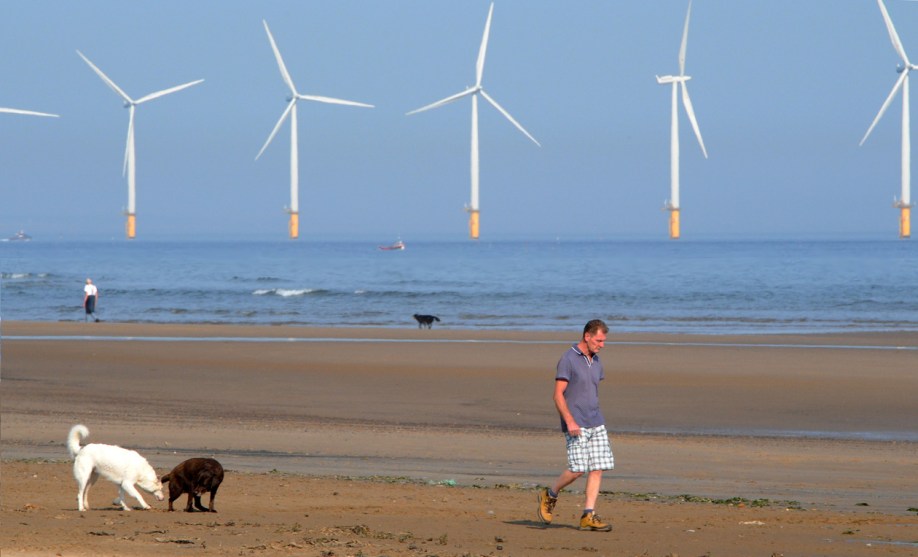
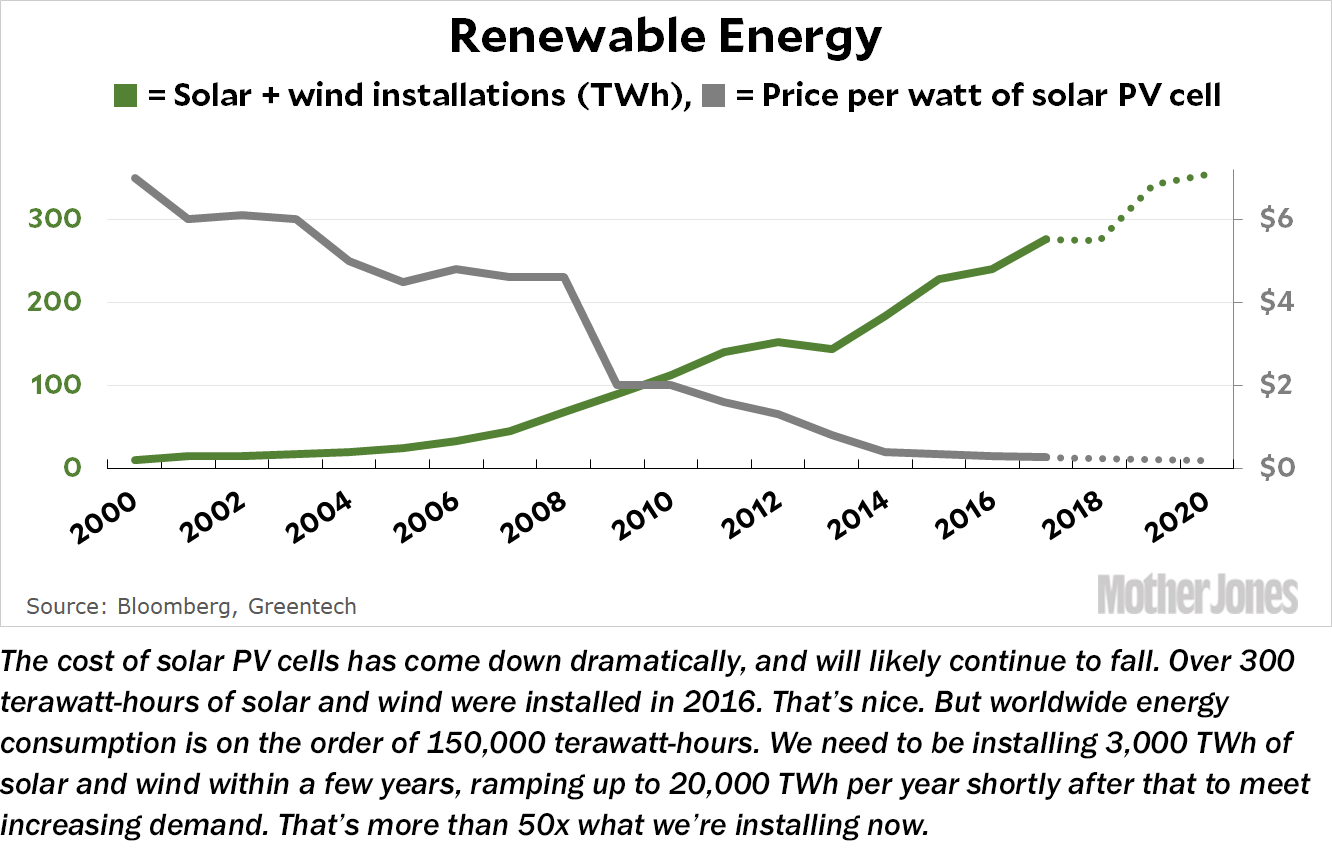
We’re very close already to having the technologies we need to eliminate 90 percent of our fossil fuel use: cheap solar, cheap wind power, and cheap battery storage. The problem is that we need to deploy them ten or twenty times faster than we’re doing right now. Fortunately, this is good news, because that kind of infrastructure buildout would be a huge economic stimulus for the entire world. This isn’t the reason to do it, but it’s certainly something that makes it easier. Maybe this is funded by a progressive carbon tax. Maybe by taxes on the rich. Maybe with eye-watering deficits. I don’t know. But the economy would boom, fossil fuel use would plummet, the rich would still be rich, and the planet would be saved.
I’m not pretending this is nirvana. Basically, I’m asking, What would we do if we discovered aliens who were 50 years from earth and were going to destroy us? The answer is that the entire world would go on a war footing—which is exactly what we need to fight the alien invasion of climate change. But as hard as this would be, at least it would rely on a burst of positive energy, not constant guilt-mongering. It would provide a tailwind for big funding increases in R&D, which creates a virtuous circle. It doesn’t pit rich countries against poor countries. It doesn’t require tons of new treaties or EPA regulations, which would allow the Republican Party to stop pretending that climate change doesn’t exist. And if we need to award massive infrastructure contracts to fossil fuel companies to get them on board—well, we’ve made worse alliances in the past for a good cause.
So we need two things. First, all good wars require a scary enemy, and doomsday writing can help with that. Second, we need a different approach to fighting the war, one that works with human nature instead of against it. If greed is what’s standing in our way, then let’s figure out how to make greed work for us instead.
That’s where I am these days. I’m hardly opposed to the usual agenda of regulating our way out of climate change, but I’m not very optimistic that it will work. We should try something different.
Spring has come and gone, which means no more sidewalks covered with annoying piles of squishy purple jacaranda blooms. Instead we have record-breaking summer heat sucking away our precious bodily fluids. However, thanks to the miracle of photography, pictures of our jacarandas taken two months ago can now remind us of cooler seasons without the annoying piles of squishy purple flowers all over. It is a miracle of technology.
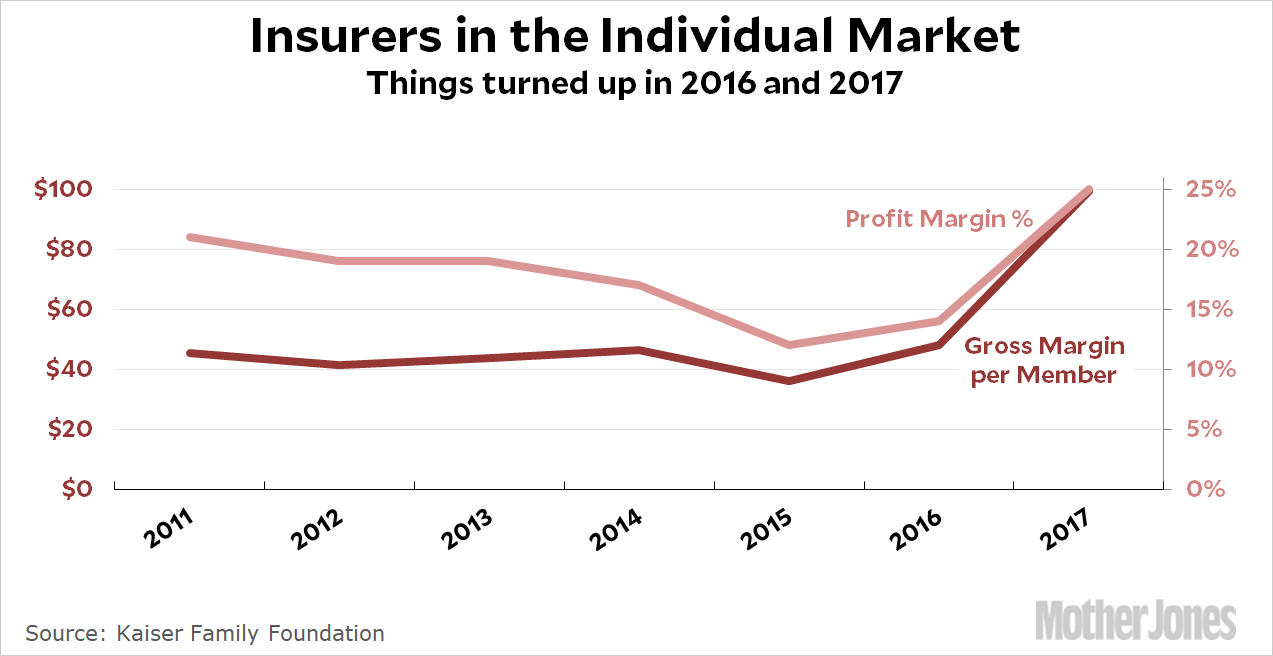
This is the result of the big increase in premiums in 2016. Claims went up only 5 percent, a little less than normal, but average premiums went up 20 percent. The result is a big increase in gross profits per customer and a big increase in overall profit margins. This is pretty much what most analysts predicted: insurers lowballed their premiums in 2013 and saw their profit margins fall over the next two years. That improved a bit in 2016, and then improved a lot in 2017 following the large premium increases.
In other words, the big premium increases of last year weren’t a sign of Obamacare failing. They were a sign that insurers had learned more about the market and needed a one-time increase to return themselves to profitability. If there’s another big premium increase this year, it won’t be because nobody is making money in the Obamacare market. It will be due to deliberate destabilization of the market by Donald Trump and congressional Republicans.
However, there’s a downside in this data: Obamacare has attracted a sicker pool of customers. Between 2011 and 2014, average hospital days increased about 1.8 percent per year. Since then, they’ve increased 4.6 percent per year. This isn’t surprising since Obamacare required insurers to cover everyone, not just the healthy, but it does indicate that insurers really are dealing with a more expensive set of customers and needed a few years to figure just how much more expensive they were going to be.
Note that all of this data is from the first quarter of 2017, and is being compared to the first quarter of previous years. Apples to apples. Obviously we’ll have to wait six months to get full-year data through 2017.
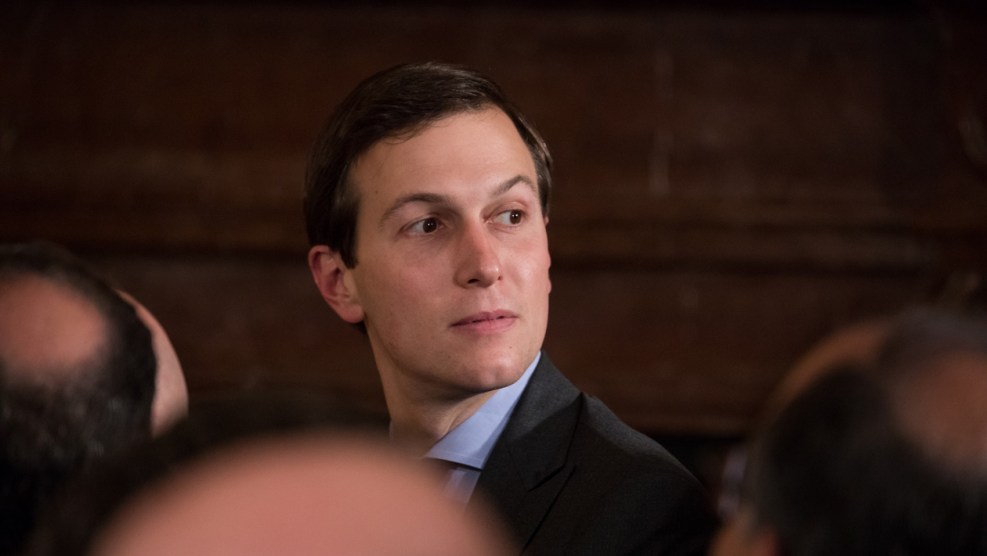
The Intercept has a story about young Jared Kushner and his catastrophically bad 2007 purchase of a New York skyscraper. Kushner has basically lost his entire $500 million investment, and the only way to turn things around is to demolish the building and put up a bigger, more valuable one in its place. But that requires a huge amount of money, and it turns out that Kushner was hoping to get a big chunk of it from a Qatari zillionaire:
Not long before a major crisis ripped through the Middle East, pitting the United States and a bloc of Gulf countries against Qatar, Jared Kushner’s real estate company had unsuccessfully sought a critical half-billion-dollar investment from one of the richest and most influential men in the tiny nation, according to three well-placed sources with knowledge of the near transaction
Qatar is facing an ongoing blockade led by Saudi Arabia and the United Arab Emirates, and joined by Egypt and Bahrain, which President Trump has taken credit for sparking. Kushner, meanwhile, has reportedly played a key behind-the-scenes role in hardening the U.S. posture toward the embattled nation.
….The revelation of the half-billion-dollar deal raises thorny and unprecedented ethical questions. If the deal is not entirely dead, that means Jared Kushner is, on the one hand, pushing to use the power of American diplomacy to pummel a small nation, while on the other, his firm is hoping to extract an extraordinary amount of capital from there for a failing investment. If, however, the deal is entirely dead, the pummeling may be seen as intimidating to other investors on the end of a Kushner Companies pitch.
There’s no way to know what’s really going on based solely on the information in the story. The problem is a very broad one: Jared Kushner runs a company that routinely needs to raise large sums of money, and one of the most common sources for large sums of money is foreign investors in places like China, the Middle East, and Russia. At the same time, Kushner is also a close advisor to the president of the United States, who routinely conducts foreign policy in places like China, the Middle East, and Russia. Conflicts of interest would be inevitable even if everyone involved were as pure as Caesar’s wife.
Is Trump helping out his son-in-law by putting pressure on Qatar? Is Trump being played by Kushner? Or are the blockade and the real estate deal completely unrelated? We have at least 42 months left of questions like this popping up constantly.
And we respect that! But maybe you’re of a mind to support our work directly instead? We have until December 31 to raise the last $400,000 we need to keep our nonprofit newsroom running at full strength into 2026. Will you make a gift today?
We noticed you have an ad blocker on. Can you pitch in a few bucks to help fund Mother Jones' investigative journalism?
We’re halfway there, but time’s running out.
With only days left in 2025, we've made real progress toward our $400,000 goal—the funding we need to keep our nonprofit newsroom running at full
strength. But to close the remaining $200,000 gap before December 31, it will take a huge surge in reader support. Whether you've given before or this is your first time, your contribution right now will matter. Will you help us get there?
We’re halfway there, but time’s running out.
With only days left in 2025, we've made real progress toward our $400,000 goal—the funding we need to keep our nonprofit newsroom running at full
strength. But to close the remaining $200,000 gap before December 31, it will take a huge surge in reader support. Whether you've given before or this is your first time, your contribution right now will matter. Will you help us get there?