• We Have a Lefty Columnist Winner! It’s….

    My survey asking for a seriously leftist columnist for the New York Times op-ed page ended at noon Sunday, after a total of 3,674 responses. Here are the top dozen vote-getters:
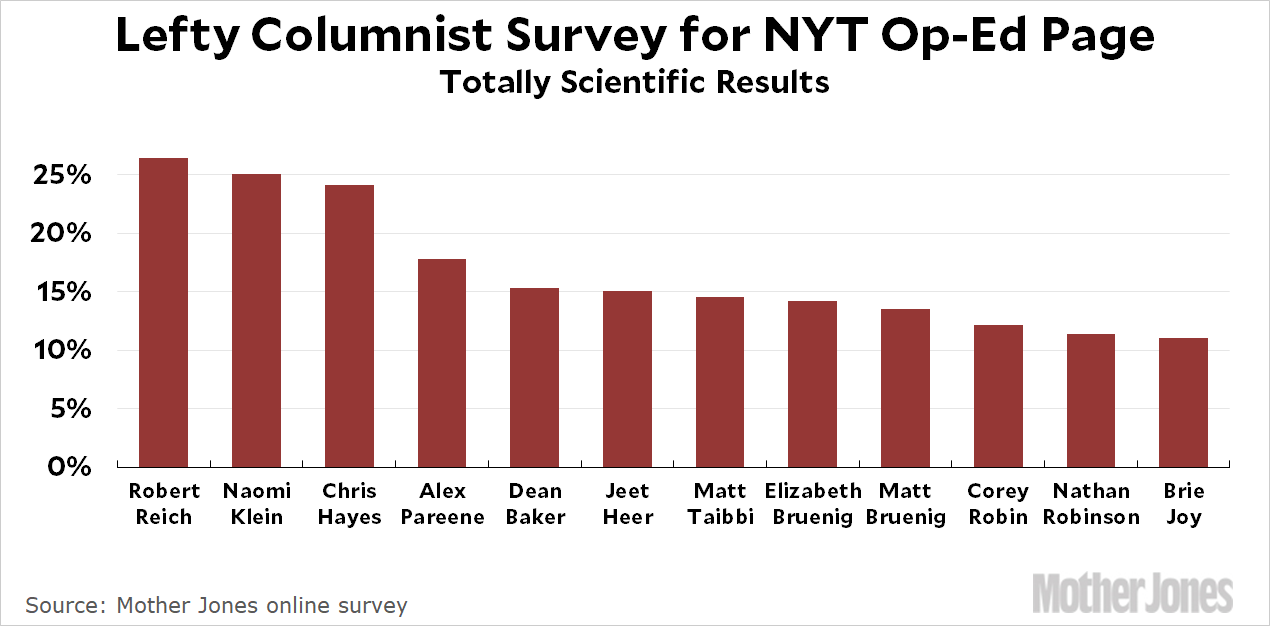
    Nominations for this survey all came from my lefty critics on Twitter, while voting was done by the (mostly) more mainstream liberals who read my blog even on weekends. Note that totals add to more than 100 percent because everyone was allowed to vote for up to five choices.

    Name recognition was obviously a big factor in the voting, though I confess a little surprise that Robert Reich has such a strong following. For what it’s worth, I’d lean toward Chris Hayes, who has a long track record as a great writer, or Naomi Klein, for the same reason. Dean Baker would be great, but there’s no way the Times would have two liberal economists on their op-ed page. Nathan Robinson can write, obviously, and certainly has the dedicated lefty chops for the position.

    And just what is the position, anyway? That’s hard to say. Andrew Sullivan said he thought the Times should hire someone who represents the “Bernie left,” which is fairly descriptive but a little too tied to a specific personality. The lefties who inhabit my Twitter feed would prefer to be called, simply, “the left,” but that doesn’t work. No matter what they think, common usage defines anyone left of center as part of the left. I can’t think of a version of “far left” or “extreme left” or somesuch that wouldn’t be insulting. “Socialist left” doesn’t work because that’s a really tiny group. “Social democrat left” doesn’t work either, since that includes sellout neolibs like me.

    I dunno. Maybe we need another survey. The best I can do is to say that we’re looking for someone materially to the left of the leftiest columnist currently at the Times.

  • It Turns Out That Bubonic Plague Has a Silver Lining

    Earlier today, Michael McCormick presented a paper at the annual meeting of the Medieval Academy of America. It was published several months ago, but I only found out about it today via a reader on Twitter, which is one of the reasons I like Twitter in spite of everything. The paper presents the results of a super-advanced ice core analysis:

    Ultra-high resolution sampling of this ice core (~120 μm, allowing ~550 measurements within the year dated ~1300 C.E.) was produced using the Climate Change Institute’s (CCI at the University of Maine) W. M. Keck Laser Ice Facility laser ablation inductively coupled plasma mass spectrometer (LA-ICP-MS) [Sneed et al., 2015]. This new method allowed us to count highly thinned annual layers previously not detectable by conventional cm-resolution analyses.

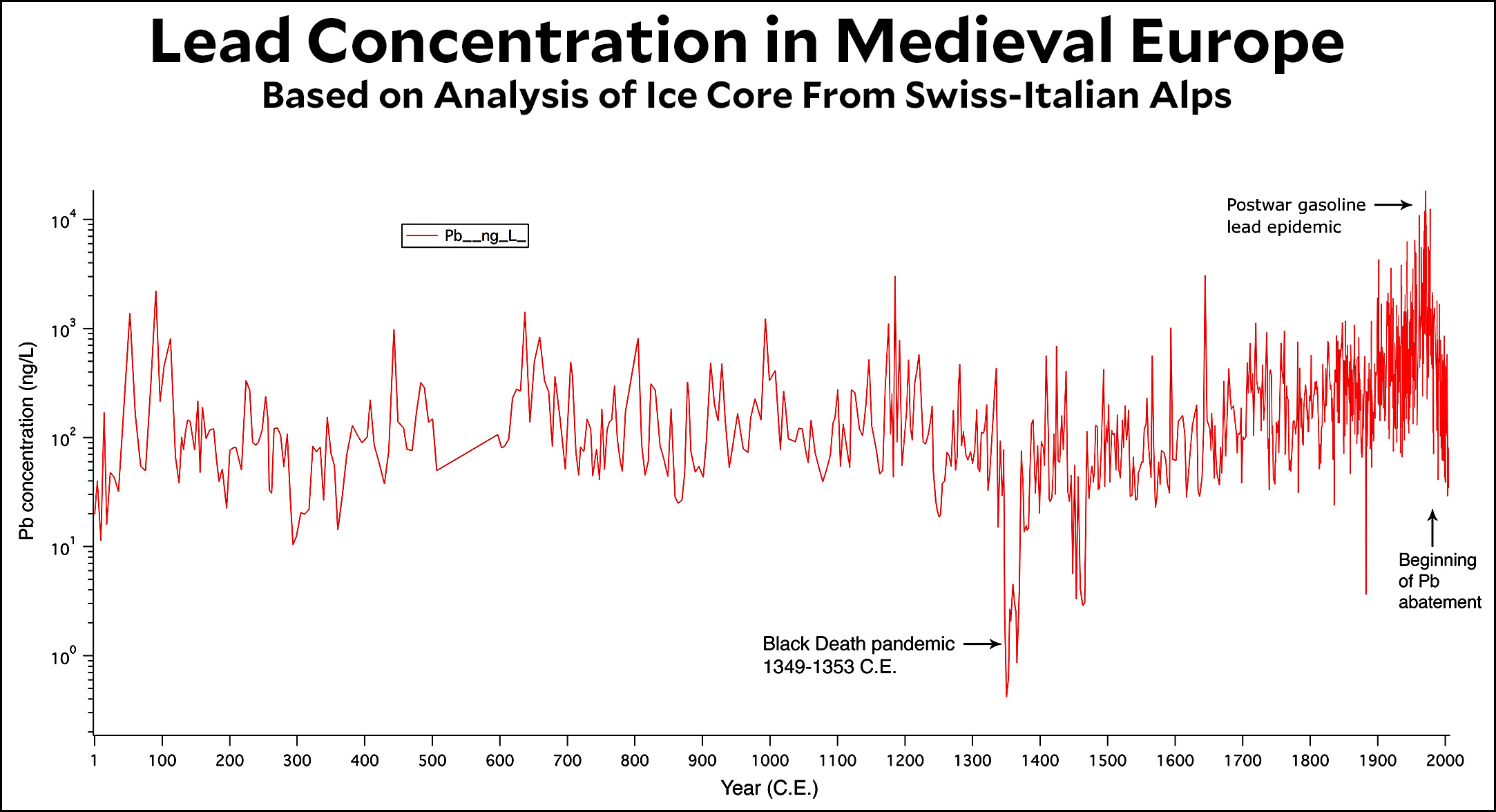
    Got it? Good. The upshot is that the researchers could determine lead concentration levels in Europe down to the individual year. Here they are:

    It turns out that lead has been poisoning Europe for at least 2,000 years, with one notable exception: the few years during and after the Black Death. Apparently the plague killed off all the lead miners, and for a period of a decade or two ambient lead levels plummeted to low levels.

    And now for some rank speculation. Check out this paragraph from Wikipedia about the origins of the Renaissance:

    One theory that has been advanced is that the devastation in Florence caused by the Black Death, which hit Europe between 1348 and 1350, resulted in a shift in the world view of people in 14th-century Italy. Italy was particularly badly hit by the plague, and it has been speculated that the resulting familiarity with death caused thinkers to dwell more on their lives on Earth, rather than on spirituality and the afterlife. It has also been argued that the Black Death prompted a new wave of piety, manifested in the sponsorship of religious works of art.

    Oh please. Maybe it caused scholars to think more about their lives on earth. Wait, no. Maybe it made them more pious. This is just post-hoc folderol.

    Here’s my theory: Lead levels plummeted from about 1350-1370, and children born during those years entered adulthood around 1370-1390. I propose that they were smarter and more focused than your average medieval scholar,¹ and this extra IQ boost from the plague is the real origin of the Renaissance. Generation P gave it enough of a kickstart that it then kept going of its own accord even after lead concentrations returned to their previous levels.

    As you can see from the chart, we have curbed the disastrous lead levels of the late 20th century² and are now down to the levels of about 1700 or so. But we still have a ways to go if we want to kick off a new renaissance of our own. Glory awaits us if we’d only spend a few billion dollars to get rid of lead once and for all.

    ¹Also less likely to pursue a life of crime, presumably.

    ²Hooray for the EPA!

  • The Mighty Circular Polarizing Filter Explained in Pictures

    Because I have a new toy, you all have to suffer through blog posts about my camera every weekend. Until I get bored of it. Which is not yet.

    Back in the day, I had a circular polarizing filter for my Leica rangefinder. But then I got a new camera, and then another and another. For some reason, I forgot all about the polarizing filter and never got another one. But someone in comments mentioned this a while back, so I got one when I ordered the new camera. It’s definitely worth having.

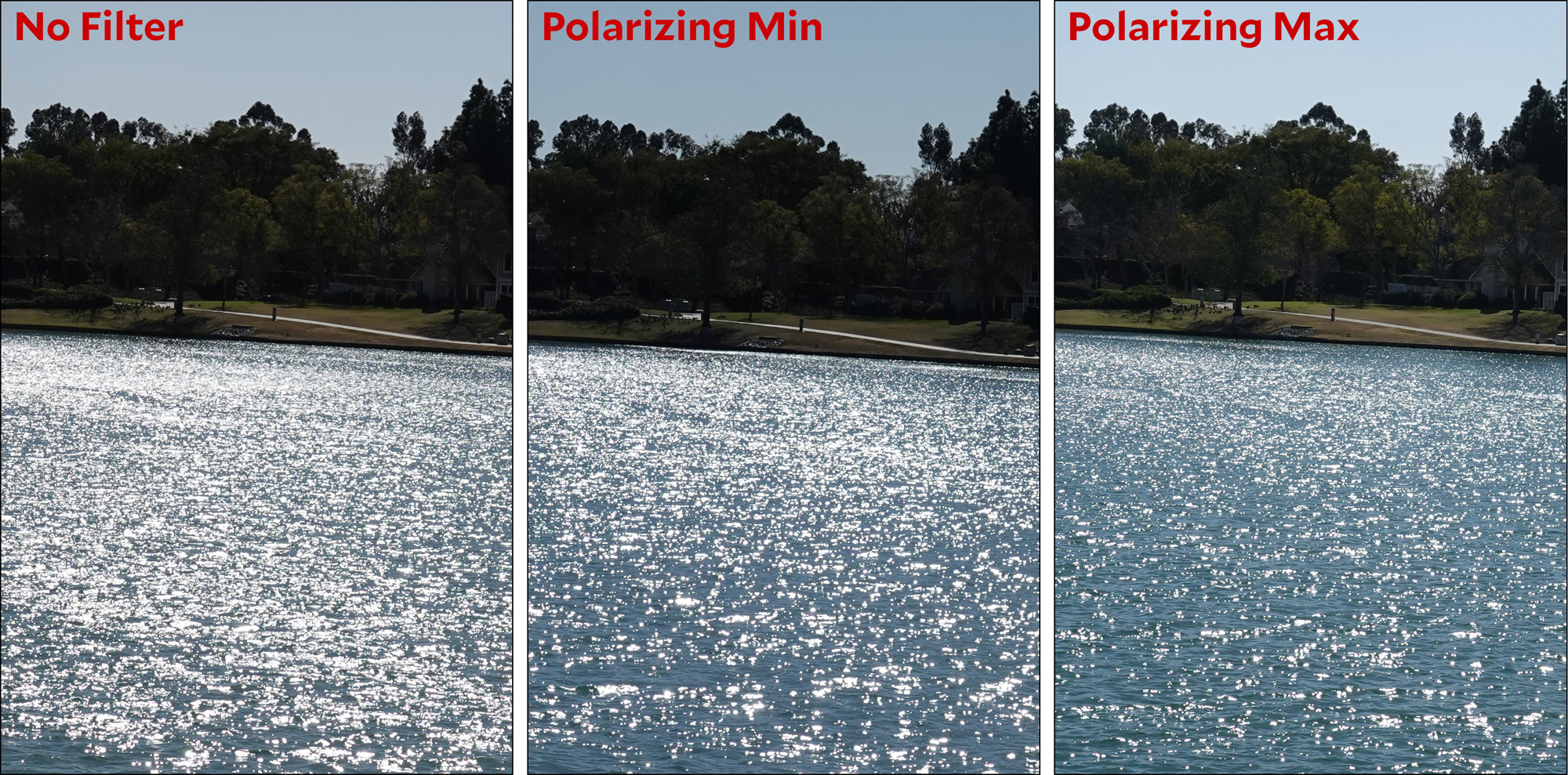
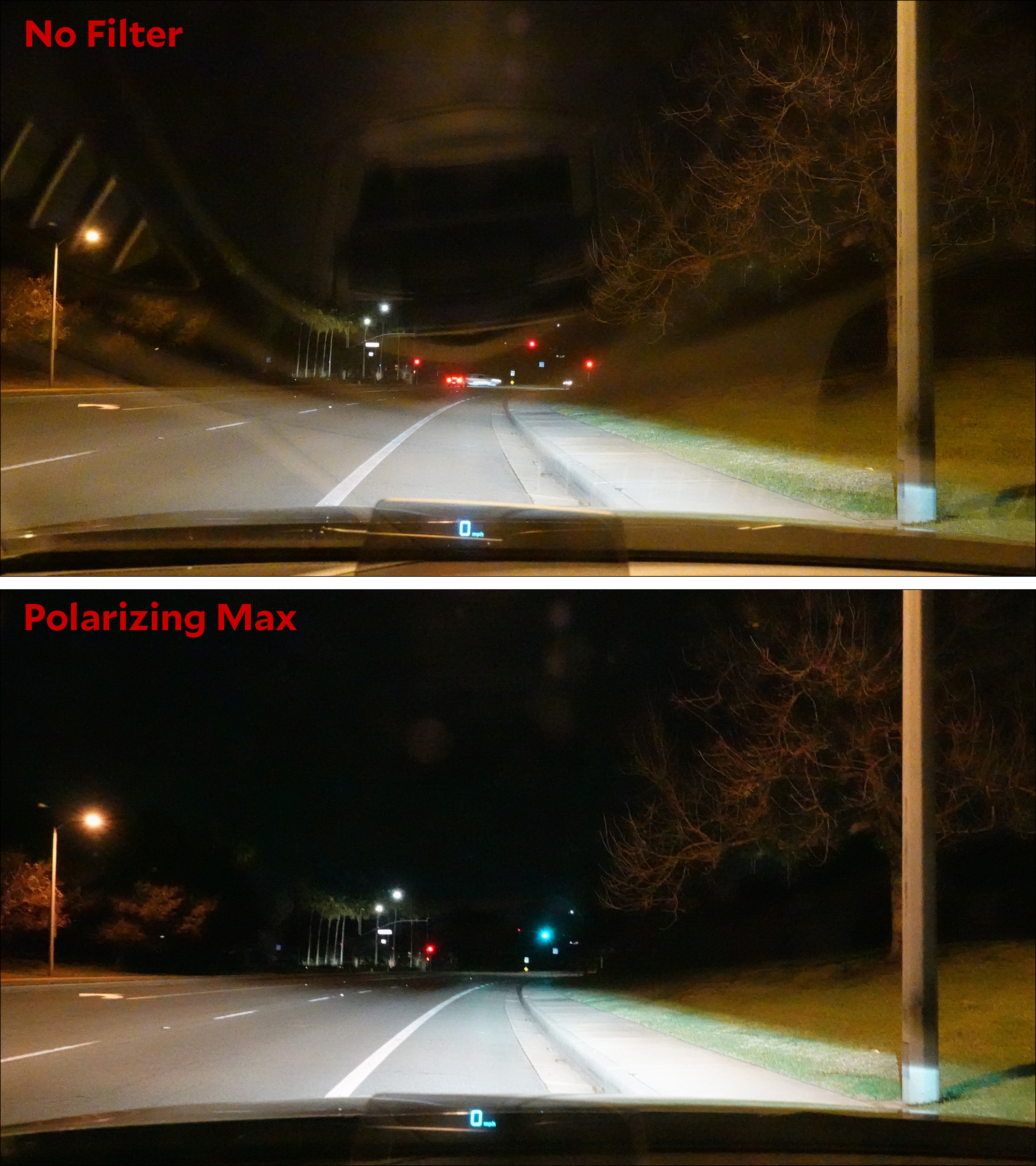
    Most light that comes into your camera bounces off the ground first, where it scatters in thousands of different directions. However, certain kinds of light are polarized in only a single direction, which means you can reduce or eliminate it with a polarizing filter. The filter contains two pieces of polarized glass in a single mounting, and it’s easy to use: you just rotate one of the pieces until the light you want to get rid of is gone. The most common use of a polarizing filter is to reduce reflected glare from water:

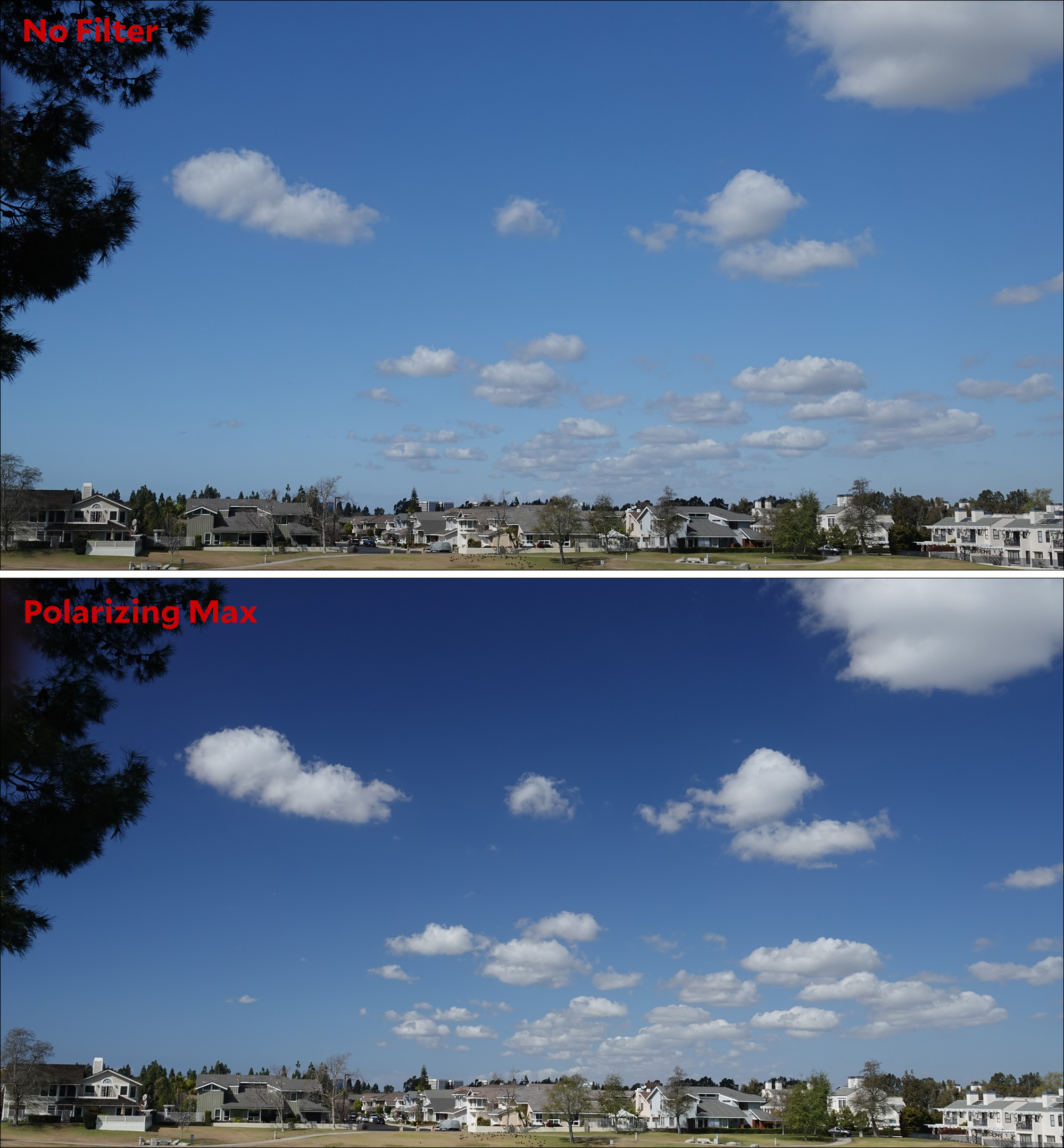
    The filter doesn’t get all the glare, but it gets a lot of it. However, there’s a lot more you can do. For example, because of the way light scatters in the atmosphere, you can make the sky bluer and clouds more defined:

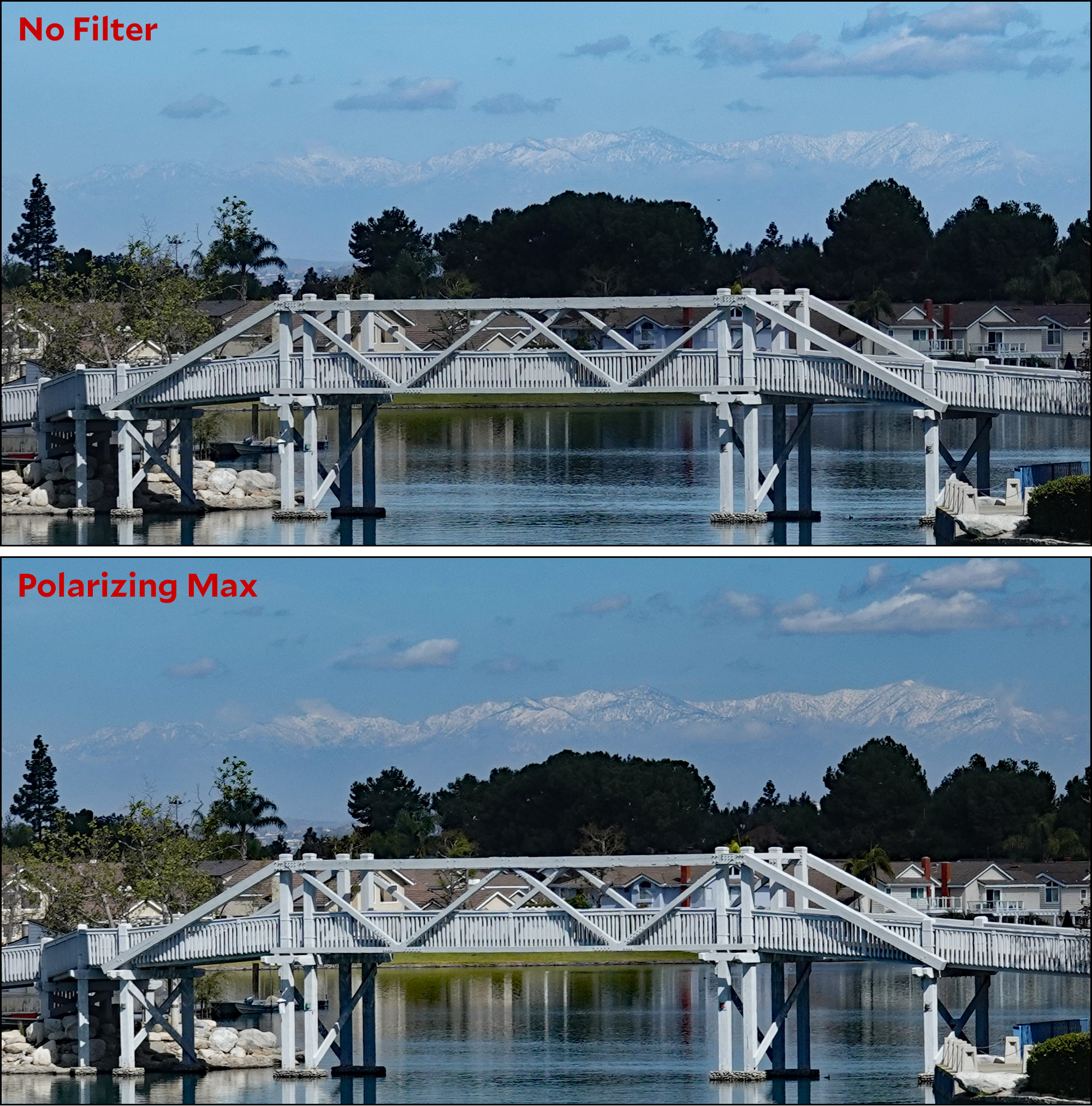
    And it’s not just clouds. We got a little bit of rain a few days ago (hooray!) and this left a light dusting of snow on the mountains. A polarizing filter can make those snowy mountains pop a little more:

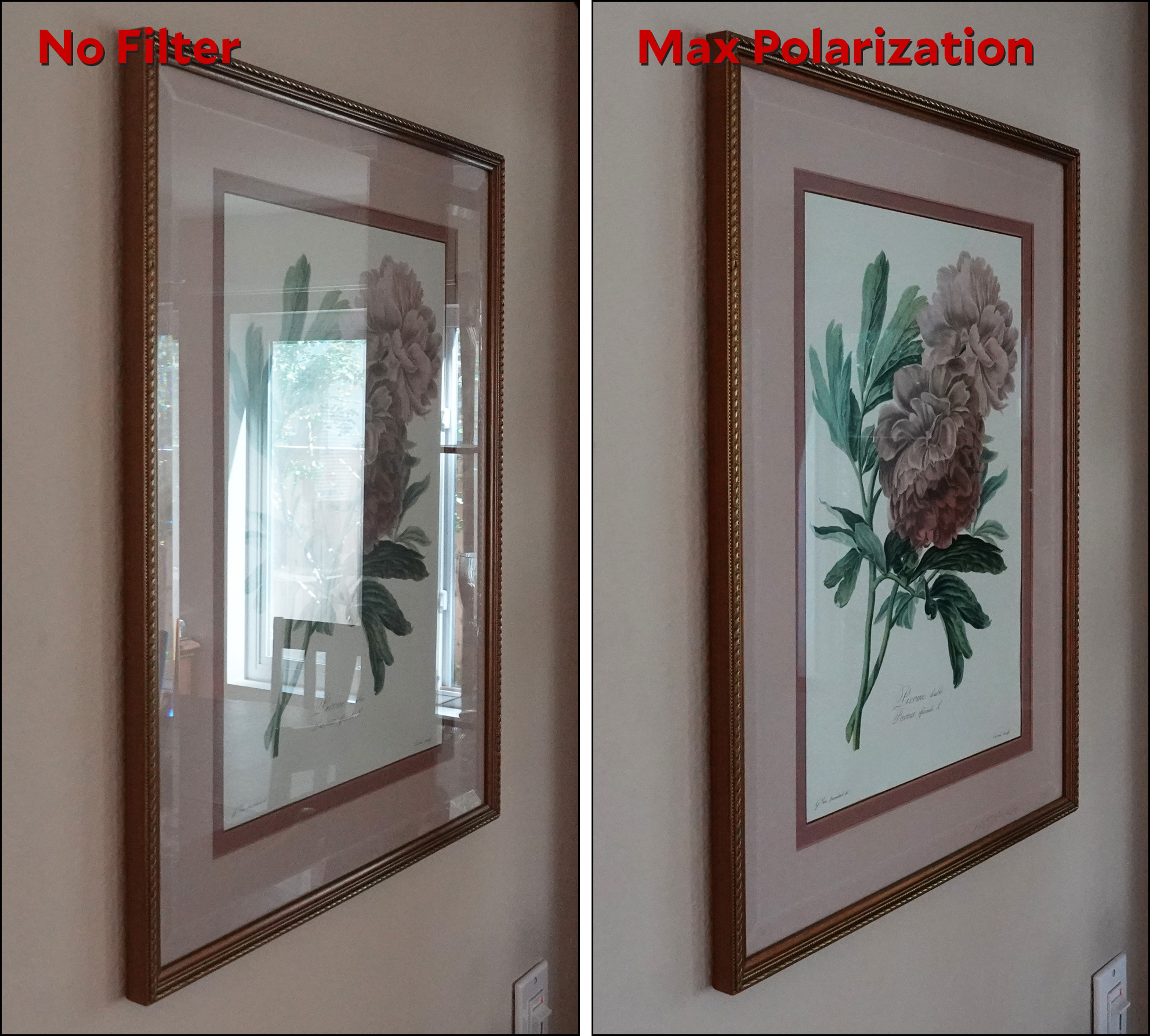
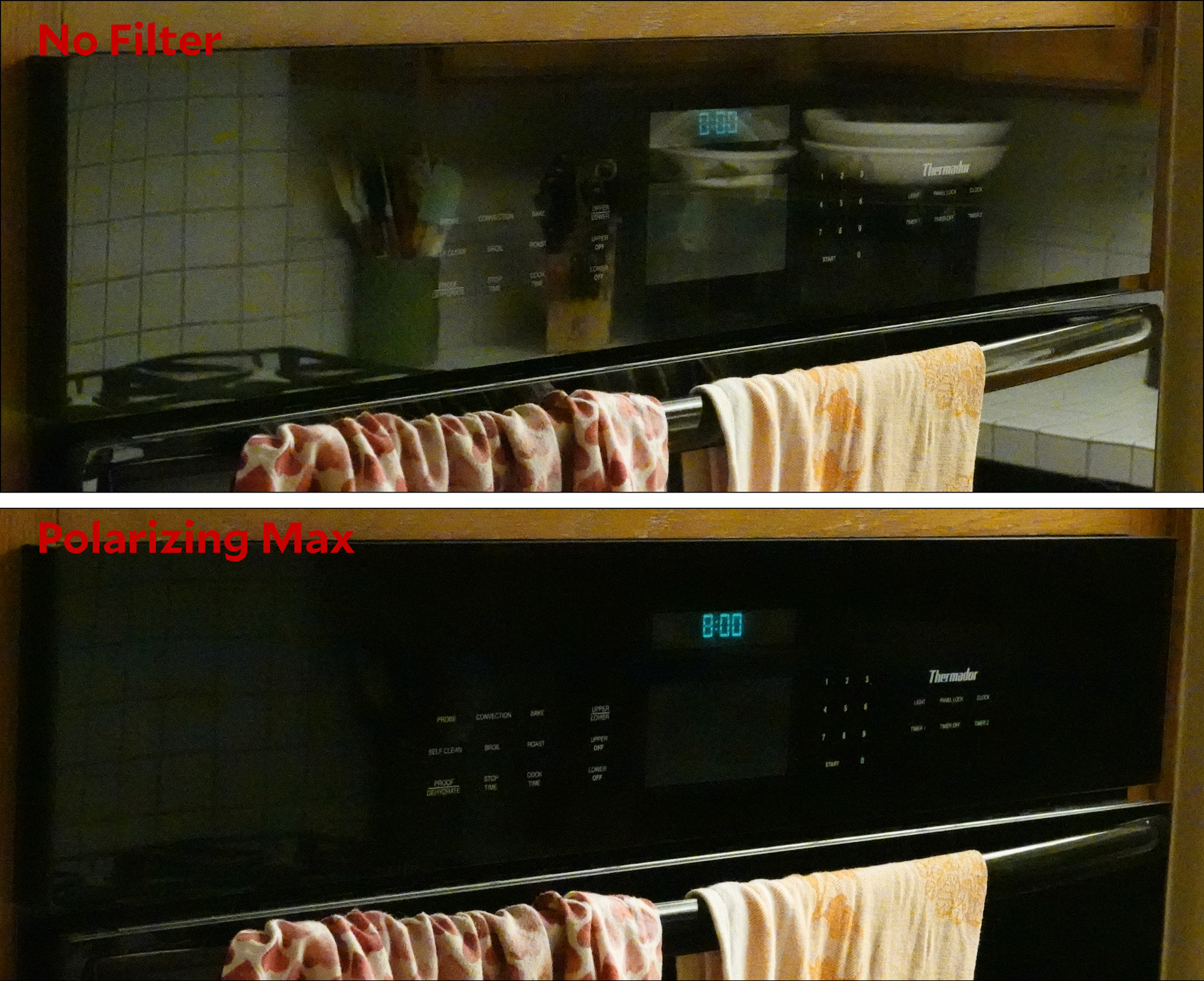
    Another common use is to reduce reflections off glass. If you’re in a museum taking shots of the paintings, a polarizing filter will help reduce hot spots from the lights or reflections off the glass if the painting is behind glass:

    This also works for shooting out of airplane windows or car windows:

    It’s also handy for commercial photographers, because sometimes you don’t always have full control of your lighting:

    So there you have it: the wonders of a circular polarizing filter. Basically, anytime there’s glass or water involved in your picture, a polarizing filter might help. It doesn’t generally alter the color of your photos since both halves of the filter are a neutral gray, but they do cut down the amount of light entering your camera. This will force a lower shutter speed or a higher ISO setting, which might be a problem shooting indoors. Whether the tradeoff is worth it depends on how bright the lighting is and how bad the glare is.

  • President Trump is Sullen, Isolated, Abandoned, and Alone

    Bruce R. Bennett/The Palm Beach Post via ZUMA

    How is our president doing these days? Here’s a quick summary from media reports:

    Washington Post: Angry and increasingly isolated … fumes … voices frustration … revives old grudges … seethed with anger … raging … venting … furious … .irate … “Morale is the worst it’s ever been” … feels abandoned and alone.

    Politico: Chaos here, backlash there, shock everywhere … growing sense of despair … deep demoralization and discord … erratic … sullen and isolated … deeply suspicious of the people around him.

    Guardian: Abandoned in a raging storm … fulminated … isolated, angry and ready to lash out … unchecked volatility … “angry and gunning for a fight” … erratic … morale is understood to be at an all-time low … increasingly isolated and mercurial … staggering from one crisis to another.

    These stories must be rough on reporters. I mean, how many synonyms for “raging four-year-old” are there?

    Actually, though, the true connecting thread running through all these stories is: sullen, isolated, abandoned, and alone. In the past, Trump tossed around vague orders and within a year or two a new golf course would open. He believes that was all due to his leadership, and the only thing different about the White House is that he’s got a different staff. So if things are failing now, it can only be the fault of the people working for him. His personality doesn’t allow him to believe anything else.

    The result is predictable: when things start going south he lashes out at his staff as either incompetent or disloyal. Then he gets new staff. And when things keep going south the only possible explanation is that everyone is against him. And so he ends up sullen, isolated, abandoned, and alone.

  • Vote For Your Favorite Lefty Columnist!

    Richard B. Levine/Levine Roberts/Newscom via ZUMA

    Let’s help the New York Times hire a lefty columnist! In between random invective about my corporate sellout neoliberalist ways, my Twitter feed and email were full of suggestions. You can vote for up to five from the list below. Which of these folks do you like reading even if their politics aren’t always to your liking?

    I’d mention who my two or three favorites are from this list, but I don’t want to ruin their chances. Also: about a third of this list is people I’m not familiar with, so don’t take this as any kind of endorsement of anyone’s politics or background.

  • There’s More to Sharp Images Than Just a Good Lens

    I mentioned this afternoon that my picture of Hopper with the new camera was so sharp it was almost too sharp. In fact, when I first took the picture last Monday I wondered if there was more than just a high-quality lens at work. Maybe the imaging engine was a little too aggressive on the sharpening front? Today, catblogging reminded me of this and prompted me to find out. I reset the camera to produce both JPG and RAW images and then went outside to take some more pictures of Hopper.

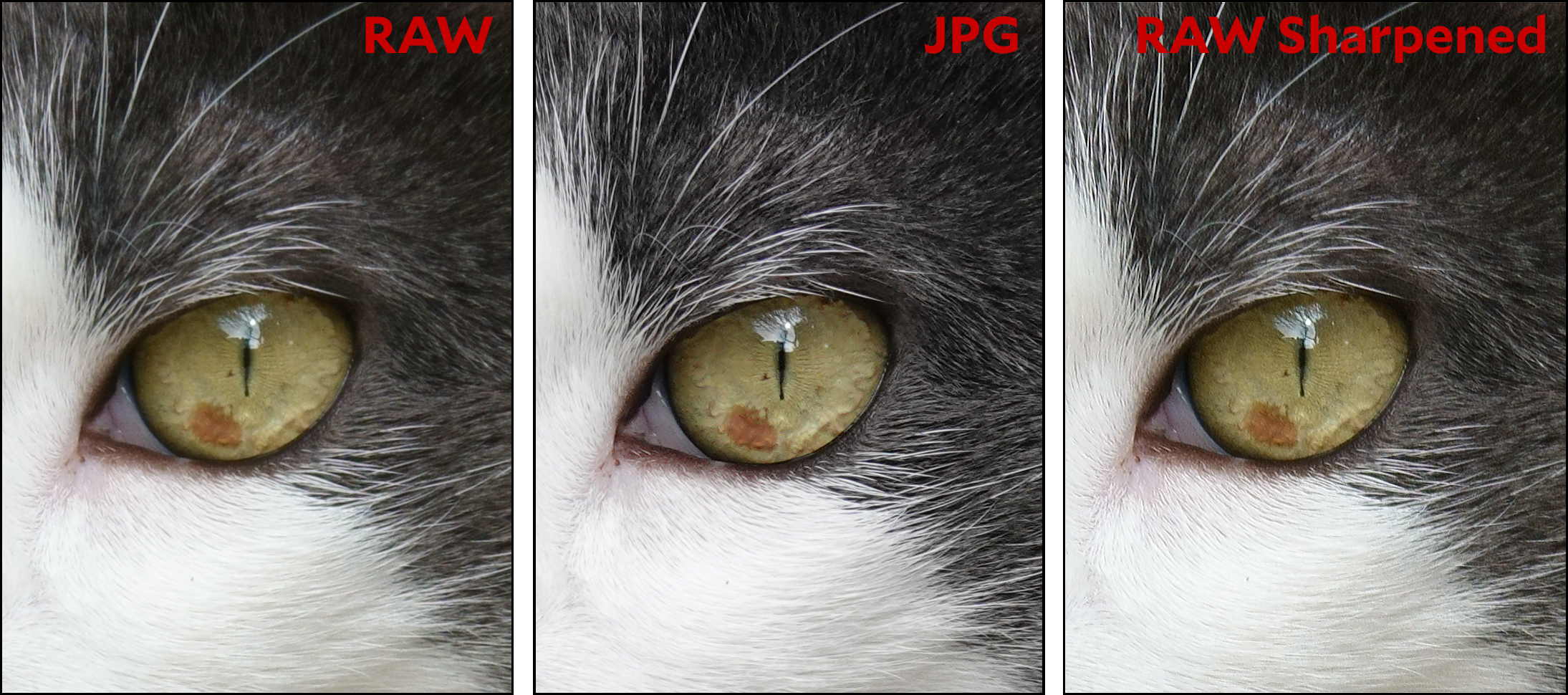
    Neither the weather nor the cat were especially cooperative, but I did get some pictures. The best one is below. On the left is the RAW image straight out of the camera. Next is the JPG image straight out of the camera. Finally there’s the RAW image manually sharpened to match the JPG image. As usual, right click if you want to view the images full size.

    The RAW image is fine, but the JPG image is obviously sharpened even further. That’s not unusual; the question is how much it’s sharpened. So I manually sharpened the RAW image to try to match the JPG, which would give me a sense of just how much sharpening was going on internal to the camera. Answer: a fair amount.

    Not a huge amount, but it’s not a light touch either. I often sharpen images, and I never use as much sharpening as I had to in order to match the camera’s JPG file. I’ve now dialed back the internal sharpening slightly and we’ll see what that looks like. The only other alternative is to shoot in RAW and do all the image processing myself. I’m not up to that yet—at least, not until I get an imaging app that can work easily with the Sony RAW format. There’s nothing very hard about that, but I haven’t done it yet. Maybe later.

  • Who Should the New York Times Hire to Speak for the Bernie Left?

    James Bennet is the editorial page editor of the New York Times. He started a couple of years ago, and immediately decided the op-ed page needed more intellectual diversity. One of his first hires was Bret Stephens from the Wall Street Journal, followed by a couple of other conservatives—which sent certain precincts of the left into a tizzy. He also hired some new liberals, but so far all his new writers have been center-left and center-right kinds of people. Andrew Sullivan thinks he should go further:

    In 2018, it seems to me you need to have someone who can represent the Bernie left. It’s the ascendant wing of the Democratic Party, after all, and after decades of neoliberalism, its time is surely coming again. The way in which no one on that page saw Trump coming, and had no grip on the populism gaining in strength everywhere was a pretty giant indictment of the insularity of left-liberal groupthink. Let’s hear from someone who is in favor of drastic redistribution and opposed to the hideous identity politics that now saturates the left and alienates everyone else.

    ….And you also need someone who is pro-Trumpism. It’s absurd that not a single writer on the op-ed page comes from this kind of background — realist and anti-intervention in foreign policy, anti–mass immigration, anti–free trade, and populist at home. Let’s see such a person tackle Stephens’s unreconstructed neoconservatism — from the right.

    Pro-Trumpism almost inherently includes a healthy dose of racism in the mix, so I’m not sure who you could get for that. I’m more interested in the Bernie liberal. There are plenty of them around, so that’s not the problem. The problem is that most of them are unreadable. This is something that struck me decades ago, long before I started blogging. In fact, I eventually grew to suspect that on the few occasions an op-ed page hired a far-lefty, they deliberately chose someone who would embarrass themselves and their movement.

    So who would be good at this? It needs to be somebody who can represent the Bernie left, but can do it in a way that appeals to the center-left readers who mostly read the Times. Any ideas?