• Google Has the Most Promising Approach to Political Ads

    Jakub Porzycki/NurPhoto via ZUMA

    We now have three big social media companies that have announced three different rules for political ads. In order:

    • Facebook will allow anyone to say anything.
    • Twitter will ban political ads completely.
    • Google will do away with hyper-local audience targeting.

    Unsurprisingly, nobody is happy with any of these companies. The reason is simple: a rule-free environment, like Facebook’s, allows an endless firehose of crap to be published. But if you add a rule, there will always be a requirement to interpret the rule. Twitter will have to decide which things are political ads and which aren’t. Google will have to do the same, since presumably hyper-local targeting will still be allowed for non-political accounts.

    So which is worse? Letting anything go, or having to continually make judgments about what’s allowed and what isn’t—and putting up with endless kvetching about how they’re getting it wrong?

    There is no good answer. For what it’s worth, I think Google has the most promising approach. Hyper-local targeting is what gives a lot of the most outrageous ads their power: their creators know they can say anything they want and it’s unlikely anyone in the mainstream media will ever see it or take it seriously. If you force them to broaden the reach of the ad, it costs more—which all by itself cuts down on some of the most frivolous stuff—and it’s more likely to become widely seen and do more harm than good to your preferred candidate.

    It’s true that Google still has to decide whether something is a “political” ad, but that’s doable. What’s more, they can afford to be fairly loose about this since, unlike Twitter, they aren’t banning the ads completely. Anyone who grumbles about being “censored” needs only change the targeting of their ad a bit so that more people can see it, and they’re back on the air. If they’re afraid to do that, it’s a pretty good sign that they’re up to something fairly sleazy.

    None of this is perfect, and nothing ever will be. One way or another, platform companies have to make decisions, and one way or another, some crap will get through and some legit stuff won’t. The best we can hope for is that social media companies take their responsibilities seriously and devote enough people to the task to prevent too many mistakes. We’ll see.

  • Having a Baby Cuts Crime by 25%

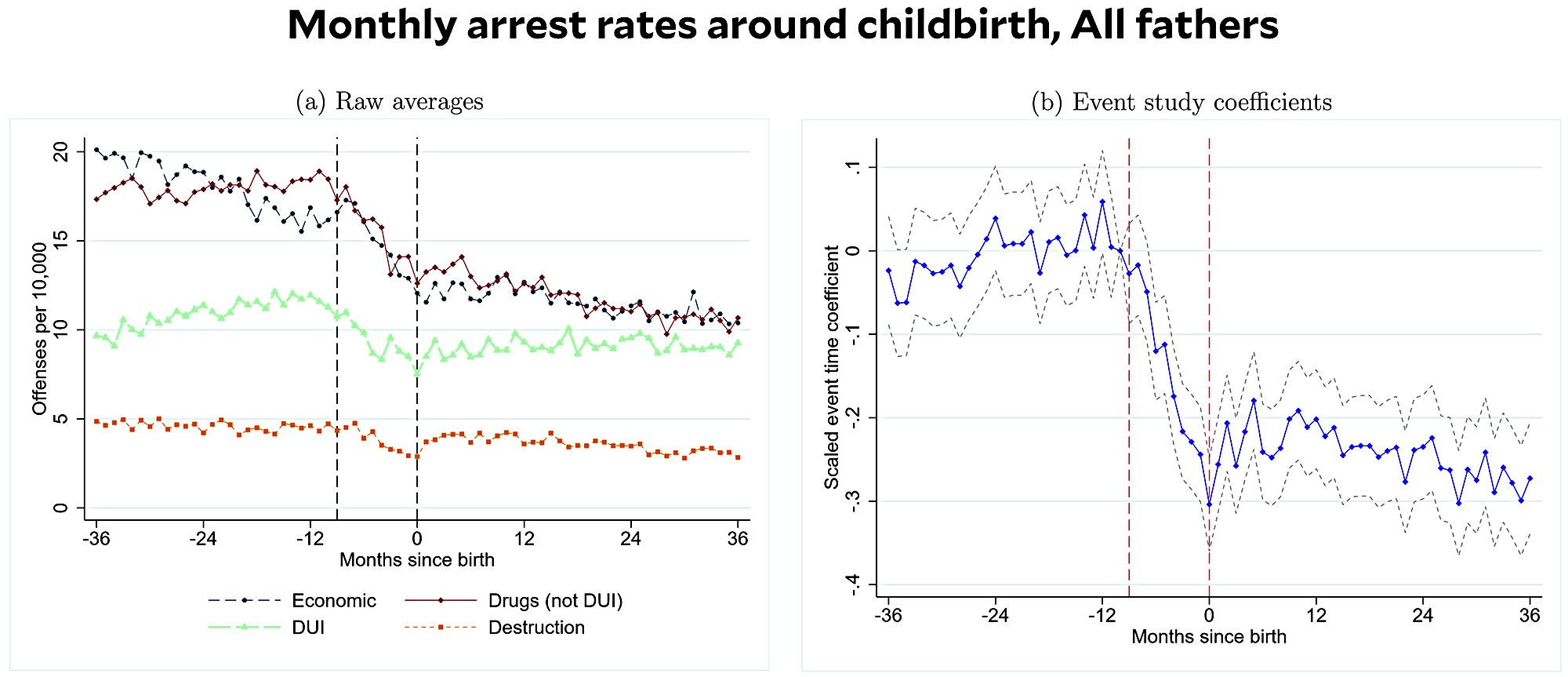
    Via Alex Tabarrok, here’s an interesting new paper about crime. It turns out that having a baby reduces crime among women substantially. This is unsurprising, and also of limited value since nearly all low-level crime is committed by men. So how does childbirth affect them? Here you go:

    The chart on the left shows drops in every kind of crime. The chart on the right puts everything together and shows a gigantic overall drop in crime when men become fathers. More accurately, given the timeline, it shows that the drop in crime begins during pregnancy. The mere prospect of becoming a father in the near future is enough to cut crime rates by about 25 percent.

    Nor is this effect limited to married men. Unmarried fathers offend at much higher rates than married men, but their offense rate drops far more than married men when their partner gets pregnant.

    This study is based on administrative data from Washington state, and it would certainly be worth replicating elsewhere. If it holds up, it shows that becoming a parent is one of the most powerful anti-crime tools around. Even the prospect of spending 20 years in prison has nowhere near the deterrent effect of having a baby.

  • Climate Change Is Still Second or Third Fiddle for Democrats

    Lev Radin/Pacific Press via ZUMA

    The closing statements from the candidates in a debate are entirely freestyle. They don’t have to respond to a question. They don’t have to worry about what some other candidate just said about them. For one minute, it’s a chance to tell the country what they think truly defines them.

    FWIW, that doesn’t appear to be climate change. Of the ten candidates on the stage last Wednesday, eight didn’t mention it at all. Elizabeth Warren mentioned it in passing as part of a laundry list, and even Tom Steyer only gave it a single sentence. Roughly speaking, the main topic the ten candidates addressed went like this:

    race, business background, race, technology, decency, race, race, race, corruption, US is greatest country in the world

    Race got five shoutouts; beating Trump got three; technology got one; and rah rah USA got one. This is fairly normal, I suppose, since closing statements are meant to either inspire or instill fear, not get into the weeds on policy. Nonetheless, for a group of people who are all willing to raise their hands to agree that climate change is an existential threat, they sure didn’t even feel like name-checking it when they had a free chance to do so. Apparently they didn’t think it was a subject that would motivate their voters.

    Sadly, they were probably right.

  • The Trump Homelessness Con Job Is Getting Near

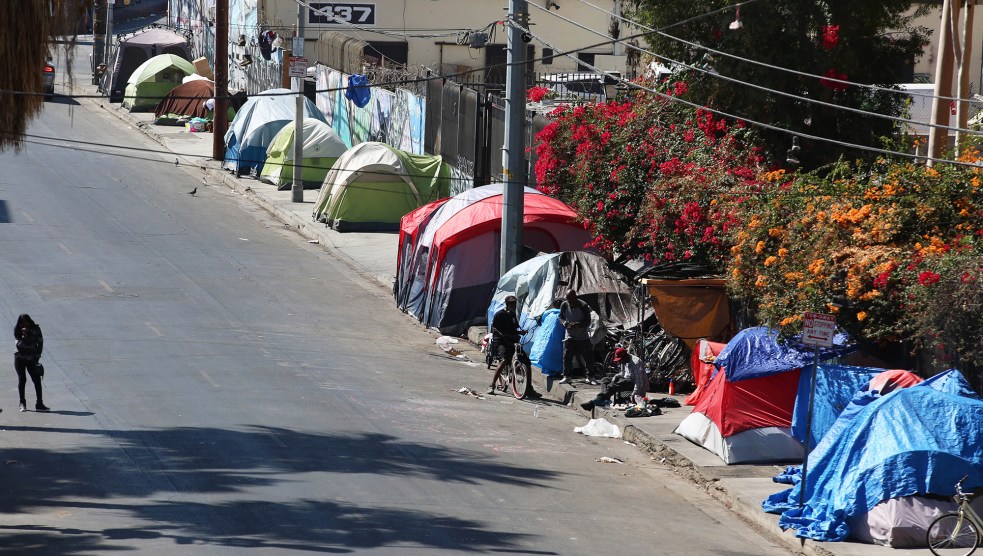
    Skid row in Los Angeles.Katrina Kochneva/ZUMA

    The Washington Post reports that President Trump is close to announcing a plan to “crack down” on homelessness in California. As near as I can tell, though, no one believes that he’s serious about helping the homeless. He just wants a big PR victory that shows what a hellhole Los Angeles and San Francisco are. Presumably they will replace “Chicago” as presidential code for liberal cities with big minority populations that are decaying before our eyes.

    The main reason to believe this comes, literally, in the very last paragraph of the Post story:

    The federal government has limited options when it comes to homelessness because it does not control local and state zoning laws on housing development, said Salim Furth, a housing expert at the libertarian-leaning Mercatus Center who has worked with the White House on housing policy….“I could imagine them declaring a homelessness emergency in seven cities and dedicate federal land” as an area where people could park RVs or install small units, Furth said. “But the truth is, in housing, there aren’t a lot of federal levers.”

    Right. It’s not like Trump can round up the homeless and put them in camps. Nor can he send in troops to toss tear gas grenades all over skid row. In fact, federal officials can’t do much at all. Hell, local officials have way more power than the feds, and even they’re so tightly hemmed in by laws that progress is agonizingly slow.

    But of course the feds can do one thing: barnstorm around with news cameras in tow, spouting damning statistics. This, I predict, is about all they’re going to do.

  • Fun With Statistics, Minority-Owned Banks Edition

    Axios reports that minority-owned banks have been disappearing since the financial crisis:

    Bank failures, mergers and closures have fueled a drop-off in the number of minority-owned banks. The institutions seek to provide financial services to communities left behind and underserved by the mainstream banking sector.

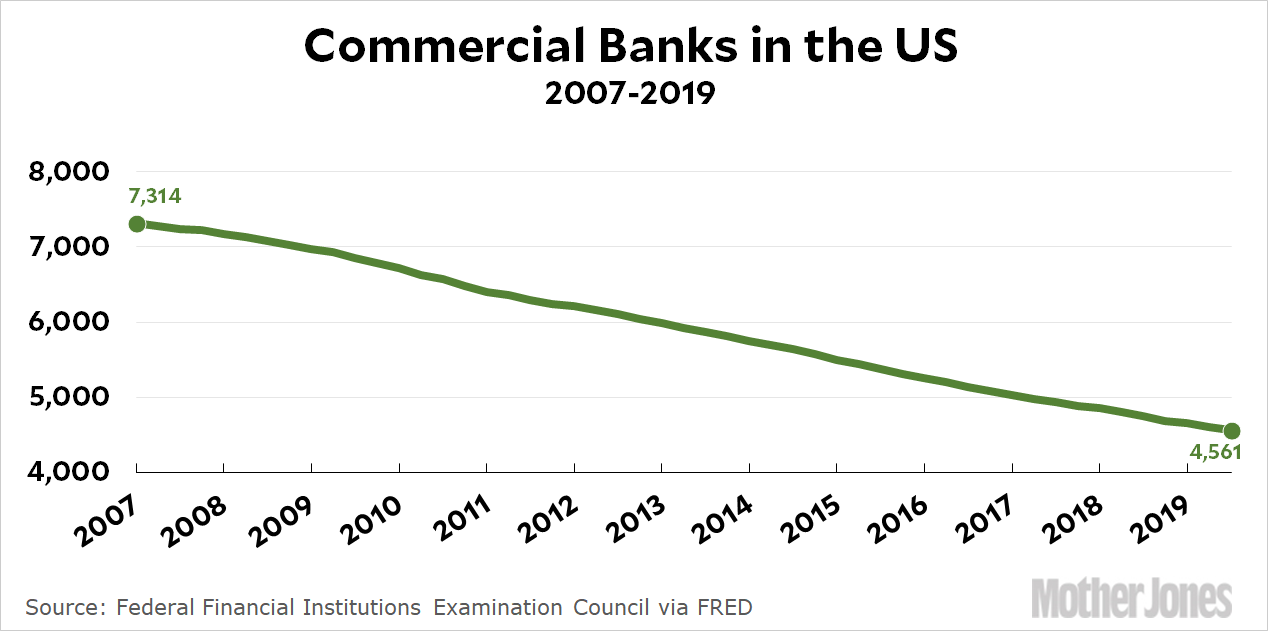
    I know we have bigger things to worry about, but reporting like this continues to annoy me. Technically, it’s true that there are fewer minority-owned banks than there used to be, but there are fewer banks of all kinds than we had before the financial crisis:

    So perhaps minority-owned banks aren’t in any special trouble. They’re just consolidating and failing like every other kind of bank. And sure enough, if you turn to the very first page of “Structural Change Among MDIs” in the report that Axios itself references, that’s exactly what it says:

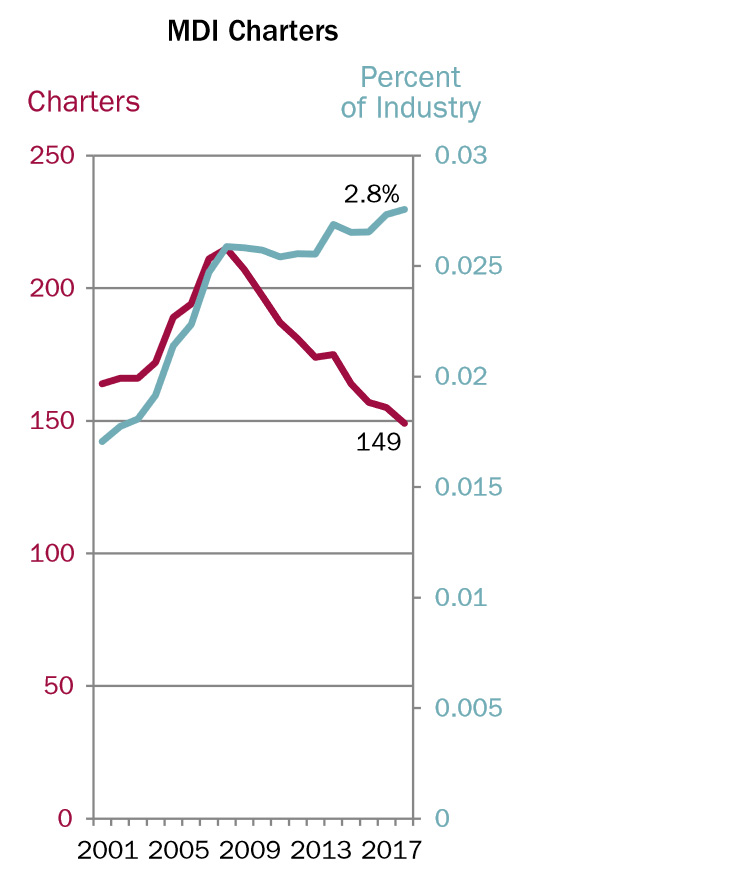
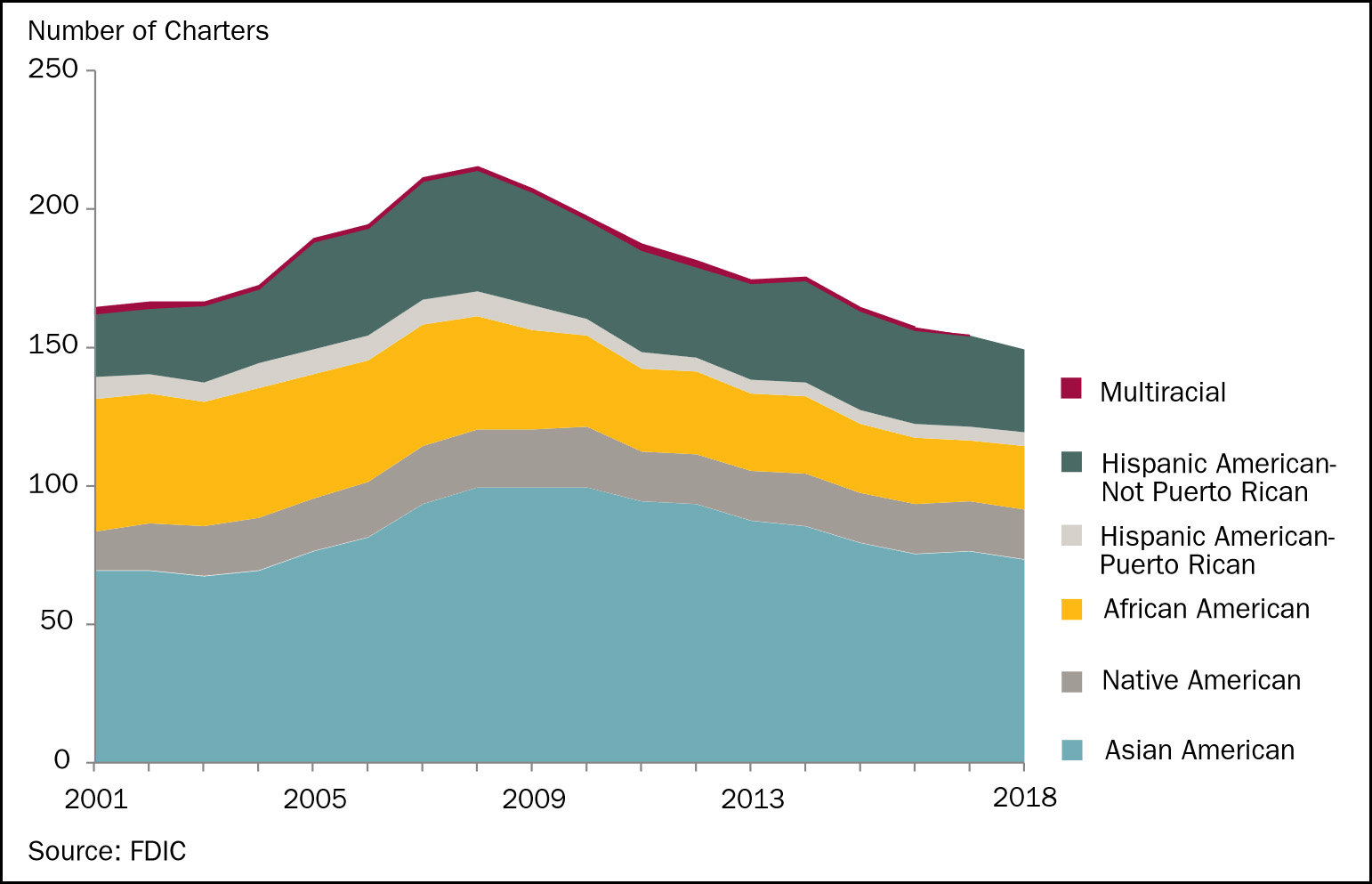
    As you can see, the number of minority charters has fallen since the financial crisis, but minority-owned banks actually make up a bigger share of the banking industry than they used to. In fact, the report says that although the number of minority-owned banks has declined since the peak of the financial bubble—hardly a surprise—in most cases the number has gone up since 2001:

    The number of MDIs with Native American minority status increased from 14 to 18 institutions since 2001. The number of Hispanic American MDIs grew from 31 institutions in 2001 to 35 in 2018, representing almost one-fourth of MDI charters. In addition, the number of Asian American MDIs increased from 69 to 73.

    There is only one exception to this: black-owned banks have cratered, going from 48 in 2001 to 21 this year:

    So: minority-owned banks aren’t really disappearing, they’ve just returned to their pre-bubble levels. In this, they’re doing better than most banks, which have declined substantially via consolidation and failure since 2001.

    However, there does appear to be a big problem with black-owned banks. That would be worth investigating further.

  • Obamacare Premiums Are Down This Year — But No One Knows It

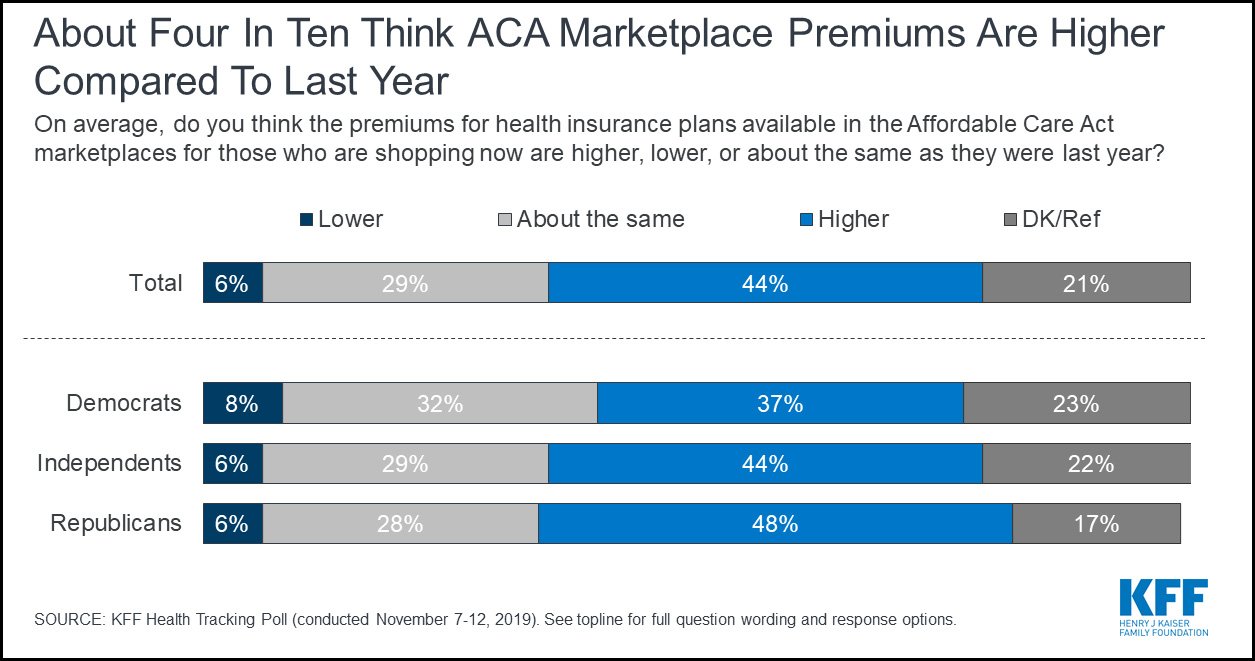
    Here are a couple of other interesting tidbits from the Kaiser tracking poll that I wrote about earlier this morning. First off, just about everyone—Democrats, Republicans, and Independents—thinks that Obamacare premiums have gone up this year:

    In fact, average premiums have gone down, an indication that the marketplace has started to stabilize. It would be worthwhile for Democrats to crow about this, don’t you think?

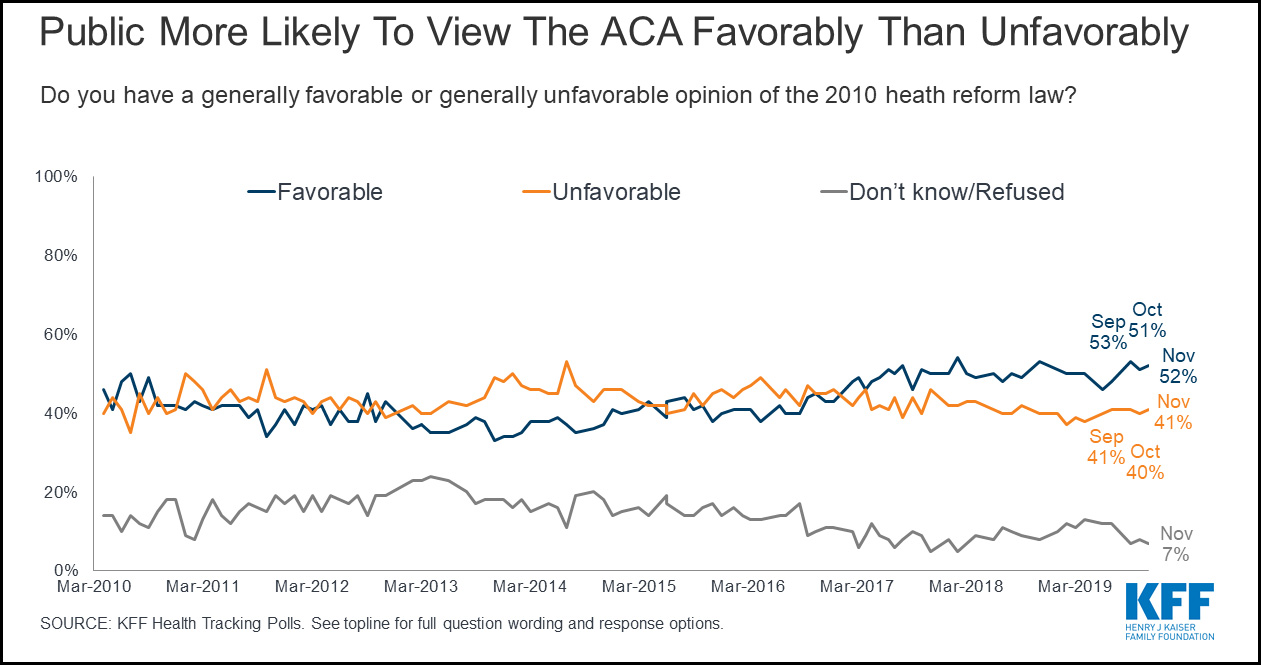
    But even with misconceptions about premiums widespread, favorable approval ratings for Obamacare have finally opened up a steady and seemingly permanent gap:

    Favorable opinions have stayed about 10 points above unfavorable for more than a year now. This took longer than I expected, but it looks like Obamacare is slowly but surely becoming an accepted part of the American social welfare landscape, just like Medicare and Social Security.