Fierce, investigative journalism doesn’t happen by accident—it happens because readers like you make it possible. Every dollar you give before midnight Friday to support our nonprofit newsroom will be matched dollar-for-dollar. We can’t do our work without you. Don’t miss this chance!
2X match ends Friday: Fierce, investigative journalism doesn’t happen by accident—it happens because readers like you make it possible. Every dollar you give before midnight Friday to support our nonprofit newsroom will be matched dollar-for-dollar. We can’t do our work without you. Don’t miss this chance!
Our president is on Twitter again today, this time telling progressive Democratic congresswomen “who originally came from countries whose governments are a complete and total catastrophe” to “go back and help fix the totally broken and crime infested places from which they came.” He then tried to bury it by retweeting a flurry of old stuff in hopes it would scroll off the bottom of the page, but it was way too late for that.
Honestly, though, I barely even care about this kind of crap from Trump anymore. His repulsive bigotry has been obvious for a long time, and it’s not as if anyone can pretend not to see it. What I do continue to care about is whether anyone from the Republican Party will say anything about this. Anything at all. Even a mild little rap on the knuckles.
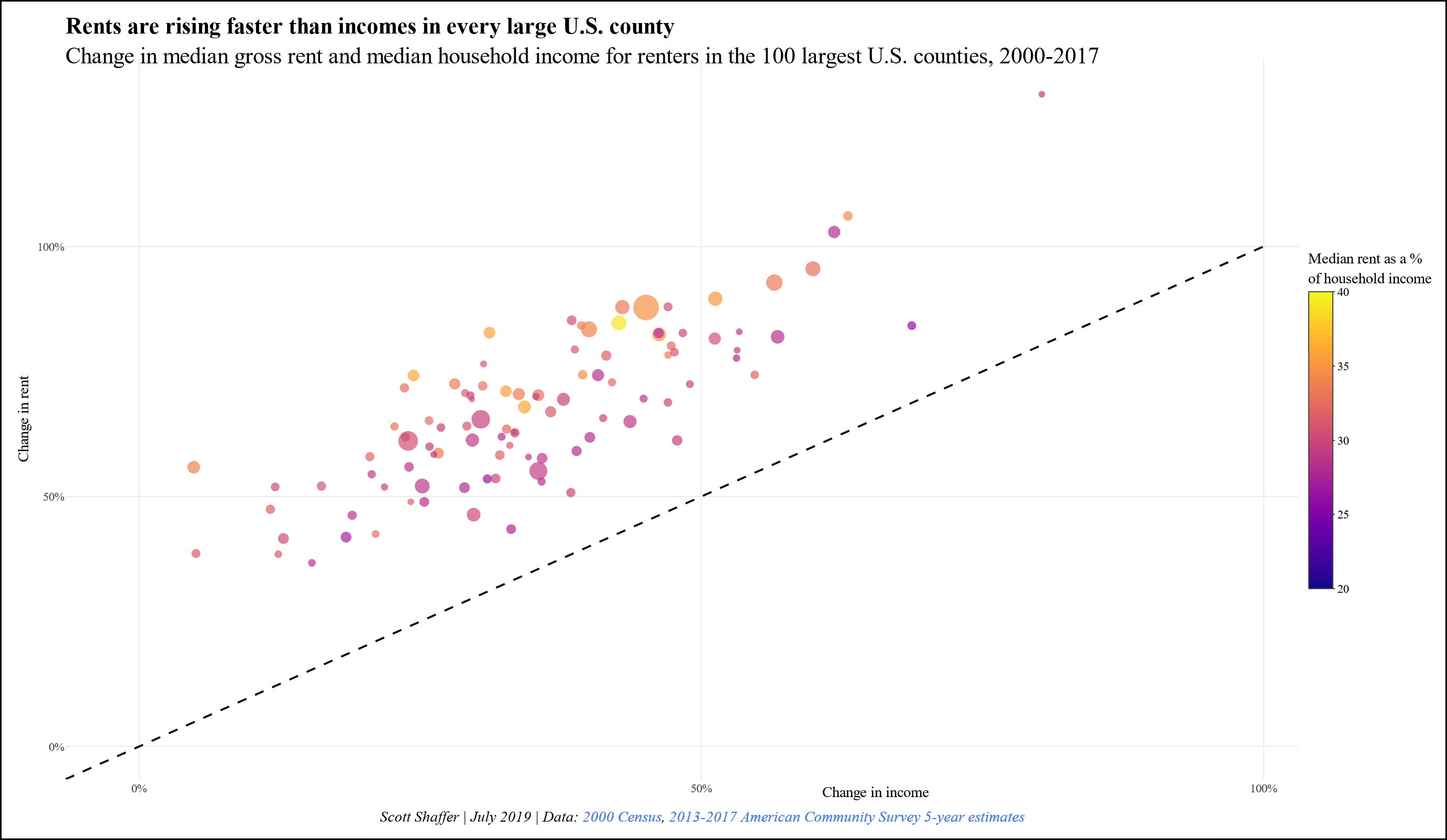
There are lots of ways of looking at the housing market. Via Twitter, Scott Shaffer suggests looking at the change in rent vs. change in income for the largest American communities. Here’s his chart:
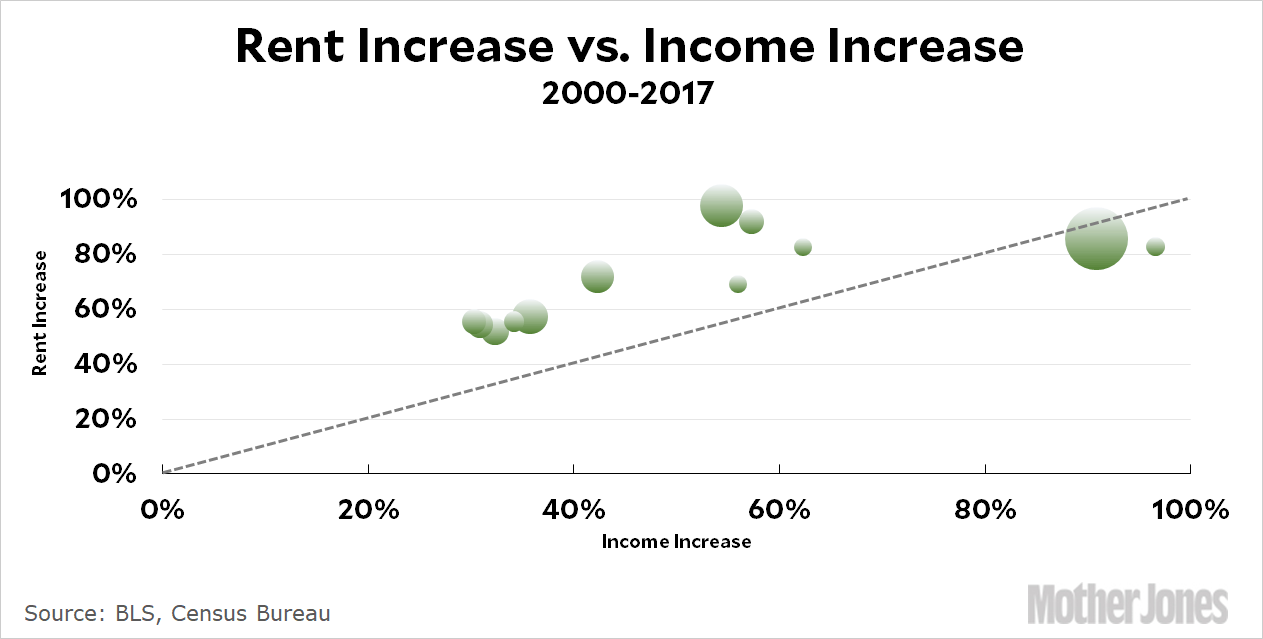
Shaffer’s data comes from the ACS. I created a similar chart for a dozen big cities using BLS rent inflation data and Census Bureau income data:
The results are similar, though Shaffer’s chart is more dramatic than mine. The ACS data suggests that, relative to income, rents have increased between 10-30 percent in the largest US counties since 2000. The BLS data comes in closer to 0-20 percent.
My chart is limited because the BLS doesn’t have historical rent series for more than about the dozen biggest cities. It also has the usual drawback of being based on entire metro areas, not just central cities, but Shaffer’s data is county-based and suffers from the same limitation. In any case, the more I’ve worked with this data the less I think this is a problem. In places with tight housing, the surrounding suburbs tend to increase in price at similar rates to the core city.
For what it’s worth, I’ve worked a bit with the ACS data and have come to have some suspicions about it. In Shaffer’s chart, for example, the scatterplot is surprisingly tight even though he’s plotted the top 100 counties. This means it goes all the way from Los Angeles down to cities like Birmingham, Stockton, and Rochester, and it’s hard to believe that every single one of them has seen such similar rent increases.
But then again, maybe they have. That’s part of the problem with this subject: there are lots of different data sources and none of them are ideal. The choice of starting and ending points can also make a big difference. What’s more, income vs. rent in big cities is inherently problematic since it can stay flat just by pushing out everyone with a middle income and attracting lots of new high-income residents. This is very much the case with San Francisco, for example.
Anyway, this is the latest cut at the housing data.
POSTSCRIPT: As usual, I should add that this is all median data and tells us nothing about low-income families or low-income housing. I’ve taken a stab or two at that, but the data is very difficult to get a handle on.
I cranked out several thousand words for a magazine article over the past couple of days, and this morning I threw one over par at the disc golf course. That’s the best score I’ve had in a while. My mojo is coming back! So here’s another Bodie picture for you because, why not?
More unexpected was an undercurrent of unease here that the Democratic Party, in its revulsion over Trump’s harsh policies and obnoxious rhetoric, is positioning itself too far to the left on immigration….Despite expectations that Latinos will be a crucial constituency in 2020, LULAC President Domingo Garcia told me that he thinks Democratic candidates made a mistake at a recent presidential debate. All 10 candidates who were onstage for the second night of debate raised their hands to show they would support providing government health coverage to people who are in the country illegally. Most of the others who are running have also said they would support that idea.
Given the fact that many U.S. citizens — a disproportionate number of them Hispanic — still lack coverage, “that was not a good general-election position to begin with, and it does not win them many votes in the Latino community,” Garcia said….Now, Garcia said, he worries that both parties are “pandering to their extremes.”
At last month’s debate, the Democratic candidates seemed to be in mortal fear that José Diaz-Balart would stare them down and cost them the election if they said anything that suggested even a slight dedication to enforcing immigration laws at the border. There were, obviously, other border issues that dominated the evening, and if you support national health care—as most Dems do—coverage for every resident comes with the territory. If you’re a US citizen traveling in London, the NHS will still treat your heart attack if you keel over waiting for the queen to pass by.
Still, there’s nothing hard about blasting Trump’s depredations on the border but still maintaining a moderate position on what our immigration laws should look like. I don’t think anyone has found that sweet spot yet.
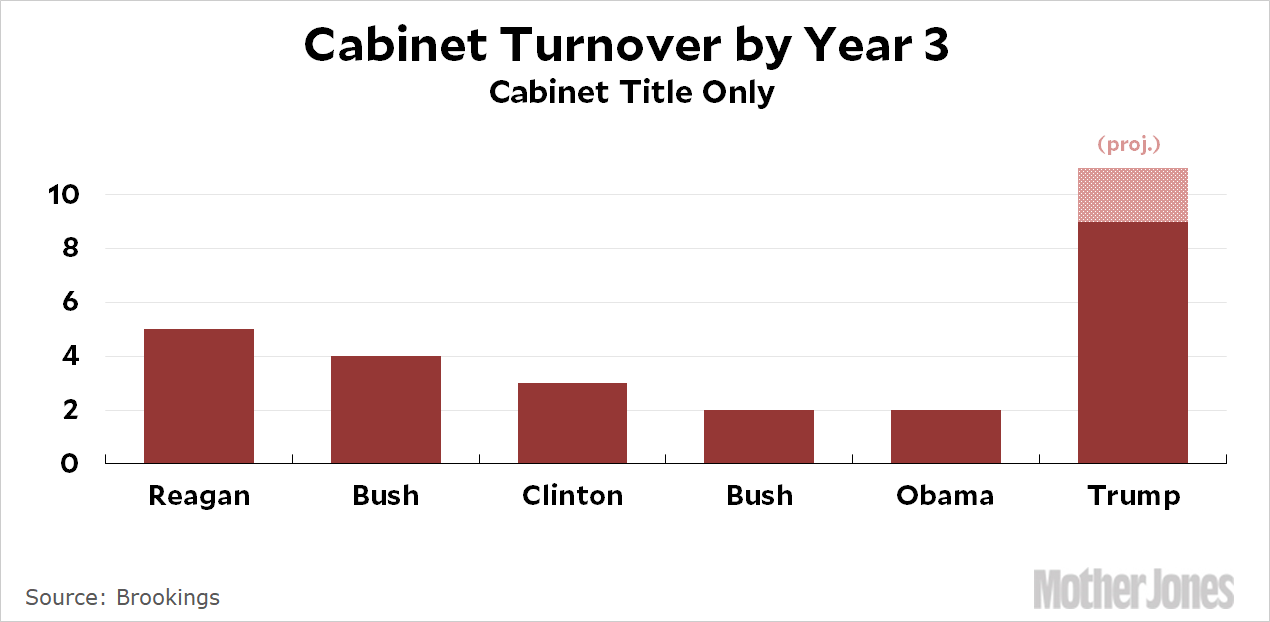
How does Donald Trump’s cabinet turnover compare to previous administrations? It’s surprisingly hard to get a straight answer, but the following numbers from Brookings seem to be about as good as it gets:
This is through the end of Year 3, and it includes only people who are department secretaries, not agency heads and others who are of “cabinet rank.”
Thanks for saving me from having to count this up. This means that two-thirds of Trump’s cabinet has been fired or resigned since he took office (14 out of 22). Remember back in the day, when the problem with government was simple: presidents kept hiring idiots and Trump was going to fix that by hiring only the best people? I guess he’s still looking for those people.
You remember Bodie the cockapoo, don’t you? You met him nearly a year ago, when he was just a few weeks old. Well, last weekend was his first birthday, so he joined us on the dog-friendly grounds of UC Irvine while we played a round of disc golf. The top picture is Bodie in his natural state, wet and dirty and loving every minute of it. The bottom picture is a rare image of Bodie at rest, looking spic and span because I took it near the start of the day.
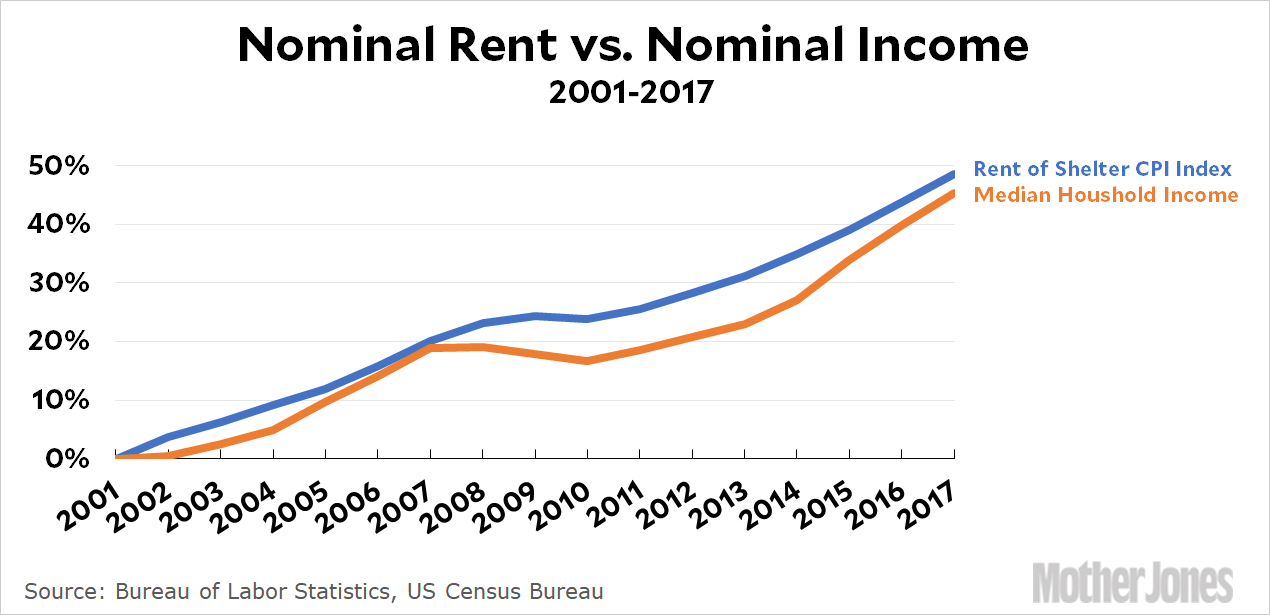
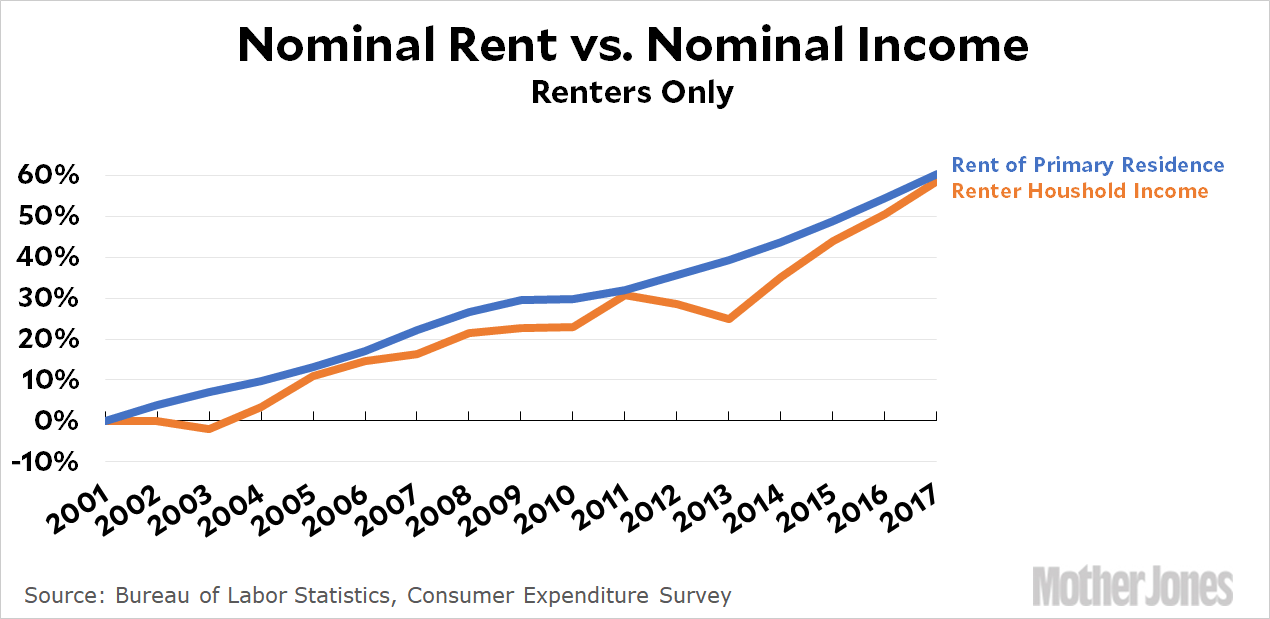
The problem is that this chart uses median income for everyone, including homeowners. How about income just for renters instead? There’s no single series for renters that everyone agrees on, but here it is using data from the Consumer Expenditure Survey:¹
If the CES is to be believed, the average income of renters has increased at the same rate as rent since 2001, and after a dip during the Great Recession it’s increased faster than rent. This is mean income, not median, which I’d prefer, but the growth rate of the two is probably pretty similar, especially over the short time frame of the past decade.
I have reason to be a little suspicious of the CES income figures, but only by a little bit. I wouldn’t be surprised if renter income is a little lower than this chart shows, but I have no reason to think it’s different enough to change the basic story here.
¹I’m also using a BLS series for rent that I think is more accurate than the one I used this morning. It shows rent growing faster than my original chart.
POSTSCRIPT: And just to make this clear, there’s no disagreement that families at or below the poverty line have to spend a big percentage of their income on rent. However, this is not a failure of the market. Builders could put up shelter in the middle of Los Angeles for $500 per unit, but not anything that would meet the building code. I’m pretty sure no one wants low-income housing that’s little more than a one-room hut with a sink and a couple of electrical outlets, which means that if we want more housing for the poor the only real answer is more public assistance. And this is something we should do.
In a lengthy rant to reporters at the White House today that was unhinged even by Trumpian standards…
Yeah, sure, how many times have I heard that before? Anyway, fine, carry on. The subject is Paul Ryan, who popped out from retirement yesterday to remark that Trump was astonishingly ignorant about how the government works:
In a lengthy rant to reporters at the White House today that was unhinged even by Trumpian standards, the president made several attacks on the former Speaker of the House. Employing his favorite method of turning the insult around on the insulter, Trump claimed it was Ryan who had no knowledge of the government: “Frankly, he was a baby, he didn’t know what he was doing.”
More strangely, Trump’s indictment of Ryan’s tenure includes lambasting him for failing to get subpoenas: “He was no leader … he wouldn’t get subpoenas … when Nancy Pelosi hands them out like they’re cookies.” It’s true that Ryan did not use his subpoena power as Speaker. That’s because he was cooperating with Trump by refusing to allow any oversight of the administration. Ryan refused to send out subpoenas because Trump didn’t want him to. Trump is attacking Ryan for helping to cover up Trump’s misconduct.
This is nothing new for Trump. He routinely says whatever’s handy, even if it directly contradicts something he said last year or last month or even yesterday. I don’t even know if he knows he’s doing it. He just blurts out whatever he thinks will appeal to his base, in the firm knowledge that the only people who will realize he’s being a moron are just effete intellectuals who won’t vote for him anyway.
¹Which I’m totally not doing because I’m, you know, working.
This is a curious plan. As near as I can tell, it recommends no actions to improve border law enforcement in any way. There’s nothing about either a wall or a “virtual wall.” There’s nothing about E-Verify. There’s nothing about “smarter” or “more efficient” enforcement. No one will ever be deported—except, presumably, for serious felons, though Warren doesn’t even say that explicitly. Expedited removal will be ended. The Border Patrol will be reshaped from “top to bottom,” and will focus their efforts on “homeland security efforts like screening cargo, identifying counterfeit goods, and preventing smuggling and trafficking.” The whole thing is very similar to Julian Castro’s plan.
I have previously criticized Republicans who accused liberals of wanting “open borders.” President Trump tweets about this endlessly. But I have to admit that it’s hard to see much daylight between Warren’s plan and de facto open borders. As near as I can tell, CBP will be retasked away from patrolling the border looking for illegal crossings; if border officers happen to apprehend someone, they’ll be released almost immediately; if they bother to show up for their court date, they’ll have a lawyer appointed for them; and employers will have no particular reason to fear giving them a job.
Am I missing something here? Does Warren’s plan explicitly make it vanishingly unlikely that anyone crossing our border will ever be caught and sent back?
Can you pitch in a few bucks to help fund Mother Jones' investigative journalism? We're a nonprofit (so it's tax-deductible), and reader support makes up about two-thirds of our budget.
We noticed you have an ad blocker on. Can you pitch in a few bucks to help fund Mother Jones' investigative journalism?