Still no results from Iowa. This is a dex night, so I don’t mind that I have to stay up late for this, but I hope they get us some results eventually. I’m beginning to wonder. Will this be our first election with a computer screwup so bad that we literally never find out who won? That would sure make Mike Bloomberg’s decision not to spend $50 million in Iowa look smart, wouldn’t it?
Anyway, if and when we get results, I suppose I’ll have something to say about them. At the moment, I see that Pete Buttigieg is just declaring victory even with no results in, which I suppose is smart. Who knows? Maybe that’s all that anyone will remember even if the official results released in 2021 show him losing.
I’m bored and tired right now, so let’s pick a fight with someone over at National Review. Let’s see . . . how about Kevin Williamson?
Part of the case against Trump is that he misused executive power by ordering the government to do things that he did not have the legal power to order the government to do….But even as senators are delivering these really enjoyable lectures about defending the powers of Congress against executive arrogation, Senator Sanders is out there on the campaign trail promising to issue dozens of executive orders in order to circumvent Congress.
….“I’m president, I’m not king,” President Obama said in 2010. “There’s a limit to the discretion that I can show because I’m obliged to execute the law. I can’t just make the laws up myself.” Only a few months later, he would decide that he was not limited after all and make the very declaration he’d just said he didn’t have the power to make….In 2016, the Obama administration failed to win the vote of a single justice (including from his appointees) in ten cases brought before the Supreme Court.
Conservatives have been on the warpath against Obama’s executive orders for years. On January 20, 2017, most of them suddenly went quiet and liberals went on the warpath against Trump’s executive orders. This is fine, as long as you’re merely arguing about whether or not you like a particular executive order on a policy level. But when you get to arguing that an executive order is literally an assault on the Constitution, you’re on very slippery ground. Lawsuits are inevitable and fully expected in the kinds of cases we’re talking about, which means that when a president signs an EO he’s effectively asking the judiciary to rule on the power of the executive branch. There’s nothing wrong with that. What’s more, it’s sort of self-modulating. An EO that’s obviously defective will produce an emergency stay and then get quickly overturned permanently by a large majority of the Supreme Court.
Conversely, a close call is almost certain to stay in force for a while until it wends its way upward, eventually getting upheld or overturned by a small margin. This kind of negative feedback does two things. First, it allows executive orders to remain in force based on how likely they are to be a proper use of executive power. Second, it provides presidents with a good idea of what will fly and what won’t. Most of them will eventually get the message and quit bothering with crowd pleasers that are just going to get quickly stayed.
So there’s really nothing wrong with being aggressive about executive orders. In the case of, say, a ban on immigration from certain countries, Trump is taking a public action and then arguing in open court about his power to do this. That’s fine—and very different from the Ukraine version of Trump “ordering the government to do things that he did not have the legal power to order the government to do.”
In the case of Ukraine, Trump secretly set aside the expressed will of Congress to provide military aid to Ukraine. He secretly instructed his aides to lie about why aid was being withheld. He secretly advised the Ukrainian government that he wouldn’t release the aid unless they investigated a campaign opponent—a personal benefit that had nothing to do with legitimate foreign policy. Trump’s own administration advised him in secret that this was probably illegal, but Trump continued anyway.
These are wildly different things, not just different shades of gray. In one case, the president is publicly asking the courts if he has the authority to enact a particular bit of legitimate policy. It features built-in negative feedback. In the other, he is secretly demanding a personal benefit from a foreign leader in return for disbursing money that he knows he’s congressionally mandated to disburse. What’s worse, by acquitting him of wrongdoing it will become an action with built-in positive feedback.
One of these is OK; the other isn’t. In any case, they certainly aren’t both covered by “ordering the government to do things that he did not have the legal power to order the government to do.”
I mentioned on Wednesday that last week’s trip to northern Arizona was mainly about photographing the famous slot canyons near Page. You may or may not know what a slot canyon is, but you’ll recognize one when you see a picture. So here’s a picture:
I’ve been admiring pictures in galleries of the slot canyons for the past couple of decades, and I’ve been meaning to go see them that entire time. Last year I finally decided to do it, and my timing couldn’t have been worse. It turns out that the slot canyon tours have become overwhelmed with tourists in the Instagram age, so the Navajo tribes that run them decided to eliminate photo tours a couple of ago. The photo tours are more expensive, but they’re limited to a few people and you’re allowed more time in the canyons. Both of these things are crucial to getting decent quality shots.
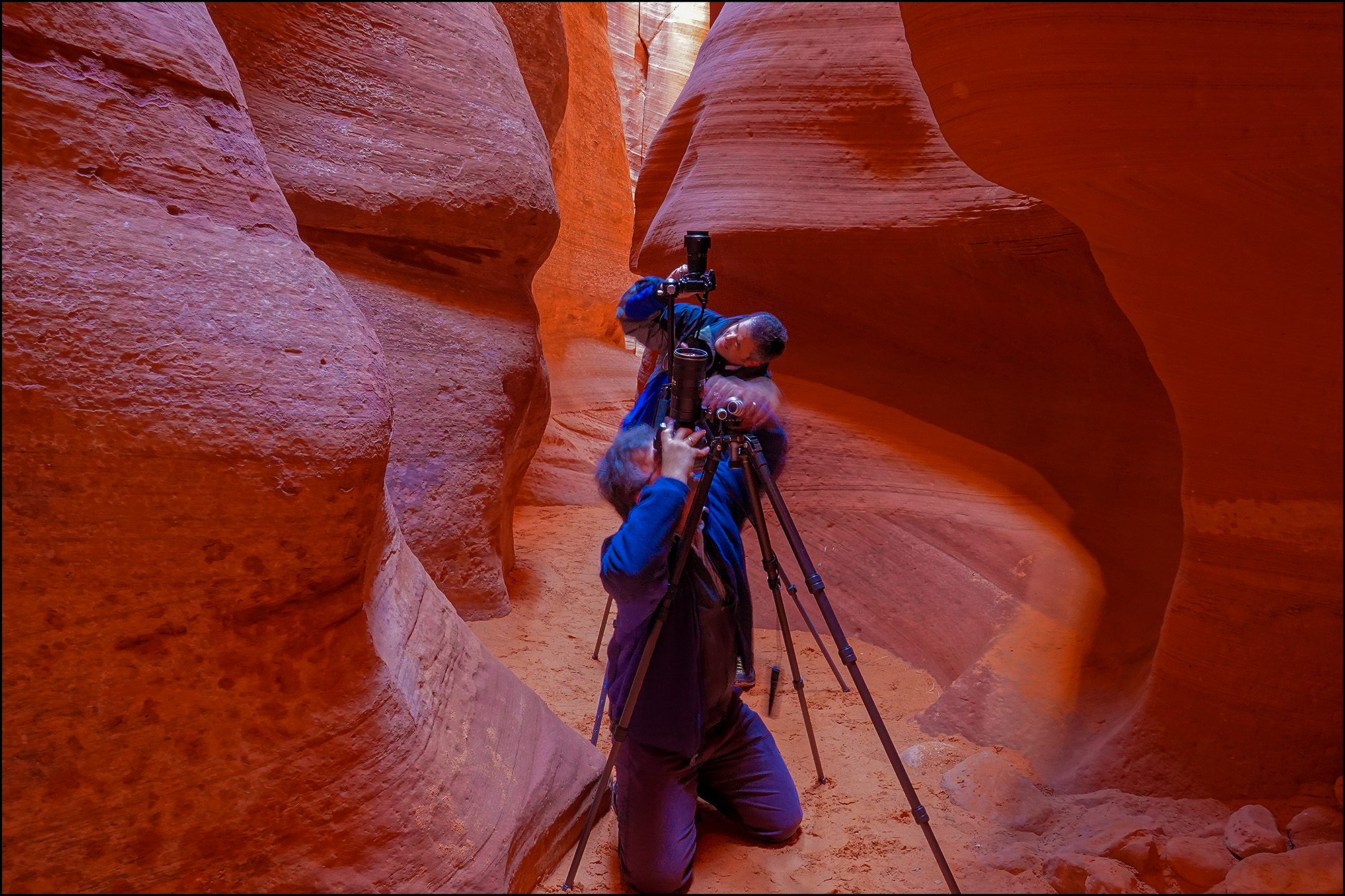
So I looked around and discovered that although the two most famous canyons no longer offered photo tours, you can still book a photo tour of Slot Canyon X, which is not as well known. So I did. And it was great. The guys in the picture above are two of the other photographers who were on my tour, and they are desperately trying to frame their shots through their viewfinders while their cameras are pointed straight up. This is why I will never buy a camera without an articulating LCD screen. I was able to frame my shots far faster, and I followed the secret advice of pros when it comes to lining up shots: don’t bother. Just take lots of pictures instead. In the digital age, there’s no reason not to.
This was the first time that I seriously used the HDR function on my camera. HDR stands for High Dynamic Range, which means the camera can get good pictures even when there are deep shadows and bright highlights. It does this by taking three separate exposures and then merging them together, which is why the photographers above are blurry. The camera could merge the background, which stayed still, but obviously couldn’t merge separate shots of a moving person.
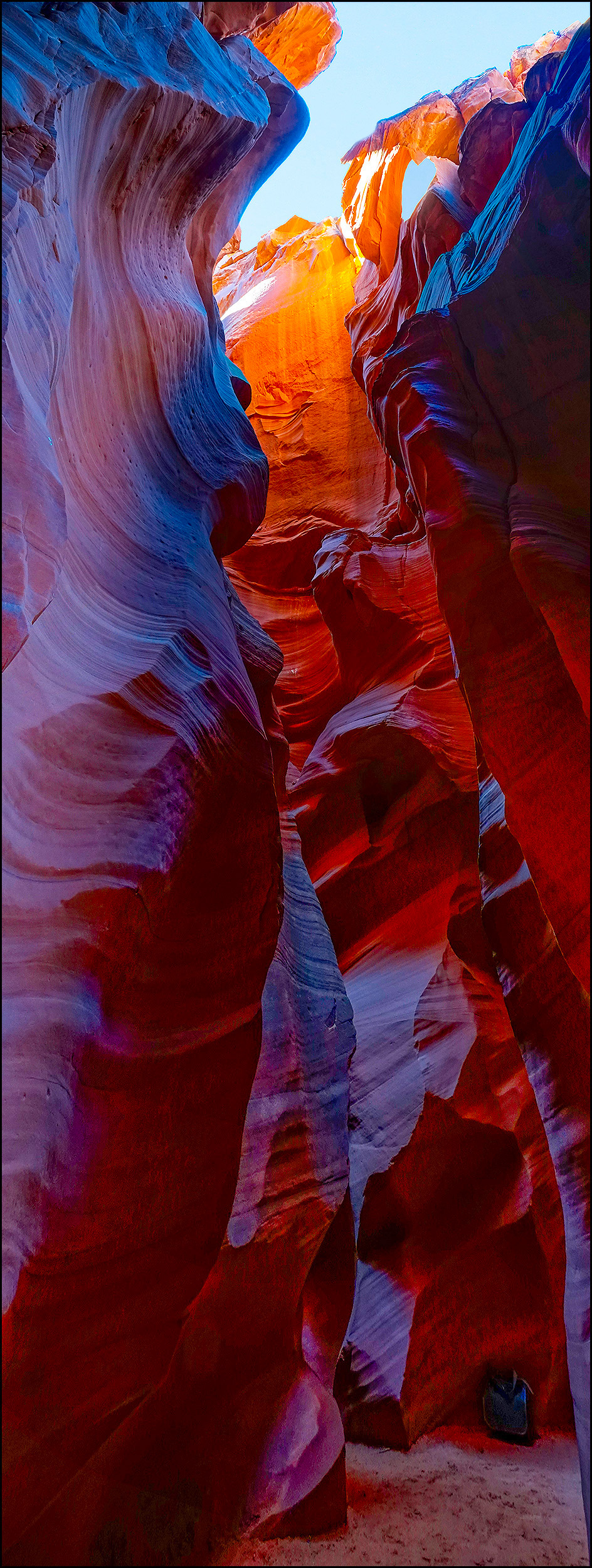
If you’re wondering why these guys were shooting straight up, it’s to get shots of the canyon openings up top, which sport a beautiful golden glow in bright sunlight. Here’s an example:
This is a panorama shot. I took four separate pictures and then Photoshop merged them together. Without this, I could have gotten the top quarter or the bottom quarter, but I couldn’t show the entire thing. A wide angle lens would have improved matters a little, but not much, and there’s no way to move further back since I was already against a wall. The merge function is a minor miracle, and it’s perfectly suited for situations like this.
Here’s one more:
January 27, 2020 — Navajo Nation, Highway 98, Arizona
This is a lovely shot of the canyon walls, and yet another demonstration of what Photoshop can do. Even with HDR, the rightmost piece of this photo was jet black when it came out of the camera, and that ruined the entire shot. But Photoshop pulled up the shadows well enough to show some color over there, and that turned it into a really nice picture.
I won’t torture you with every single slot canyon picture I took. I’ve got about three dozen. But you’ll definitely be seeing a bunch more of them over the course of the year. You’ll also be seeing pictures of starry nights, the Grand Canyon, Monument Valley, Horseshoe Bend, Hoover Dam, and much more. It was, as I said last week, a stunningly beautiful trip.
Bear with me here. Today the Democratic impeachment managers are giving their closing statement. Tomorrow it’s the Republicans’ turn. They have eight hours, and then on Wednesday the Senate holds a final vote on convicting President Trump.
But is there anything stopping Trump’s team from doing a quickie one-hour statement and then turning the floor over to Mitch McConnell for a final vote? That way, Trump would be acquitted on Tuesday before he delivers his State of the Union address.
That’s what I’d do if I were them.
UPDATE: I’m really out of it today. Closing statements are over, and today and tomorrow are reserved for 10-minute mini-speeches from any senator who wants to give one. So the final vote is on Wednesday regardless.
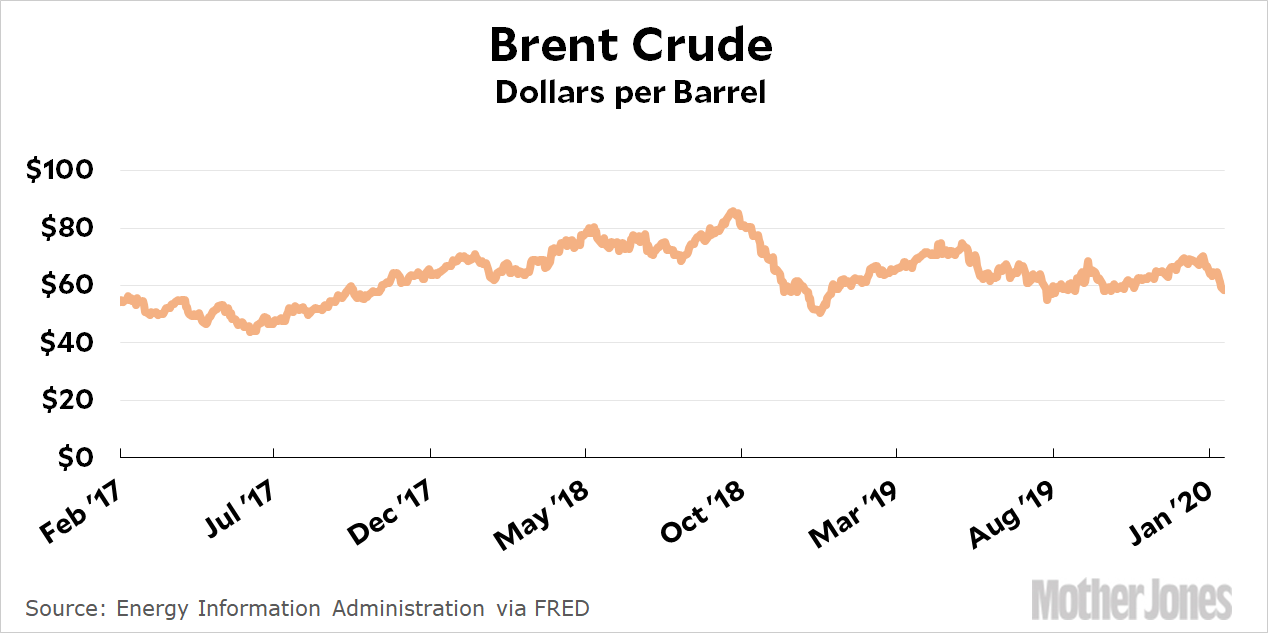
Saudi Arabia is pushing for a major short-term oil production cut as it seeks to respond to the impact of China’s deadly coronavirus on crude demand, according to OPEC officials….Representatives of the Organization of the Petroleum Exporting Countries and its allies are set to meet Tuesday and Wednesday to debate possible action after the outbreak originating in China, the world’s largest oil consumer, contributed to a sharp drop in crude prices.
Hmmm. It doesn’t look like all that sharp a drop. There are about five similar drops over the past two years, and none of them required a plague outbreak. So maybe January’s decline is just another ordinary little slump caused by a so-so global economy and an increase in American spare capacity thanks to fracking.
The Democratic primary finally gets underway today. Hooray!
And let me just say this in defense of caucuses: at least we don’t have to put up with early exit polls in caucus states. Nobody shows up to vote until 7 pm and the whole thing is finished in an hour. I don’t know if anyone even bothers with an entrance poll, but it wouldn’t do much good anyway. The rules are too weird and the official results come back too fast for an entrance poll to make much sense. So sit back, relax, and turn on the TV around 8 pm Central Time. We’ll know the winner soon enough.
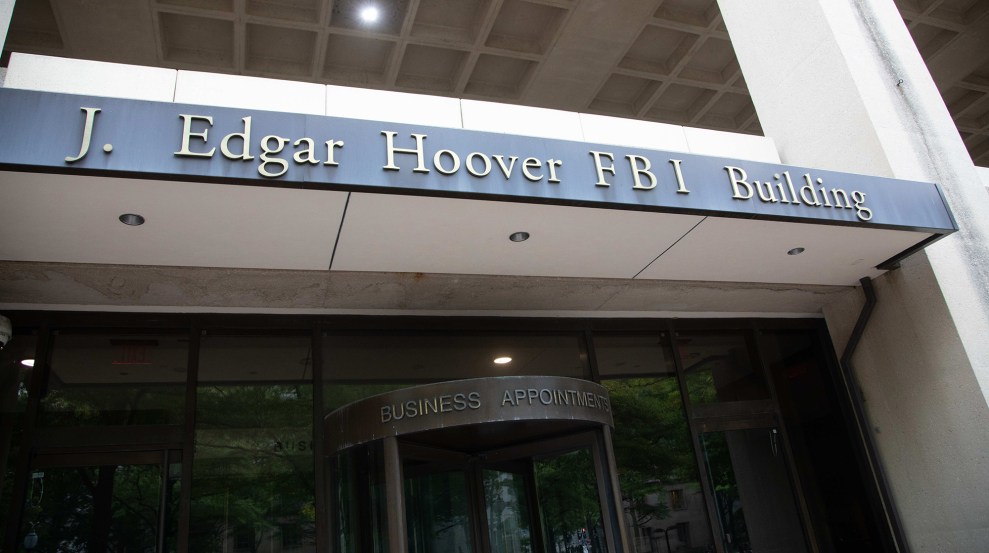
Over in Commentary, Eli Lake has a fairly evenhanded review of the FBI’s investigation of Donald Trump’s 2016 presidential campaign. If I had written it the emphasis would be different here and there, but that’s hardly surprising. Quibbles aside, if you’re looking for a decent review of how events unfolded, you could do a lot worse.
Obama did not tap Trump’s phones. But his FBI did spy on Trump’s campaign. That fact is no longer in dispute. The question is whether the FBI was justified in treating the Trump campaign itself as a suspect in this crime against the 2016 election.
The answer is messy. A comprehensive survey of all available information about the matter shows there were grounds in the summer of 2016 for American intelligence and law-enforcement officials at the FBI to turn their attention to the peculiar behavior of some Trump campaign advisers. But as the bureau learned more about them, it should have reassessed its theory of the case. Indeed, it was obliged to do so—by law, and custom, and elementary standards of fairness….Even after the bureau had good reason to doubt its veracity, it didn’t share the exculpatory information it had uncovered—not with the public, not with the courts, and not even with the Justice Department lawyers who were supposed to check its work.
The result was a debacle. What had been teased as the greatest espionage scandal in American history—a U.S. president conspiring with Russia to steal an election—today should be seen as a cautionary tale about the fallibility of our lawmen and spies, the credulity of our press, and the hubris and hysteria of Trump’s resistance.
If there’s one thing that conservatives need to knock off doing, it’s claiming that the FBI “spied” on the Trump campaign. As Lake acknowledges, they opened a legitimate investigation. There are no other circumstances under which conservatives—or much of anyone else—would call this spying. That’s an obviously loaded term designed to make the whole thing look like a deep-state conspiracy, and it’s not worthy of anyone who claims to be any more serious about things than hacks like Sean Hannity or Lou Dobbs.
As Lake makes clear if you pay attention to the timeline, even “investigation” is stretching things. The FBI had been looking into Paul Manafort long before Trump hired him, so his investigation had nothing to do with the Trump campaign. The investigation that was related to Trump’s campaign didn’t even start until late July of 2016, and the FISA warrant for Carter Page wasn’t filed until October. In other words, the investigation, such as it was, only barely got underway during the presidential campaign, and nothing about it was leaked until the very end of October, when the New York Times ran a piece explicitly saying the FBI hadn’t discovered a link between Trump and Russia.
So there’s no reason to believe the FBI had it in for Trump. Quite the contrary. Among other things, we know for a fact that the New York office was pro-Trump and we know that FBI director James Comey most likely won the election for Trump by very publicly reopening the FBI’s investigation of Hillary Clinton’s emails. Later on, the Mueller investigation was provoked not by Democrats but by a Republican president firing a Republican FBI director under dodgy circumstances, and a bipartisan Congress then appointing a Republican investigator to look into it.
In the end, though, the FBI did make a big mistake in its handling of the Carter Page surveillance. But there’s no reason to believe this was the result of partisan bias or deep-state conspiracy. Carter Page, after all, was a very small fish under any circumstances. What there is reason to believe is that our criminal justice establishment is riddled with what Lake delicately calls the “fallibility of our lawmen.” There is endless evidence of this, virtually all of it not in high-profile cases like this one, but in day-to-day cases of ordinary crime. This is something that liberals have been hollering about for decades, and it would be nice if conservatives could use the opportunity of this investigation to start taking it seriously too. Our “lawmen” are indeed fallible and often worse, and that’s something we should all acknowledge even when there’s no particular partisan motivation to do so.
Bob Somerby complains today about an op-ed in the New York Times arguing that lots of poor schools get less funding than rich schools. The issue, it turns out, isn’t money per se; it’s the fact that poor schools attract lots of new teachers who are paid less than more experienced teachers. This disparity in teacher pay amounts to about $1,200 per student.
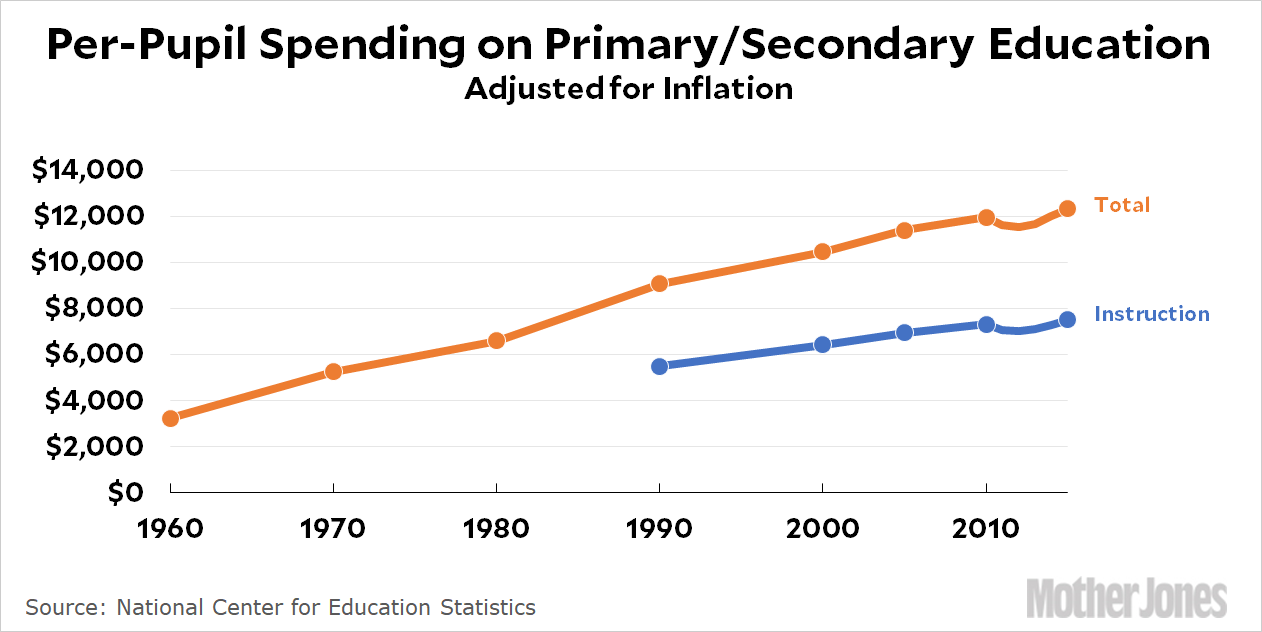
Total spending per pupil has doubled since 1980 and quadrupled since 1960. Both total spending and instructional spending have increased by a third since 1990. And if you’re thinking that this increase is a mirage because all the money—and more!—just goes to higher teacher salaries demanded by militant teacher unions, think again:
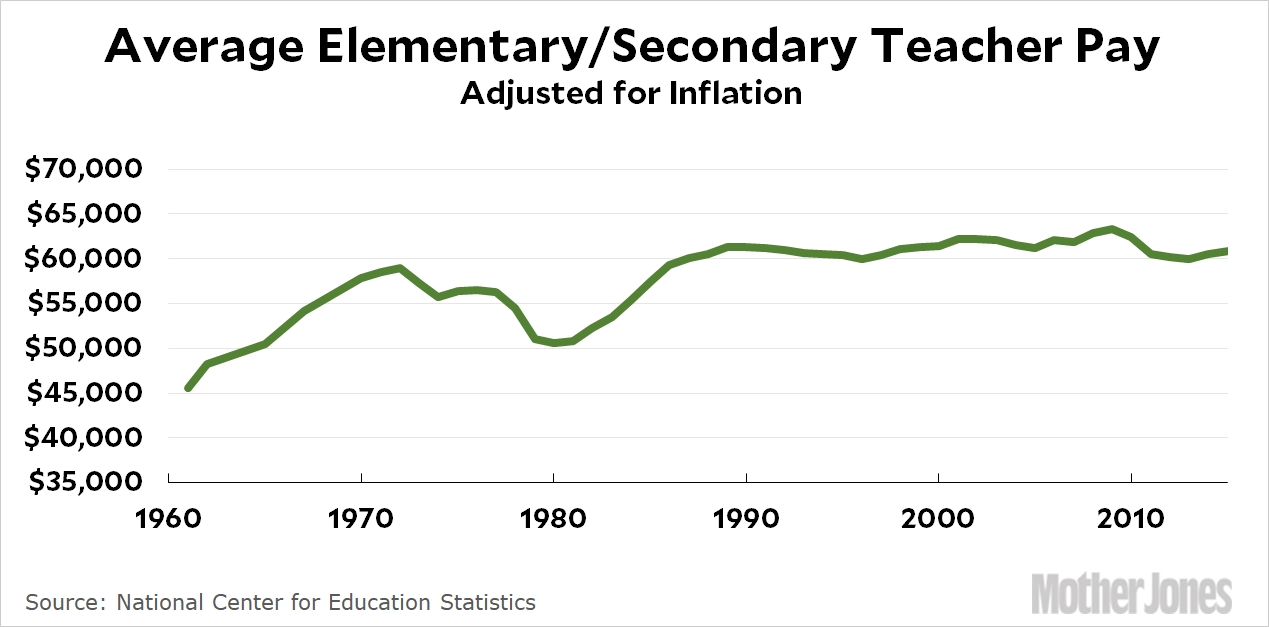
Teacher pay jumped in the ’60s but it’s gone nowhere since then. It’s actually gone slightly down since 1990. The increase in instructional spending comes from more aides, more counselors, more computers, and so forth. And our school spending is ahead of most of the rest of the world:
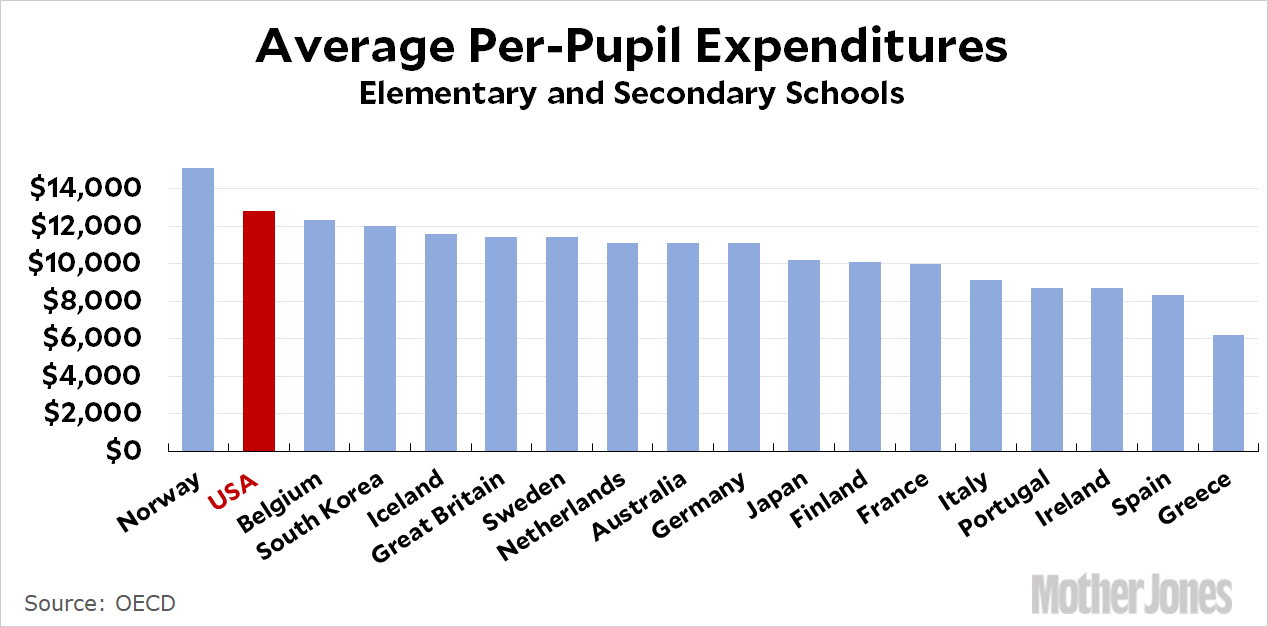
With the exception of the oil-driven socialists in Norway, we spend more money on public schools than any other country in the world.
Now, this may be fair. For one thing, the top ten non-Norwegian countries all spend about the same amount. We’re not a leader, we’re just comfortably among the high spenders. And it’s easy to argue that our national history of racism has produced a situation that requires higher spending for education than more homogeneous countries like Iceland and Japan. Merely spending as much isn’t enough.
But even with all that said, and even conceding the problem with teachers opting to leave poor schools when they get the experience and seniority to do so, spending on education has gone up a lot in the United States. A per-pupil difference of $1,200 between poor and rich schools is small potatoes compared to the average increase of $7,000 across all schools since 1980.
I’m not arguing here that we shouldn’t be concerned about equitable school funding. Of course we should be. In fact, poor school districts should get more funding, not just equitable funding, since they obviously have both tougher educational problems than rich school districts and fewer parents able to donate extra cash for extracurricular activities. Nonetheless, I think it remains a fact that whatever our educational problems are, money is not at the root of them. The problem with experienced teachers, for example, isn’t really a money problem even though it can be converted into a dollar equivalent. Our problems lie elsewhere, and we’d do well to figure out exactly where that is.
You all remember Meowser, don’t you? Refresher here, for those of you who have forgotten about the Great Meowser Hunt.
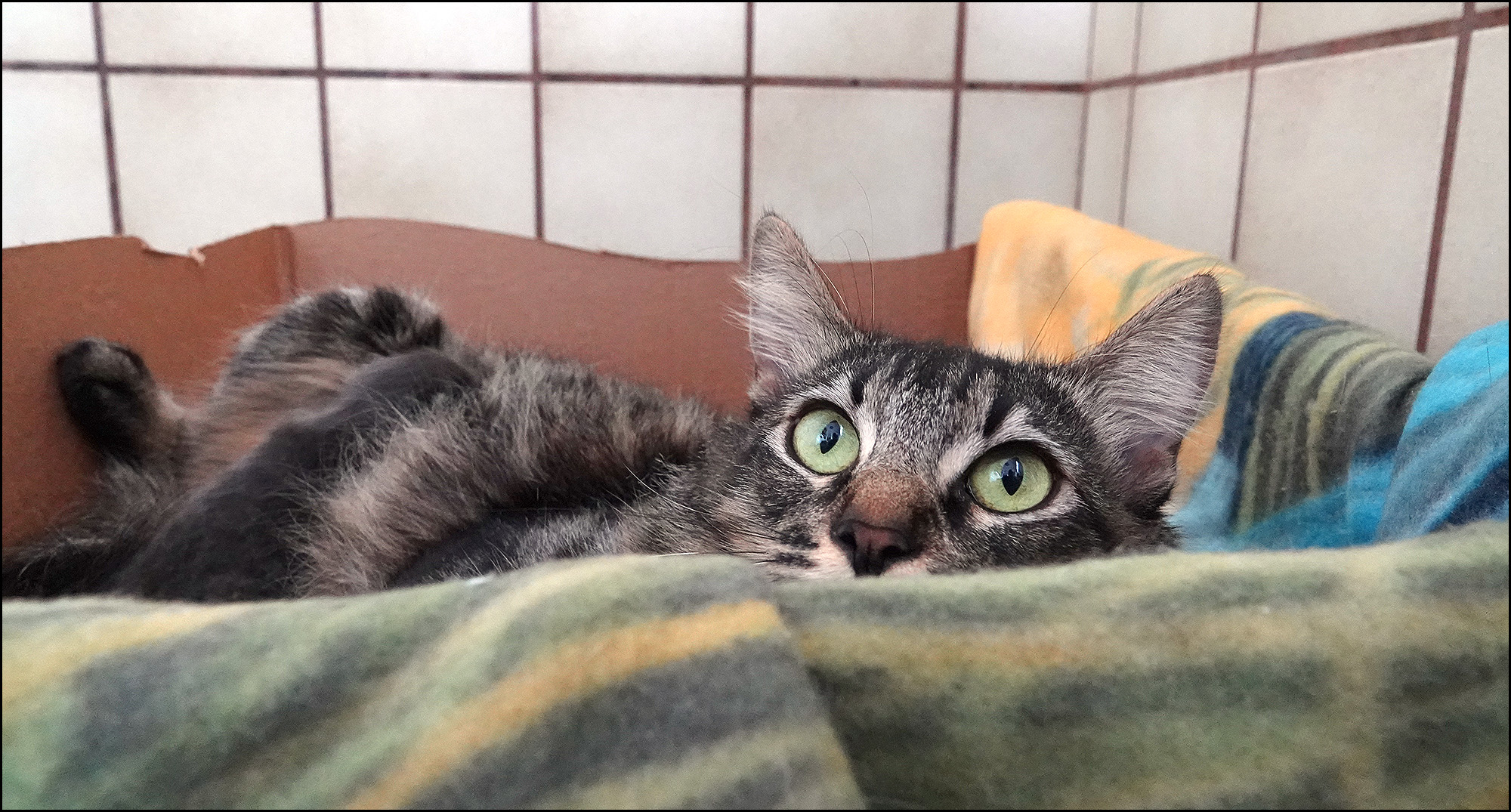
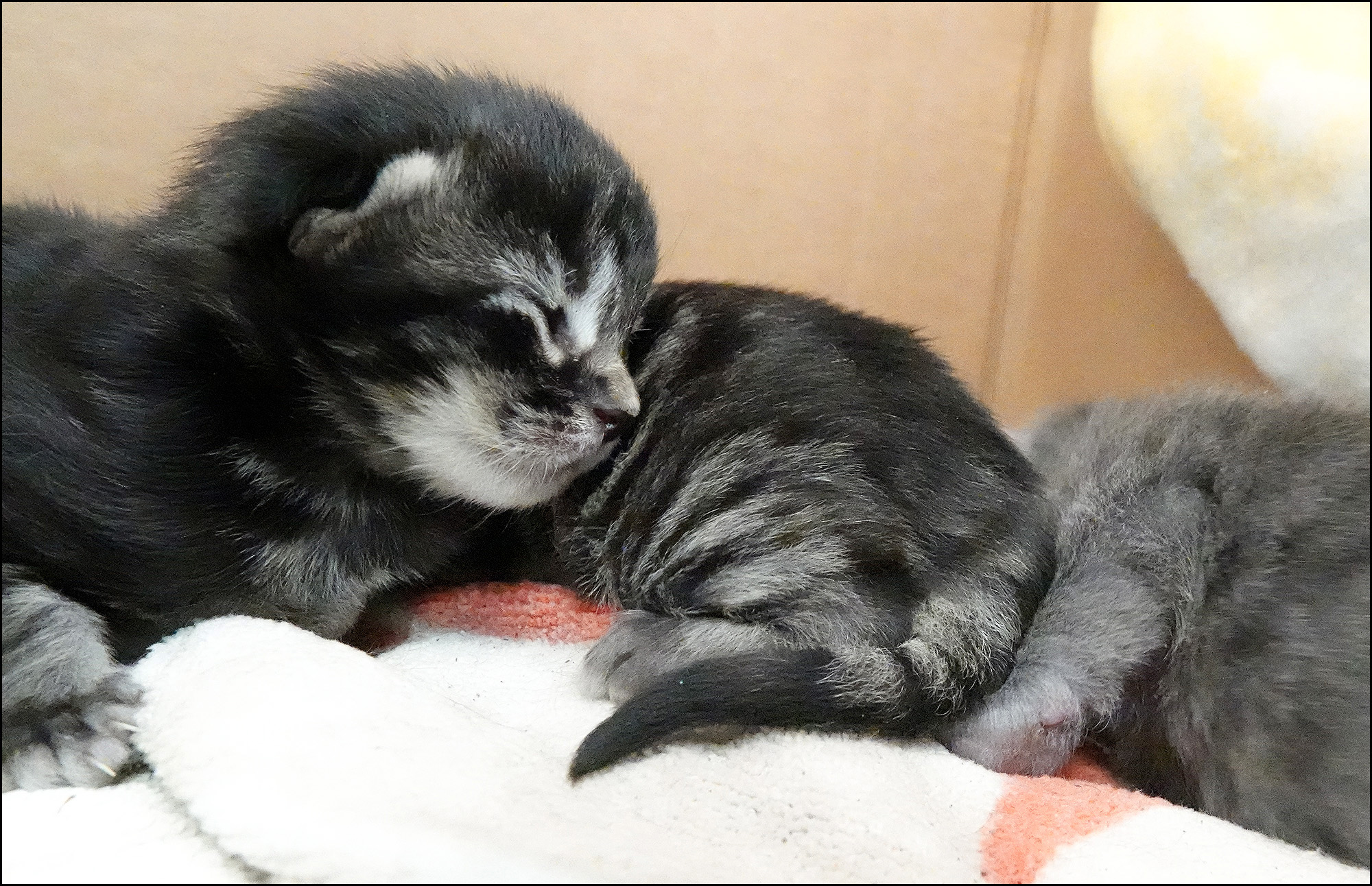
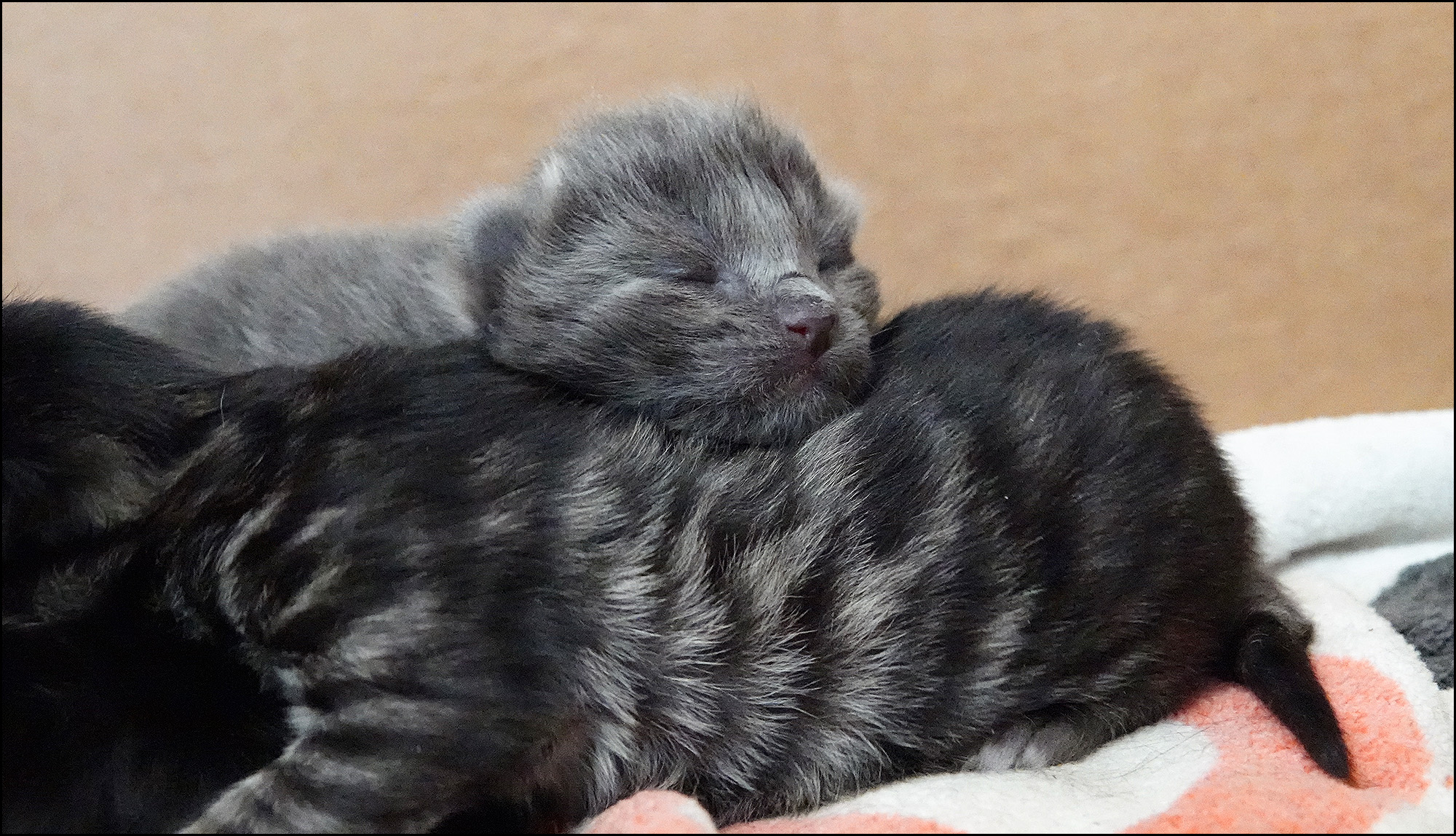
Anyway, guess what? It turns out that Meowser is female. Very, very female. When my mother returned home a week ago Wednesday, she found Meowser curled up on her bed along with a pile of kittens. This was unexpected. However, it was short work to construct the standard box-and-blanket combo that’s the traditional nest for new cat mothers, and that went into the shower while my mother’s bedding headed to the washing machine.
The kittens are now nine days old. Here’s a little photo collection of the whole brood. First off is Meowser herself, who seems very pleased with herself as she peers over her box to scope me out:
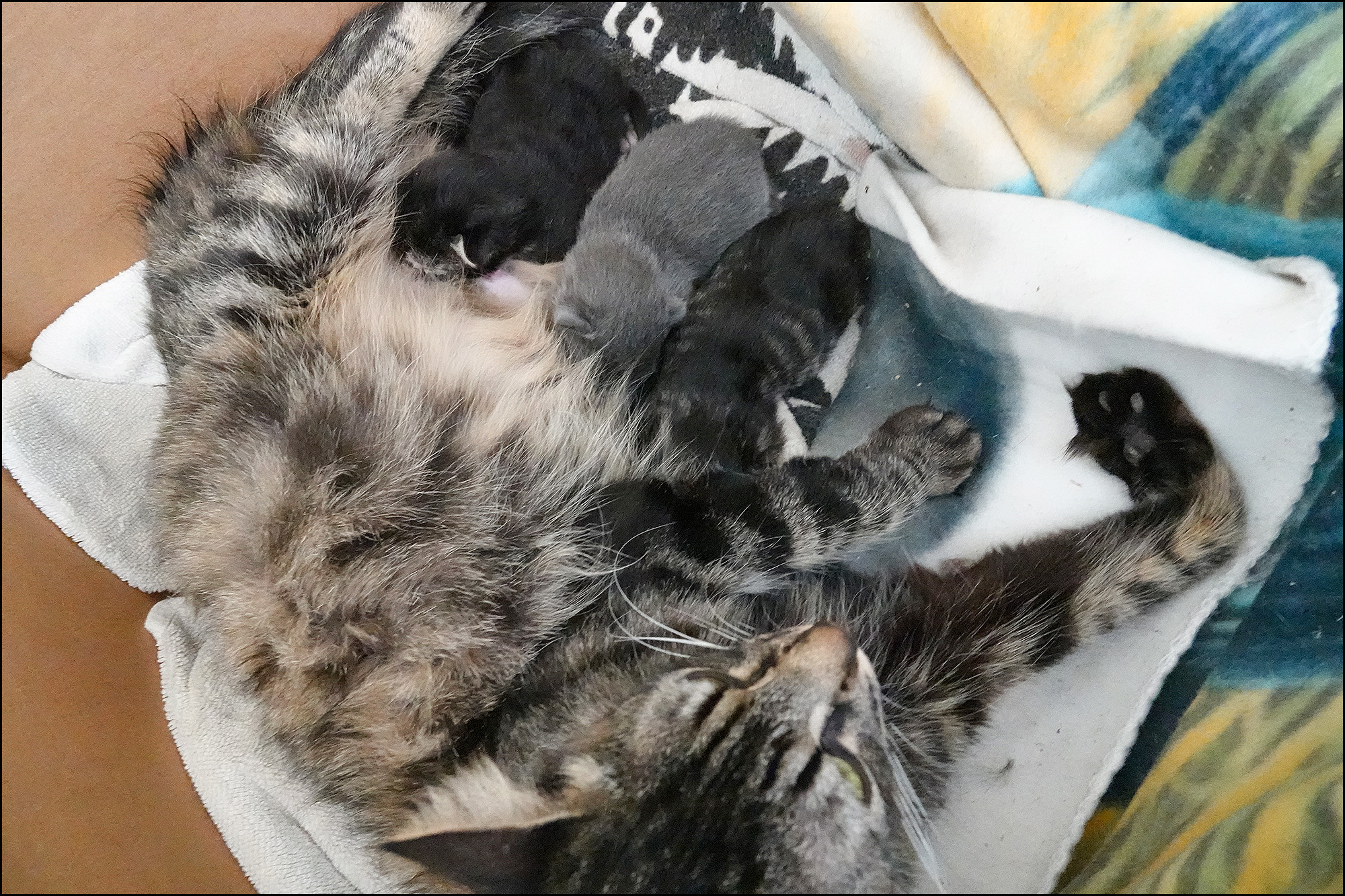
Here are the three kittens at the ol’ watering hole. One is black, one is gray, and one is striped:
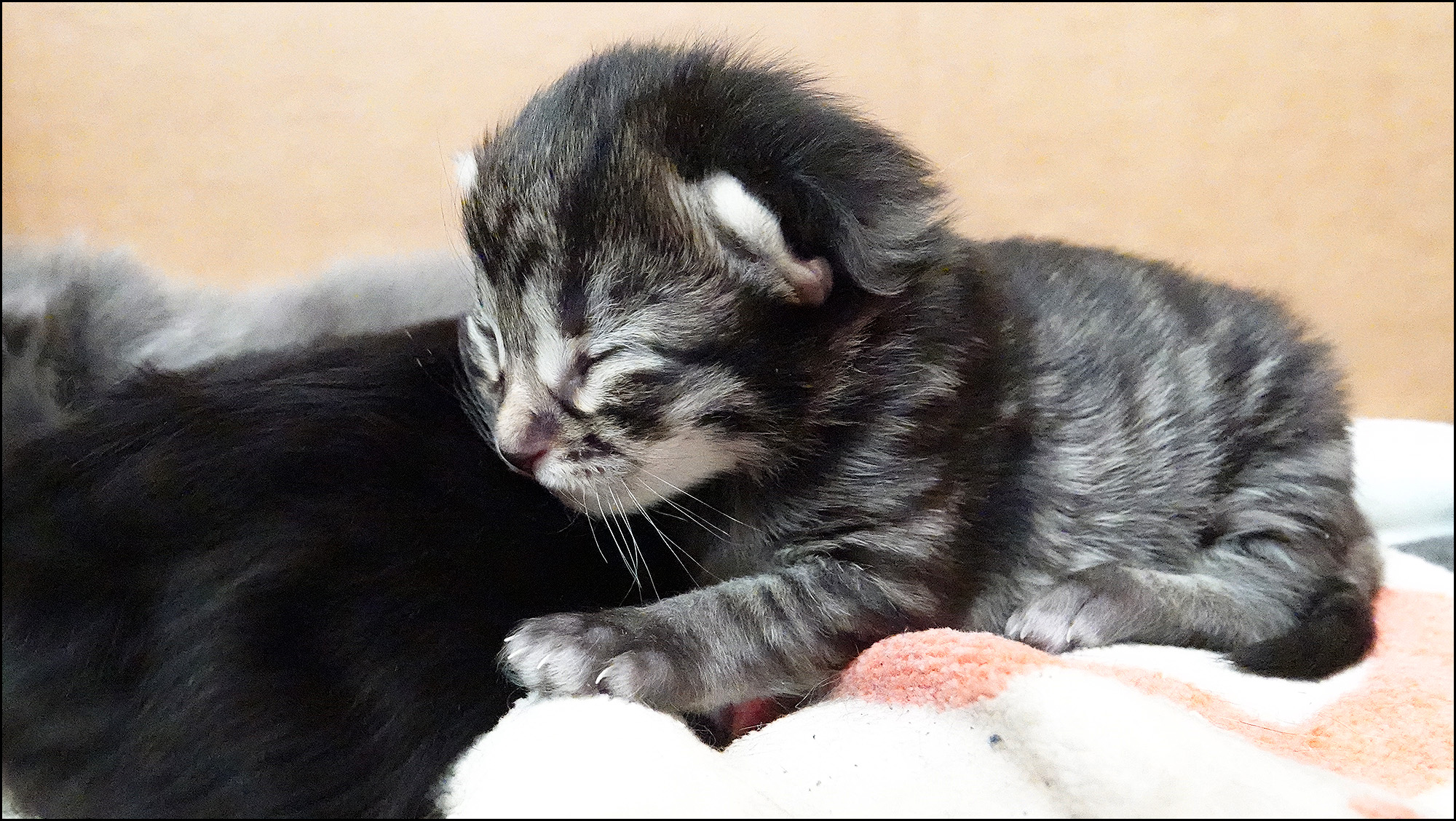
Here is Stripey:
Here is Blackie:
And here is Lord Graystoke:
In about five weeks my mother will have three excellent kittens available for adoption. If you happen to live in the Orange County area and are in the market for one, drop me a line. After we find homes for them, I believe Meowser will be in for a short visit to the vet to make sure we aren’t surprised like this again.
What this means, roughly speaking, is that for the past 15 years big companies have been hiring CEOs who were born in 1960 and only 1960, give or take a couple of years. In other words, corporate boards are continuing to hire CEOs from the tail end of the baby boom generation come hell or high water. They simply don’t want to break the age barrier and start hiring Gen Xers.
This will change shortly, of course. There’s no choice. But it says something remarkable that apparently the boards of big corporations are really, really uncomfortable with putting their companies into the hands of Xers. So instead they’ve been hiring older and older CEOs, to the point where today the average CEO is being hired only a few years before they might be expected to retire.
So what, if anything, happens when this finally breaks down and a majority of big companies are finally run by Gen Xers? Beats me. But apparently there are a lot of boomers who really don’t want to find out.
And we respect that! But maybe you’re of a mind to support our work directly instead? We have until December 31 to raise the last $400,000 we need to keep our nonprofit newsroom running at full strength into 2026. Will you make a gift today?
We noticed you have an ad blocker on. Can you pitch in a few bucks to help fund Mother Jones' investigative journalism?
Billionaires own the media,
but they don’t own us.
At Mother Jones we know these aren’t conventional times, and they require unconventional coverage. That’s what deliver every day: fierce, independent journalism you can’t find elsewhere. Perhaps never in the history of our country has that been more necessary than now. But we can’t do it without reader support—your support. Please chip in today.
Billionaires own the media,
but they don’t own us.
At Mother Jones we know these aren’t conventional times, and they require unconventional coverage. That’s what deliver every day: fierce, independent journalism you can’t find elsewhere. Perhaps never in the history of our country has that been more necessary than now. But we can’t do it without reader support—your support. Please chip in today.