• I Want To Be on Trump’s Enemies List

    From the New York Times:

    A loose network of conservative operatives allied with the White House is pursuing what they say will be an aggressive operation to discredit news organizations deemed hostile to President Trump by publicizing damaging information about journalists.

    ….Operatives have closely examined more than a decade’s worth of public posts and statements by journalists, the people familiar with the operation said. Only a fraction of what the network claims to have uncovered has been made public, the people said, with more to be disclosed as the 2020 election heats up. The research is said to extend to members of journalists’ families who are active in politics, as well as liberal activists and other political opponents of the president.

    Do me next! The red rose brigade can help you out with tweets about how I hate homeless people and mistreat my cats. If that’s not enough, I’ll be happy to write some new tweets that make the grade. I’ve always wanted to be on an enemies list of some kind but I’ve always missed out. I feel like this might be my last chance.

  • Can We Please Ignore Donald Trump Occasionally?

    Last week Donald Trump talked about buying Greenland. Within a day or two the news media was full of stories asking “Can America really buy Greenland?”

    Today Trump mused about using nuclear weapons to break up hurricanes. I suppose this means that tomorrow we’ll be buried under earnest pieces asking “Are nukes the answer to hurricanes?”

    I sympathize with news organizations over this stuff. I mean, the guy is president of the United States, so when he says stuff people want to know more about it. Still, I wonder if we really need to scurry around producing thumbsuckers—complete with expert interviews!—explaining things like Greenland’s territorial status and the physics of hurricanes? Just because Trump says something doesn’t mean it’s automatically a topic for deep investigation.

    Anyway, the answers are (a) no and (b) no. If you really need more, Wikipedia is your friend.

  • Why Climate Change Is So Hard

    Abriansyah Liberto/SOPA Images via ZUMA

    In the Washington Post today, Jamil Zaki asks a question:

    About 70 percent of Americans believe that the climate is changing, most acknowledge that this change reflects human activity, and more than two-thirds think it will harm future generations. Unless we dramatically alter our way of life, swaths of the planet will become hostile or uninhabitable later this century — spinning out ecological, epidemiological and social disasters like eddies from a current. And yet most Americans would support energy-conserving policies only if they cost households less than $200 per year — woefully short of the investment required to keep warming under catastrophic rates. This inaction is breathtakingly immoral.

    It’s also puzzling. Why would we mortgage our future — and that of our children, and their children — rather than temper our addiction to fossil fuels? Knowing what we know, why is it so hard to change our ways?

    Zaki’s answer is that we lack empathy on large scales. A single child who falls down a well excites tremendous empathy, but the starvation of millions doesn’t. And it’s even worse when the millions are decades in the future.

    This is certainly part of the answer, but I think Zaki misses the real issue: halting climate change, as he himself says, requires us to “dramatically alter our way of life.” This is not something most people are willing to do, regardless of empathy. We may feel tremendous empathy for the child in the well or the victim of a tornado, but we still aren’t willing to dramatically alter our way of life to help them. At most we’ll send some money to the Red Cross.

    This is something that too many people don’t get. What makes climate change different from other environmental calamities isn’t that it’s bigger or farther away or difficult to see. Those things all contribute to our inaction, but the key difference is that halting climate change requires us to dramatically alter our way of life. All of us. For a very long time.

    Human beings aren’t wired to do this. You aren’t doing it. I’m not doing it. Europeans aren’t doing it. No one is doing it. We’re willing to make modest changes here and there, but dramatic changes? The kind that seriously bite into our incomes and our way of life? Nope.

    When I mention this to people, a common reaction is disbelief. You really think people will let the planet burn before they’ll give up their cars? That’s exactly what I think, because it’s happened many times before. Over and over, human civilizations have destroyed their environments because no one was willing to give up their piece of it. They knew exactly what they were doing but still couldn’t stop. They have overfished, overgrazed, overhunted, overmined, and overpolluted. They have literally destroyed their own lifeblood rather than make even modest changes to their lifestyles.

    Anybody who’s interested in constructing a realistic plan to fight climate change has to accept this. It’s the the single biggest obstacle in our way, and it can’t be wished away or talked away. As frustrating as it is, it has to be addressed on its own terms. Anyone not willing to do this simply because they don’t like it needs a very deep gut check about what they really think is important.


  • Here Is Your Weekend Tariff Primer

    Ding Ting/Xinhua via ZUMA

    It’s hard to keep track of all the China tariff action these days. Here’s a short primer.

    Imports from China have been broken into lists, which are just what they sound like: lists of various kinds of products. Lists 1 and 2 account for about $50 billion worth of Chinese imports annually and were subjected to 25 percent tariffs last year. These were mostly industrial products, not consumer products.

    List 3 included food and other consumer items in addition to industrial goods, clocking in at about $200 billion worth of Chinese imports. Trump imposed a 10 percent tariff on List 3 last year and upped it to 25 percent earlier this year.

    List 4 is everything else and amounts to about $300 billion worth of imports. Trump imposed a 10 percent tariff on List 4 products earlier this month. On Friday, he announced that this would increase to 15 percent and the tariffs on the other lists would increase to 30 percent.

    However, because Trump doesn’t want to interfere with Christmas, List 4 was split into List 4a and List 4b. The tariffs on List 4b, which includes lots of popular consumer items, won’t go into effect until mid-December.

    Keep in mind that tariffs are imposed on the “customs value” of products. An iPhone that retails for $1,000, for example, has a customs value of around $400. A 15 percent tariff comes to $60, or roughly 6 percent of the retail value.

    All told, we import about $550 billion in goods from China annually, and when List 4 takes full effect at the end of the year all of it will be subject to Trump tariffs. Products on Lists 1-3 will be subject to tariffs of 30 percent and products on List 4 will be subject to tariffs of 15 percent. Unless Trump changes his mind between now and December, that is.

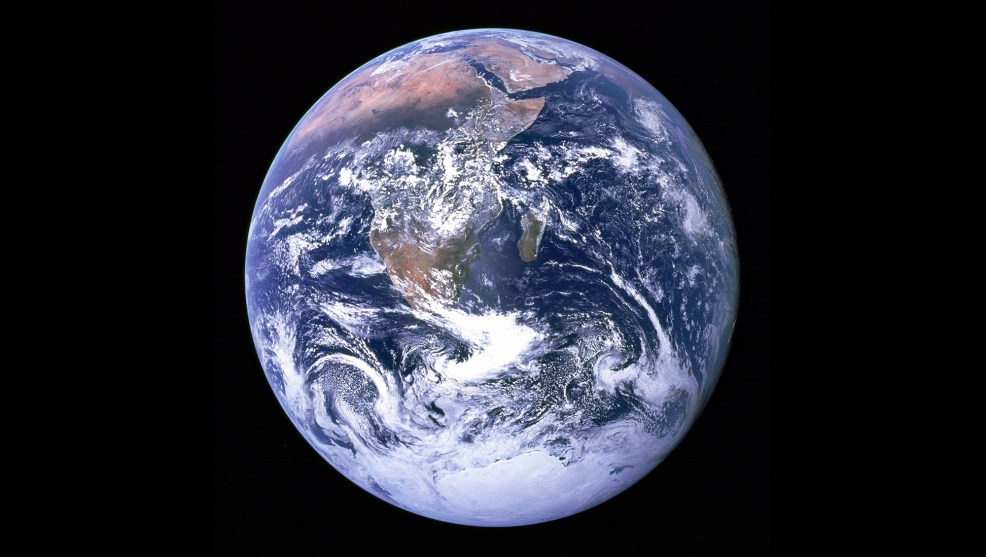
  • Here’s My Summary of All the Climate Plans

    NASA

    Here’s my summary of the climate change plans from all of the top-tier Democratic candidates. My assessment is based mostly on three things:

    • How practical is the plan? I’m not interested in kitchen sinks. It’s easy to propose a plan that does everything, but if it has no chance of gaining public support then it’s not a serious effort.
    • The plan should allocate huge sums for energy R&D. The past two decades have made it clear that the public—and that includes everyone reading this—is not willing to endure huge lifestyle changes in order to save us from planetary suicide. The only way we’re likely to beat climate change is by finding new technologies that provide lots of carbon-free energy at low prices.
    • The United States is responsible for only about 15 percent of global carbon emissions. This means that while subsidies for things like solar and wind are good ideas, they are nowhere near enough. Even if the US completely decarbonized by 2050, it would have virtually no effect unless the rest of the world joins us. Any serious plan has to address this head on.

    I understand that this is not the usual way of grading climate plans. The usual way is to count up how many boxes have been checked and how much money is being promised. This rewards the same old kitchen sink plans that have been failing to gain public traction for the past two decades and I have no interest in going down this path. Climate change is shaping up to be the biggest catastrophe in human history, and it demands not wishful thinking, but a clear-eyed view of reality and human nature.

    I’m interested in plans that demonstrate some thought; show a willingness to prioritize; and take into account what the public is and isn’t likely to support. In other words, plans that are likely to work. Here are my grades:

    Candidate Grade Comments
    Joe Biden C+ $1.7 trillion plan is not bad. It takes R&D seriously and spends considerable time acknowledging that we’ll get nowhere unless we get the rest of the world on board. Unfortunately, it’s way too timid. Multiply the R&D by ten and it would be pretty good.
    Cory Booker Inc. No plan yet. Placeholder is mostly about environmental justice and doesn’t look promising.
    Pete Buttigieg Inc. His plan is here. I haven’t yet read through it.
    Kamala Harris D- No number given for size of plan. Mostly pandering to lefty priorities rather than a serious climate proposal. Little attention given to renewable buildout or R&D.
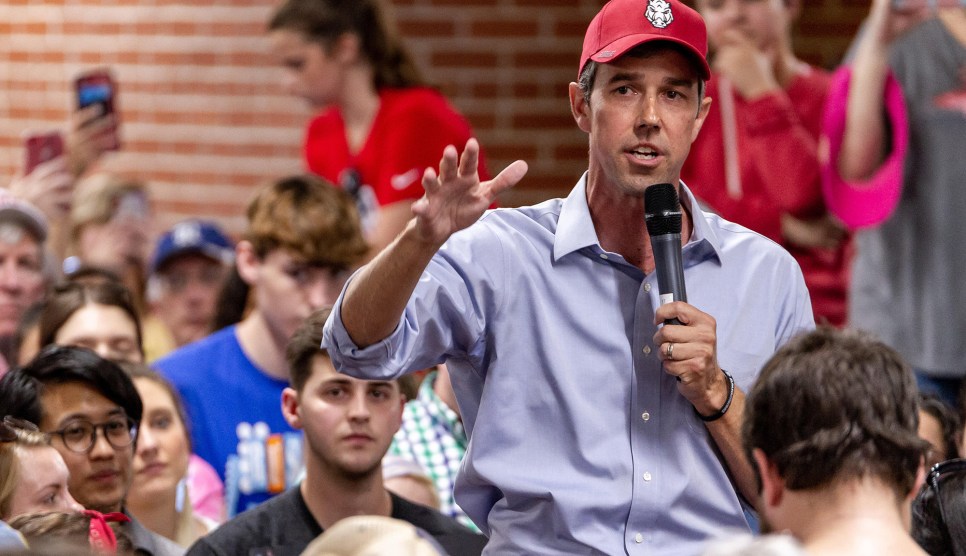
    Beto O’Rourke F $1.5 trillion plan is small and allocates only $200 billion for R&D. It’s so full of jargon that it’s hard to figure out what it really means. Once you cut through the cant, there’s nothing much there.
    Bernie Sanders D- $16 trillion plan is the king of the kitchen sinks: just say you support everything so you don’t have to prioritize anything. It is plainly meant more to impress than to provide a practical way forward. There’s more about vanquishing the left’s enemies and providing jobs than there is about genuinely tackling climate change.
    Elizabeth Warren C- $2 trillion plan is incomplete and too small, but it’s genuinely focused on climate change rather than using climate change as a cover for other progressive priorities. It needs more thought, and like Biden’s plan, the R&D spending needs to be multiplied by ten.
    Andrew Yang C- $2.2 trillion plan is interesting: Yang talks directly about adaptation and geoengineering and supports 4th Gen nuclear. However, he’s vague on R&D spending and barely mentions the need for international action.
  • Beto O’Rourke Gets an F for His Climate Plan

    Brent Soule/ZUMA

    Beto O’Rourke’s climate plan presents a problem: it’s so full of jargon and voodoo accounting that it’s genuinely hard to figure out what he’s saying. For starters, he calls it a $5 trillion plan, but it turns out that he plans only to “mobilize” $5 trillion by “leveraging” a $1.5 trillion direct investment. Of that dubious $5 trillion, he targets $4 trillion on infrastructure buildout, including this:

    More than $1 trillion through limited-duration, performance-focused climate change tax incentives that accelerate the scale up of nascent technologies enabling reductions in greenhouse gas emissions across all sectors, through efficiency and alternatives.

    What does that mean? It reads like a parody of corporatese, not a real attempt to say something. In any case, what O’Rourke is actually proposing is $600 billion in spending on infrastructure buildout that, in some unstated way, will spur a total of $4 trillion in infrastructure buildout.

    On the R&D front, O’Rourke proposes spending $200 billion. This will “catalyze follow-on private investment,” but he doesn’t pretend to put a number on that. There’s no detail about what this money will be spent on, which is OK since that decision should be left to experts, but it would be nice to include at least enough to show that he’s given it some thought instead of just repeating platitudes.

    Beyond this, he proposes a “legally enforceable standard” to meet the goal of net zero emissions by 2050:

    This standard will send a clear price signal to the market to change the incentives for how we produce, consume, and invest in energy, while putting in place a mechanism that will ensure the environmental and socio-economic integrity of this endeavor — providing us with the confidence that we are moving at least as quickly as we need in order to meet a 2050 deadline.

    I guess this means a carbon tax? Or cap-and-trade? Once again, the jargon quotient is so high that it’s hardly possible to say what O’Rourke really means here.

    Taken as a whole, O’Rourke’s plan is the smallest one out there; it targets only $200 billion for R&D; it doesn’t even acknowledge that the rest of the world exists; and it’s so full of buzzwords and funny money that it’s genuinely hard to figure out what he really means. He gets an F.

  • Joe Biden Gets a C+ for His Climate Plan

    Caroline Brehman/Congressional Quarterly via ZUMA

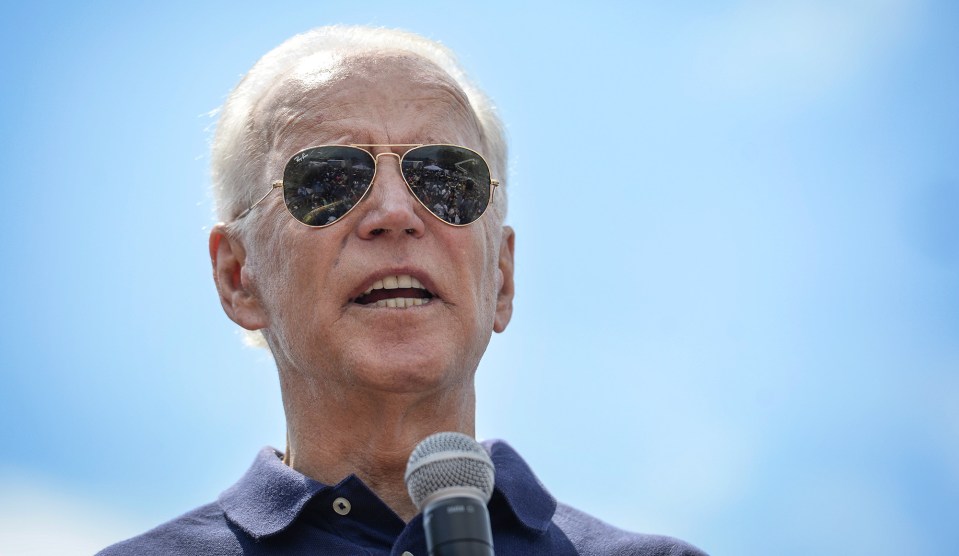
    Joe Biden has proposed a $1.7 trillion climate plan over ten years that includes the following major components:

    • Net zero emissions by 2050.
    • $400 billion (over ten years) on R&D targeted at: grid-scale storage; small modular nuclear reactors; zero net energy buildings; using renewables to produce carbon-free hydrogen; decarbonizing industrial heat needed to make steel, concrete, and chemicals; leveraging agriculture to remove carbon dioxide from the air; and sequestering carbon dioxide from power plants deep underground.
    • Special attention paid to R&D on nuclear power and carbon sequestration.
    • A climate adaptation agenda.
    • A lengthy plan to “rally the world” to address climate change.
    • All the usual shoutouts to climate justice and protection for fossil-fuel workers who lose their jobs.

    This is . . . surprisingly good. There are two key components to any good climate plan: (a) it can’t rely on lifestyle sacrifices that people simply won’t accept, and (b) it has to be truly global. The United States accounts for about 15 percent of total carbon emissions, so even if we spend trillions in subsidies to become carbon free it will represent only a drop in the ocean unless the rest of the world comes along.

    Biden’s plan doesn’t say this as explicitly as I just did, but its emphasis on R&D and global action is obvious: nearly 20 percent of the report is taken up by R&D and another 20 percent by the need to work with other countries. What’s more, Biden has obviously taken some expert advice on the R&D front. His suggestions for general areas to spend money on are quite good.

    That said, Biden’s suggestion of $400 billion in R&D is laughably small. Multiply by ten and you might have something serious. This is the place where Biden’s natural caution and centrism work against him. He’s on the right track here, but climate change is the single biggest catastrophe our planet has ever faced. If we’re going to do something about it, we’re going to need the single biggest response our planet has ever put forth.

    So: right idea, but pitifully small. I’ll give it a C+. A sharp bump upward in the R&D budget would get Biden a solid B.